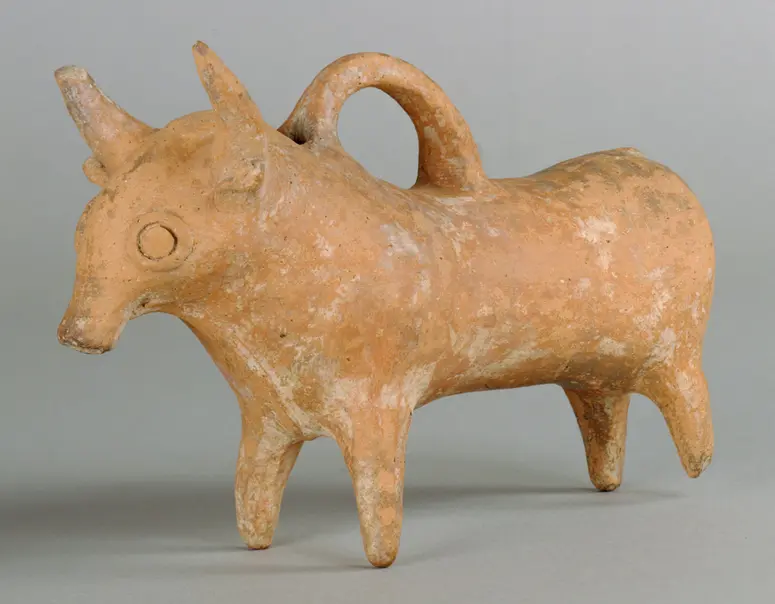
Form eines Stieres
1725 - 1600 v. Chr.
The bull-shaped rhyton of white painted ware is of a type characteristic of the Cypriote Bronze Age and represented by numerous examples, all of which come from tombs The handmade body in the shape of a wineskin, narrowing to a point at the back, stands on four small feet. At the front is a sculptural, stylized bull’s head with big, curved horns and a pointed muzzle. The eyes and muzzle of the animal are suggested by bore-holes. Underneath the protome is a round opening for pouring. At the rear a straight tail has been attached. On the top a string-hole has been bored. Painted decoration in light gray to light brown: horizontal wavy lines on the body, cut on the underside by a vertical wavy band. Striped decoration on the protome.
A. Bernhard-Walcher u.a., Die Sammlung zyprischer Antiken im KHM. Sammlungskataloge des KHM Bd. 2, Wien 1999
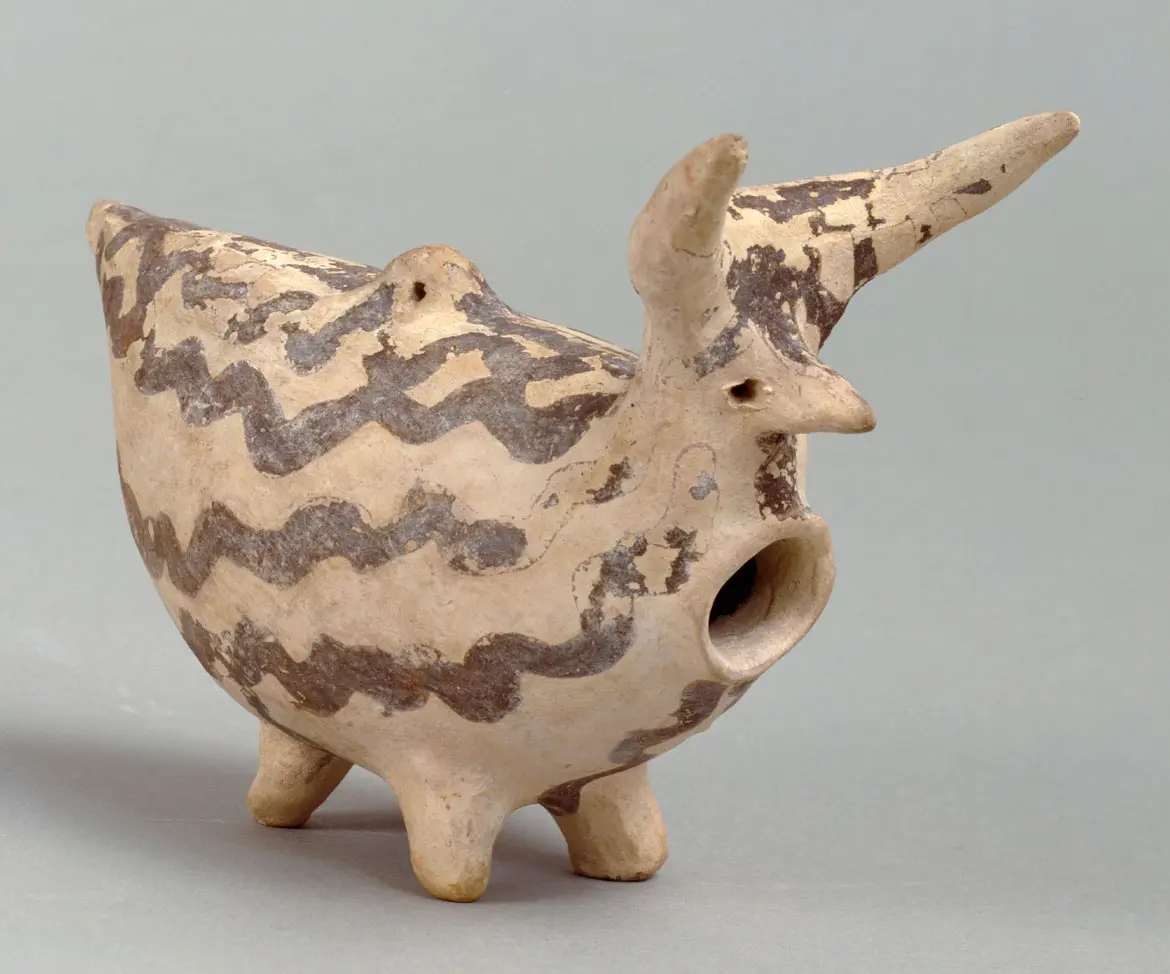
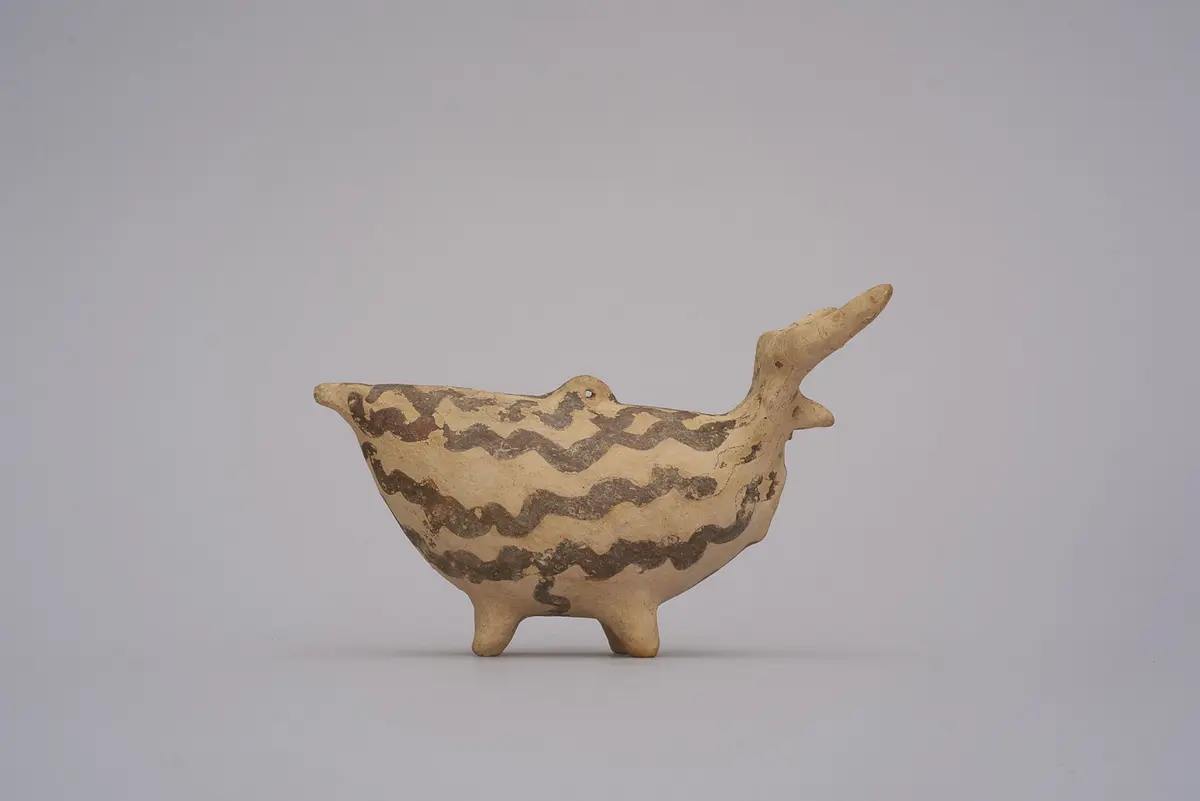
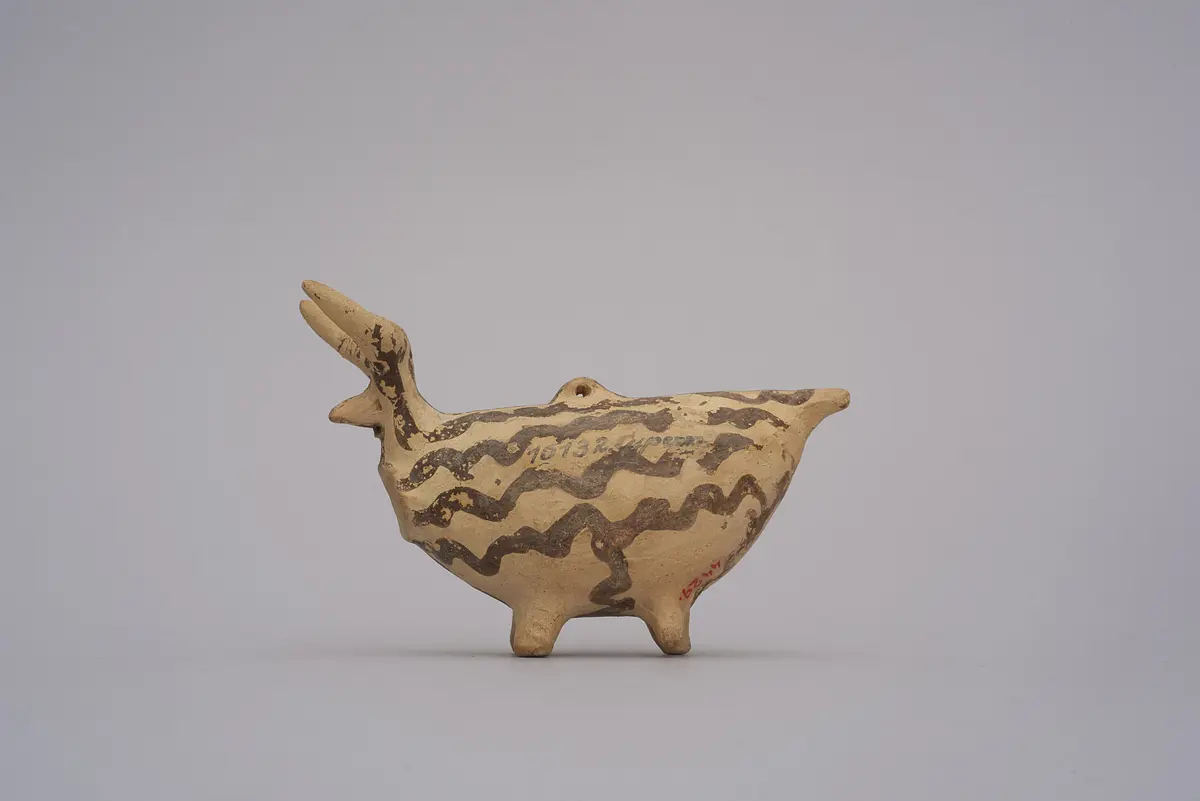
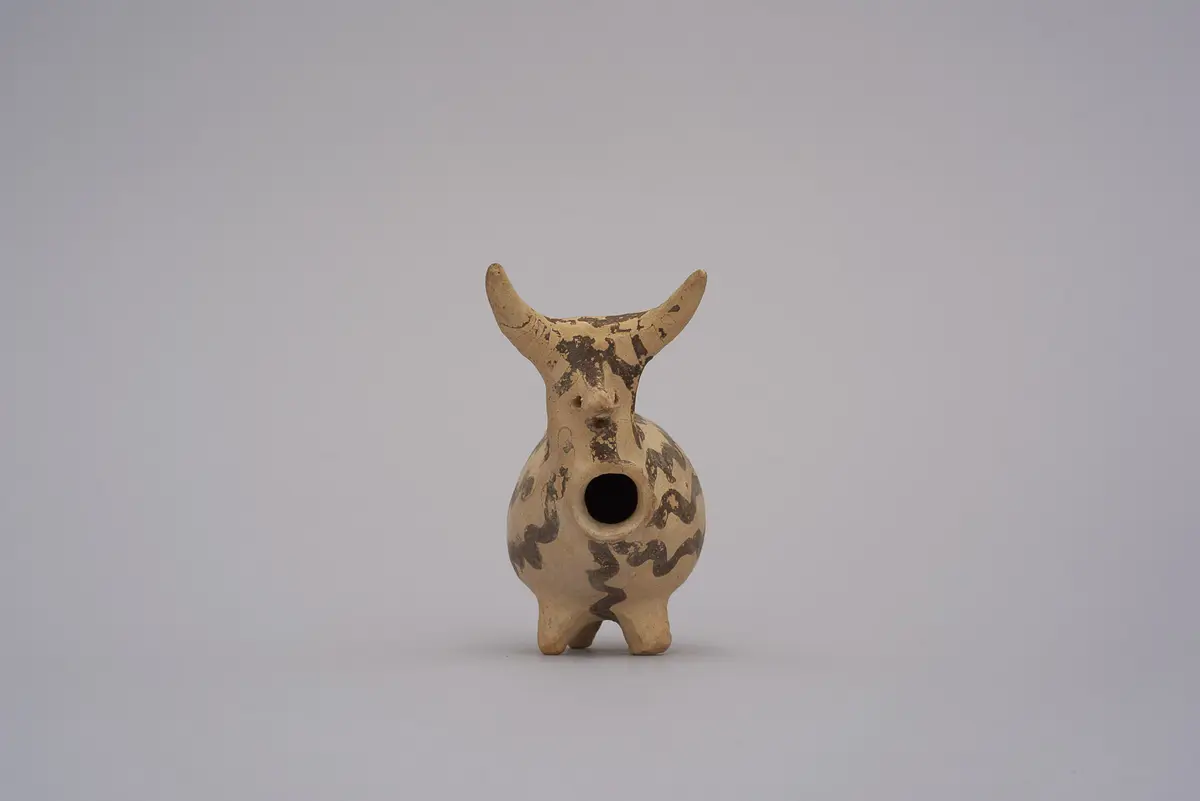
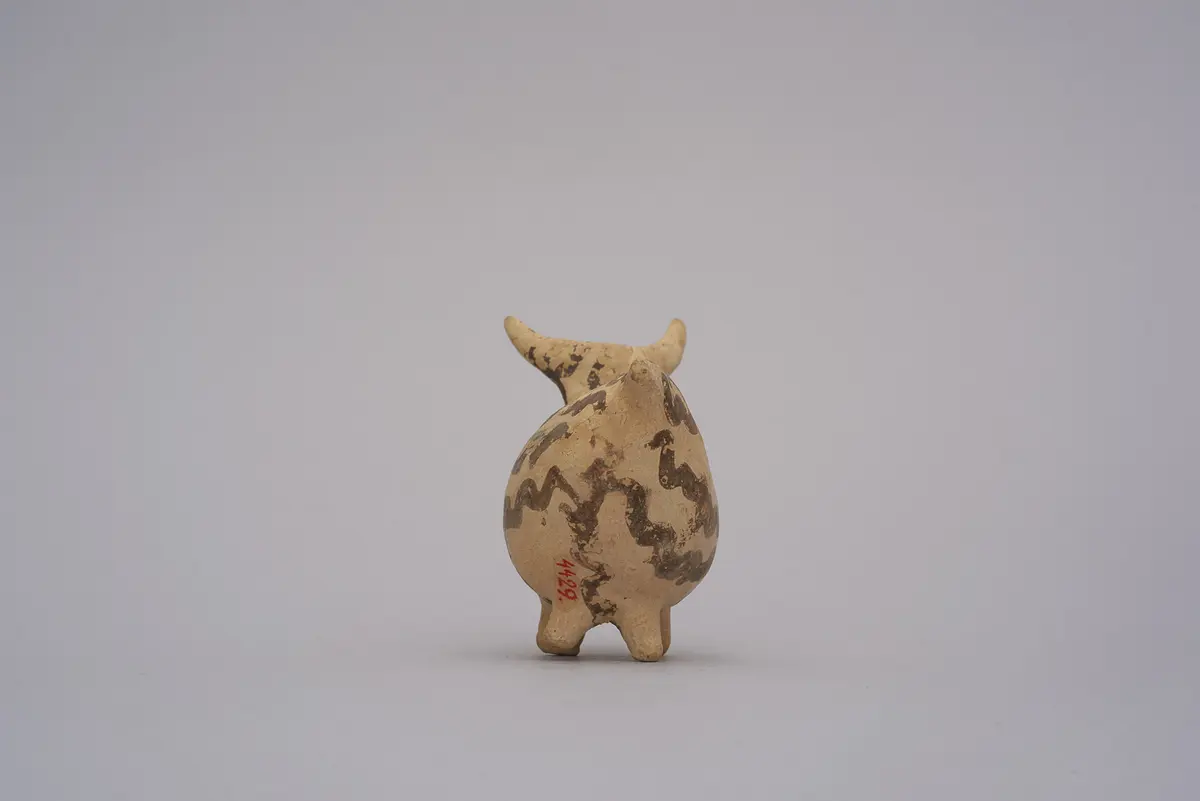
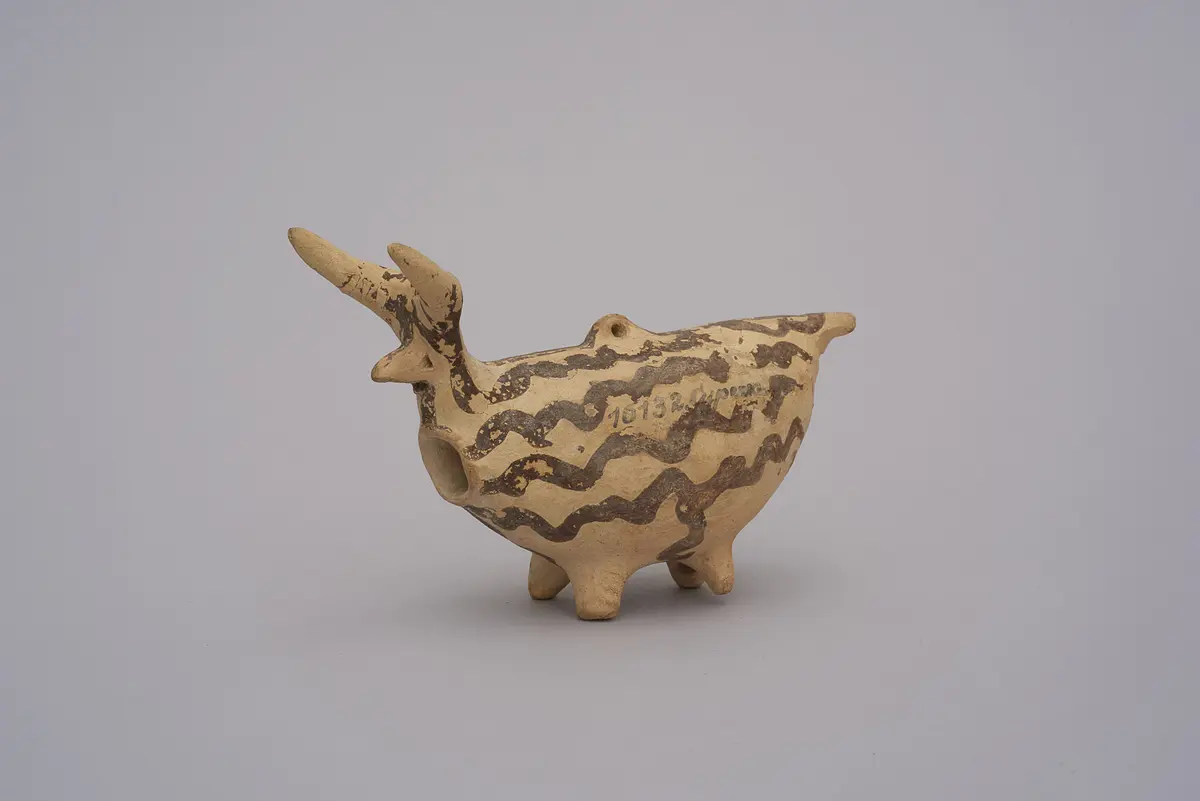
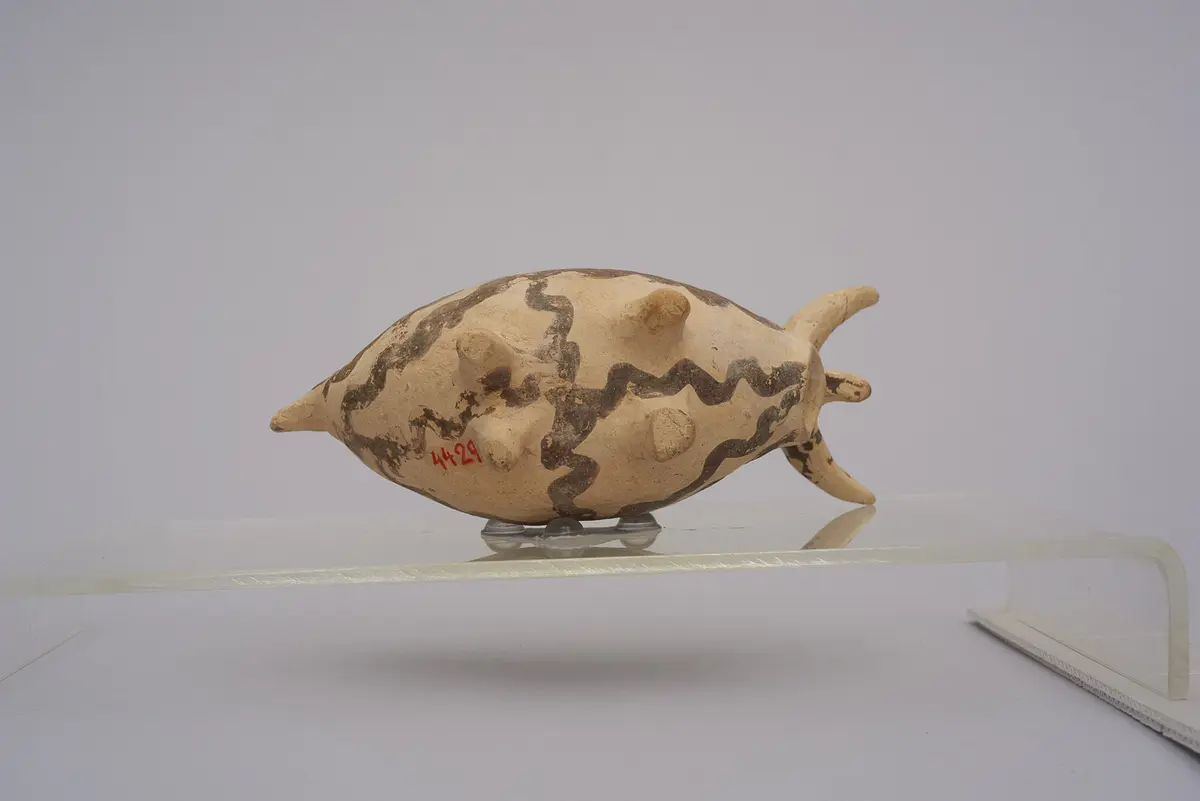
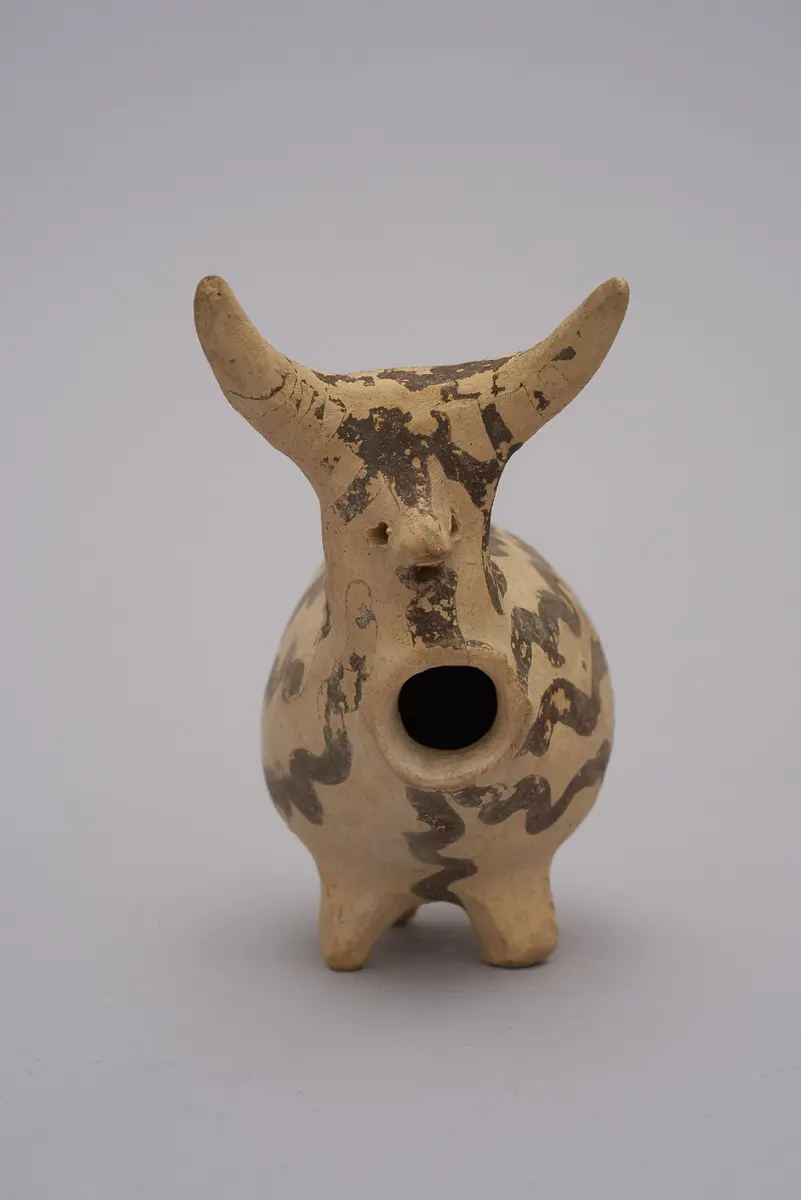
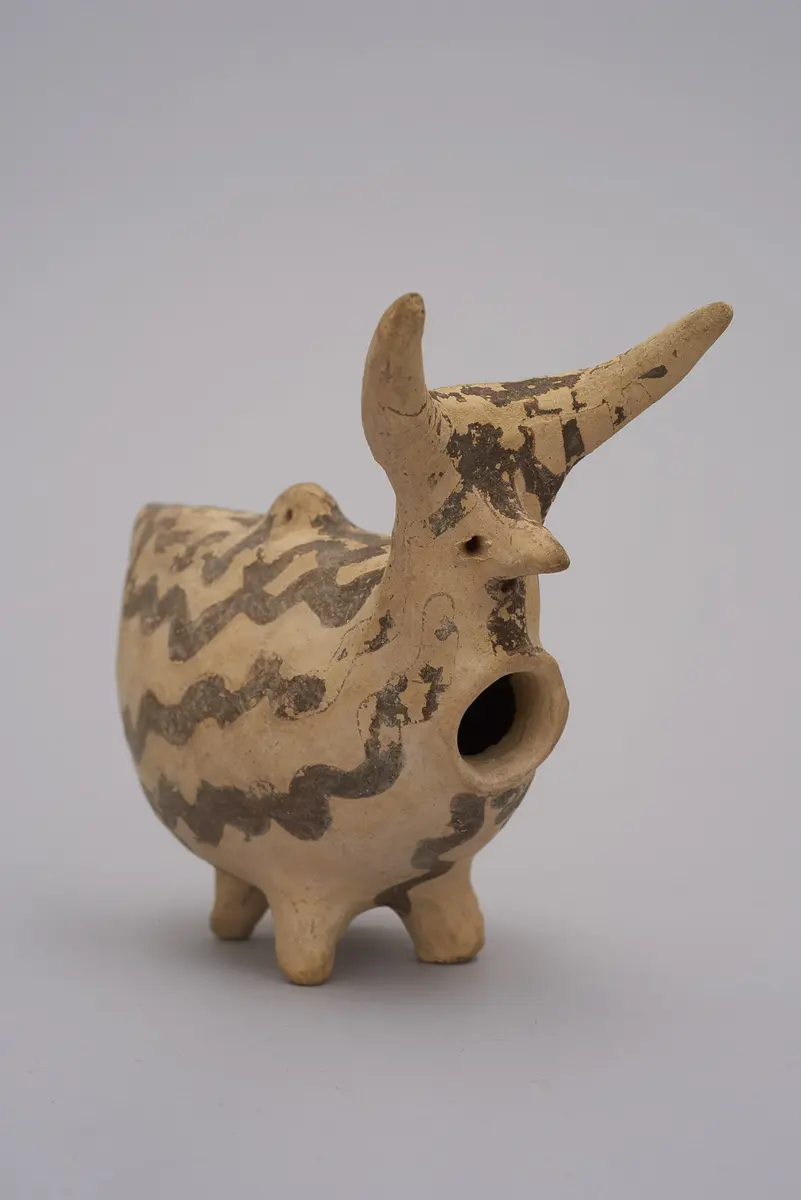
The bull-shaped rhyton of white painted ware is of a type characteristic of the Cypriote Bronze Age and represented by numerous examples, all of which come from tombs The handmade body in the shape of a wineskin, narrowing to a point at the back, stands on four small feet. At the front is a sculptural, stylized bull’s head with big, curved horns and a pointed muzzle. The eyes and muzzle of the animal are suggested by bore-holes. Underneath the protome is a round opening for pouring. At the rear a straight tail has been attached. On the top a string-hole has been bored. Painted decoration in light gray to light brown: horizontal wavy lines on the body, cut on the underside by a vertical wavy band. Striped decoration on the protome.
A. Bernhard-Walcher u.a., Die Sammlung zyprischer Antiken im KHM. Sammlungskataloge des KHM Bd. 2, Wien 1999
Time:
1725 - 1600 v. Chr.
Object Name
Askos der White Painted Ware
Culture
Zyprisch
Location of discovery:
Ayia Paraskevi (Nikosia, Zypern)
Material/technology:
Ton hellbraun; Überzug gelblich-weiß, matt; Bemalung hellbraun bis hellgrau. Handgeformt.
Dimensions:
H. 10,2 cm, L. 16,1 cm
Copyright
Kunsthistorisches Museum, Antikensammlung
Invs.
Antikensammlung, IV 4429
Provenance
Prähistorische Abteilung/NHM Wien; 1890 Kauf von Max, Ohnefalsch-Richter; 1958 Tausch
Browse more
Similar items you might be interested in
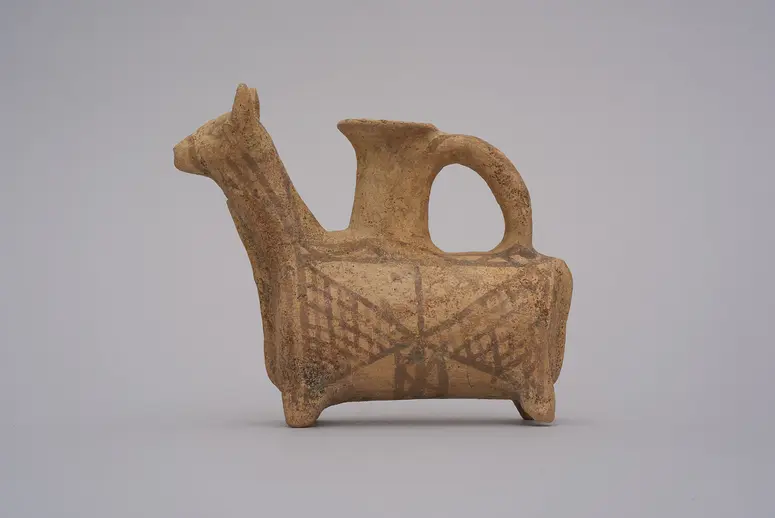
Askos in Stierform der Proto-White Painted Ware: Form eines Stieres Zyprisch, Bronzezeit, Spätzyprisch 1125 - 1050 v. Chr.
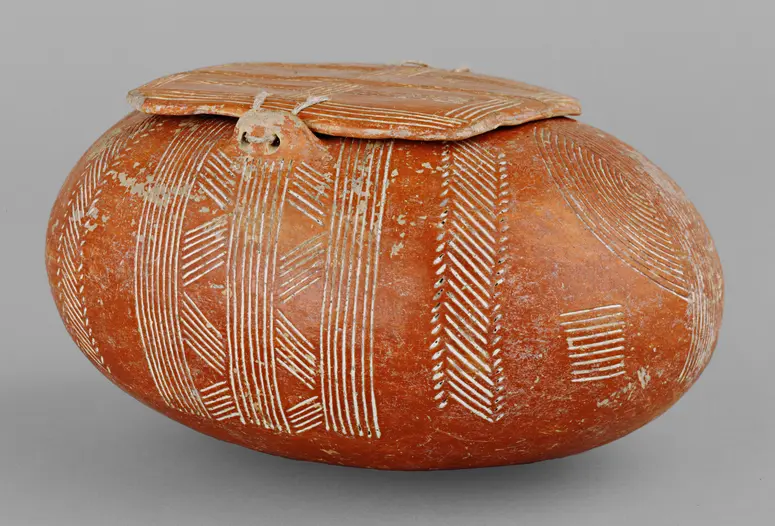
Deckelbüchse (Pyxis) der Red Polished III Ware: Ritzdekor Zyprisch, Bronzezeit, Früh- bis Mittelzyprisch 2000 - 1800 v. Chr.
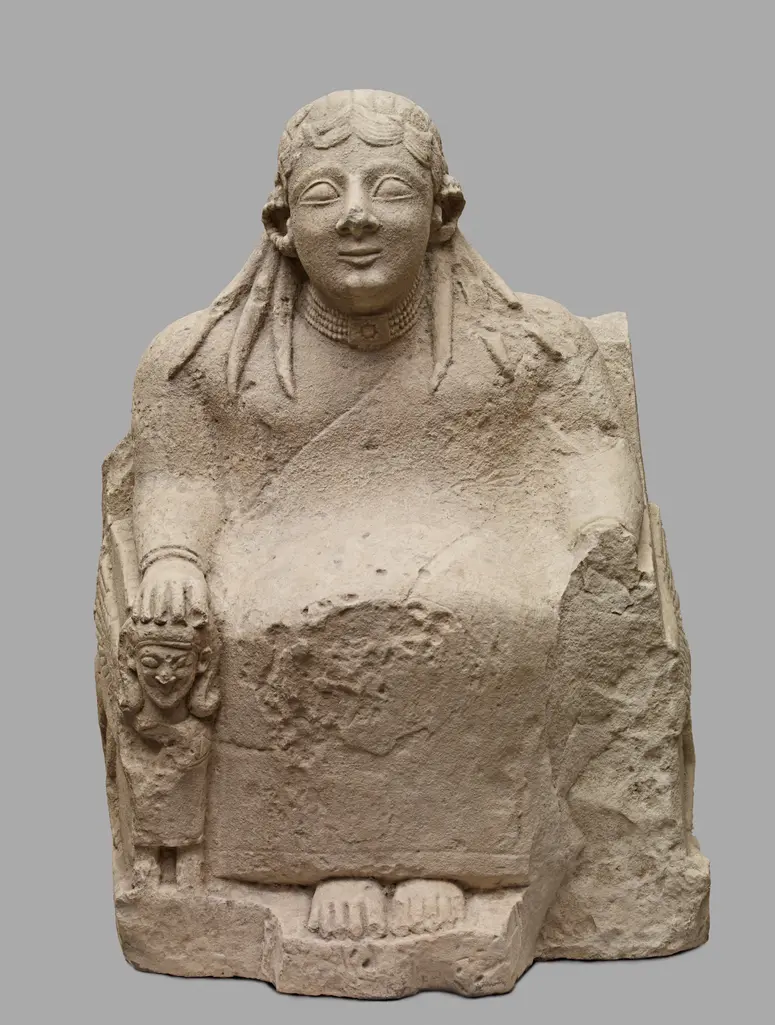
Statuette: Thronende Göttin (Astarte?) Zyprisch, Eisenzeit, archaisch 1. Hälfte 6. Jh. v. Chr.
Rhyton der Base-Ring II Ware: Form eines Stieres Zyprisch, Bronzezeit, Spätzyprisch 1450 - 1200 v. Chr.
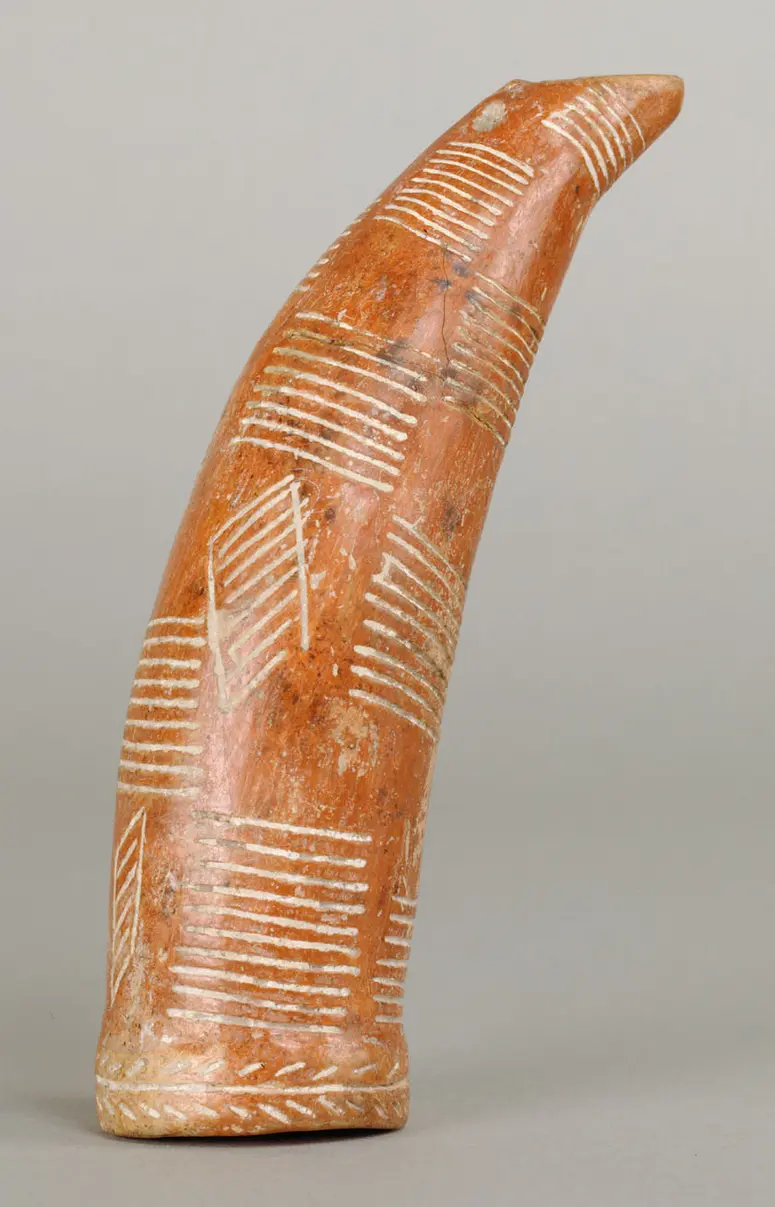
Hornförmiges Gefäß der Red Polished III Ware: Ritzdekor Zyprisch, Bronzezeit, Früh- bis Mittelzyprisch 2000 - 1800 v. Chr.
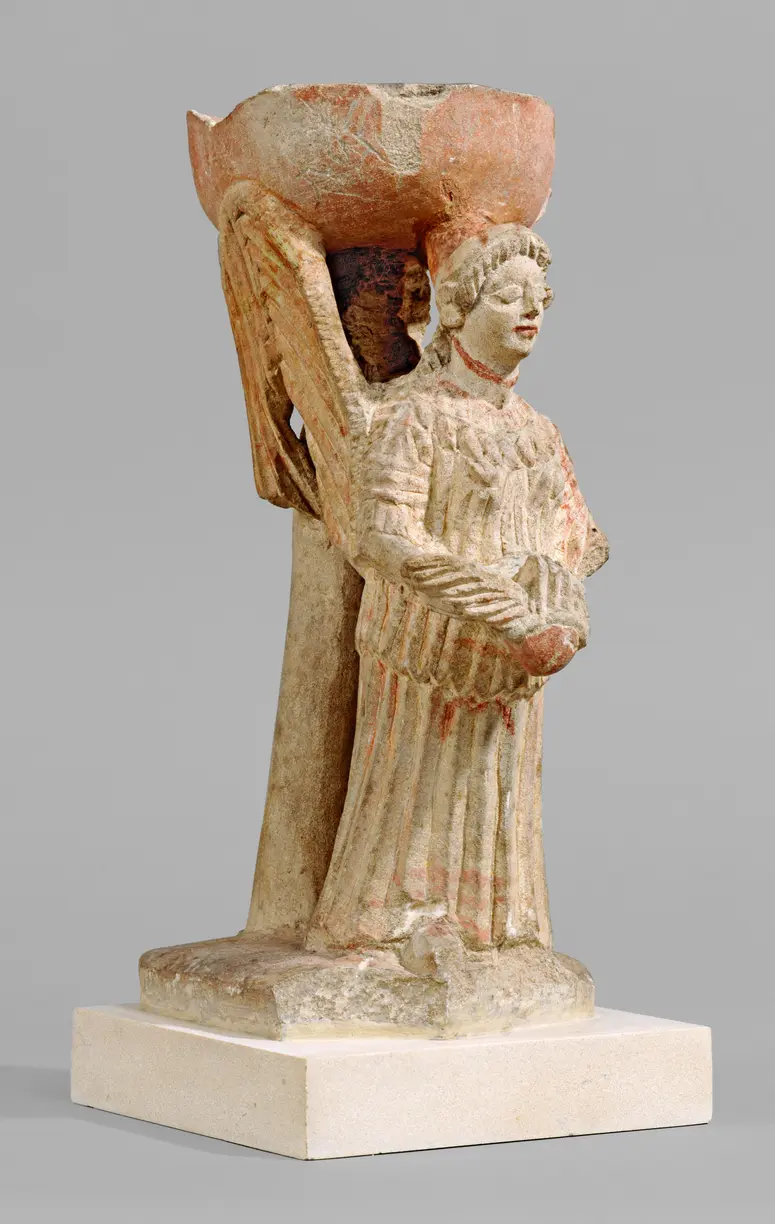
Räuchergefäß: Flügelfrau mit Räucherbecken Zyprisch, Eisenzeit, archaisch 1. Viertel 5. Jh. v. Chr.
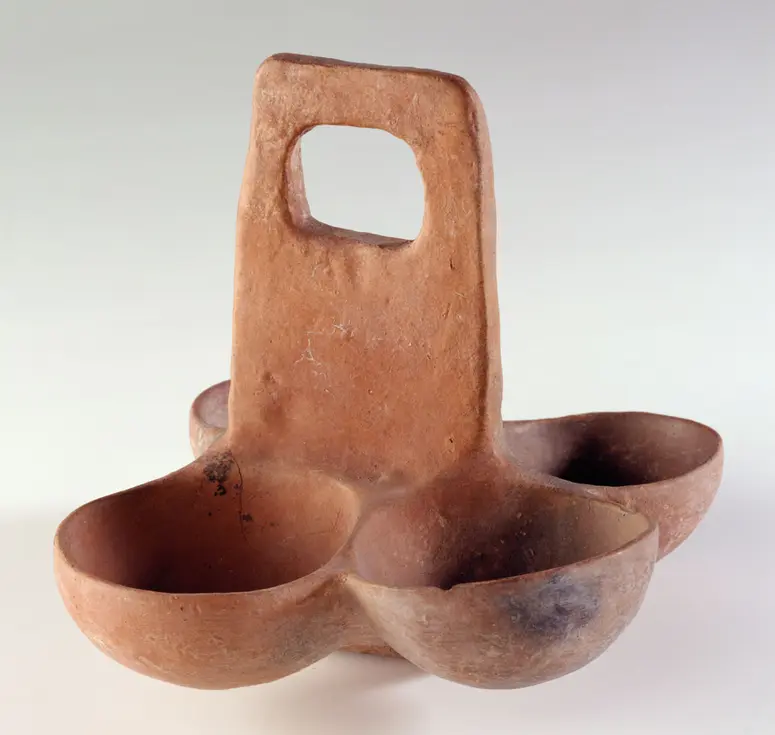
Kompositgefäß der Base-Ring I Ware (?): Halbkugelförmige Schalen Zyprisch, Bronzezeit, Spätzyprisch 1625 - 1450 v. Chr.
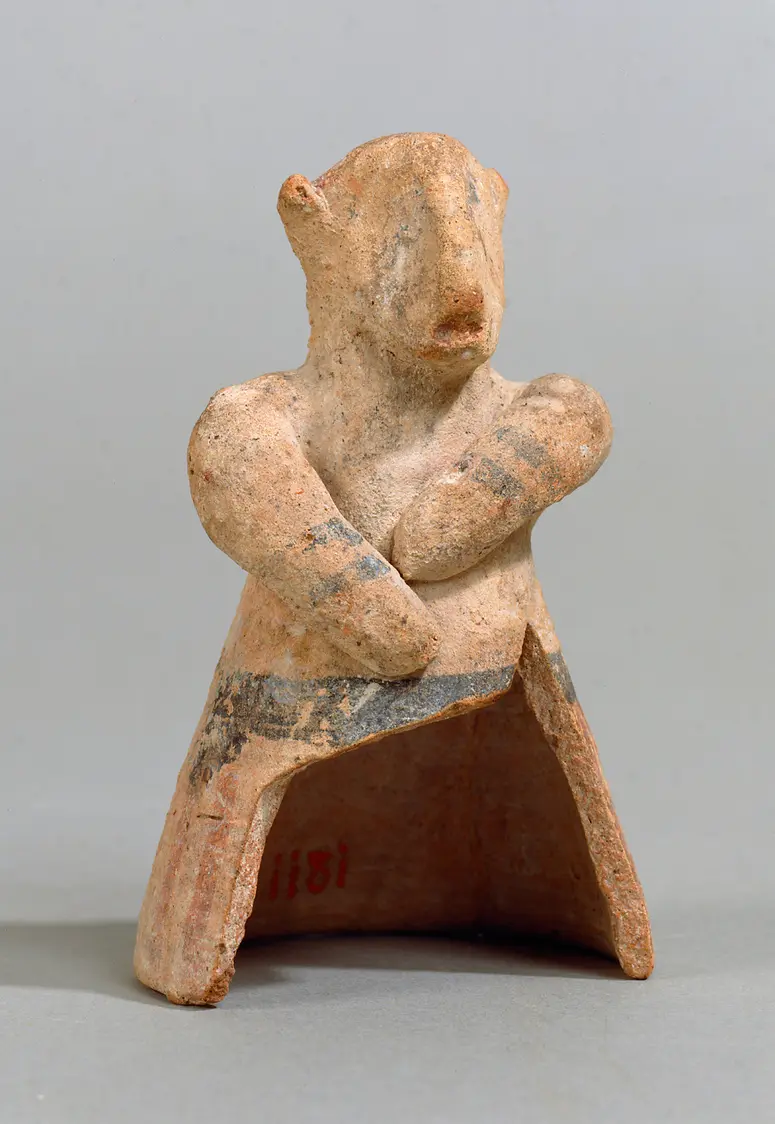
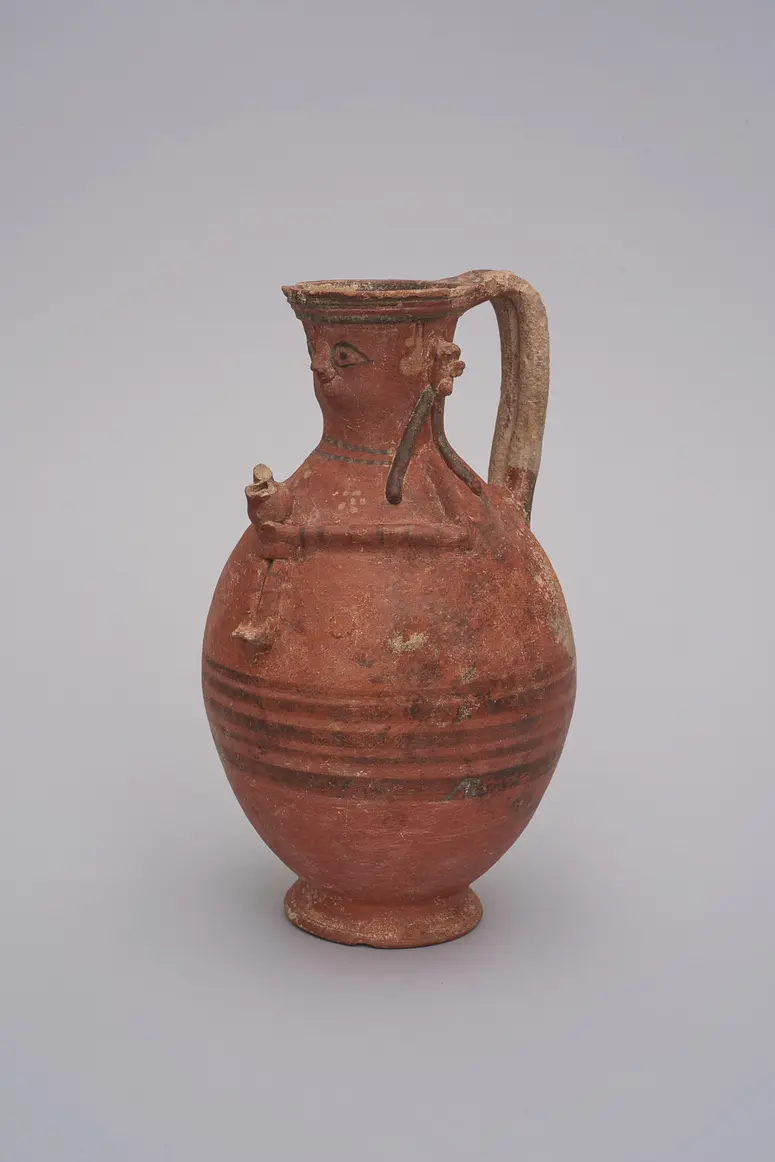
Kanne der Bichrome Red II (V) Ware: Anthropomorphe Form Zyprisch, Eisenzeit, archaisch 6. Jh. v. Chr.
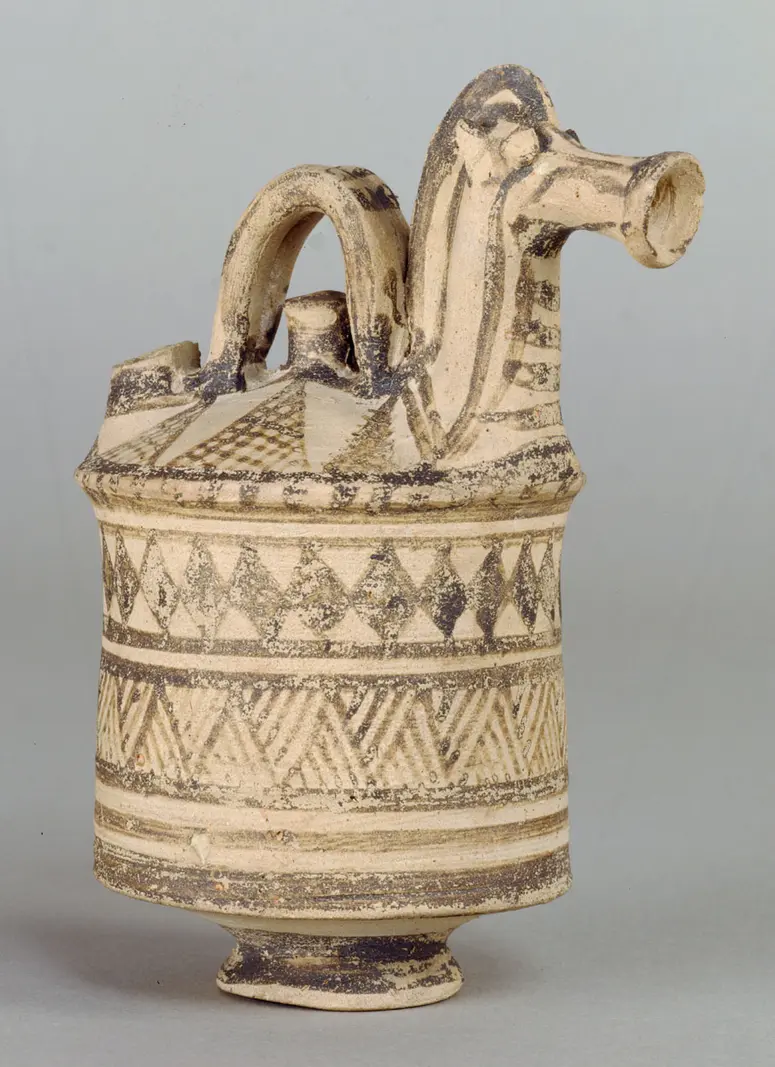
Askos der Proto-White Painted Ware: Pferdekopfprotome Zyprisch, Bronzezeit, Spätzyprisch 1125 - 1050 v. Chr.
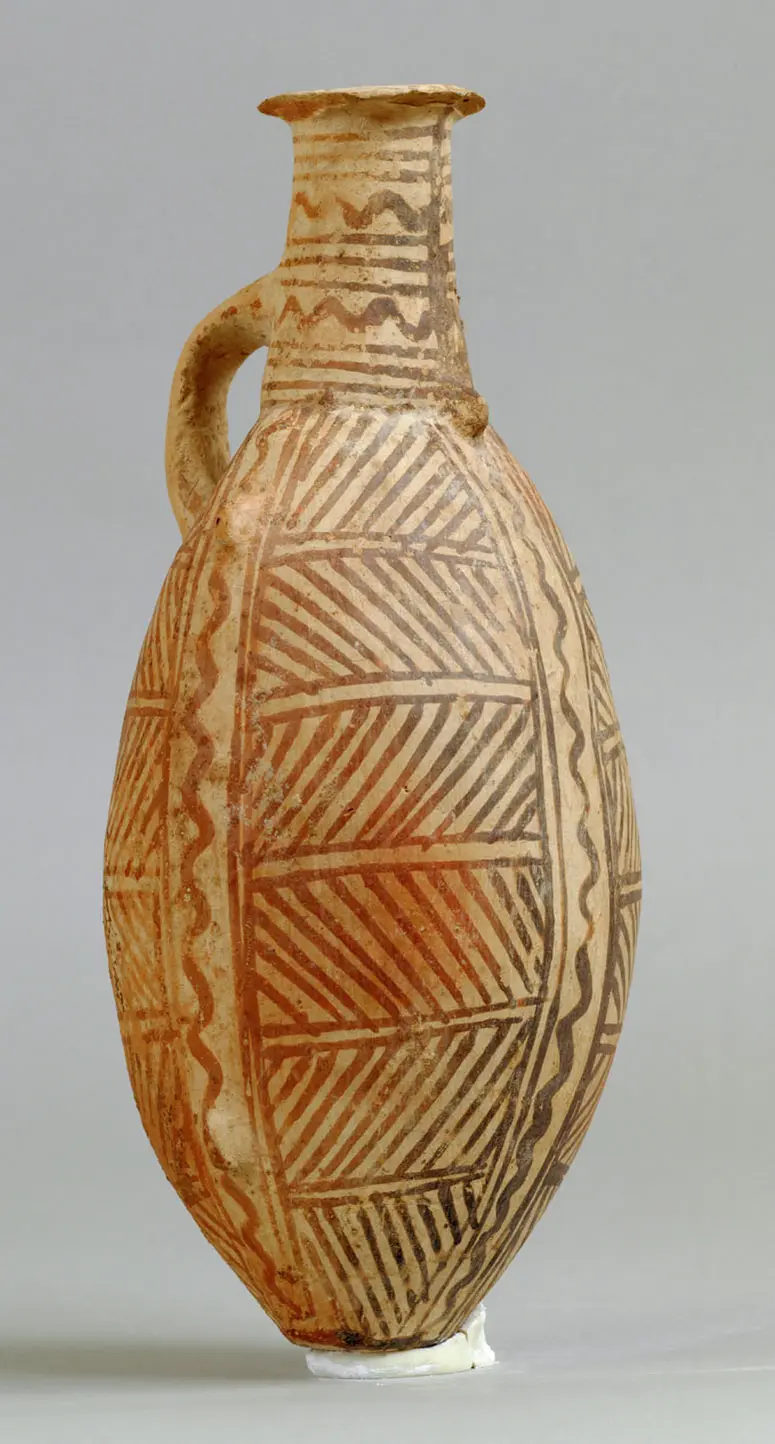
Flasche der White Painted IV Ware: Liniendekor Zyprisch, Bronzezeit, Mittelzyprisch 1725 - 1625 v. Chr.
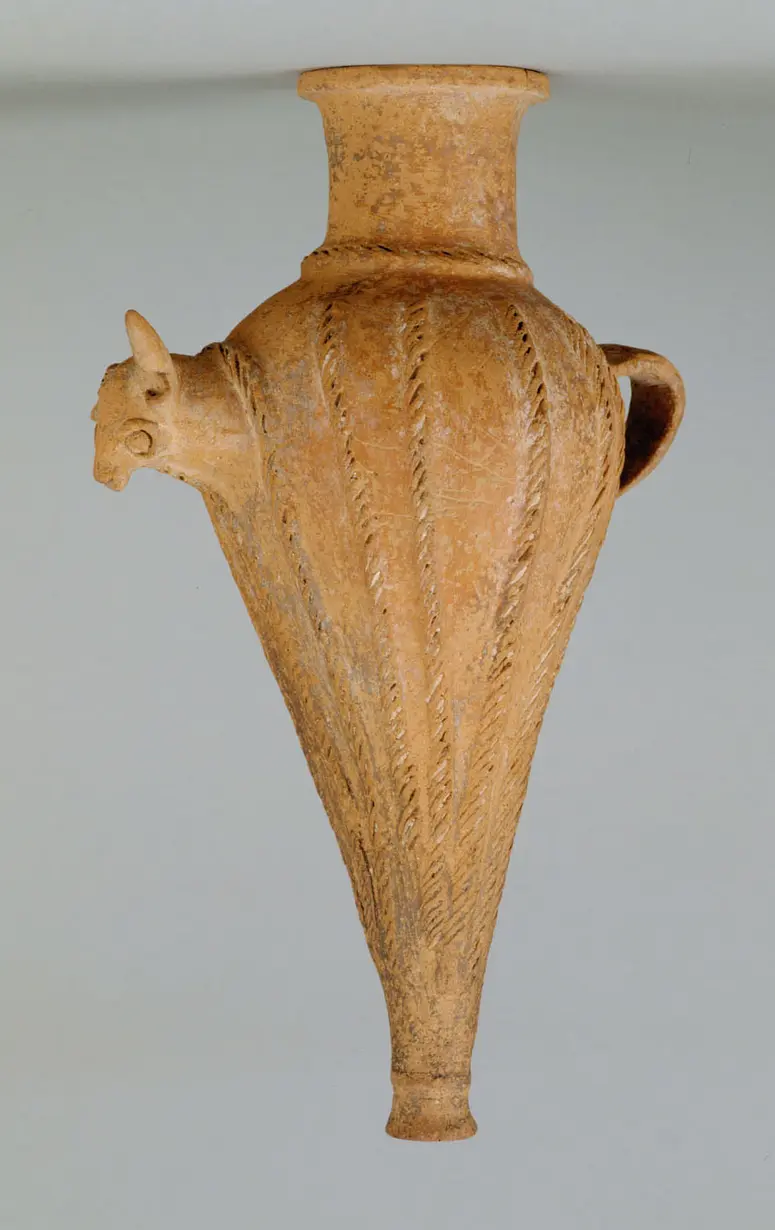
Trichter der Base-Ring I Ware: Stierkopfprotome Zyprisch, Bronzezeit, Spätzyprisch 1625 - 1450 v. Chr.

Schnabelkanne der Red Polished III Ware: Doppelkonischer Gefäßkörper Zyprisch, Bronzezeit, Früh- bis Mittelzyprisch 2000 - 1800 v. Chr.
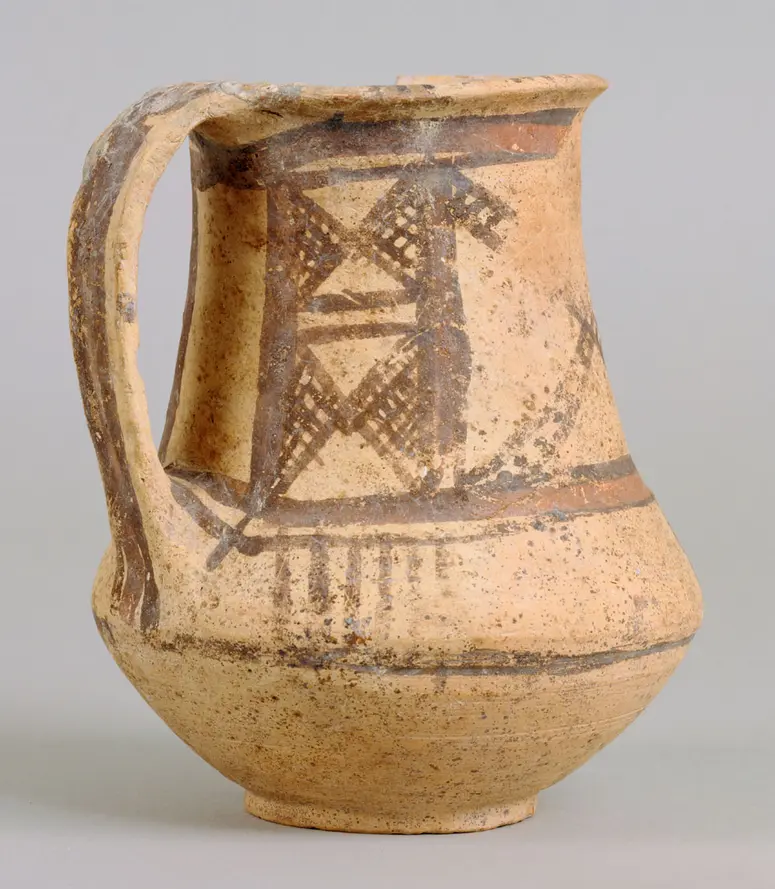
Henkelkrug der Bichrome Wheel-made Ware: Zweifarbige Ornamentik Zyprisch, Bronzezeit, Spätzyprisch 1625 - 1450 v. Chr.
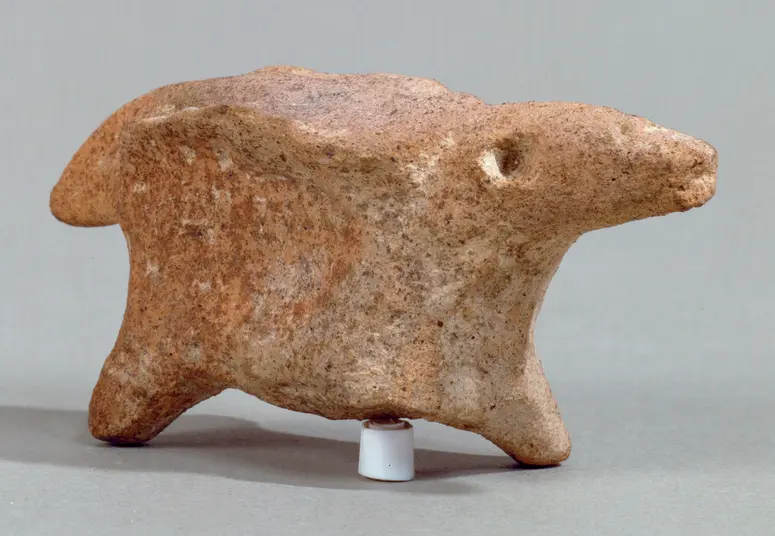
Statuette der Red Slip Ware: Tierfigur Zyprisch, Bronzezeit, Mittelzyprisch 1900 - 1800 v. Chr.
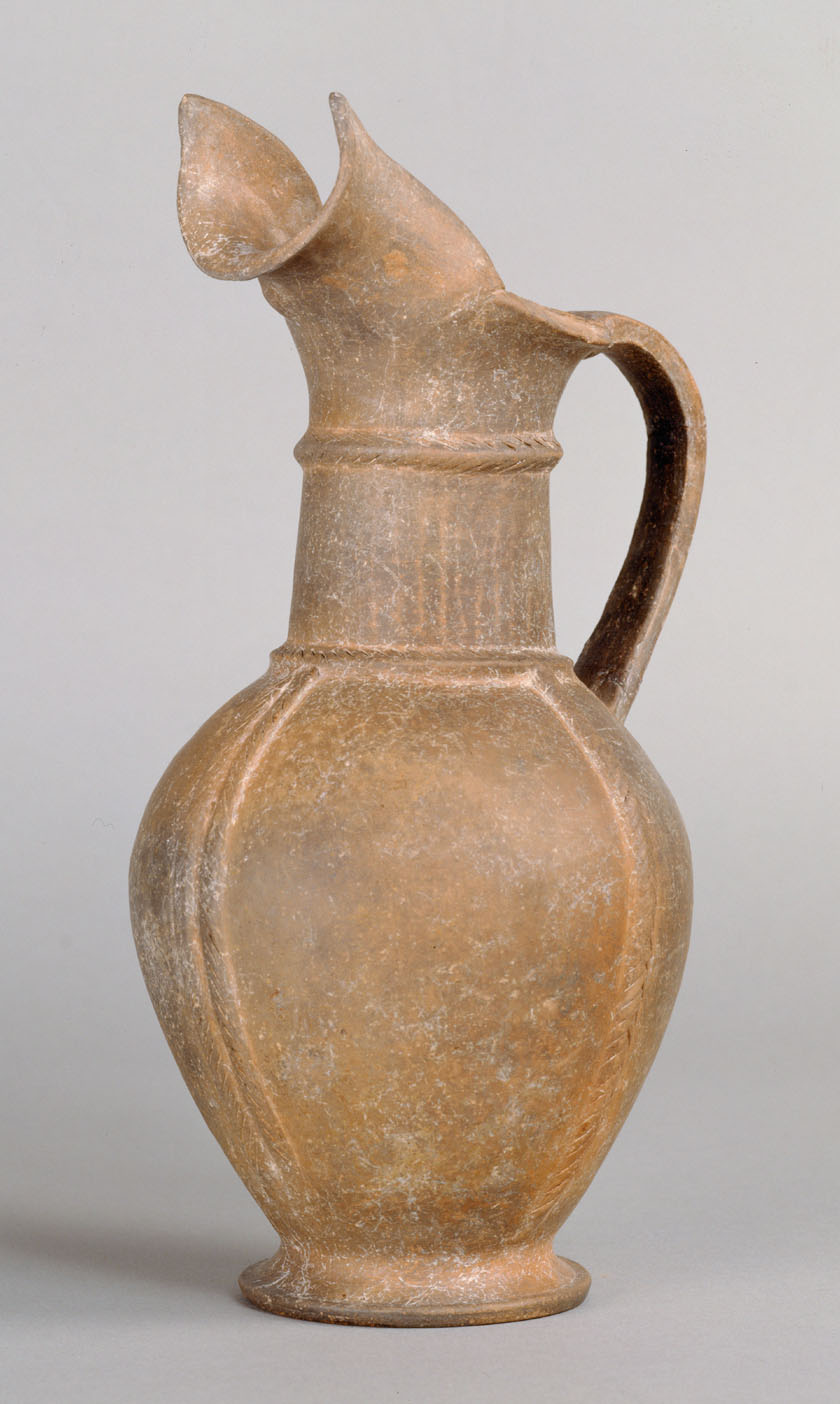
Schnabelkanne der Base-Ring I Ware: Bänder mit Ritzornamenten Zyprisch, Bronzezeit, Spätzyprisch 1625 - 1450 v. Chr.
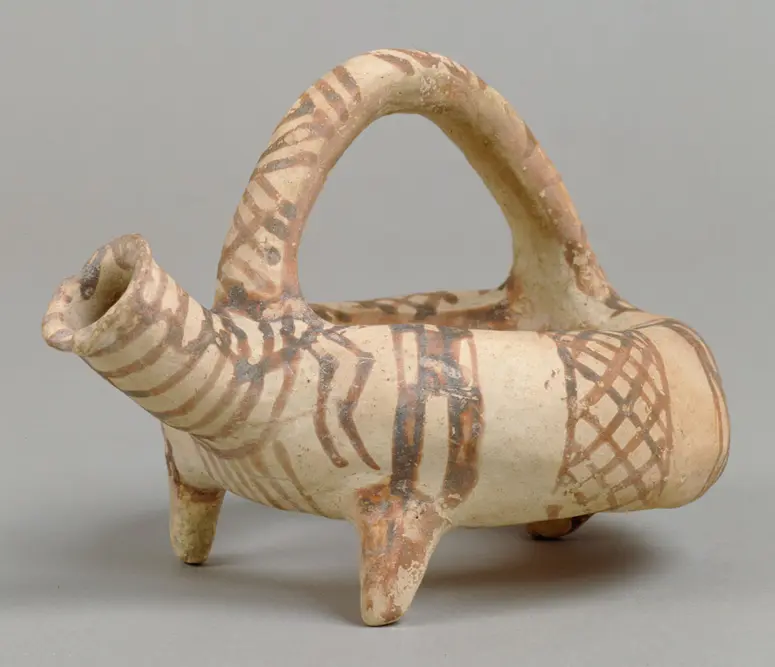
Ringaskos der White Painted III Ware: Liniendekor Zyprisch, Bronzezeit, Mittelzyprisch 1725 - 1625 v. Chr.