Liniendekor
1725 - 1625 v. Chr.
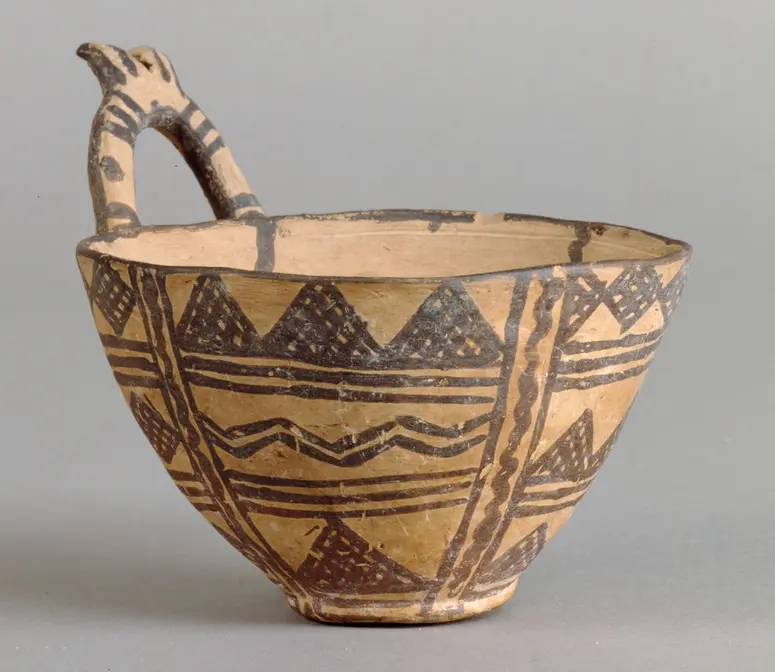
Ring-shaped vessels have been identified in various types of pottery from the Early to the Late Bronze Age, but only few survive. Because of its characteristic painted decoration, the askos found in a tomb in Ayia Paraskevi, is classified as white painted ware III. Horizontal, ring-shaped vessel on three pointed, stump legs; on the front a slanted, tubular spout with a spreading, round mouth; band-shaped basket-handle on the top. On the top and outer sides of the body, the painted decoration consists of alternating vertical fields with lattice patterns and three-rowed checkerboard patterns. To the right of the spout, a vertical double zigzag line; beneath the spout, seven parallel, vertical lines. On the interior and bottom of the body, three broad, horizontal stripes that are cut by five vertical stripes; painted feet. On the spout, six circumambient, parallel, horizontal lines, cut on the top and on each side respectively by one vertical wavy line, on the bottom by two; edge of the mouth outlined. On the top side of the handle, a zigzag band of slanted triple groups of strokes, the narrow side outlined.
A. Bernhard-Walcher u.a., Die Sammlung zyprischer Antiken im KHM. Sammlungskataloge des KHM Bd. 2, Wien 1999
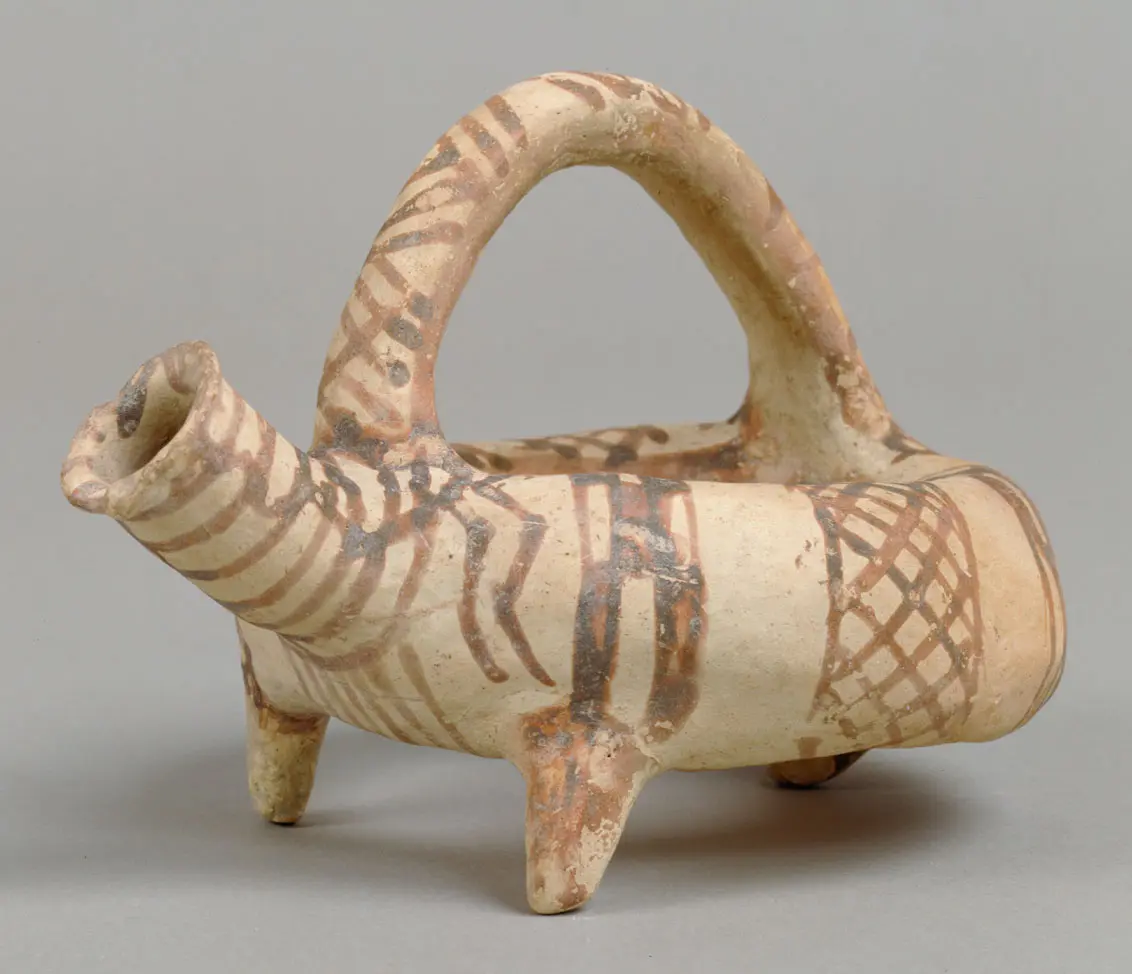
Ring-shaped vessels have been identified in various types of pottery from the Early to the Late Bronze Age, but only few survive. Because of its characteristic painted decoration, the askos found in a tomb in Ayia Paraskevi, is classified as white painted ware III. Horizontal, ring-shaped vessel on three pointed, stump legs; on the front a slanted, tubular spout with a spreading, round mouth; band-shaped basket-handle on the top. On the top and outer sides of the body, the painted decoration consists of alternating vertical fields with lattice patterns and three-rowed checkerboard patterns. To the right of the spout, a vertical double zigzag line; beneath the spout, seven parallel, vertical lines. On the interior and bottom of the body, three broad, horizontal stripes that are cut by five vertical stripes; painted feet. On the spout, six circumambient, parallel, horizontal lines, cut on the top and on each side respectively by one vertical wavy line, on the bottom by two; edge of the mouth outlined. On the top side of the handle, a zigzag band of slanted triple groups of strokes, the narrow side outlined.
A. Bernhard-Walcher u.a., Die Sammlung zyprischer Antiken im KHM. Sammlungskataloge des KHM Bd. 2, Wien 1999
Time:
1725 - 1625 v. Chr.
Object Name
Ringaskos der White Painted III Ware
Culture
Zyprisch
Location of discovery:
Ayia Paraskevi (Nikosia, Zypern)
Material/technology:
Ton lederfarben; Überzug gelblich-weiß, matt; Bemalung rotbraun bis dunkelbraun. Handgeformt.
Dimensions:
H. 10,9 cm, L. 15,7 cm
Copyright
Kunsthistorisches Museum, Antikensammlung
Invs.
Antikensammlung, IV 4424
Provenance
Prähistorische Abteilung/NHM Wien; 1890 Kauf von Max, Ohnefalsch-Richter (Inv. 16.126); 1958 Tausch
Browse more
Similar items you might be interested in
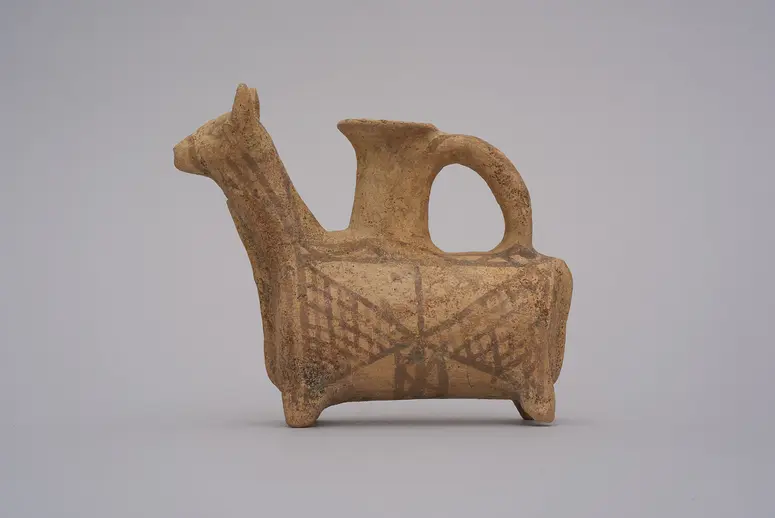
Askos in Stierform der Proto-White Painted Ware: Form eines Stieres Zyprisch, Bronzezeit, Spätzyprisch 1125 - 1050 v. Chr.
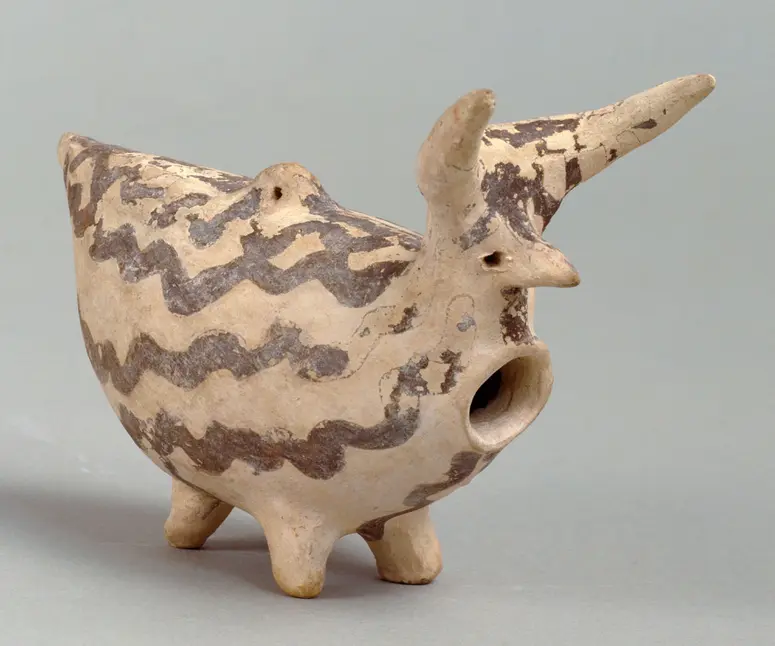
Askos der White Painted Ware: Form eines Stieres Zyprisch, Bronzezeit, Mittelzyprisch 1725 - 1600 v. Chr.
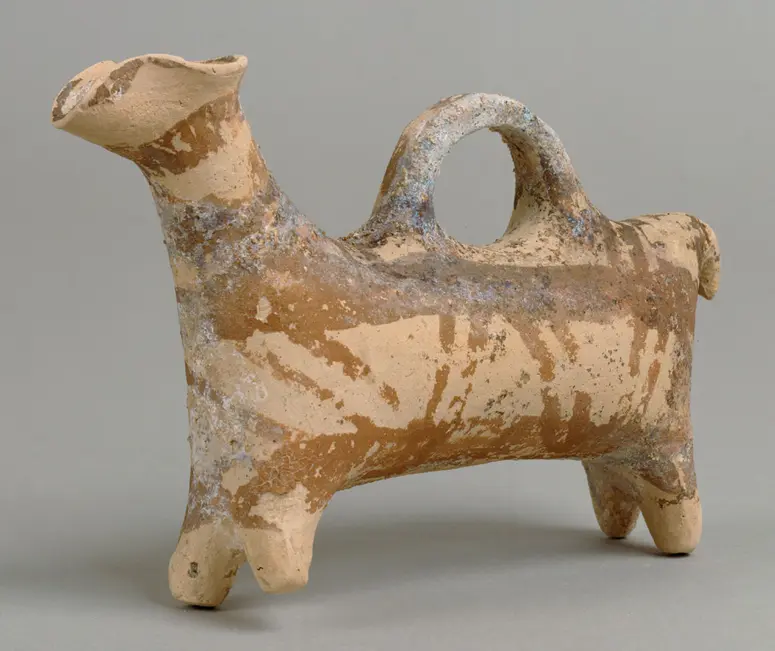
Askos der White Painted V Ware: Form eines Tieres Zyprisch, Bronzezeit, Mittelzyprisch 1725 - 1600 v. Chr.
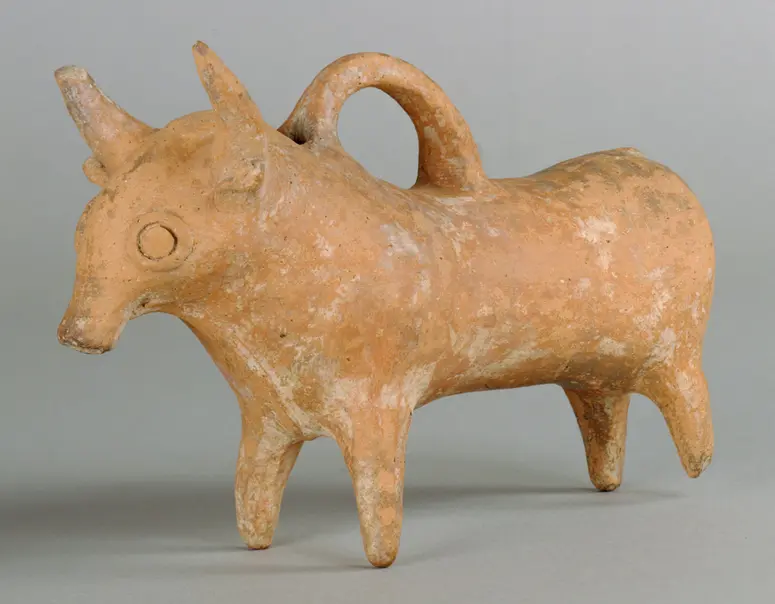
Rhyton der Base-Ring II Ware: Form eines Stieres Zyprisch, Bronzezeit, Spätzyprisch 1450 - 1200 v. Chr.
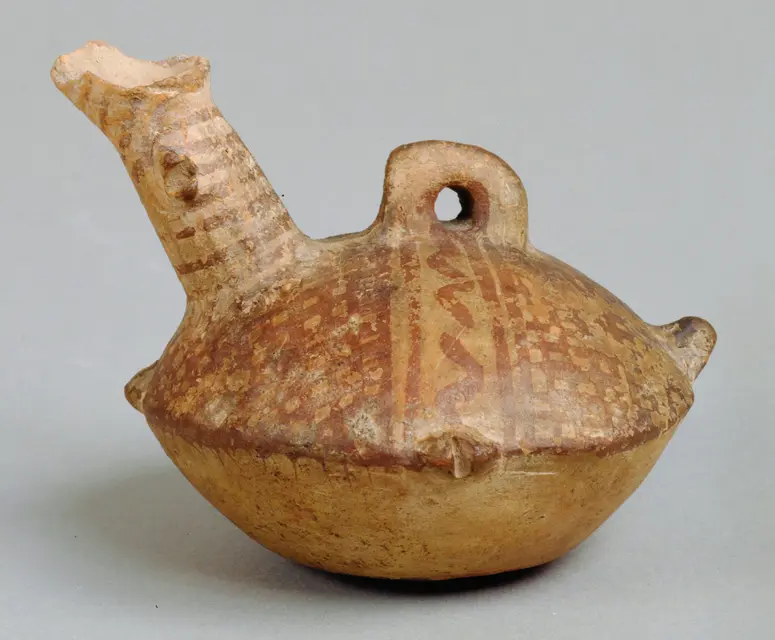
Askos der White Painted Ware III-V: Form eines Vogels Zyprisch, Bronzezeit, Mittelzyprisch 1800 - 1625 v. Chr.
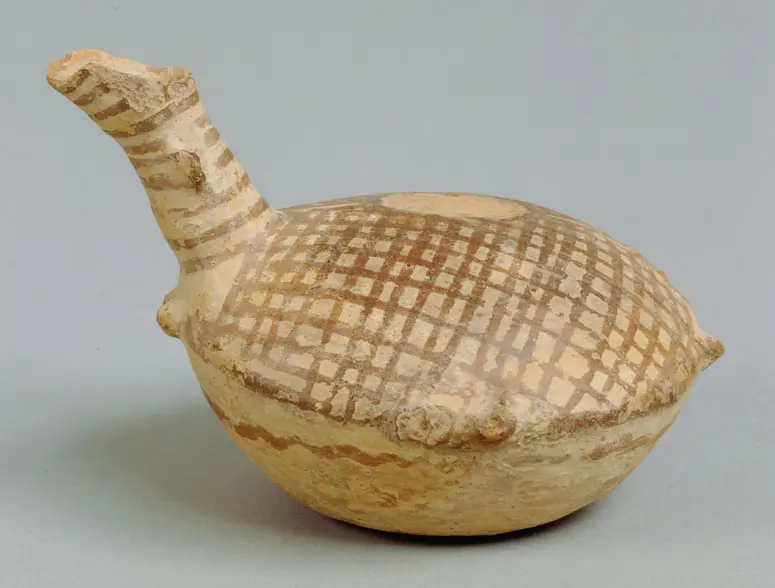
Askos der White Painted Ware: Form eines Vogels Zyprisch, Bronzezeit, Mittelzyprisch 1800 - 1625 v. Chr.
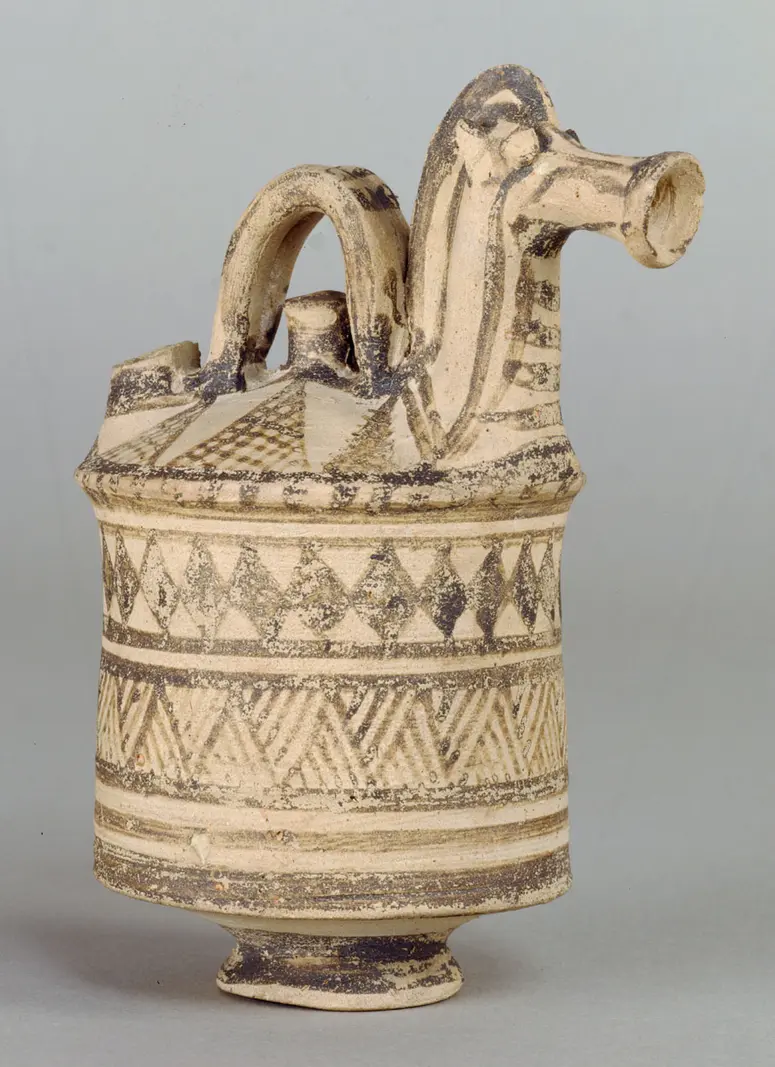
Askos der Proto-White Painted Ware: Pferdekopfprotome Zyprisch, Bronzezeit, Spätzyprisch 1125 - 1050 v. Chr.
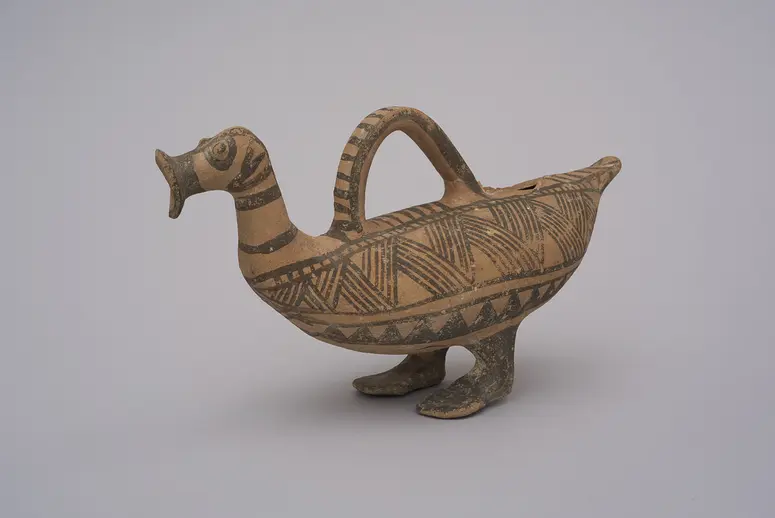
Askos der Proto-White Painted Ware: Form eines Vogels Zyprisch, Bronzezeit, Spätzyprisch 1125 - 1050 v. Chr.
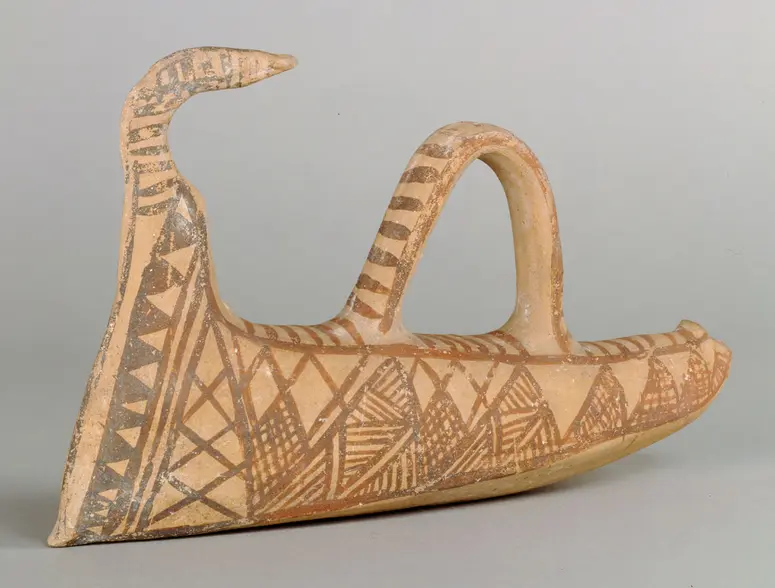
Askos der Proto-White Painted Ware: Form eines Schiffes Zyprisch, Bronzezeit, Spätzyprisch 1125 - 1050 v. Chr.
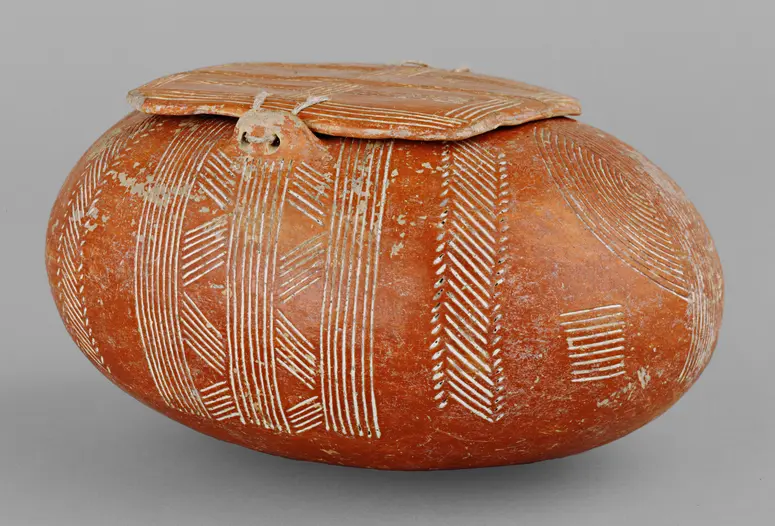
Deckelbüchse (Pyxis) der Red Polished III Ware: Ritzdekor Zyprisch, Bronzezeit, Früh- bis Mittelzyprisch 2000 - 1800 v. Chr.
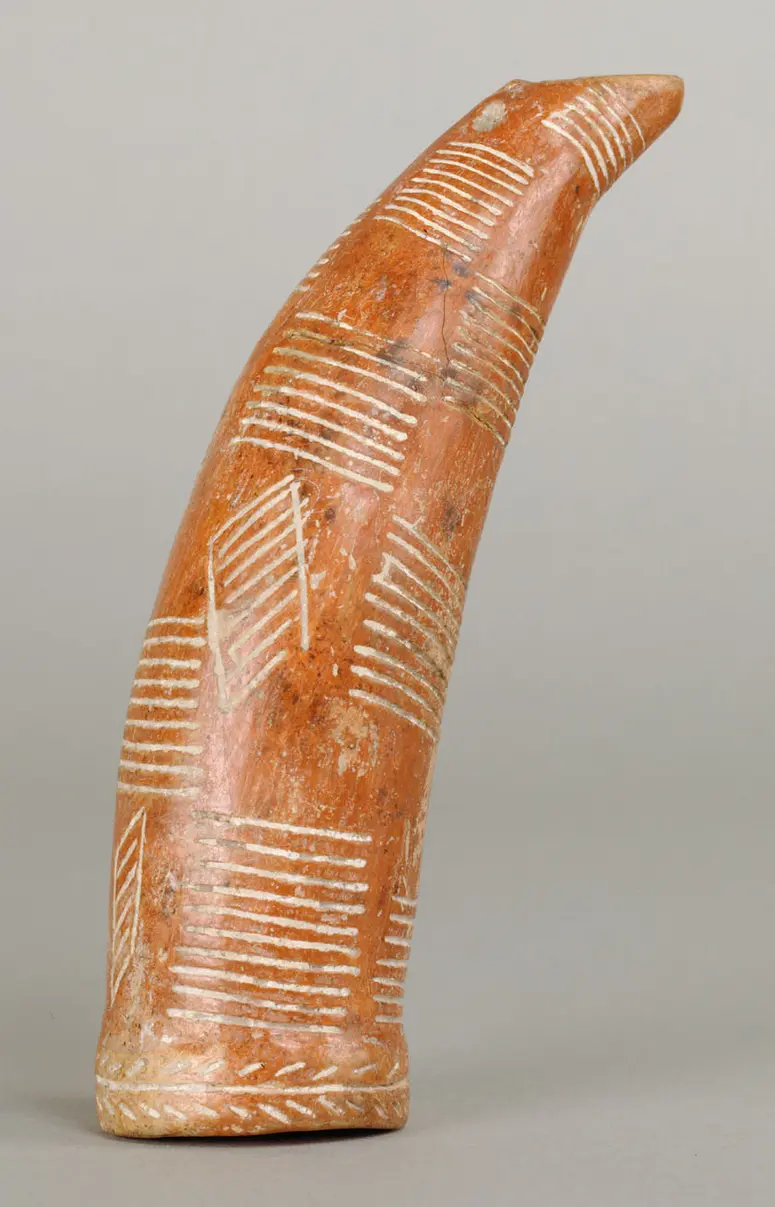
Hornförmiges Gefäß der Red Polished III Ware: Ritzdekor Zyprisch, Bronzezeit, Früh- bis Mittelzyprisch 2000 - 1800 v. Chr.
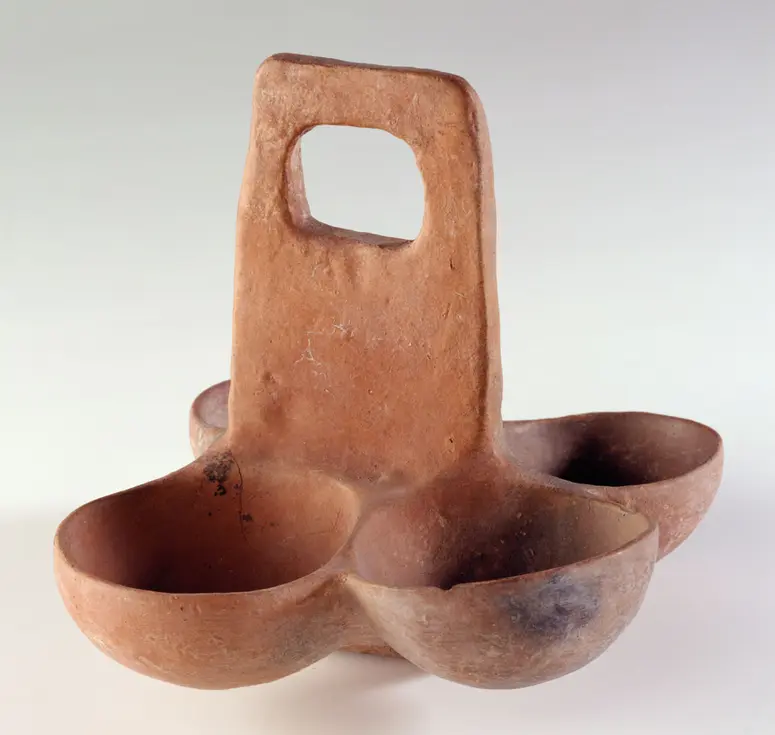
Kompositgefäß der Base-Ring I Ware (?): Halbkugelförmige Schalen Zyprisch, Bronzezeit, Spätzyprisch 1625 - 1450 v. Chr.
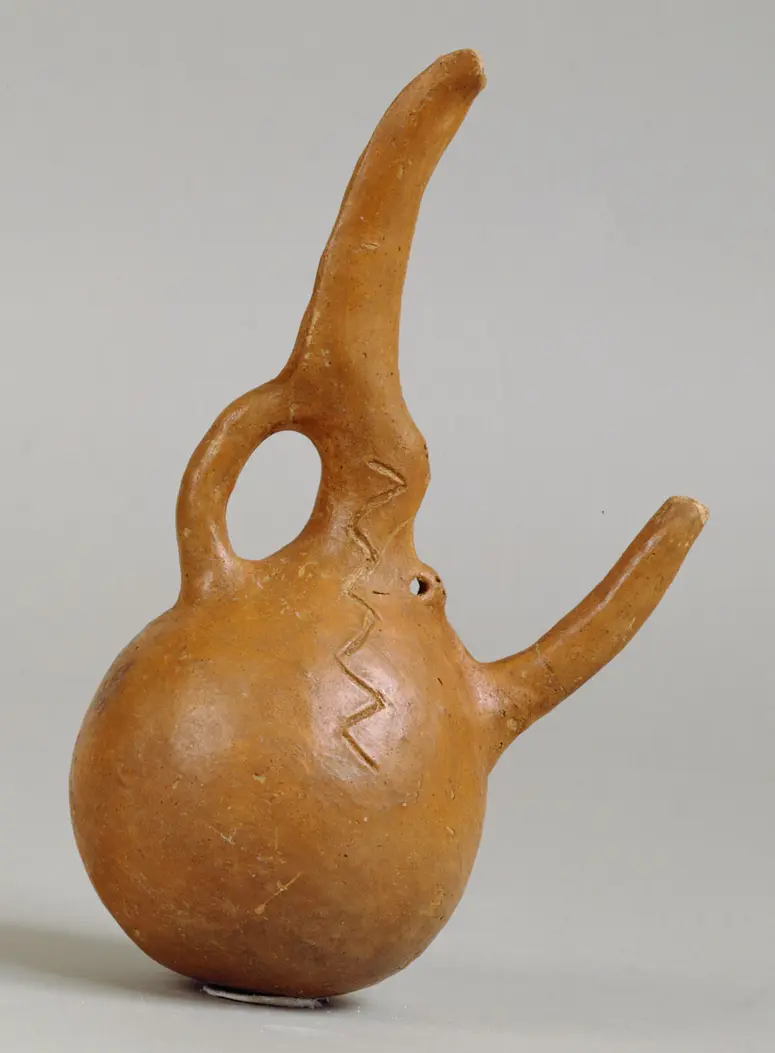
Schnabelkanne der Red Polished III Ware: Ritzdekor Zyprisch, Bronzezeit, Früh- bis Mittelzyprisch 2000 - 1800 v. Chr.
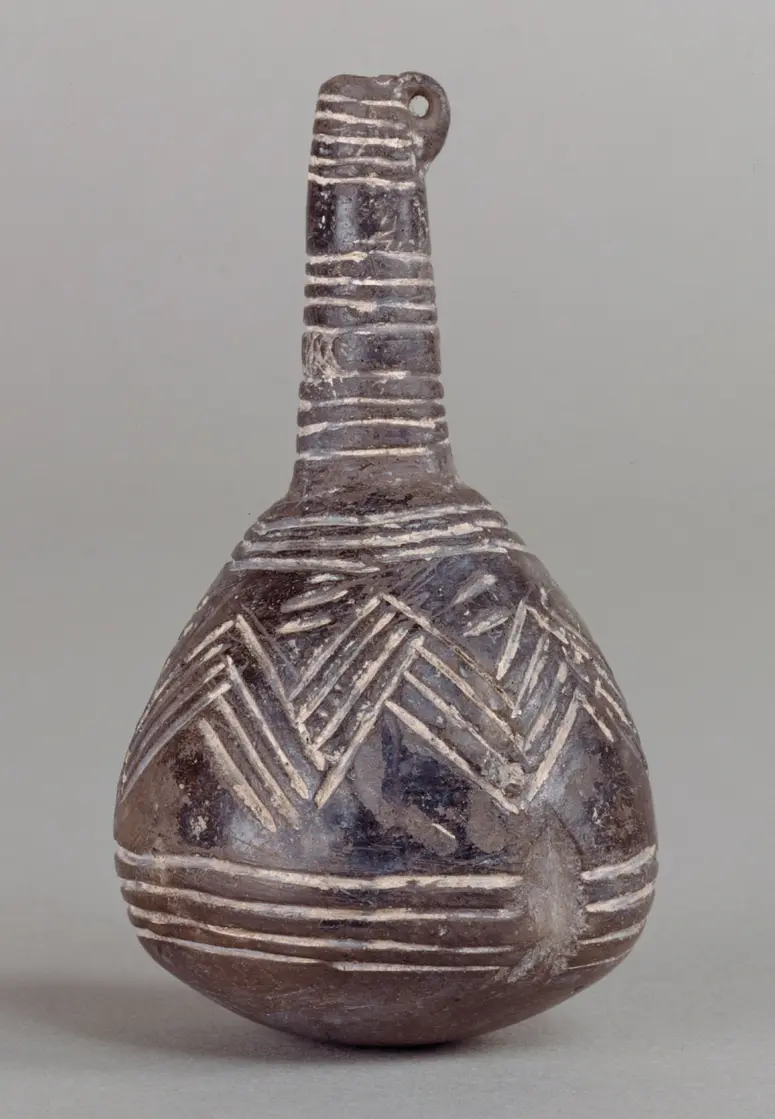
Fläschchen der Black Polished Ware: Ritzdekor Zyprisch, Bronzezeit, Früh- bis Mittelzyprisch 2000 - 1800 v. Chr.
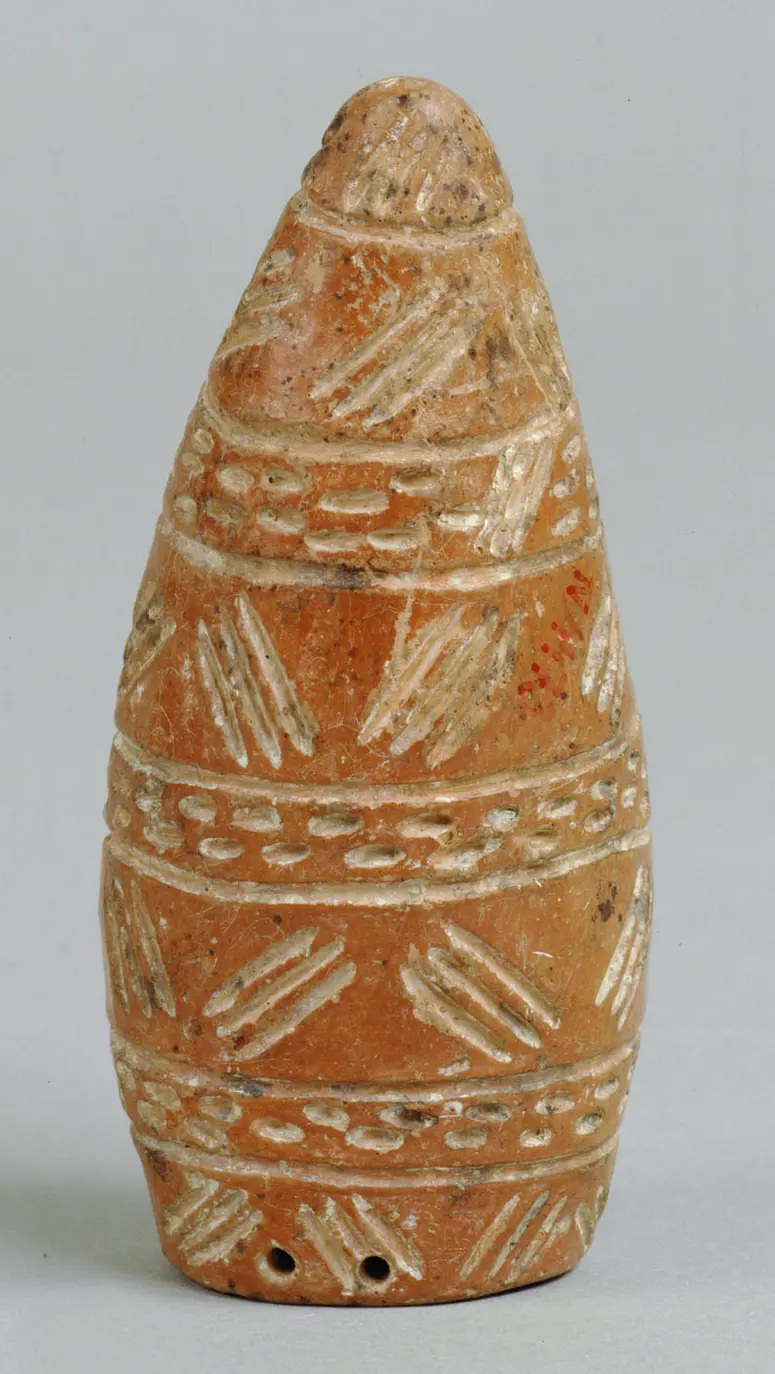
Hornförmiges Gefäß der Red Polished III Ware: Ritzdekor Zyprisch, Bronzezeit, Früh- bis Mittelzyprisch 2000 - 1800 v. Chr.
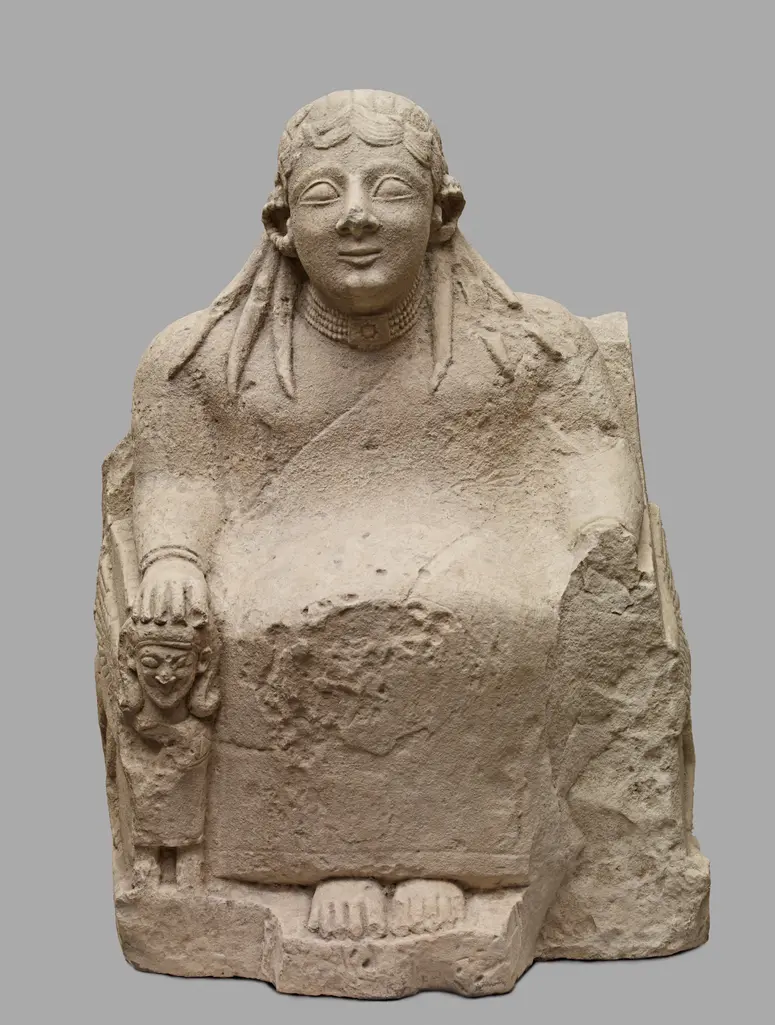
Statuette: Thronende Göttin (Astarte?) Zyprisch, Eisenzeit, archaisch 1. Hälfte 6. Jh. v. Chr.
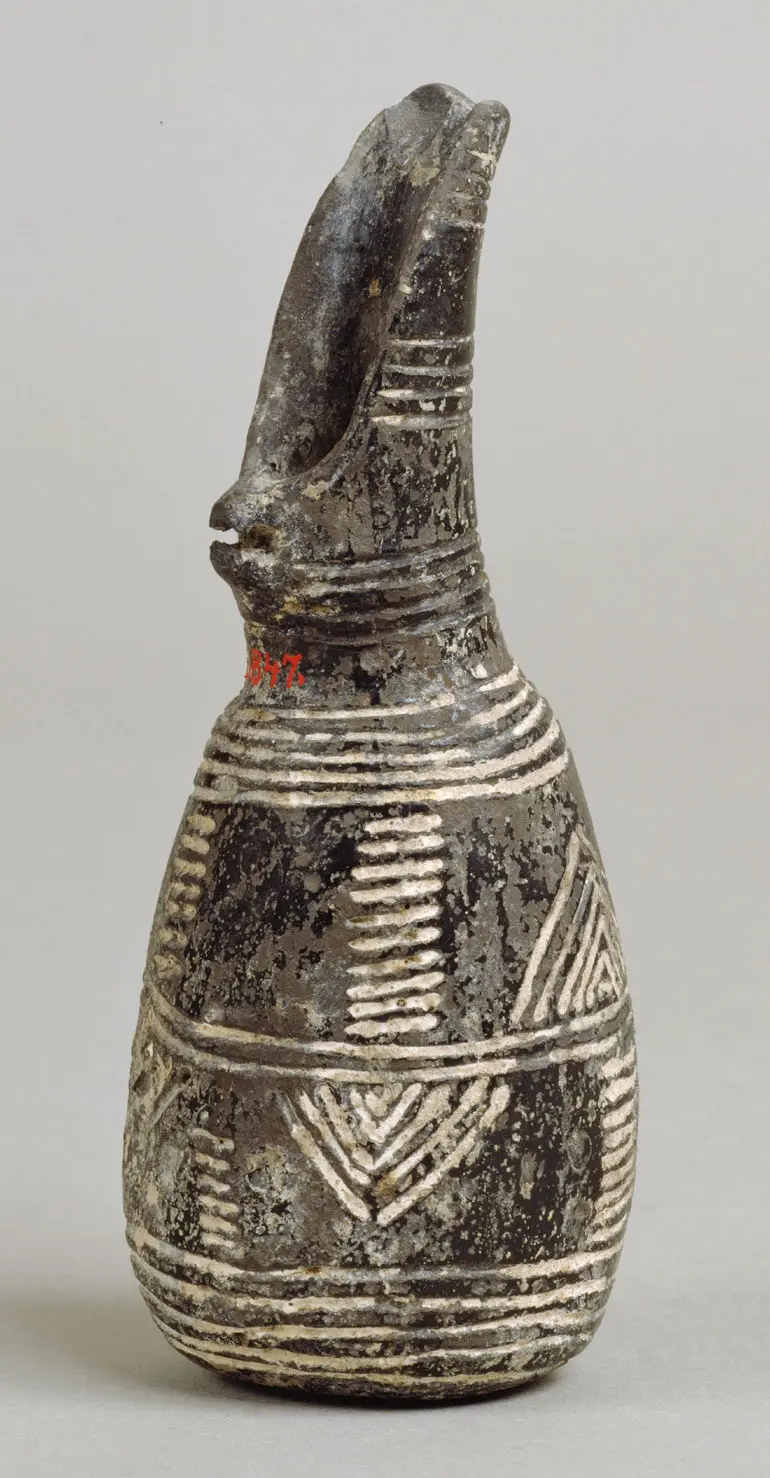
Schnabelkännchen der Black Polished Ware: Ritzdekor Zyprisch, Bronzezeit, Mittelzyprisch 1900 - 1725 v. Chr.
Henkelschale der White Painted Ware: Liniendekor Zyprisch, Bronzezeit, Mittelzyprisch 1725 - 1625 v. Chr.