Votivstatue eines Mannes
550 - 525 v. Chr.
The kouros emerged in the early years of Greek monumental sculpture, around the middle of the 7th century B. C. It portrays an unclothed youth standing with his left leg forward and his arms at his sides. The Cypriot sculptures of this period, like the statue cat. no. 76 found at the shrine of Apollo at Pyla on Cyprus, largely conform to this type in their composition and posture. (On the statue’s history in the 19th century cf. the essay by A. Bernhard-Walcher in the present catalogue.) However, other influences are also manifest in Cypriot sculpture, resulting from the island’s turbulent history: in the 7th century B. C. it was under Assyrian, in the 6th century under Egyptian and later under Persian hegemony. Like some kouroi from eastern Ionia -- from Samos, Pergamum and Miletus -- the Cypriot statues are almost invariably clothed in accordance with Oriental convention. Their attire is reminiscent of the diagonally worn cape which, originating in eastern Ionia in the middle of the 6th century, is worn by the late-archaic Greek korai.The kouroi were erected as votive offerings at shrines or as heroic portrayals of the deceased on graves. This larger-than-life statue was unearthed at a shrine to Apollo and will have been donated as a votive offering.The Greek kouroi are depicted as beardless, an indication of the figure’s youthfulness. The statue from Pyla, on the other hand, has a prominent beard made up of stylized curls deriving from Assyrian models. The figure also has a delicate moustache in the form of several plastic horizontal strips. The hair is curled over the forehead and at the back falls thickly to low on the back in the manner of a wig. Here, however, is it only crudely elaborated, like the back of the statue as a whole. Behind the ears, which are located far back and too high up, three locks of hair are draped over the shoulders and hang down over the chest. The regular recessed waves, resembling indentations in clay, are intended to suggest plaits. A wreath of leaves is woven into the hair, the adversifoliate leaves changing direction over the middle of the forehead.The principal features of the radiant face are the large, almond-shaped eyes with their raised eyebrows, the prominent (partially restored) nose and the mouth. The lips and the slight upward curl of the corners of the mouth evoke a restrained smile. The figure is of sturdy stature with broad shoulders, a very powerful chest and strong arm and leg muscles. A notable feature is the kneecap of the left leg, depicted as a lentiform indentation somewhat reminiscent of an eye. The coat was originally red (there are traces of paint above the right thigh). It leaves the right half of the chest and the left side of the body exposed. Originally there would probably have been a painted, tight-fitting undergarment beneath the coat (cf. cat. no. 77). The coat is fastened at the left shoulder and encloses the torso in curving folds. A length of fabric pleated several times hangs from the left shoulder in stepped zigzag folds.
The strictly frontal aspect, the homogeneity of the silhouette with the lowered, slightly angled arms and the clenched fists, and the one extended leg all suggest that these kouroi were influenced by Egyptian sculptures. This influence was evident even in ancient times. Writing in the 1st century AD, Diodorus (I,98,9) described a sculpture of Apollo Pythios in the kouros style on Samos as “similar to Egyptian works.” However, whereas the Egyptian sculptors left their figures attached to the stone of the block from which they were fashioned, the Greek sculptors always detached their figures from the rear column of stone. And in Egypt the form, once it had emerged, was retained, while in the context of Greek culture the archaic kouros evolved over a period of 150 years into the early classical depiction of the young man. In Cyprus (and in much the same way in Etruria) the process occurred more slowly and less consistently. Thus, this votive statue, dating from the threshold to the 5th century, still has a distinctly archaic feel about it, with the incomplete separation of the lower legs -- reminiscent of Egyptian statues -- a notable feature.A. Bernhard-Walcher u. a., Die Sammlung zyprischer Antiken im KHM. Sammlungskataloge des KHM Bd. 2, Wien: 1999
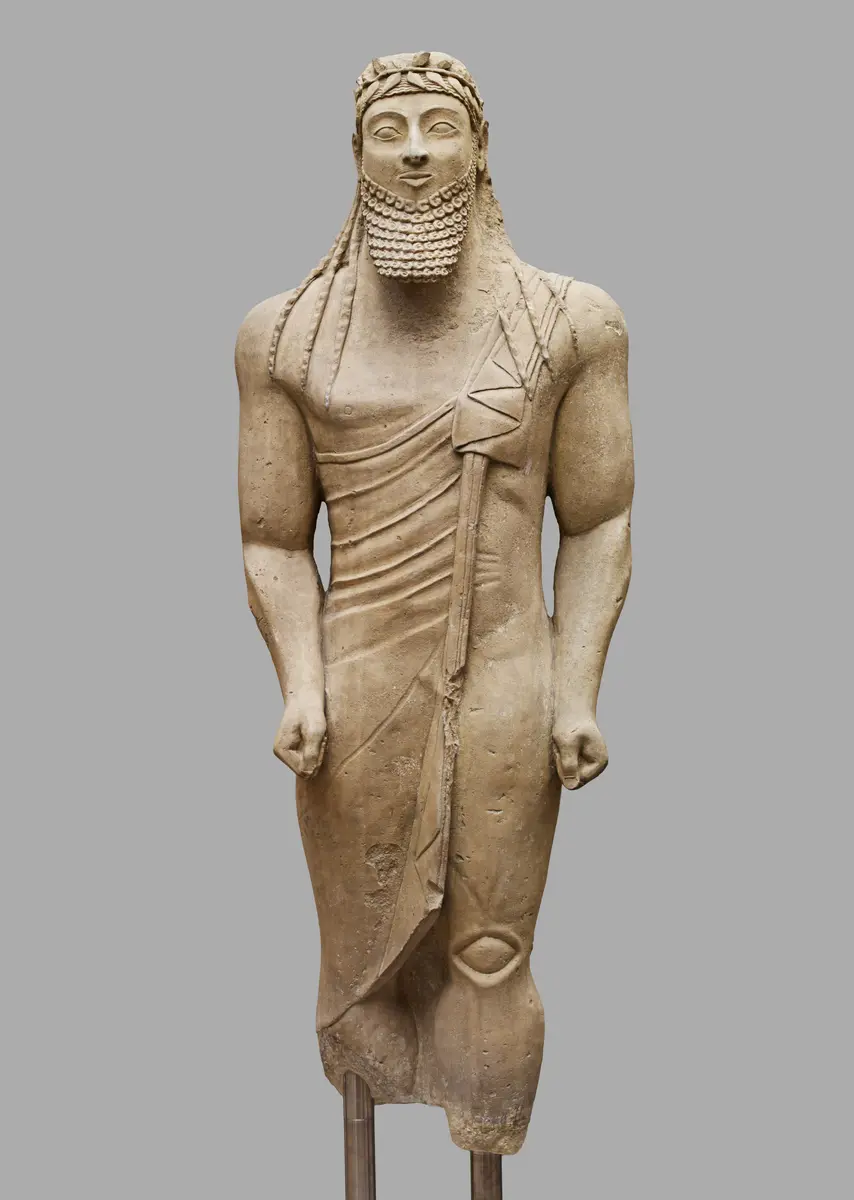
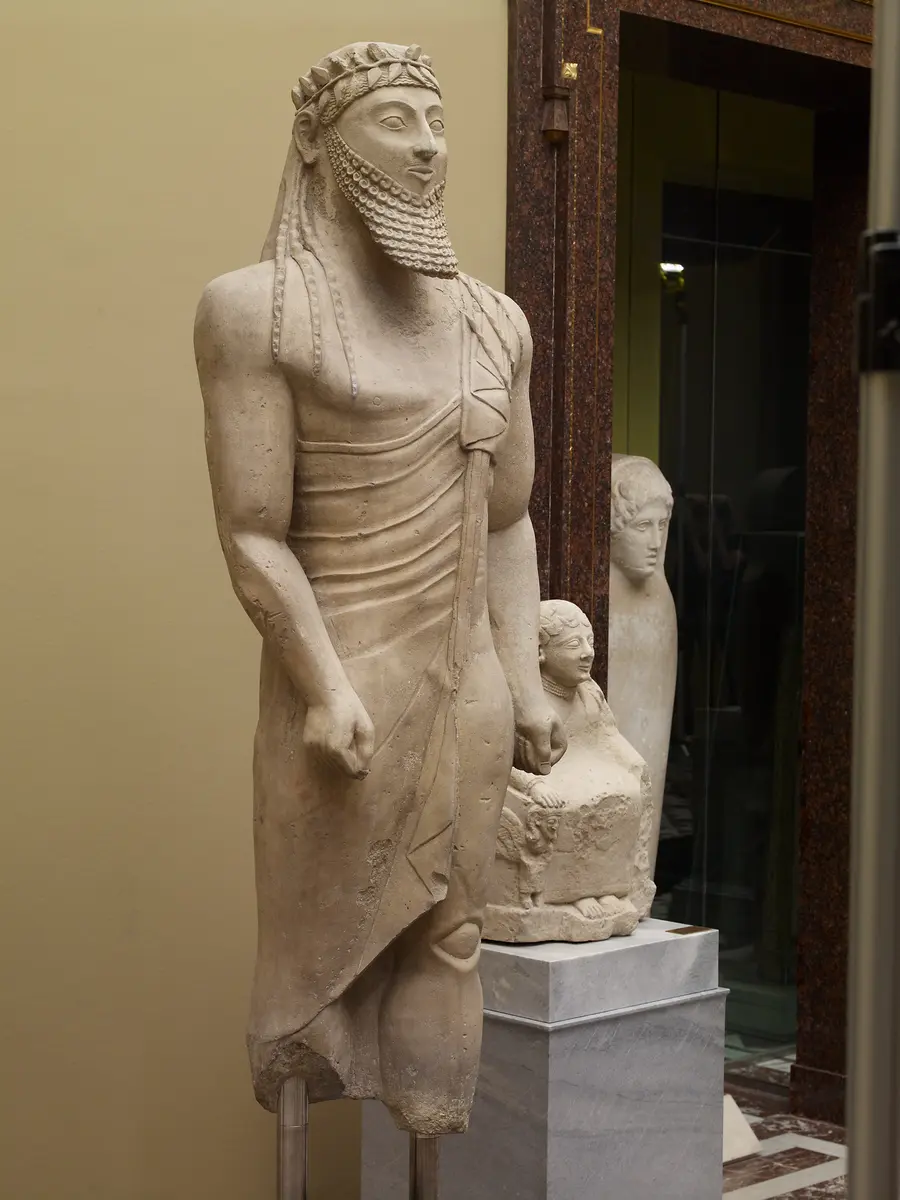
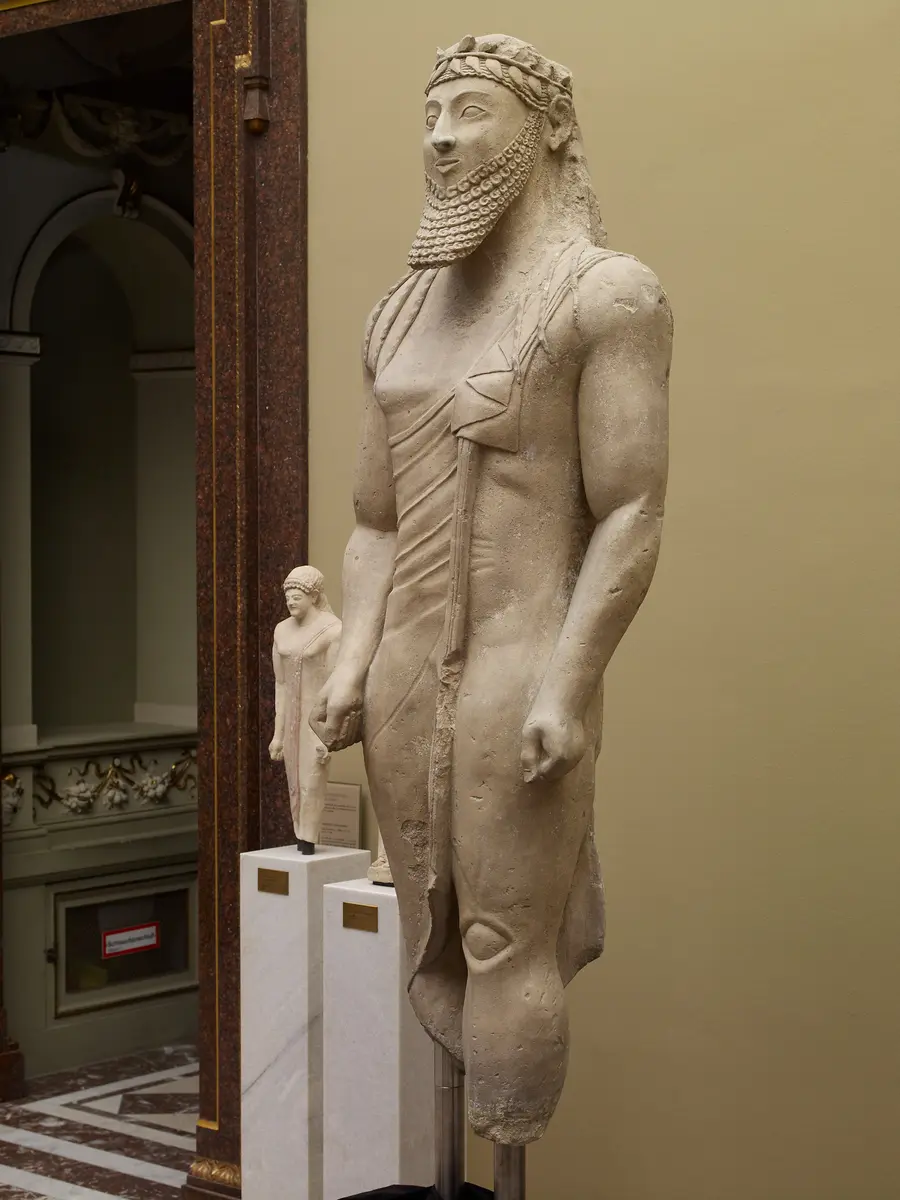
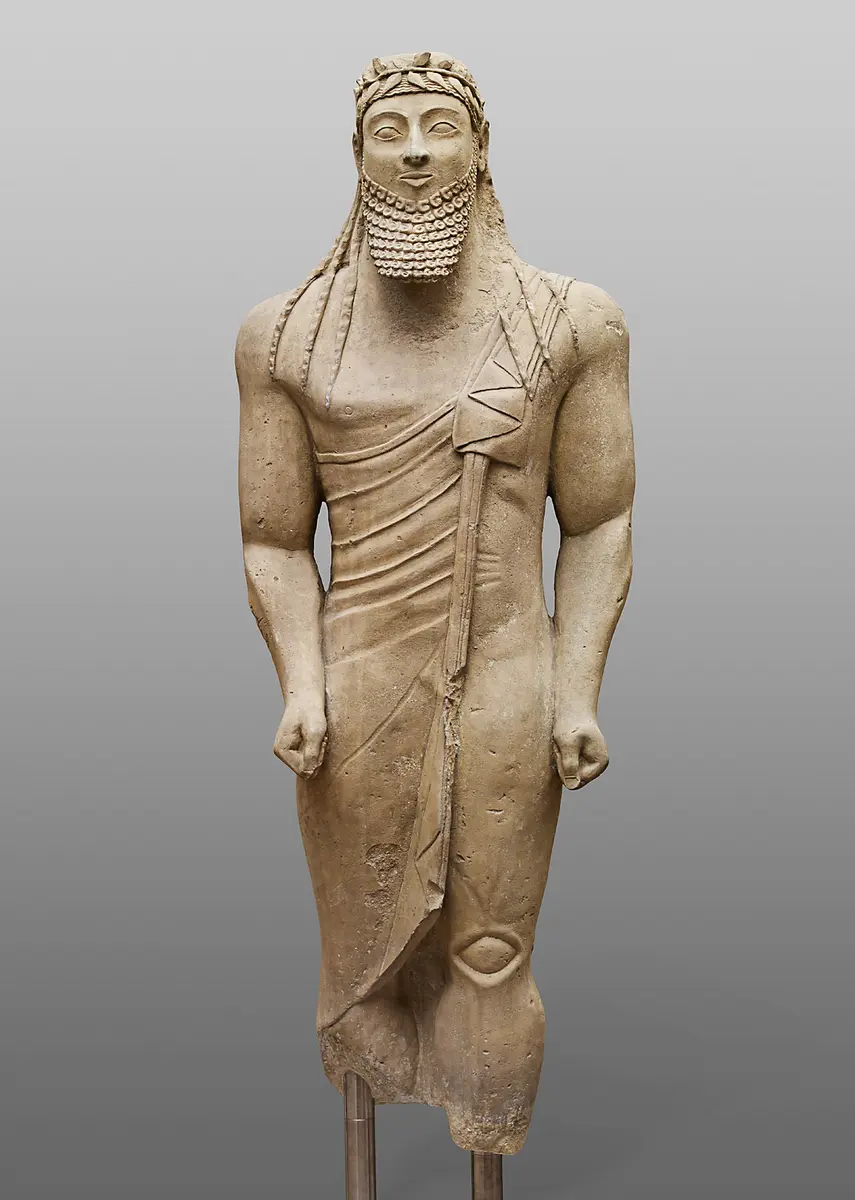
The kouros emerged in the early years of Greek monumental sculpture, around the middle of the 7th century B. C. It portrays an unclothed youth standing with his left leg forward and his arms at his sides. The Cypriot sculptures of this period, like the statue cat. no. 76 found at the shrine of Apollo at Pyla on Cyprus, largely conform to this type in their composition and posture. (On the statue’s history in the 19th century cf. the essay by A. Bernhard-Walcher in the present catalogue.) However, other influences are also manifest in Cypriot sculpture, resulting from the island’s turbulent history: in the 7th century B. C. it was under Assyrian, in the 6th century under Egyptian and later under Persian hegemony. Like some kouroi from eastern Ionia -- from Samos, Pergamum and Miletus -- the Cypriot statues are almost invariably clothed in accordance with Oriental convention. Their attire is reminiscent of the diagonally worn cape which, originating in eastern Ionia in the middle of the 6th century, is worn by the late-archaic Greek korai.The kouroi were erected as votive offerings at shrines or as heroic portrayals of the deceased on graves. This larger-than-life statue was unearthed at a shrine to Apollo and will have been donated as a votive offering.The Greek kouroi are depicted as beardless, an indication of the figure’s youthfulness. The statue from Pyla, on the other hand, has a prominent beard made up of stylized curls deriving from Assyrian models. The figure also has a delicate moustache in the form of several plastic horizontal strips. The hair is curled over the forehead and at the back falls thickly to low on the back in the manner of a wig. Here, however, is it only crudely elaborated, like the back of the statue as a whole. Behind the ears, which are located far back and too high up, three locks of hair are draped over the shoulders and hang down over the chest. The regular recessed waves, resembling indentations in clay, are intended to suggest plaits. A wreath of leaves is woven into the hair, the adversifoliate leaves changing direction over the middle of the forehead.The principal features of the radiant face are the large, almond-shaped eyes with their raised eyebrows, the prominent (partially restored) nose and the mouth. The lips and the slight upward curl of the corners of the mouth evoke a restrained smile. The figure is of sturdy stature with broad shoulders, a very powerful chest and strong arm and leg muscles. A notable feature is the kneecap of the left leg, depicted as a lentiform indentation somewhat reminiscent of an eye. The coat was originally red (there are traces of paint above the right thigh). It leaves the right half of the chest and the left side of the body exposed. Originally there would probably have been a painted, tight-fitting undergarment beneath the coat (cf. cat. no. 77). The coat is fastened at the left shoulder and encloses the torso in curving folds. A length of fabric pleated several times hangs from the left shoulder in stepped zigzag folds.
The strictly frontal aspect, the homogeneity of the silhouette with the lowered, slightly angled arms and the clenched fists, and the one extended leg all suggest that these kouroi were influenced by Egyptian sculptures. This influence was evident even in ancient times. Writing in the 1st century AD, Diodorus (I,98,9) described a sculpture of Apollo Pythios in the kouros style on Samos as “similar to Egyptian works.” However, whereas the Egyptian sculptors left their figures attached to the stone of the block from which they were fashioned, the Greek sculptors always detached their figures from the rear column of stone. And in Egypt the form, once it had emerged, was retained, while in the context of Greek culture the archaic kouros evolved over a period of 150 years into the early classical depiction of the young man. In Cyprus (and in much the same way in Etruria) the process occurred more slowly and less consistently. Thus, this votive statue, dating from the threshold to the 5th century, still has a distinctly archaic feel about it, with the incomplete separation of the lower legs -- reminiscent of Egyptian statues -- a notable feature.A. Bernhard-Walcher u. a., Die Sammlung zyprischer Antiken im KHM. Sammlungskataloge des KHM Bd. 2, Wien: 1999
Time:
550 - 525 v. Chr.
Culture
Zyprisch
Location of discovery:
Pyla (Zypern)
Material/technology:
Kalkstein; Reste von Bemalung
Dimensions:
H. 201 cm
Copyright
Kunsthistorisches Museum, Antikensammlung
Invs.
Antikensammlung, I 341
Provenance
Lang, Sir Robert H.; Millosicz, Georg von, Wien; 1872 Kauf
Browse more
Similar items you might be interested in


Wanddekoration, Relief, Einlegearbeit, Korallenmosaik 1. Hälfte 17. Jahrhundert
Wanddekoration, Platte, Teller, Einlegearbeit, Korallenmosaik 1. Hälfte 17. Jahrhundert
Aufsatz, Schnitzarbeit, Filigranarbeit, Heiliges Grab 2. Hälfte 16. Jahrhundert
Statuette, Kleinbronze, Bronze, Venus marina Nicolo Roccatagliata Ende 16. Jahrhundert

Inschrift: Türsturz mit Abgaros-Inschrift Frühchristlich, Spätantike 5. - 6. Jh. n. Chr.
Bildnis eines behinderten Mannes Deutsch 2. Hälfte 16. Jahrhundert
Aufsatz, Mikroschnitzerei, Drechselarbeit, Holzarbeit 2. Hälfte 16. Jahrhundert
Relief, Domitian, römischer Kaiser, Imperator 2. Hälfte 16. Jahrhundert
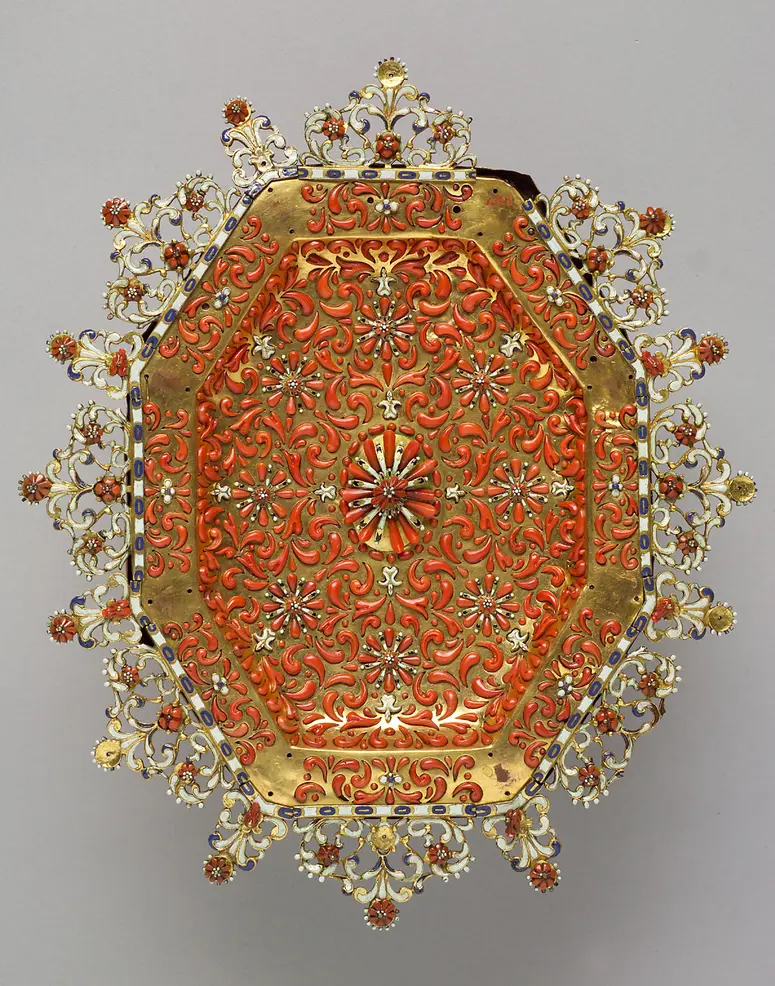
Gefäß, Teller, Platte, Korallenmosaik, Einlegearbeit Ende 16. Jahrhundert / Anfang 17. Jahrhundert
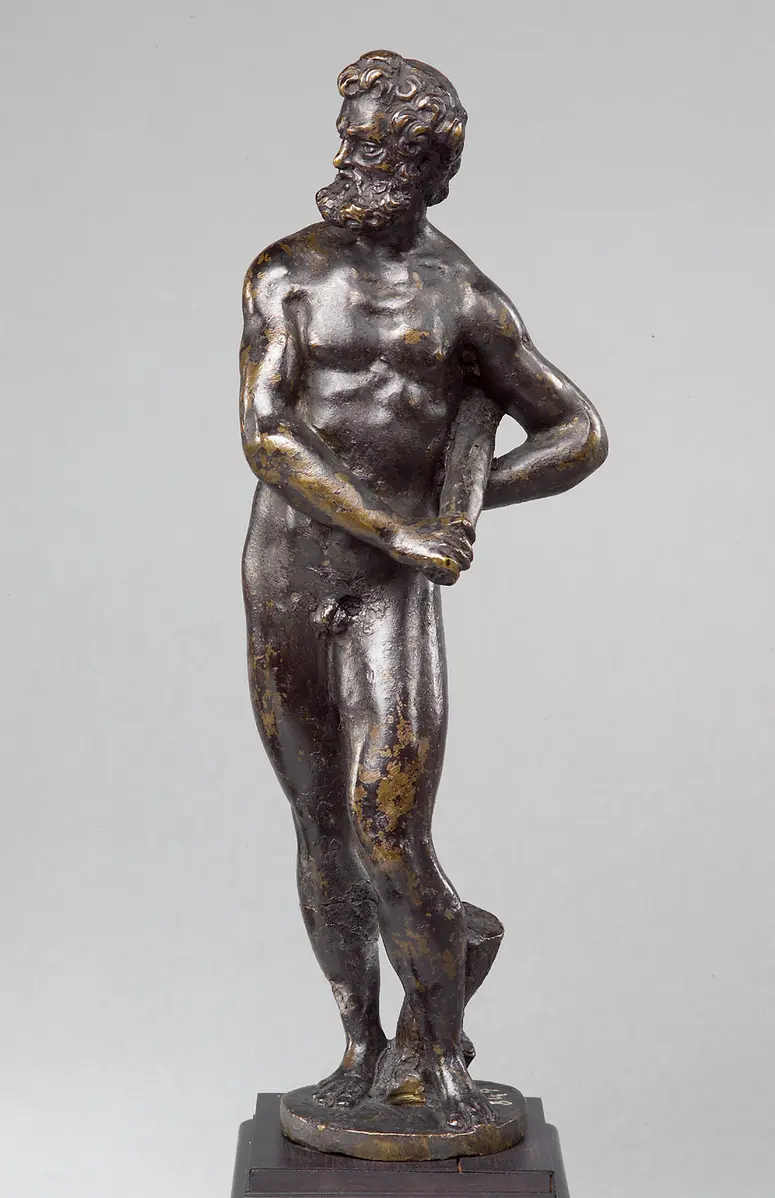
Statuette, Kleinbronze, Herkules, Herakles Nicolo Roccatagliata Ende 16. Jahrhundert / Anfang 17. Jahrhundert
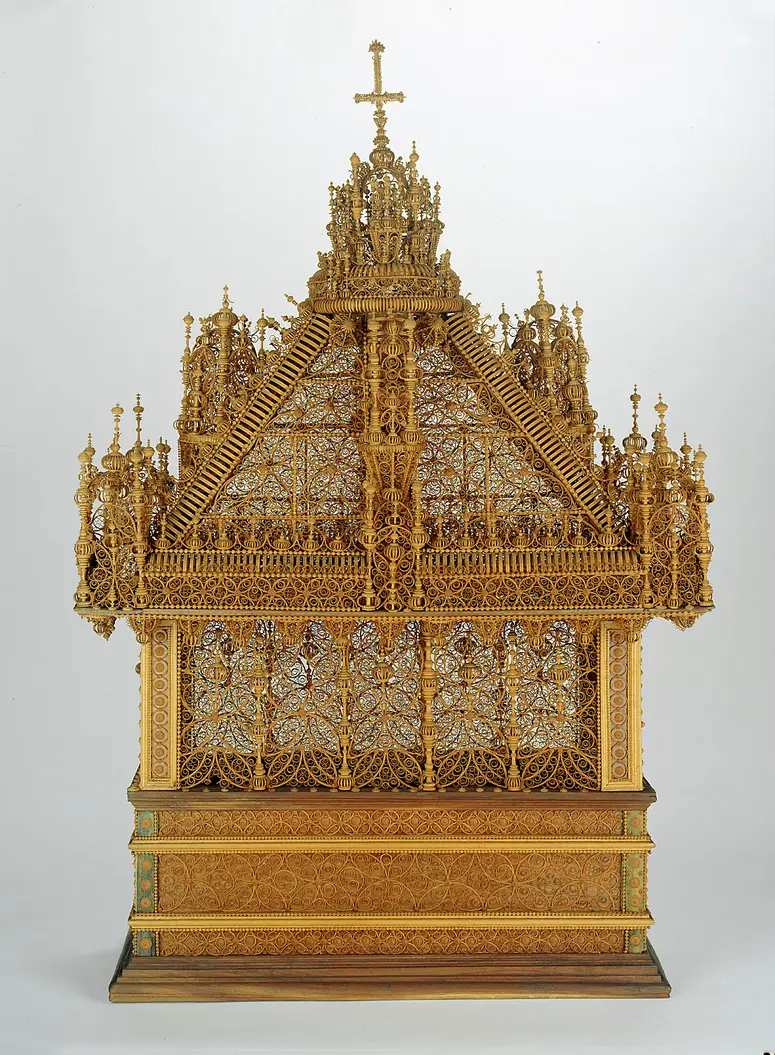
Heiliges Grab, Mikroschnitzerei, Schnitzerei, Holzarbeit 2. Hälfte 16. Jahrhundert
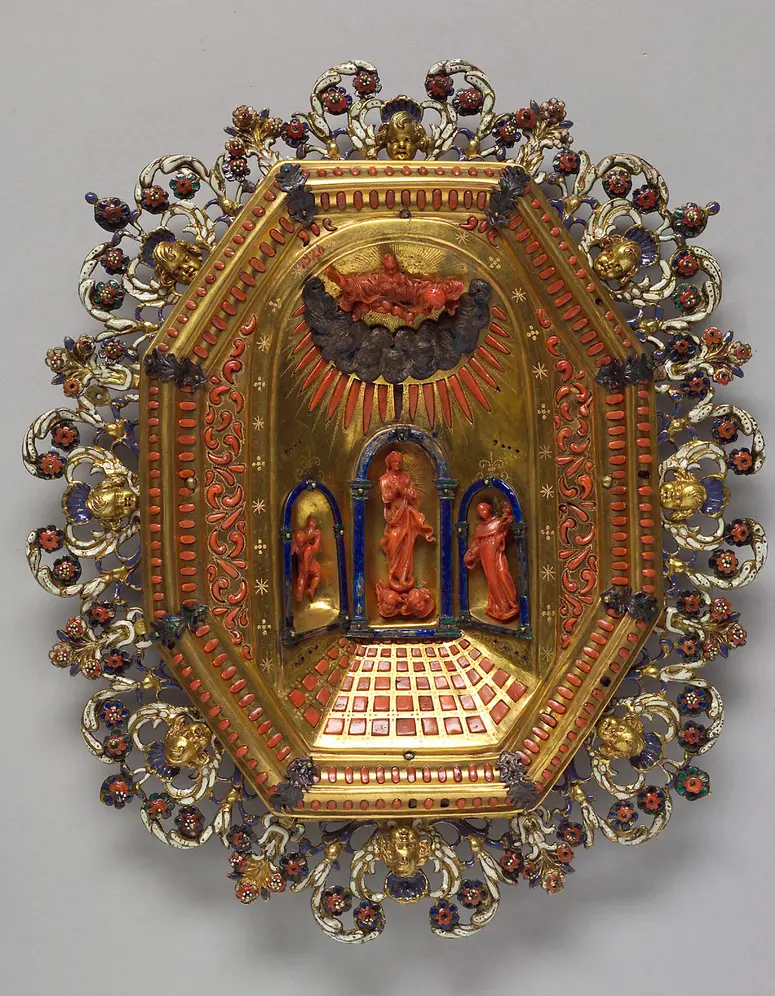
Wanddekoration mit der Darstellung Mariae Empfängnis, Platte, Teller, Einlegearbeit um 1650
