Werkzeugkasten, Gerät, Werkzeug
16. Jahrhundert
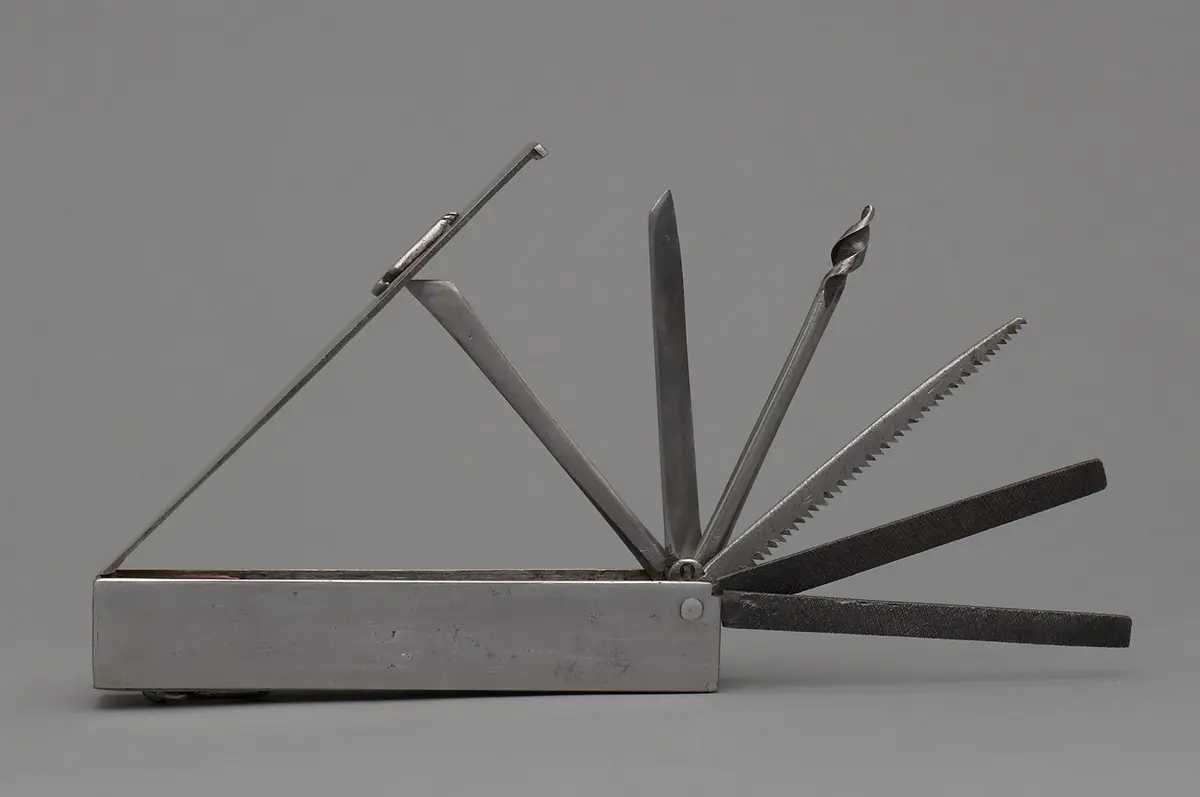
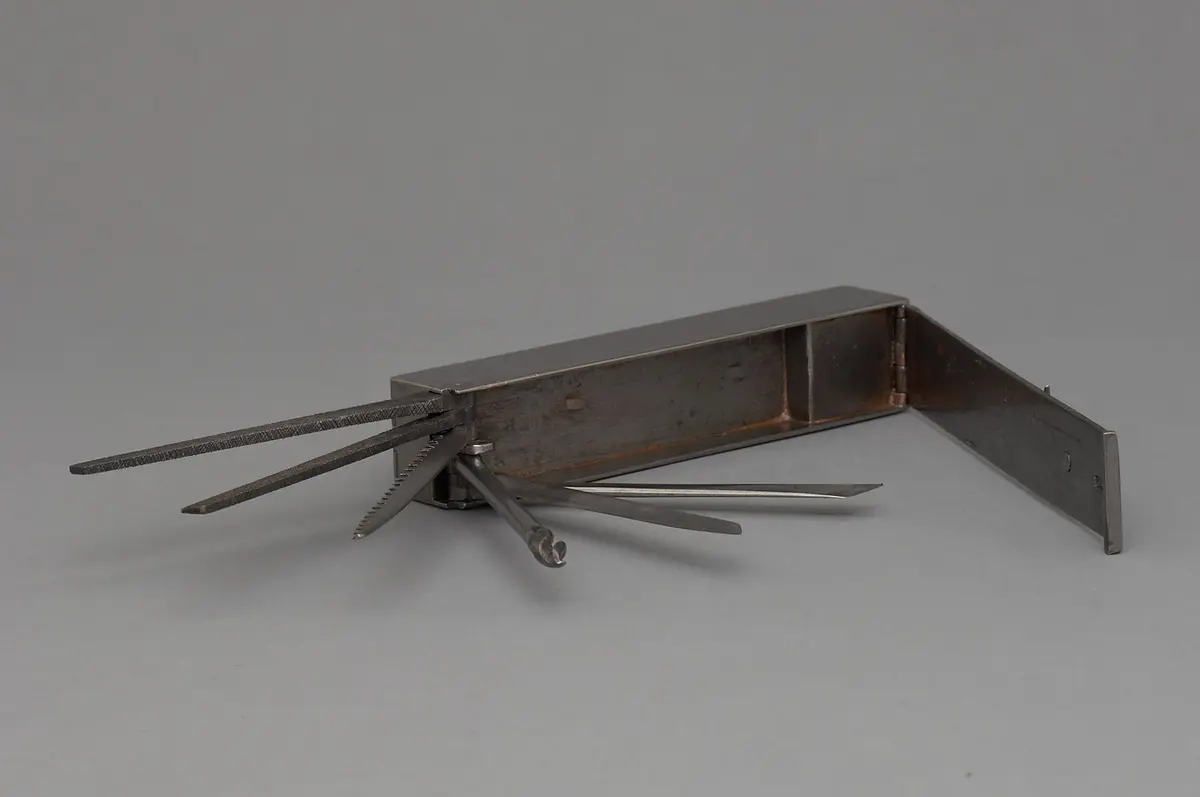
In 16th century Kunstkammer, tools occupy a special position between functional and decorative forms. Far beyond their practical usability, they served as evidence of original functionality and testified to the pedagogical aspect of instruction in a craft. This toolbox comes from Archduke Ferdinand II's Kunstkammer and was kept in the seventh showcase ("darinnen allerlei eisenwerch"/ "all kinds of ironwork inside"), where it is described as "A viereggetes gannzes Eisen, Darynn dergleichen auch feilen Porer unnd Sagen".The toolbox impresses with its simple design and sophisticated functions. In addition, the universal instrument is in no way inferior to today's modern multi-tools. It consists of a cuboid box with a lid that can be opened on both sides and closed with a hook. Inside there are two knives, a saw, a drill and two files. The lower part is divided into three compartments, which originally contained writing utensils. It could also be used to store tinder and flints, which could be used to light fires on the files forged from hardened iron. Comparable tools, albeit much more elaborately decorated with etching, come from the Staatliche Kunstsammlungen in Dresden.
In 16th century Kunstkammer, tools occupy a special position between functional and decorative forms. Far beyond their practical usability, they served as evidence of original functionality and testified to the pedagogical aspect of instruction in a craft. This toolbox comes from Archduke Ferdinand II's Kunstkammer and was kept in the seventh showcase ("darinnen allerlei eisenwerch"/ "all kinds of ironwork inside"), where it is described as "A viereggetes gannzes Eisen, Darynn dergleichen auch feilen Porer unnd Sagen".The toolbox impresses with its simple design and sophisticated functions. In addition, the universal instrument is in no way inferior to today's modern multi-tools. It consists of a cuboid box with a lid that can be opened on both sides and closed with a hook. Inside there are two knives, a saw, a drill and two files. The lower part is divided into three compartments, which originally contained writing utensils. It could also be used to store tinder and flints, which could be used to light fires on the files forged from hardened iron. Comparable tools, albeit much more elaborately decorated with etching, come from the Staatliche Kunstsammlungen in Dresden.
Time:
16. Jahrhundert
Object Name
Werkzeugkasten, Gerät, Werkzeug
Culture
Deutsch (Tirol?)
Material/technology:
Eisen
Dimensions:
Kästchen: H. 2,6 cm × B. 3 cm × L. 15 cm
Copyright
Schloss Ambras Innsbruck
Invs.
Schloss Ambras Innsbruck, PA 337
Provenance
Nachlassinventar Erzherzog Ferdinands II. von 1596 (nach KK 6652), fol. 447v: "Ain viereggetes gannzes Eisen, Darynn dergleichen auch feilen Porer unnd Sagen"
Browse more
Similar items you might be interested in
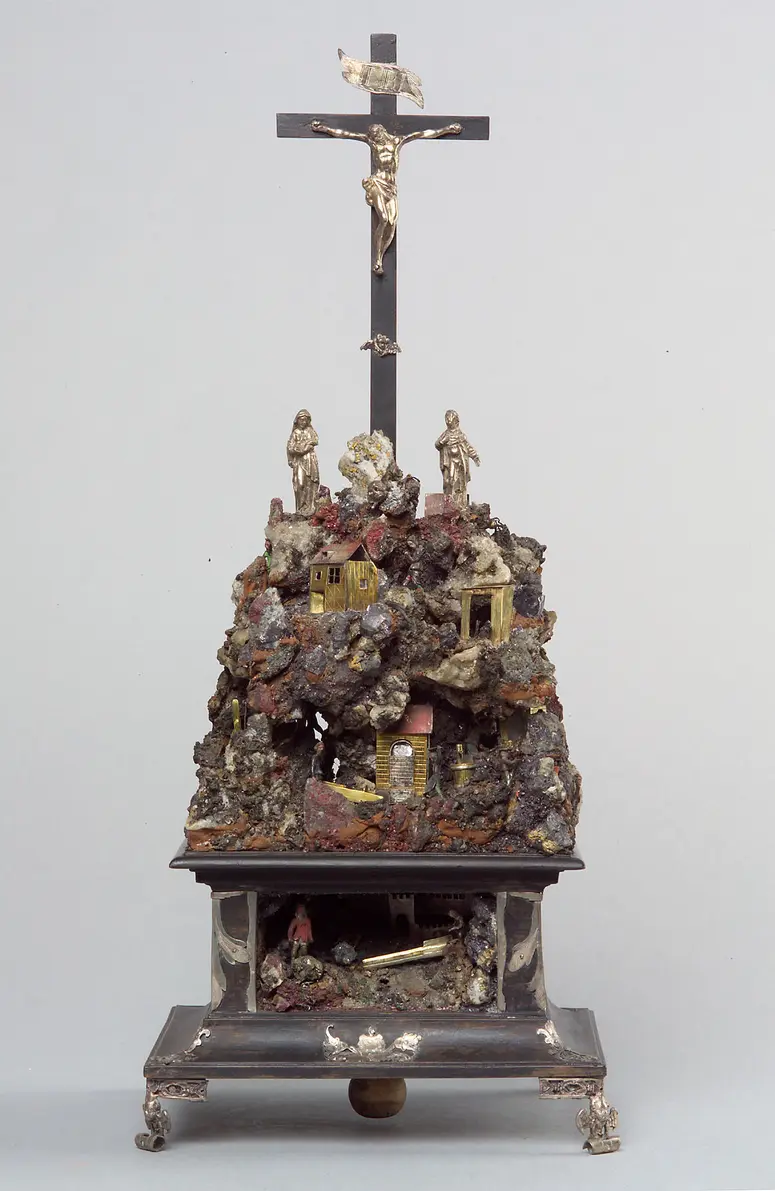
Handstein mit Bergwerk und Kreuzigung 3. Viertel 16. Jahrhundert

Elisabeth von Görz-Tirol, Statue, Statuette, Terracotta Dominicus Custos um 1600

Aufsatz, Filigranarbeit, Schnitzarbeit 2. Hälfte 16. Jahrhundert
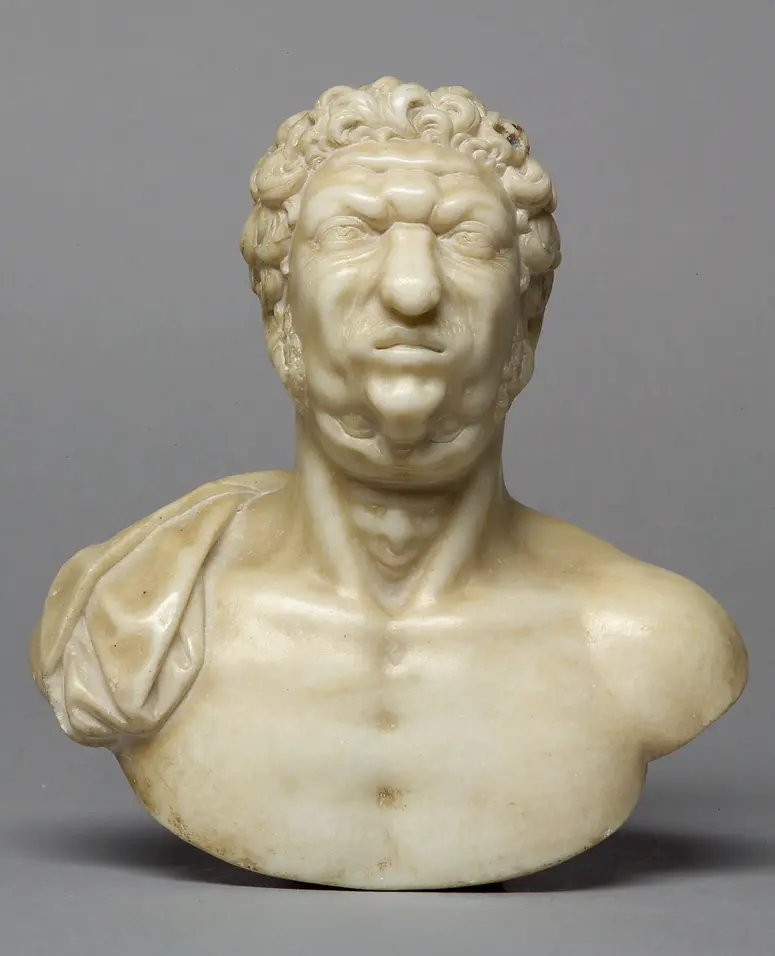
Büste, Faun, Vexierkopf, Vexierbüste Spätes 16. Jahrhundert

Graviertes Nautilusgehäuse, Nautilus-Schale, Nautilus-Gehäuse, Nautlius, Meeresschnecke 2. Hälfte 16. Jahrhundert


Pferd, Bronze, Kleinbronze, Pferd in der Levade 1. Hälfte 16. Jahrhundert
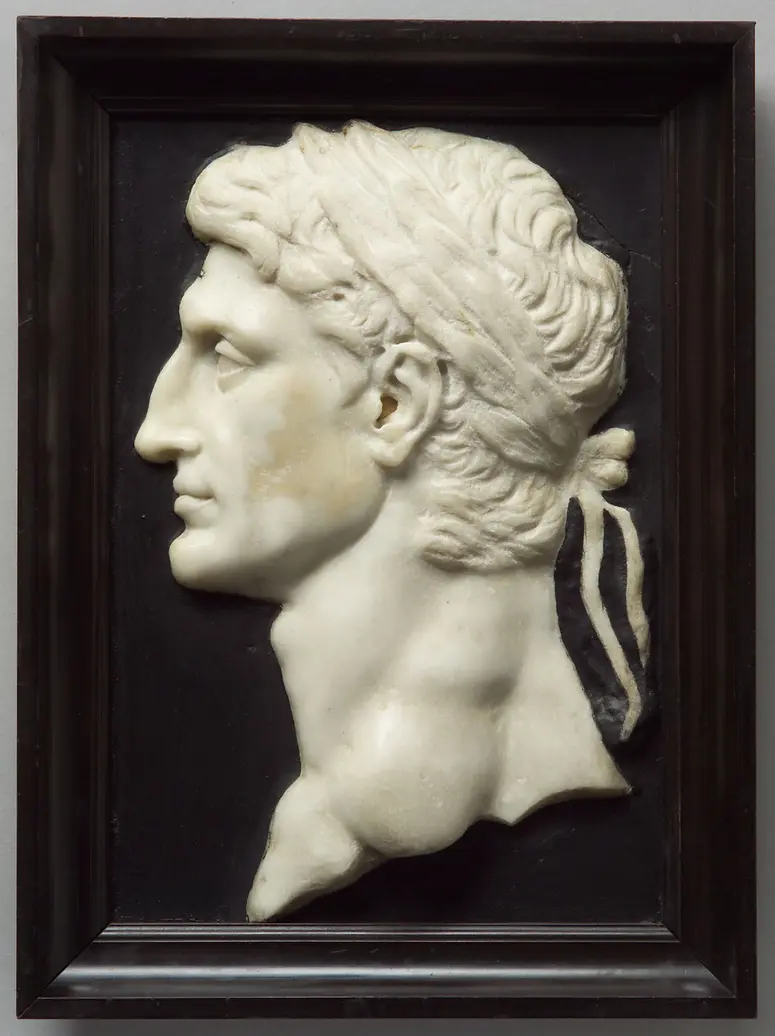
Relief, Kaiser Augustus, Augustus 2. Hälfte 16. Jahrhundert
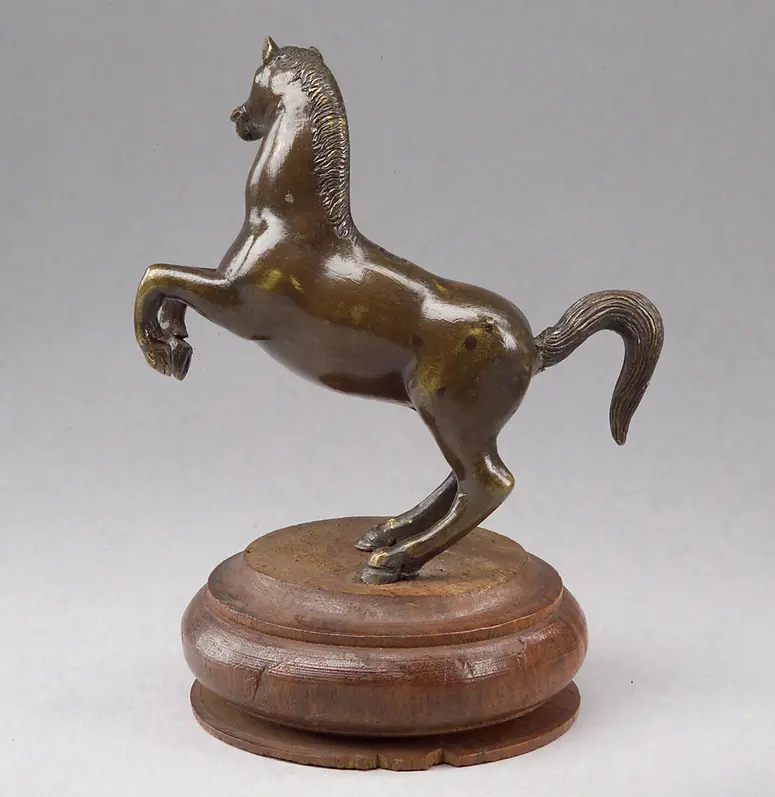
Pferd, Bronze, Kleinbronze, Pferd in der Levade 1. Hälfte 16. Jahrhundert

Aufsatz, Filigranarbeit, Schnitzarbeit 2. Hälfte 16. Jahrhundert

Nautilus-Gehäuse, Nautlius, Meeresschnecke, Naturalie 2. Hälfte 16. Jahrhundert
Amor mit Flammenkeule auf einem Löwen reitend, Statuette, Kleinbronze, Amor Nicolo Roccatagliata Ende 16. Jahrhundert
Herrscher mit Halskrause, Büste, Kleinbronze, Cosimo II. de´Medici ? Anfang 17. Jahrhundert
Spielbrett, Tric Track, Mühle, Backgammon Johann Kayser um 1550