Nautilus-Gehäuse, Nautlius, Meeresschnecke, Naturalie
2. Hälfte 16. Jahrhundert
Amongst the mollusc shells, the nautilus shells originating from the south-west Pacific were particularly appreciated after the Middle Ages. During the course of the 16th century, nautilus shells reached Europe in ever greater numbers via Dutch merchant ships; some of these carved and decorated by Chinese artists. The fragile, beautiful nautilus also became as a dead shell a popular symbol representing vanity. E.g. Margaret of Austria greatly valued natural objects – unworked or artistically carved – such as coral, shells and horn objects, which were kept in her palace at Mechelen.
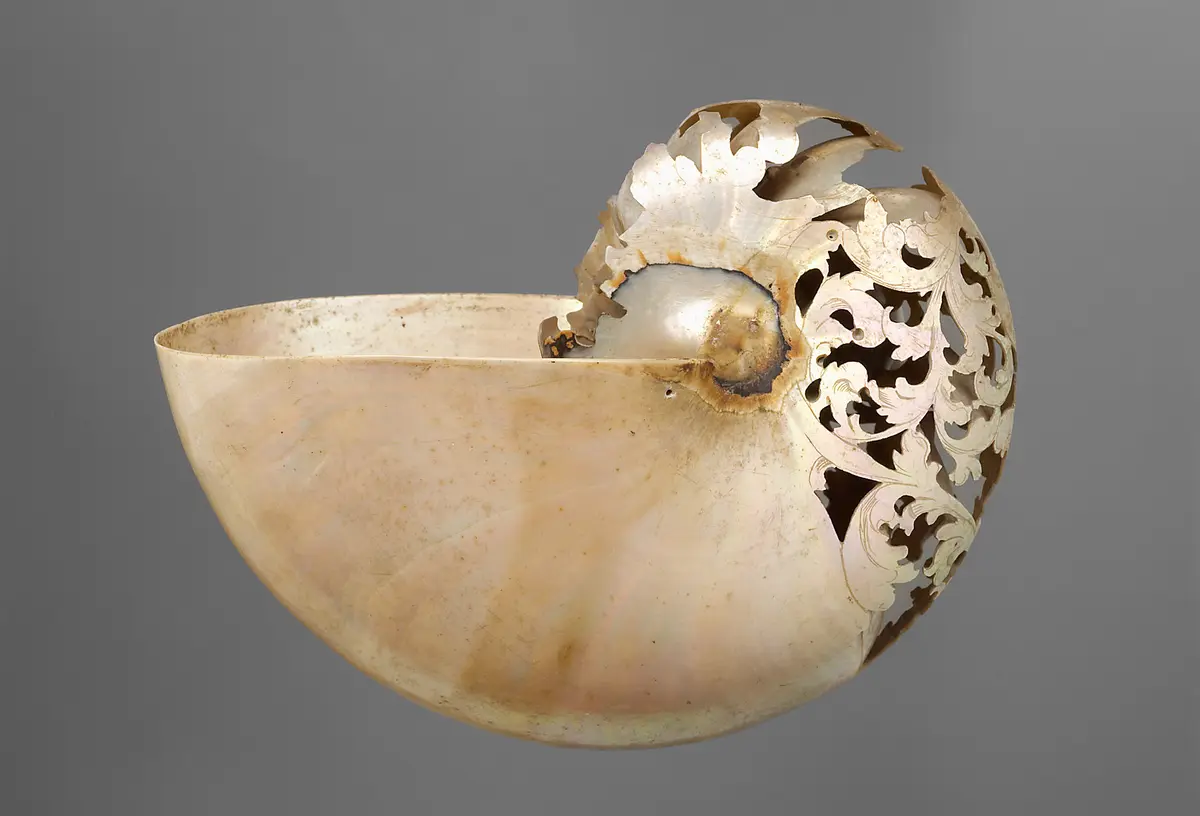
Amongst the mollusc shells, the nautilus shells originating from the south-west Pacific were particularly appreciated after the Middle Ages. During the course of the 16th century, nautilus shells reached Europe in ever greater numbers via Dutch merchant ships; some of these carved and decorated by Chinese artists. The fragile, beautiful nautilus also became as a dead shell a popular symbol representing vanity. E.g. Margaret of Austria greatly valued natural objects – unworked or artistically carved – such as coral, shells and horn objects, which were kept in her palace at Mechelen.
Time:
2. Hälfte 16. Jahrhundert
Object Name
Nautilus-Gehäuse, Nautlius, Meeresschnecke, Naturalie
Culture
Naturalie: westlicher Pazifik, indischer Ozean
Material/technology:
Schale einer Nautilus
Dimensions:
H. 12,5 cm × B. 16 cm
Copyright
Schloss Ambras Innsbruck
Invs.
Schloss Ambras Innsbruck, PA 796
Provenance
Inv.1596, fol .468
Browse more
Similar items you might be interested in

Graviertes Nautilusgehäuse, Nautilus-Schale, Nautilus-Gehäuse, Nautlius, Meeresschnecke 2. Hälfte 16. Jahrhundert
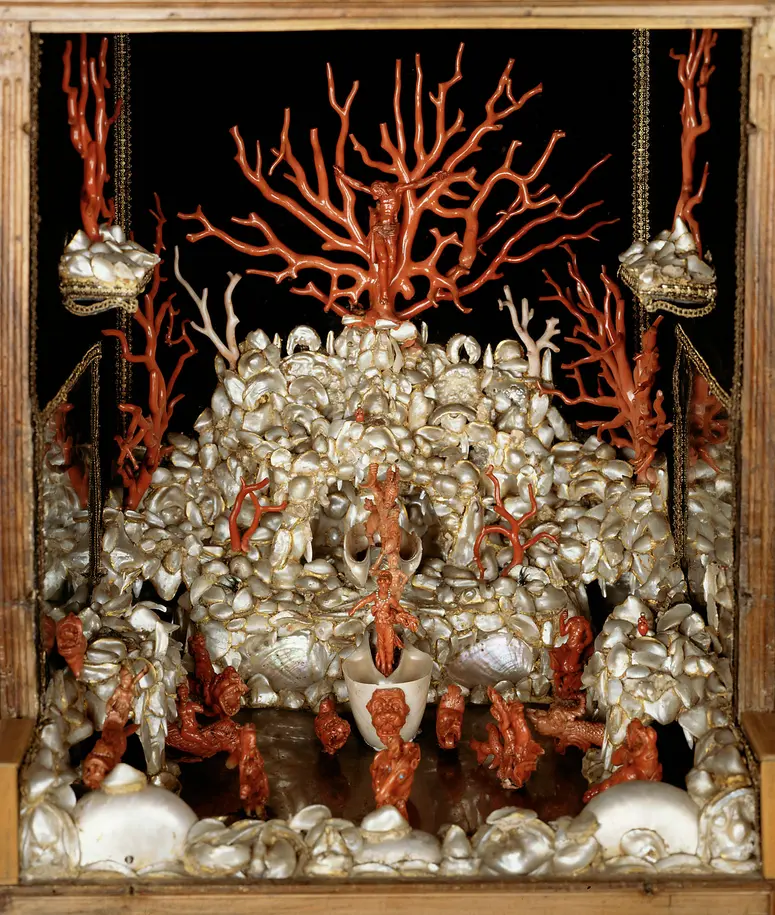
Korallenkabinett, Kabinettschrank mit Korallen 2. Hälfte 16. Jahrhundert
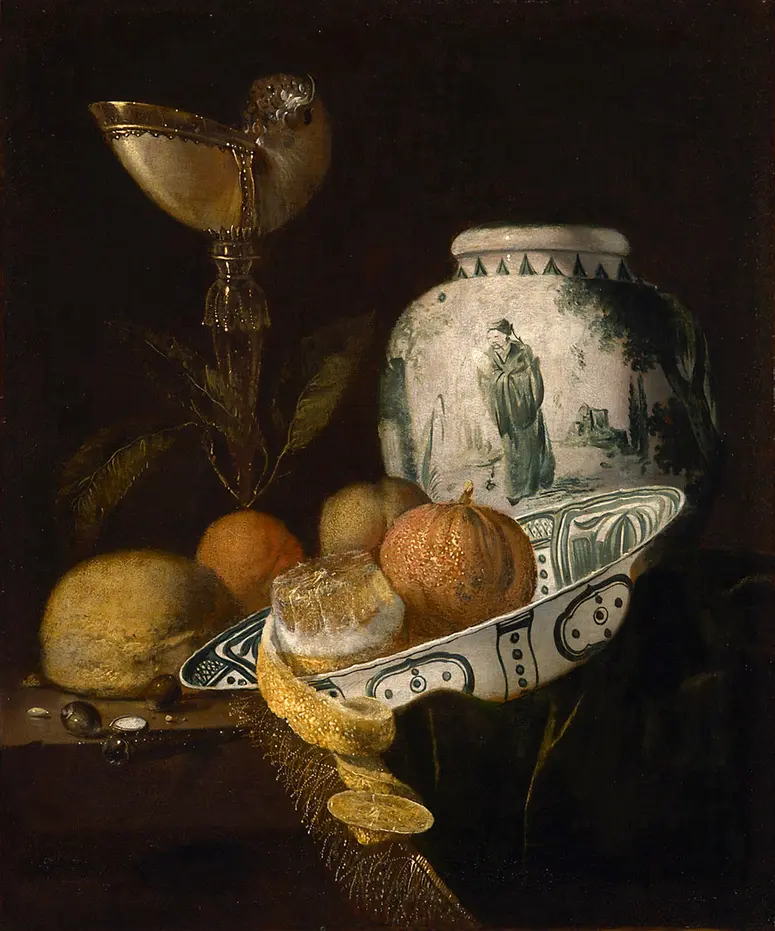
Stillleben mit Nautiluspokal und Ingwertopf Juriaen van Streeck 3. Viertel 17. Jahrhundert
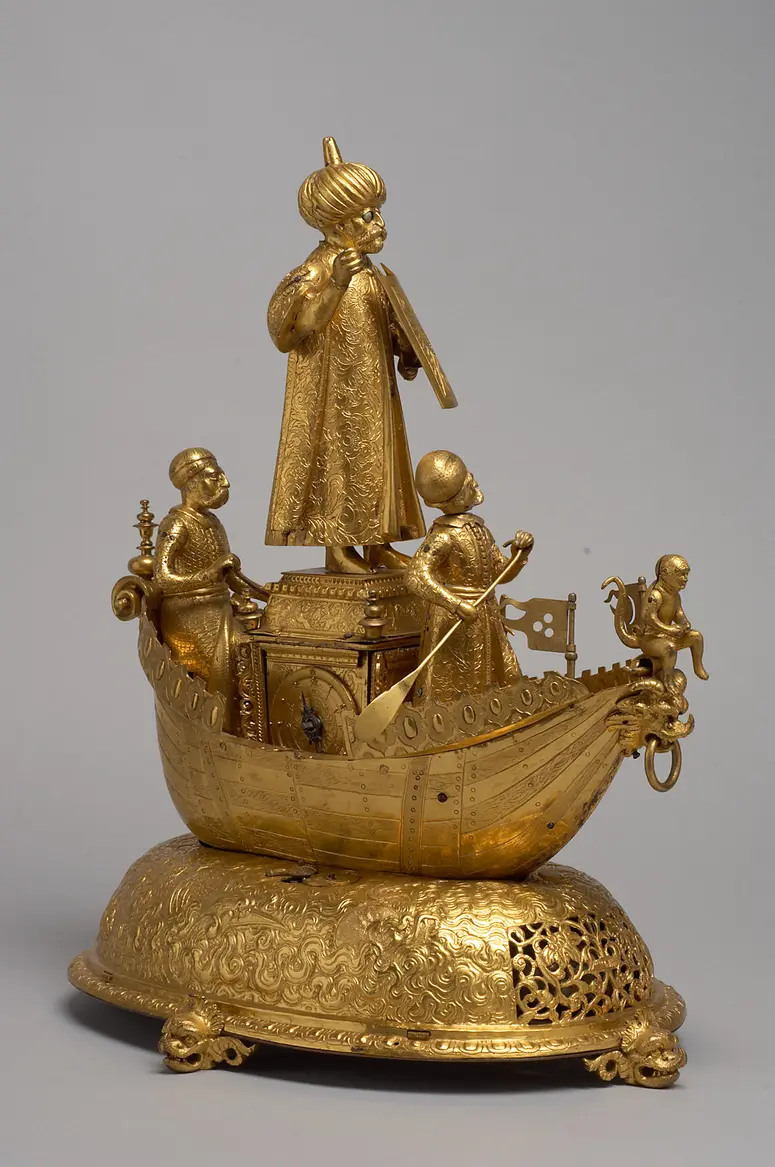
Figurenuhr mit türkischer Barke, Automat, Türkenautomat um 1580/1590


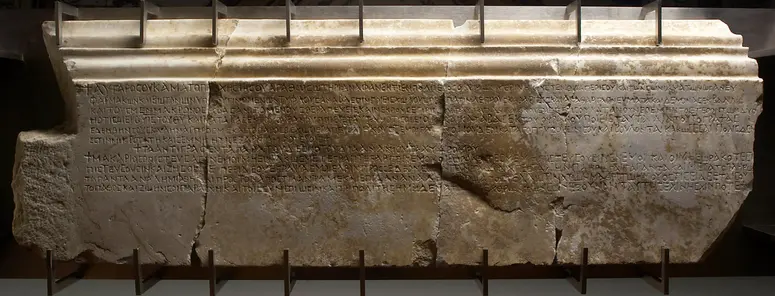
Inschrift: Türsturz mit Abgaros-Inschrift Frühchristlich, Spätantike 5. - 6. Jh. n. Chr.
Spielbrett, Tric Track, Mühle, Backgammon Johann Kayser um 1550