Graviertes Nautilusgehäuse, Nautilus-Schale, Nautilus-Gehäuse, Nautlius, Meeresschnecke
2. Hälfte 16. Jahrhundert
Amongst the mollusc shells, the nautilus shells originating from the south-west Pacific were particularly appreciated after the Middle Ages and were worked into nautilus vessels, the so-called Nefs. These were simple containers, generally in the form of a boat for holding cutlery or the napkin of the ruler. The Flemish sculptor and architect Cornelis Floris de Vriendt (1514–1575) began the fashion with his series of vases created in Antwerp in 1548; in these objects he combined nautilus shells with animal and human figures, creating fantastic objects. During the course of the 16th century, nautilus shells reached Europe in ever greater numbers via Dutch merchant ships; some of these carved and decorated by Chinese artists. These elaborate bowls were extremely fine in craftsmanship. A nautilus goblets frequently appear in still-life paintings of this period. The fragile, beautiful nautilus also became as a dead shell a popular symbol representing vanity. The carved nautilus housing demonstrates the virtuosity of the artist. The black engraving adds even more to the fragility of the object and attractively interrupts the iridiscent reflection of the surface, which is ornamented with decorative imagery of flowers, foliage and two angels blowing trumpets. Engraved nautilus shells were frequently left without a mounting, and the example exhibited here shows no evidence of an intended setting. Since the decoration of this nautilus is consistent with the late 16th century, it could have once belonged to the Ambras collections. Margaret of Austria greatly valued natural objects – unworked or artistically carved – such as coral, shells and horn objects, which were kept in the cabinet emprès le jardin (‘garden cabinet’) of her palace at Mechelen. Catherine of Austria possessed two Chinese nautilus shells described in an inventory dated 1579/80 as carved and set into silver-plated and gilded mountings.
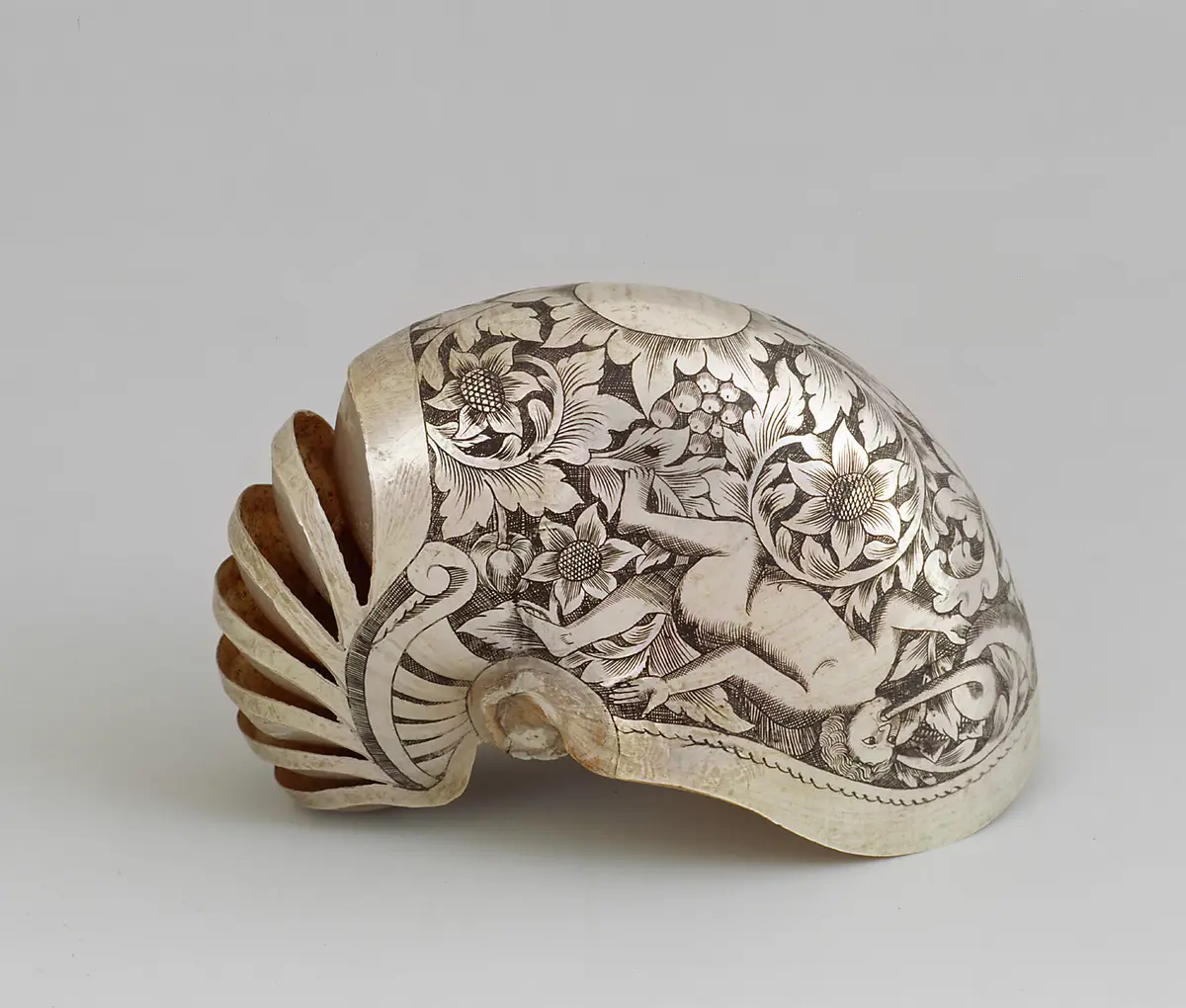
Amongst the mollusc shells, the nautilus shells originating from the south-west Pacific were particularly appreciated after the Middle Ages and were worked into nautilus vessels, the so-called Nefs. These were simple containers, generally in the form of a boat for holding cutlery or the napkin of the ruler. The Flemish sculptor and architect Cornelis Floris de Vriendt (1514–1575) began the fashion with his series of vases created in Antwerp in 1548; in these objects he combined nautilus shells with animal and human figures, creating fantastic objects. During the course of the 16th century, nautilus shells reached Europe in ever greater numbers via Dutch merchant ships; some of these carved and decorated by Chinese artists. These elaborate bowls were extremely fine in craftsmanship. A nautilus goblets frequently appear in still-life paintings of this period. The fragile, beautiful nautilus also became as a dead shell a popular symbol representing vanity. The carved nautilus housing demonstrates the virtuosity of the artist. The black engraving adds even more to the fragility of the object and attractively interrupts the iridiscent reflection of the surface, which is ornamented with decorative imagery of flowers, foliage and two angels blowing trumpets. Engraved nautilus shells were frequently left without a mounting, and the example exhibited here shows no evidence of an intended setting. Since the decoration of this nautilus is consistent with the late 16th century, it could have once belonged to the Ambras collections. Margaret of Austria greatly valued natural objects – unworked or artistically carved – such as coral, shells and horn objects, which were kept in the cabinet emprès le jardin (‘garden cabinet’) of her palace at Mechelen. Catherine of Austria possessed two Chinese nautilus shells described in an inventory dated 1579/80 as carved and set into silver-plated and gilded mountings.
Time:
2. Hälfte 16. Jahrhundert
Object Name
Nautilus-Schale, Nautilus-Gehäuse, Nautlius, Meeresschnecke
Culture
Naturalie: westlicher Pazifik, indischer Ozean: Dekor: Holländisch
Material/technology:
Schale einer Nautilus
Dimensions:
H. 8,5 cm × B. 12,5 cm
Copyright
Schloss Ambras Innsbruck
Invs.
Schloss Ambras Innsbruck, PA 800
Browse more
Similar items you might be interested in

Nautilus-Gehäuse, Nautlius, Meeresschnecke, Naturalie 2. Hälfte 16. Jahrhundert
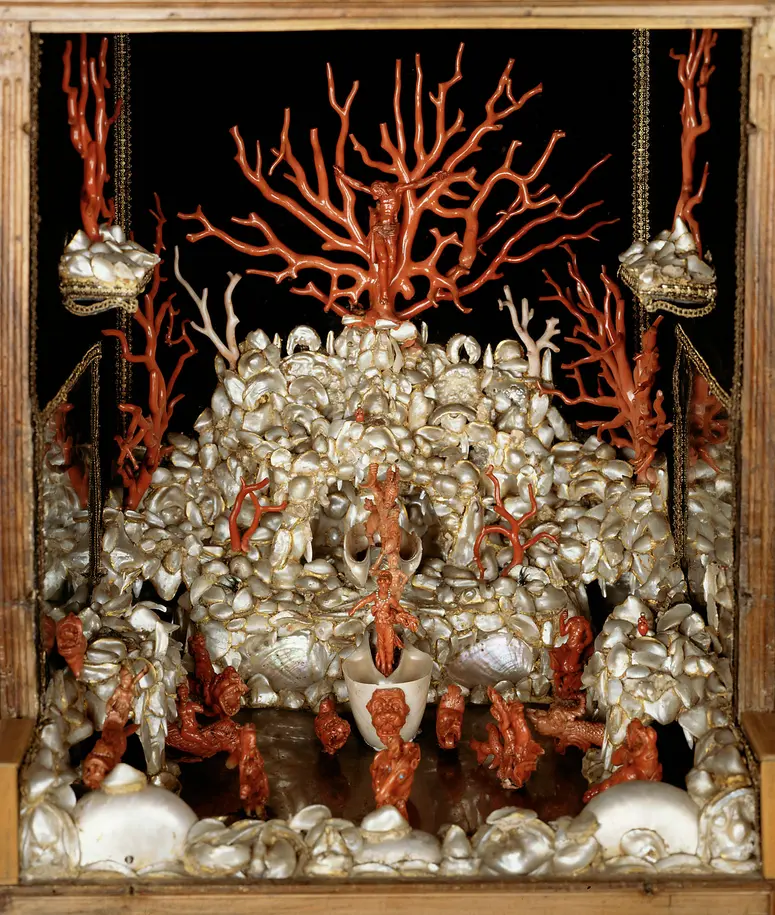
Korallenkabinett, Kabinettschrank mit Korallen 2. Hälfte 16. Jahrhundert
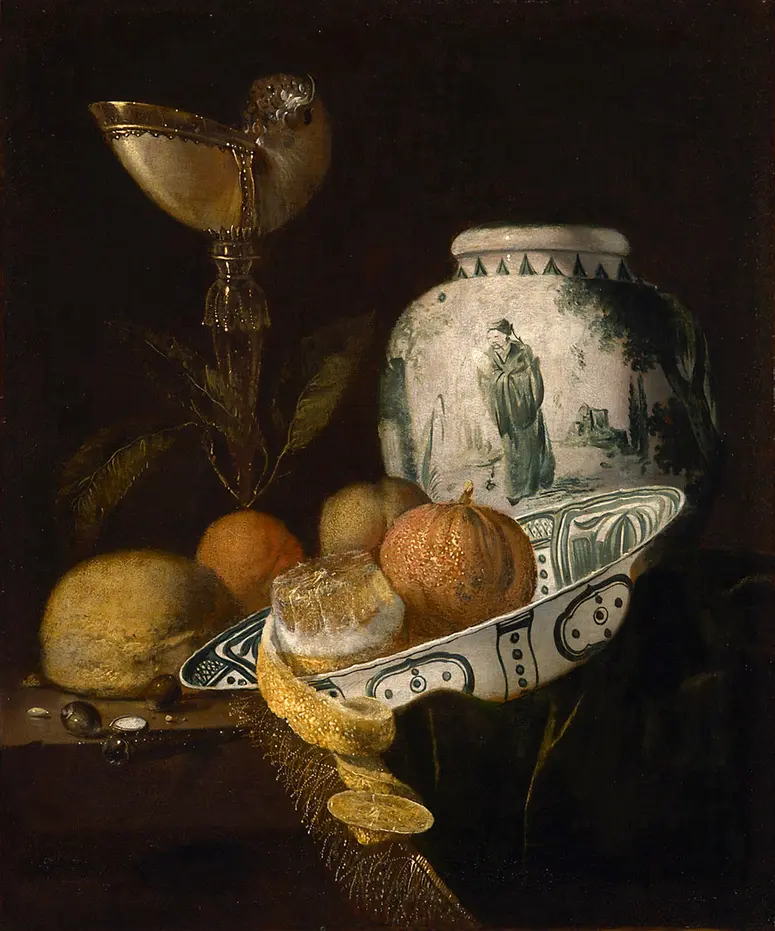
Stillleben mit Nautiluspokal und Ingwertopf Juriaen van Streeck 3. Viertel 17. Jahrhundert
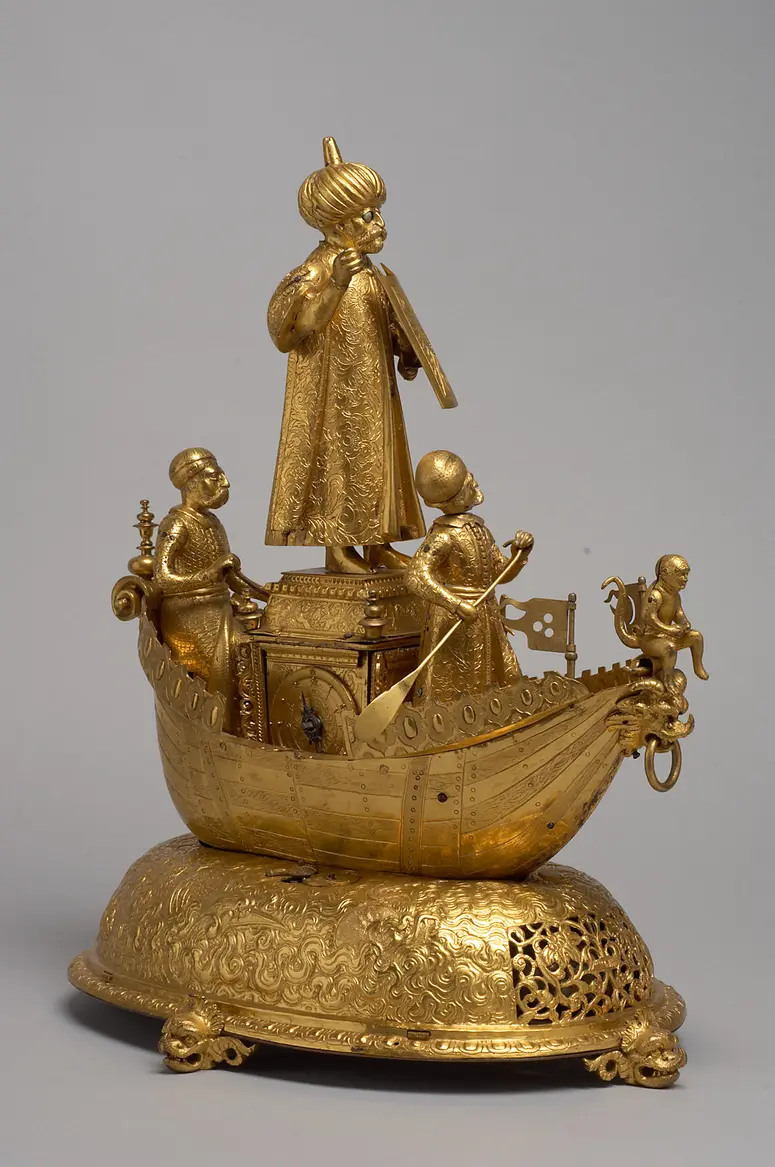
Figurenuhr mit türkischer Barke, Automat, Türkenautomat um 1580/1590


Fingerring mit Gemme: Büste der Plautilla Römisch, Späte Kaiserzeit 203 - 205 n. Chr.
