Mundbirne, Folterinstrument (?)
16. Jahrhundert
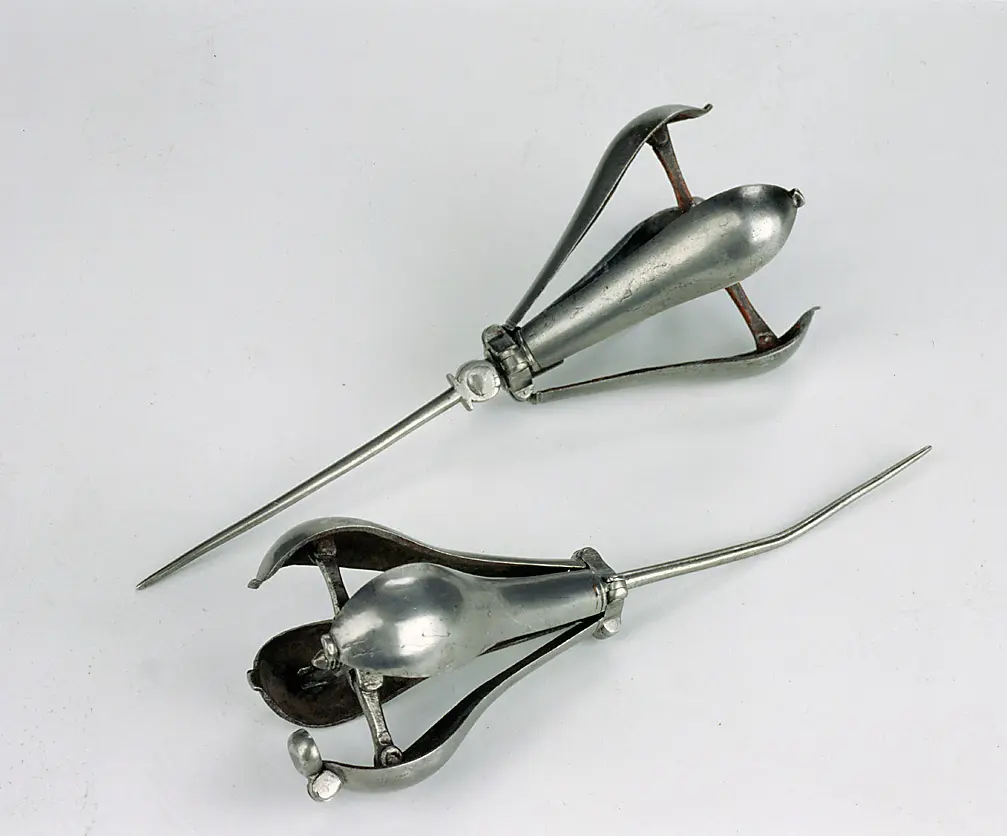
The mouth pears were probably instruments of torture belonging to the category of skull screws and are mentioned in Archduke Ferdinand II's inventory of estate dated 1596 as "mer 2 Eiserne Maulpirn" alongside various iron objects. They each consist of four spoon-shaped bowls, which are movably connected to each other at the tapered end. Inside there is a simple threaded mechanism that can be used to push the parts apart. Torture instruments were mainly used in "embarrassing interrogations", the main interrogations in inquisition trials up until the early modern period. According to the Constitutio Criminalis Carolina (Emperor Charles V's Code of Criminal Procedure), which was published in 1532 and is regarded as the first general German penal code, torture was only to be used if there was an urgent suspicion of an offence and only if the accused had not been convicted either by a confession or by the presentation of evidence. Mouth pears were inserted into the delinquent's mouth in a closed state and then slowly opened. This initially resulted in a painful locking of the jaw; if the device was spread open further, teeth or even the jaw could break.
The mouth pears were probably instruments of torture belonging to the category of skull screws and are mentioned in Archduke Ferdinand II's inventory of estate dated 1596 as "mer 2 Eiserne Maulpirn" alongside various iron objects. They each consist of four spoon-shaped bowls, which are movably connected to each other at the tapered end. Inside there is a simple threaded mechanism that can be used to push the parts apart. Torture instruments were mainly used in "embarrassing interrogations", the main interrogations in inquisition trials up until the early modern period. According to the Constitutio Criminalis Carolina (Emperor Charles V's Code of Criminal Procedure), which was published in 1532 and is regarded as the first general German penal code, torture was only to be used if there was an urgent suspicion of an offence and only if the accused had not been convicted either by a confession or by the presentation of evidence. Mouth pears were inserted into the delinquent's mouth in a closed state and then slowly opened. This initially resulted in a painful locking of the jaw; if the device was spread open further, teeth or even the jaw could break.
Time:
16. Jahrhundert
Object Name
Mundbirne, Folterinstrument (?)
Culture
Deutsch (Tirol?)
Dimensions:
L. 12,5 cm
Copyright
Kunsthistorisches Museum, Kunstkammer
Invs.
Kunstkammer, 810
Browse more
Similar items you might be interested in



Statuette, Bronze, Kleinbronze, Aktäon, Brunnenfigur, Brunnenbekrönung Wenzel Jamnitzer 3. Viertel 16. Jahrhundert
Handstein mit Bergwerk und Kreuzigung 3. Viertel 16. Jahrhundert

Aufsatz, Filigranarbeit, Schnitzarbeit 2. Hälfte 16. Jahrhundert

Statuette, Kleinbronze, Bronze, Herkules, Herakles um 1550

Pferd, Bronze, Kleinbronze, Pferd in der Levade 1. Hälfte 16. Jahrhundert
Heiliges Grab, Mikroschnitzerei, Schnitzerei, Holzarbeit 2. Hälfte 16. Jahrhundert
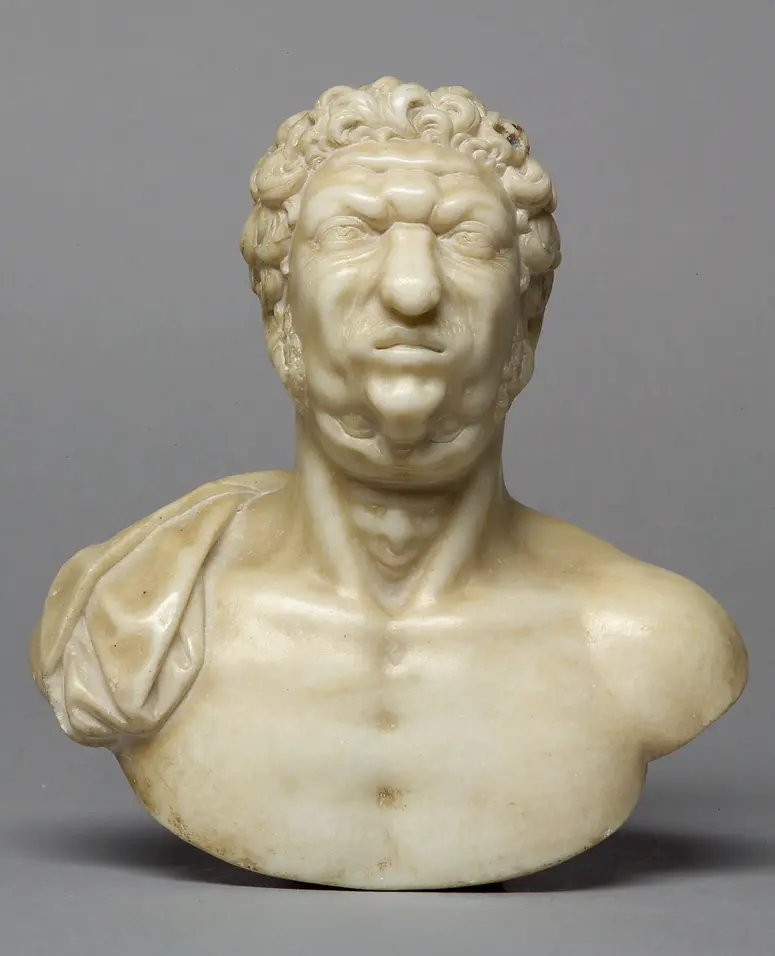
Büste, Faun, Vexierkopf, Vexierbüste Spätes 16. Jahrhundert
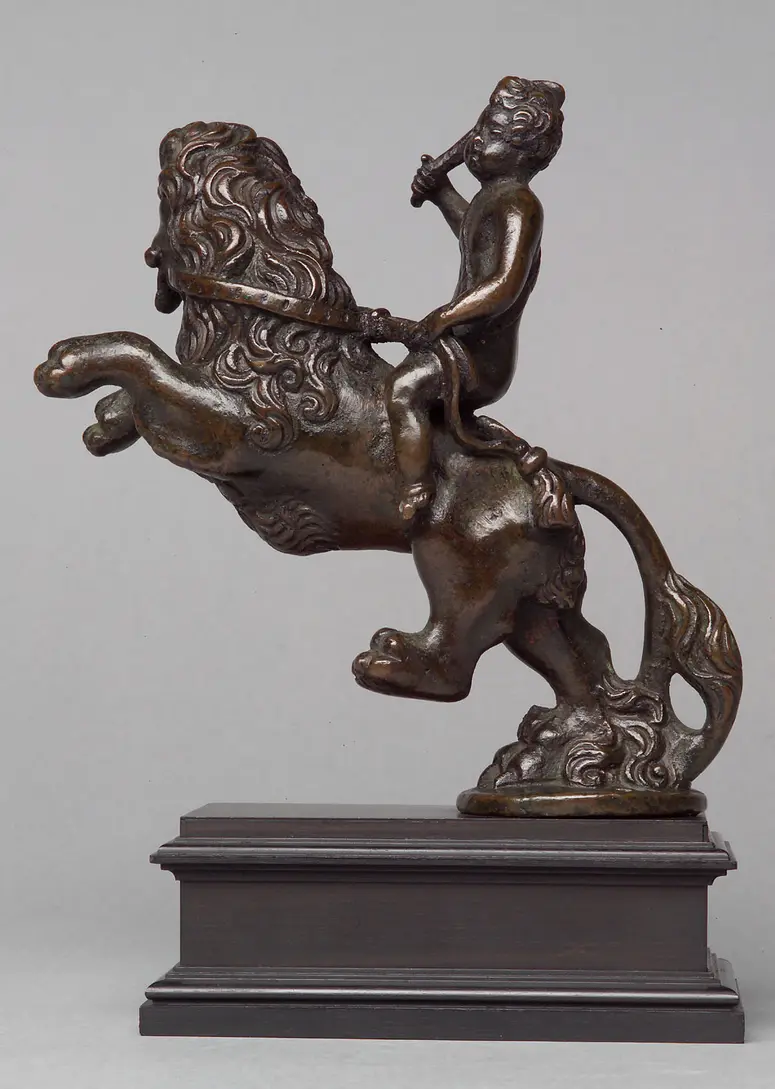
Amor mit Flammenkeule auf einem Löwen reitend, Statuette, Kleinbronze, Amor Nicolo Roccatagliata Ende 16. Jahrhundert
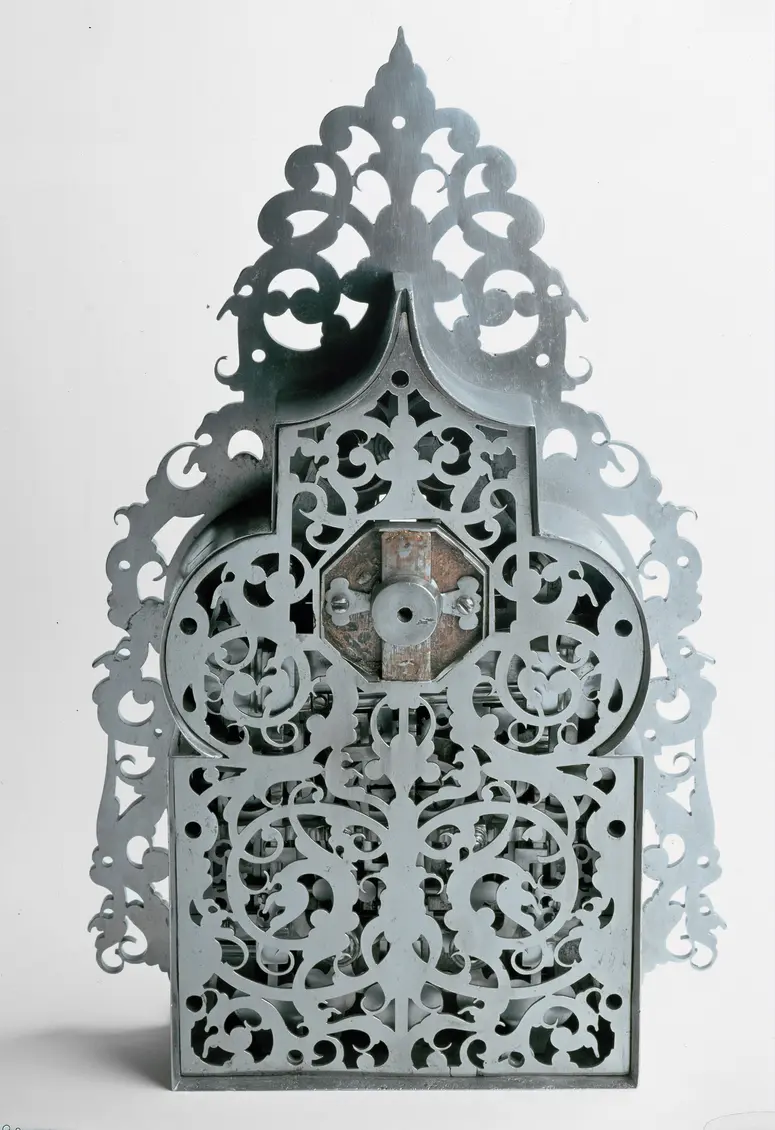
Truhenschloss, Schloss, Gerät, Werkzeug, Schmiedearbeit 16. Jahrhundert
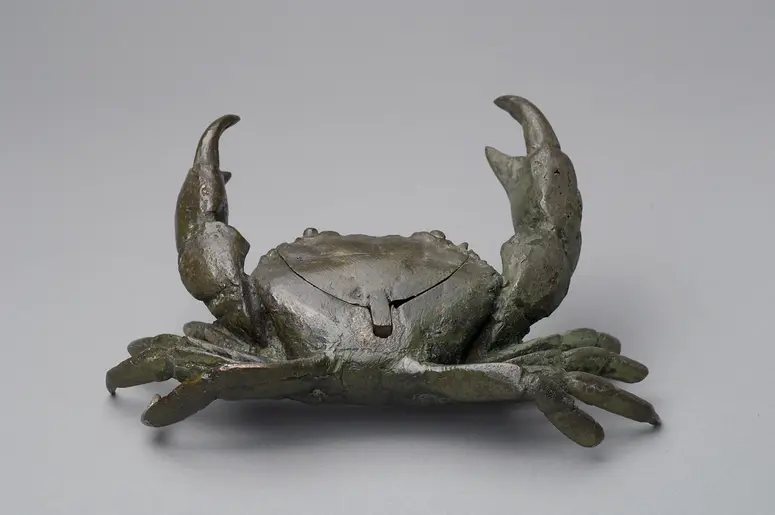
Statuette, Kleinbronze, Bronze, Taschenkrebs Anfang 16. Jahrhundert