Ritzdekor
1900 - 1725 v. Chr.
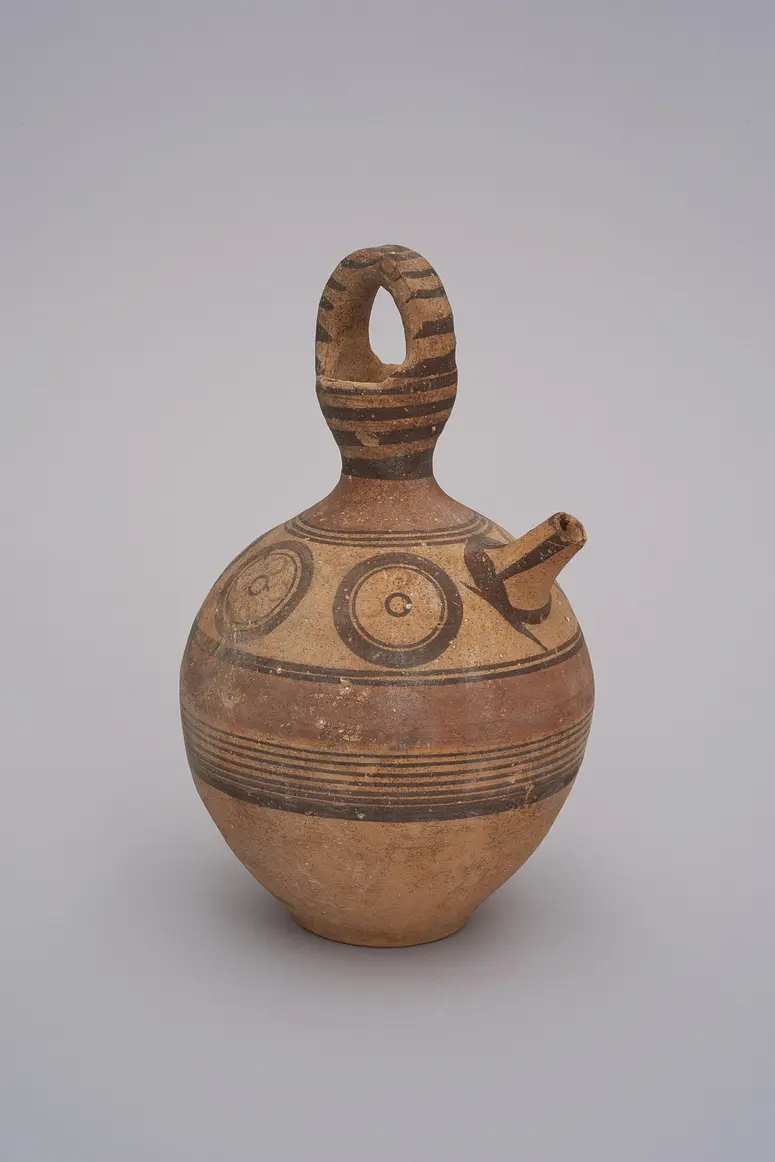
This miniature jug was a popular type of red and black polished ware and appeared at the beginning of the Middle Bronze Age. Given the numerous tomb finds, the potteries producing black polished ware are believed to have been in Vounos. The oblong, irregularly conical body has a flattened bottom and a short neck with a steep spout; a vertical perforated lug is attached to the back of the rim. The incised decoration on the body consists of two horizontal circumambient fields, separated by two parallel horizontal lines. The fields are framed on the shoulder and above the edge of the bottom by five parallel horizontal lines. In the upper field are two standing, concentric chevron designs separated on either side by two groups of horizontal strokes; staggered below them in the lower field are three groups of horizontal strokes and three hanging concentric chevrons. On both the neck and top of the spout are four parallel horizontal lines.
A. Bernhard-Walcher u.a., Die Sammlung zyprischer Antiken im KHM. Sammlungskataloge des KHM Bd. 2, Wien 1999
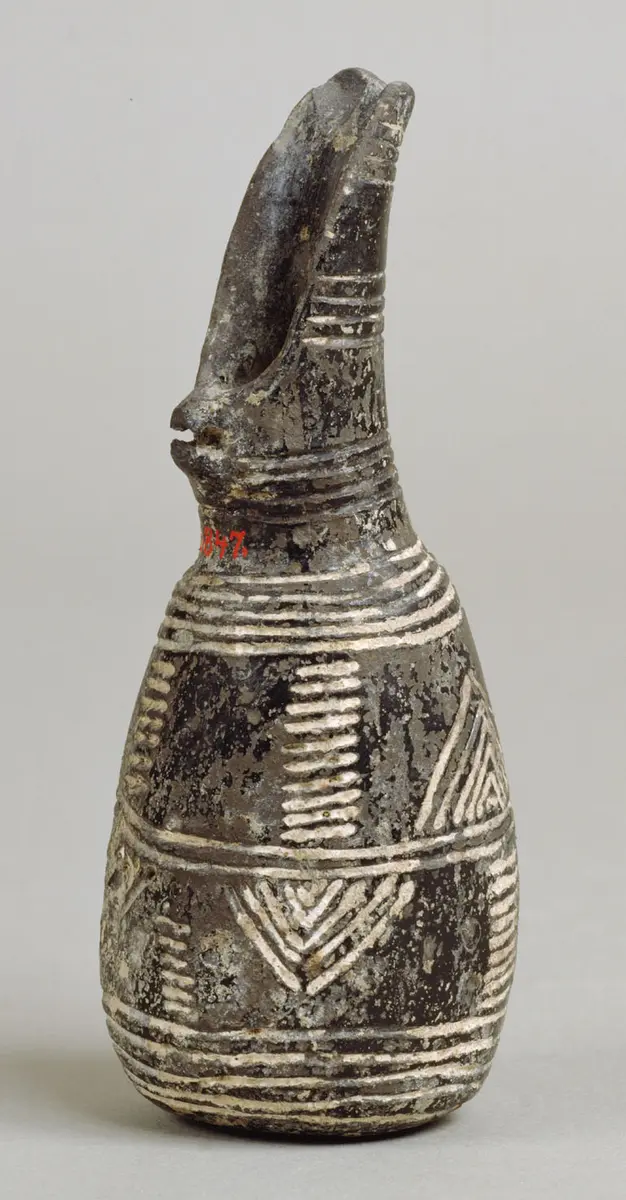
This miniature jug was a popular type of red and black polished ware and appeared at the beginning of the Middle Bronze Age. Given the numerous tomb finds, the potteries producing black polished ware are believed to have been in Vounos. The oblong, irregularly conical body has a flattened bottom and a short neck with a steep spout; a vertical perforated lug is attached to the back of the rim. The incised decoration on the body consists of two horizontal circumambient fields, separated by two parallel horizontal lines. The fields are framed on the shoulder and above the edge of the bottom by five parallel horizontal lines. In the upper field are two standing, concentric chevron designs separated on either side by two groups of horizontal strokes; staggered below them in the lower field are three groups of horizontal strokes and three hanging concentric chevrons. On both the neck and top of the spout are four parallel horizontal lines.
A. Bernhard-Walcher u.a., Die Sammlung zyprischer Antiken im KHM. Sammlungskataloge des KHM Bd. 2, Wien 1999
Time:
1900 - 1725 v. Chr.
Object Name
Schnabelkännchen der Black Polished Ware
Culture
Zyprisch
Location of discovery:
Ayia Paraskevi (Nikosia, Zypern)
Material/technology:
Ton dunkelbraun; Oberfläche geglättet; Überzug schwarz, poliert, glänzend, bis Halsinnenseite; Ritzungen weiß eingelegt. Handgeformt.
Dimensions:
H. 12,1 cm, Dm. 4,6 cm
Copyright
Kunsthistorisches Museum, Antikensammlung
Invs.
Antikensammlung, IV 3847
Provenance
Oesterr. Museum Wien; 1890 Kauf von M., Ohnefalsch-Richter; 1940 Übernahme; 1941 inventarisiert
Browse more
Similar items you might be interested in
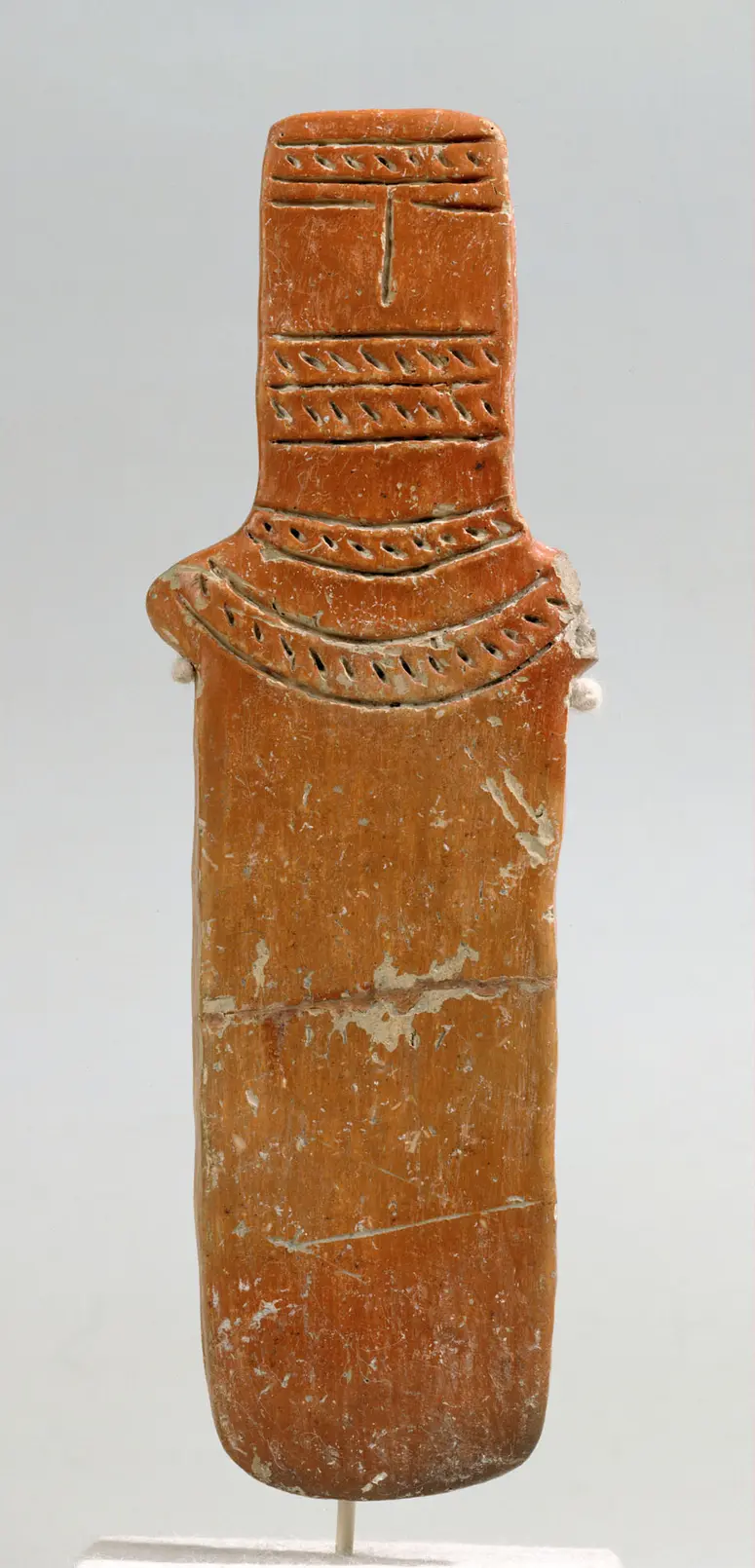
Brettidol der Red Polished Ware: Anthropomorphe Form Zyprisch, Bronzezeit, Frühzyprisch 2000 - 1900 v. Chr.

Pyxis der Bichrome III Ware: Vogel Zyprisch, Eisenzeit, geometrisch 850 - 750 v. Chr.
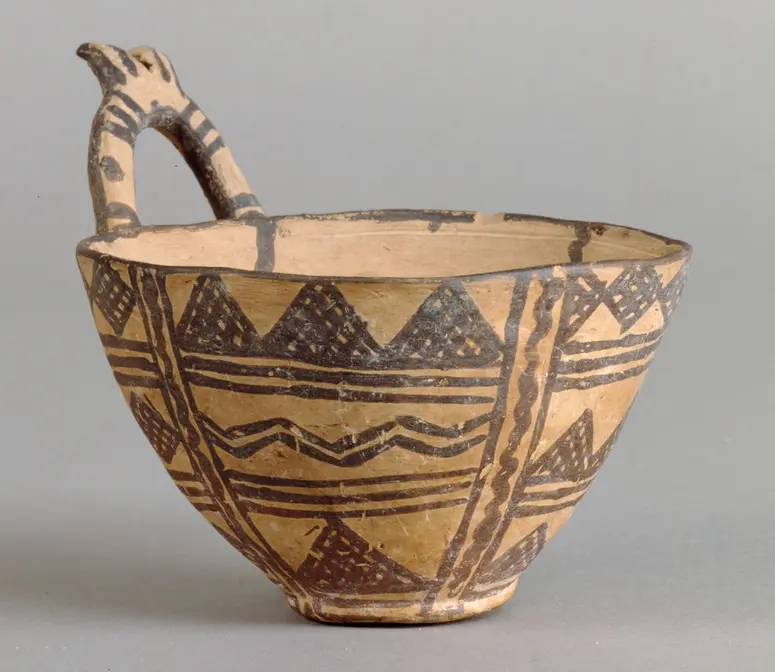
Henkelschale der White Painted Ware: Liniendekor Zyprisch, Bronzezeit, Mittelzyprisch 1725 - 1625 v. Chr.

Schnabelkännchen mit Tierprotome der White Painted Ware: Liniendekor Zyprisch, Bronzezeit, Spätzyprisch 1625 - 1450 v. Chr.
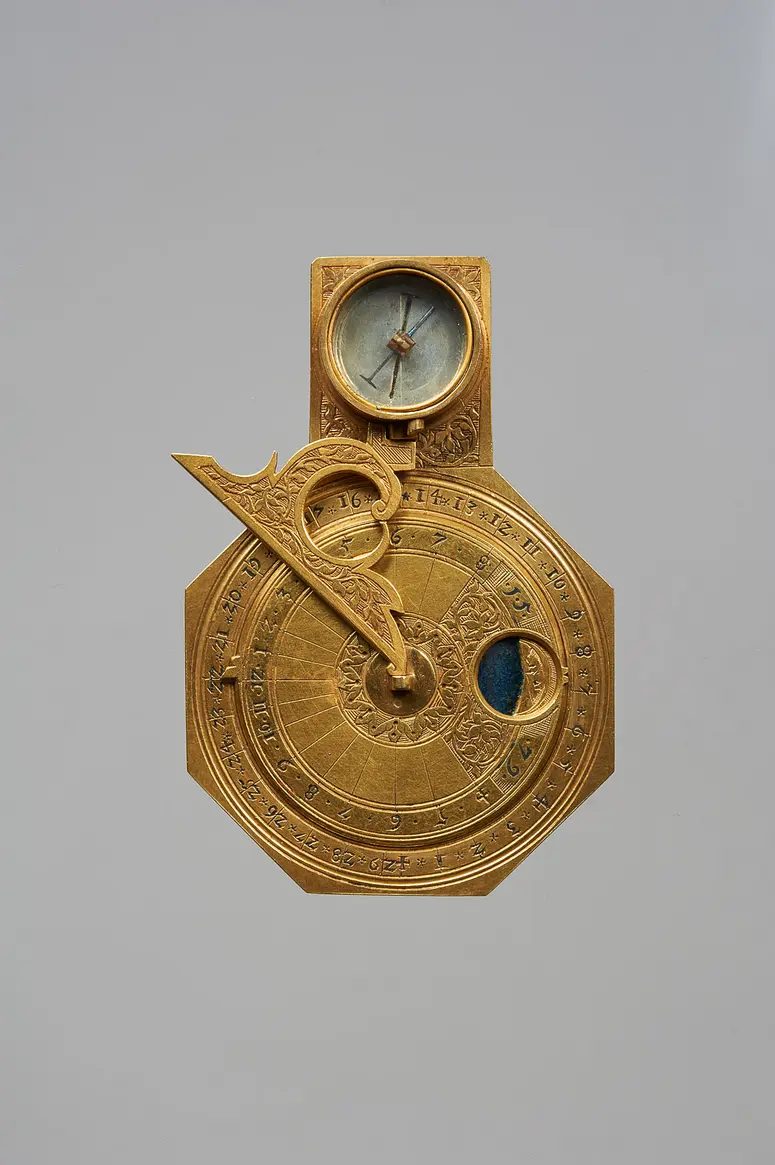

Schnabelkanne mit Bügelhenkel der Bichrome IV Ware: Kreis- und Banddekor Zyprisch, Eisenzeit, archaisch 750 - 600 v. Chr.