Modell eines Schiffes der Plain White Ware
6. Jh. v. Chr.
Model of a boat of plain white ware. Oblong body with an upright, short, pointed stem above the prow. The pointed ram and the stern stem are missing. Along the gunwale at the stern and prow there is a horizontal strap of added clay. Horizontal bar across, from one side of gunwale to the other, near prow and stern respectively. Socket for the mast at the middle of the keel. No traces of painted decoration.Models of boats were particularly favored by the Amathusians, especially during the sixth century B. C. Such models were probably exported and some of them have been found at the bottom of the sea. They may have been the origin for the story narrated by Homer in which Kinyras cheated Agamemnon. As his contribution to the Trojan War, Kinyras sent Agamemnon 50 clay ships instead of real ships, as he had originally promised (Iliad, XI. 20).
A. Bernhard-Walcher u.a., Die Sammlung zyprischer Antiken im KHM. Sammlungskataloge des KHM Bd. 2, Wien 1999 (V. Karageorghis)
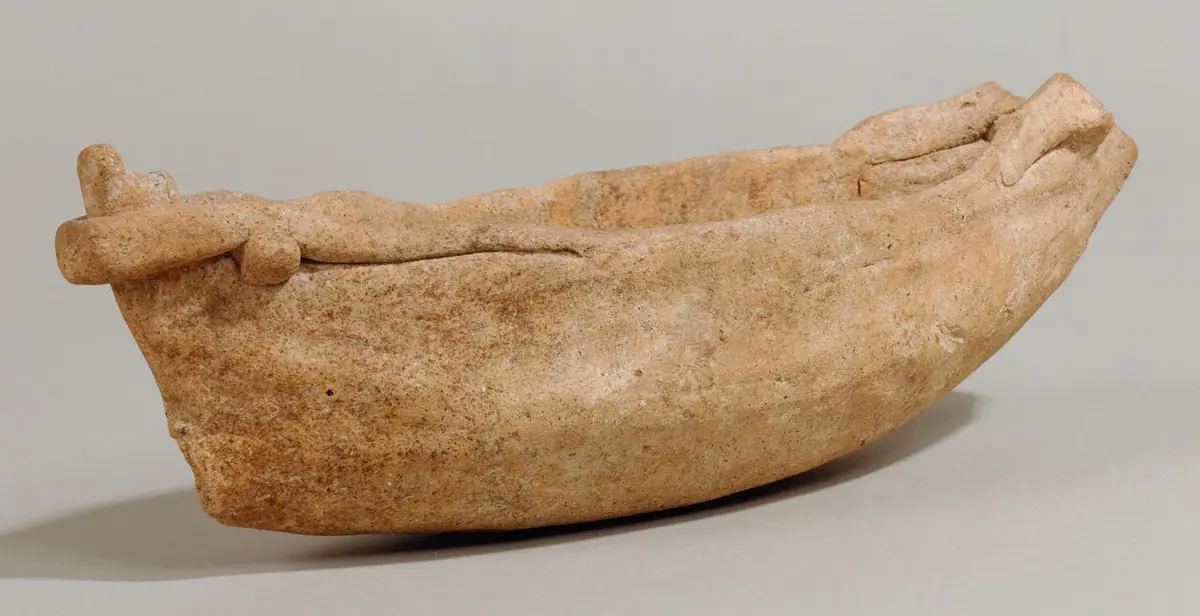
Model of a boat of plain white ware. Oblong body with an upright, short, pointed stem above the prow. The pointed ram and the stern stem are missing. Along the gunwale at the stern and prow there is a horizontal strap of added clay. Horizontal bar across, from one side of gunwale to the other, near prow and stern respectively. Socket for the mast at the middle of the keel. No traces of painted decoration.Models of boats were particularly favored by the Amathusians, especially during the sixth century B. C. Such models were probably exported and some of them have been found at the bottom of the sea. They may have been the origin for the story narrated by Homer in which Kinyras cheated Agamemnon. As his contribution to the Trojan War, Kinyras sent Agamemnon 50 clay ships instead of real ships, as he had originally promised (Iliad, XI. 20).
A. Bernhard-Walcher u.a., Die Sammlung zyprischer Antiken im KHM. Sammlungskataloge des KHM Bd. 2, Wien 1999 (V. Karageorghis)
Time:
6. Jh. v. Chr.
Object Name
Modell eines Schiffes der Plain White Ware
Culture
Zyprisch
Location of discovery:
Amathus (Zypern)
Material/technology:
Ton rötlich. Handgeformt
Dimensions:
H. 9,1 cm, L. 28,4 cm, B. 8,7 cm
Copyright
Kunsthistorisches Museum, Antikensammlung
Invs.
Antikensammlung, V 1501
Provenance
Ohnefalsch-Richter, Max; 1890 Tausch
Browse more
Similar items you might be interested in
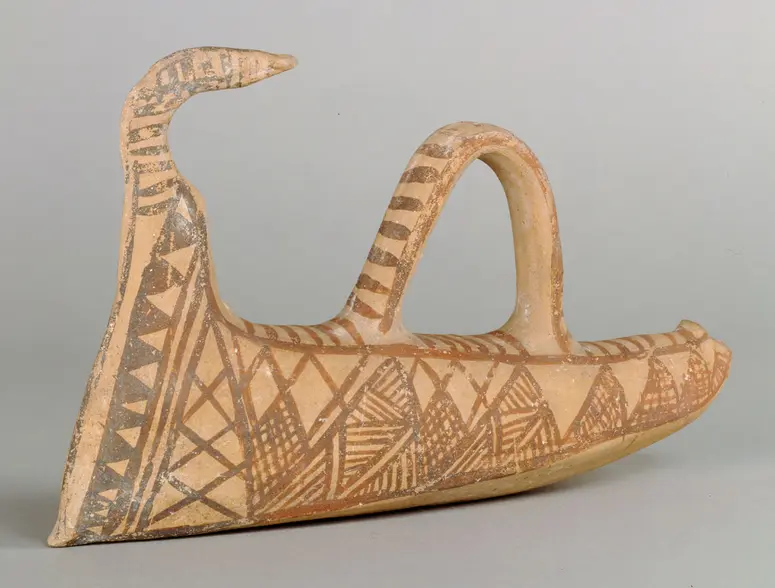
Askos der Proto-White Painted Ware: Form eines Schiffes Zyprisch, Bronzezeit, Spätzyprisch 1125 - 1050 v. Chr.
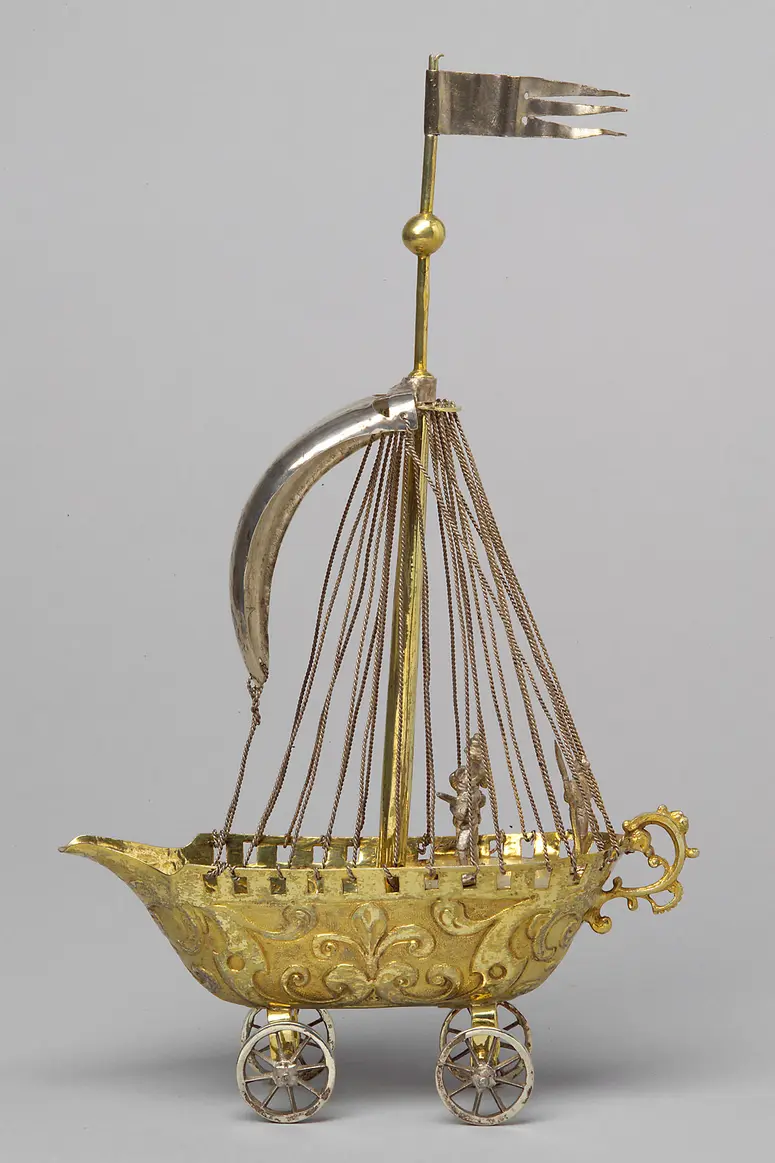
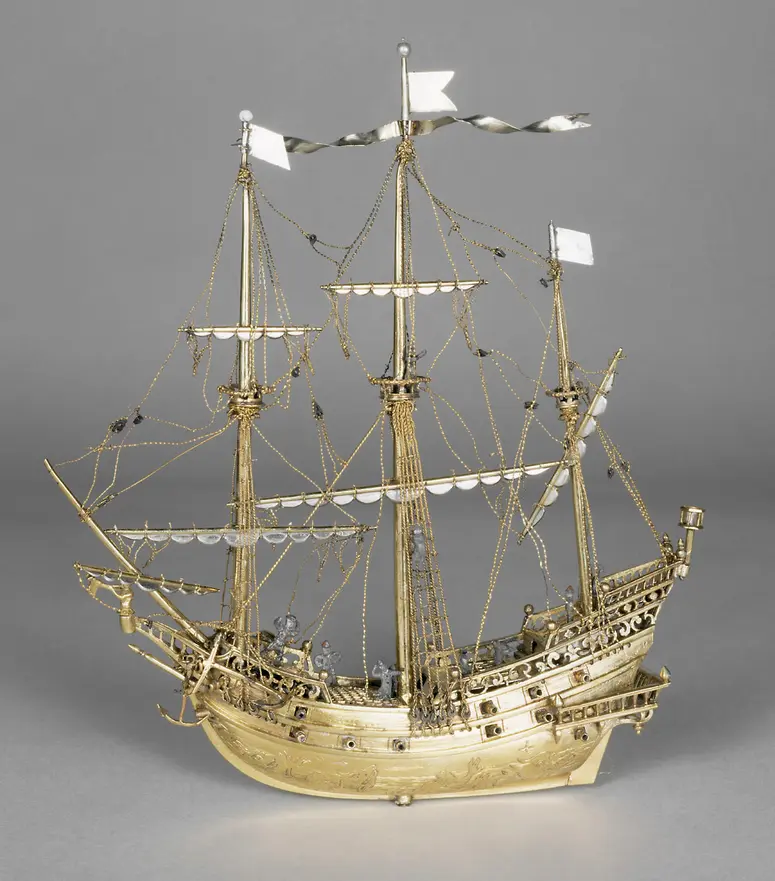
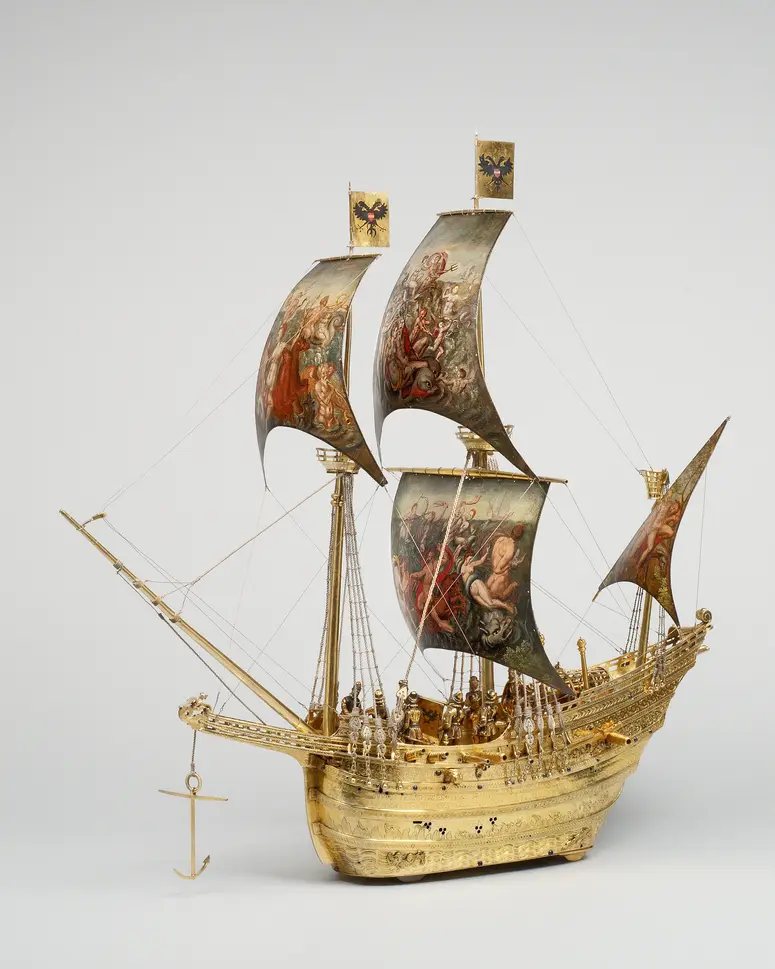
Schiffchenförmiger Tafelaufsatz Abraham Werner 1. Viertel 17. Jahrhundert
Karl I. (V.) (1516-1556), als Karl I. König von Spanien, ab 1519 deutscher König, ab 1520 Kaiser ca. 1700–1800
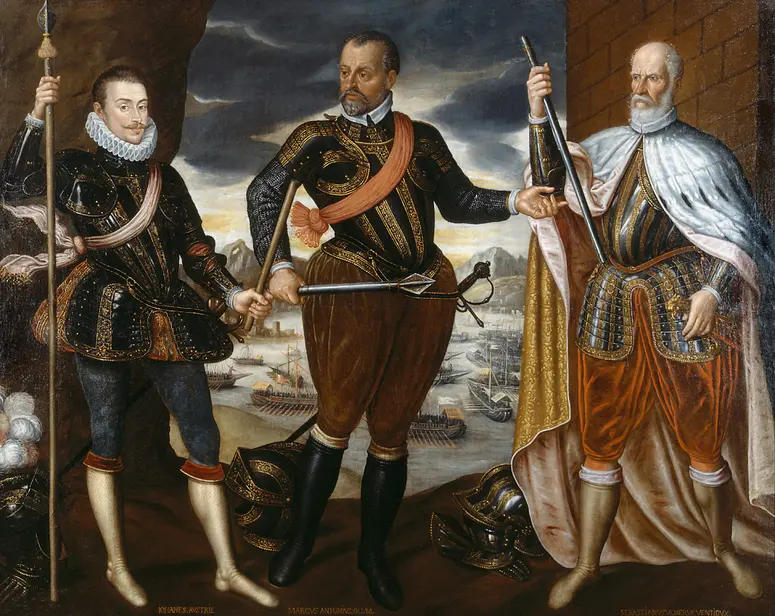
Die Sieger der Seeschlacht von Lepanto 1571 Italienisch, Florenz (?) um 1575
Der Erzengel Michael stürzt den Teufel in den Abgrund Bartolomé Estéban Murillo um 1665/1668

Nautilus-Gehäuse, Nautlius, Meeresschnecke, Naturalie 2. Hälfte 16. Jahrhundert
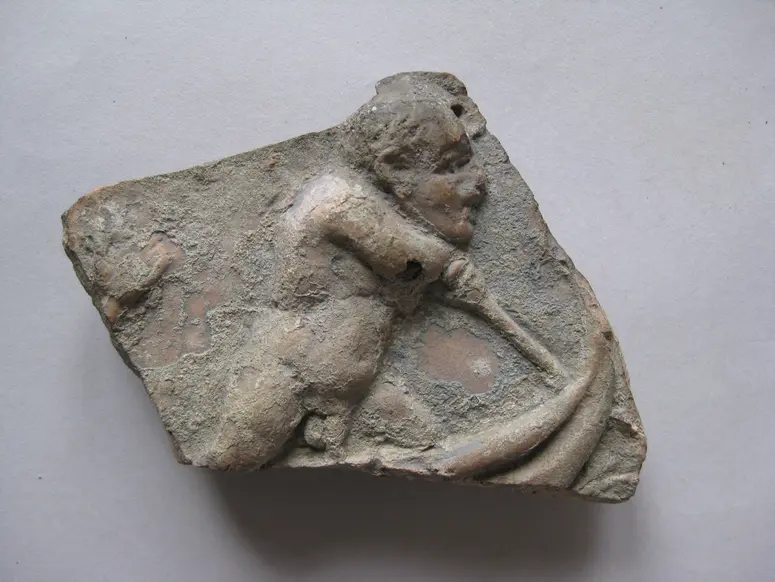
Campanarelief: Fragment einer Nillandschaft: Kahnschiffer Römisch, Frühe Kaiserzeit 1. Hälfte 1. Jh. n. Chr.
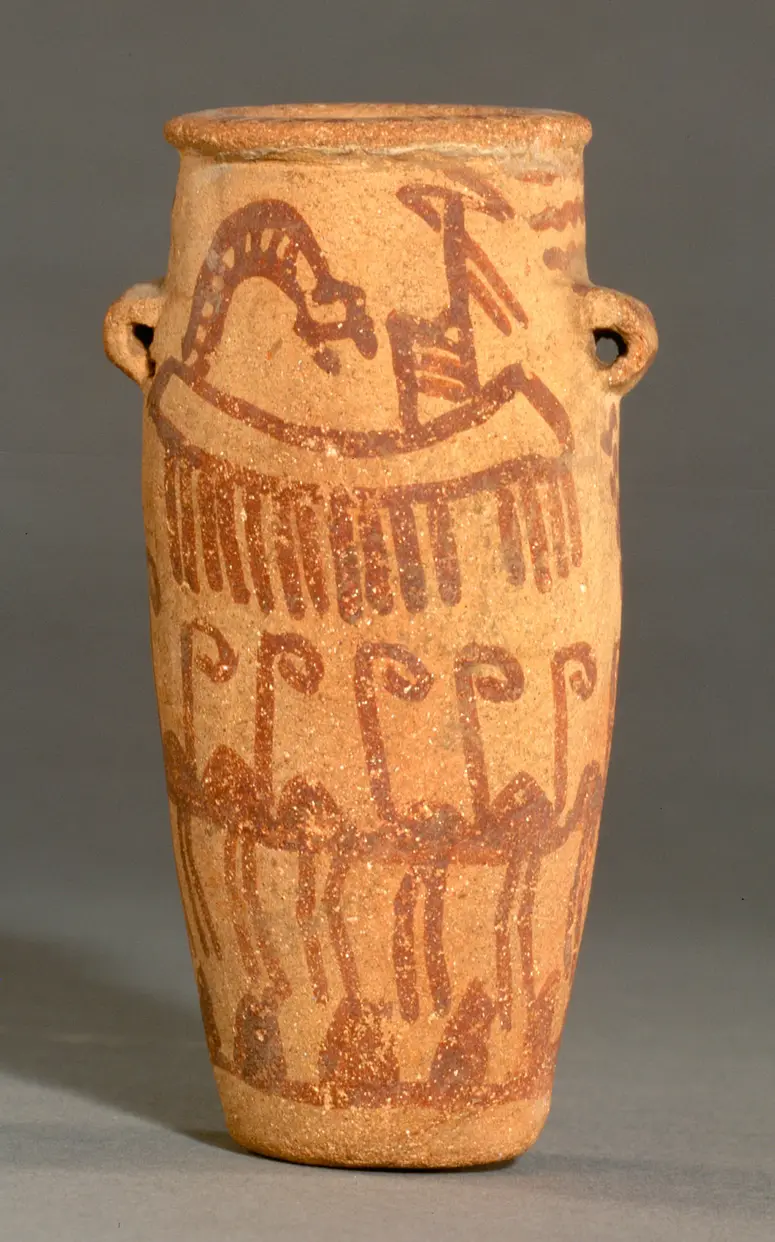
Gefäß mit Darstellung von Schiffen und Vögeln El-Kubanija Süd, Grab 21 h 2 Späte Naqada II-Kultur, ca. 3300-3150 v. Chr.

Graviertes Nautilusgehäuse, Nautilus-Schale, Nautilus-Gehäuse, Nautlius, Meeresschnecke 2. Hälfte 16. Jahrhundert

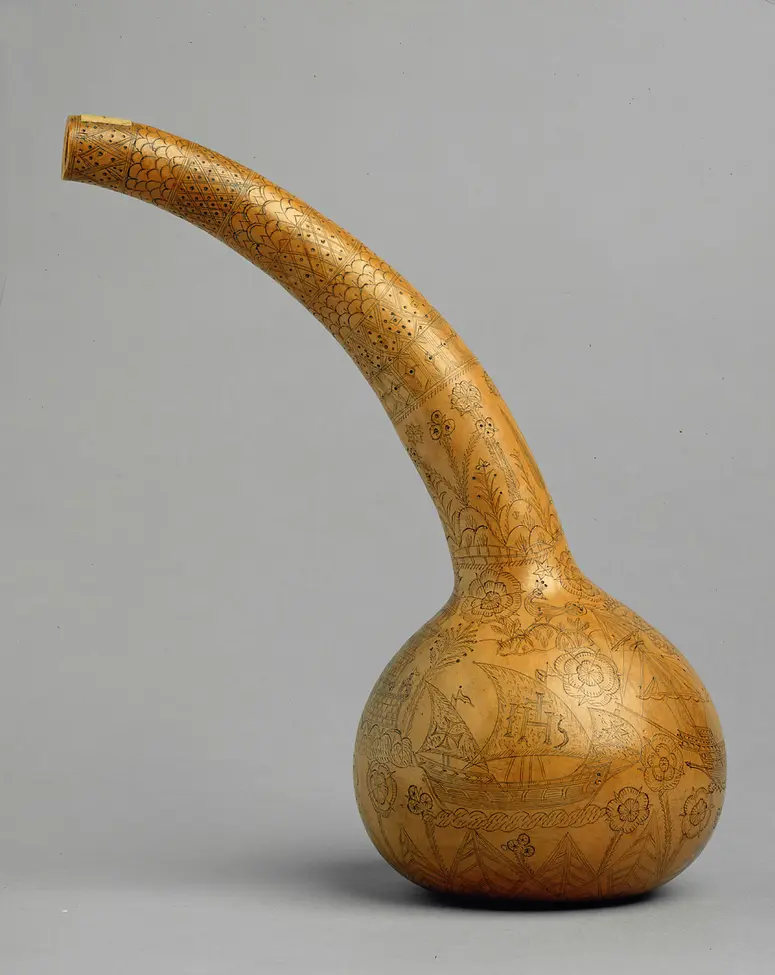
Flaschenkürbis, Schnitzarbeit, Naturalie, Kürbis Ende 16. Jahrhundert
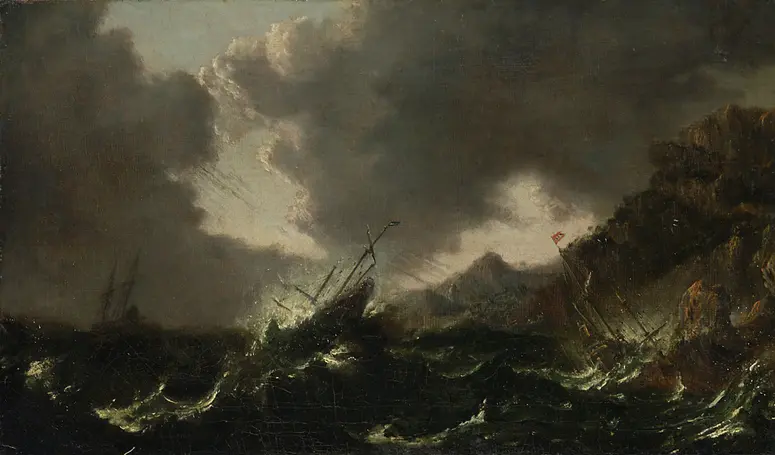
Ein Seesturm mit Schiffen Pieter Mulier d. J., gen. Cavaliere Tempesta 2. Hälfte 17. Jahrhundert