Stierkopfprotome
1625 - 1450 v. Chr.
The shape of funnel-shaped vessels, which were used primarily in worship, is derived from Cretan models; protomes -- usually as a bull’s head -- are characteristic of Cyprus.The oblong, spindle-shaped body, which narrows towards a point at the bottom, has a narrow, conical base-ring with a funnel opening underneath; the short, concave neck with spreading, round mouth and prominent, angular lip is sharply carinated. On the shoulders, a vertical, loop handle; opposite on the front, a bull’s head protome with curved horns tilted to the front, pointed muzzle and three-dimensional eyes. The relief decoration on the body consists of vertical bands of incised strokes: five on each side of the body; on the front, two bands that connect above the bull’s head protome and a third that begins beneath the protome. On the back, a band beneath the base of the handle as well as a circumambient, horizontal band at the base of the neck.
A. Bernhard-Walcher u.a., Die Sammlung zyprischer Antiken im KHM. Sammlungskataloge des KHM Bd. 2, Wien 1999
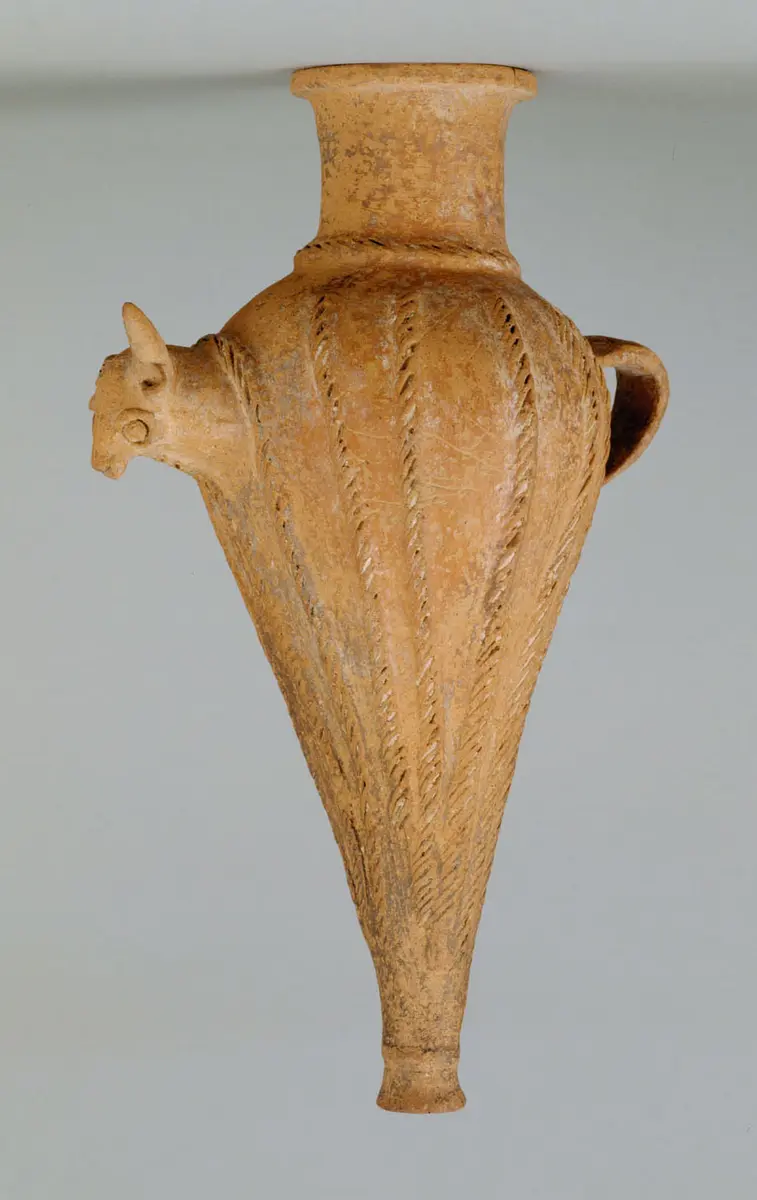
The shape of funnel-shaped vessels, which were used primarily in worship, is derived from Cretan models; protomes -- usually as a bull’s head -- are characteristic of Cyprus.The oblong, spindle-shaped body, which narrows towards a point at the bottom, has a narrow, conical base-ring with a funnel opening underneath; the short, concave neck with spreading, round mouth and prominent, angular lip is sharply carinated. On the shoulders, a vertical, loop handle; opposite on the front, a bull’s head protome with curved horns tilted to the front, pointed muzzle and three-dimensional eyes. The relief decoration on the body consists of vertical bands of incised strokes: five on each side of the body; on the front, two bands that connect above the bull’s head protome and a third that begins beneath the protome. On the back, a band beneath the base of the handle as well as a circumambient, horizontal band at the base of the neck.
A. Bernhard-Walcher u.a., Die Sammlung zyprischer Antiken im KHM. Sammlungskataloge des KHM Bd. 2, Wien 1999
Time:
1625 - 1450 v. Chr.
Object Name
Trichter der Base-Ring I Ware
Culture
Zyprisch
Location of discovery:
Zypern
Material/technology:
Ton hellbraun, mit grauem Kern, krobkörnig; Überzug graubraun, matt, bis zur Halsinnenseite. Handgeformt.
Dimensions:
Dm. (Mündung) 6 cm, Dm. (Standring) 2,4 cm: L/H 26,1 × B 16,8 × D 9,9 cm
Copyright
Kunsthistorisches Museum, Antikensammlung
Invs.
Antikensammlung, IV 1535
Provenance
Ludolf, Graf, Emmanuel, Madrid; 1879 Geschenk
Browse more
Similar items you might be interested in
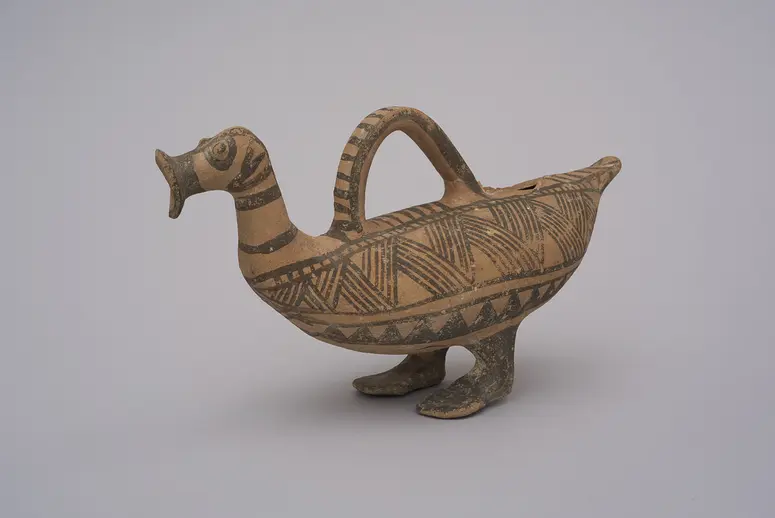
Askos der Proto-White Painted Ware: Form eines Vogels Zyprisch, Bronzezeit, Spätzyprisch 1125 - 1050 v. Chr.
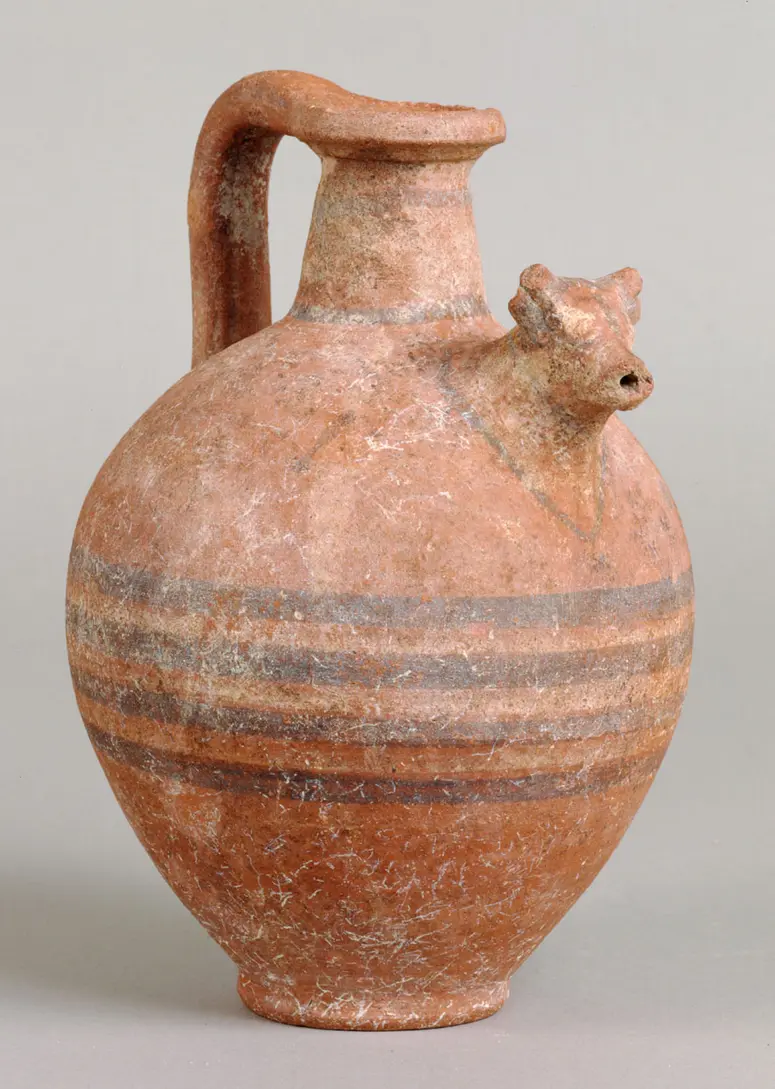
Kanne der Bichrome Red II (V) Ware: Stierkopfprotome Zyprisch, Eisenzeit, archaisch 600 - 480 v. Chr.
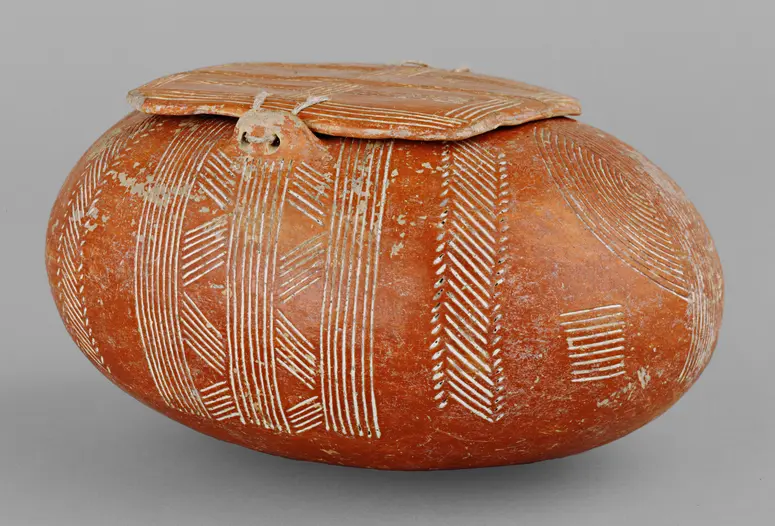
Deckelbüchse (Pyxis) der Red Polished III Ware: Ritzdekor Zyprisch, Bronzezeit, Früh- bis Mittelzyprisch 2000 - 1800 v. Chr.
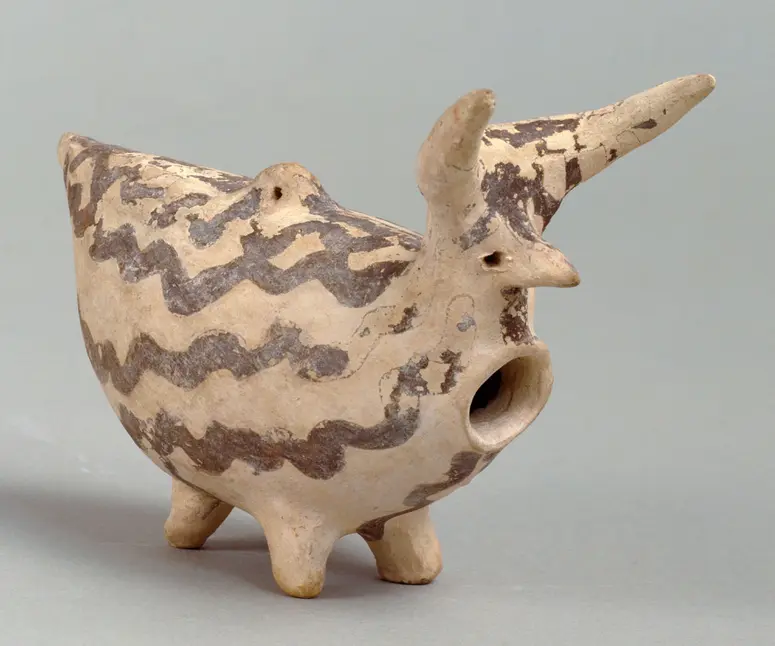
Askos der White Painted Ware: Form eines Stieres Zyprisch, Bronzezeit, Mittelzyprisch 1725 - 1600 v. Chr.
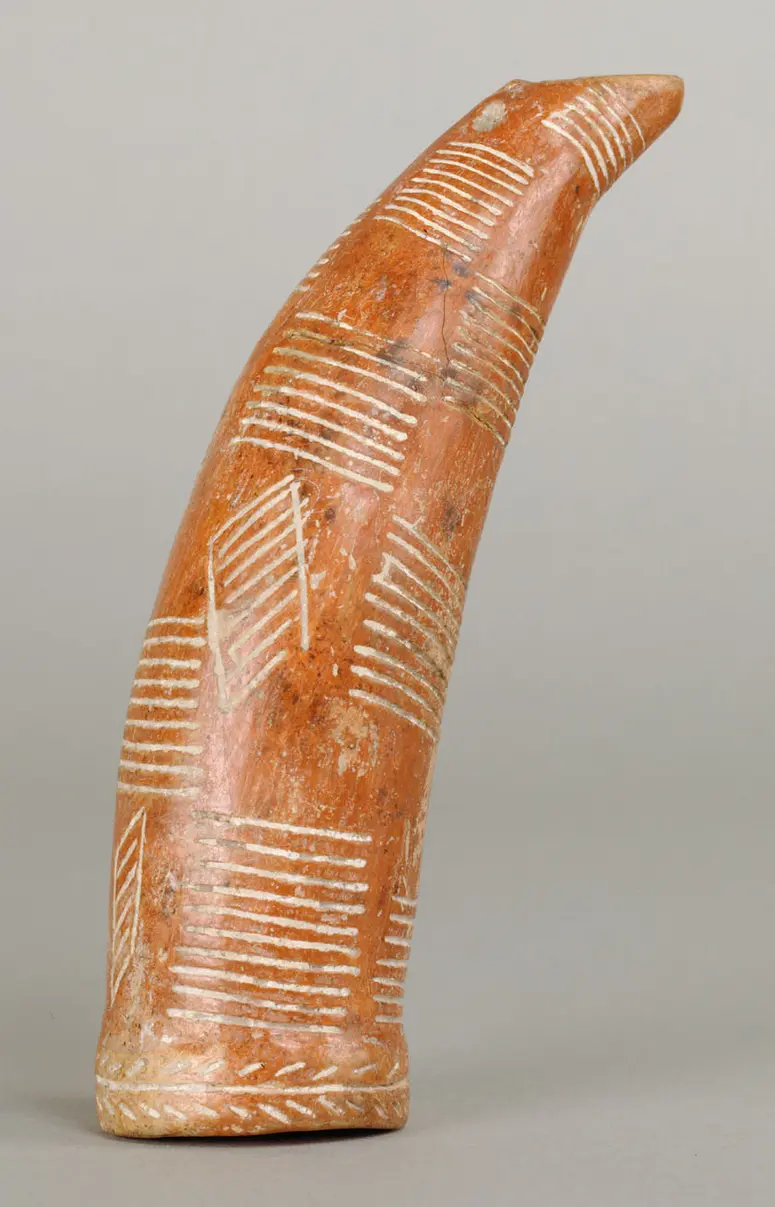
Hornförmiges Gefäß der Red Polished III Ware: Ritzdekor Zyprisch, Bronzezeit, Früh- bis Mittelzyprisch 2000 - 1800 v. Chr.
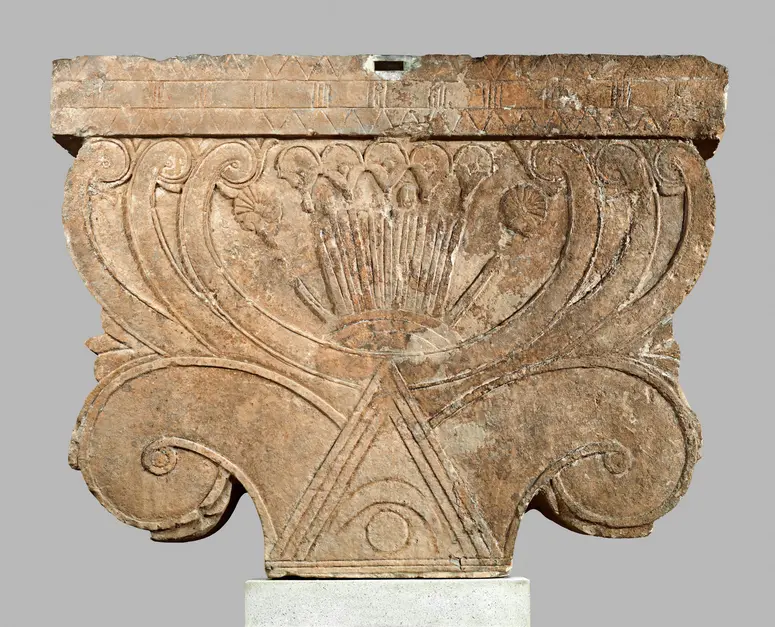
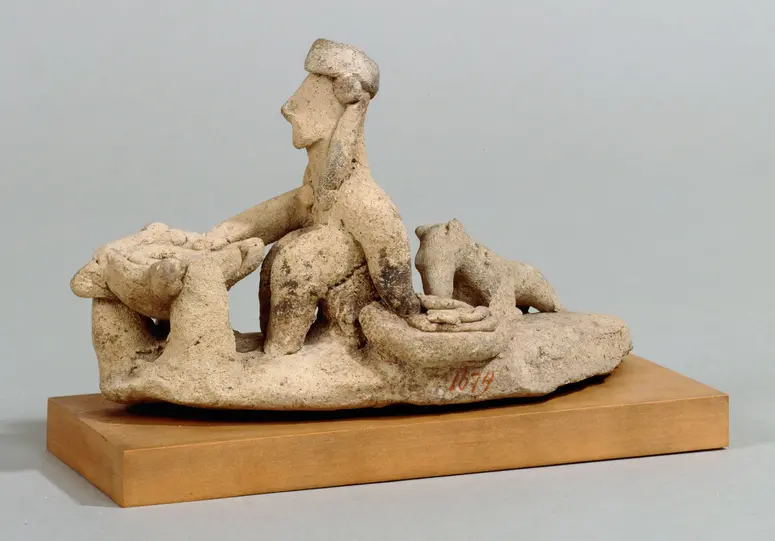
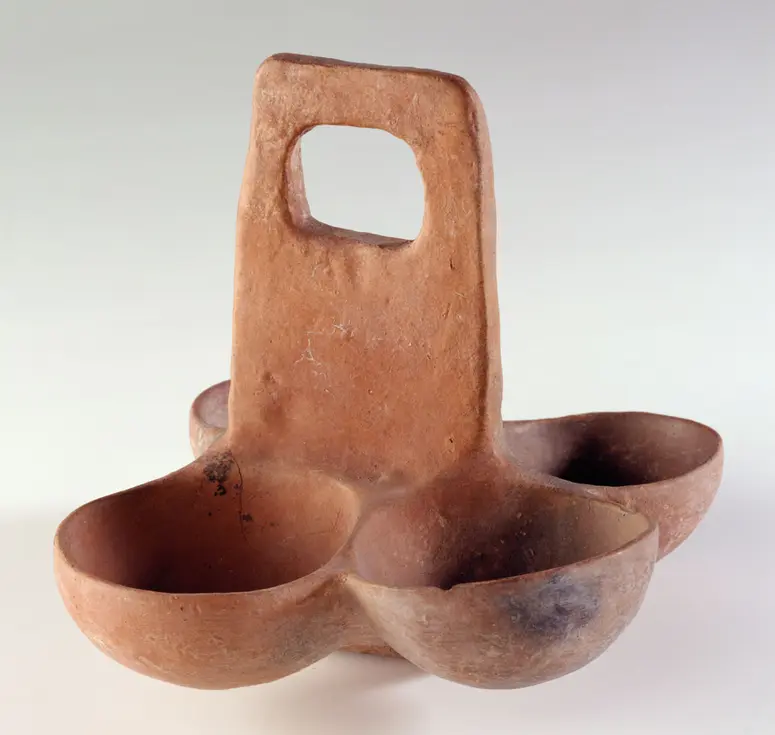
Kompositgefäß der Base-Ring I Ware (?): Halbkugelförmige Schalen Zyprisch, Bronzezeit, Spätzyprisch 1625 - 1450 v. Chr.
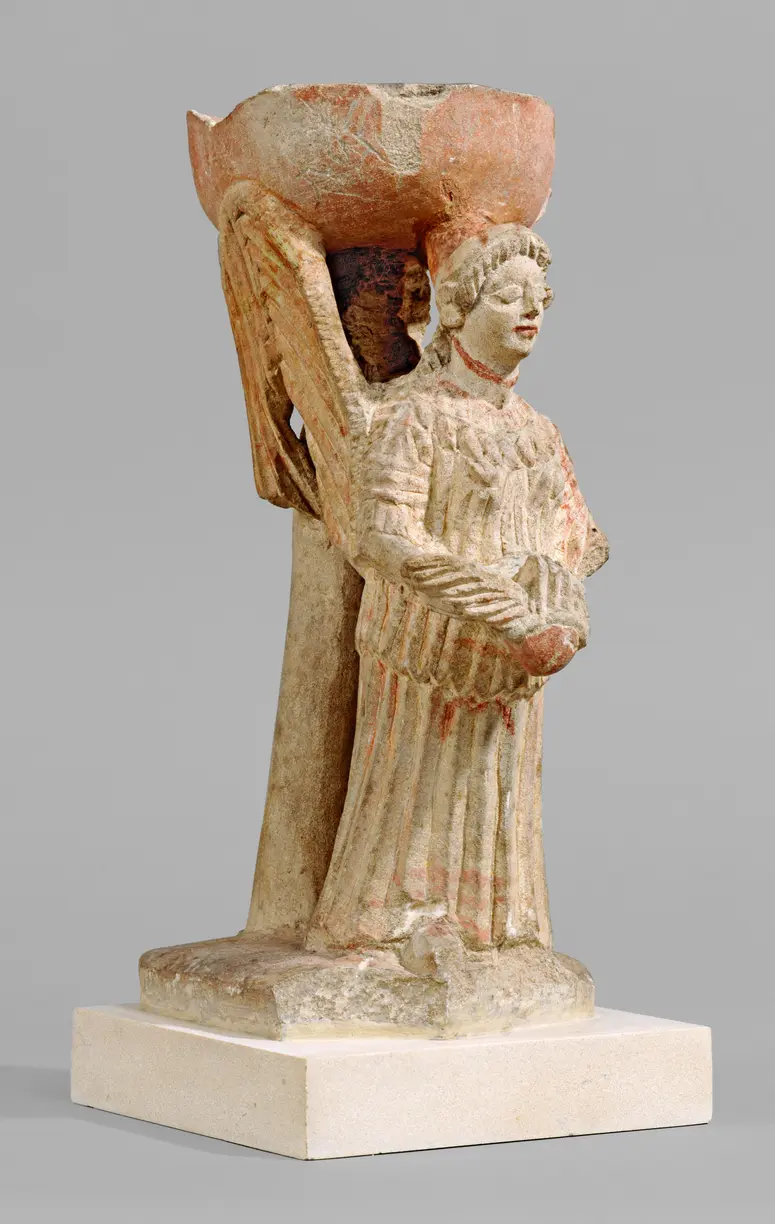
Räuchergefäß: Flügelfrau mit Räucherbecken Zyprisch, Eisenzeit, archaisch 1. Viertel 5. Jh. v. Chr.
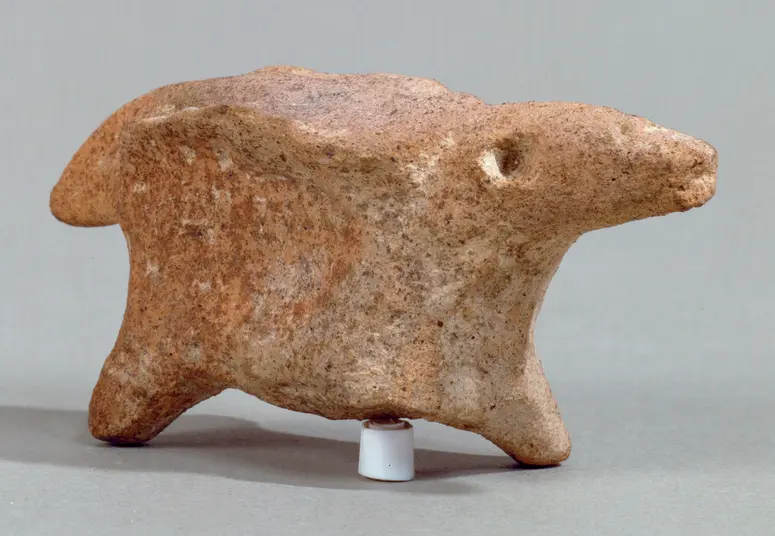
Statuette der Red Slip Ware: Tierfigur Zyprisch, Bronzezeit, Mittelzyprisch 1900 - 1800 v. Chr.
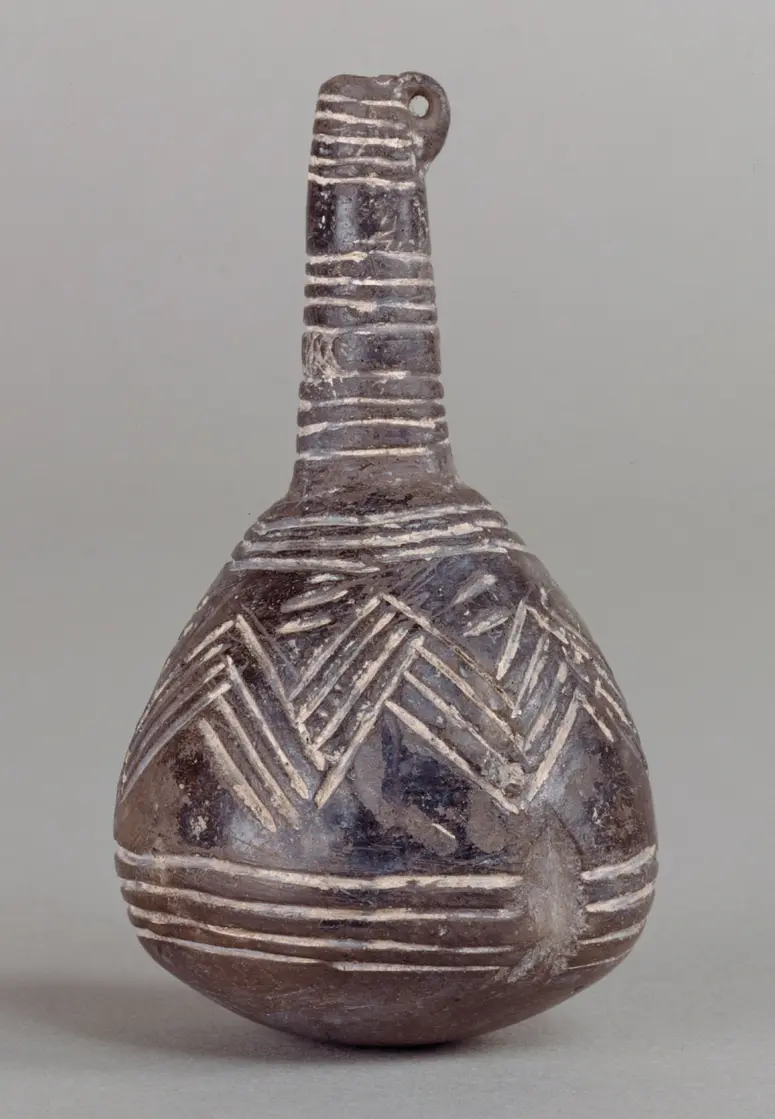
Fläschchen der Black Polished Ware: Ritzdekor Zyprisch, Bronzezeit, Früh- bis Mittelzyprisch 2000 - 1800 v. Chr.
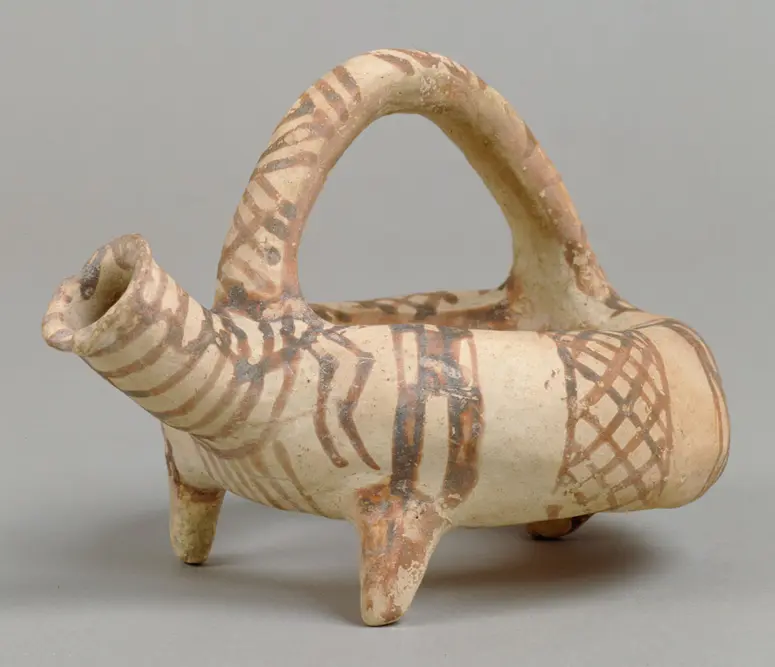
Ringaskos der White Painted III Ware: Liniendekor Zyprisch, Bronzezeit, Mittelzyprisch 1725 - 1625 v. Chr.
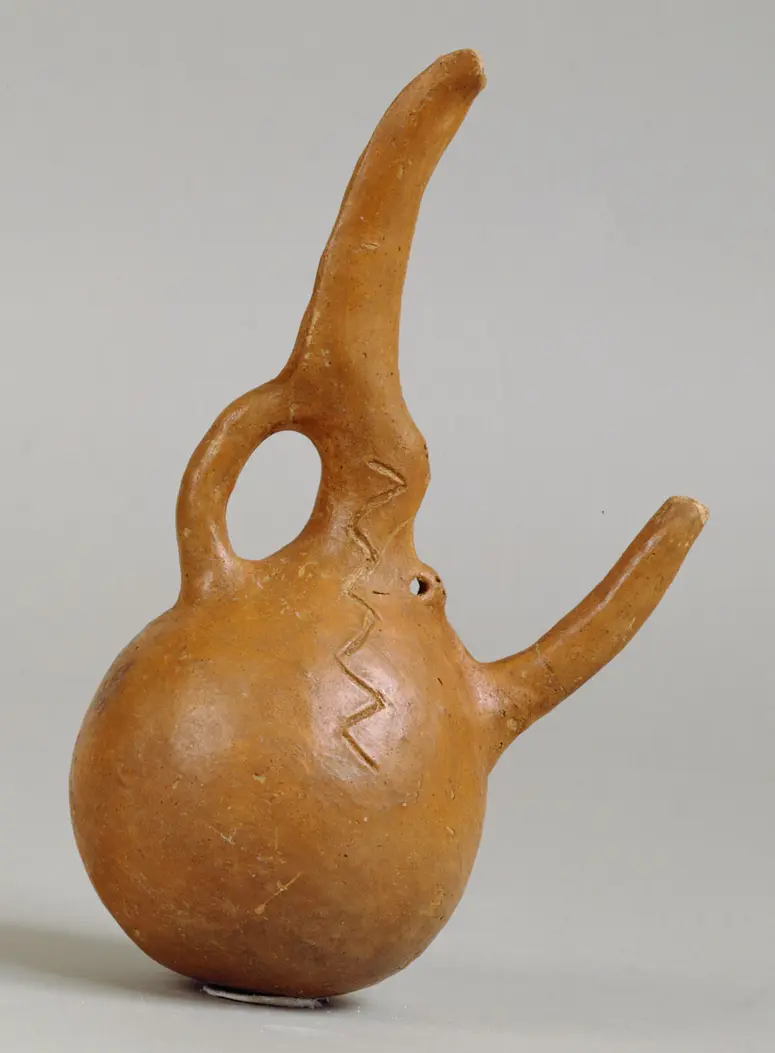
Schnabelkanne der Red Polished III Ware: Ritzdekor Zyprisch, Bronzezeit, Früh- bis Mittelzyprisch 2000 - 1800 v. Chr.
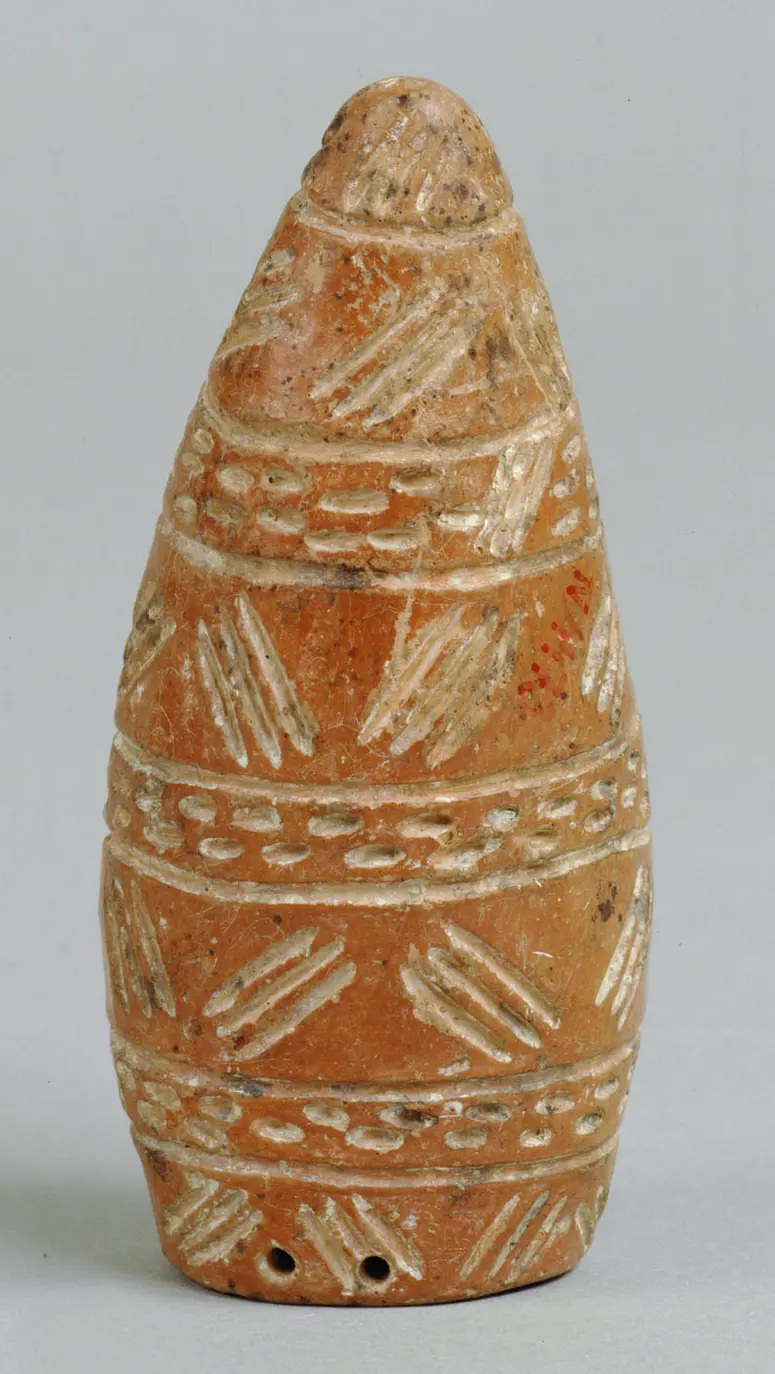
Hornförmiges Gefäß der Red Polished III Ware: Ritzdekor Zyprisch, Bronzezeit, Früh- bis Mittelzyprisch 2000 - 1800 v. Chr.
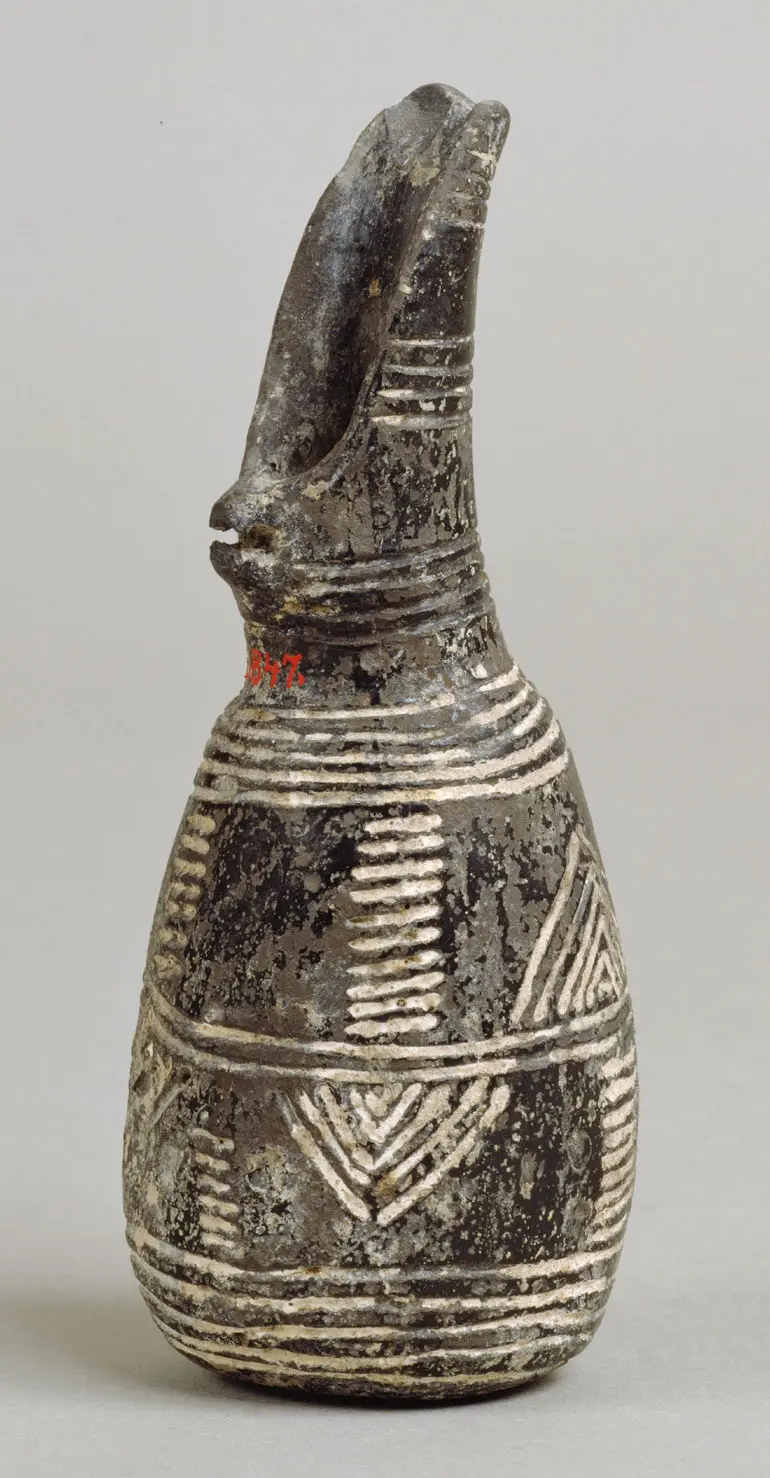
Schnabelkännchen der Black Polished Ware: Ritzdekor Zyprisch, Bronzezeit, Mittelzyprisch 1900 - 1725 v. Chr.
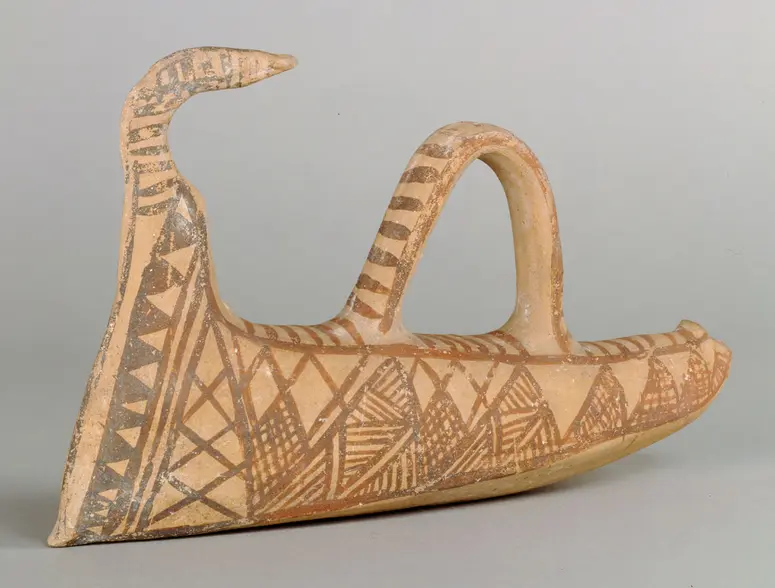
Askos der Proto-White Painted Ware: Form eines Schiffes Zyprisch, Bronzezeit, Spätzyprisch 1125 - 1050 v. Chr.
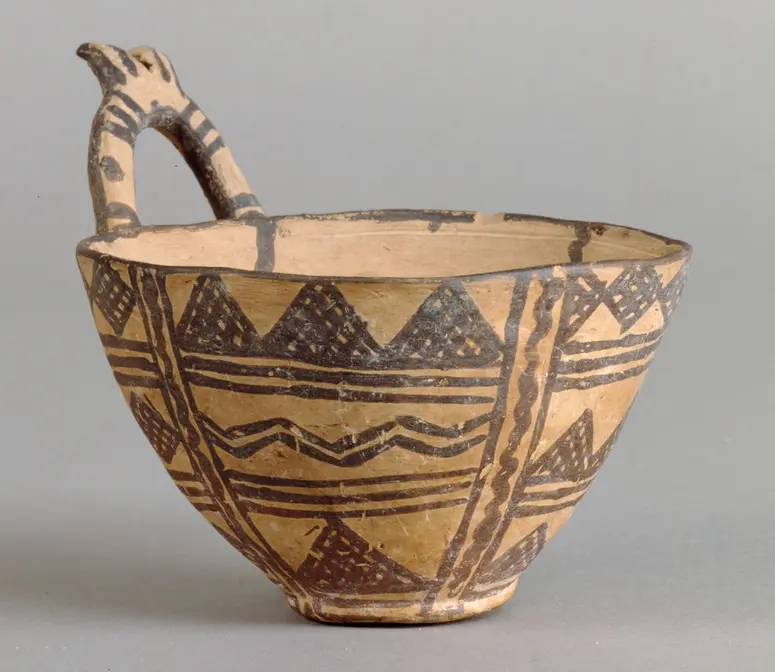
Henkelschale der White Painted Ware: Liniendekor Zyprisch, Bronzezeit, Mittelzyprisch 1725 - 1625 v. Chr.