Anthropomorphe Form
6. Jh. v. Chr.
The jug belongs to a class of pottery very characteristic of Cypriote ceramics. From the Middle Cypriote period onwards the Cypriote potter was inclined to consider ceramic creations as human beings, by attributing to them a human face, arms, breasts etc. While from the point of view of pottery form and style, this anthropomorphizing tendency may not have been entirely successful, it is nevertheless interesting and amusing. The creator of the jug played with the idea of reproducing a mother and child and managed to transform the spout of the jug, which in itself is a miniature jug, into an infant. The jug has an ovoid body, short neck in the form of a female human face, four horizontal ridges along the upper part and a flat out-turned rim. Twin handle from rim to shoulder, conical splaying foot. Opposite the handle on the shoulder, a spout in the form of a miniature jug, its mouth missing. Two human arms spring from the base of the neck. They are in relief and bend towards the spout. The left one terminates in a hand that is placed below the spout, the right one has its hand missing. Below the spout there are two legs and feet of an infant in relief, as if they were the legs of the spout conceived of as an infant, held by its mother. The face of the “mother” is carefully rendered in relief with a nose, the mouth rendered with a pellet and round chin. Large ears in relief, with three sets of ring-shaped ear-rings along the border. In front of the ear-rings, on the temples, a lock of curly hair in added clay, now detached. Two long locks of hair below each ear. Large almond-shaped eyes outlined in black, filled with white, with spots in black for eyeballs. Hair painted black. Two black bands around neck, black also for ridges below rim. Dotted rosettes in the place of the breasts. Transversal black lines on arms and on infant’s legs. Black bands around the middle of the body. Transversal black bands on outer part of handle. Three-pronged arrow motif below base of handle.
A. Bernhard-Walcher u.a., Die Sammlung zyprischer Antiken im KHM. Sammlungskataloge des KHM Bd. 2, Wien 1999 (V. Karageorghis)
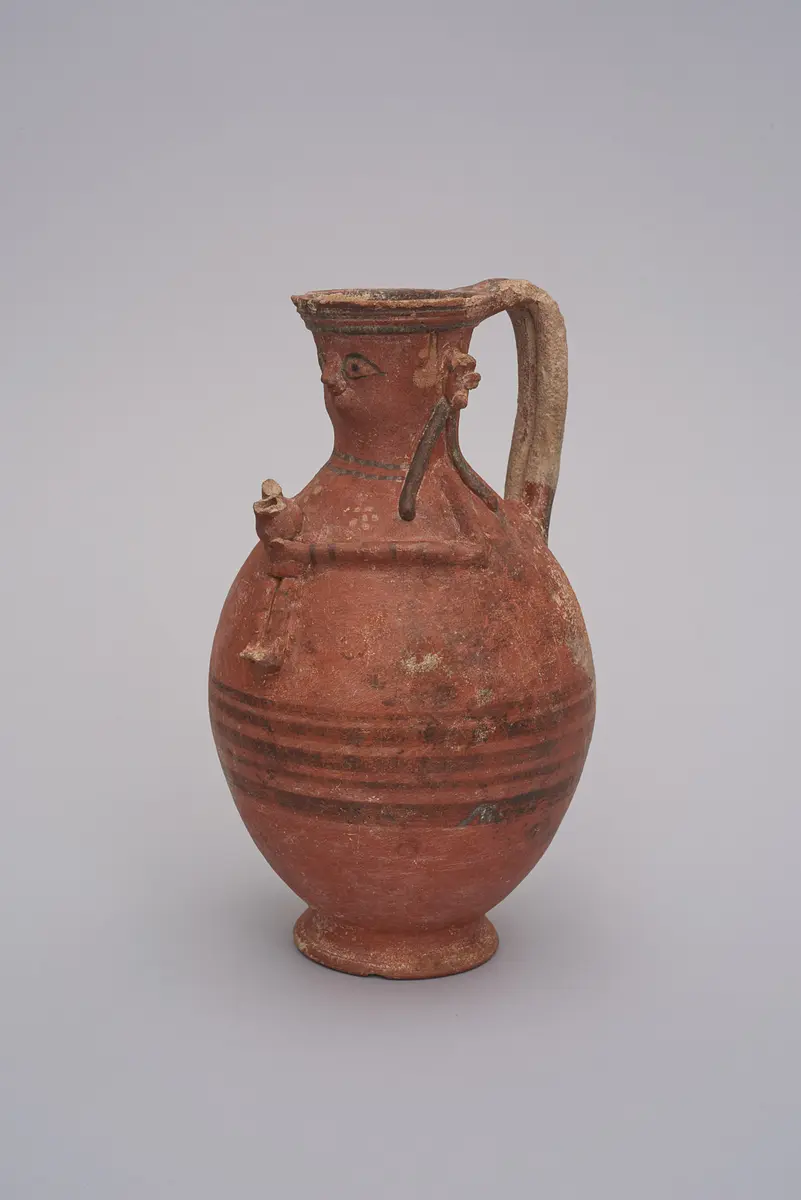
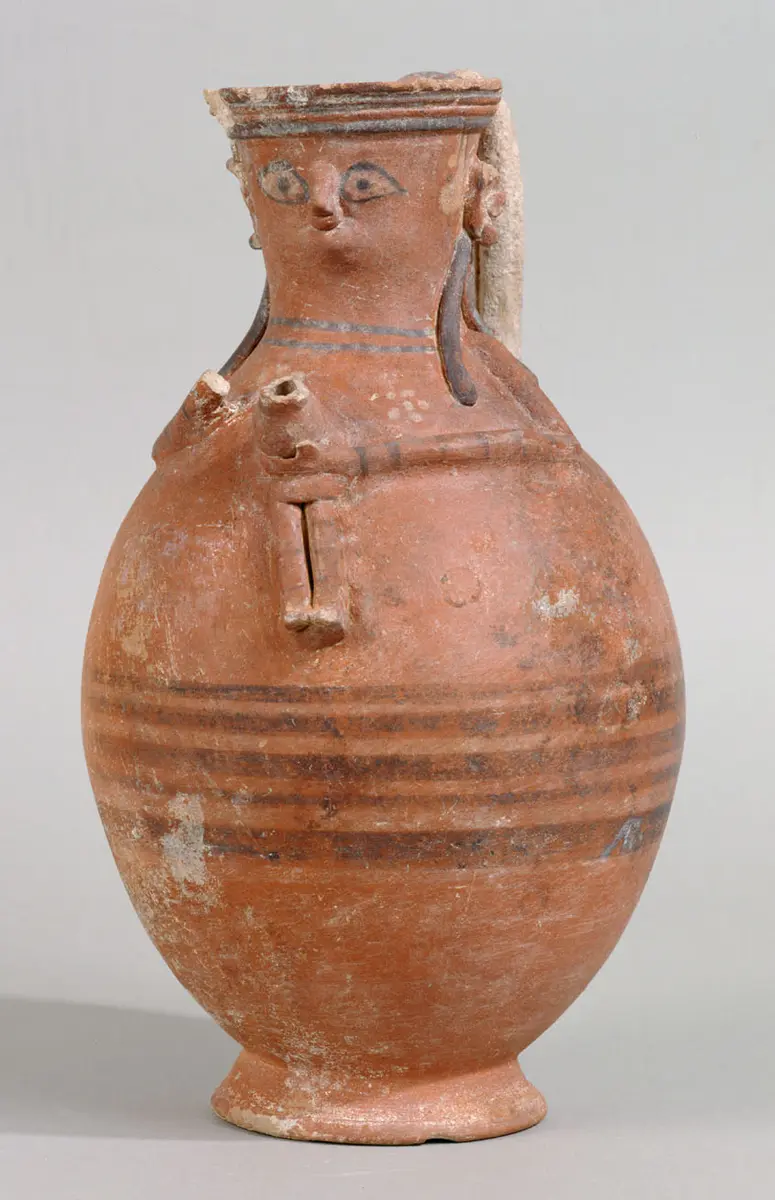
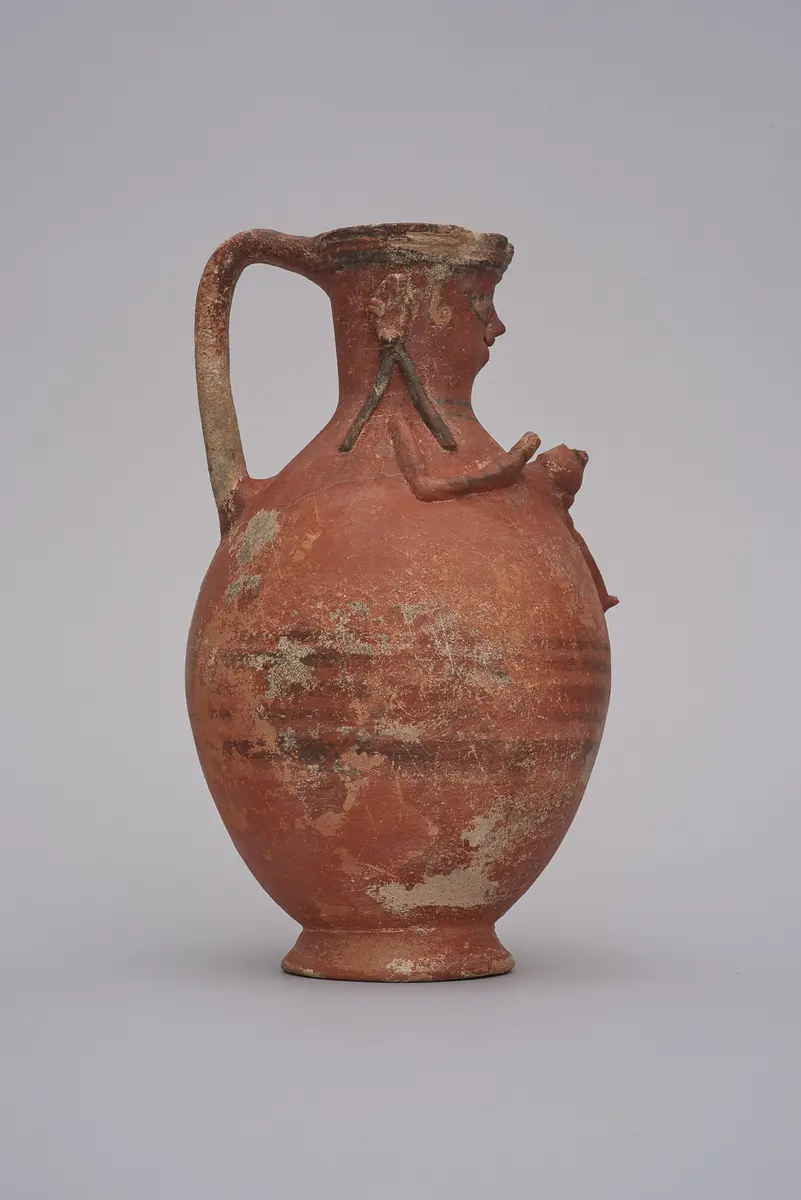
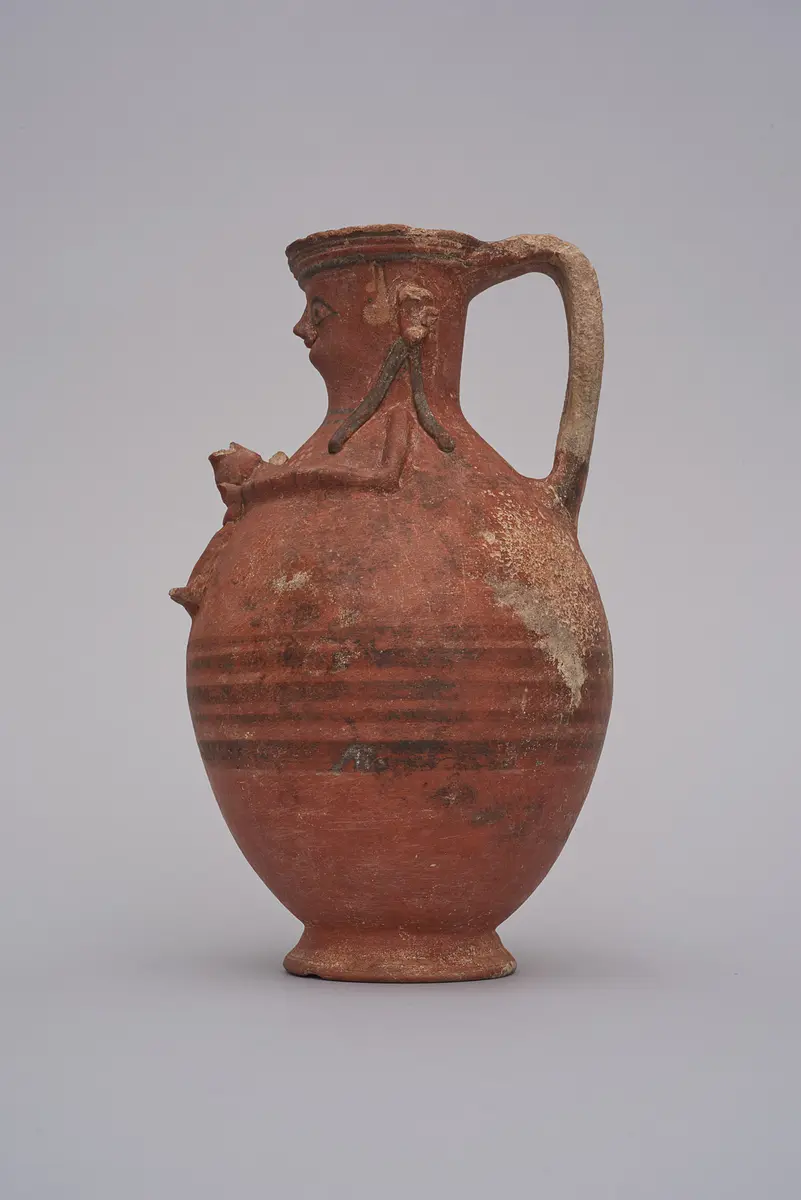
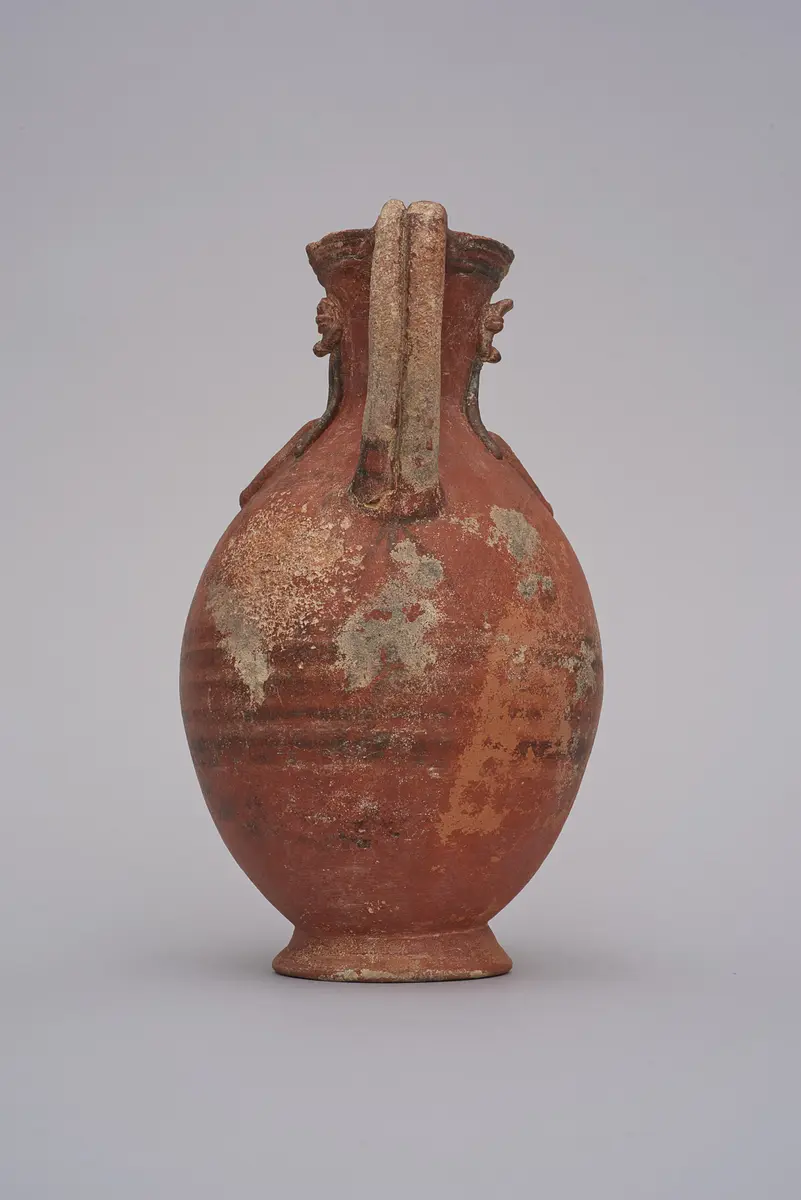
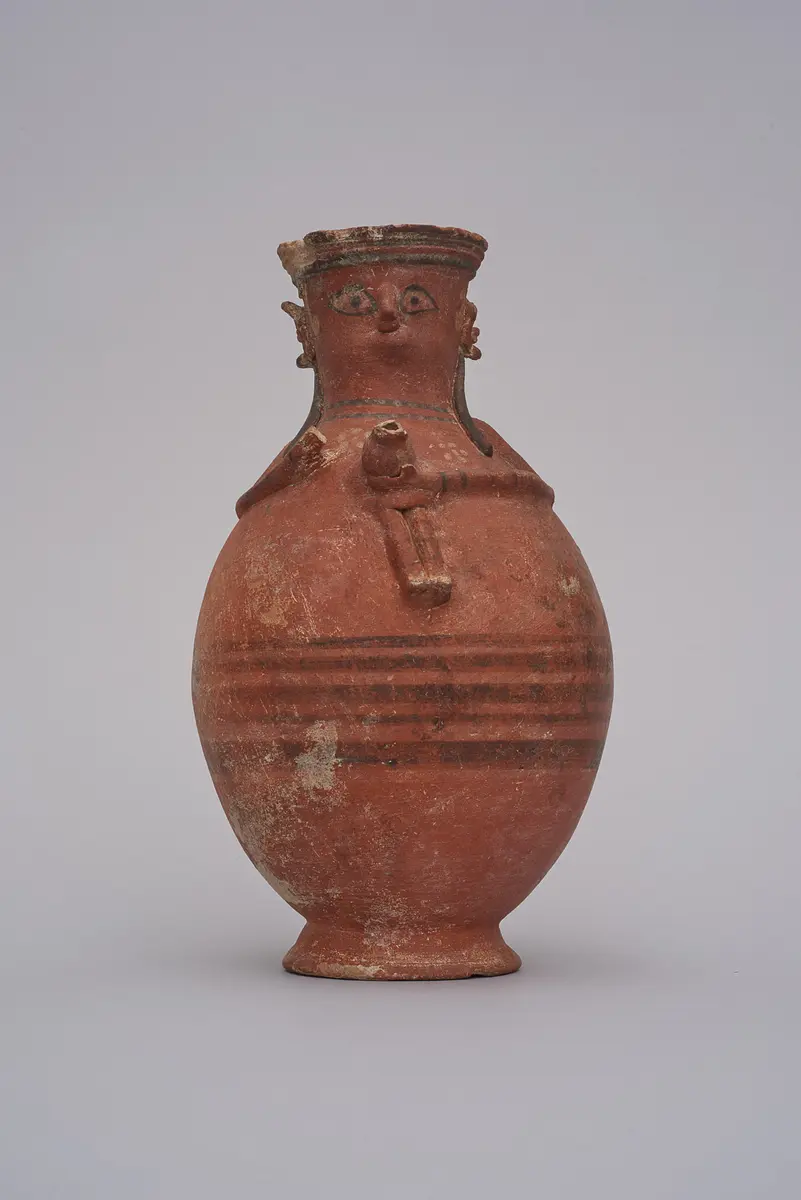
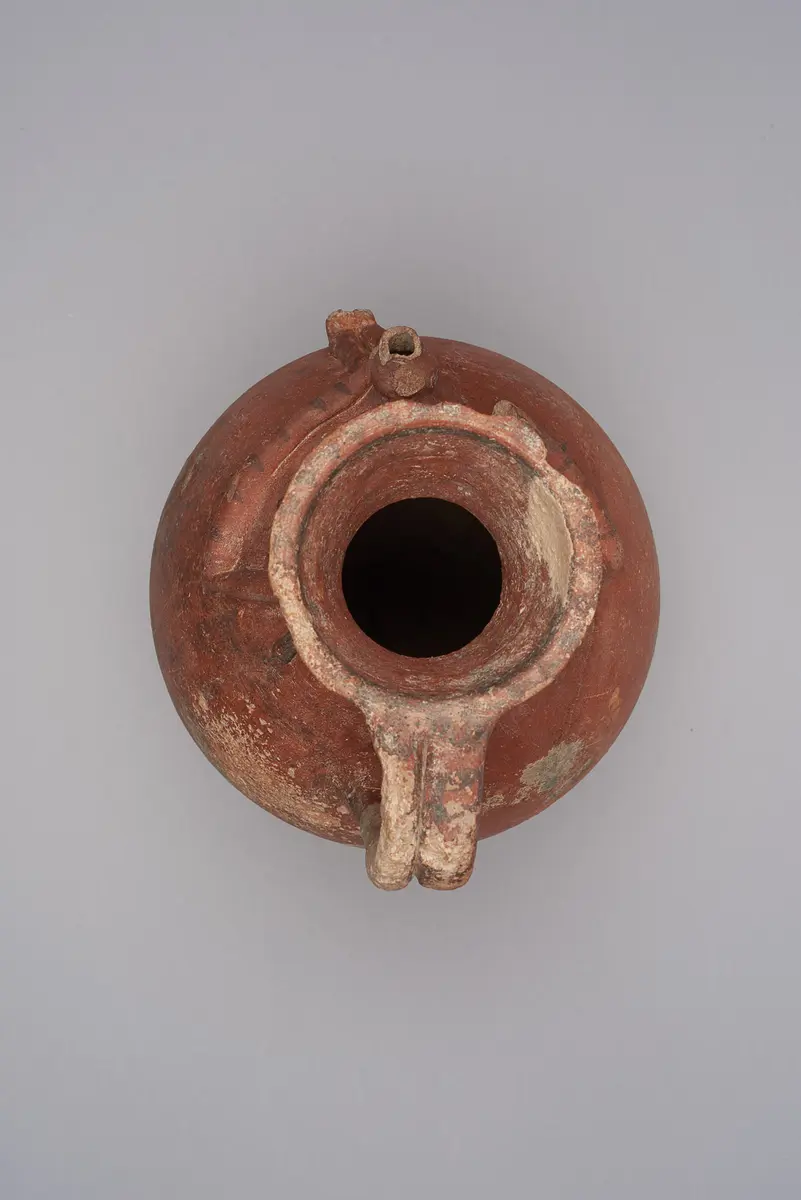
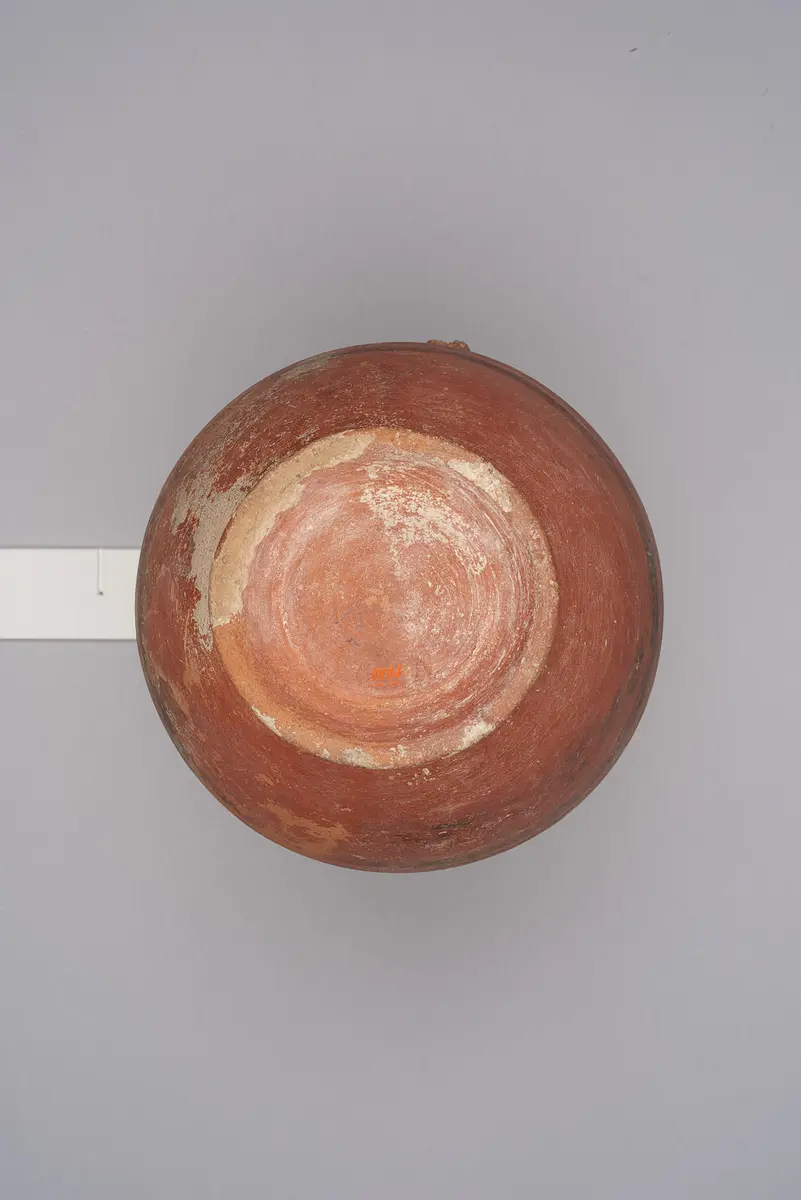
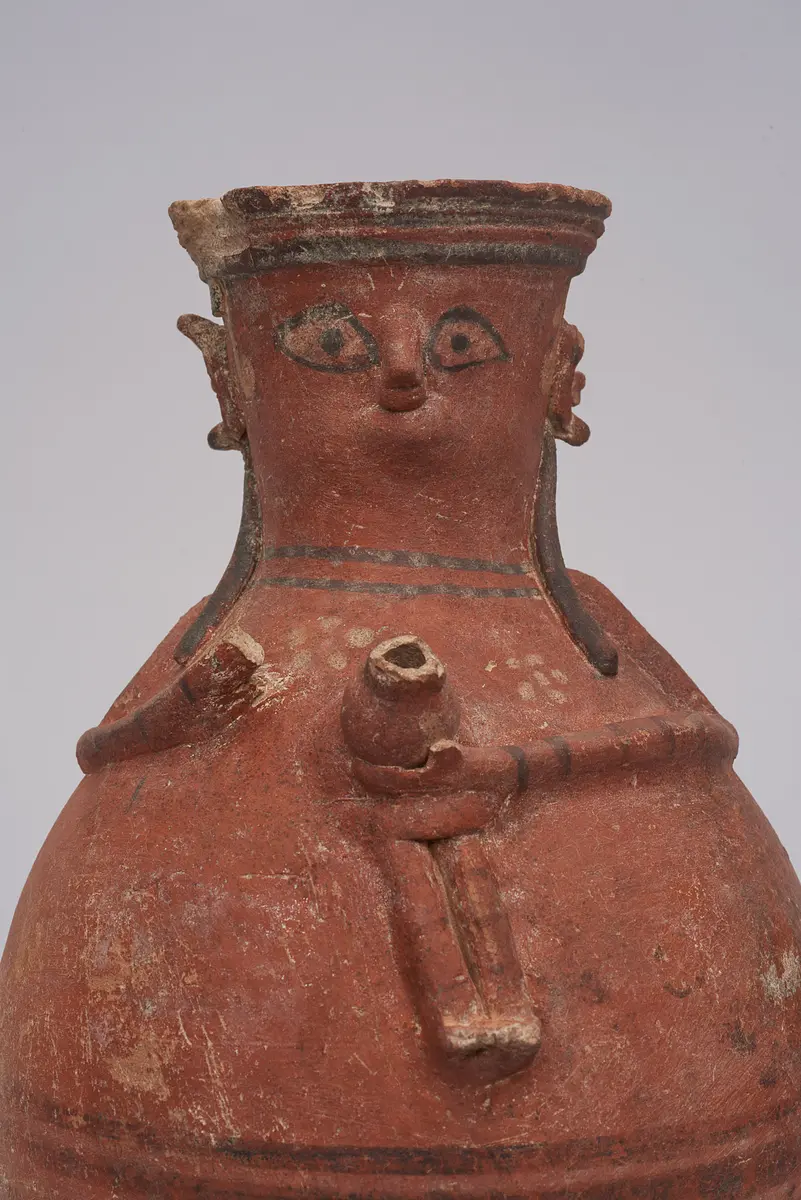
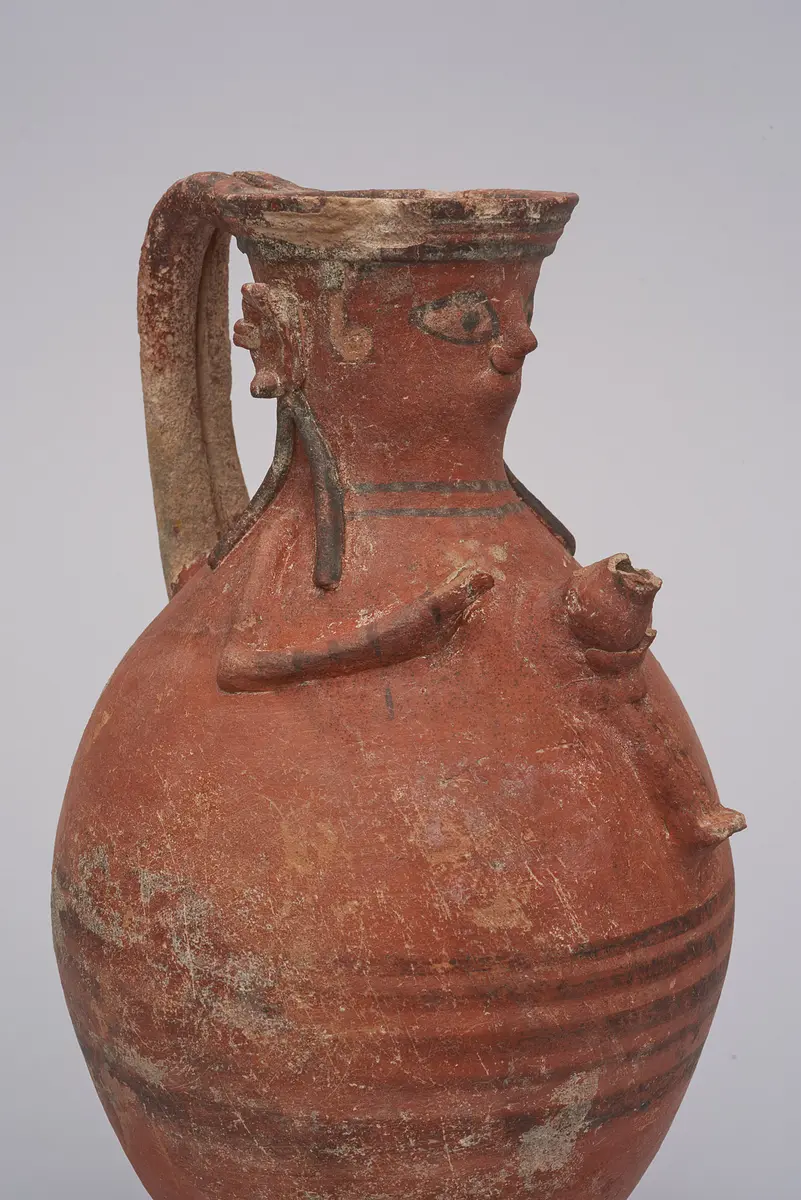
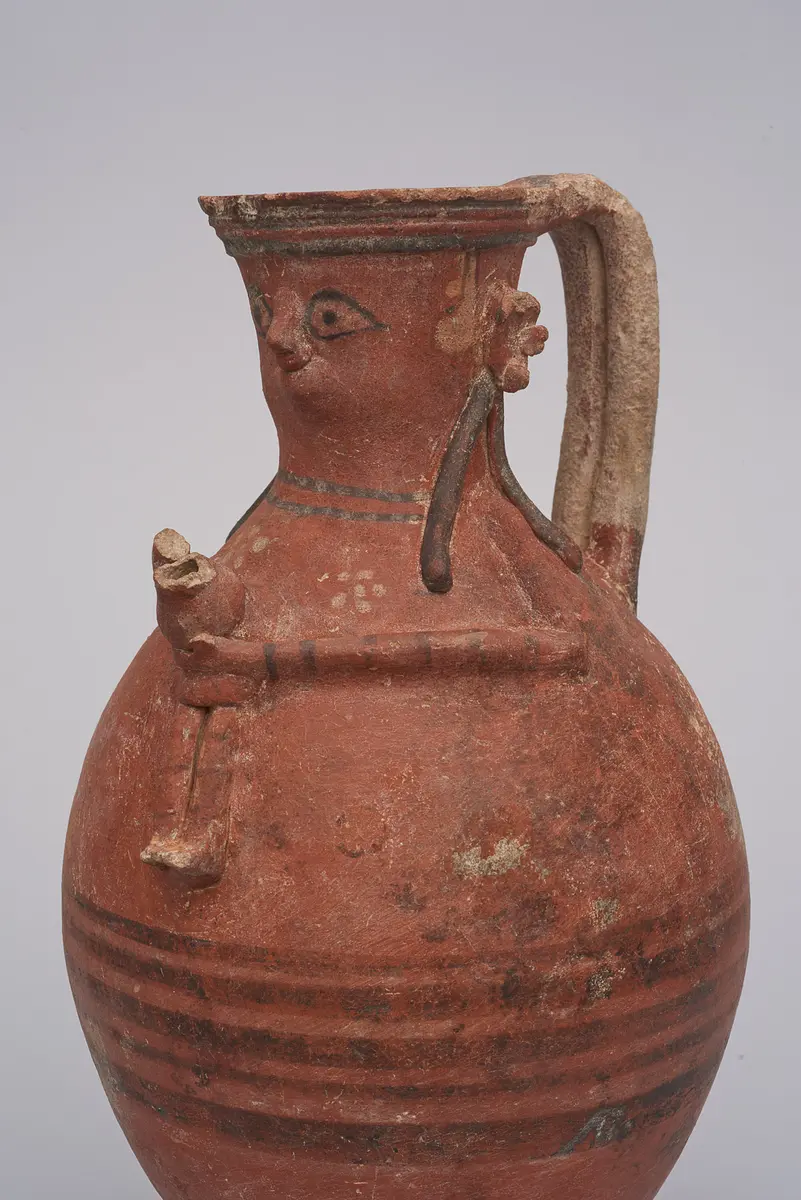
The jug belongs to a class of pottery very characteristic of Cypriote ceramics. From the Middle Cypriote period onwards the Cypriote potter was inclined to consider ceramic creations as human beings, by attributing to them a human face, arms, breasts etc. While from the point of view of pottery form and style, this anthropomorphizing tendency may not have been entirely successful, it is nevertheless interesting and amusing. The creator of the jug played with the idea of reproducing a mother and child and managed to transform the spout of the jug, which in itself is a miniature jug, into an infant. The jug has an ovoid body, short neck in the form of a female human face, four horizontal ridges along the upper part and a flat out-turned rim. Twin handle from rim to shoulder, conical splaying foot. Opposite the handle on the shoulder, a spout in the form of a miniature jug, its mouth missing. Two human arms spring from the base of the neck. They are in relief and bend towards the spout. The left one terminates in a hand that is placed below the spout, the right one has its hand missing. Below the spout there are two legs and feet of an infant in relief, as if they were the legs of the spout conceived of as an infant, held by its mother. The face of the “mother” is carefully rendered in relief with a nose, the mouth rendered with a pellet and round chin. Large ears in relief, with three sets of ring-shaped ear-rings along the border. In front of the ear-rings, on the temples, a lock of curly hair in added clay, now detached. Two long locks of hair below each ear. Large almond-shaped eyes outlined in black, filled with white, with spots in black for eyeballs. Hair painted black. Two black bands around neck, black also for ridges below rim. Dotted rosettes in the place of the breasts. Transversal black lines on arms and on infant’s legs. Black bands around the middle of the body. Transversal black bands on outer part of handle. Three-pronged arrow motif below base of handle.
A. Bernhard-Walcher u.a., Die Sammlung zyprischer Antiken im KHM. Sammlungskataloge des KHM Bd. 2, Wien 1999 (V. Karageorghis)
Time:
6. Jh. v. Chr.
Object Name
Kanne der Bichrome Red II (V) Ware
Culture
Zyprisch
Location of discovery:
Idalion (Dhali, Zypern)
Material/technology:
Ton hellbraun; Überzug rot; Bemalung schwarz
Dimensions:
H. 29 cm, Dm. 16,2 cm
Copyright
Kunsthistorisches Museum, Antikensammlung
Invs.
Antikensammlung, V 1111
Provenance
Cesnola, Luigi Palma di, Konsul, Larnaka; 1869 Kauf
Browse more
Similar items you might be interested in

Portrait of a Young Woman in Profile Jacopo Negretti, gen. Palma il Vecchio around 1520/25

Young Woman in Blue Dress with Fan Jacopo Negretti, gen. Palma il Vecchio around 1512/14
Madonna mit Kind und Heiligen J. Löwy, K. und K. Hof-Photograph, Kunst- und Verlagsanstalt (Wien) 1888 bis 1910
Salome with the Head of John the Baptist Jacopo Negretti, gen. Palma il Giovane around 1599

Evangelist Johannes J. Löwy, K. und K. Hof-Photograph, Kunst- und Verlagsanstalt (Wien) 1888 bis 1891

Johannes der Täufer J. Löwy, K. und K. Hof-Photograph, Kunst- und Verlagsanstalt (Wien) 1888 bis 1891
Hl. Rochus J. Löwy, K. und K. Hof-Photograph, Kunst- und Verlagsanstalt (Wien) 1888 bis 1891
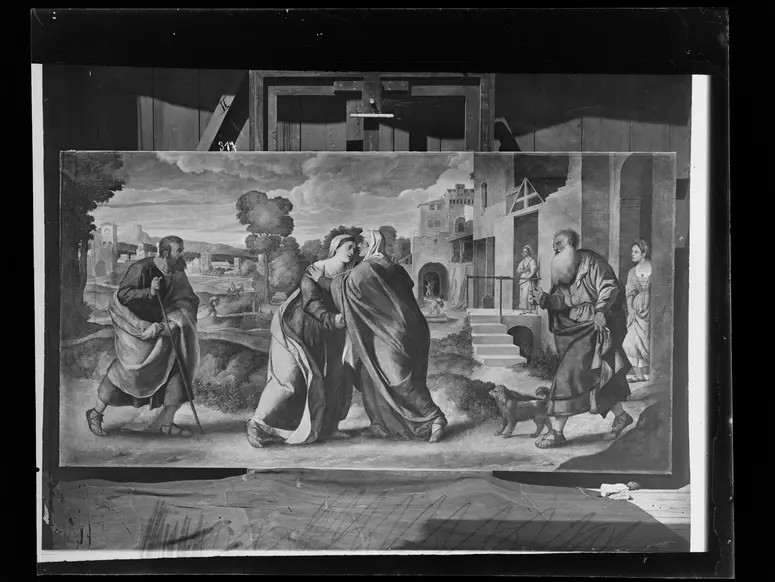
Heimsuchung Mariae J. Löwy, K. und K. Hof-Photograph, Kunst- und Verlagsanstalt (Wien) 1888 bis 1891

Hl. Sebastian J. Löwy, K. und K. Hof-Photograph, Kunst- und Verlagsanstalt (Wien) 1888 bis 1891

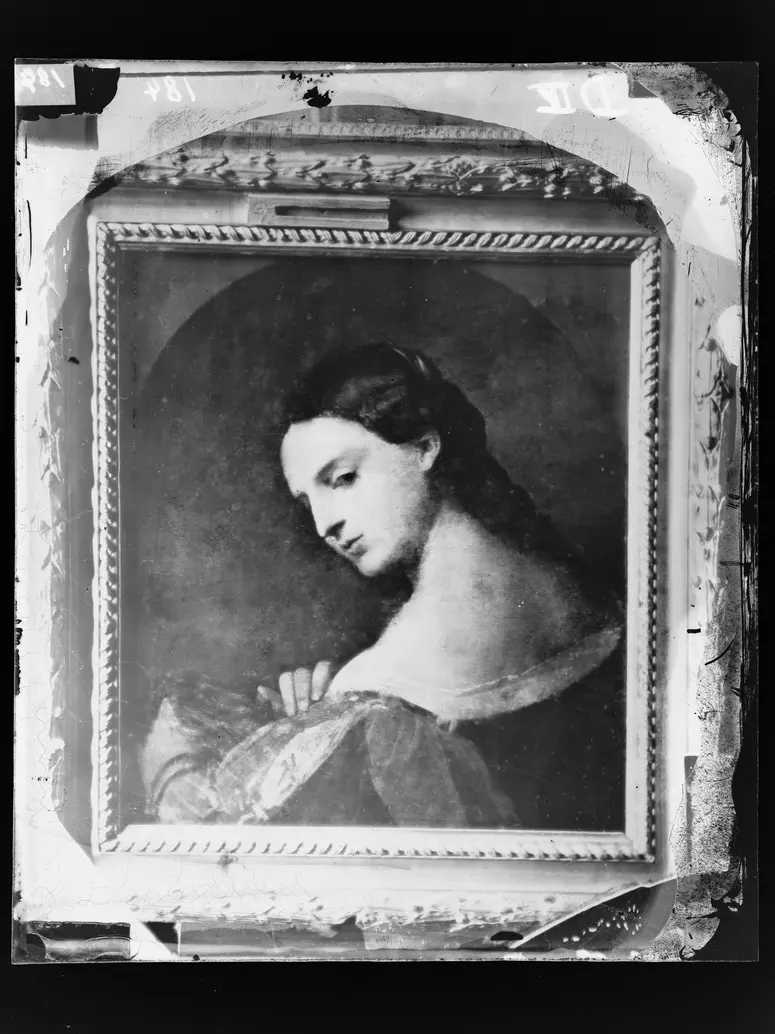
Bildnis einer jungen Frau im Profil J. Löwy, K. und K. Hof-Photograph, Kunst- und Verlagsanstalt (Wien) 1888 bis 1891