Oboe
beginning of the 18th century | Hendrik Richters
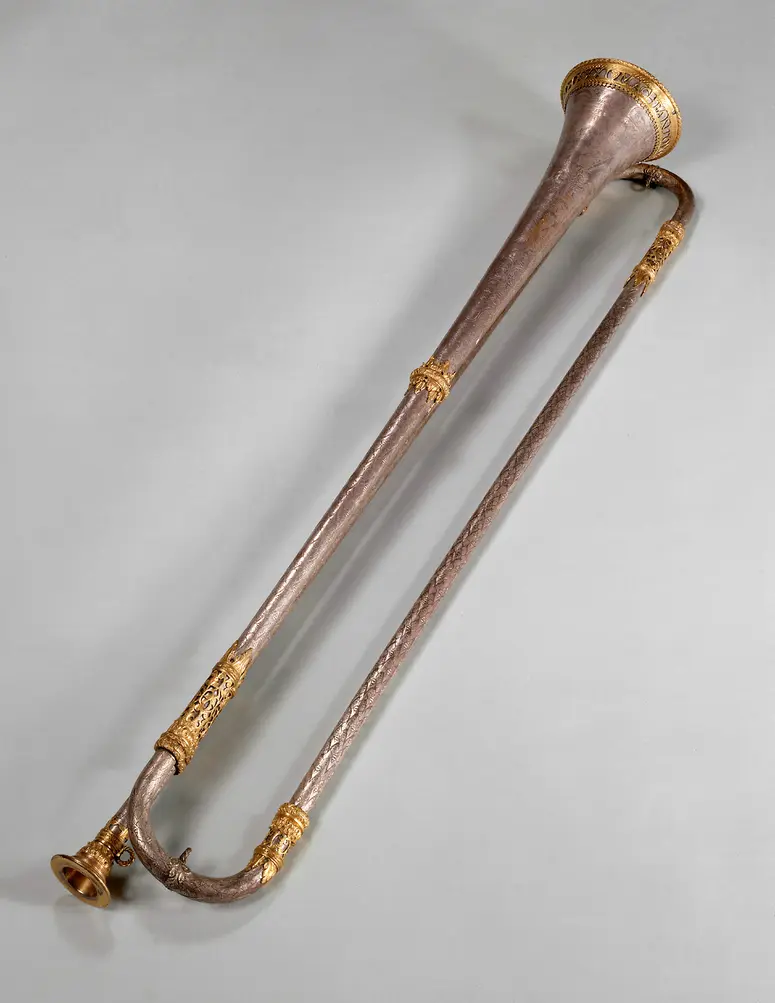
The oboe belongs to the group of double-reed instruments and developed out of the shawm. Due to its powerful sound, flexible timbre and extensive range, it became a much-loved solo and ensemble instrument during the Baroque period. The typical Baroque instrument has two keys for the notes C and E-flat, the upper being a double key. The way the instrument was held, with either the right or left hand at the lower end, had not yet been standardised and both options were open to the player. Hendrik Richters was born in 1683 in Amsterdam and, although he died when he was only 45, he left a great number of oboes that are among the most beautiful of their kind. With exquisite craftsmanship, Hendrik Richters worked these materials into exclusive, precious artefacts. Whereas the ornamental rings of other of his instruments are often made of ebony, this oboe has finely chiselled, perforated silver rings. An unusual feature of this instrument is the connecting silver chain which prevents segments of the body from getting lost. (rh/bd)
Lit.: Rudolf Hopfner: Masterpieces from the Collection of Historic Musical Instruments. A Short Guide through the Kunsthistorisches Museum Vienna, Vol. 1, Vienna 2019
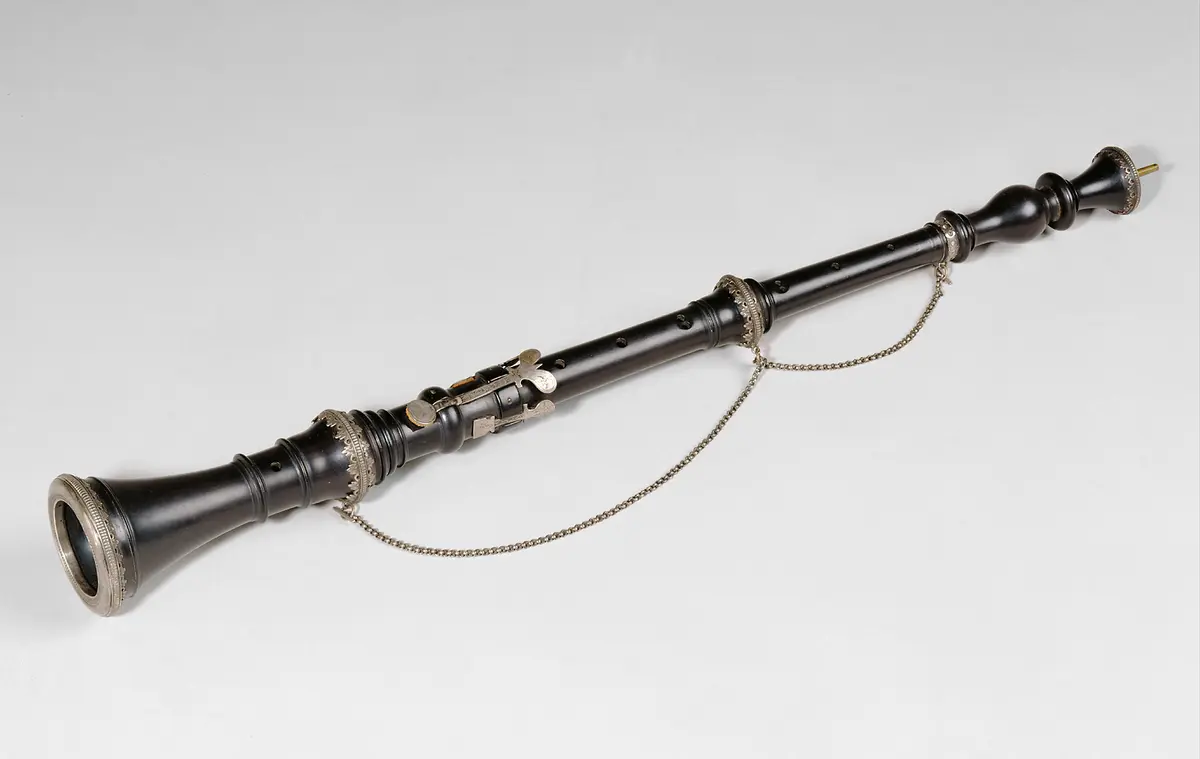
The oboe belongs to the group of double-reed instruments and developed out of the shawm. Due to its powerful sound, flexible timbre and extensive range, it became a much-loved solo and ensemble instrument during the Baroque period. The typical Baroque instrument has two keys for the notes C and E-flat, the upper being a double key. The way the instrument was held, with either the right or left hand at the lower end, had not yet been standardised and both options were open to the player. Hendrik Richters was born in 1683 in Amsterdam and, although he died when he was only 45, he left a great number of oboes that are among the most beautiful of their kind. With exquisite craftsmanship, Hendrik Richters worked these materials into exclusive, precious artefacts. Whereas the ornamental rings of other of his instruments are often made of ebony, this oboe has finely chiselled, perforated silver rings. An unusual feature of this instrument is the connecting silver chain which prevents segments of the body from getting lost. (rh/bd)
Lit.: Rudolf Hopfner: Masterpieces from the Collection of Historic Musical Instruments. A Short Guide through the Kunsthistorisches Museum Vienna, Vol. 1, Vienna 2019
Manufacturer:
Hendrik Richters (1683 Amsterdam - 1727)
Time:
beginning of the 18th century
Object Name
Oboe
Culture
Netherlands, Amsterdam
Dimensions:
575 mm x 65 mm x 65 mm
Copyright
Kunsthistorisches Museum, Sammlung alter Musikinstrumente
Invs.
Sammlung alter Musikinstrumente, 653
Browse more
Similar items you might be interested in
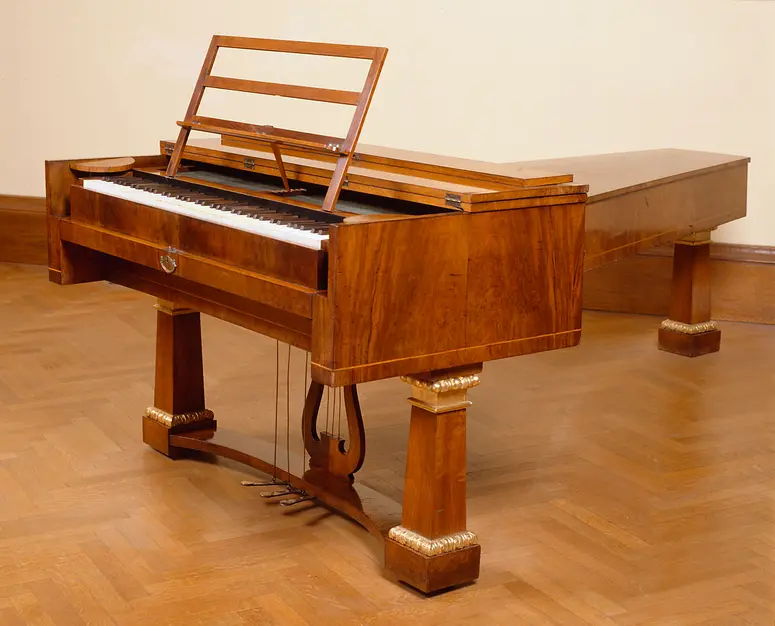
Manufacturer: Johann Baptist Streicher 1840
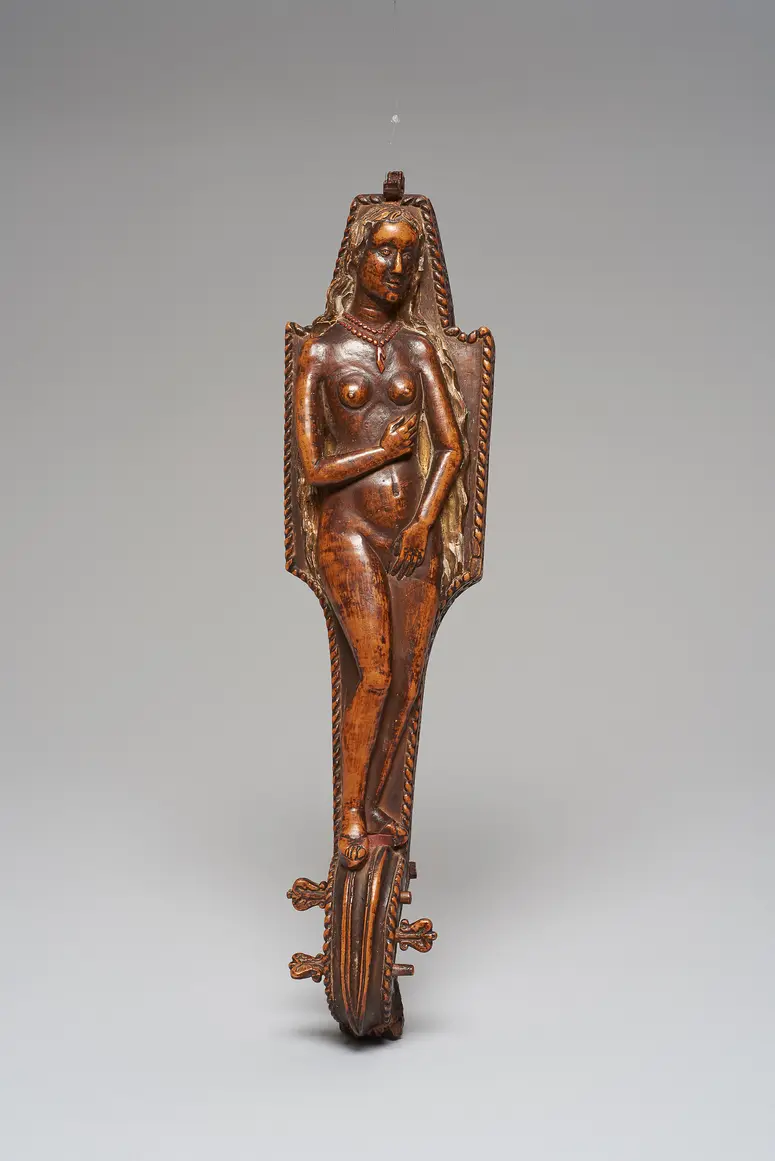
Manufacturer: anonym 15th century
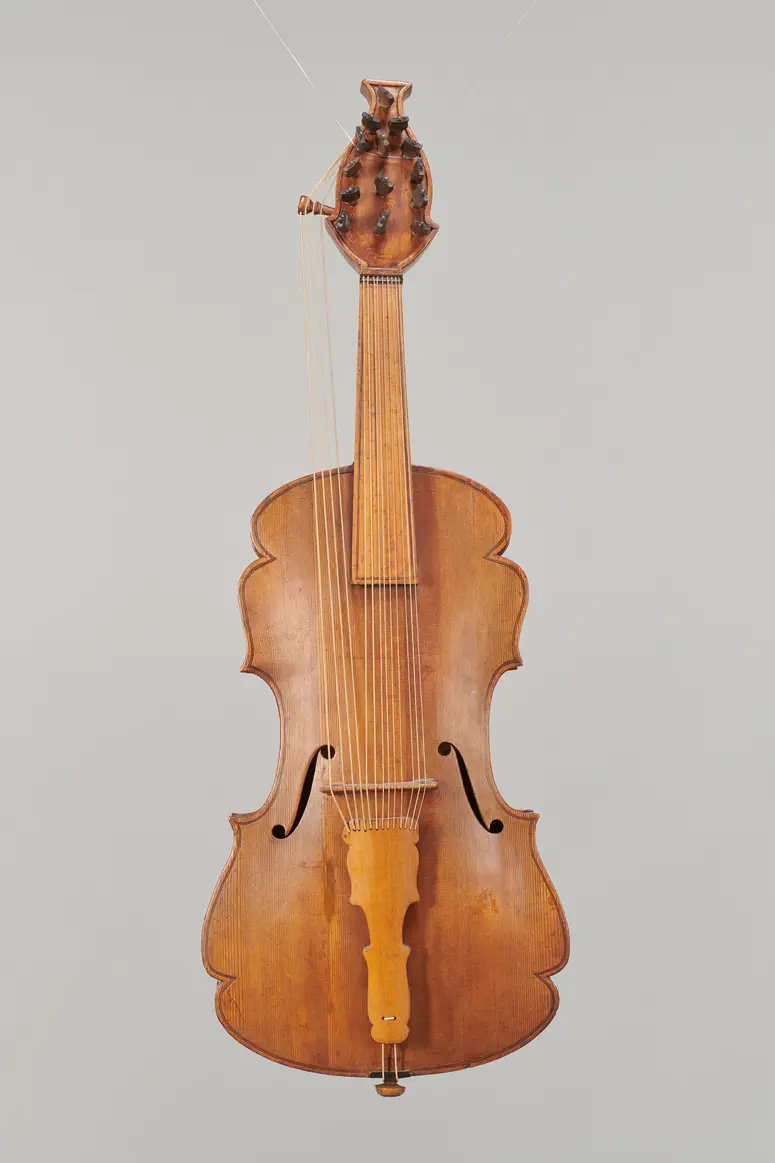
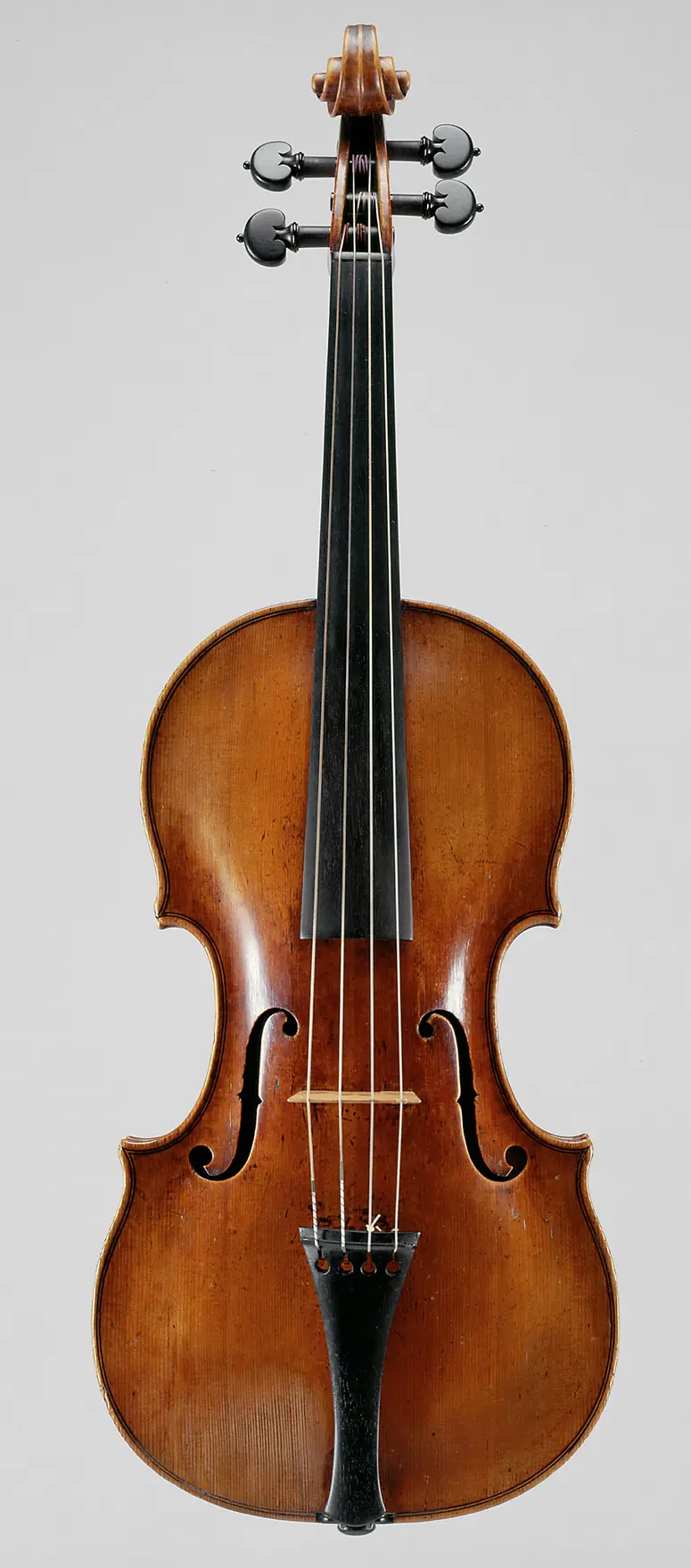
Manufacturer: Jacob Stainer after 1650
Manufacturer: Martin Kaiser 2nd half of the 17th century
Manufacturer: Johann Baptist Merklein approx. 1800
Manufacturer: anonym 2nd half of the 16th century (assigned)
Manufacturer: Michael Leichamschneider 1732
Manufacturer: Matthäus Seelos 1st half of the 17th century
Manufacturer: Anton Meidting December 1587
Manufacturer: Joerg Neuschel 1557
Manufacturer: Michael Leichamschneider 1741
Manufacturer: Anton Schnitzer 1581