Trombone
1732 | Michael Leichamschneider
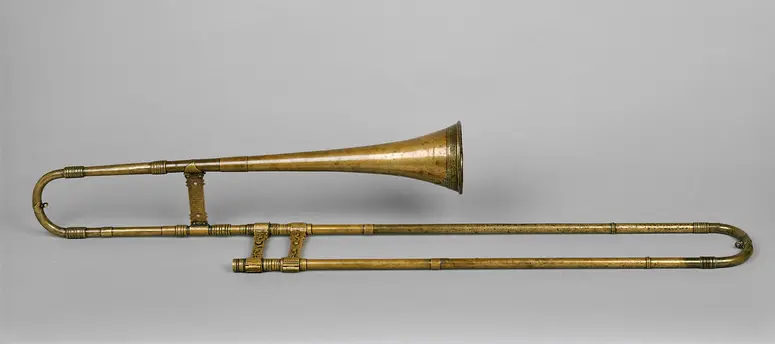
As can clearly be seen from early trombones, the design of this type of instrument has basically remained unchanged since the time of the Renaissance. The trombones belong to the family of labrosones, in which a primary tone is produced by agitating the whole column of air within the instrument with the vibration of the lips. Through over-blowing, the player can produce notes of the over-tone row. Unlike the natural trumpet in which the gaps between these upper partials cannot be filled in, the trombone has a slide with which the column of air can be constantly elongated or shortened. This means that the instrument is capable of producing all the notes of the chromatic scale across its entire range. Until the end of the Baroque era, the various parts of the instrument had simple ‘plug’ joins and it could therefore be taken apart. Later, the joins were soldered for greater stability. During the 18th century the walls of the instrument became thinner, which influenced the response and the tone. Compared to modern trombones these instruments also have a very narrow bell. (rh)
Lit.: Rudolf Hopfner: Masterpieces from the Collection of Historic Musical Instruments. A Short Guide through the Kunsthistorisches Museum Vienna, Vol. 1, Vienna 2019
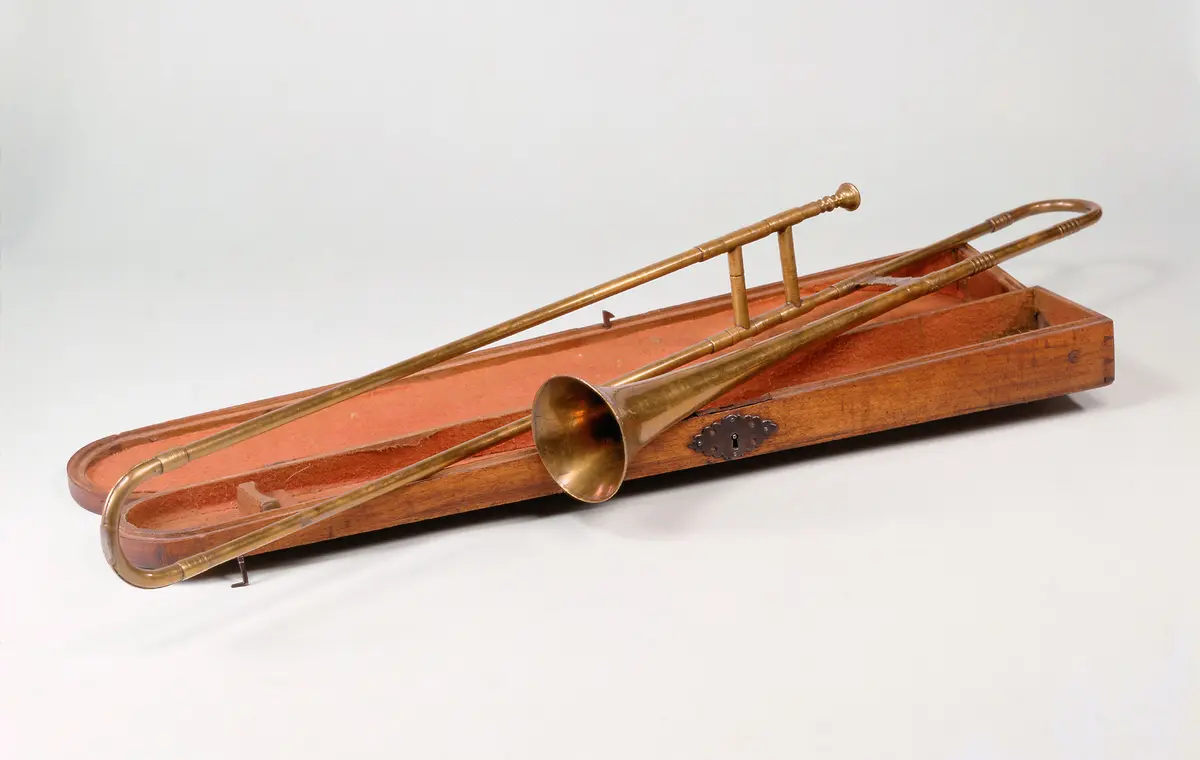
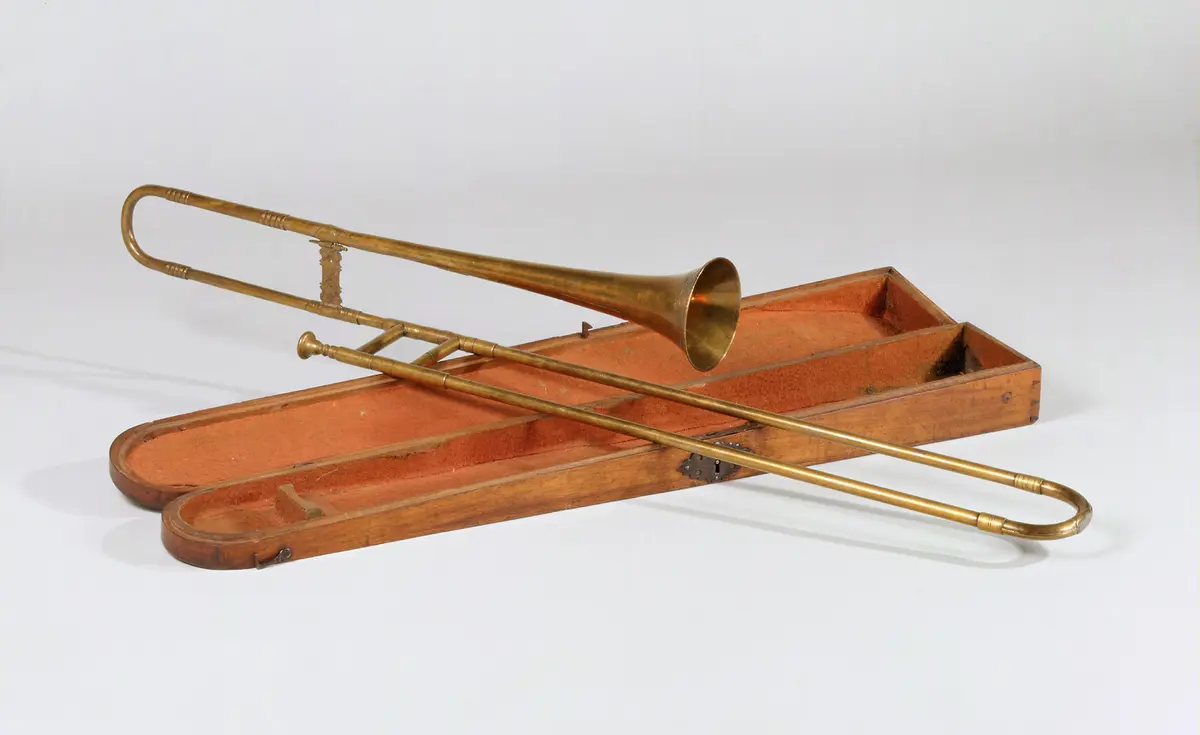
As can clearly be seen from early trombones, the design of this type of instrument has basically remained unchanged since the time of the Renaissance. The trombones belong to the family of labrosones, in which a primary tone is produced by agitating the whole column of air within the instrument with the vibration of the lips. Through over-blowing, the player can produce notes of the over-tone row. Unlike the natural trumpet in which the gaps between these upper partials cannot be filled in, the trombone has a slide with which the column of air can be constantly elongated or shortened. This means that the instrument is capable of producing all the notes of the chromatic scale across its entire range. Until the end of the Baroque era, the various parts of the instrument had simple ‘plug’ joins and it could therefore be taken apart. Later, the joins were soldered for greater stability. During the 18th century the walls of the instrument became thinner, which influenced the response and the tone. Compared to modern trombones these instruments also have a very narrow bell. (rh)
Lit.: Rudolf Hopfner: Masterpieces from the Collection of Historic Musical Instruments. A Short Guide through the Kunsthistorisches Museum Vienna, Vol. 1, Vienna 2019
Manufacturer:
Michael Leichamschneider (1676 Osterberg - 1746 Wien) DNB
Time:
1732
Object Name
Trombone
Culture
Austria, Vienna
Dimensions:
1100 mm x 220 mm x 110 mm
Copyright
Kunsthistorisches Museum, Sammlung alter Musikinstrumente
Invs.
Sammlung alter Musikinstrumente, 255
Alte Inv.Nr.:
KK_8607
Schlosser Nr.:
NE 265
Browse more
Similar items you might be interested in
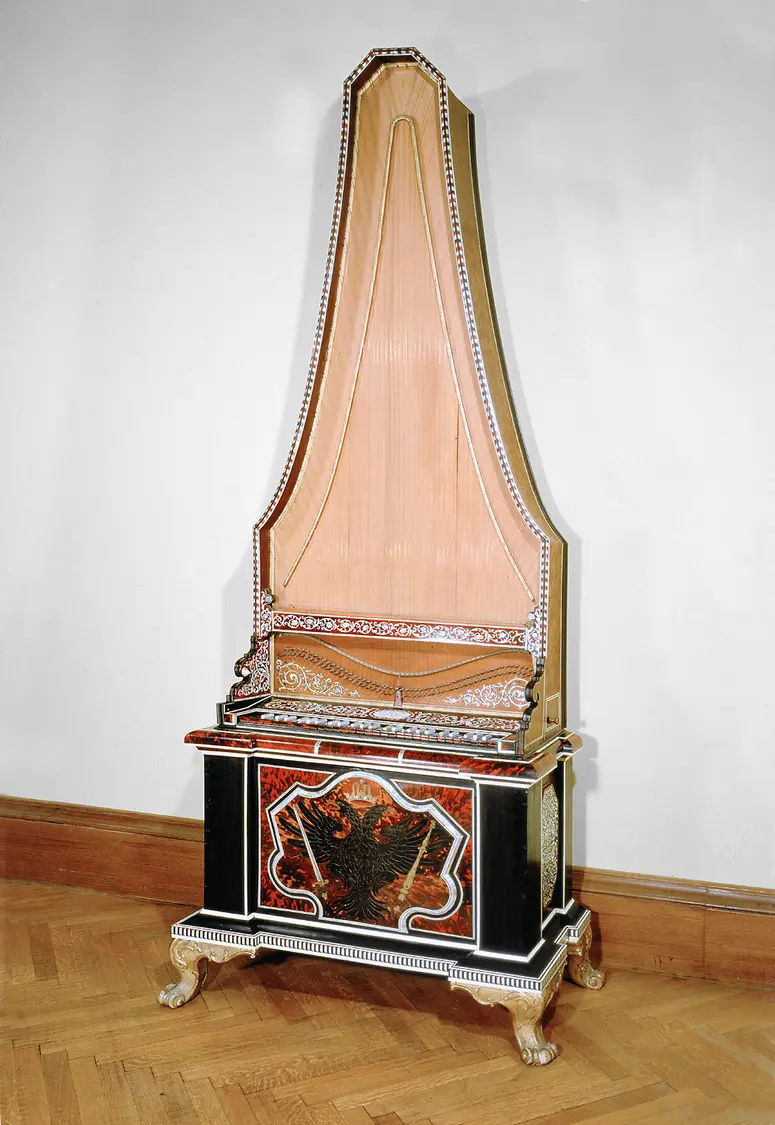
Manufacturer: Martin Kaiser 2nd half of the 17th century
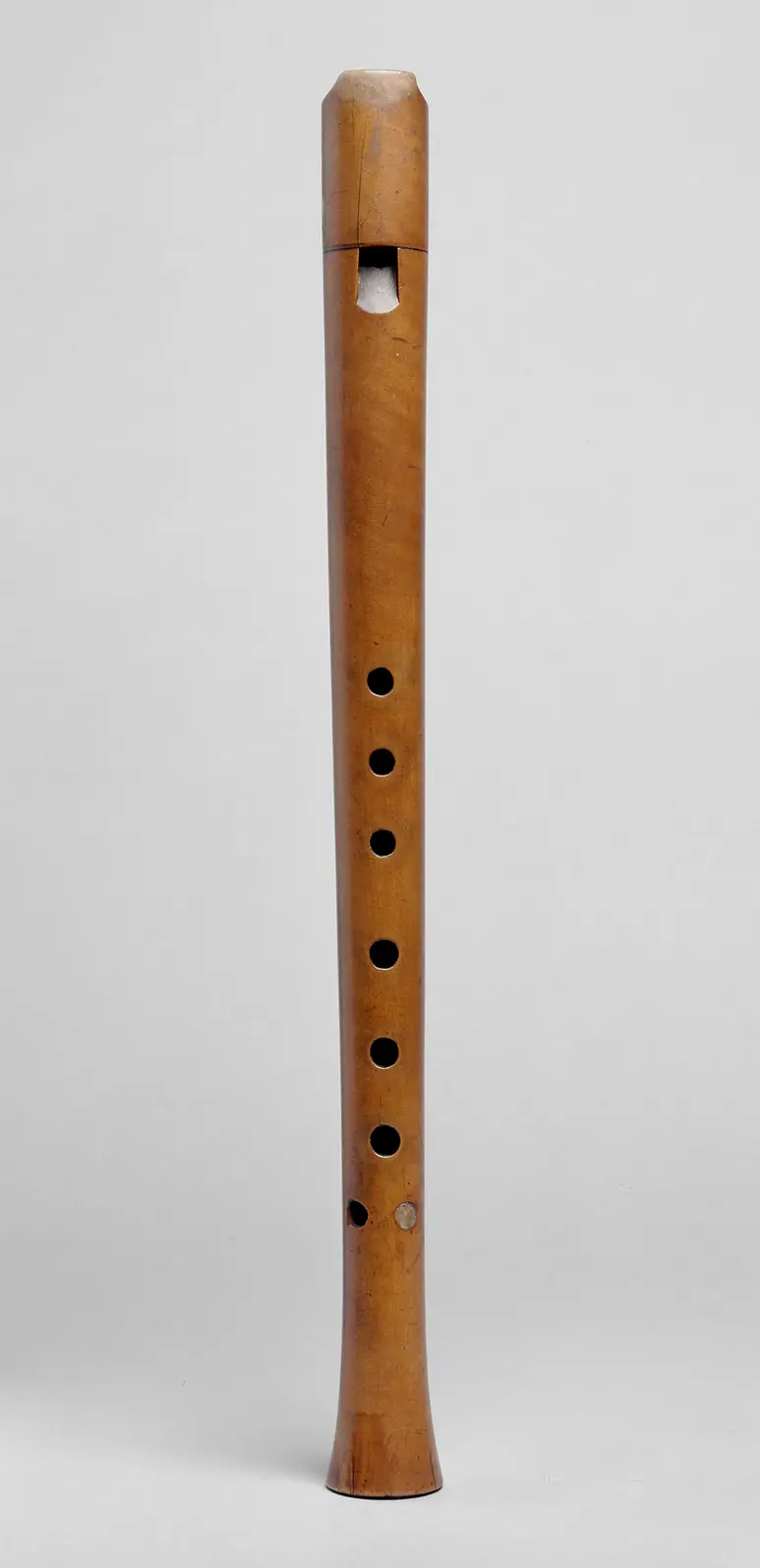
Manufacturer: Johann Baptist Merklein approx. 1800
Manufacturer: anonym 2nd half of the 16th century (assigned)
Manufacturer: Hendrik Richters beginning of the 18th century
Manufacturer: Matthäus Seelos 1st half of the 17th century
Manufacturer: Anton Meidting December 1587
Manufacturer: Joerg Neuschel 1557
Manufacturer: Michael Leichamschneider 1741
Manufacturer: Anton Schnitzer 1581
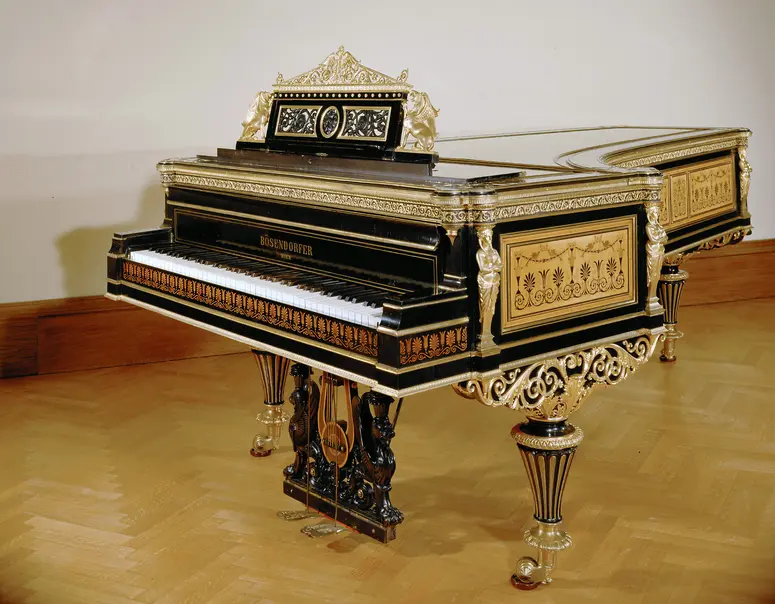
Manufacturer: Fa. Bösendorfer 1867
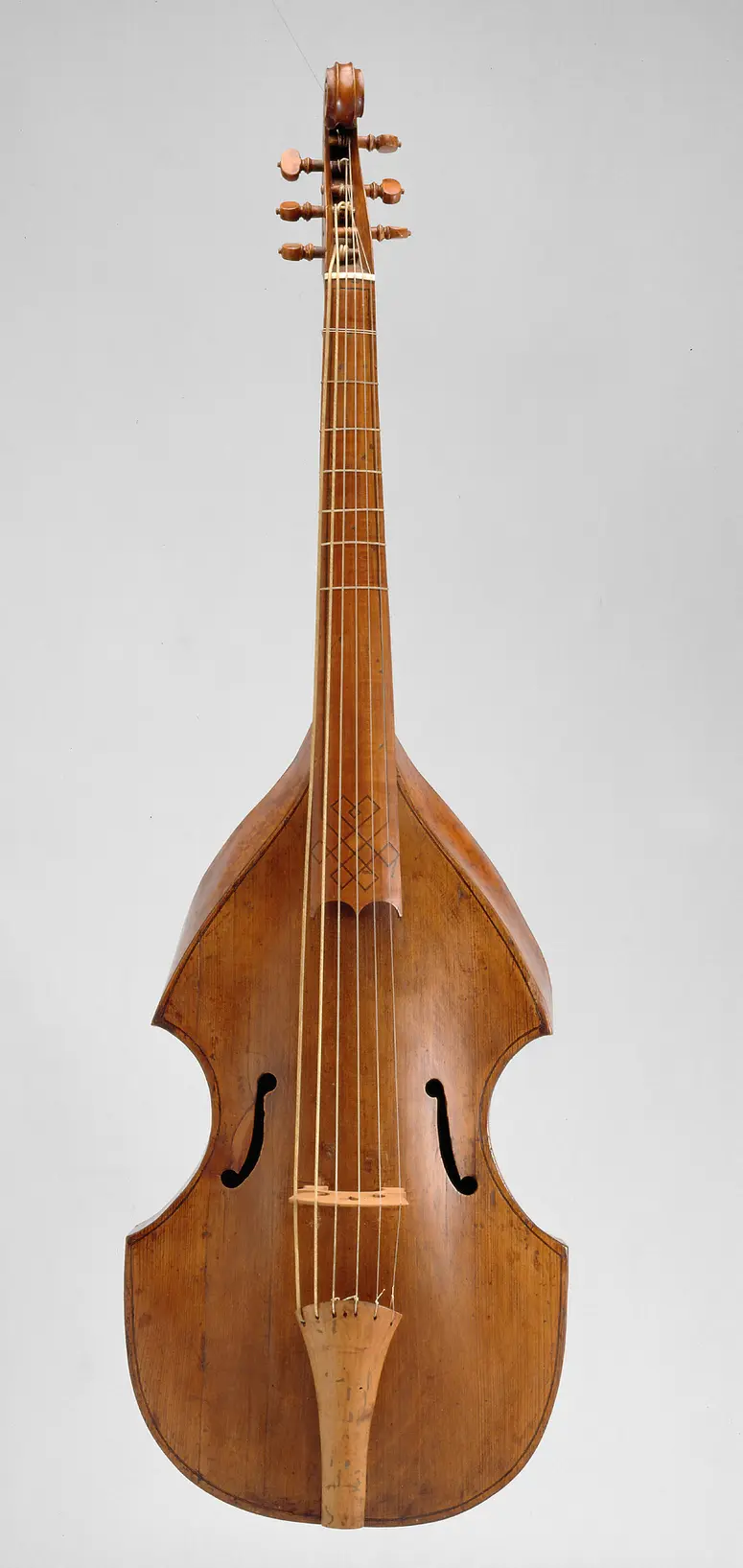
Manufacturer: Antonio Ciciliano presumably after 1602
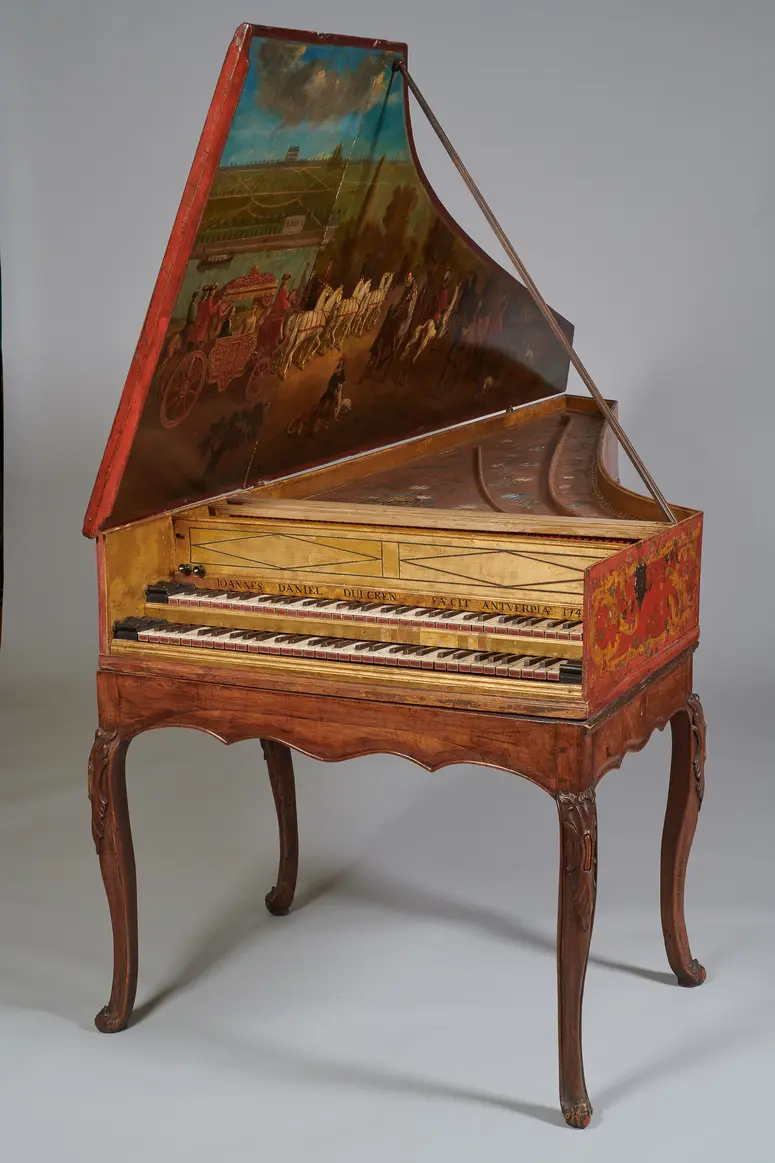
Manufacturer: Joann Daniel Dulcken 1745
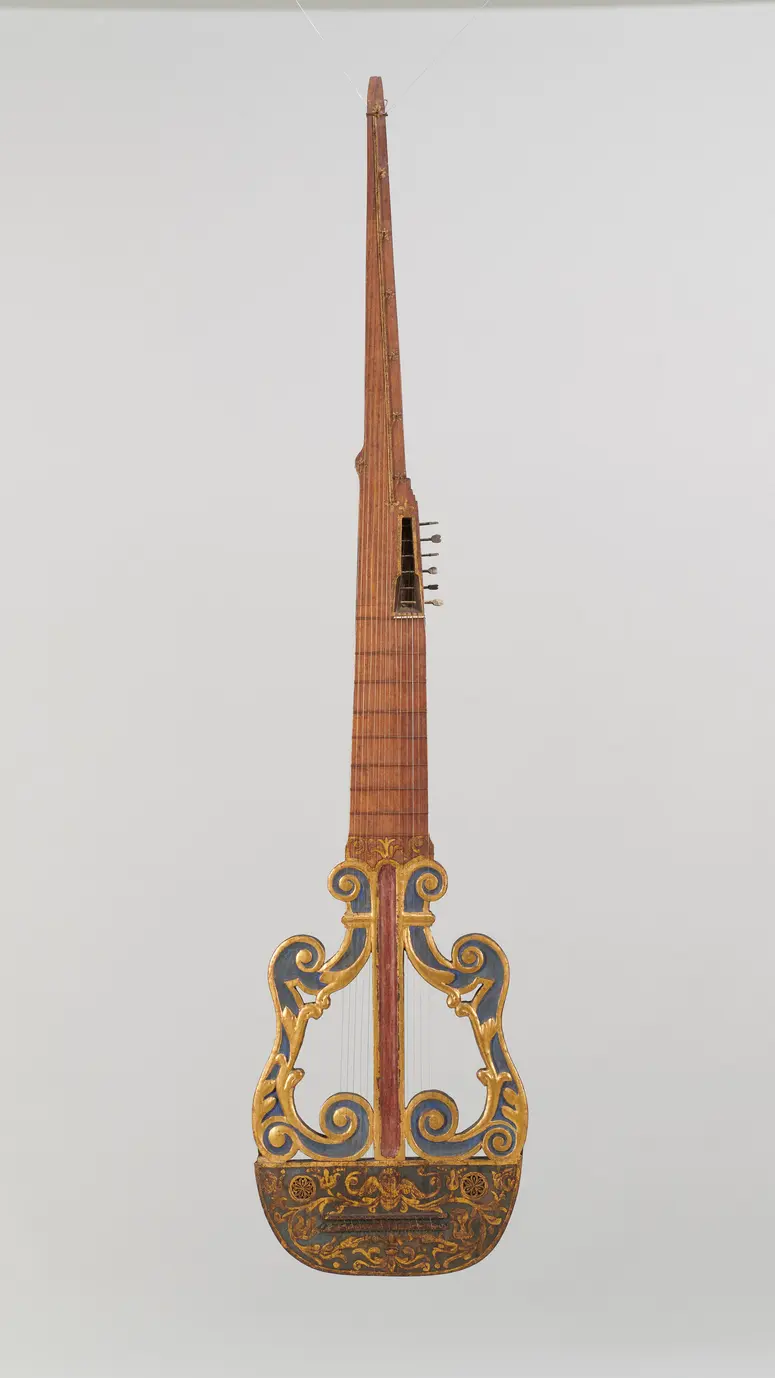
Manufacturer: Wenzel Kowansky 1749
Manufacturer: Girolamo de Virchis 1574