Lyre-Cittern
16. or 17. century | anonym
This cittern is mentioned in a 17th century Ambras inventory. Its body is reminiscent of the design of the ancient lyre and it was probably used on stage as a theatrical instrument. The attempt to revive the theatrical arts of the ancient world through contemporary means is a typical characteristic of the late Renaissance period. The resonating body itself is very small and makes up only the lowest part of the instrument. It is decorated with gilded ornaments.The upper part of the corpus corresponds in design to the arms of a lyre. The two necks of the cittern replace the cross-bar of the lyre. The use of volutes and leaf-patterning are a quotation of historic stylistic features. The instrument is strung with metal strings and has metal frets. Six strings are mounted in a pegbox while a separate neck carries the eight bass strings of successively increasing length. (rh)
Lit.: Rudolf Hopfner: Masterpieces from the Collection of Historic Musical Instruments. A Short Guide through the Kunsthistorisches Museum Vienna, Vol. 1, Vienna 2019

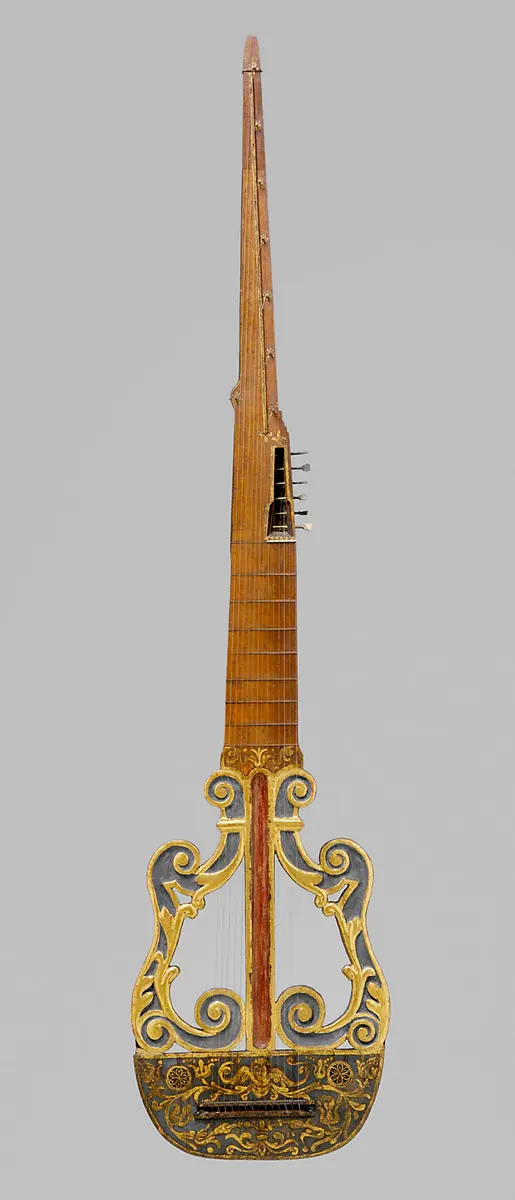
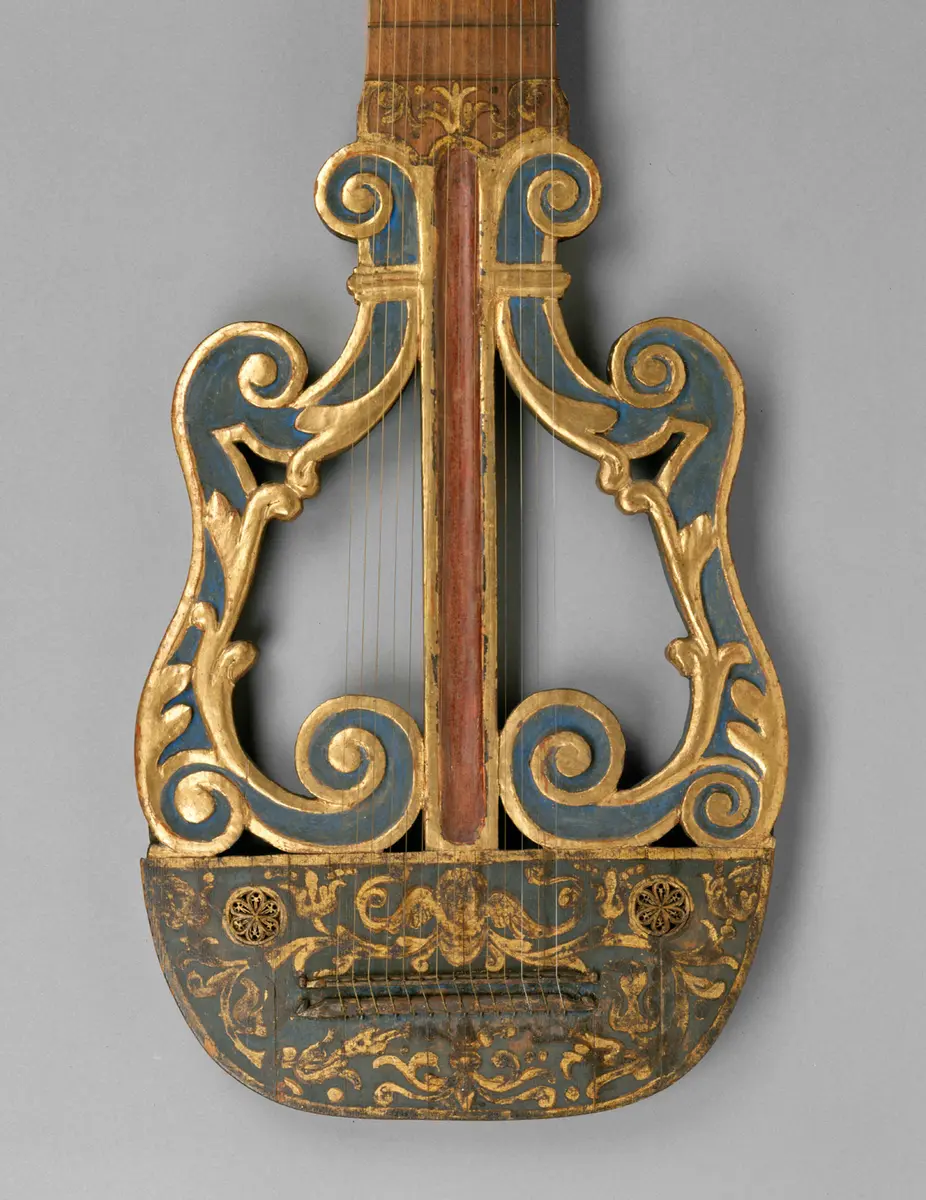
This cittern is mentioned in a 17th century Ambras inventory. Its body is reminiscent of the design of the ancient lyre and it was probably used on stage as a theatrical instrument. The attempt to revive the theatrical arts of the ancient world through contemporary means is a typical characteristic of the late Renaissance period. The resonating body itself is very small and makes up only the lowest part of the instrument. It is decorated with gilded ornaments.The upper part of the corpus corresponds in design to the arms of a lyre. The two necks of the cittern replace the cross-bar of the lyre. The use of volutes and leaf-patterning are a quotation of historic stylistic features. The instrument is strung with metal strings and has metal frets. Six strings are mounted in a pegbox while a separate neck carries the eight bass strings of successively increasing length. (rh)
Lit.: Rudolf Hopfner: Masterpieces from the Collection of Historic Musical Instruments. A Short Guide through the Kunsthistorisches Museum Vienna, Vol. 1, Vienna 2019
Manufacturer:
anonym
Time:
16. or 17. century
Object Name
Lyre-Cittern
Culture
(?)
Dimensions:
1600 mm x 360 mm x 45 mm
Copyright
Kunsthistorisches Museum, Sammlung alter Musikinstrumente
Invs.
Sammlung alter Musikinstrumente, 61
Alte Inv.Nr.:
KK_4069
Schlosser Nr.:
A 66
Browse more
Similar items you might be interested in
Manufacturer: Martin Kaiser 2nd half of the 17th century
Manufacturer: Johann Baptist Merklein approx. 1800
Manufacturer: anonym 2nd half of the 16th century (assigned)
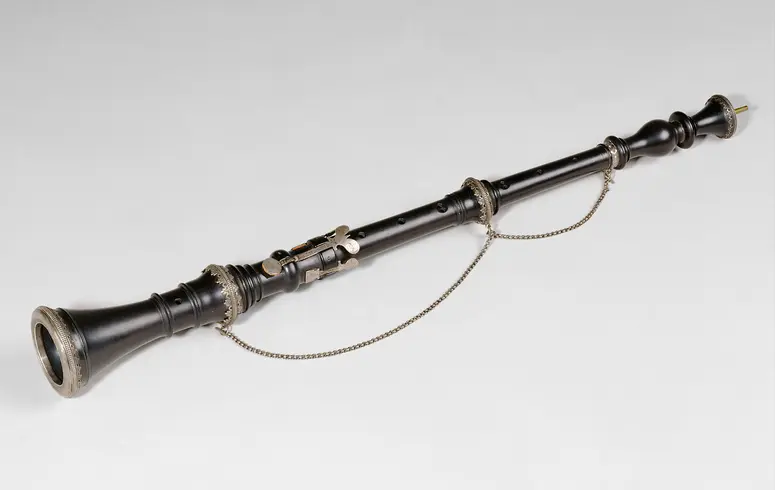
Manufacturer: Hendrik Richters beginning of the 18th century
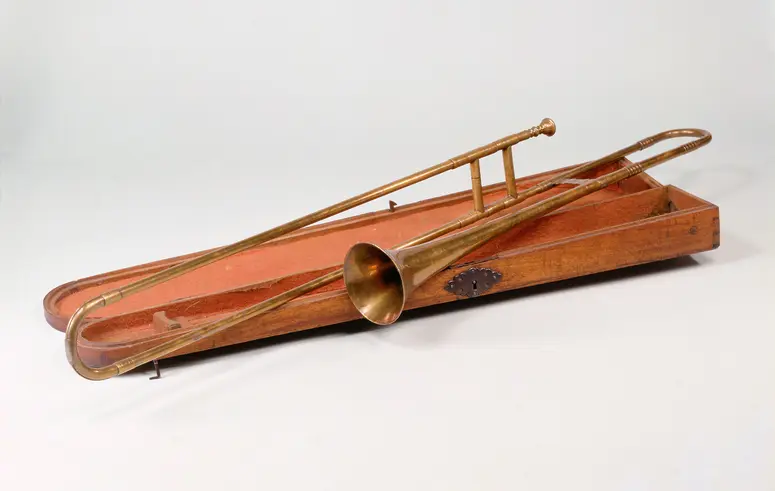
Manufacturer: Michael Leichamschneider 1732
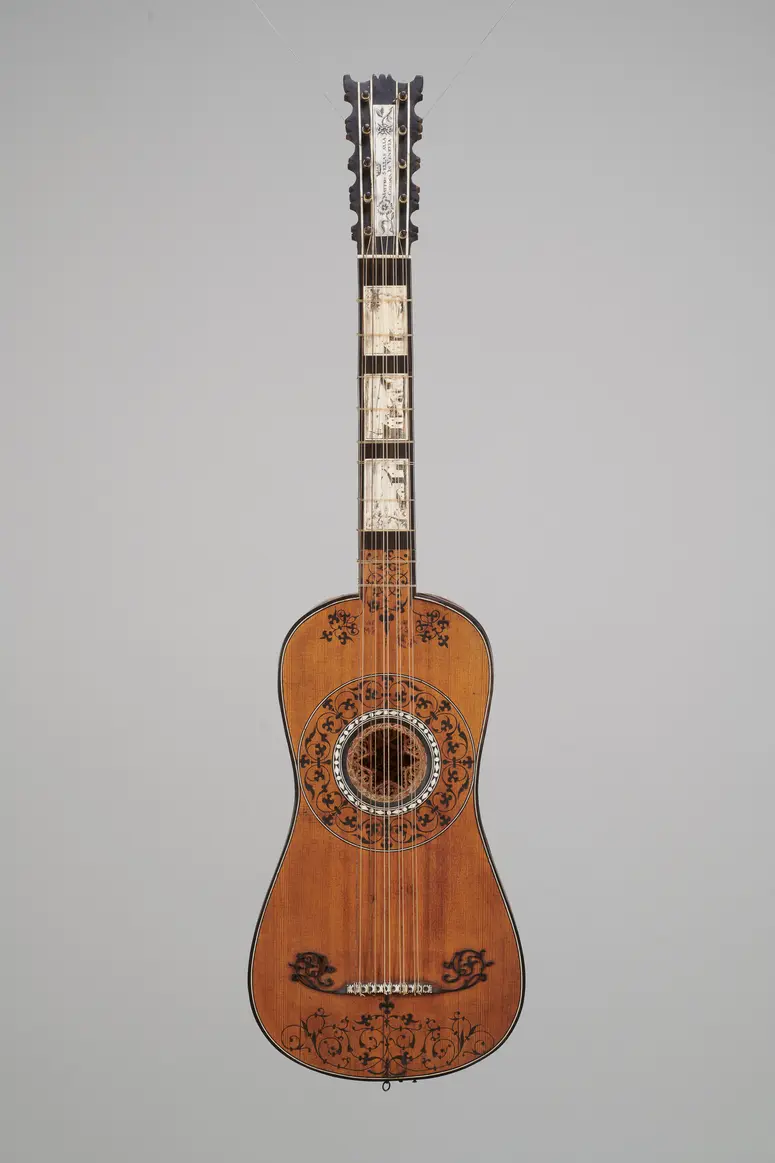
Manufacturer: Matthäus Seelos 1st half of the 17th century
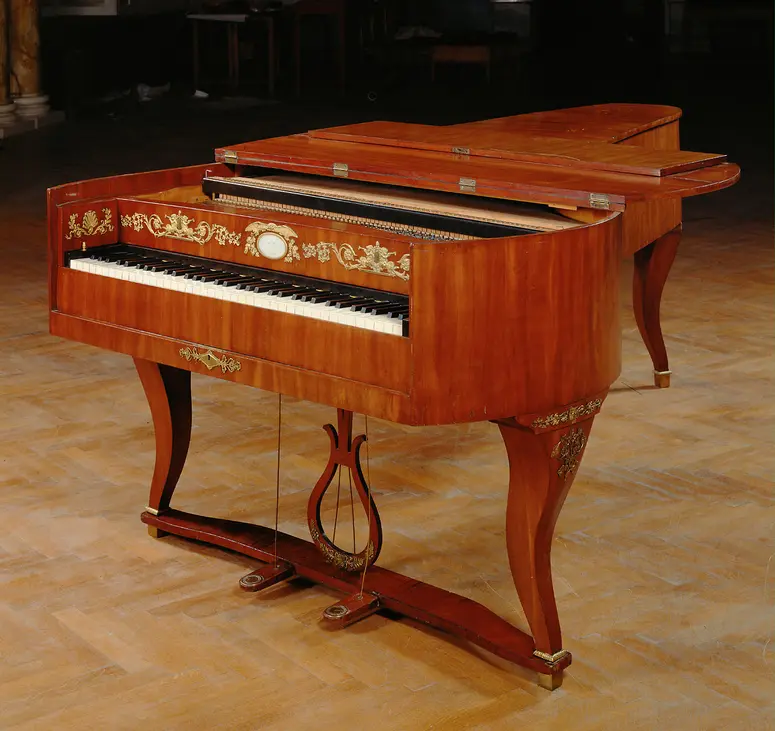
Manufacturer: Anton Meidting December 1587
Manufacturer: Joerg Neuschel 1557
Manufacturer: Michael Leichamschneider 1741
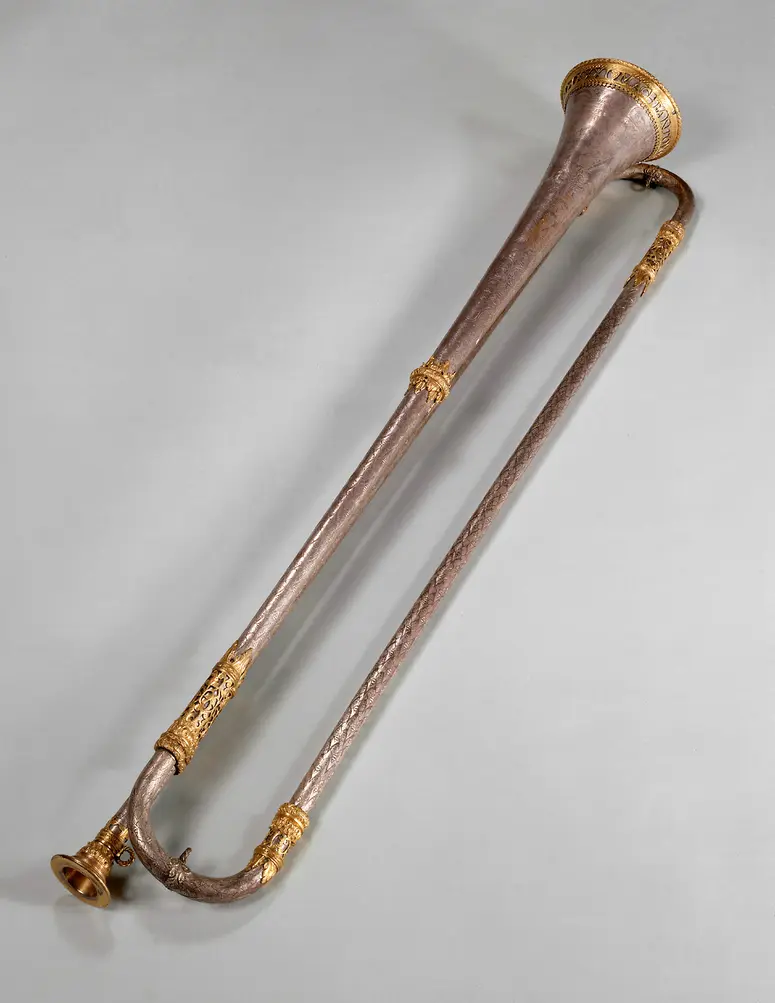
Manufacturer: Anton Schnitzer 1581
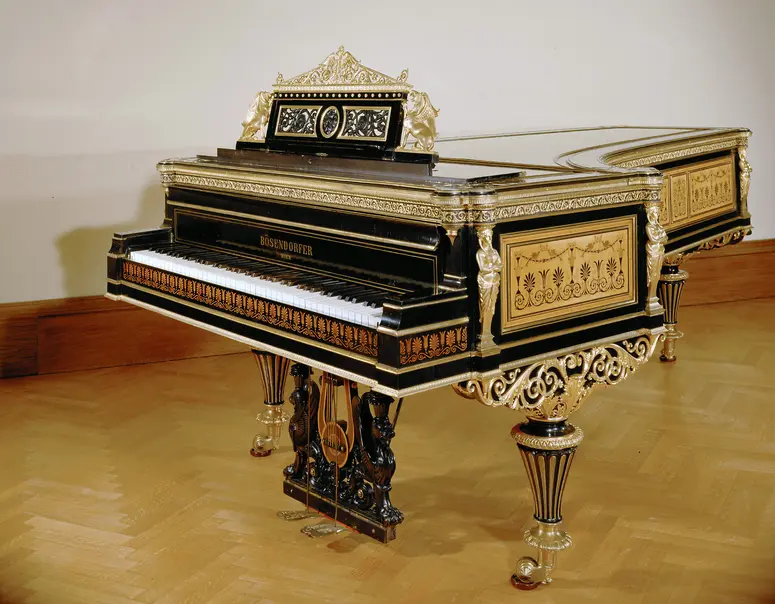
Manufacturer: Fa. Bösendorfer 1867
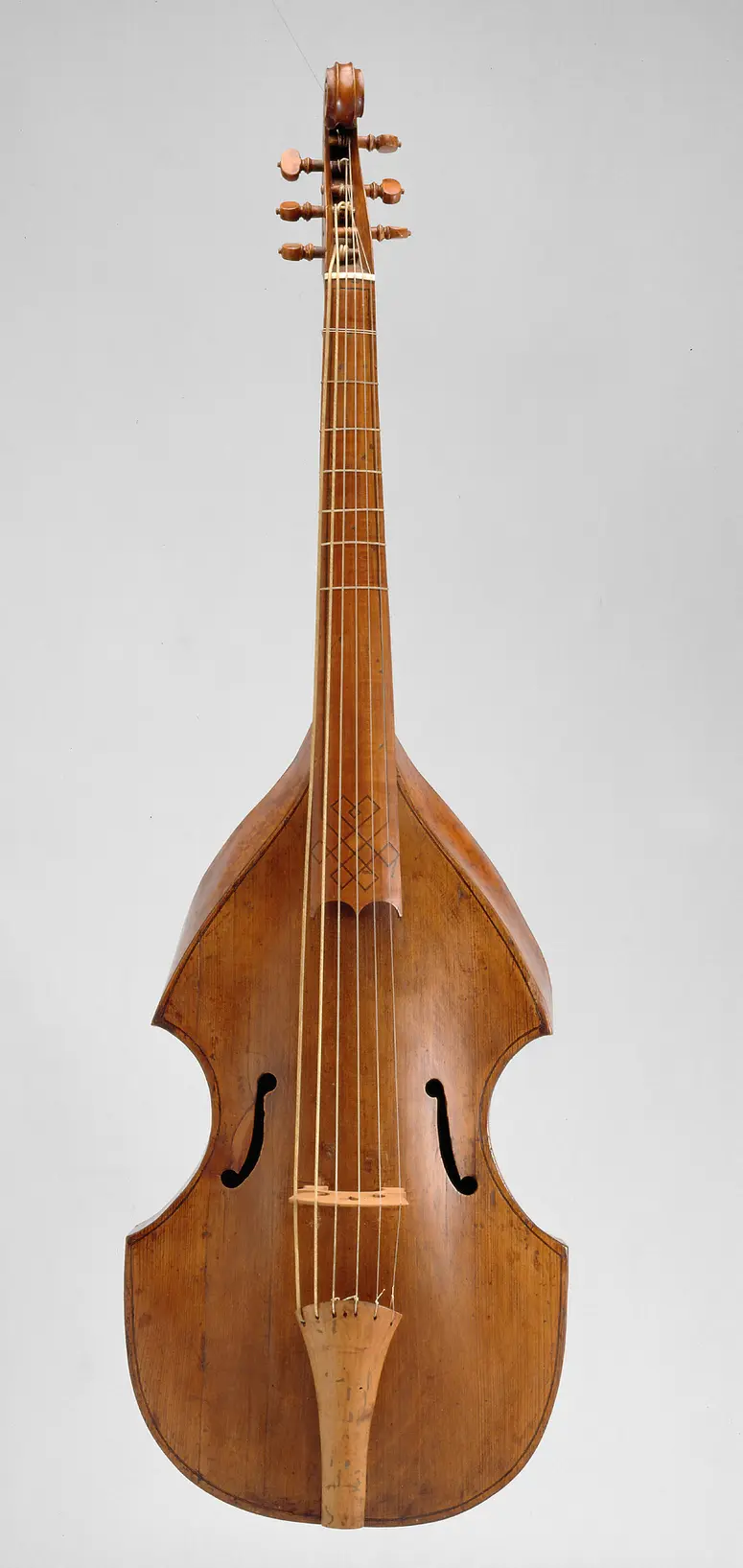
Manufacturer: Antonio Ciciliano presumably after 1602
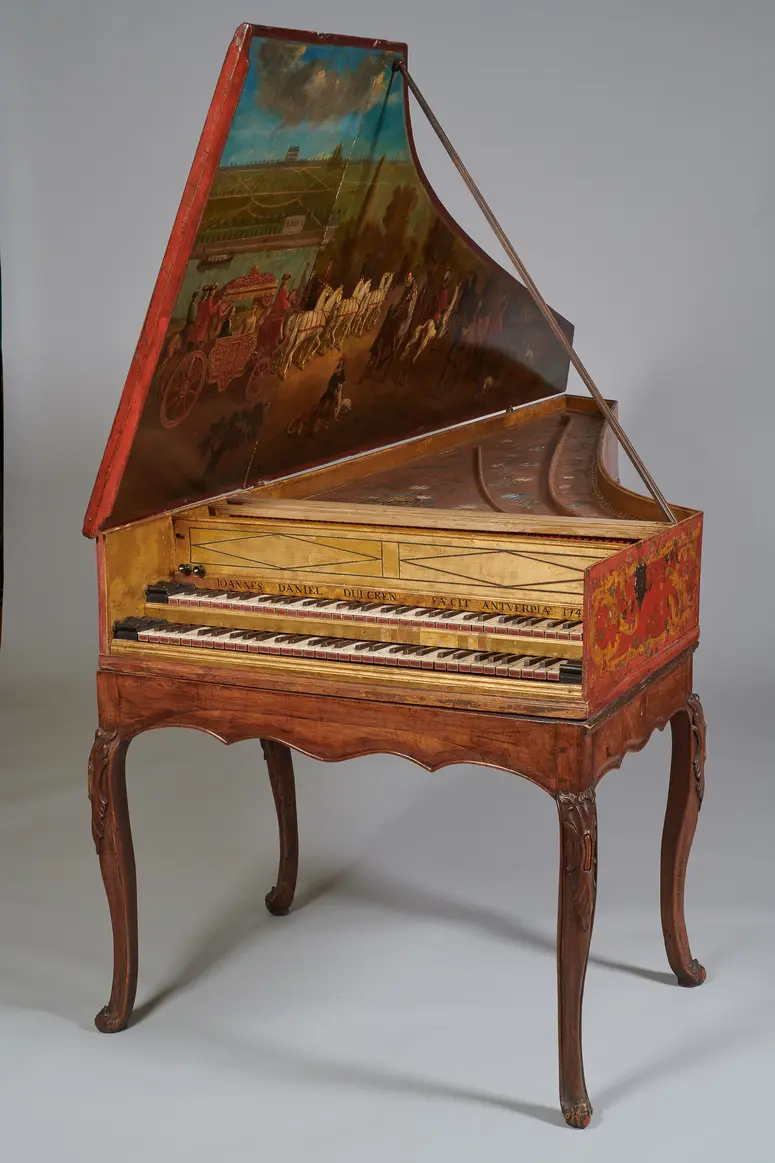
Manufacturer: Joann Daniel Dulcken 1745
Manufacturer: Wenzel Kowansky 1749
Manufacturer: Girolamo de Virchis 1574