Clavicytherium
2nd half of the 17th century | Martin Kaiser
Clavicitheriums are plucked keyboard instruments in which, unlike the harpsichord, the strings run vertically instead of horizontally. As this type of musical instrument already existed in the 15th century, the title ‘inventor of instruments’ which Kaiser bestowed upon himself cannot refer to this instrument. In Kaiser’s clavicitherium only the arrangement of the strings is new. The layout of the keyboard, with the bass notes on the left side, means that the longer bass strings should also be on this side. For reasons of symmetry - an aspect that was of the utmost importance to the architectural thinking of the Baroque era - Kaiser arranged the strings so that the bass strings are flanked on both sides by the shorter strings and the body has the form of a pyramid. This arrangement requires the movement of the keys to be conveyed through a complicated rollerboard situated in the stand of the instrument, similar to that of an organ. Signature: "MARTINVS KAISER / SER: ELECTORIS: / PALATINI / INSTRVMENTORIVM OPIFEX / ET HVIVSMODI / INVENTOR". (rh/bd)
Lit.: Rudolf Hopfner: Masterpieces from the Collection of Historic Musical Instruments. A Short Guide through the Kunsthistorisches Museum Vienna, Vol. 1, Vienna 2019
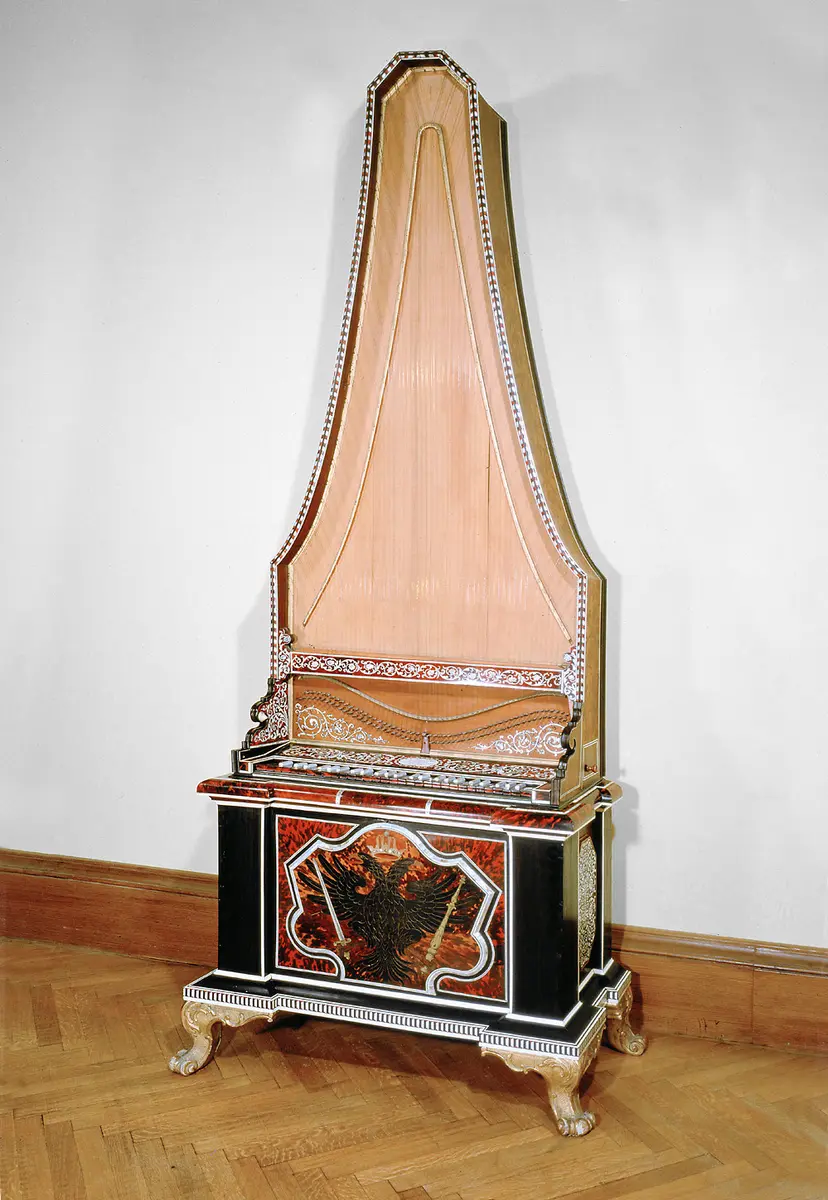
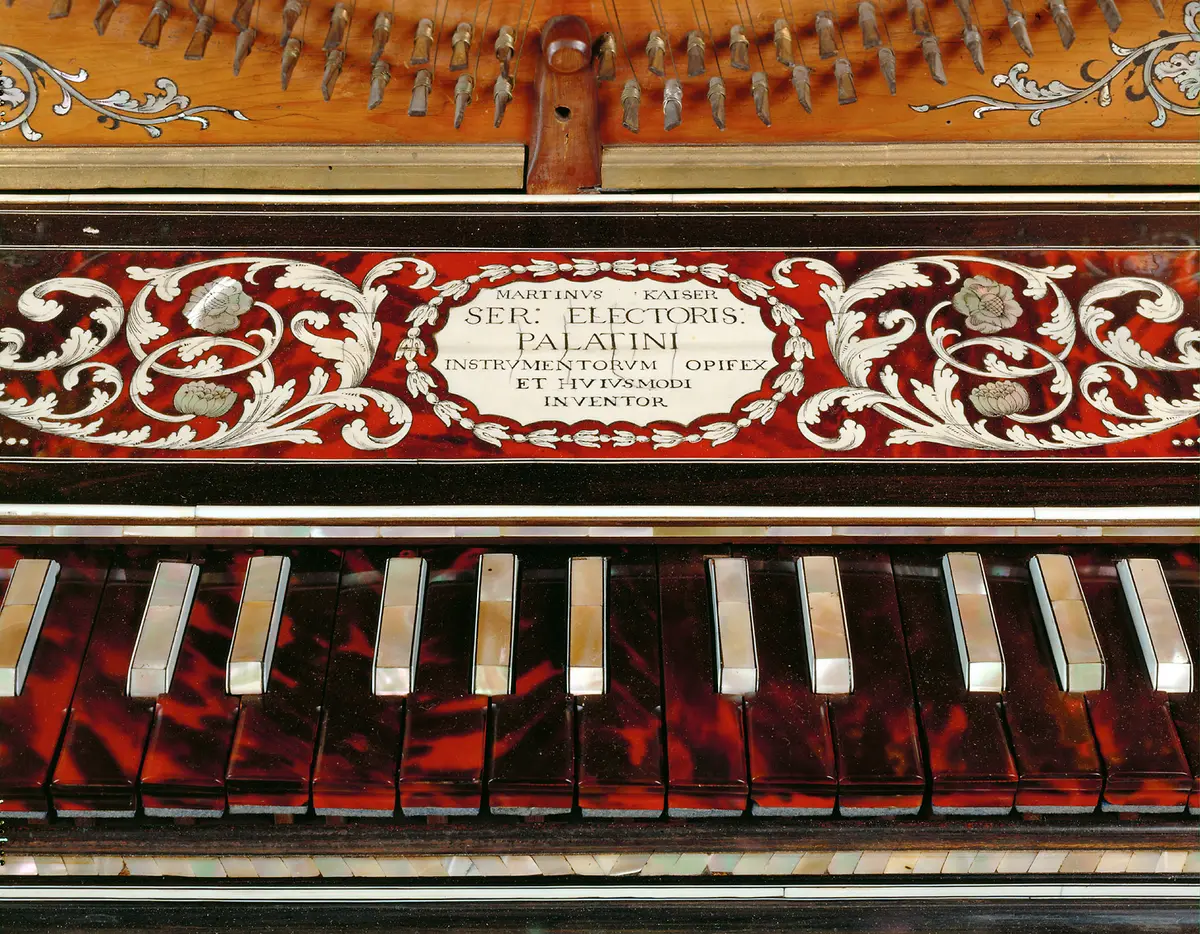
Clavicitheriums are plucked keyboard instruments in which, unlike the harpsichord, the strings run vertically instead of horizontally. As this type of musical instrument already existed in the 15th century, the title ‘inventor of instruments’ which Kaiser bestowed upon himself cannot refer to this instrument. In Kaiser’s clavicitherium only the arrangement of the strings is new. The layout of the keyboard, with the bass notes on the left side, means that the longer bass strings should also be on this side. For reasons of symmetry - an aspect that was of the utmost importance to the architectural thinking of the Baroque era - Kaiser arranged the strings so that the bass strings are flanked on both sides by the shorter strings and the body has the form of a pyramid. This arrangement requires the movement of the keys to be conveyed through a complicated rollerboard situated in the stand of the instrument, similar to that of an organ. Signature: "MARTINVS KAISER / SER: ELECTORIS: / PALATINI / INSTRVMENTORIVM OPIFEX / ET HVIVSMODI / INVENTOR". (rh/bd)
Lit.: Rudolf Hopfner: Masterpieces from the Collection of Historic Musical Instruments. A Short Guide through the Kunsthistorisches Museum Vienna, Vol. 1, Vienna 2019
Manufacturer:
Martin Kaiser (ca. 1645 Erkenbollingen bei Rieden - vor 1710 Düsseldorf)
Time:
2nd half of the 17th century
Object Name
Clavicytherium
Culture
Germany, Düsseldorf
Dimensions:
2830 mm x 880 mm x 560 mm
Copyright
Kunsthistorisches Museum, Sammlung alter Musikinstrumente
Invs.
Sammlung alter Musikinstrumente, 377
Alte Inv.Nr.:
KK_8801
Browse more
Similar items you might be interested in
Manufacturer: Johann Baptist Merklein approx. 1800
Manufacturer: anonym 2nd half of the 16th century (assigned)
Manufacturer: Hendrik Richters beginning of the 18th century
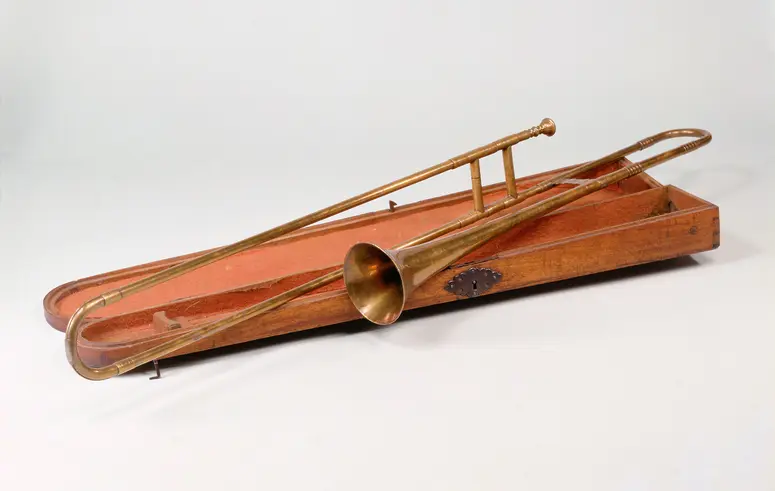
Manufacturer: Michael Leichamschneider 1732
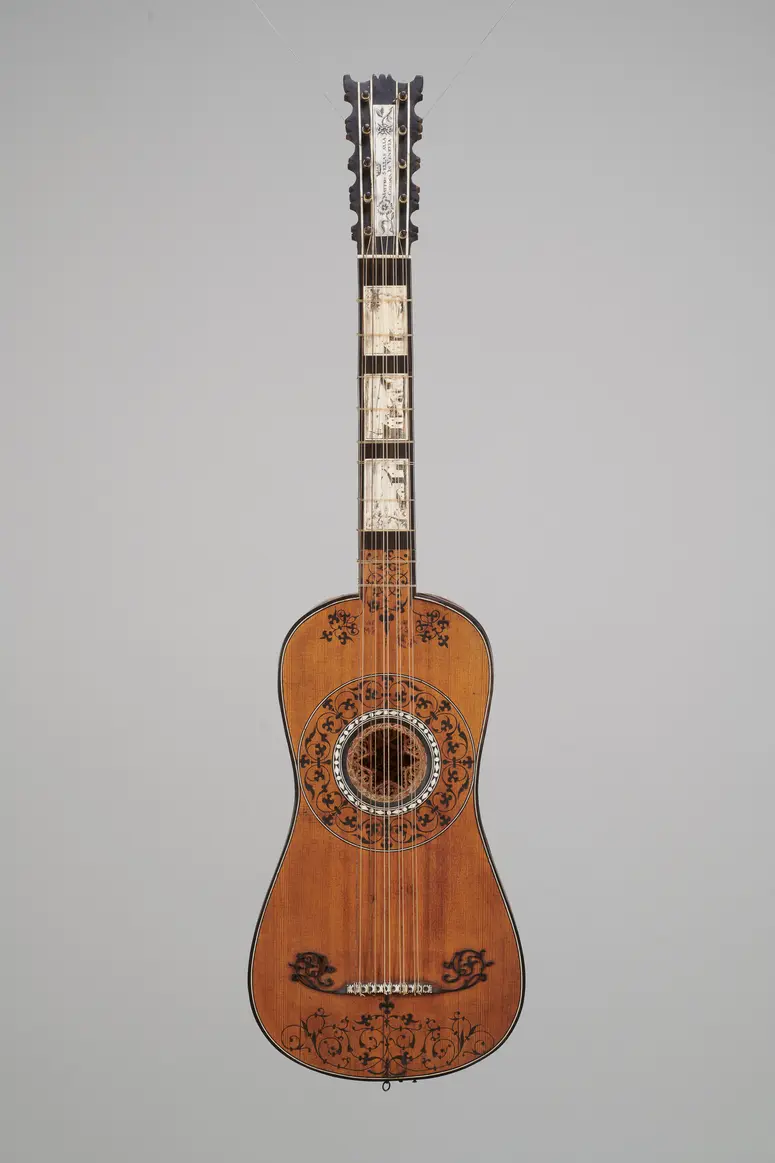
Manufacturer: Matthäus Seelos 1st half of the 17th century
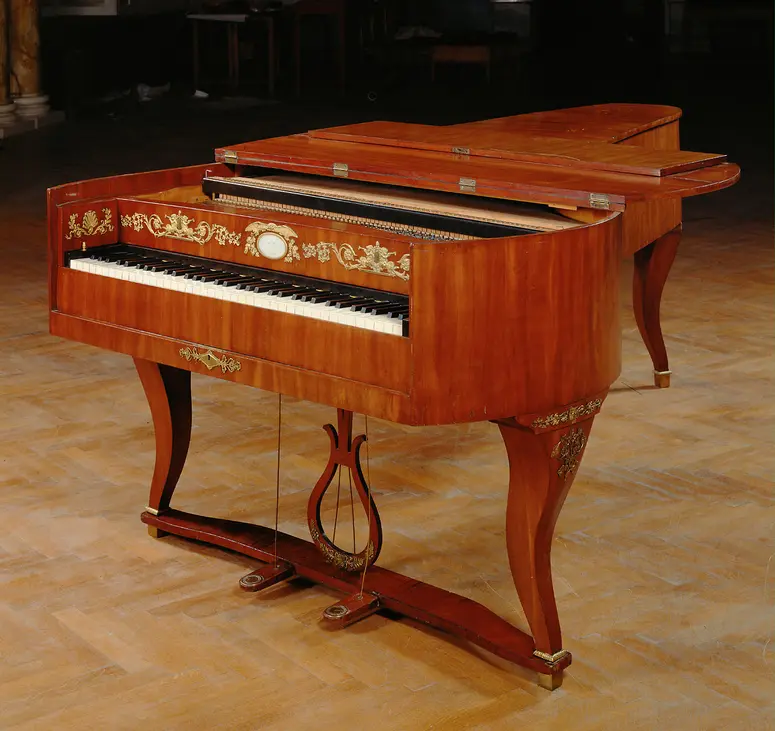
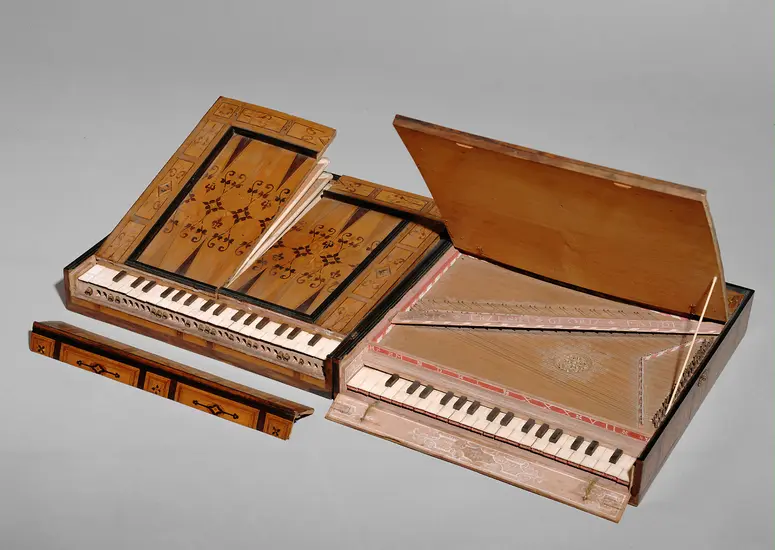
Manufacturer: Anton Meidting December 1587
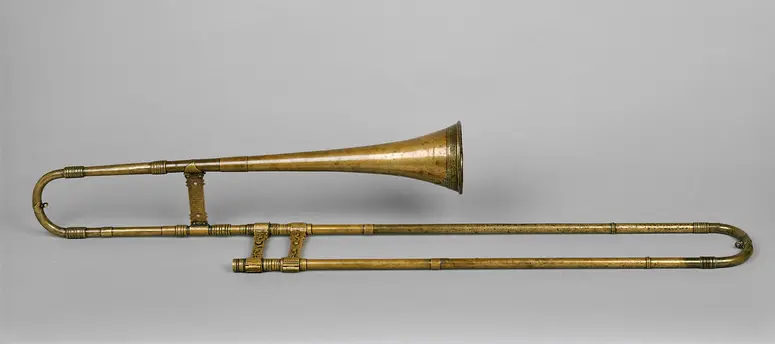
Manufacturer: Joerg Neuschel 1557
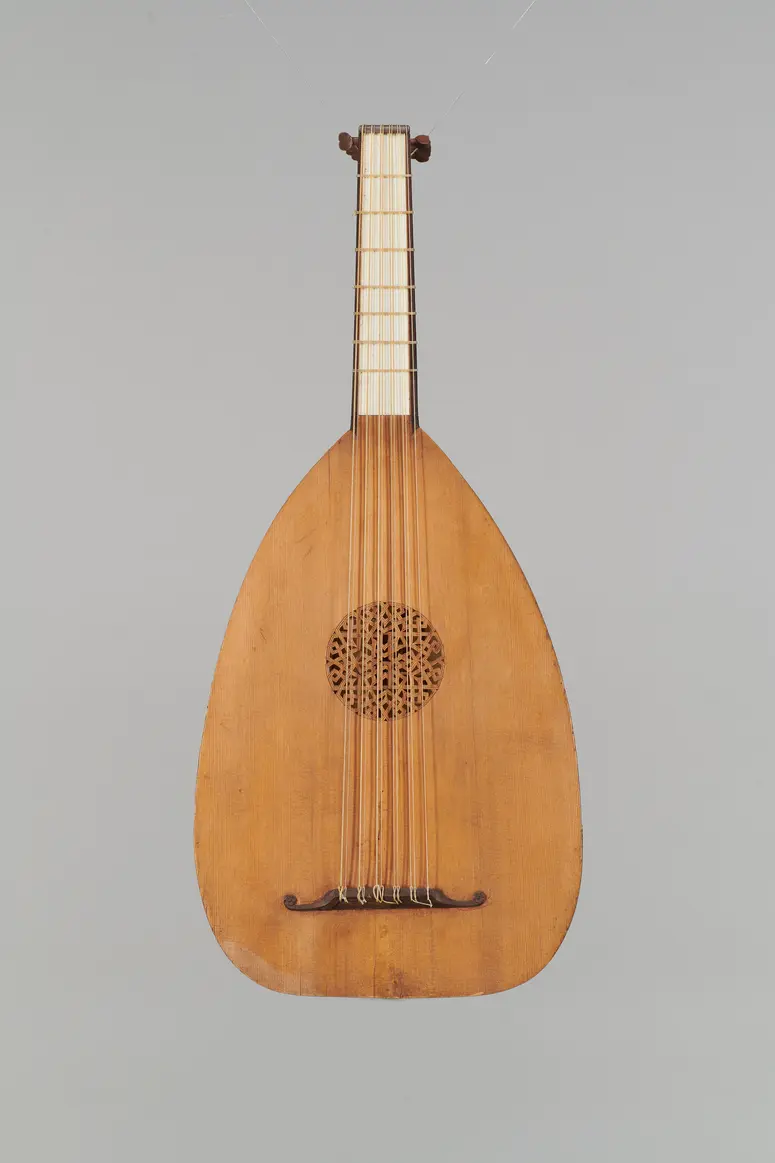
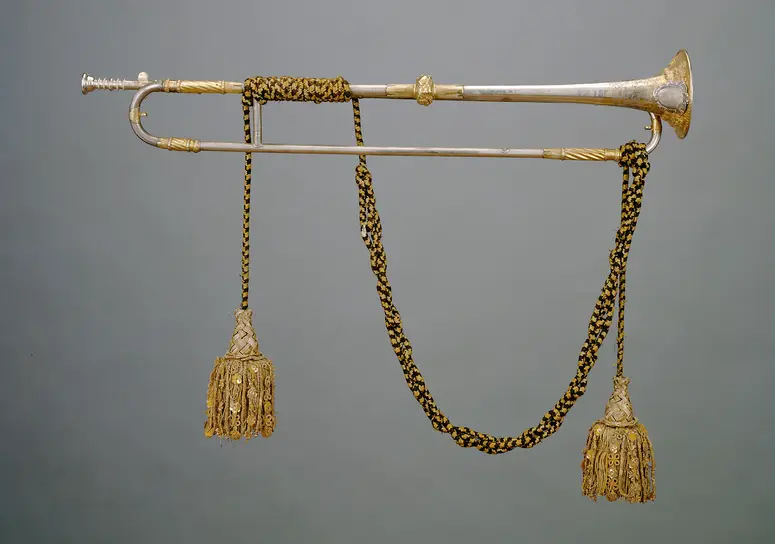
Manufacturer: Michael Leichamschneider 1741
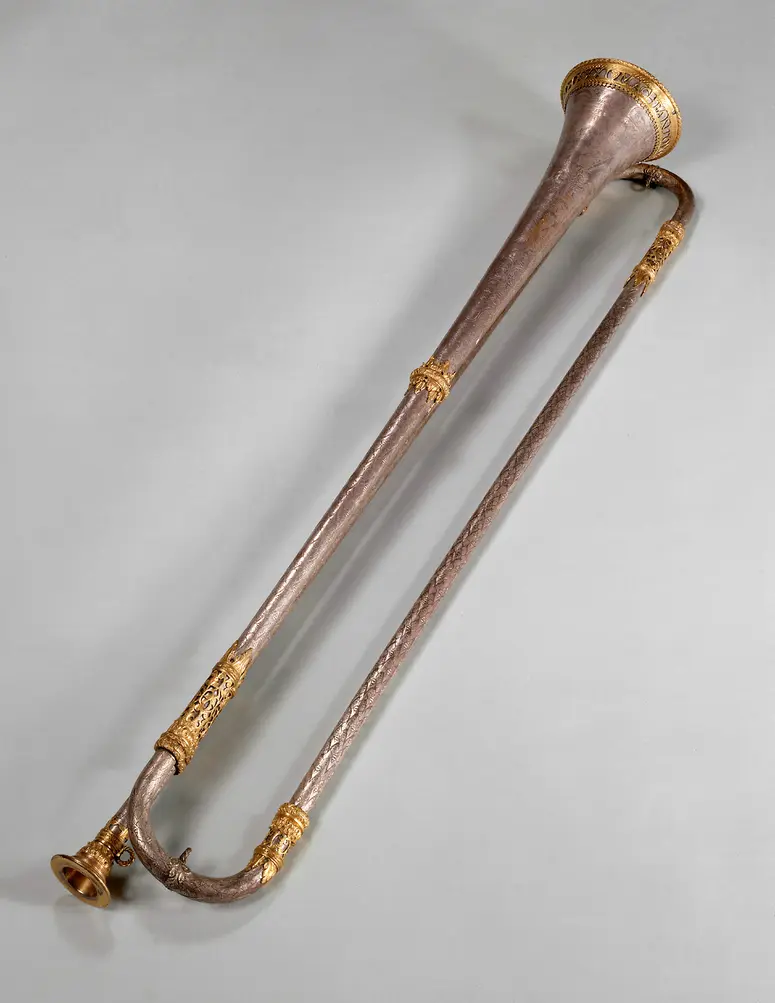
Manufacturer: Anton Schnitzer 1581
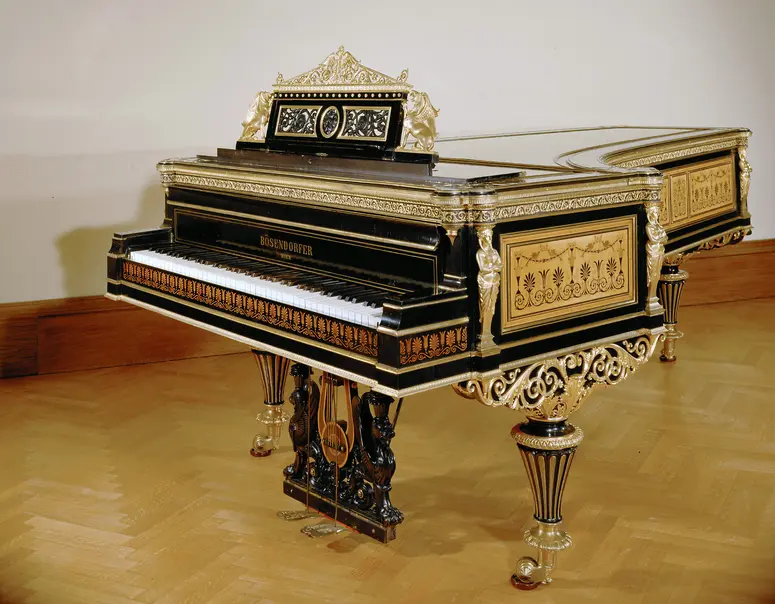
Manufacturer: Fa. Bösendorfer 1867
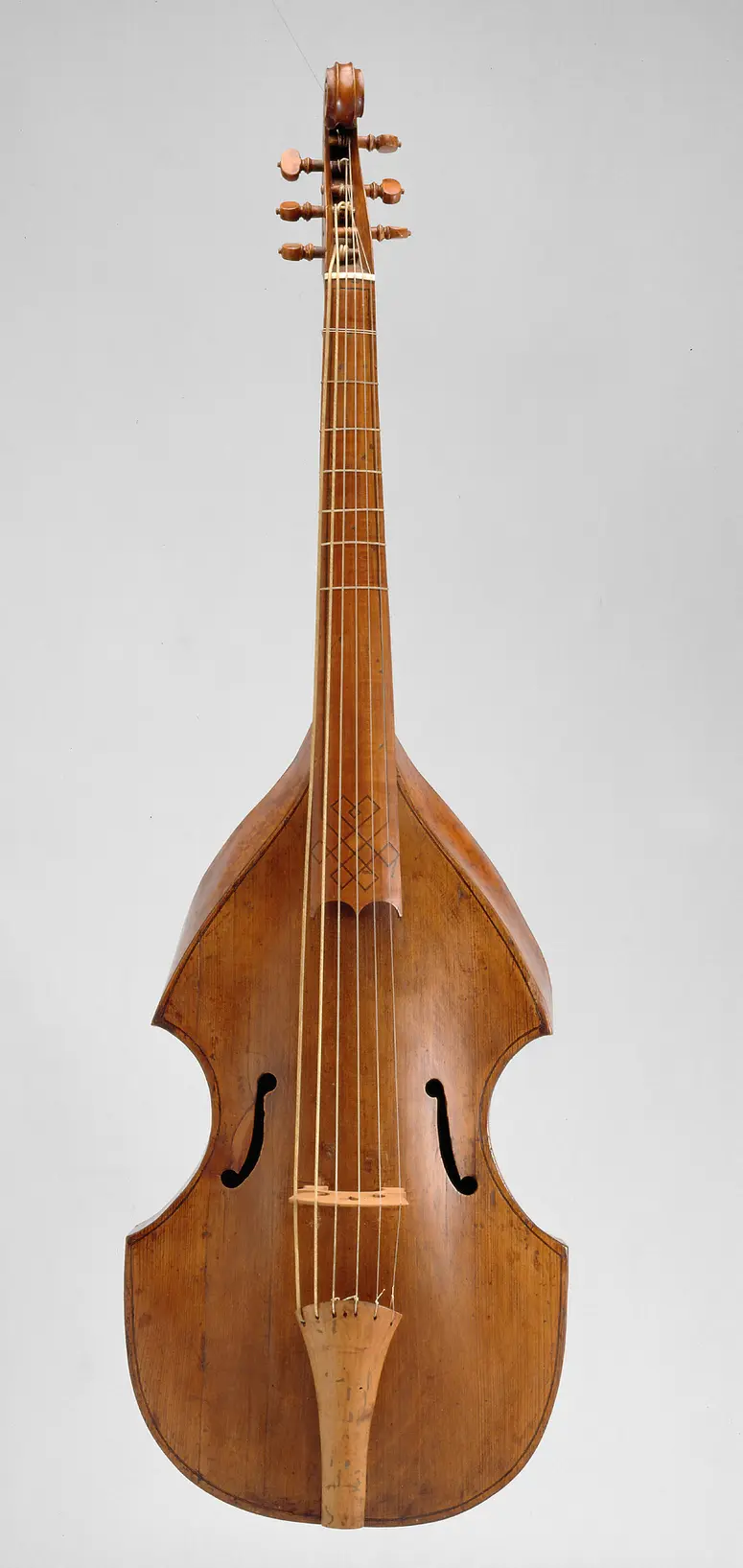
Manufacturer: Antonio Ciciliano presumably after 1602
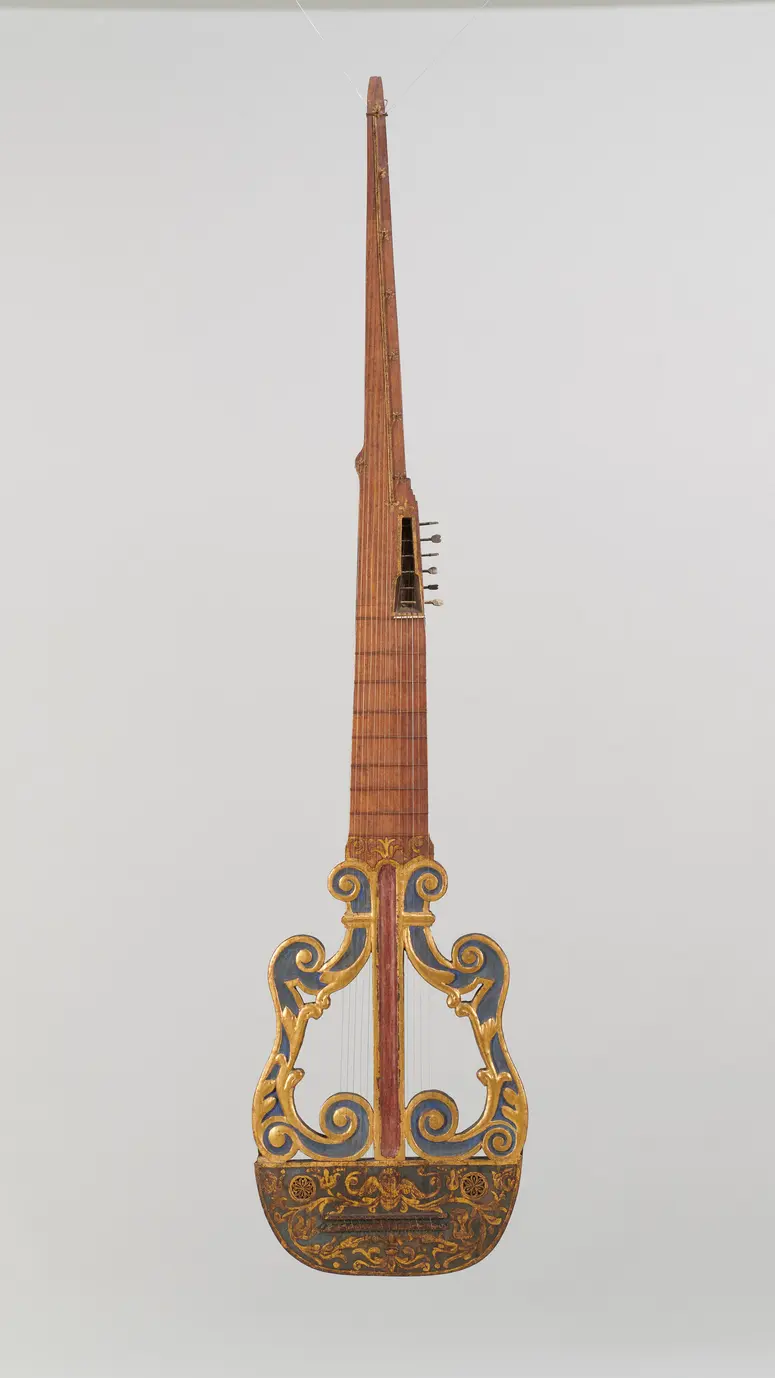
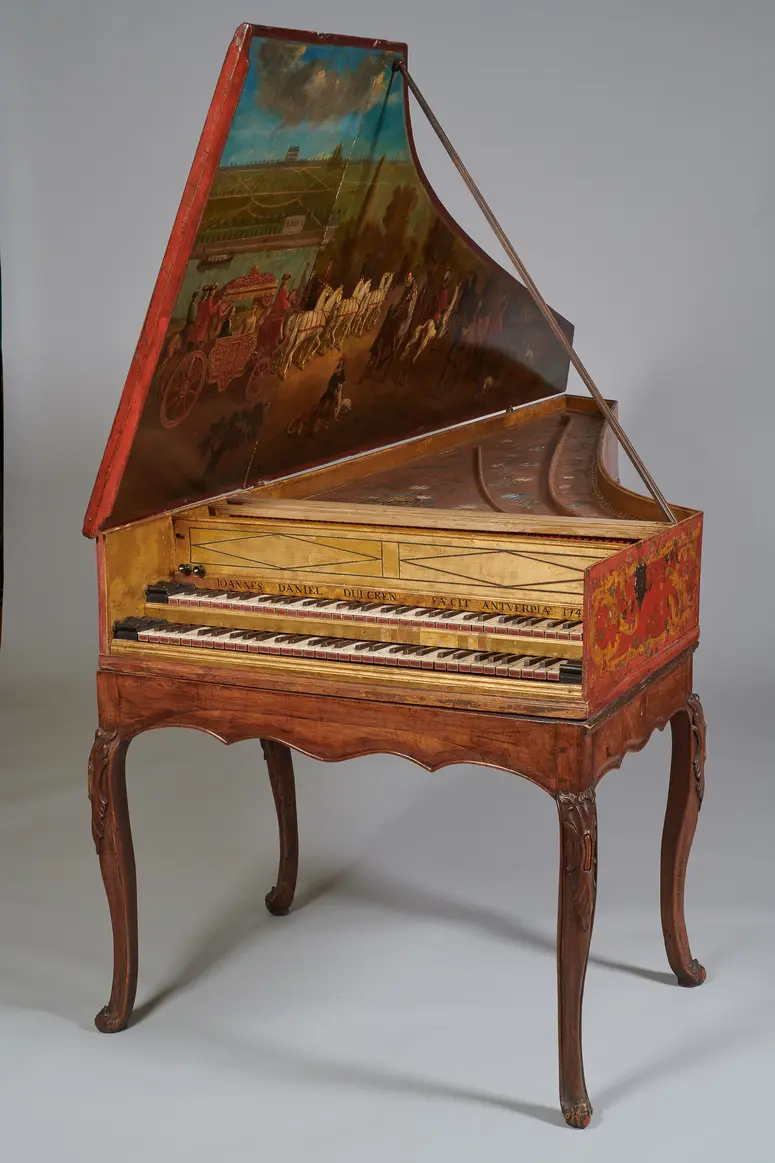
Manufacturer: Joann Daniel Dulcken 1745
Manufacturer: Wenzel Kowansky 1749
Manufacturer: Girolamo de Virchis 1574