Tartolt
before 1578 | anonym
In Archduke Ferdinand II’s Kunst- und Wunderkammer (chamber of arts and curiosities) in Ambras Castle, alongside conventional instruments there are some for which no comparable equivalents can be found anywhere in the world. To this group belongs a set of double-reed instruments with bodies shaped like animals. The Ambras inventory of 1596 describes the instruments as follows: “In one case 5 tardöld, shaped like dragons”. The origin of the term tardöld or tartölt is uncertain. Perhaps it is a dialect form of the word cortholt (kurzholz = short wood), a collective term for wind instruments with a curved or folded bore. Sound is produced by means of a double reed fixed to an air-pipe shaped into a figure 8. The tube of the instrument is made of metal and is twisted into a helix. The tube is integrated into a model of a dragon’s body. (rh)
Lit.: Rudolf Hopfner: Masterpieces from the Collection of Historic Musical Instruments. A Short Guide through the Kunsthistorisches Museum Vienna, Vol. 1, Vienna 2019
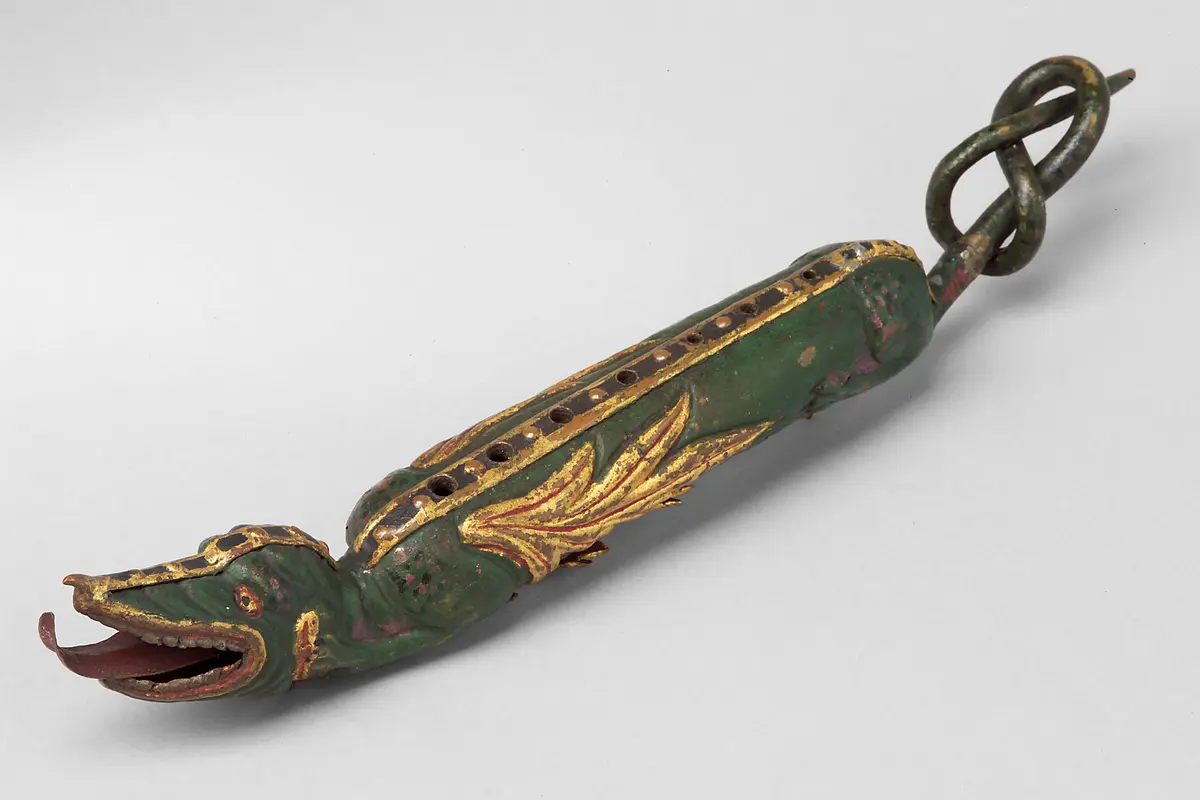
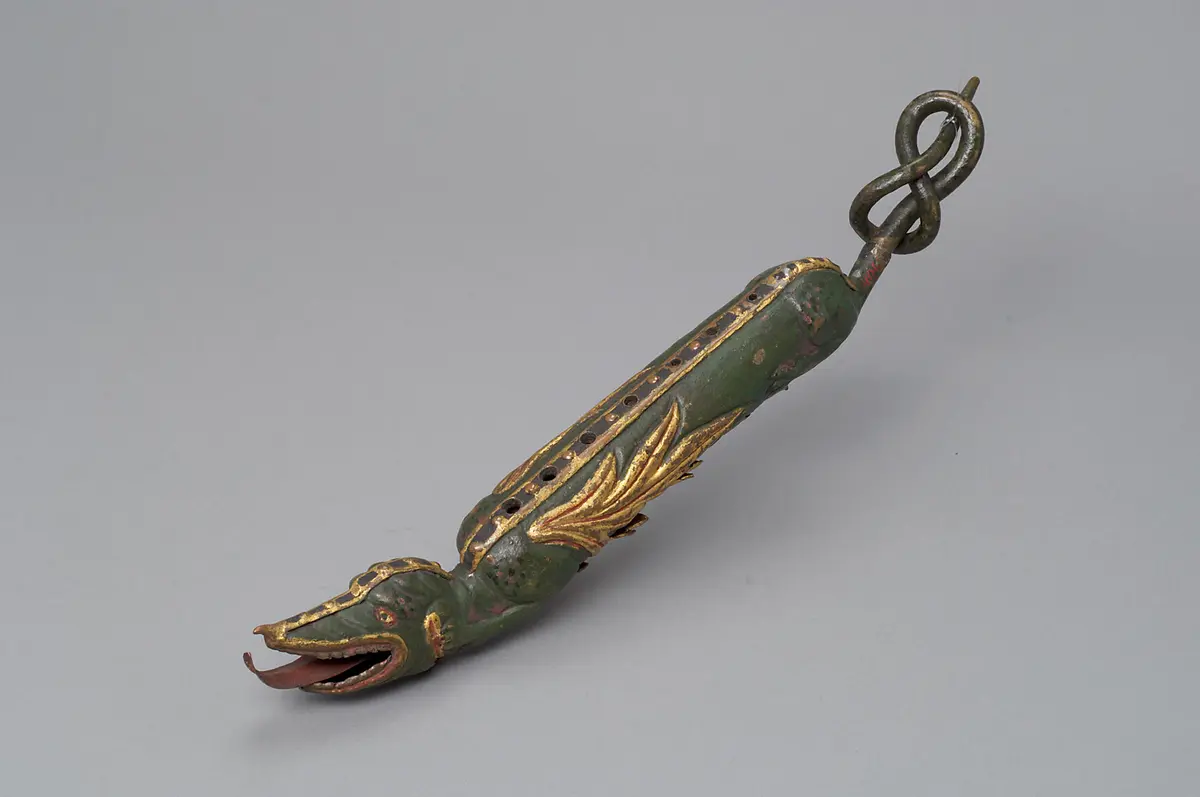
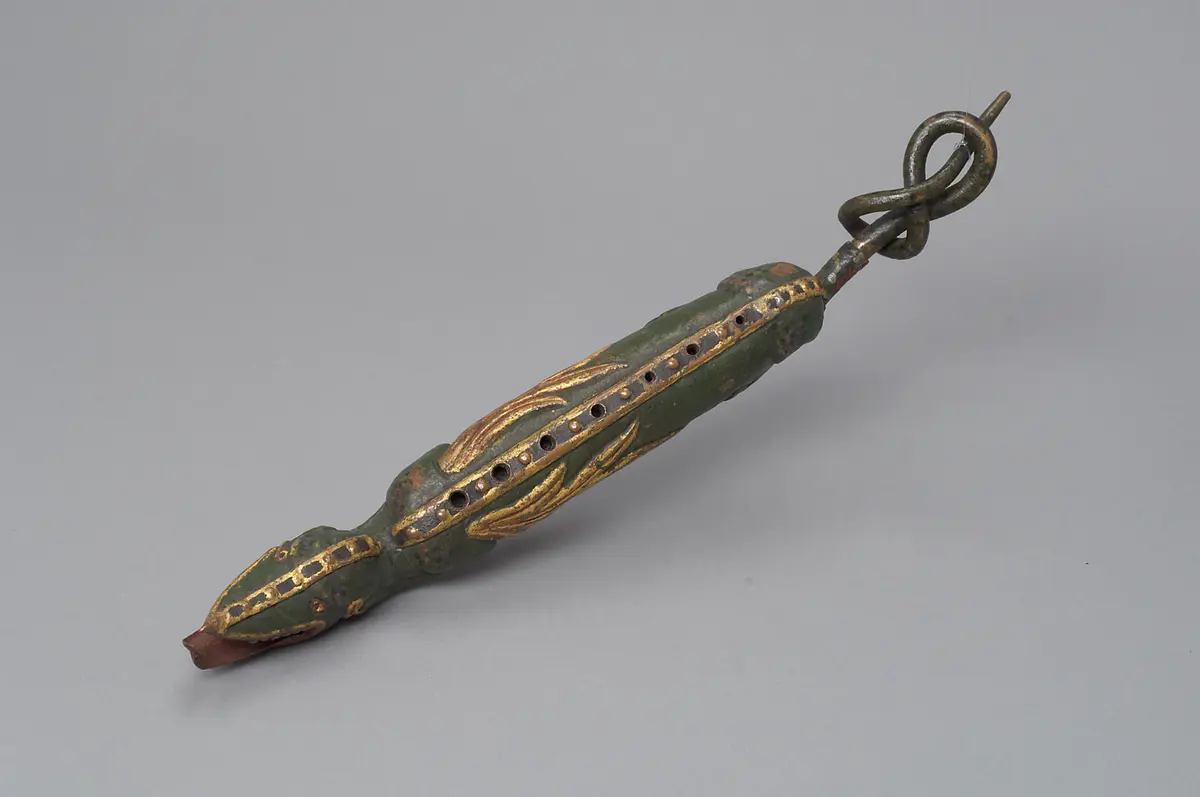
In Archduke Ferdinand II’s Kunst- und Wunderkammer (chamber of arts and curiosities) in Ambras Castle, alongside conventional instruments there are some for which no comparable equivalents can be found anywhere in the world. To this group belongs a set of double-reed instruments with bodies shaped like animals. The Ambras inventory of 1596 describes the instruments as follows: “In one case 5 tardöld, shaped like dragons”. The origin of the term tardöld or tartölt is uncertain. Perhaps it is a dialect form of the word cortholt (kurzholz = short wood), a collective term for wind instruments with a curved or folded bore. Sound is produced by means of a double reed fixed to an air-pipe shaped into a figure 8. The tube of the instrument is made of metal and is twisted into a helix. The tube is integrated into a model of a dragon’s body. (rh)
Lit.: Rudolf Hopfner: Masterpieces from the Collection of Historic Musical Instruments. A Short Guide through the Kunsthistorisches Museum Vienna, Vol. 1, Vienna 2019
Manufacturer:
anonym
Time:
before 1578
Object Name
Tartolt
Culture
Germany
Material/technology:
Corpus composed of two soldered metal halves, polychrome mounted, partially gold-plated
Dimensions:
L. 370 mm, B. 40 mm, H. 40 mm
Copyright
Kunsthistorisches Museum, Sammlung alter Musikinstrumente
Invs.
Sammlung alter Musikinstrumente, 208
Alte Inv.Nr.:
KK_4043
Schlosser Nr.:
A 219
Browse more
Similar items you might be interested in
Manufacturer: Martin Kaiser 2nd half of the 17th century
Manufacturer: Johann Baptist Merklein approx. 1800
Manufacturer: anonym 2nd half of the 16th century (assigned)
Manufacturer: Hendrik Richters beginning of the 18th century
Manufacturer: Michael Leichamschneider 1732
Manufacturer: Joerg Neuschel 1557
Manufacturer: Michael Leichamschneider 1741
Manufacturer: Matthäus Seelos 1st half of the 17th century
Manufacturer: Anton Meidting December 1587
Manufacturer: Fa. Bösendorfer 1867
Manufacturer: Anton Schnitzer 1581
Manufacturer: Antonio Ciciliano presumably after 1602
Manufacturer: Wenzel Kowansky 1749
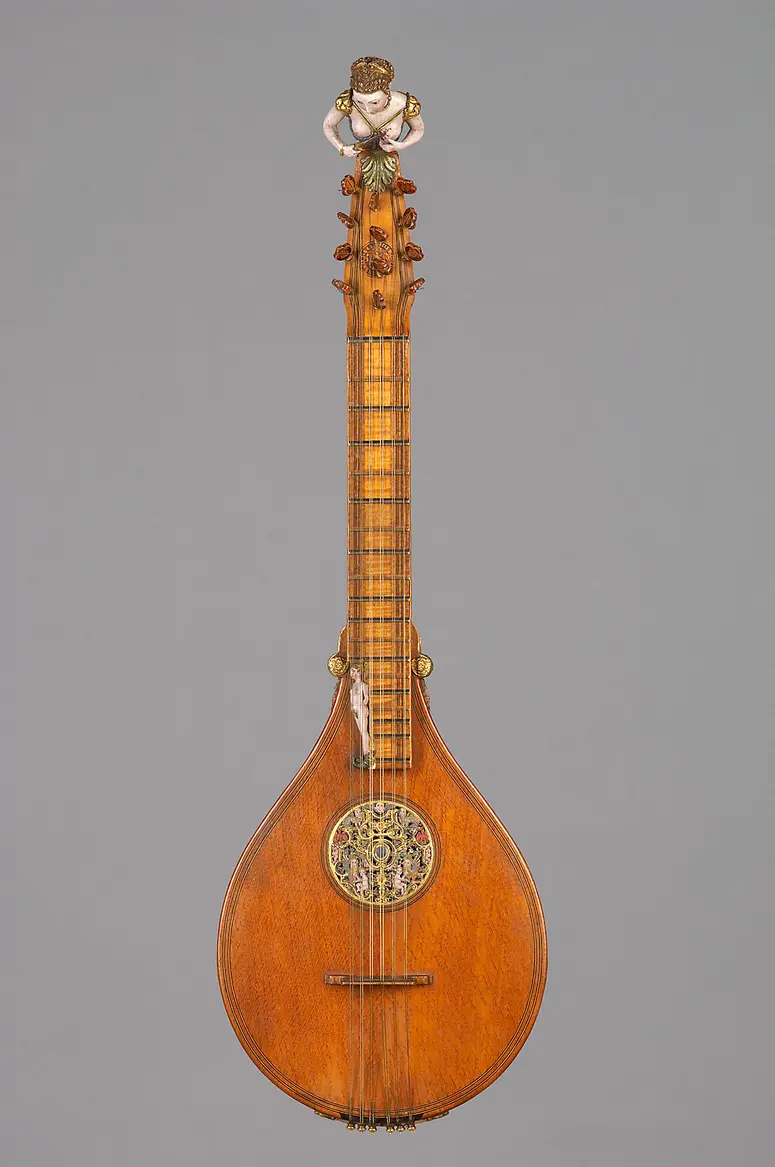
Manufacturer: Girolamo de Virchis 1574
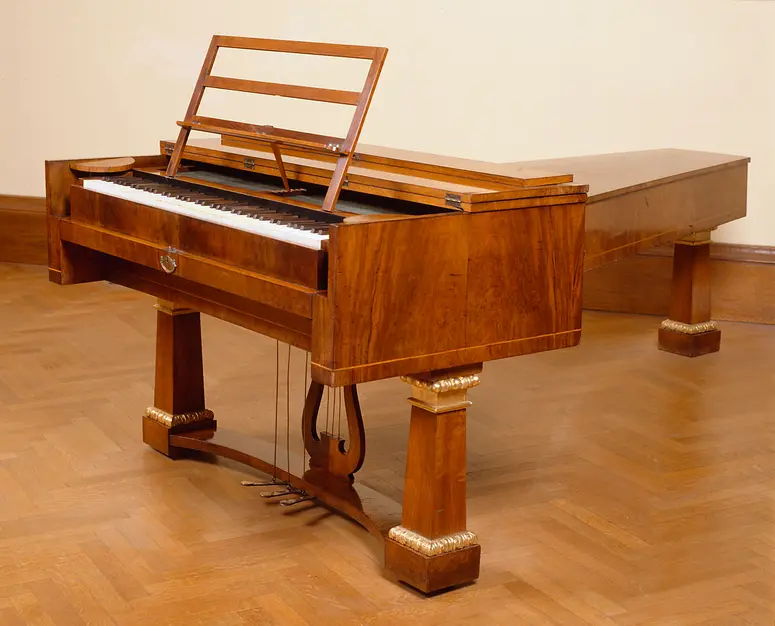
Manufacturer: Johann Baptist Streicher 1840
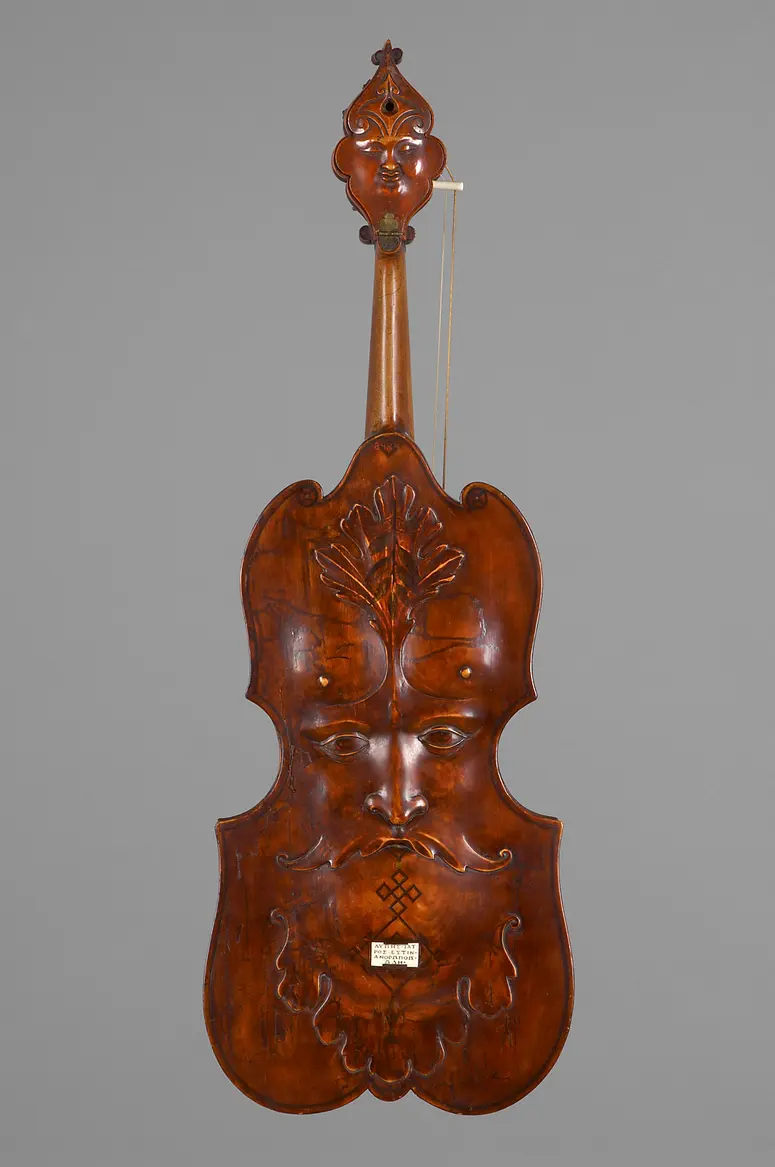
Manufacturer: Giovanni d'Andrea 1511