Fortepiano with a down-striking action
1840 | Johann Baptist Streicher
Until its dissolution in 1896, Johann Baptist Streicher’s (1796-1871) firm, together with that of Bösendorfer, was the most important piano manufacturer in the Austrian regions. His success was largely due to his great technical expertise and his quest for perfection. He attempted to make numerous design improvements: some just involved details, but others effected more fundamental aspects of piano construction. He discovered, for example, that the impact of the hammer from above facilitated a more efficient transmission of energy from the string into the soundboard. He developed the so called oberschlägige Mechanik, which functions according to this principle. The tonal results proved him right, but the maintenance of a mechanism of this type and the tuning procedure turned out to be too complicated. (rh)
Lit.: Rudolf Hopfner: Masterpieces from the Collection of Historic Musical Instruments. A Short Guide through the Kunsthistorisches Museum Vienna, Vol. 1, Vienna 2019
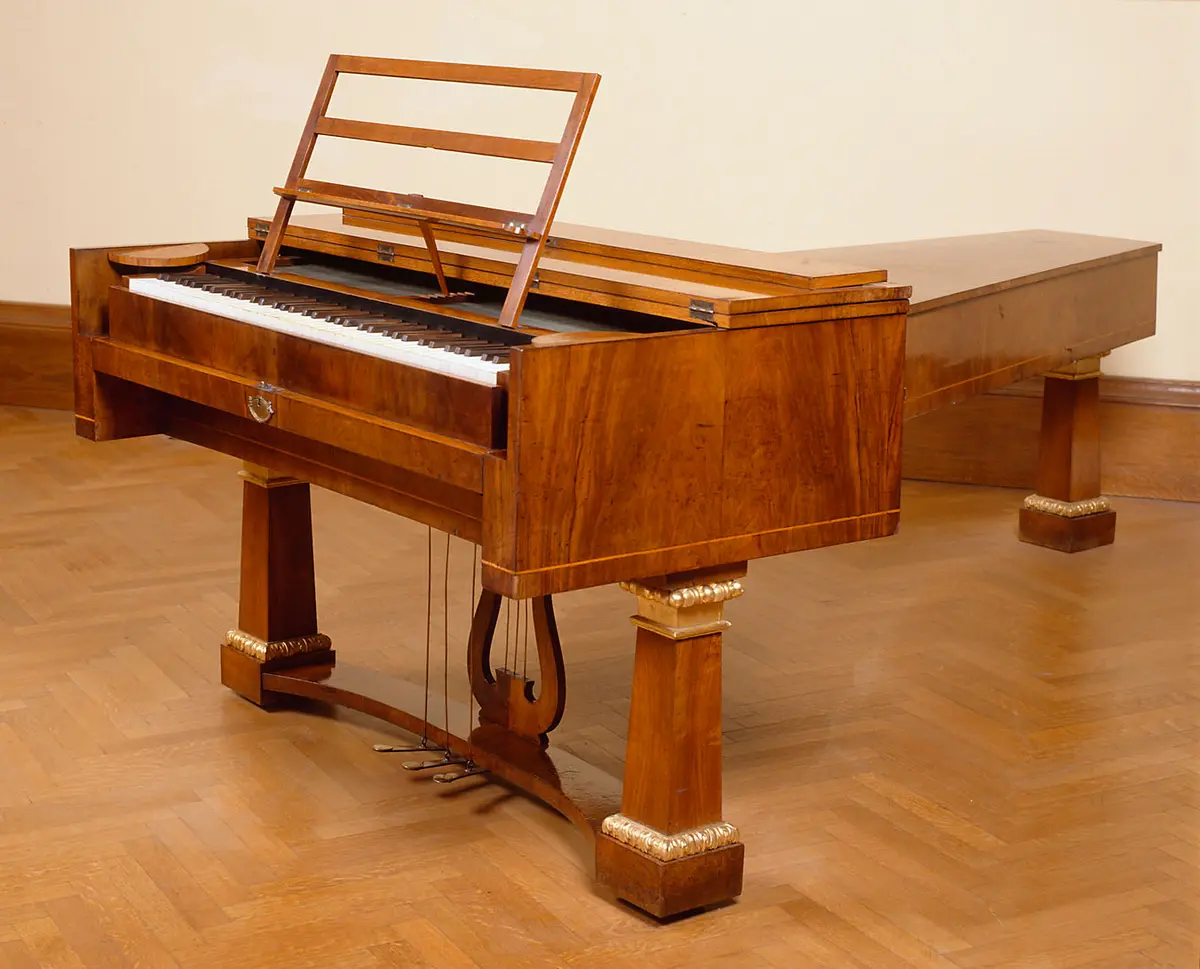
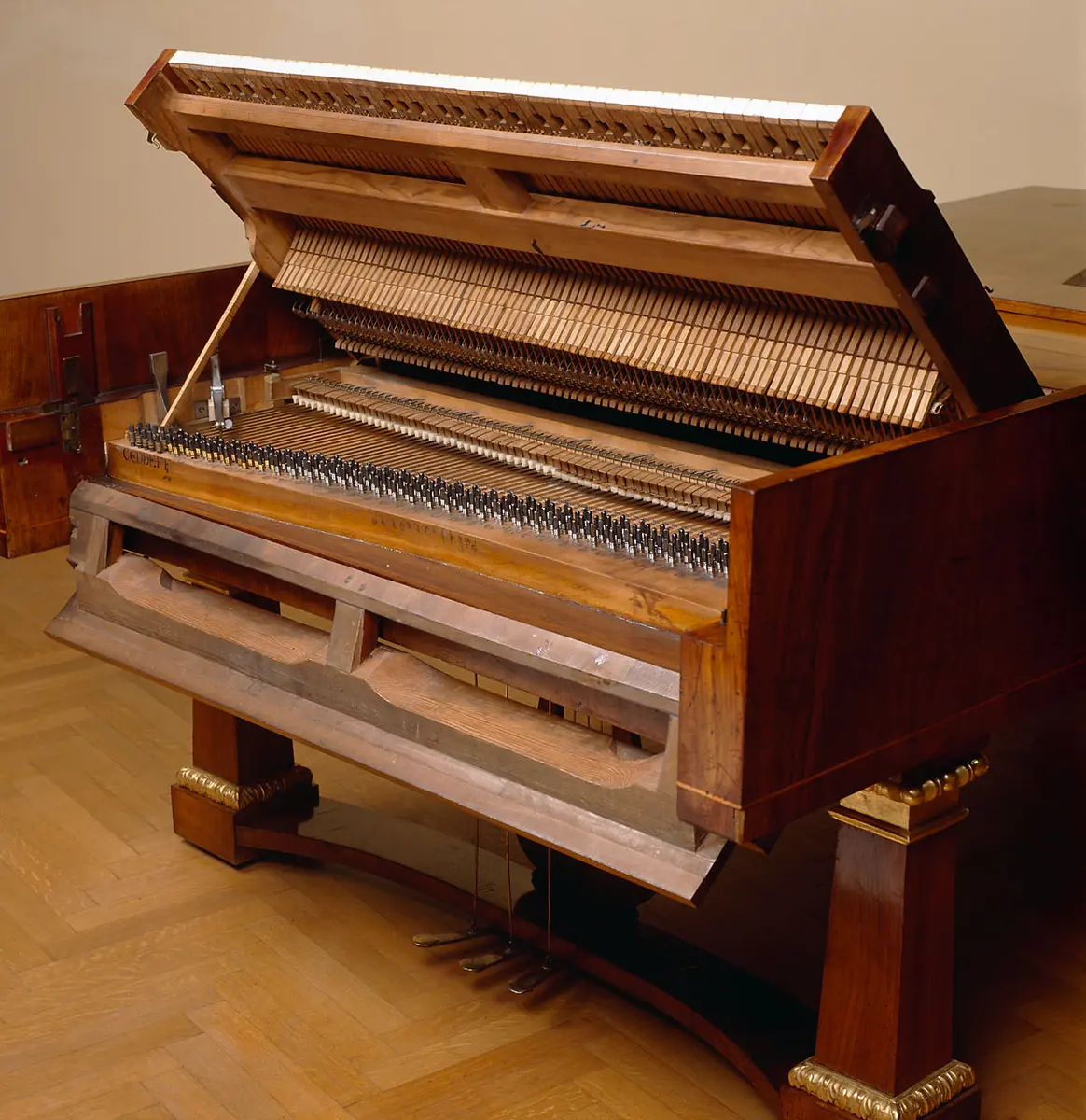
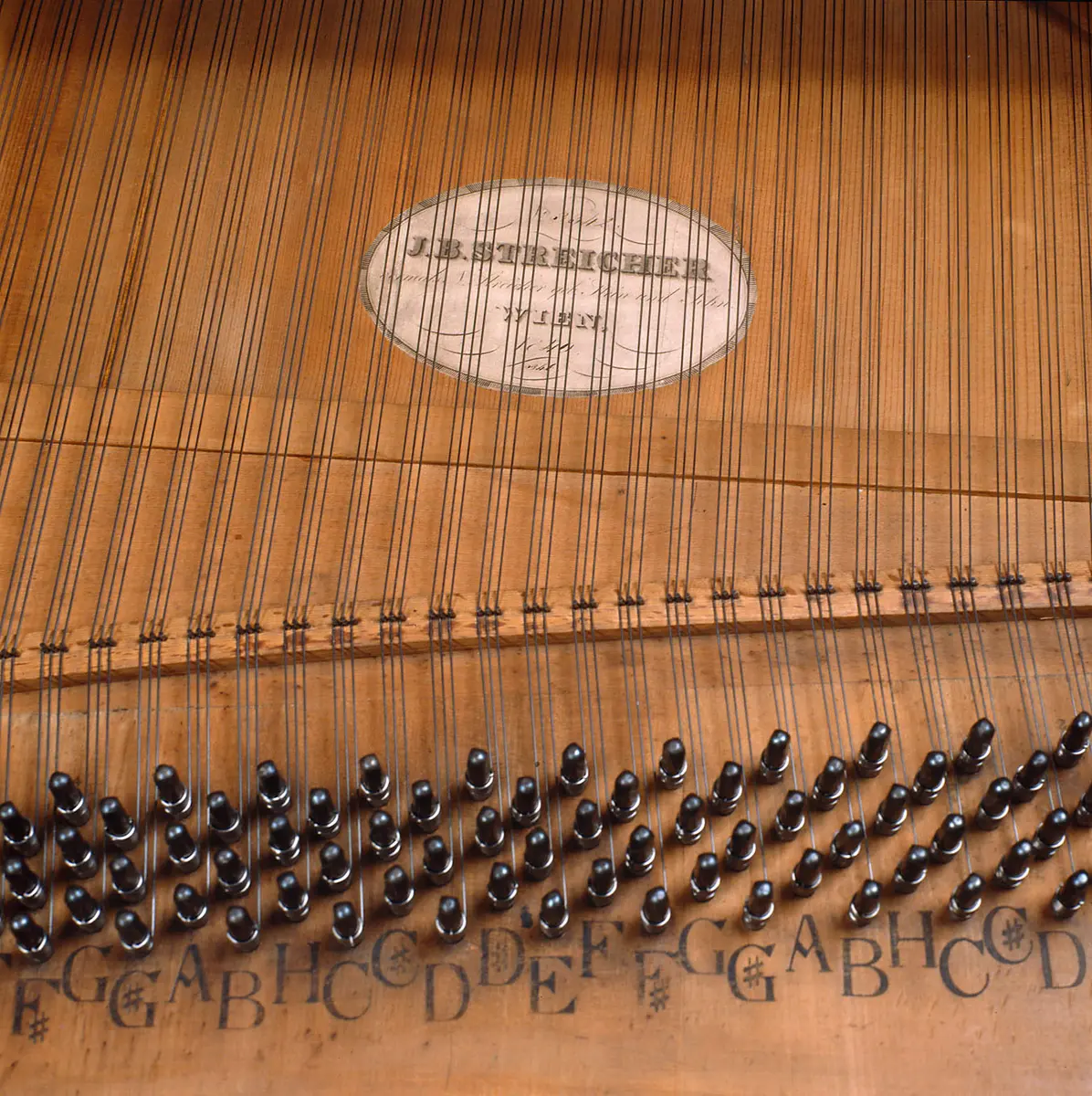
Until its dissolution in 1896, Johann Baptist Streicher’s (1796-1871) firm, together with that of Bösendorfer, was the most important piano manufacturer in the Austrian regions. His success was largely due to his great technical expertise and his quest for perfection. He attempted to make numerous design improvements: some just involved details, but others effected more fundamental aspects of piano construction. He discovered, for example, that the impact of the hammer from above facilitated a more efficient transmission of energy from the string into the soundboard. He developed the so called oberschlägige Mechanik, which functions according to this principle. The tonal results proved him right, but the maintenance of a mechanism of this type and the tuning procedure turned out to be too complicated. (rh)
Lit.: Rudolf Hopfner: Masterpieces from the Collection of Historic Musical Instruments. A Short Guide through the Kunsthistorisches Museum Vienna, Vol. 1, Vienna 2019
Manufacturer:
Johann Baptist Streicher (1796 Wien - 1871 Wien) DNB
Time:
1840
Object Name
Fortepiano with a down-striking action
Culture
Austria, Vienna
Dimensions:
2450 mm x 1310 mm x 860 mm
Copyright
Kunsthistorisches Museum, Sammlung alter Musikinstrumente
Invs.
Sammlung alter Musikinstrumente, 412
Alte Inv.Nr.:
KK_8989
Browse more
Similar items you might be interested in
Manufacturer: Johann Baptist Merklein approx. 1800
Manufacturer: Joerg Neuschel 1557
Manufacturer: Johann Baptist Merklein 19th century
Simon Johann Havelka 2nd half of the 18th century
Manufacturer: Johann Georg Thir 2nd half of the 18th century
Instrument with screw; scientific instrument Johann Melchior Volckmair dated 1637–1642
Needle-like instrument; Scientific instrument Johann Melchior Volckmair dated 1637–1642