Hund und Hase
5. - 4. Jh. v. Chr.
This animal group consisting of a greyhound in full stretch, grasping a fleeing hare on its back, was part of a votive offering in the holy-site of Amathus. Traces of red coloring on the edge of the plinth, the contours of the ground; the jaws, ears and collar of the dog, as well as the ears and eyes of the hare are visible. The hare is painted green. A number of related animal figures, made of bronze and clay are known from Greek holy-sites. They were used as offerings to Artemis by successful hunters. Dogs possessed a special place in the fertility cult of Astarte-Aphrodite in Cyprus. There is evidence of keeping and sacrificing temple hounds, a Phoenician custom, in Tamassos.
A. Bernhard-Walcher u. a., Die Sammlung zyprischer Antiken im KHM. Sammlungskataloge des KHM Bd. 2, Wien: 1999
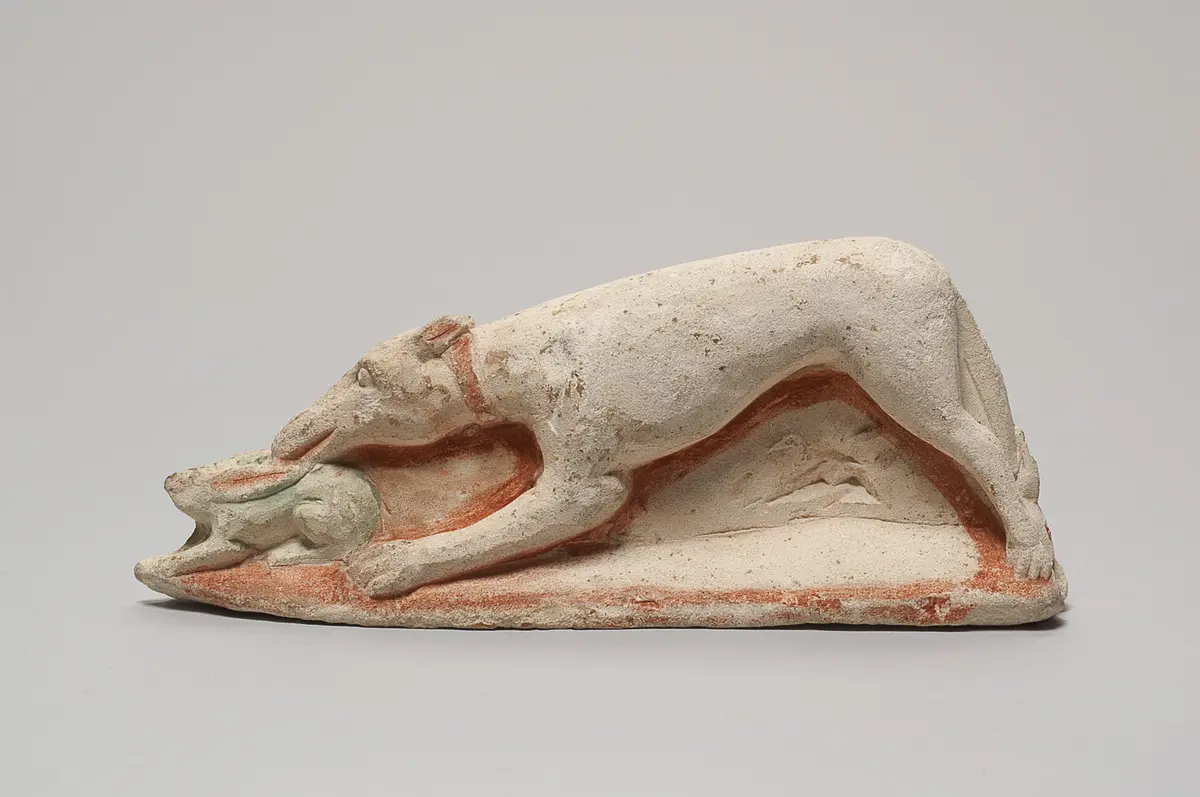
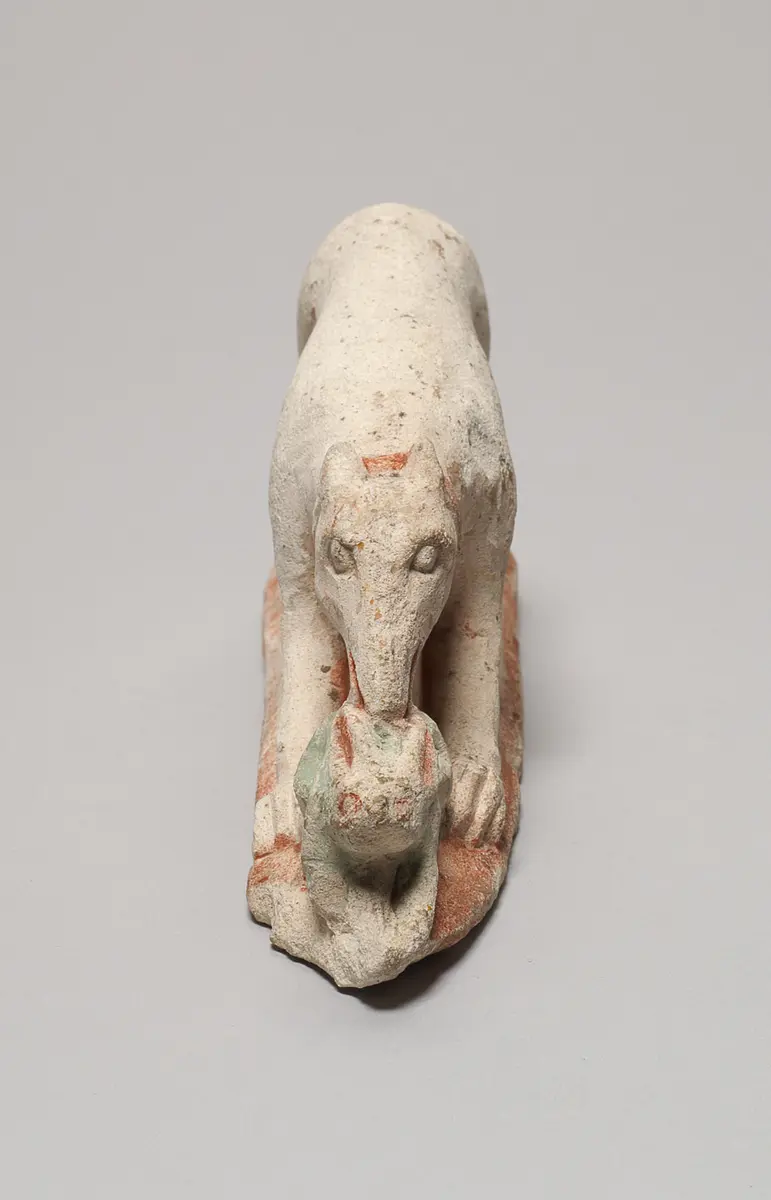
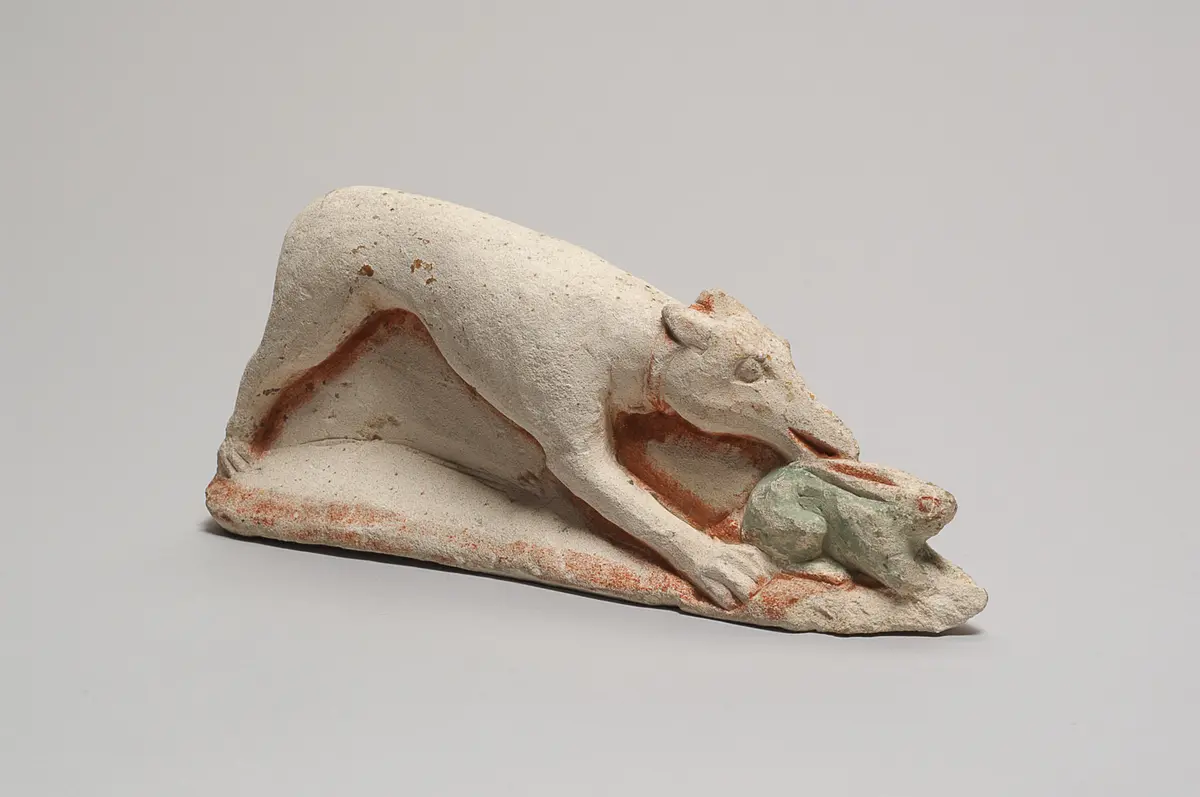
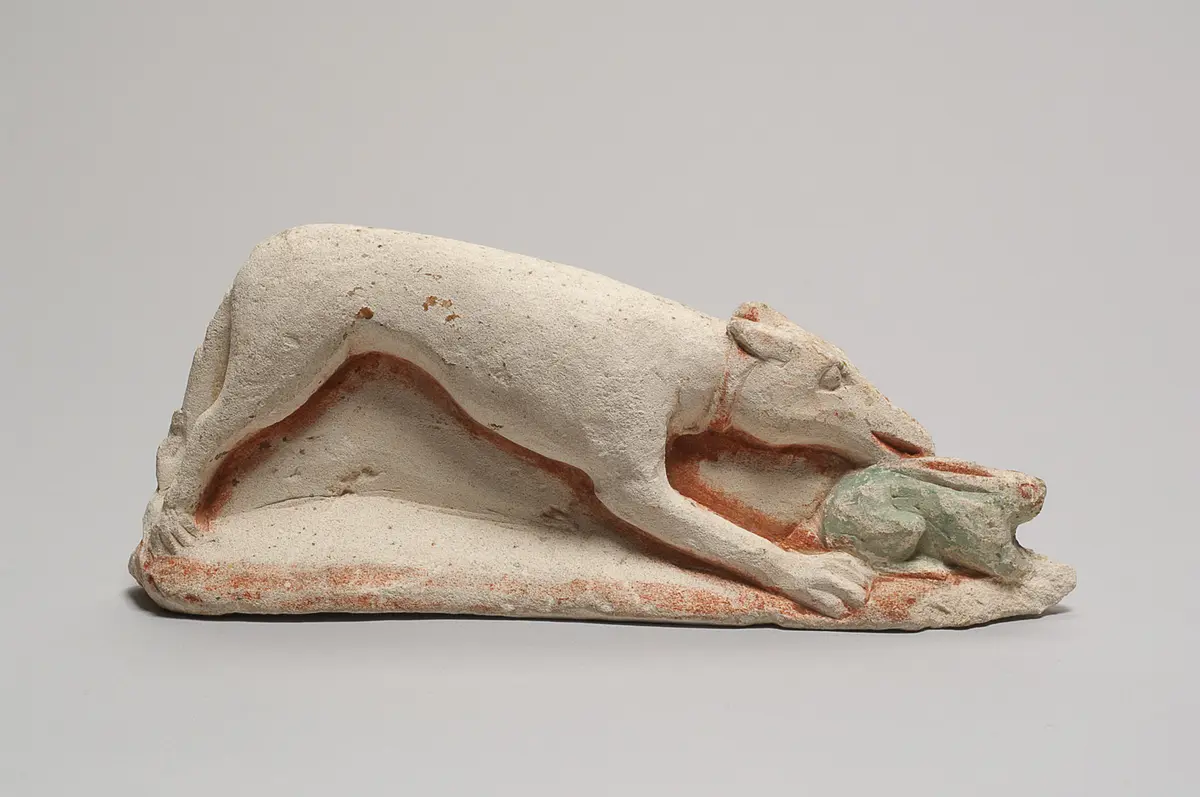
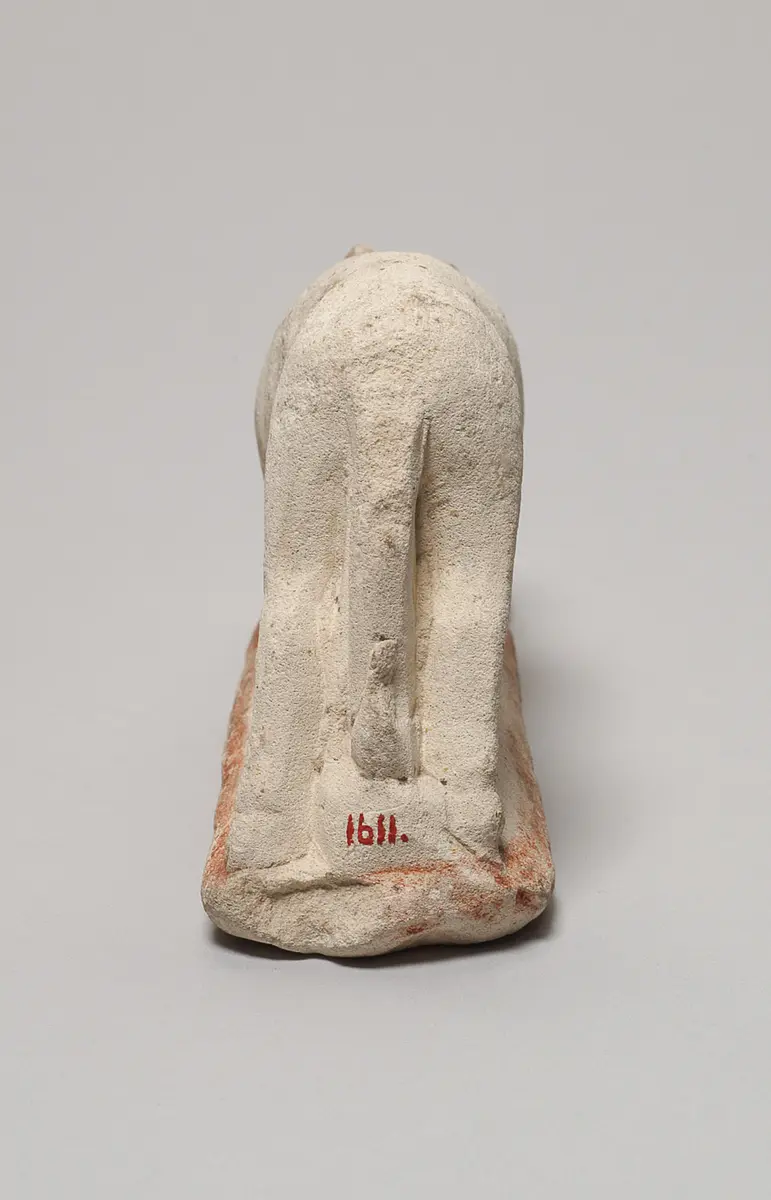
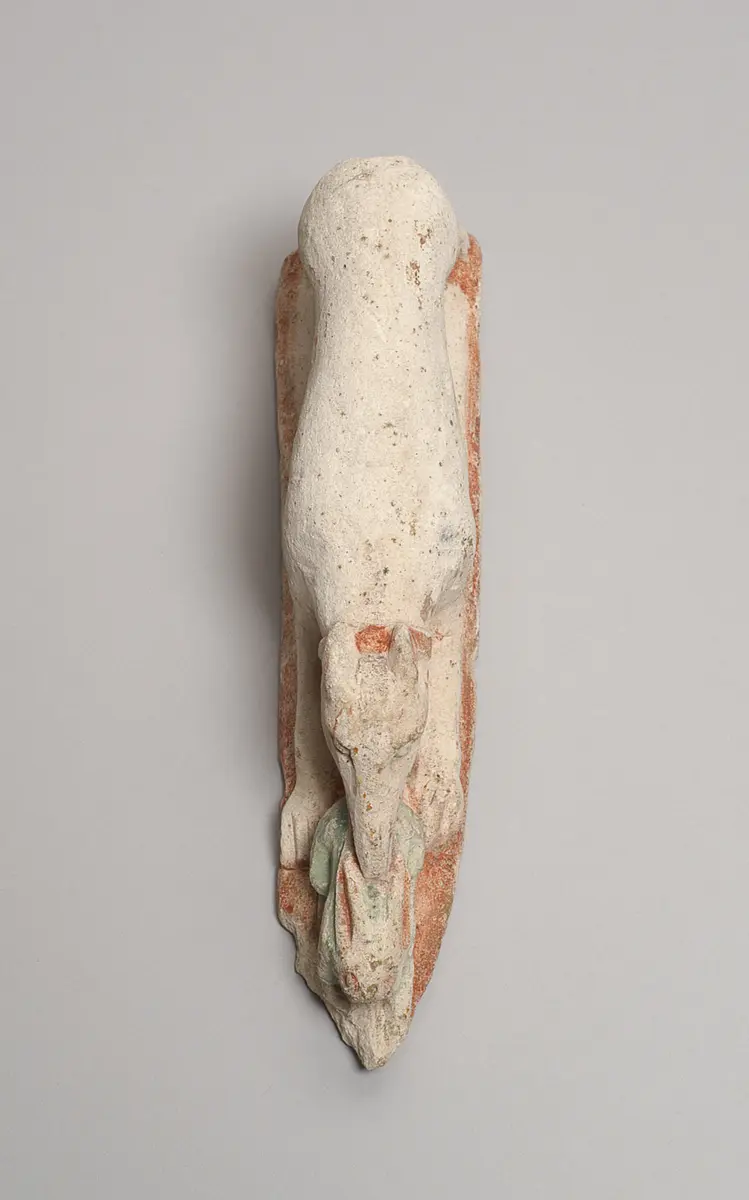
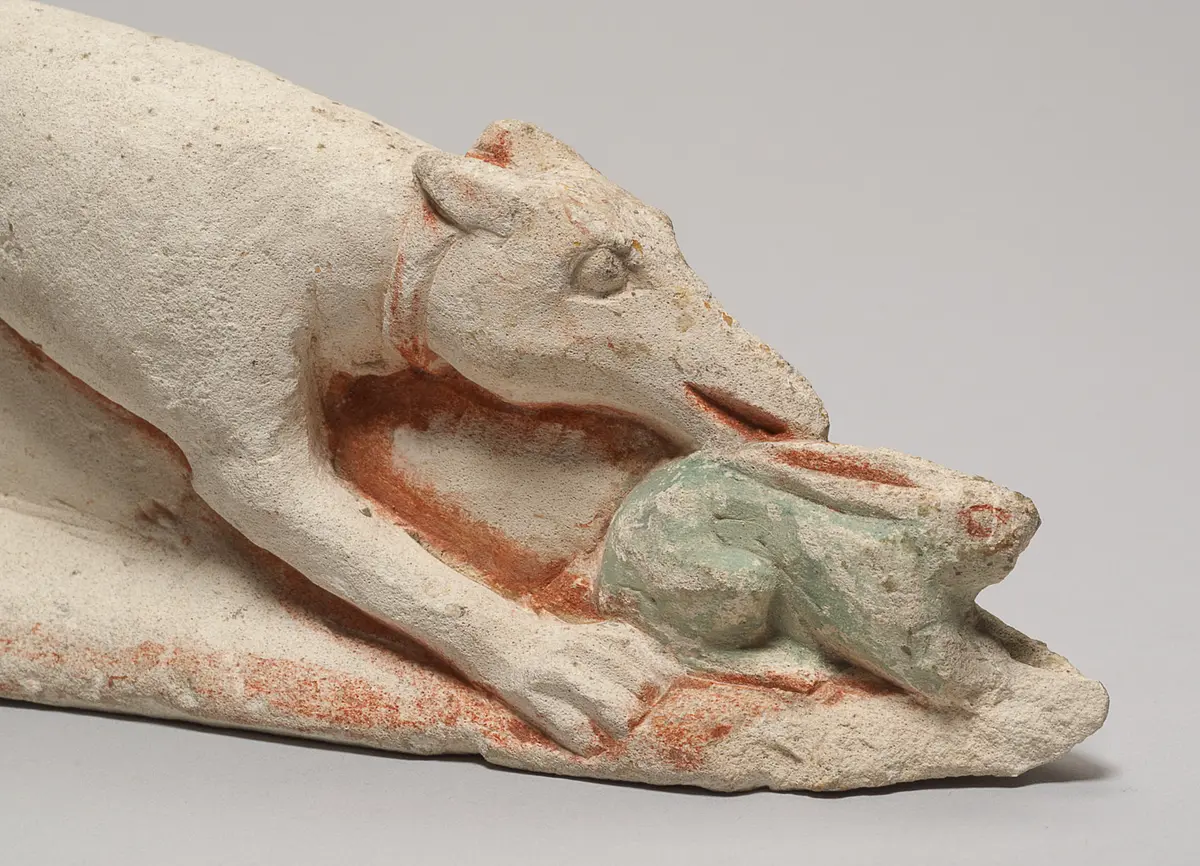
This animal group consisting of a greyhound in full stretch, grasping a fleeing hare on its back, was part of a votive offering in the holy-site of Amathus. Traces of red coloring on the edge of the plinth, the contours of the ground; the jaws, ears and collar of the dog, as well as the ears and eyes of the hare are visible. The hare is painted green. A number of related animal figures, made of bronze and clay are known from Greek holy-sites. They were used as offerings to Artemis by successful hunters. Dogs possessed a special place in the fertility cult of Astarte-Aphrodite in Cyprus. There is evidence of keeping and sacrificing temple hounds, a Phoenician custom, in Tamassos.
A. Bernhard-Walcher u. a., Die Sammlung zyprischer Antiken im KHM. Sammlungskataloge des KHM Bd. 2, Wien: 1999
Time:
5. - 4. Jh. v. Chr.
Object Name
Statuette
Culture
Zyprisch
Location of discovery:
Amathus (Zypern)
Material/technology:
Kalkstein; Bemalung rot und grün
Dimensions:
H. 8,2 cm, L. 20,7 cm
Copyright
Kunsthistorisches Museum, Antikensammlung
Invs.
Antikensammlung, I 1611
Provenance
Oesterr. Museum Wien; 1890 Kauf von Max Ohnefalsch-Richter; 1940 Übernahme; 1941 inventarisiert
Browse more
Similar items you might be interested in
Statuette: Modell eines Reisewagens Zyprisch, Eisenzeit, archaisch 1. Viertel 5. Jh. v. Chr.
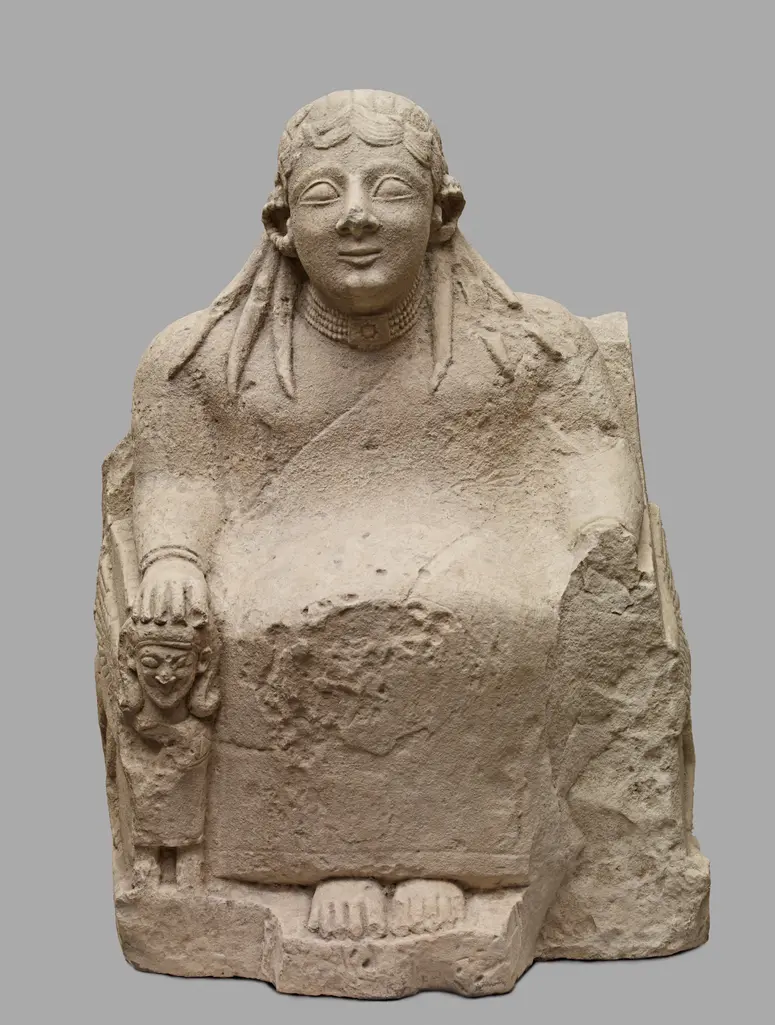
Statuette: Thronende Göttin (Astarte?) Zyprisch, Eisenzeit, archaisch 1. Hälfte 6. Jh. v. Chr.
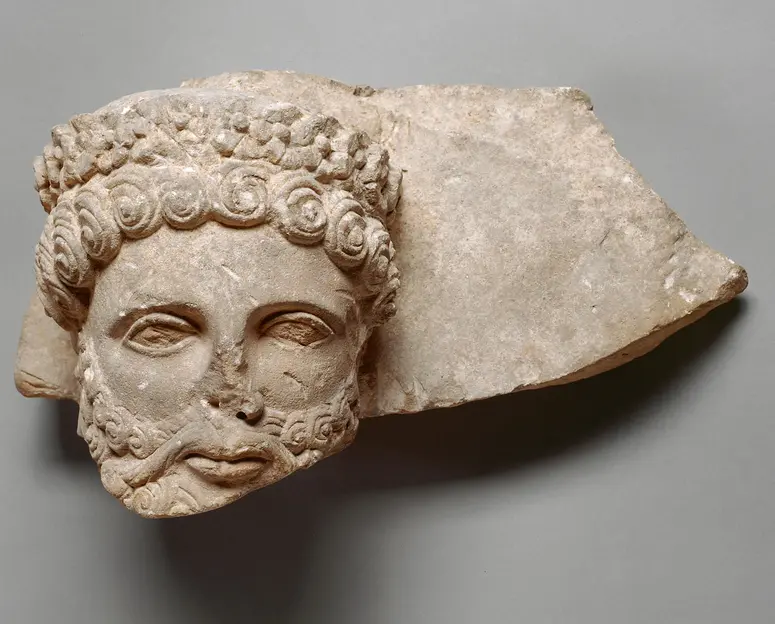
Relief: Kopf eines bärtigen Mannes Zyprisch, Eisenzeit, klassisch 2. Hälfte 5. Jh. v. Chr.
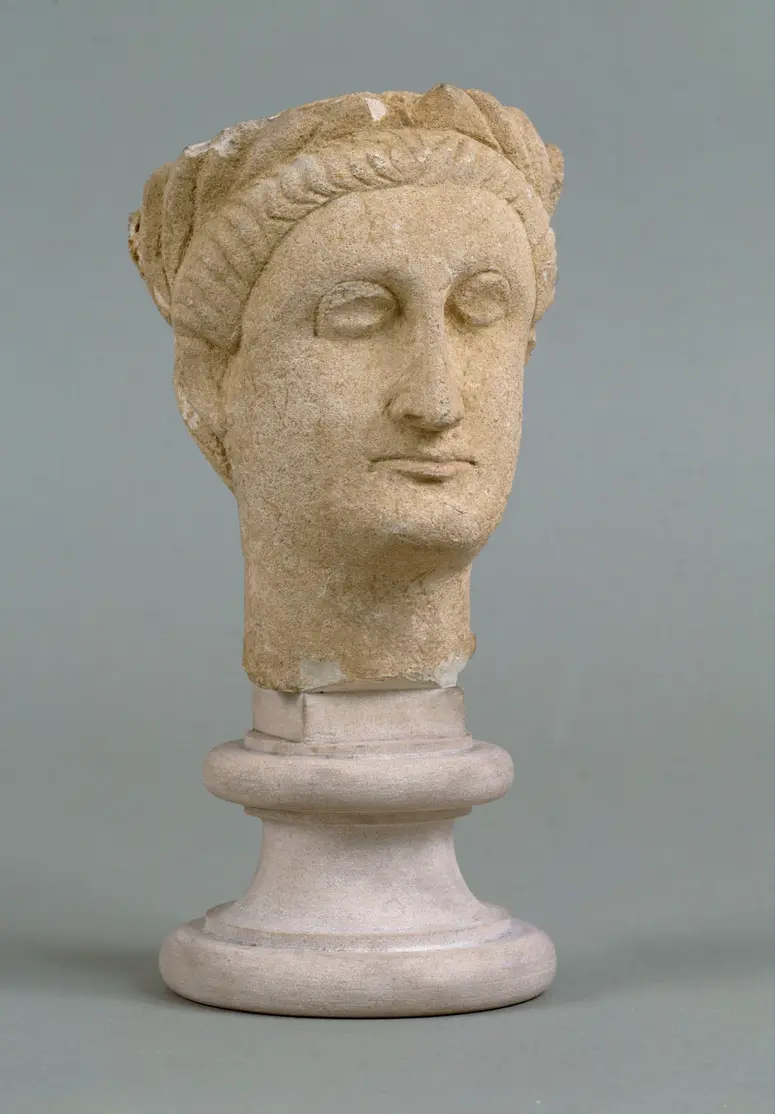
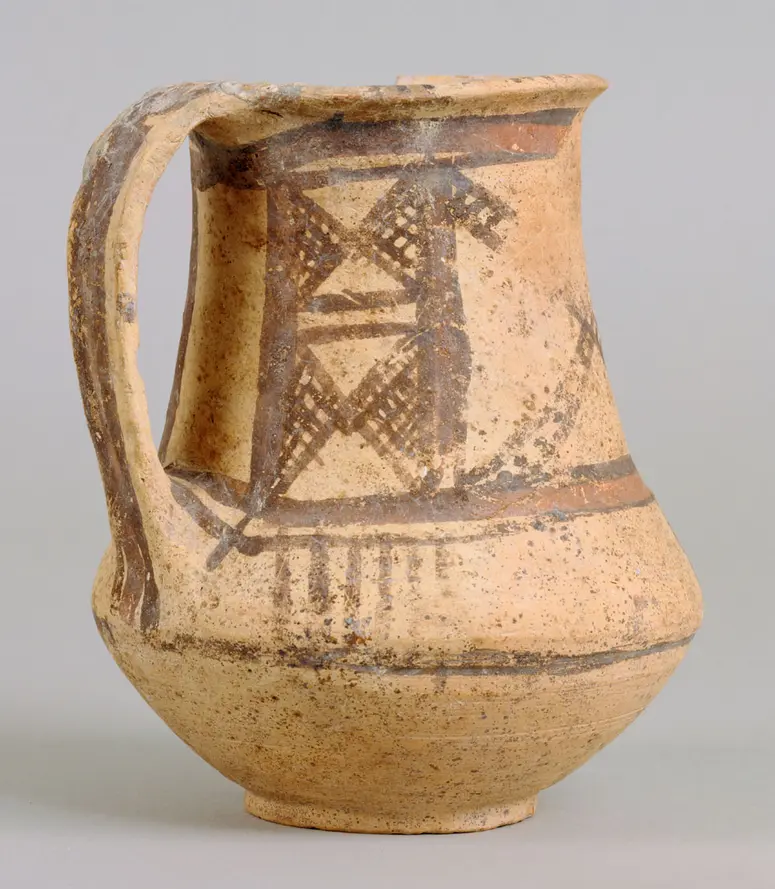
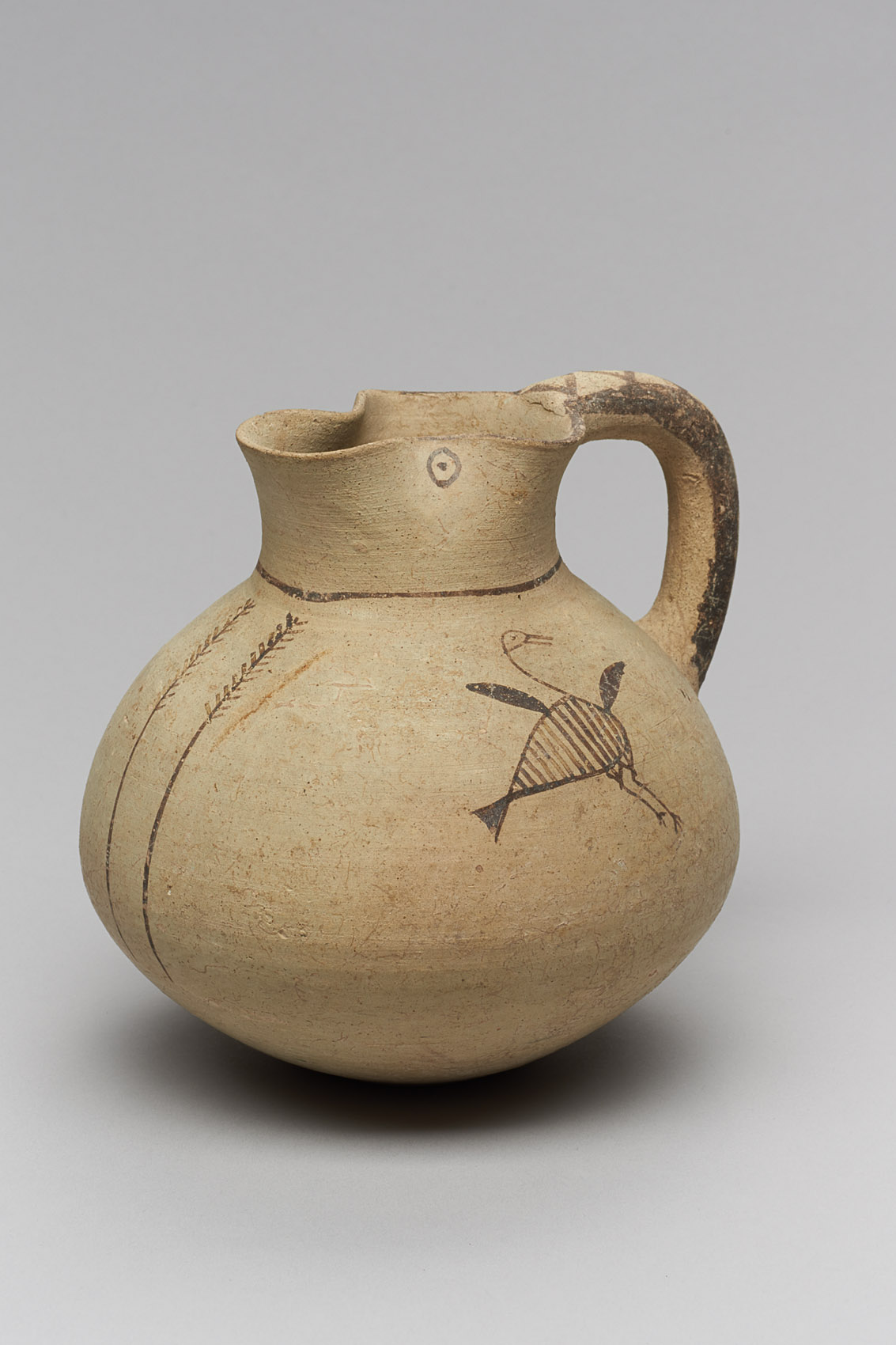
Henkelkrug der Bichrome Wheel-made Ware: Zweifarbige Ornamentik Zyprisch, Bronzezeit, Spätzyprisch 1625 - 1450 v. Chr.
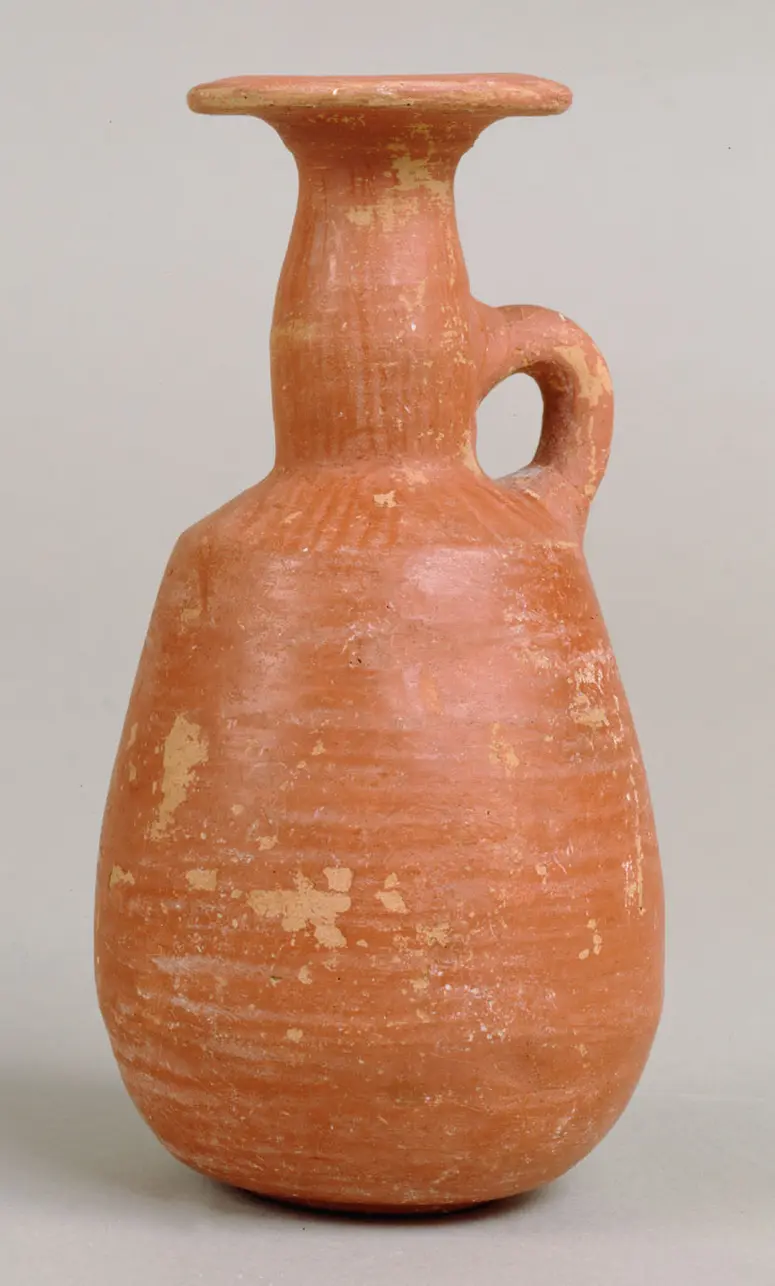

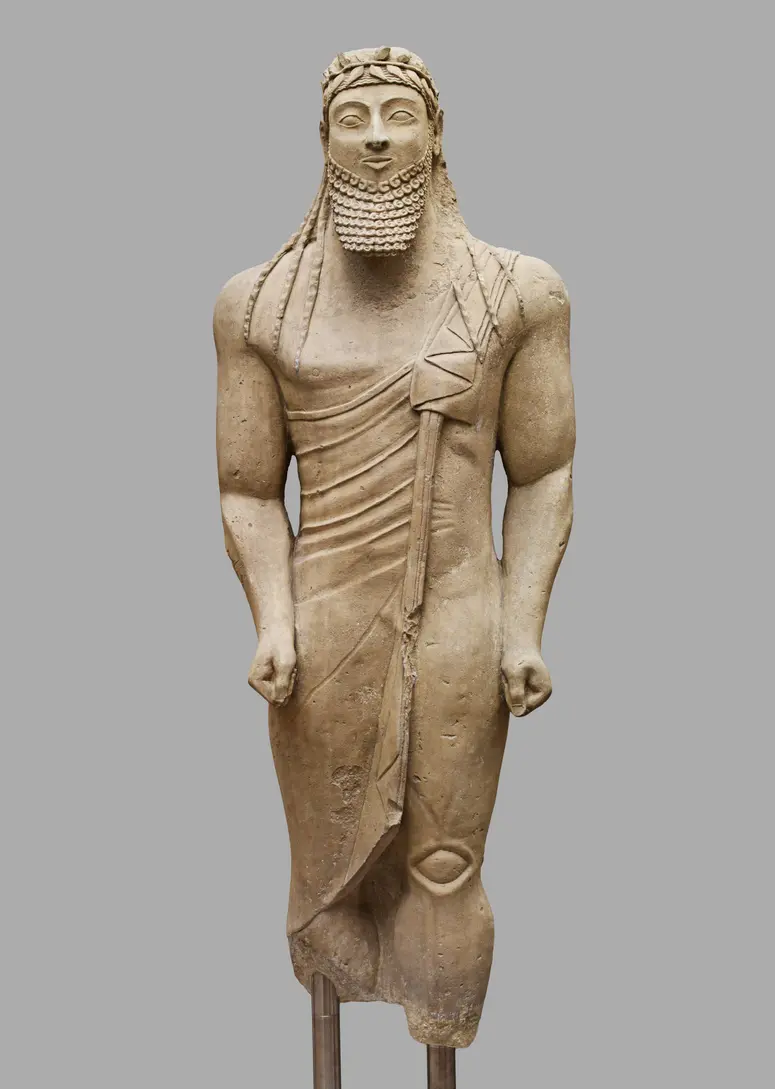
Kopf: Junger Mann mit Lorbeerkranz Zyprisch, Eisenzeit, archaisch 1. Viertel 5. Jh. v. Chr.