Modell eines Reisewagens
1. Viertel 5. Jh. v. Chr.
This model of a chariot found in Amathus, served as a grave treasure. Two horses pull a two-wheeled roofed chariot. The wagon and the horses stand on the same base. The missing wheels could spin freely, on a wooden stick stuck through a drilled hole. In the inside of the wagon, is a female face with a veil, possibly the buried. A long-robed servant accompanies the traveler. Between the two spans strides the horse-driver, who has a much quieter mien in contrast to the horses running at full-tilt. Traces of red and black paint can still be identified. Red can be seen on the horses, the pleats of the robe and the lips of the figures as well as the wagon. The hair of the figures, the manes, tails and hooves of the horses show some black. Many limestone representations of wagons were discovered in Amathus. They suggest that the Amathus workshops, during the archaic period, specialized in the production of these models. Primarily open war or racing chariots are encountered, rarely this closed passenger coach.
A. Bernhard-Walcher u. a., Die Sammlung zyprischer Antiken im KHM. Sammlungskataloge des KHM Bd. 2, Wien: 1999
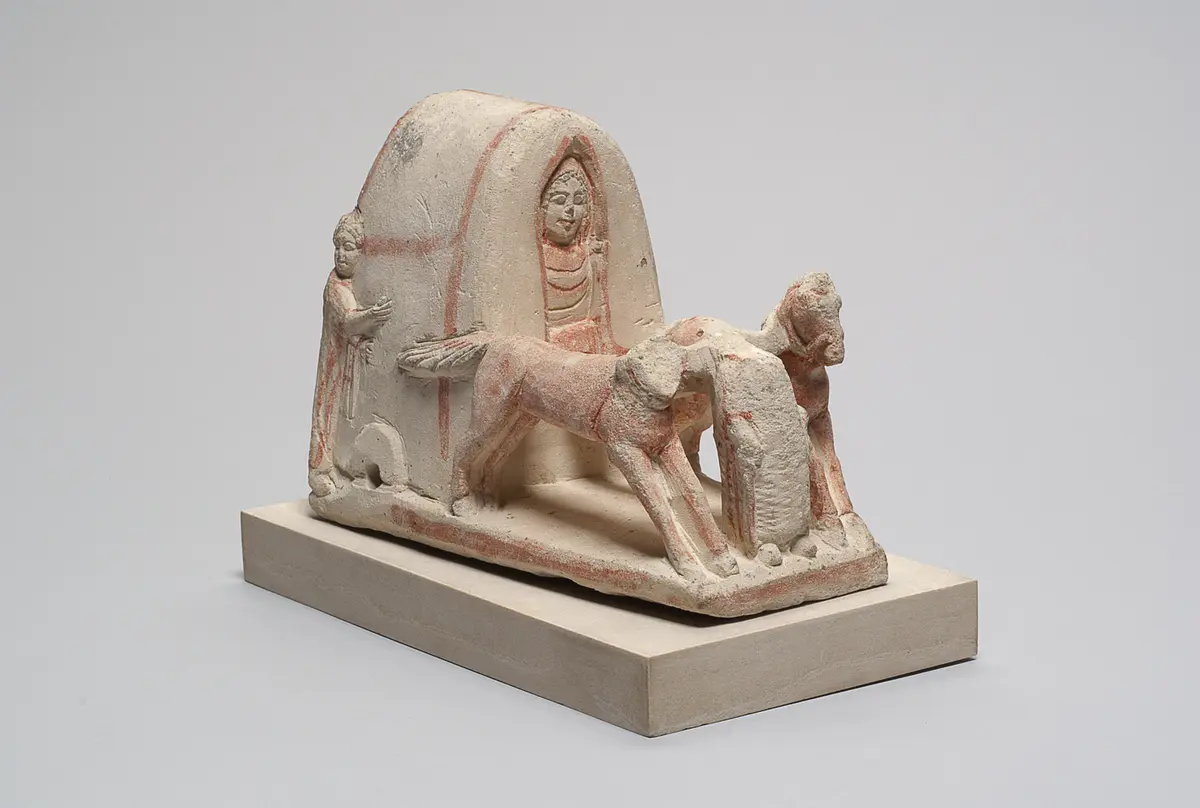

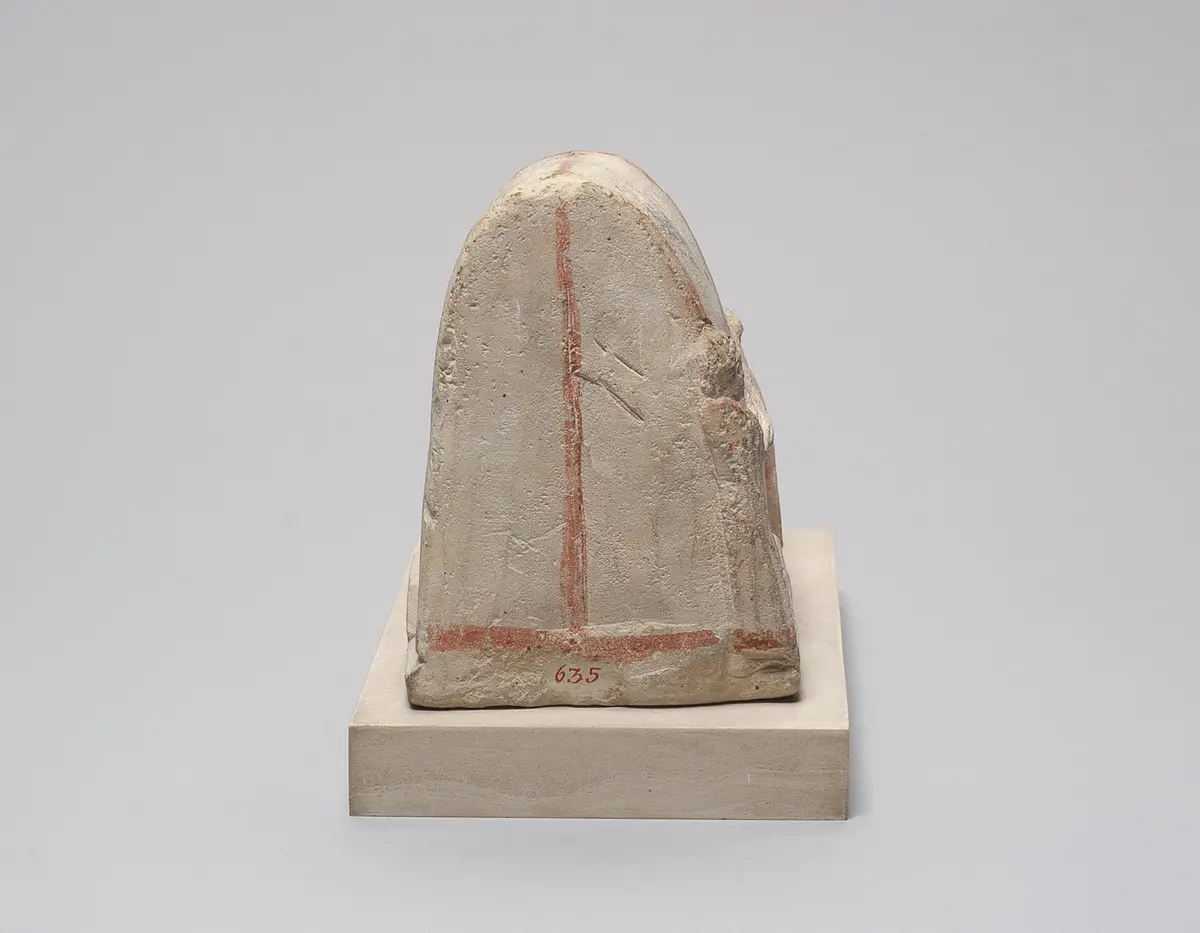
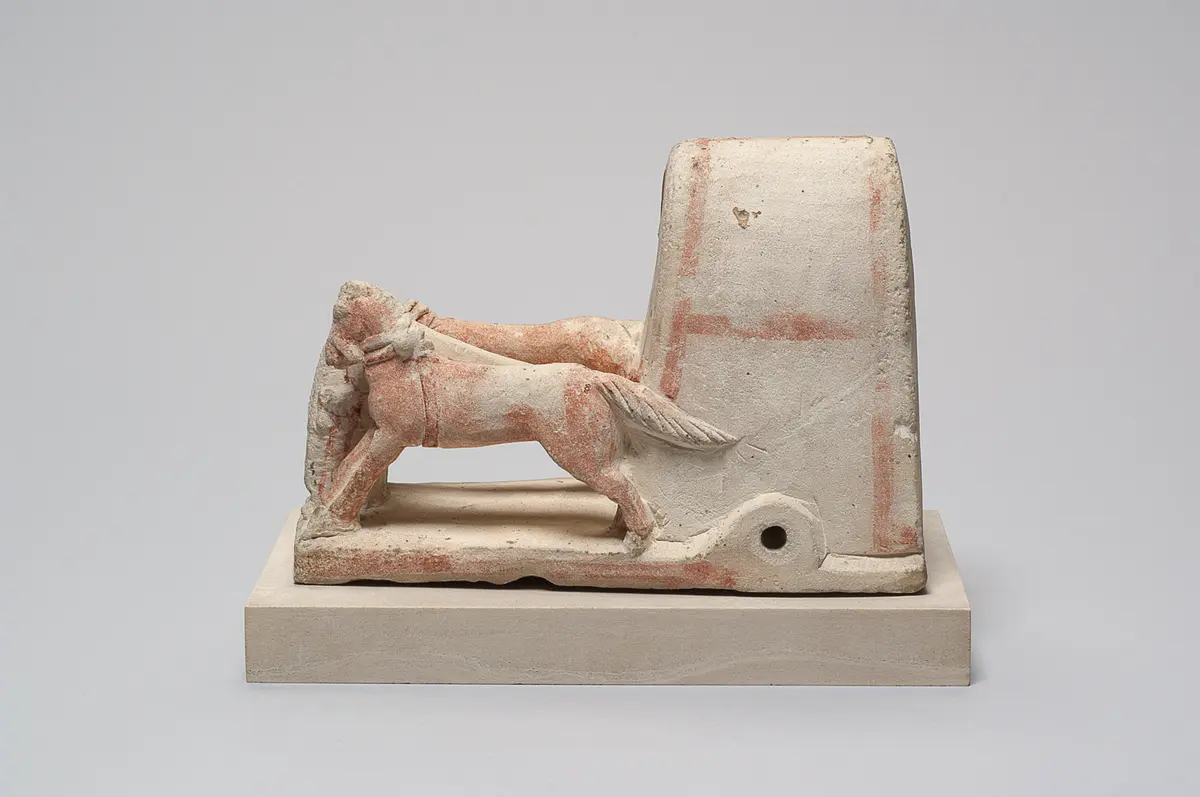
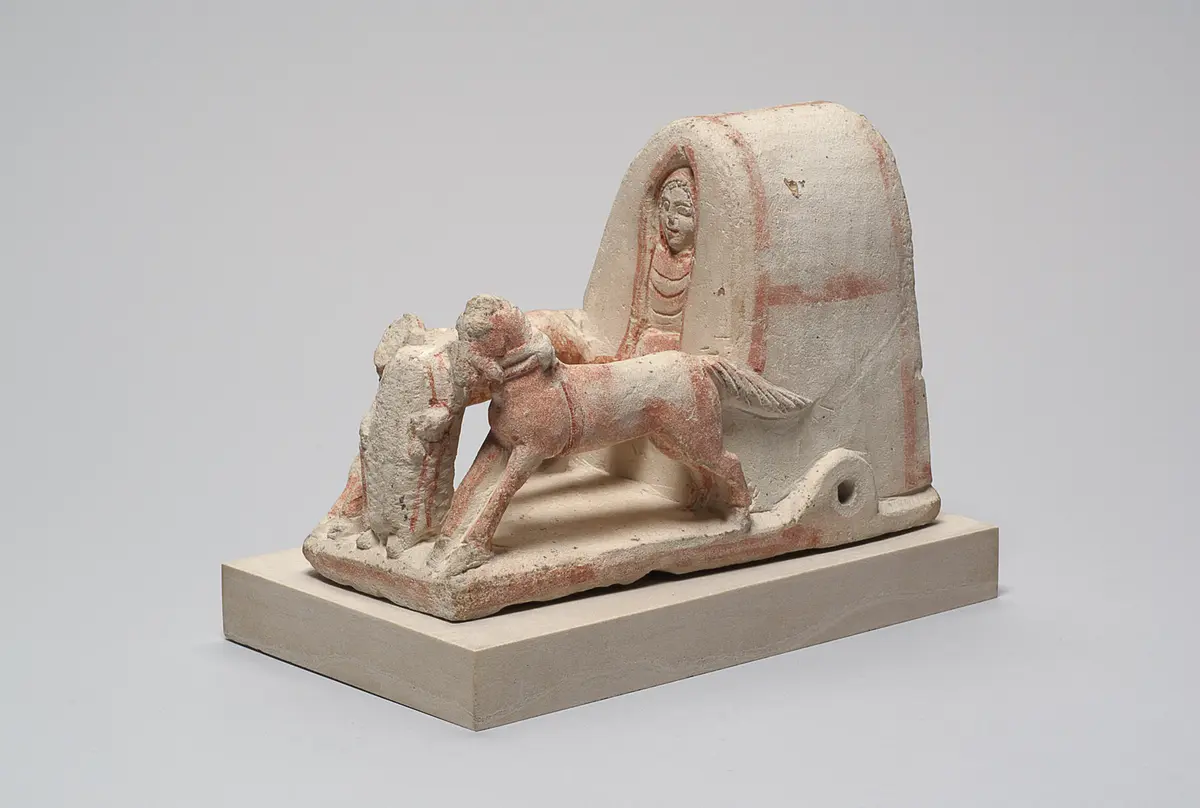
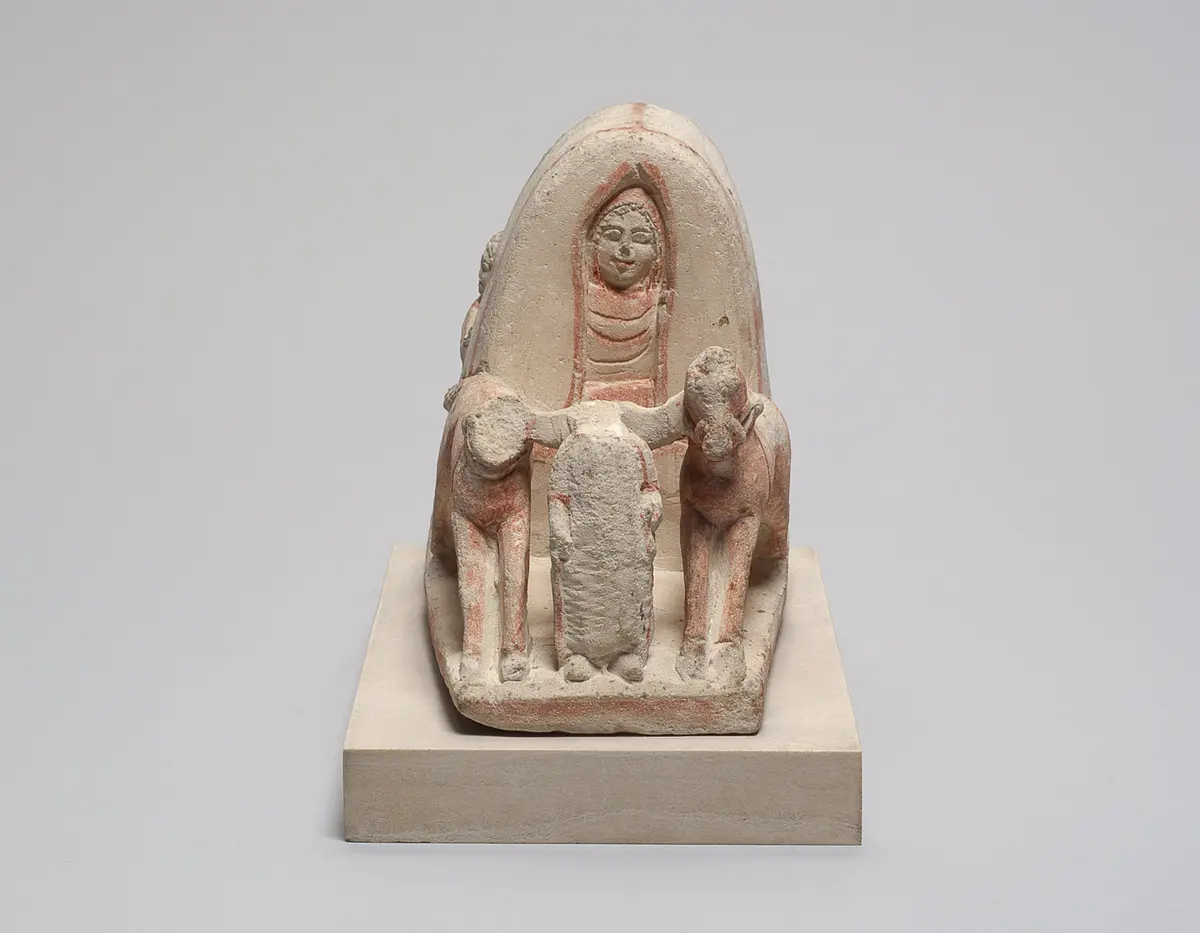
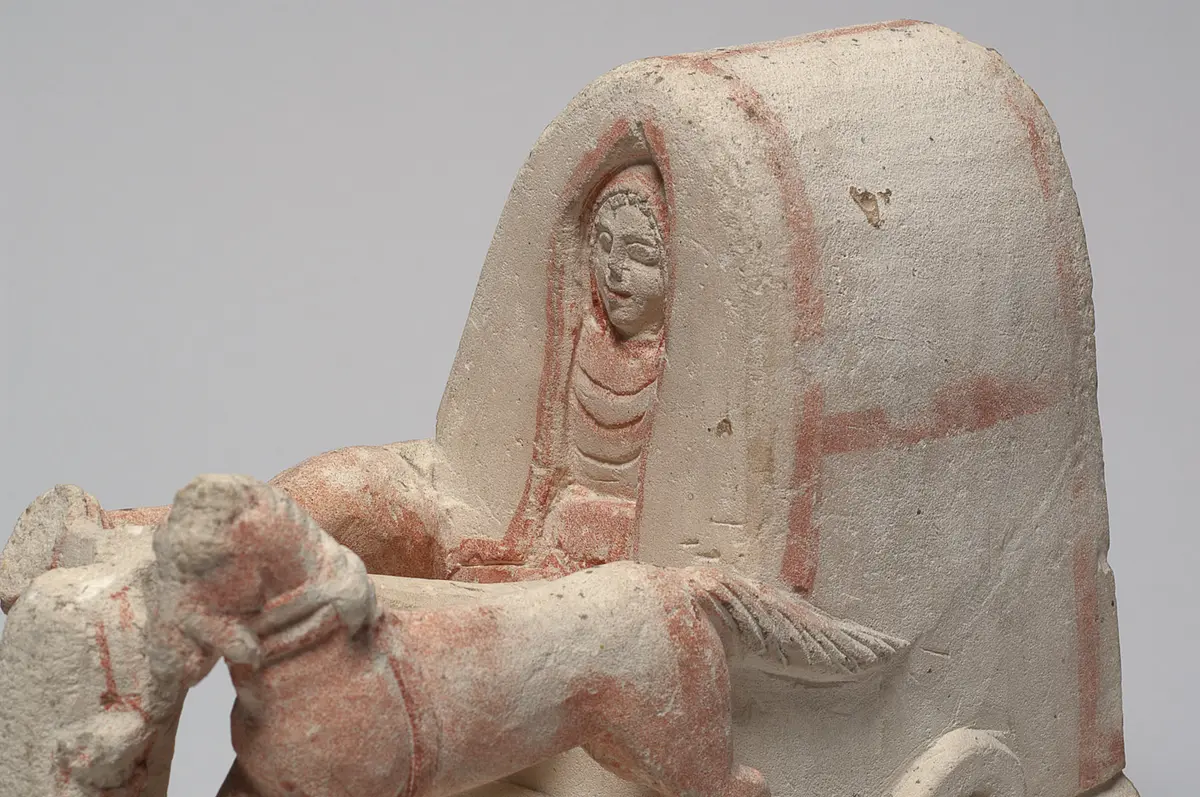
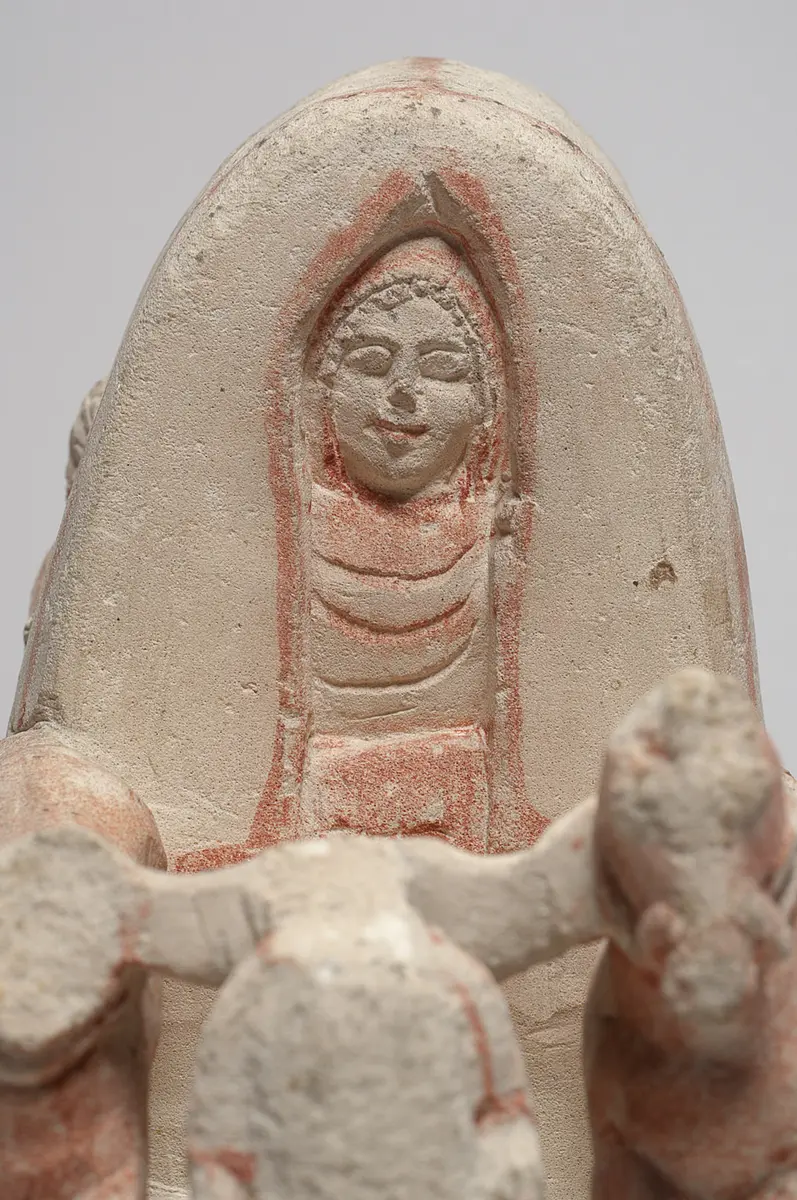
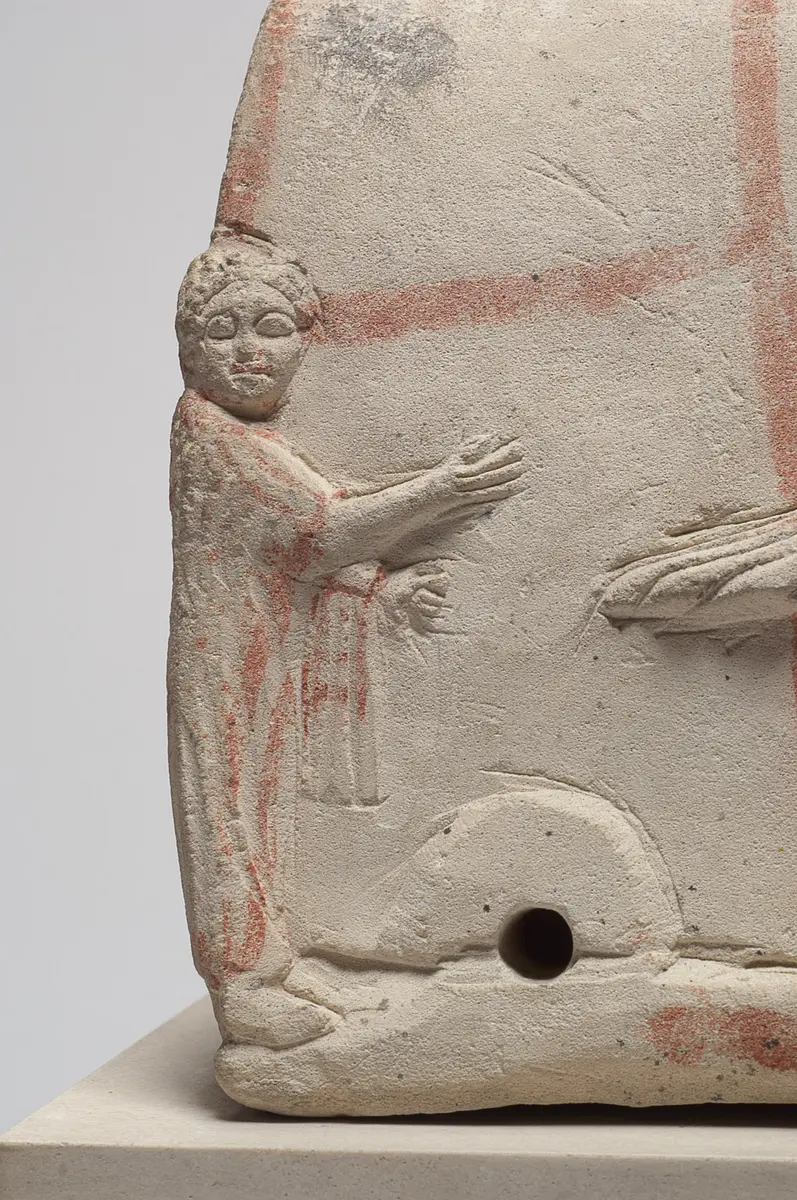
This model of a chariot found in Amathus, served as a grave treasure. Two horses pull a two-wheeled roofed chariot. The wagon and the horses stand on the same base. The missing wheels could spin freely, on a wooden stick stuck through a drilled hole. In the inside of the wagon, is a female face with a veil, possibly the buried. A long-robed servant accompanies the traveler. Between the two spans strides the horse-driver, who has a much quieter mien in contrast to the horses running at full-tilt. Traces of red and black paint can still be identified. Red can be seen on the horses, the pleats of the robe and the lips of the figures as well as the wagon. The hair of the figures, the manes, tails and hooves of the horses show some black. Many limestone representations of wagons were discovered in Amathus. They suggest that the Amathus workshops, during the archaic period, specialized in the production of these models. Primarily open war or racing chariots are encountered, rarely this closed passenger coach.
A. Bernhard-Walcher u. a., Die Sammlung zyprischer Antiken im KHM. Sammlungskataloge des KHM Bd. 2, Wien: 1999
Time:
1. Viertel 5. Jh. v. Chr.
Object Name
Statuette
Culture
Zyprisch
Location of discovery:
Amathus (Zypern)
Material/technology:
Kalkstein; Bemalung rot und schwarz
Dimensions:
H. 14,5 cm, L. 21 cm
Copyright
Kunsthistorisches Museum, Antikensammlung
Invs.
Antikensammlung, I 635
Provenance
Ohnefalsch-Richter, Max; 1890 Tausch
Browse more
Similar items you might be interested in
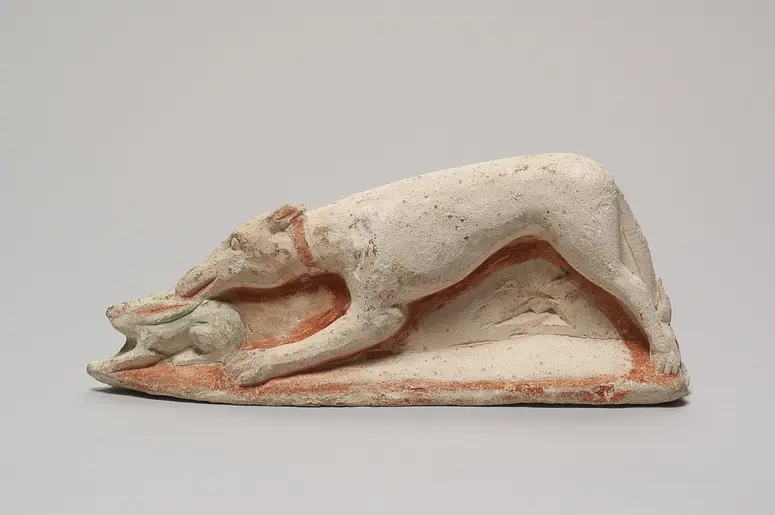
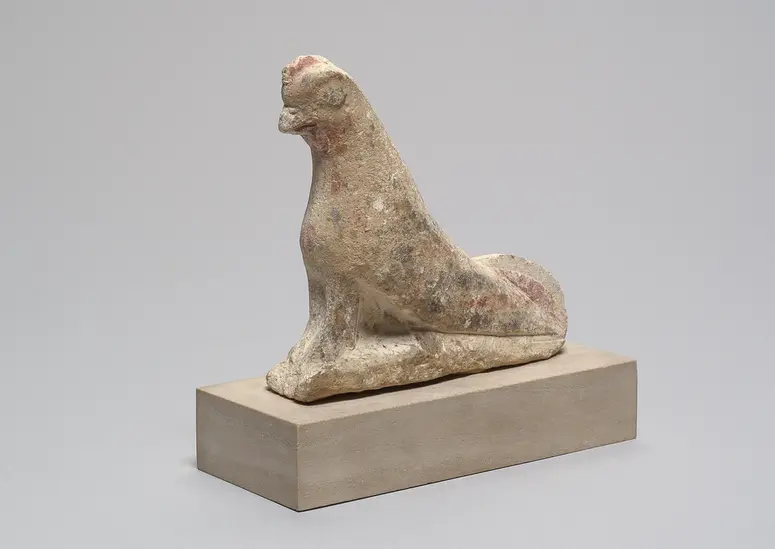
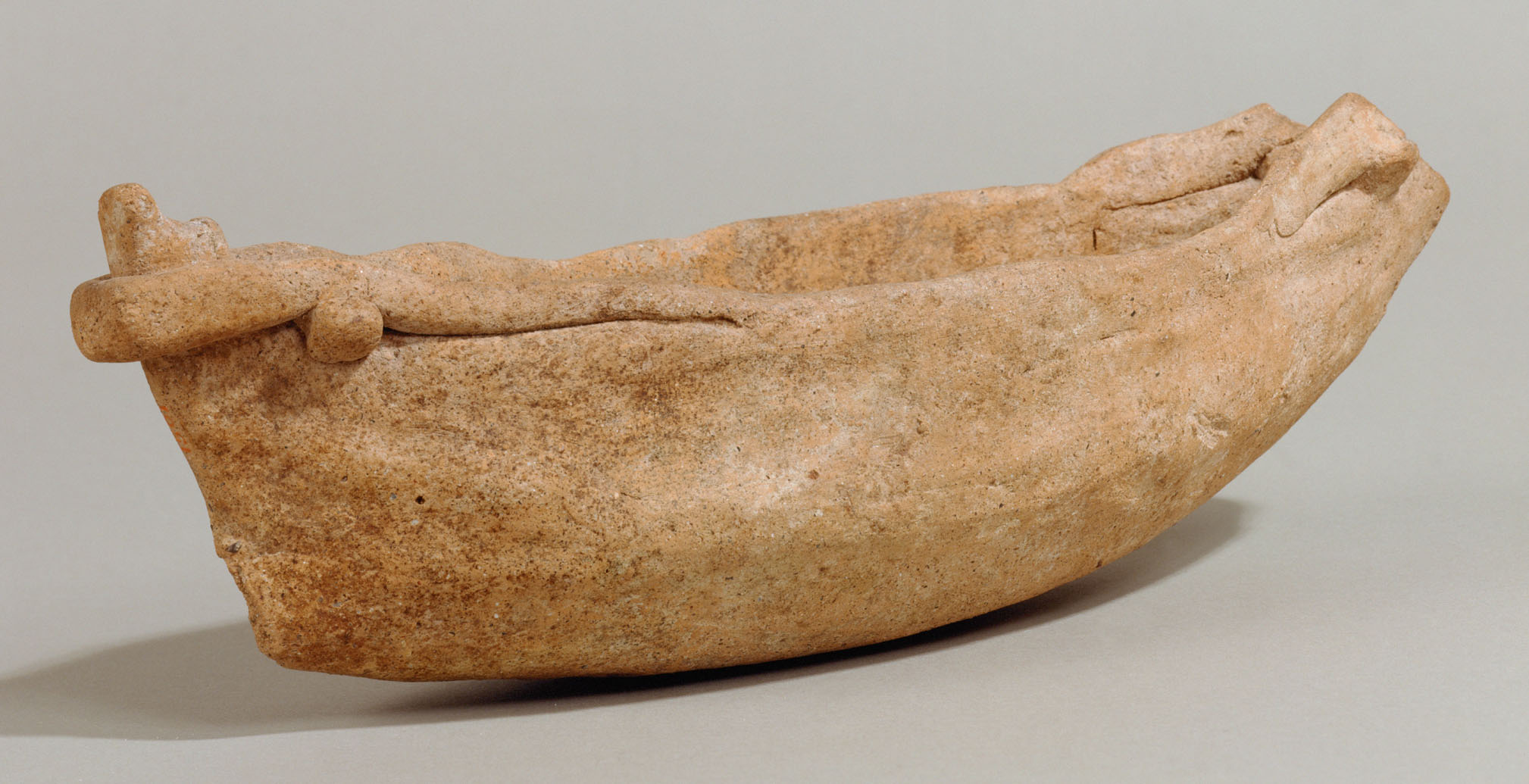
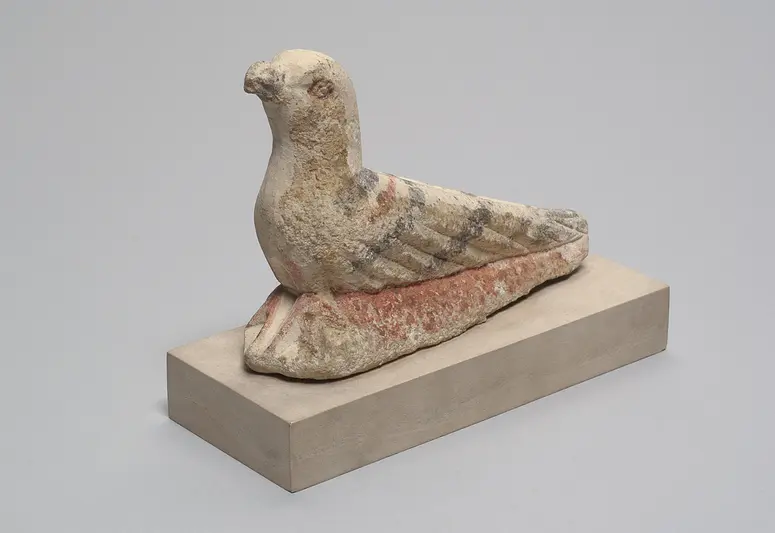
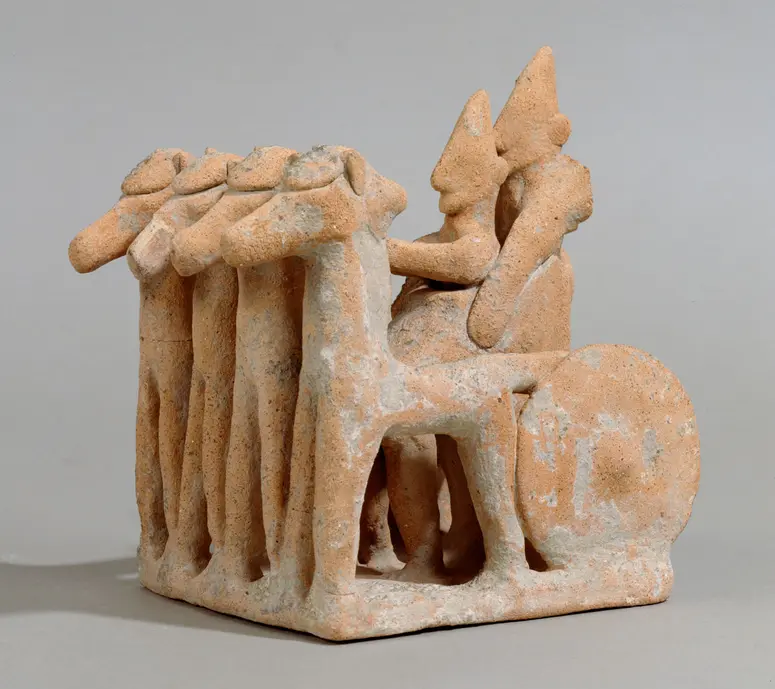
Statuette: Modell eines Viergespannes (Quadriga) Zyprisch, Eisenzeit, archaisch 6. Jh. v. Chr.

Two-Seater personal travelling carriage of the Emperor Franz I Hofsattlerei around 1833

Imperial gala coach for court mourning undercarriage around 1690, body around 1730/35, adapted in the 19th century
Four-seater Ceremonial State Carriage Carl Marius 1865
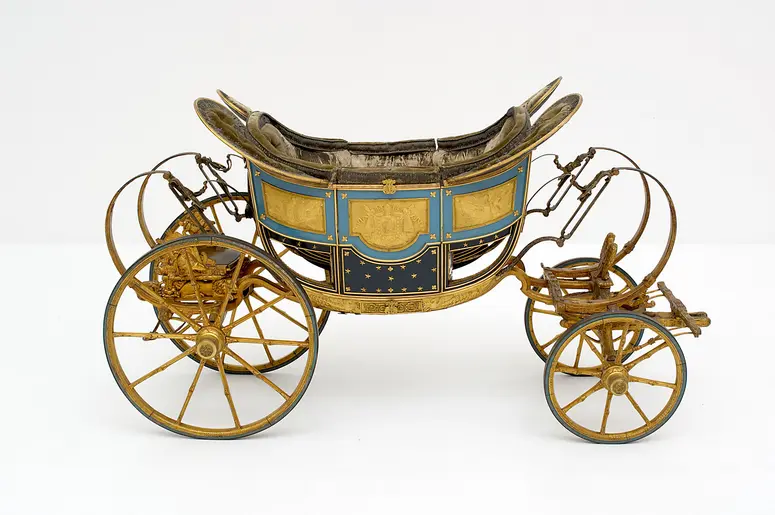
Children’s carriage of the King of Rome Manufacturer: J. Fr. Tremblay 1811/12
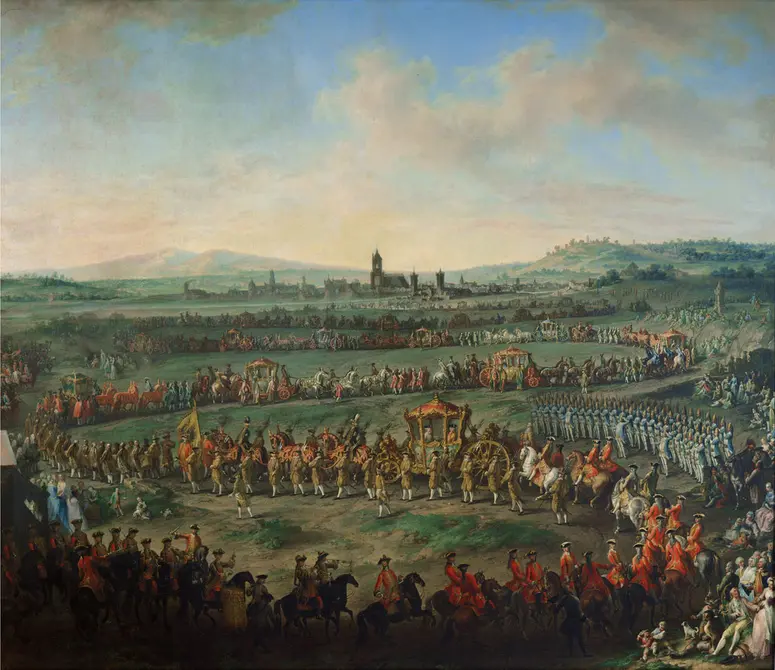
Einzug von Joseph II. (1741-1790) zur Krönung in Frankfurt Martin van Meytens d. J.
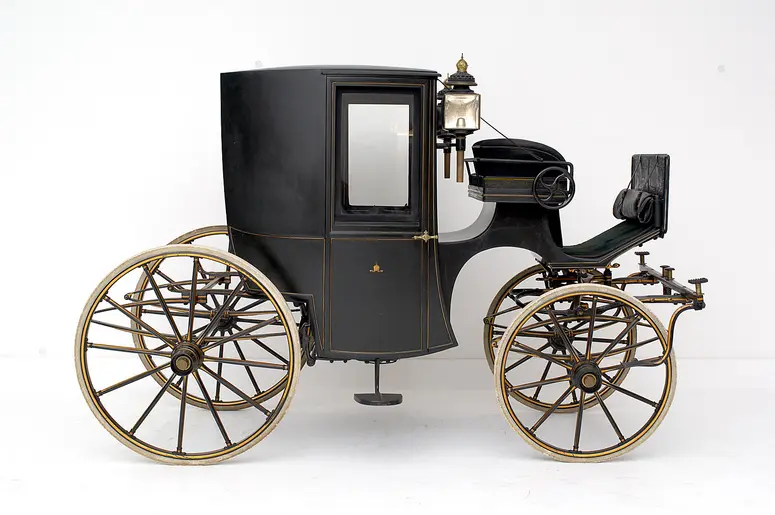
Personal Coupé Manufacturer: Hofwagenfabrik Marius (Wien) 1887

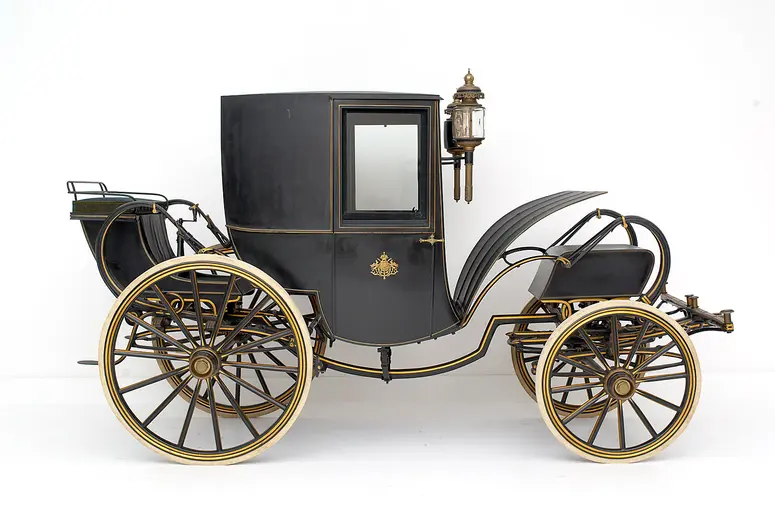
Personal Landaulet of Empress Elisabeth Manufacturer: Carl Marius 1885
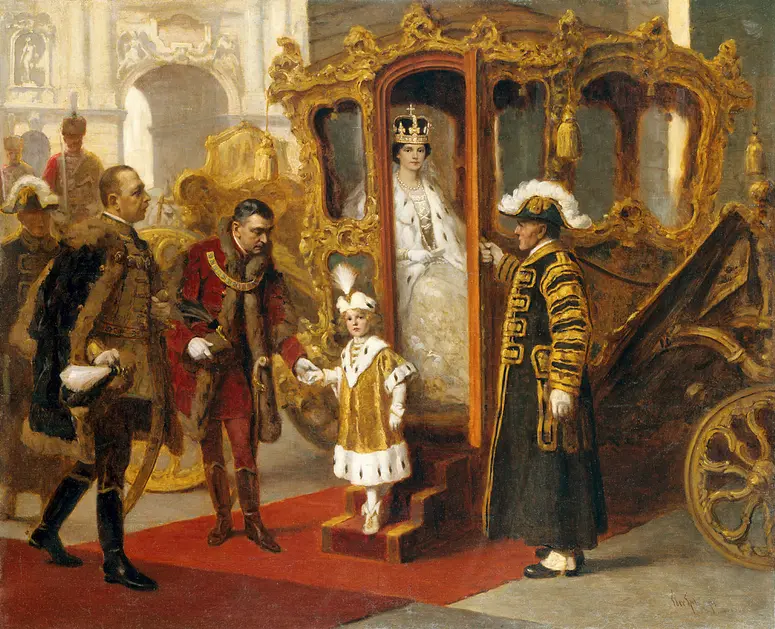
Empress/Queen Zita and Crown Prince Otto before the Coronation in Budapest on December 30, 1916 Gyula Éder 1929
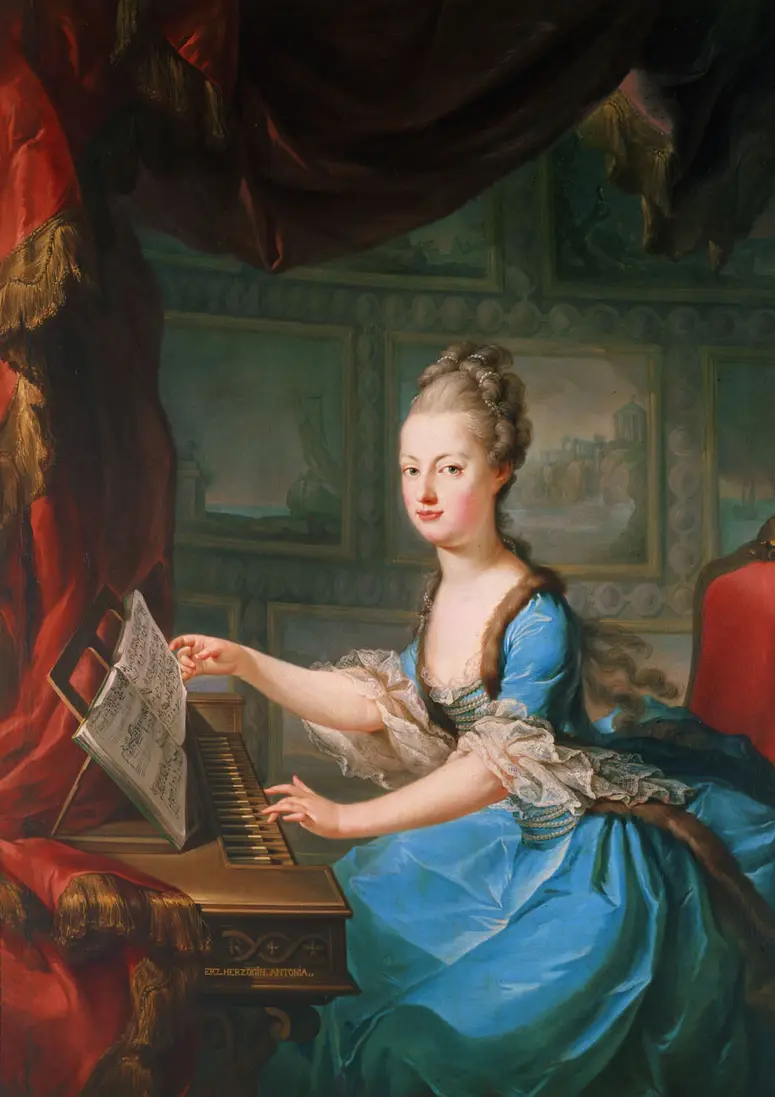
Erzherzogin Marie Antoinette (1755-1793) am Spinett Franz Xaver Wagenschön vor 1770
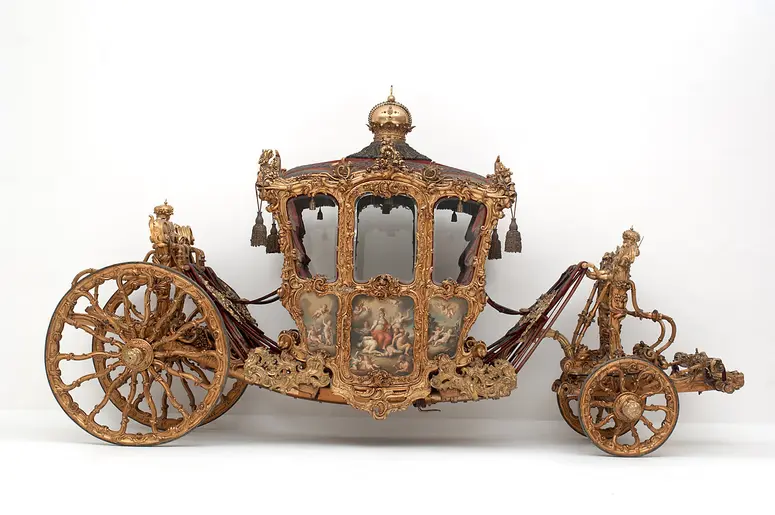
Coronation Coach ("The Imperial Carriage") 18th century
Versuch über das Kostüm der vorzüglichsten Völker des Alterthums, des Mittelalters und der neuern Zeiten Robert von Spalart 1796 - 1837