Taube
5. - 4. Jh. v. Chr.
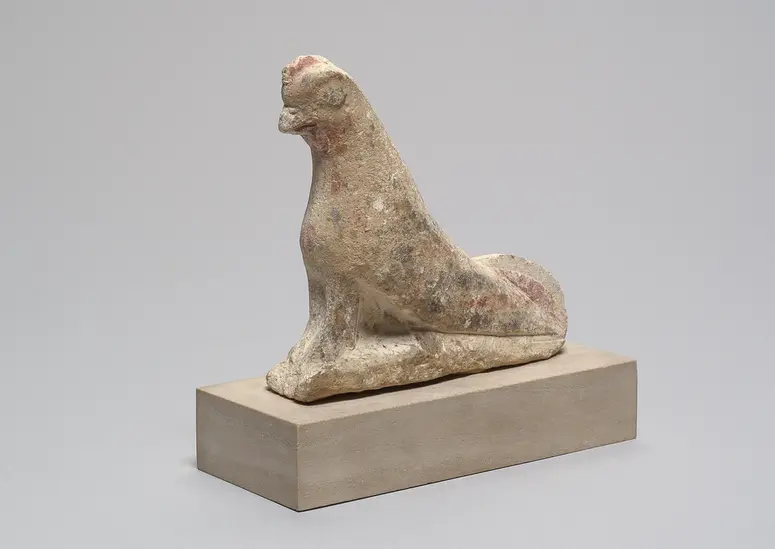
This small limestone sculpture of a dove also originates from the holy-sites of Amathus. The bird lies with raised head and outstretched feet on a square flat base. The claws are spread. The feathers are drawn with scored lines, the bird’s body was decorated with painted bands of red and black. Traces of red paint are visible on the base, the feet and the eyes. The beak was black. Doves had been domesticated by the 3rd millennium B. C. in Egypt and the Near East. White doves held especial importance in the cult of Astarte and related goddesses, one of whom was Aphrodite. Her holy site in Paphos on Cyprus was famous for its tame doves.
A. Bernhard-Walcher u. a., Die Sammlung zyprischer Antiken im KHM. Sammlungskataloge des KHM Bd. 2, Wien: 1999
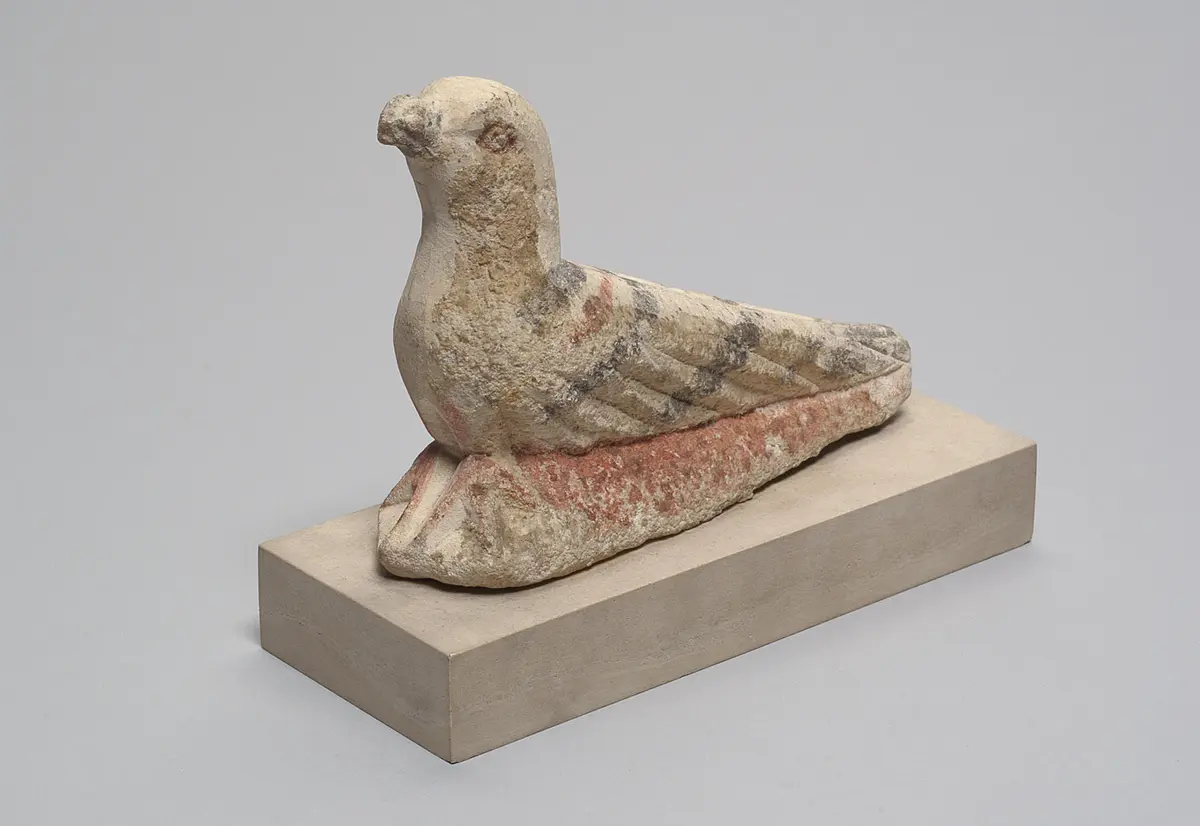
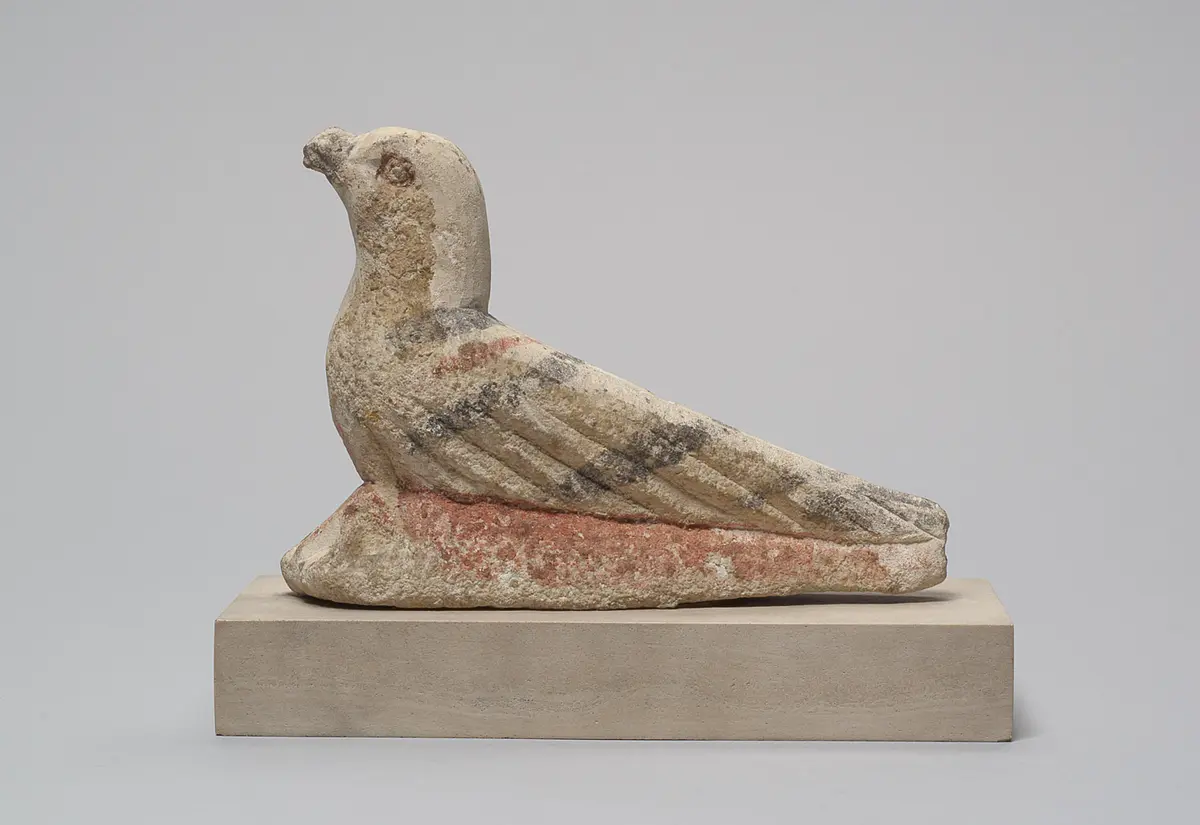
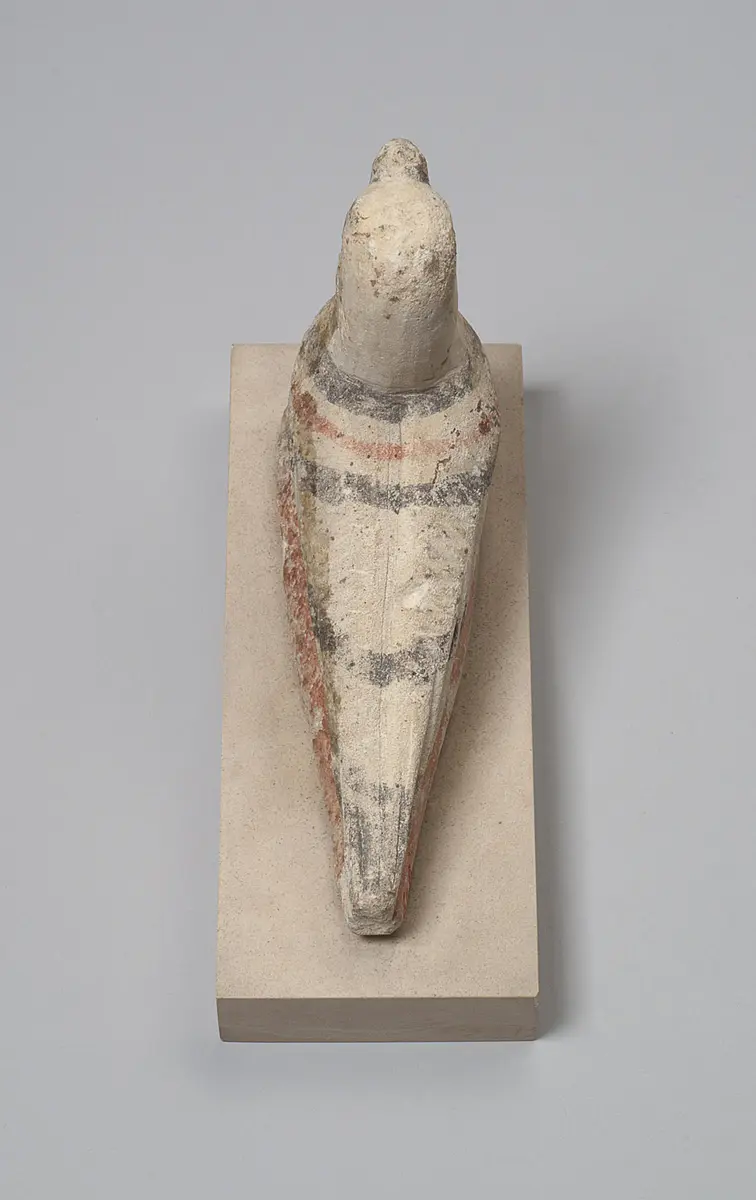
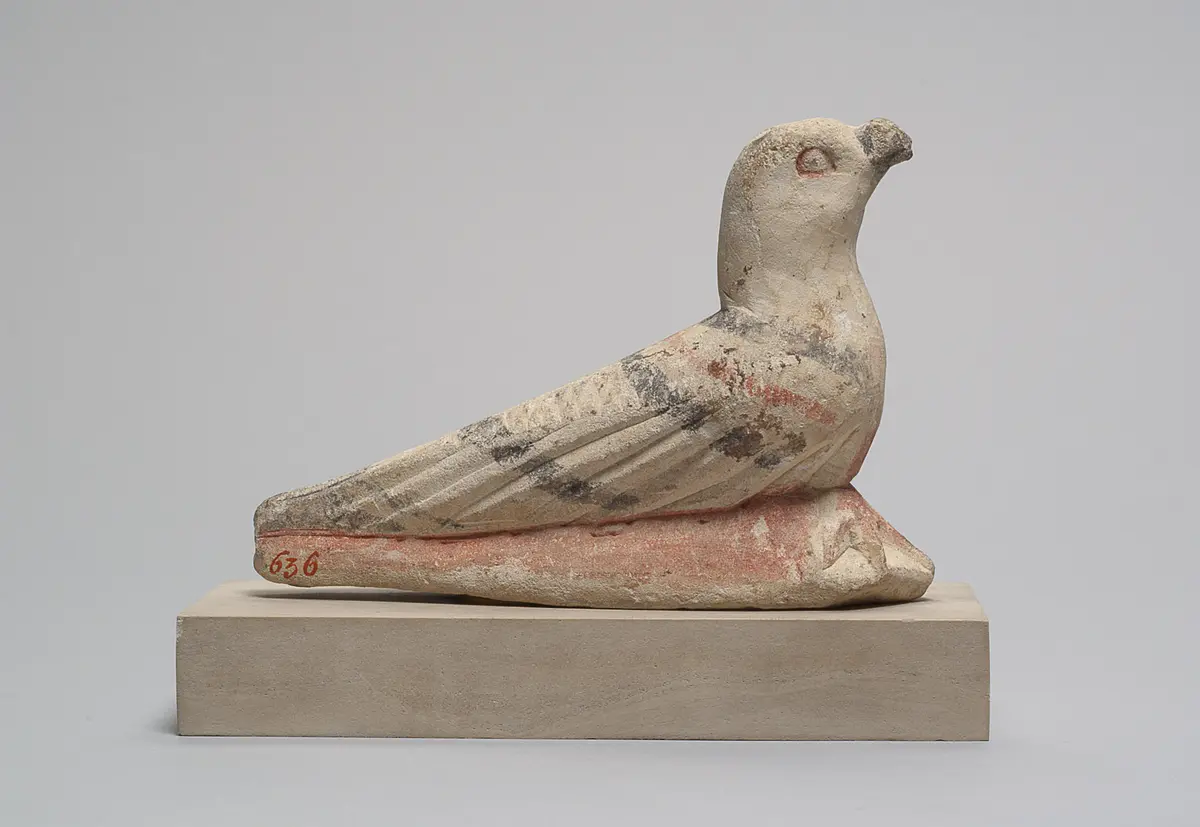
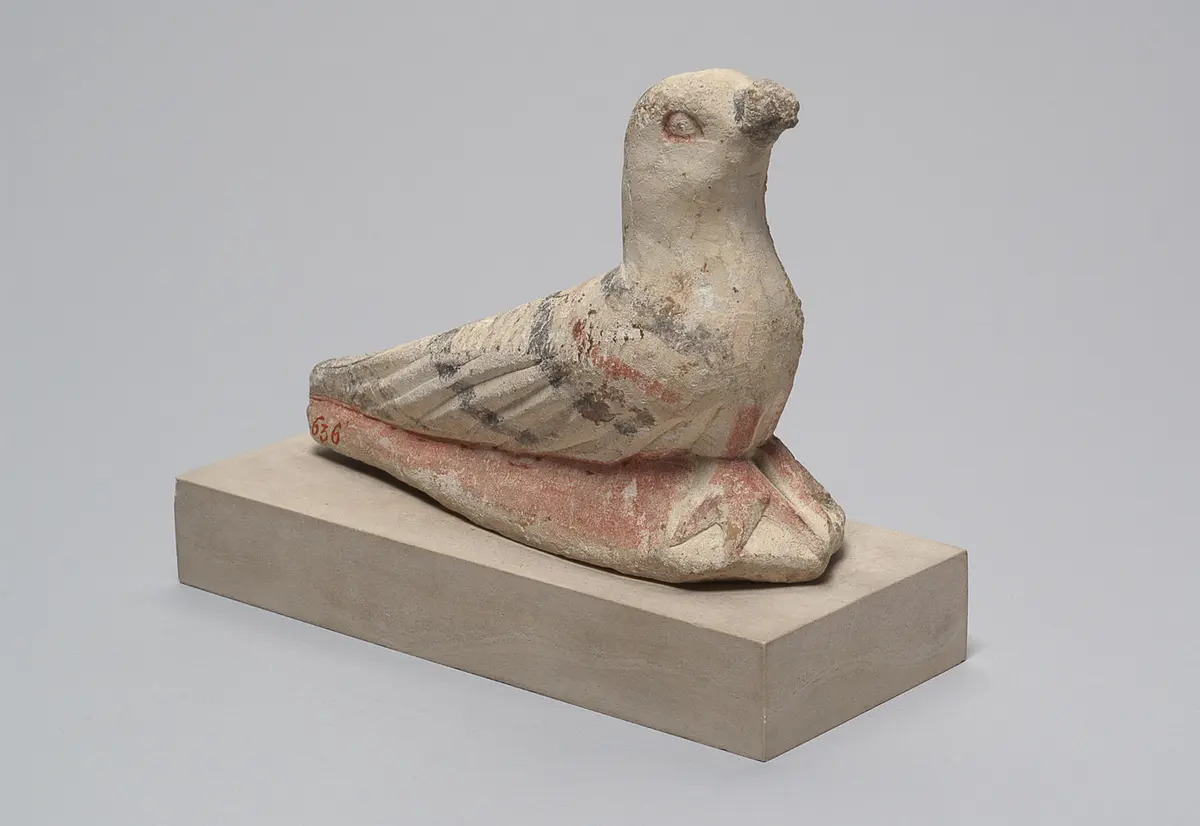
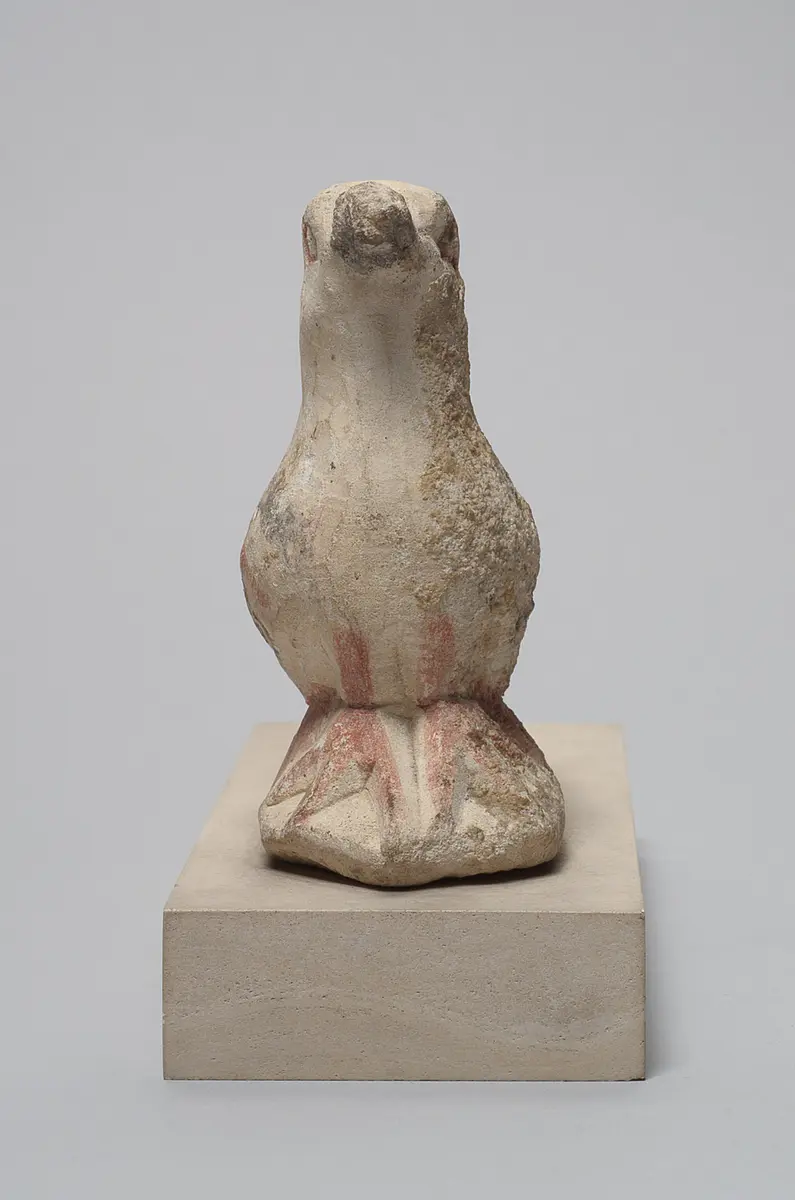
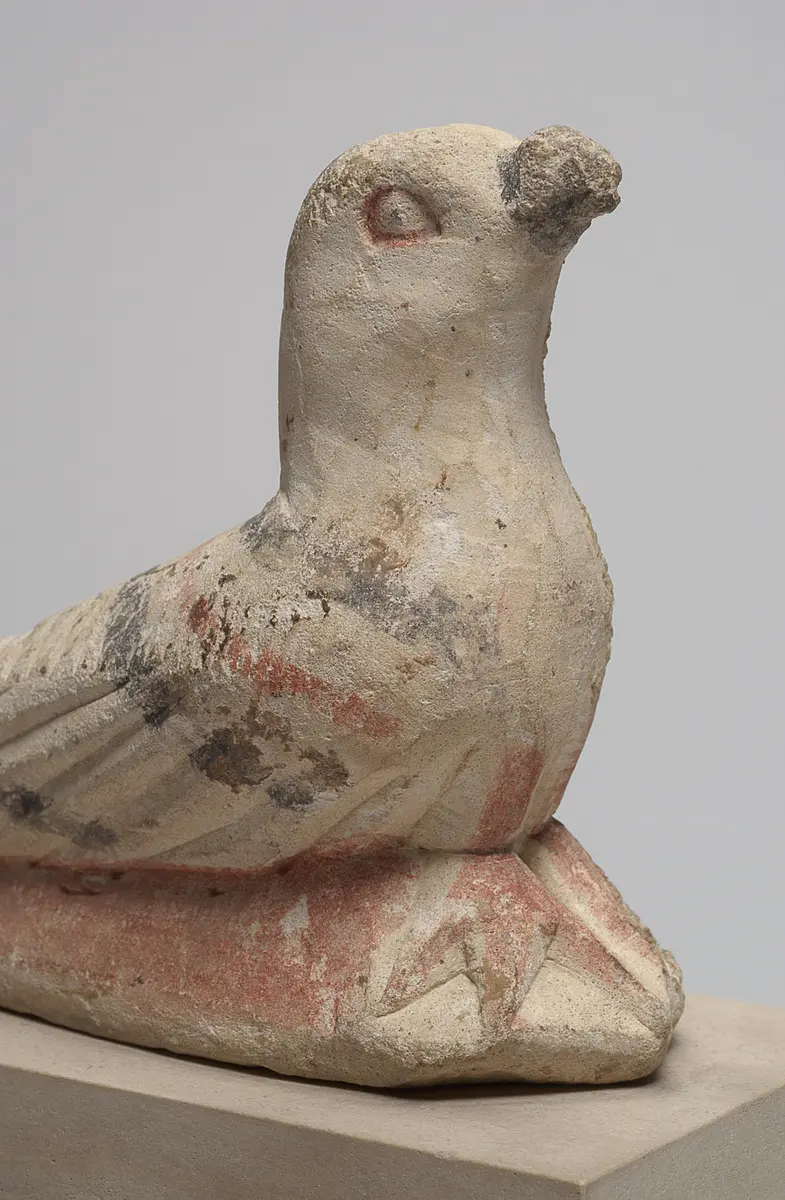
This small limestone sculpture of a dove also originates from the holy-sites of Amathus. The bird lies with raised head and outstretched feet on a square flat base. The claws are spread. The feathers are drawn with scored lines, the bird’s body was decorated with painted bands of red and black. Traces of red paint are visible on the base, the feet and the eyes. The beak was black. Doves had been domesticated by the 3rd millennium B. C. in Egypt and the Near East. White doves held especial importance in the cult of Astarte and related goddesses, one of whom was Aphrodite. Her holy site in Paphos on Cyprus was famous for its tame doves.
A. Bernhard-Walcher u. a., Die Sammlung zyprischer Antiken im KHM. Sammlungskataloge des KHM Bd. 2, Wien: 1999
Time:
5. - 4. Jh. v. Chr.
Object Name
Statuette
Culture
Zyprisch
Location of discovery:
Amathus (Zypern)
Material/technology:
Kalkstein; Bemalung rot und schwarz
Dimensions:
H. 10,5 cm, L. 15 cm
Copyright
Kunsthistorisches Museum, Antikensammlung
Invs.
Antikensammlung, I 636
Provenance
Ohnefalsch-Richter, Max; 1890 Tausch
Browse more
Similar items you might be interested in
Statuette: Modell eines Reisewagens Zyprisch, Eisenzeit, archaisch 1. Viertel 5. Jh. v. Chr.
Spiegel: Deckel eines Klappspiegels mit Reliefapplik: Deiphobos, Paris, Kassandra Etruskisch