Modell eines Viergespannes (Quadriga)
6. Jh. v. Chr.
A model of a quadriga, fixed on a flat rectangular plaque. Handmade. The chariot box is small and is not clearly defined. There is no indication of any pole, the front of the chariot box is fused with the hind part of the second and third horses. There is a high upright loop springing from the middle of the edge of the floor of the chariot. Long axle, on which two round solid wheels are fixed with a knob for the hub. There are two human figures in the chariot box, one smaller than the other. The small figure (the charioteer) has both arms stretched to hold the reins. The second figure, standing just behind the charioteer, has both arms stretched down and slightly forward, apparently touching the sides of the chariot box. On his back he was carrying a shield, now detached. Both human figures have large noses, pellet eyes and high conical helmets. The horses are identical. They each have a cylindrical body, long slender legs, a high upright neck, pointed ears and flat forelocks on the forehead. The left outer horse has a long tail that is fixed to the inner upper part of the wheel. The horses are yoked by two. No traces of painted decoration.
A. Bernhard-Walcher u.a., Die Sammlung zyprischer Antiken im KHM. Sammlungskataloge des KHM Bd. 2, Wien 1999 (V. Karageorghis)
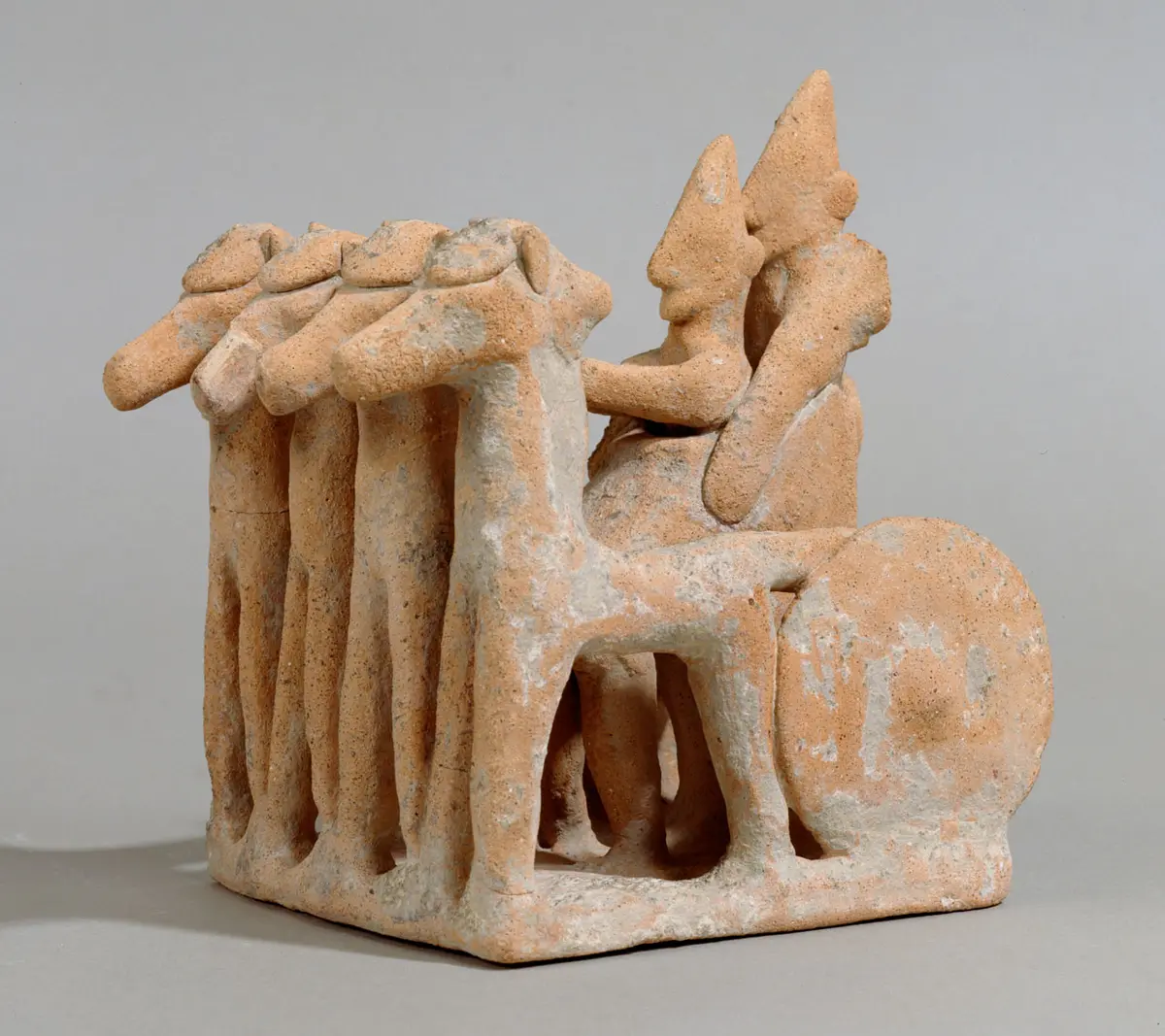
A model of a quadriga, fixed on a flat rectangular plaque. Handmade. The chariot box is small and is not clearly defined. There is no indication of any pole, the front of the chariot box is fused with the hind part of the second and third horses. There is a high upright loop springing from the middle of the edge of the floor of the chariot. Long axle, on which two round solid wheels are fixed with a knob for the hub. There are two human figures in the chariot box, one smaller than the other. The small figure (the charioteer) has both arms stretched to hold the reins. The second figure, standing just behind the charioteer, has both arms stretched down and slightly forward, apparently touching the sides of the chariot box. On his back he was carrying a shield, now detached. Both human figures have large noses, pellet eyes and high conical helmets. The horses are identical. They each have a cylindrical body, long slender legs, a high upright neck, pointed ears and flat forelocks on the forehead. The left outer horse has a long tail that is fixed to the inner upper part of the wheel. The horses are yoked by two. No traces of painted decoration.
A. Bernhard-Walcher u.a., Die Sammlung zyprischer Antiken im KHM. Sammlungskataloge des KHM Bd. 2, Wien 1999 (V. Karageorghis)
Time:
6. Jh. v. Chr.
Object Name
Statuette
Culture
Zyprisch
Location of discovery:
Idalion (Dhali, Zypern)
Material/technology:
Ton braun. Handgeformt
Dimensions:
H. 15,6 cm, L. 15,1 cm
Copyright
Kunsthistorisches Museum, Antikensammlung
Invs.
Antikensammlung, V 1175
Provenance
Cesnola, Luigi Palma di, Konsul, Larnaka; 1869 Kauf
Browse more
Similar items you might be interested in
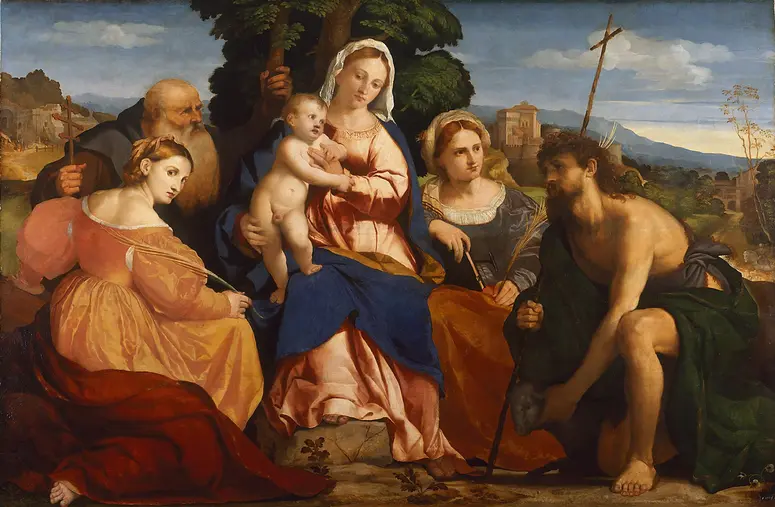
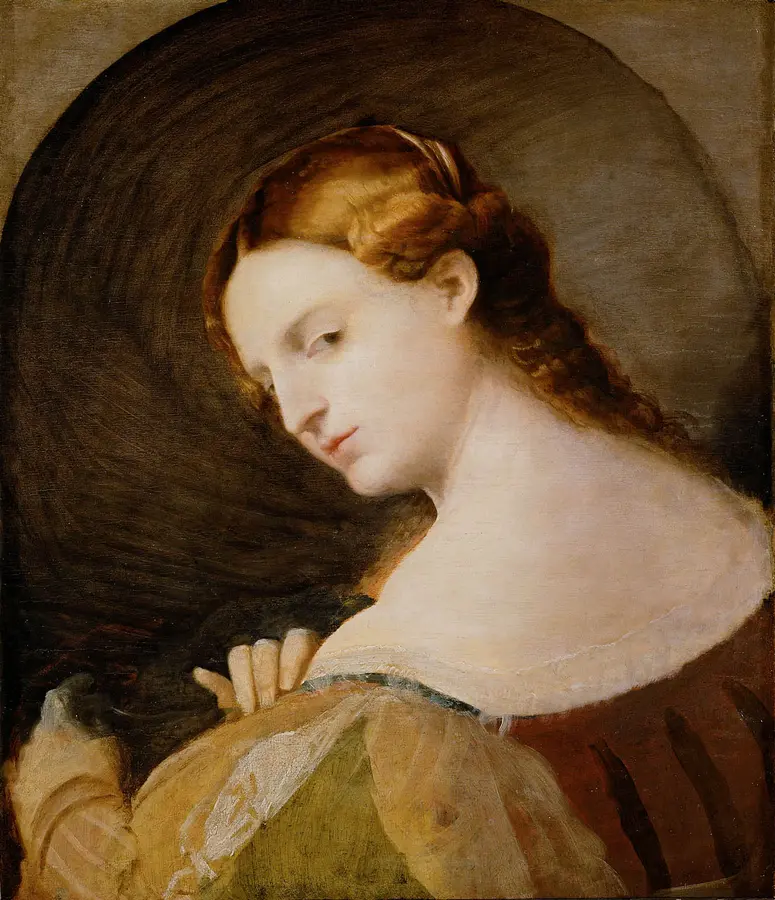
Portrait of a Young Woman in Profile Jacopo Negretti, gen. Palma il Vecchio around 1520/25
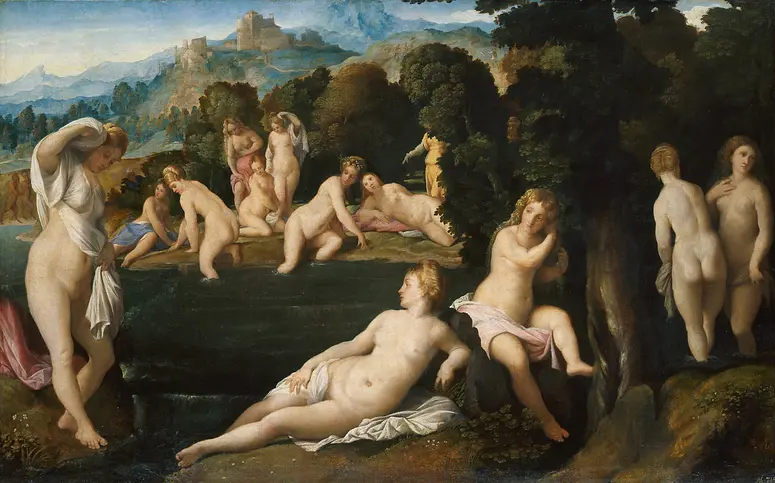
Young Woman in Blue Dress with Fan Jacopo Negretti, gen. Palma il Vecchio around 1512/14
Madonna mit Kind und Heiligen J. Löwy, K. und K. Hof-Photograph, Kunst- und Verlagsanstalt (Wien) 1888 bis 1910
Salome with the Head of John the Baptist Jacopo Negretti, gen. Palma il Giovane around 1599
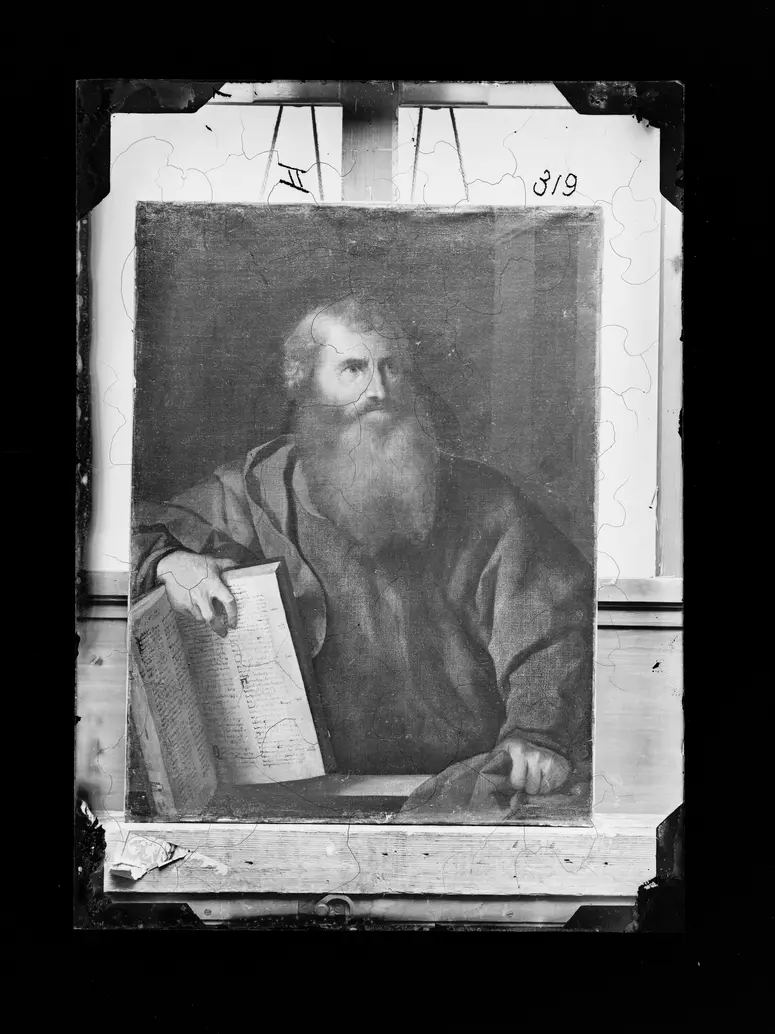
Evangelist Johannes J. Löwy, K. und K. Hof-Photograph, Kunst- und Verlagsanstalt (Wien) 1888 bis 1891
Johannes der Täufer J. Löwy, K. und K. Hof-Photograph, Kunst- und Verlagsanstalt (Wien) 1888 bis 1891
Hl. Rochus J. Löwy, K. und K. Hof-Photograph, Kunst- und Verlagsanstalt (Wien) 1888 bis 1891
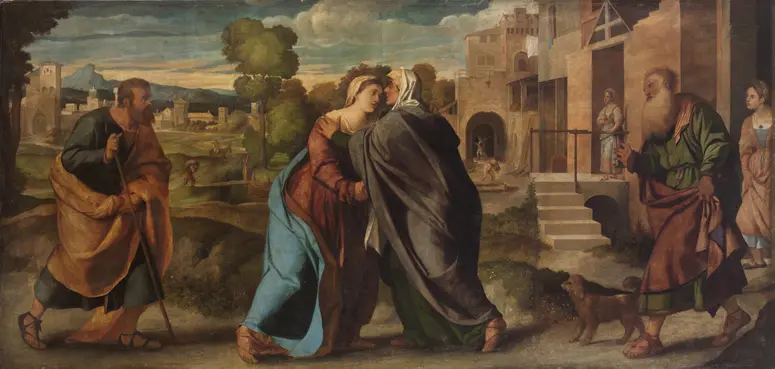
Heimsuchung Mariae J. Löwy, K. und K. Hof-Photograph, Kunst- und Verlagsanstalt (Wien) 1888 bis 1891

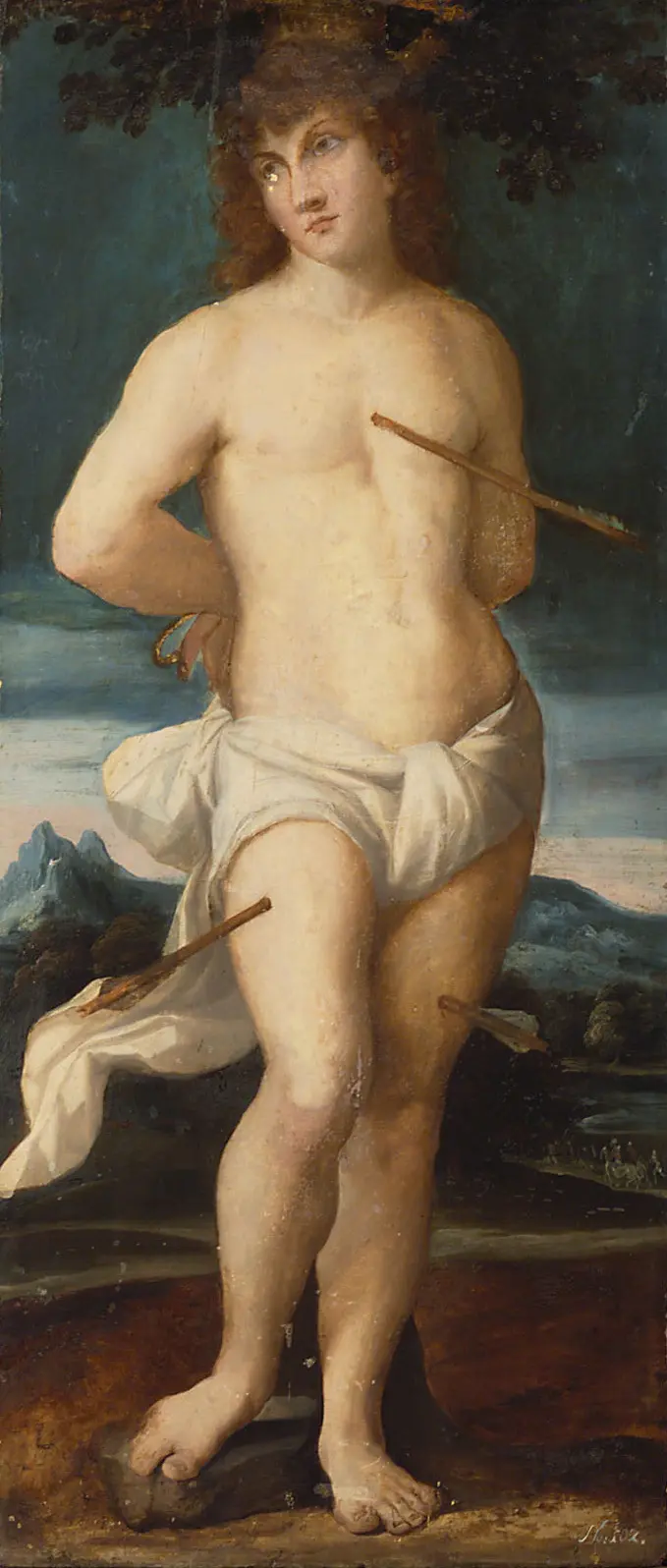
Hl. Sebastian J. Löwy, K. und K. Hof-Photograph, Kunst- und Verlagsanstalt (Wien) 1888 bis 1891
Bildnis einer jungen Frau im Profil J. Löwy, K. und K. Hof-Photograph, Kunst- und Verlagsanstalt (Wien) 1888 bis 1891