Coronation Coach ("The Imperial Carriage")
18th century
The most elegant carriage of the Viennese Court, a "grand carrosse" with eight windows made of Venetian glass, is thought to have been built around 1735/40 for Emperor Karl VI (1685 - 1740) and later converted several times. The paintings on the coach panels show allegories of the virtues of the ruler which are thought to refer to Karl's daughter, Empress Maria Theresia (1717 - 1780). The "Imperial Carriage" was an insignia representing the power of the dynasty and was only used at the most important events. Originally, the coach was drawn by six white horses from the Kladrub Imperial Stud Farm, but after 1851, eight horses were used. The "Imperial Carriage" was used exclusively by the Emperor, the Empress and the Crown Prince on the most important state occasions. It was last used during the coronations in Milan (1838) and Budapest (1867, 1916). (MKR)
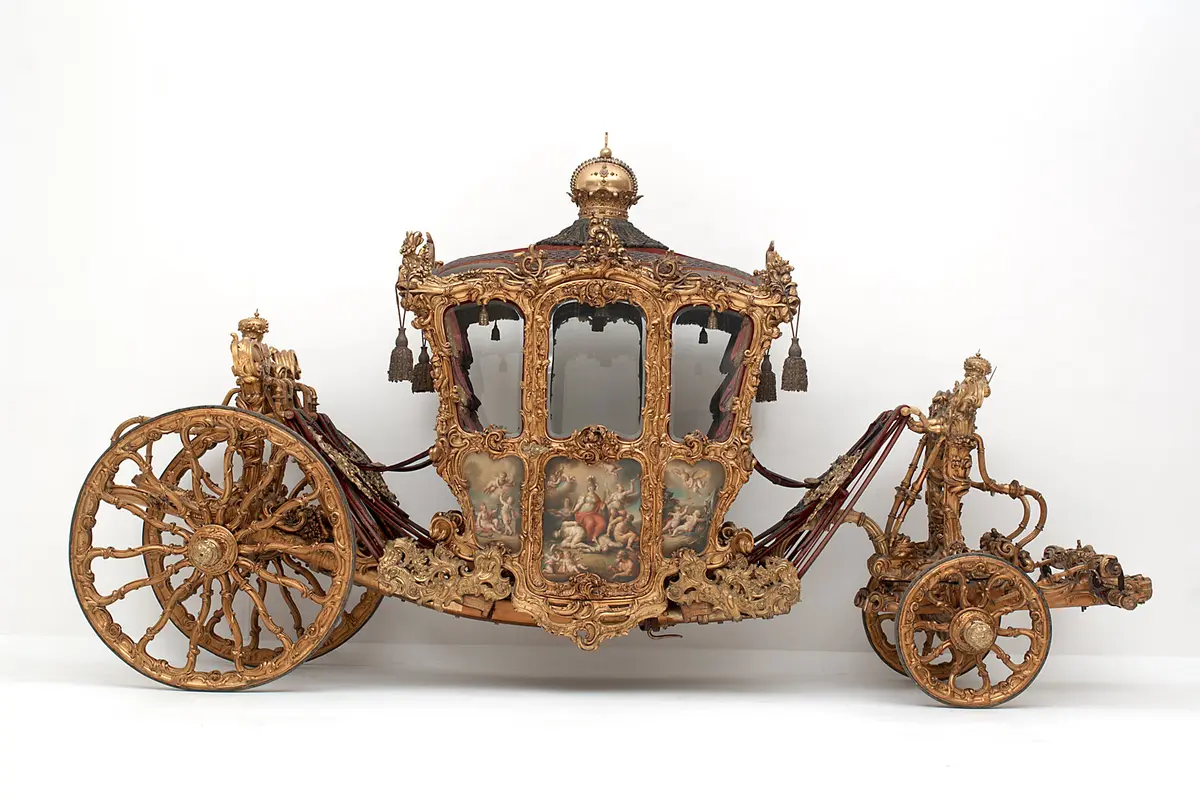
The most elegant carriage of the Viennese Court, a "grand carrosse" with eight windows made of Venetian glass, is thought to have been built around 1735/40 for Emperor Karl VI (1685 - 1740) and later converted several times. The paintings on the coach panels show allegories of the virtues of the ruler which are thought to refer to Karl's daughter, Empress Maria Theresia (1717 - 1780). The "Imperial Carriage" was an insignia representing the power of the dynasty and was only used at the most important events. Originally, the coach was drawn by six white horses from the Kladrub Imperial Stud Farm, but after 1851, eight horses were used. The "Imperial Carriage" was used exclusively by the Emperor, the Empress and the Crown Prince on the most important state occasions. It was last used during the coronations in Milan (1838) and Budapest (1867, 1916). (MKR)
Time:
18th century
Object Name
Coronation Coach ("The Imperial Carriage")
Dimensions:
677 cm × 355 cm × 212 cm
Copyright
Kunsthistorisches Museum, Wagenburg
Invs.
Wagenburg, W 1
Browse more
Similar items you might be interested in

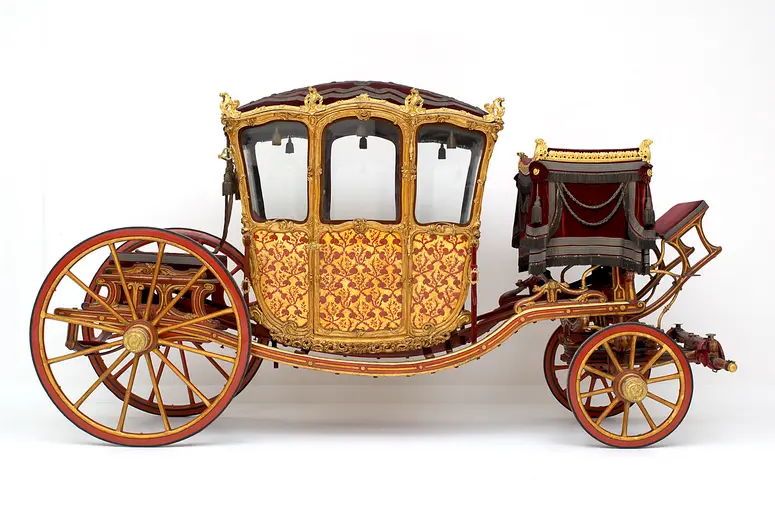
Rococo Berlin carriage, so-called “prince” or “ladies’” carriage around 1750/60
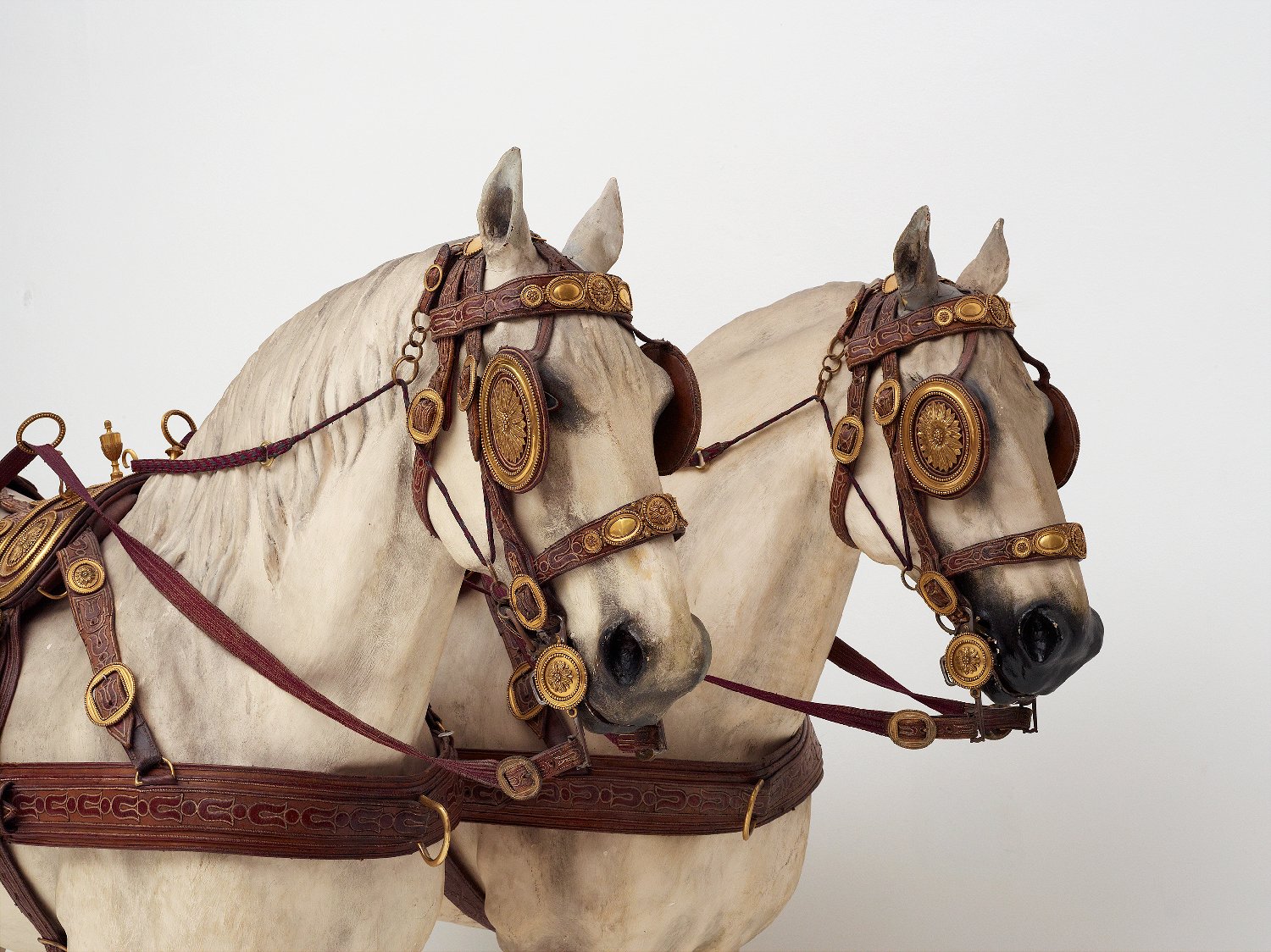
Double Harness for the Ceremonial State Carriage of the Grand Equerry early 19th century

Two-Seater personal travelling carriage of the Emperor Franz I Hofsattlerei around 1833

Four-seater travelling carriage of the Counts Harrach around 1775

Child’s Carriage of Crown Prince Rudolf Manufacturer: Cesare Sala around 1860
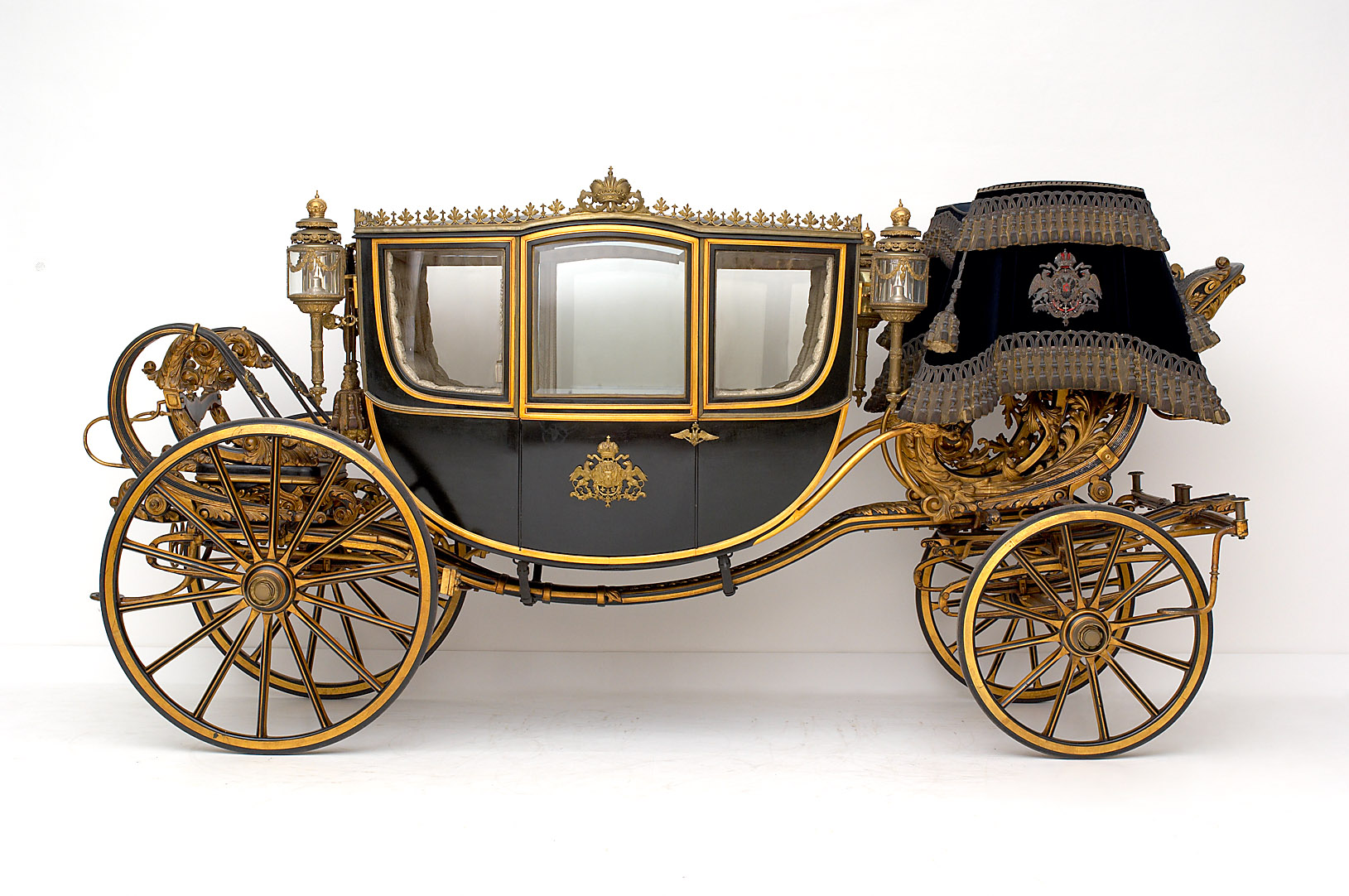
Four-seater Ceremonial State Carriage Carl Marius 1865

Two-seater children’s driving carriage with collapsible roof around 1859

Personal driving carriage of the Emperor Franz I around 1815
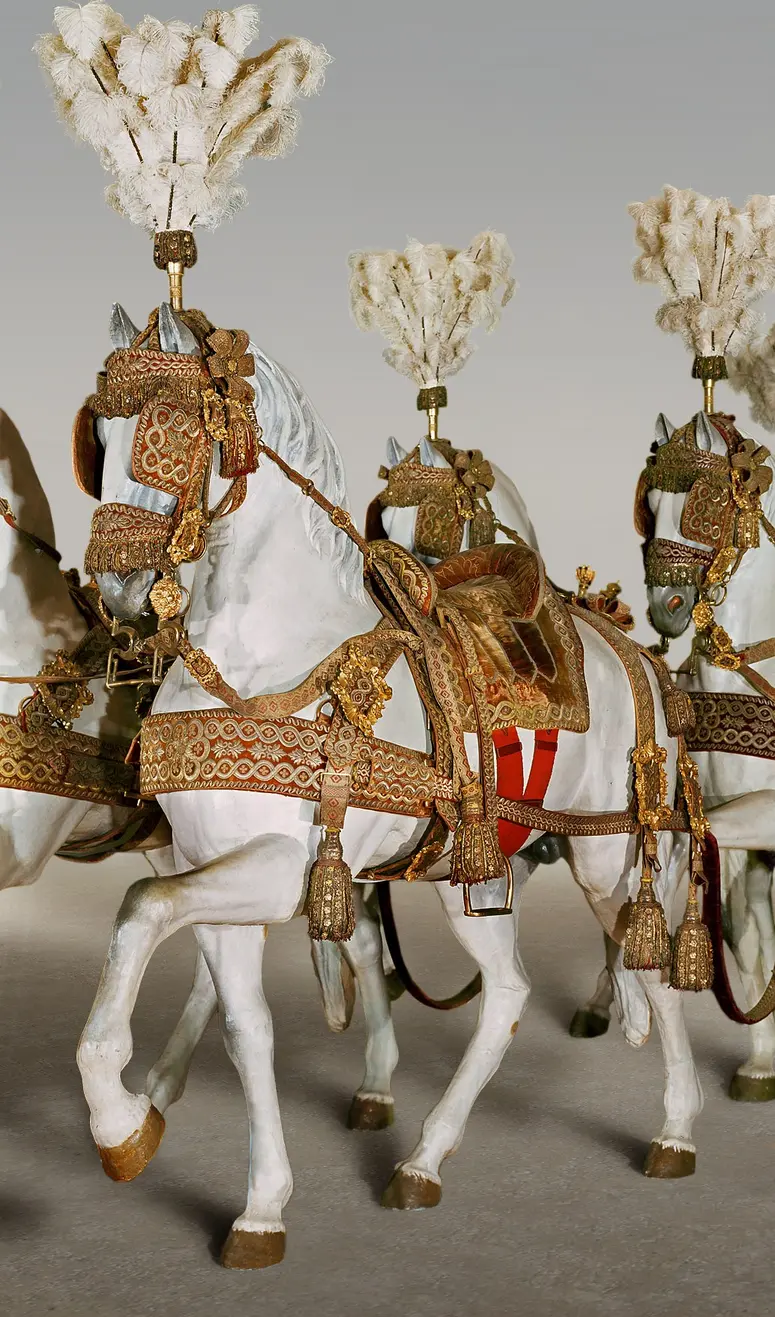
Harness for the eight horses who draw the Imperial Carriage 18th century, expanded in the 19th century

Emperor Franz Joseph's ceremonial state carriage returning to the court studs Mariza Büngener 1912
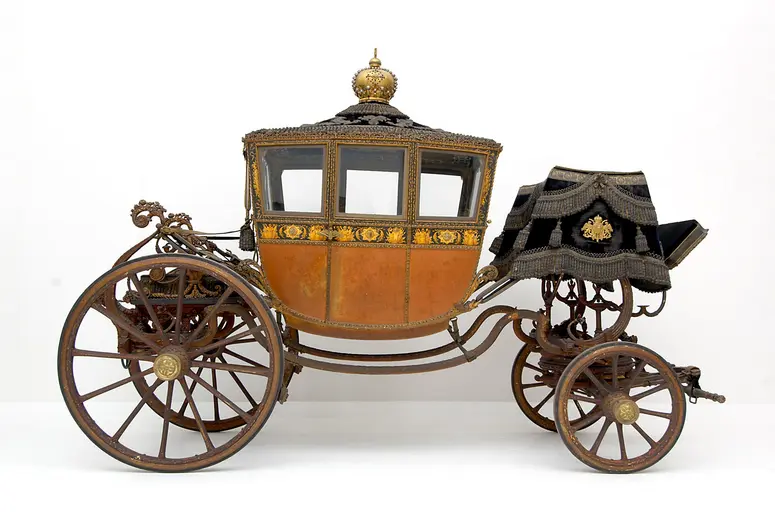
“Milan Coronation Carriage” of Napoleon I around 1790, later changed several times

Open hunting "Wurst” carriage with revolving seat Hofsattlerei around 1820

Two-seat Town-Carriage (Coupé) of Maximilian Karl, Prince von Thurn und Taxis Manufacturer: Simon Brandmayer 1828

Golden Carousel Carriage of Maria Theresa Balthasar Ferdinand Moll around 1740/42
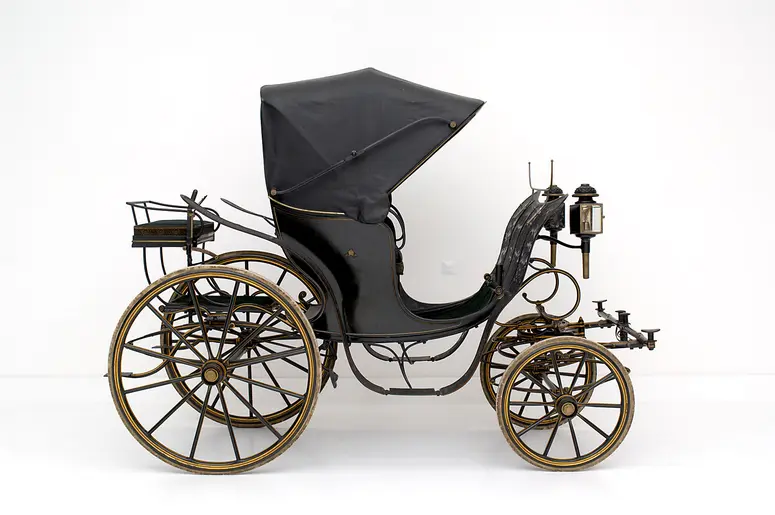
Ladies Driving Carriage ("Duc") of the Empress Zita Hofwagenfabrik Armbruster (Wien) 1917

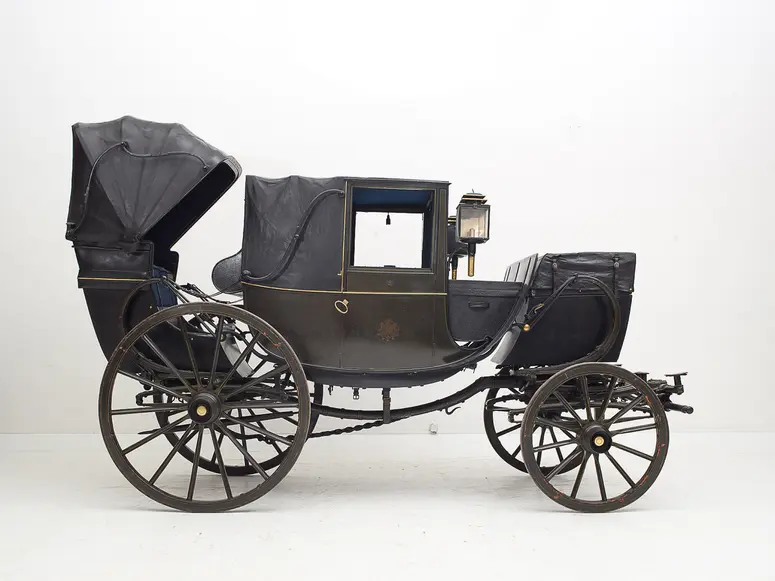
Travelling Carriage of Wilhelmine, Princess von Thurn und Taxis Baxter & Pearce (London) 1833
Two-seater hunting "Wurst” carriage of Emperor Franz I. Hofsattlerei after 1823 (probably 1827)

Imperial Carriage in front of St.Stephen's Cathedral drawn by eight horses Johann Erdmann Gottlieb Prestel around/after 1851