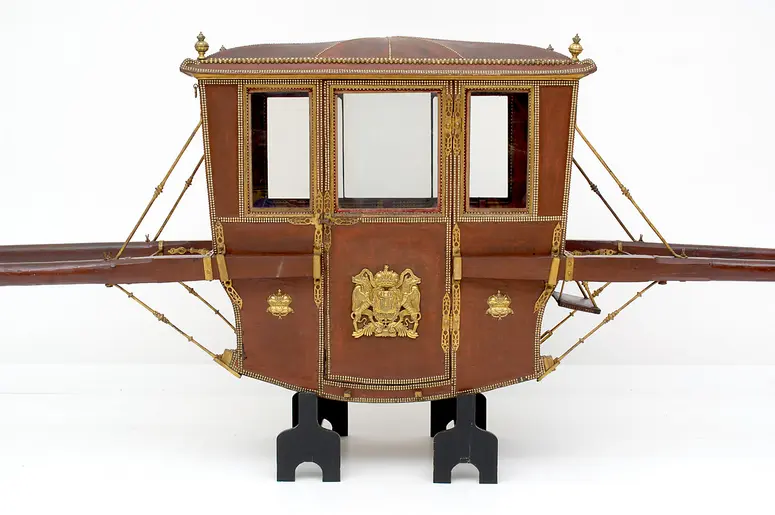
Two-seater hunting "Wurst” carriage of Emperor Franz I.
after 1823 (probably 1827) | Hofsattlerei
"Wurst" ("Sausage") is the designation originally given to carriages used for hunting which were equipped with a long weapons and material box parallel to the longitudinal axis. This box was covered with cushions and at the same time served as a bench for the hunters to sit on astride or back to back. This type of carriage was particularly popular during the "Biedermeier" period (c. 1815-1848) and had its name bestowed upon it because of its sausage-like appearance. In this leisure vehicle for two passengers, which is also one of the state carriages, the "sausage" can still only be recognised in parts. (MKR)
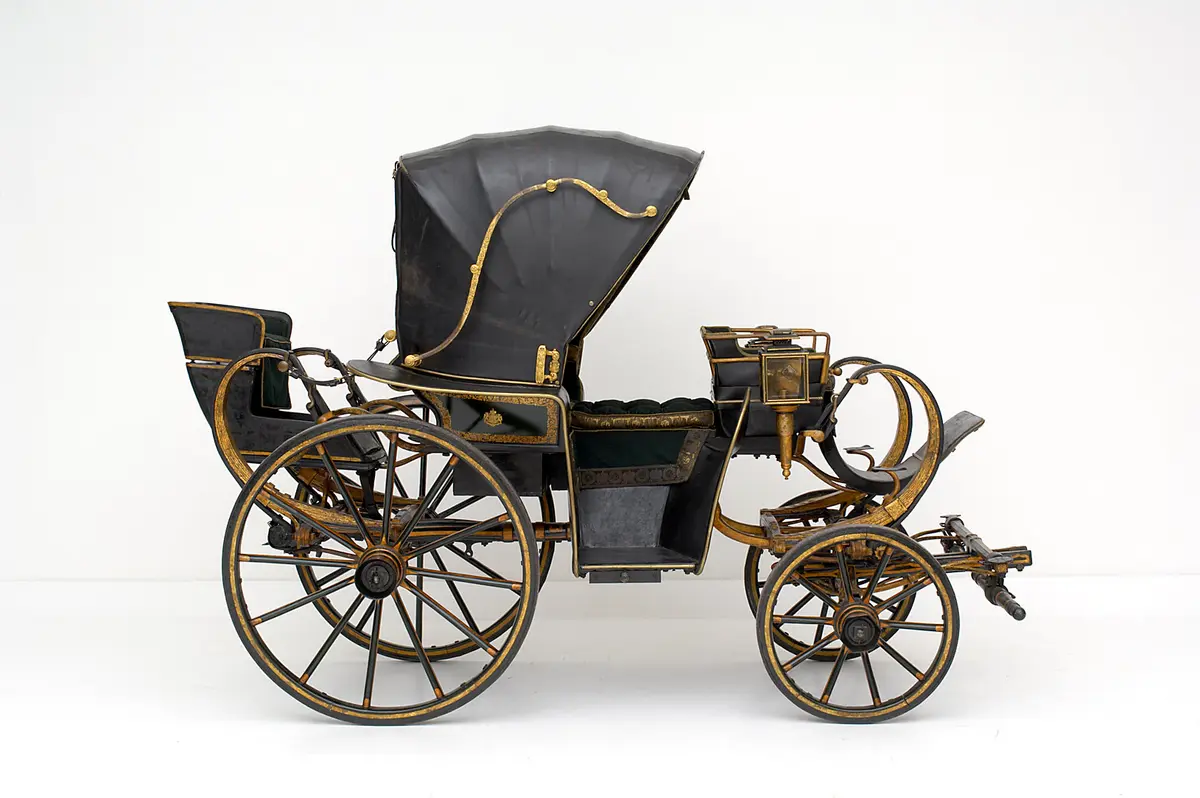
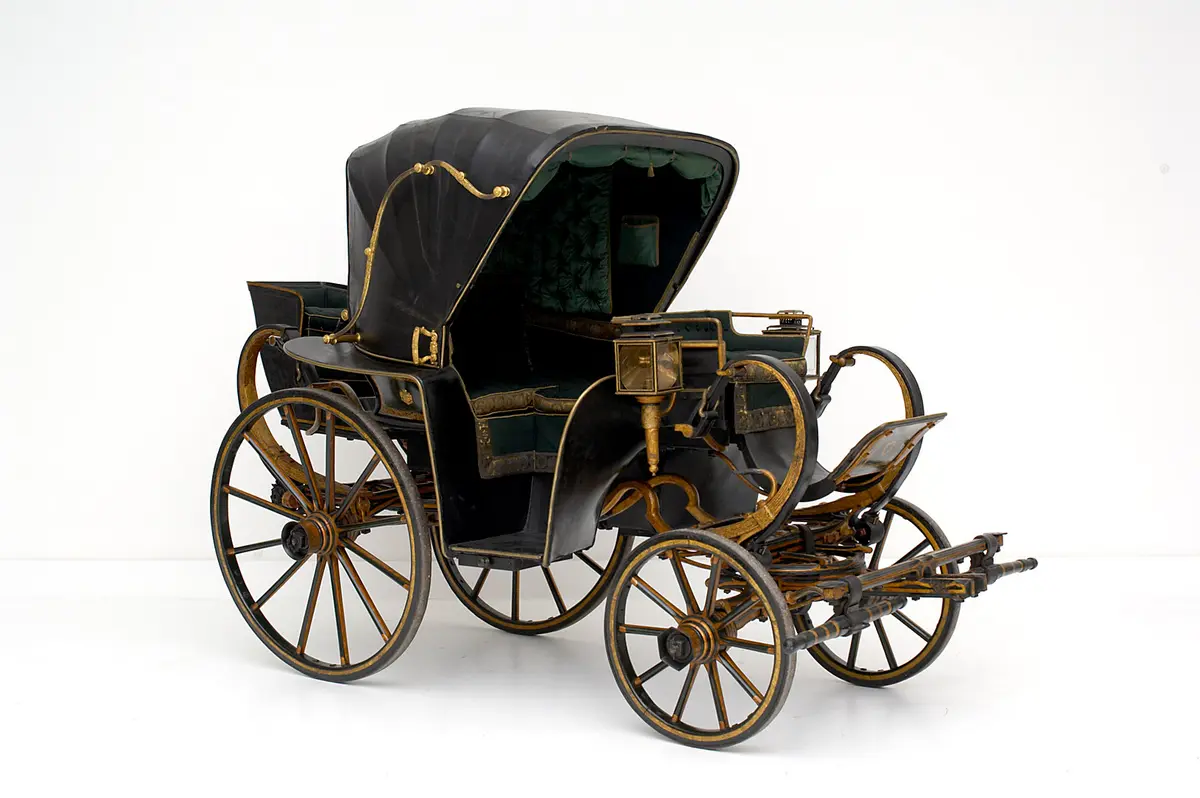
"Wurst" ("Sausage") is the designation originally given to carriages used for hunting which were equipped with a long weapons and material box parallel to the longitudinal axis. This box was covered with cushions and at the same time served as a bench for the hunters to sit on astride or back to back. This type of carriage was particularly popular during the "Biedermeier" period (c. 1815-1848) and had its name bestowed upon it because of its sausage-like appearance. In this leisure vehicle for two passengers, which is also one of the state carriages, the "sausage" can still only be recognised in parts. (MKR)
Production:
Hofsattlerei
Time:
after 1823 (probably 1827)
Object Name
Two-seater hunting "Wurst” carriage of Emperor Franz I.
Copyright
Kunsthistorisches Museum, Wagenburg
Invs.
Wagenburg, W 57 1
Browse more
Similar items you might be interested in

Open hunting "Wurst” carriage with revolving seat Hofsattlerei around 1820

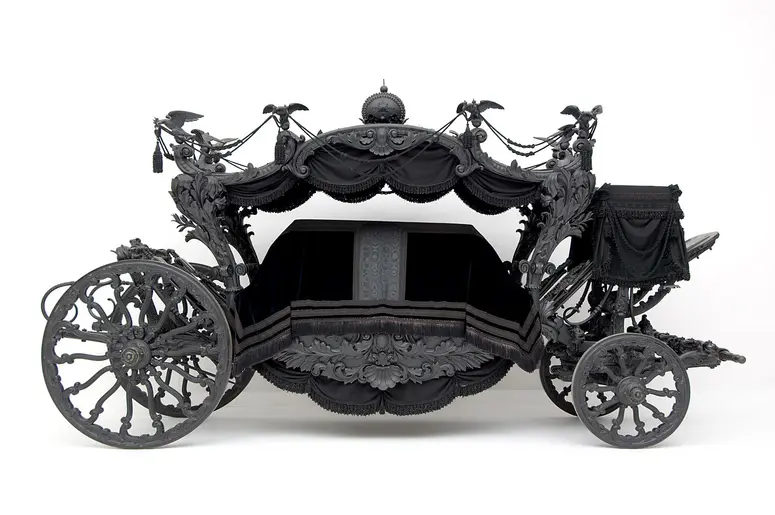
Imperial gala coach for court mourning undercarriage around 1690, body around 1730/35, adapted in the 19th century
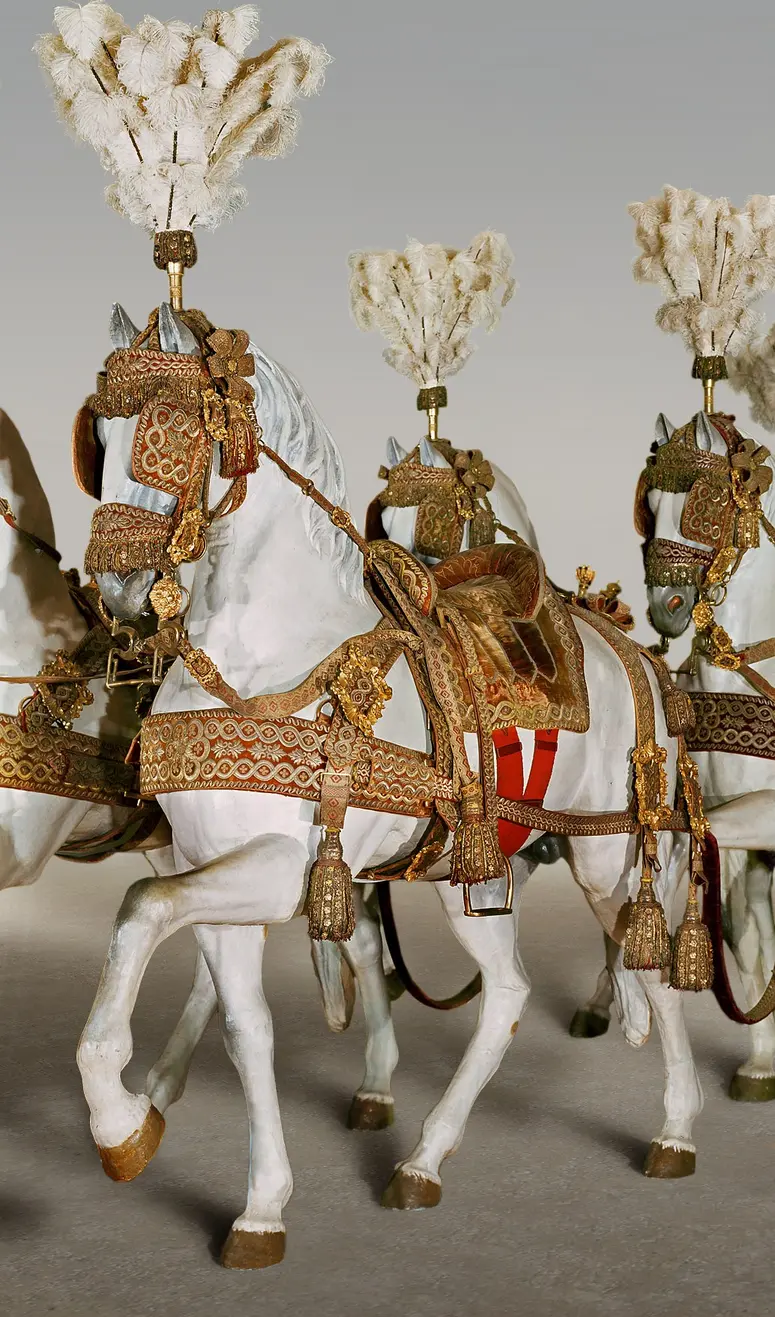
Harness for the eight horses who draw the Imperial Carriage 18th century, expanded in the 19th century
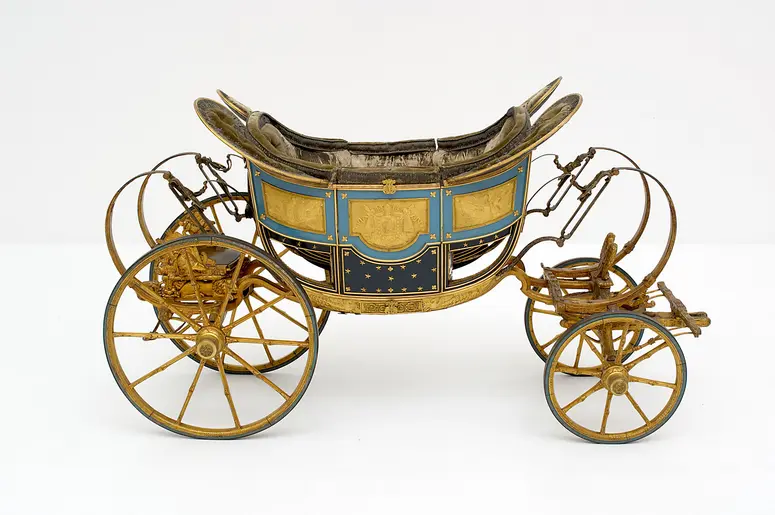
Children’s carriage of the King of Rome Manufacturer: J. Fr. Tremblay 1811/12
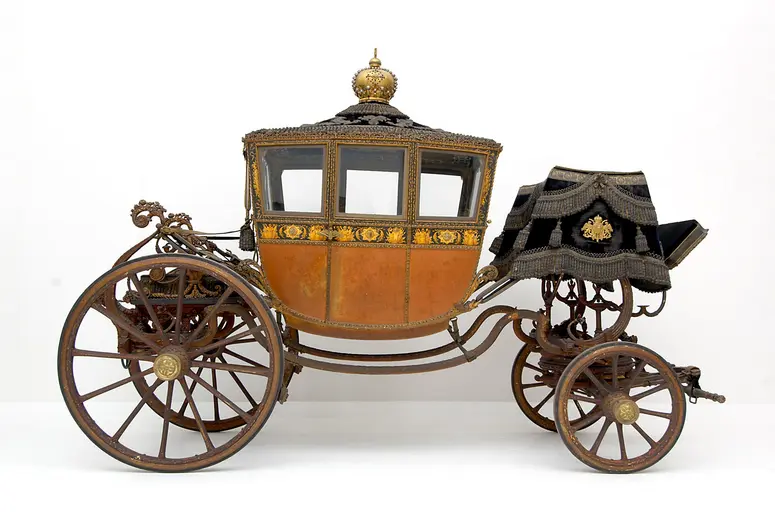
“Milan Coronation Carriage” of Napoleon I around 1790, later changed several times

Two-seat Town-Carriage (Coupé) of Maximilian Karl, Prince von Thurn und Taxis Manufacturer: Simon Brandmayer 1828

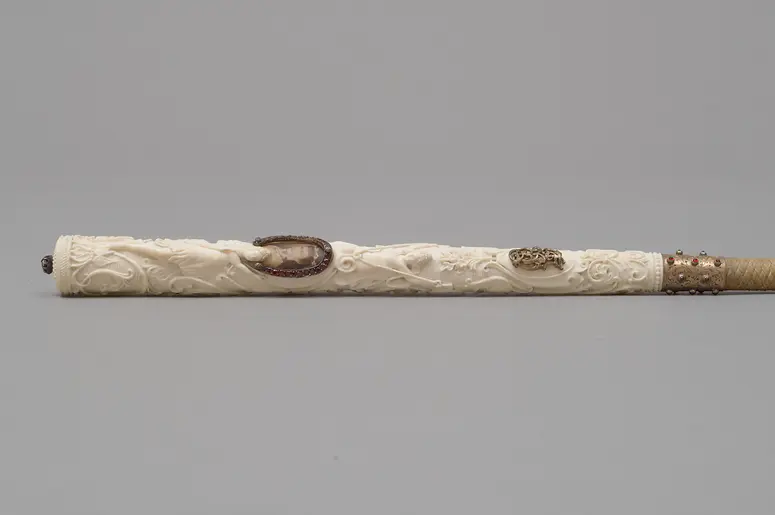
Man’s Riding Whip with a Portrait of Empress Elisabeth 1891

Personal Landaulet of Empress Elisabeth Manufacturer: Carl Marius 1885

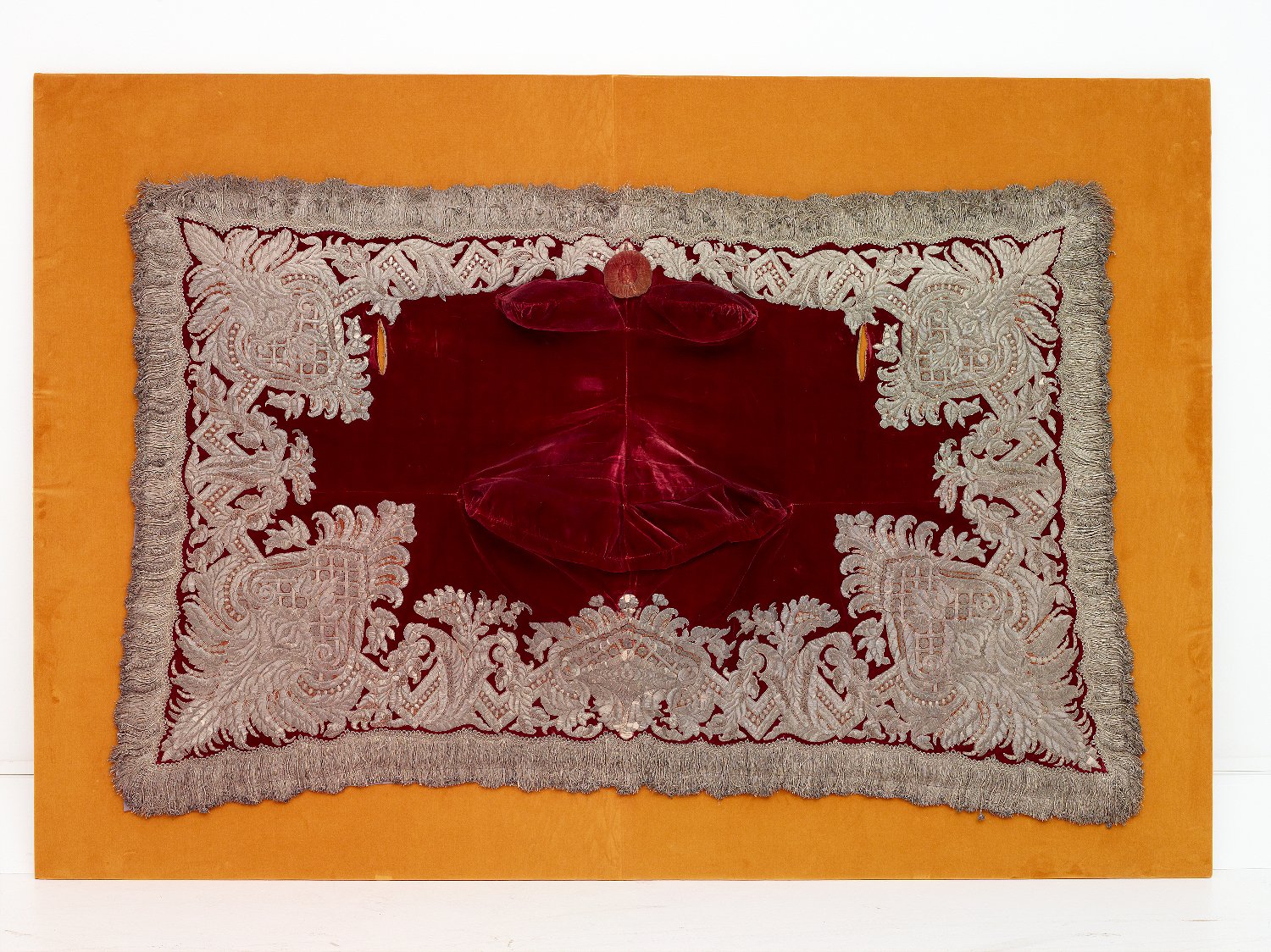

Personal driving carriage of the Emperor Franz I around 1815

Lavish Personal State Chariot Manufacturer: Cesare Sala 1857

Imperial Carriage in front of St.Stephen's Cathedral drawn by eight horses Johann Erdmann Gottlieb Prestel around/after 1851


Sleigh of the princes Windisch-Graetz 1st half of the 19th century

Two-seater children’s driving carriage with collapsible roof around 1859