Serpent
16th century | anonym
The serpent belongs to the family of horns with finger holes and is played with a bowl-shaped mouthpiece. The tube, which is of considerable length, is shaped into serpent-like coils so that the player can reach the finger holes. The name of the instrument is derived from this zoomorphic design. The body of the serpent is built in several segments that are hollowed out and subsequently glued together. The surface is then covered with black leather to ensure that the connections of the segments are airtight. In the instrument shown here, the blowing-end of the tube terminates in a serpent’s head. A brass tube, to which the mouthpiece is connected, is inserted into the head. Both this tube and the present ivory mouthpiece are not original. The instrument comes from the Ambras collection which already contained several serpents in the 16th century. The instrument is first explicitly mentioned in an inventory of 1725. (rh)
Lit.: Beatrix Darmstädter: Die Zinken und der Serpent der Sammlung alter Musikinstrumente, Sammlungskataloge des Kunsthistorischen Museums, Bd. 7, Bergkirchen 2011, S. 228-234
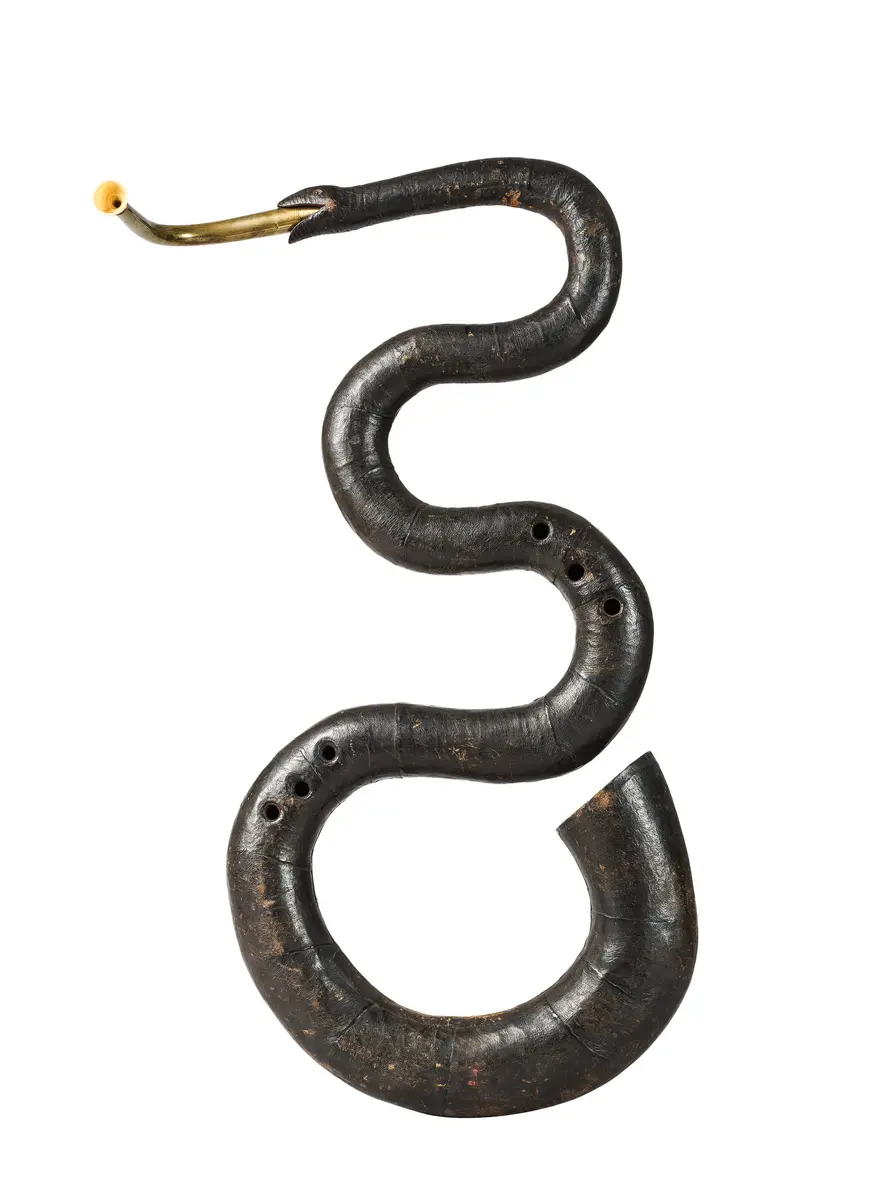
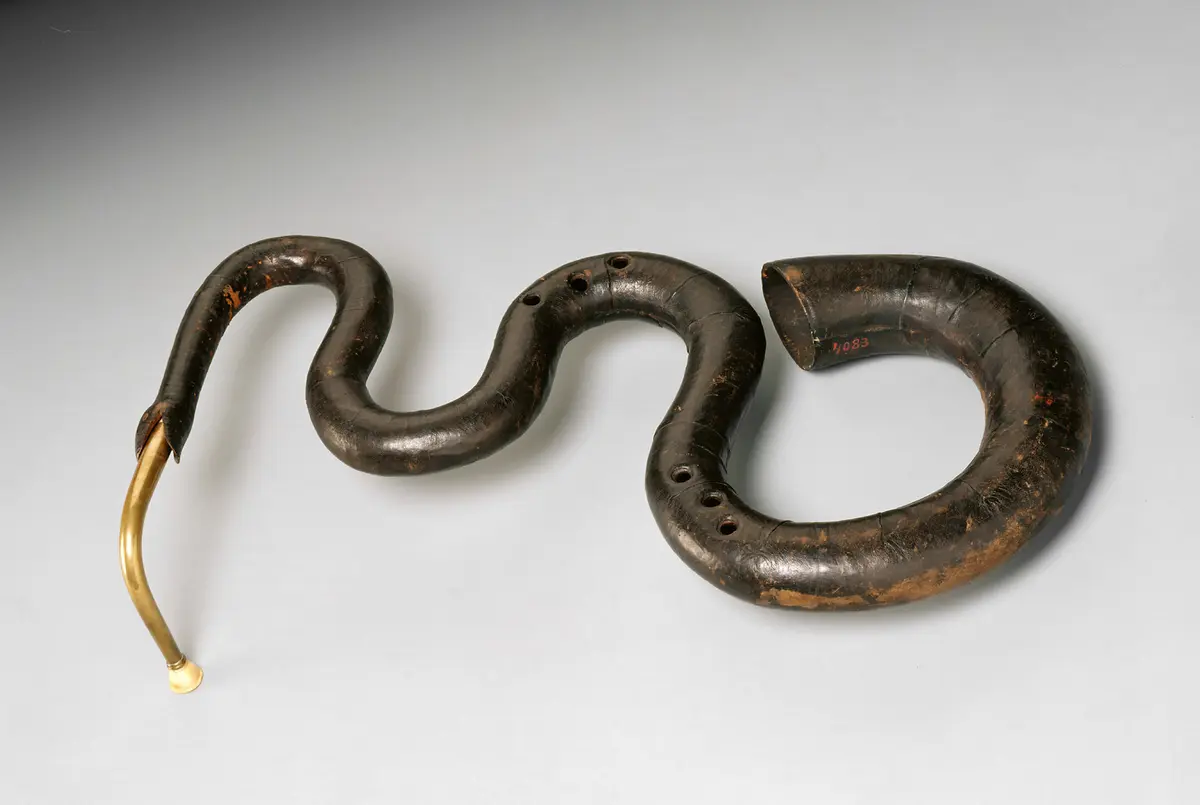
The serpent belongs to the family of horns with finger holes and is played with a bowl-shaped mouthpiece. The tube, which is of considerable length, is shaped into serpent-like coils so that the player can reach the finger holes. The name of the instrument is derived from this zoomorphic design. The body of the serpent is built in several segments that are hollowed out and subsequently glued together. The surface is then covered with black leather to ensure that the connections of the segments are airtight. In the instrument shown here, the blowing-end of the tube terminates in a serpent’s head. A brass tube, to which the mouthpiece is connected, is inserted into the head. Both this tube and the present ivory mouthpiece are not original. The instrument comes from the Ambras collection which already contained several serpents in the 16th century. The instrument is first explicitly mentioned in an inventory of 1725. (rh)
Lit.: Beatrix Darmstädter: Die Zinken und der Serpent der Sammlung alter Musikinstrumente, Sammlungskataloge des Kunsthistorischen Museums, Bd. 7, Bergkirchen 2011, S. 228-234
Manufacturer:
anonym
Time:
16th century
Object Name
Serpent
Culture
Italy (?)
Copyright
Kunsthistorisches Museum, Sammlung alter Musikinstrumente
Invs.
Sammlung alter Musikinstrumente, 237
Alte Inv.Nr.:
KK_4083
Schlosser Nr.:
A 248
Browse more
Similar items you might be interested in
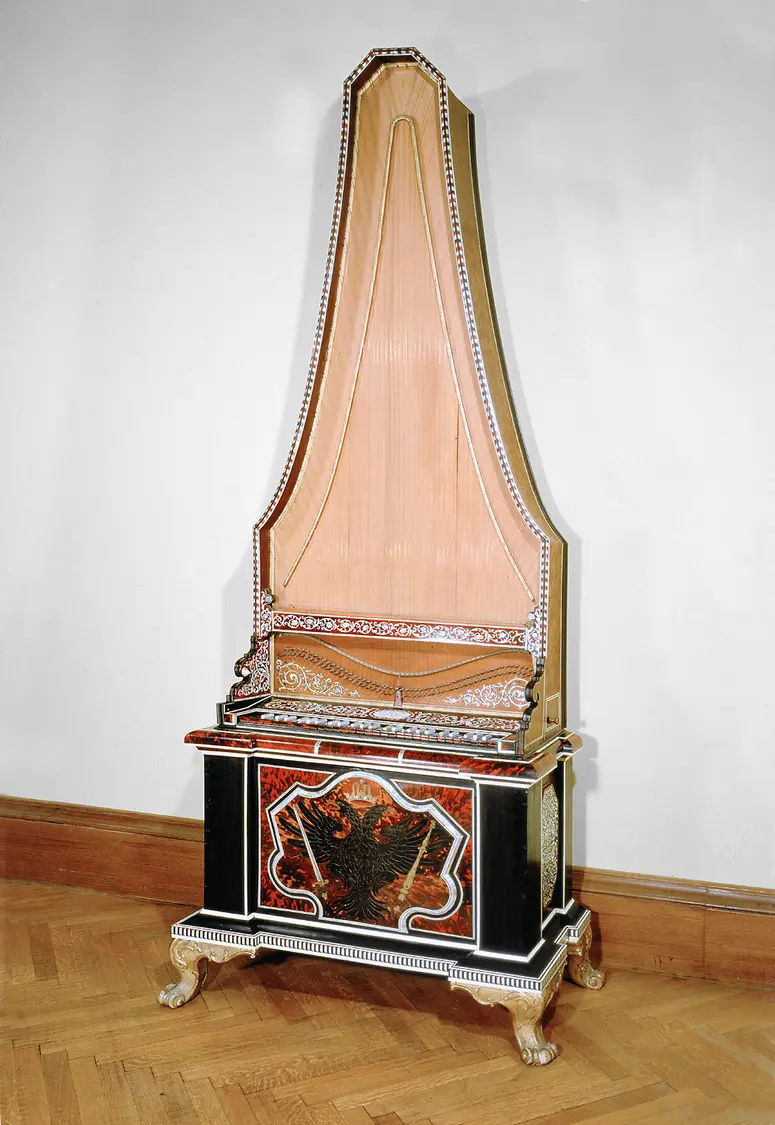
Manufacturer: Martin Kaiser 2nd half of the 17th century
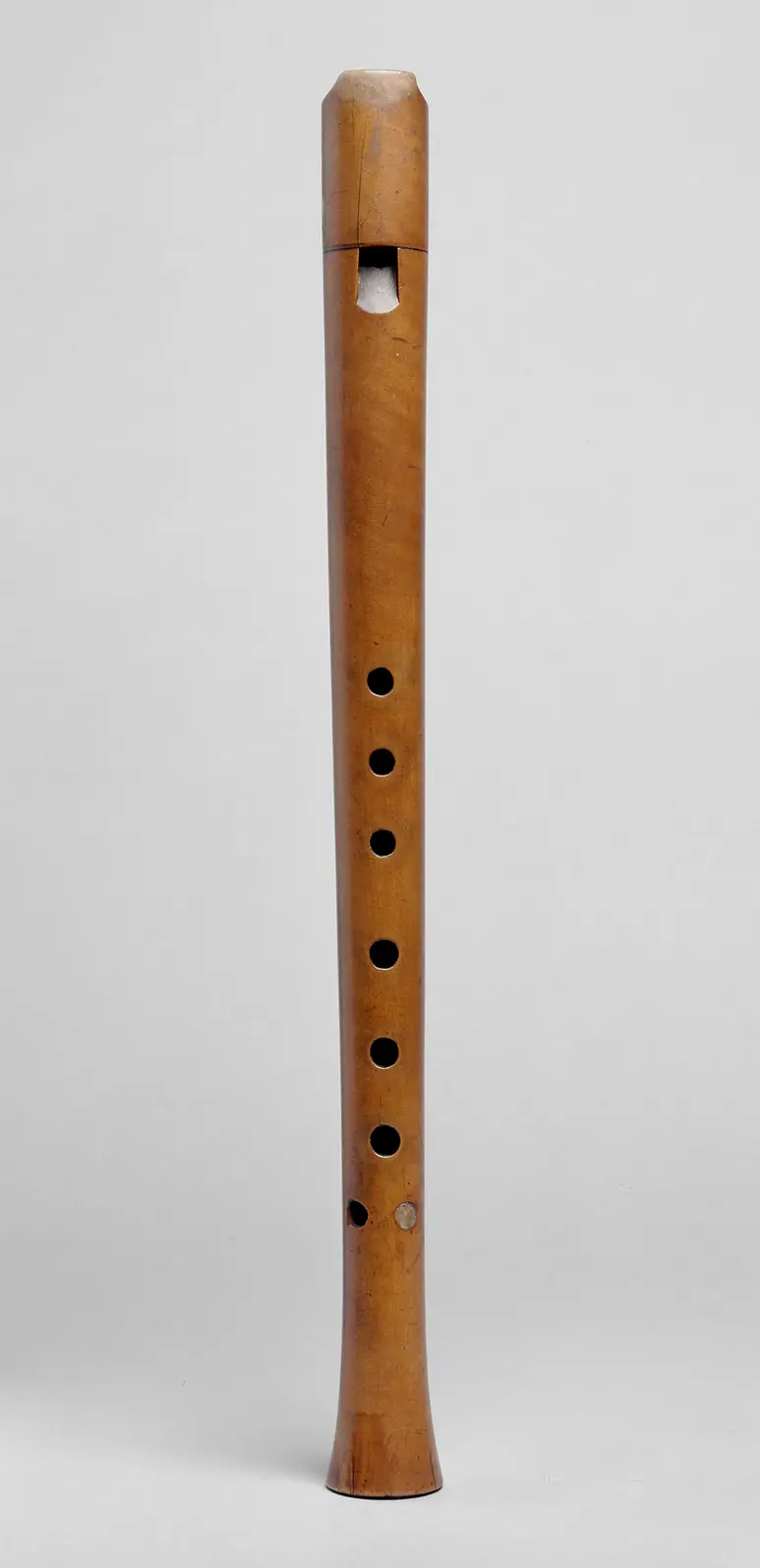
Manufacturer: Johann Baptist Merklein approx. 1800
Manufacturer: anonym 2nd half of the 16th century (assigned)
Manufacturer: Hendrik Richters beginning of the 18th century
Manufacturer: Michael Leichamschneider 1732
Manufacturer: Matthäus Seelos 1st half of the 17th century
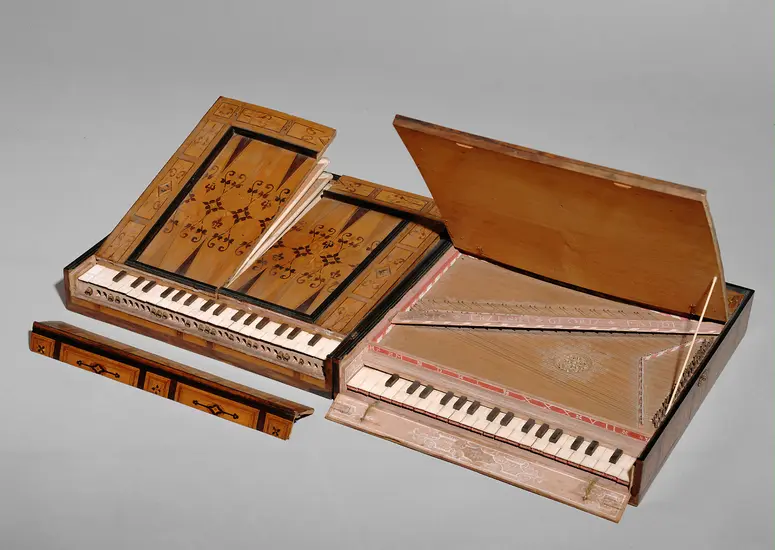
Manufacturer: Anton Meidting December 1587
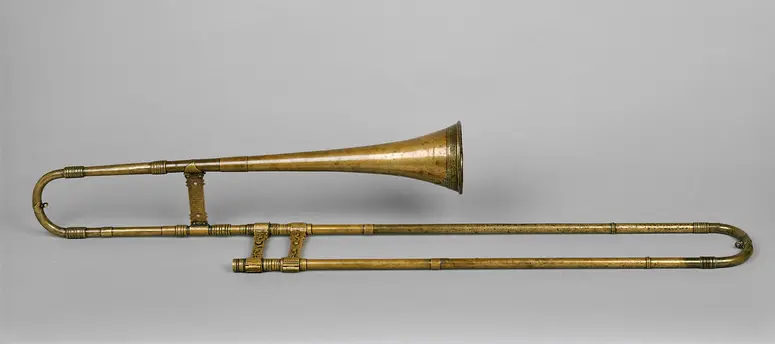
Manufacturer: Joerg Neuschel 1557
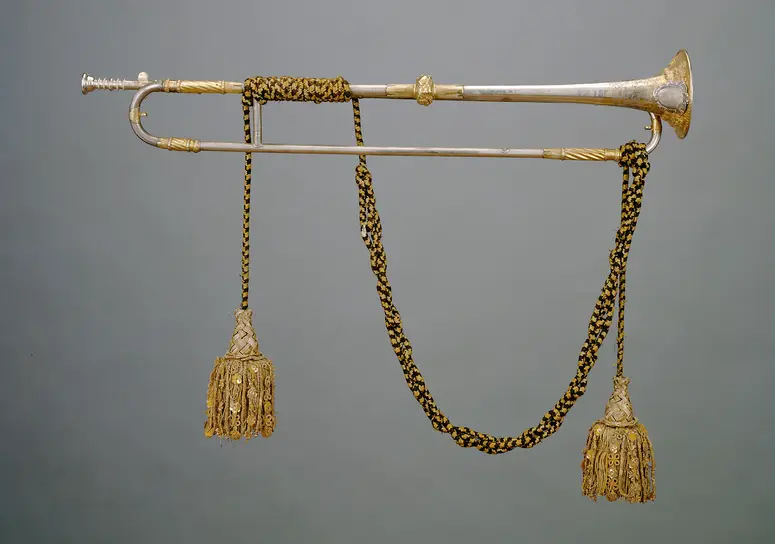
Manufacturer: Michael Leichamschneider 1741
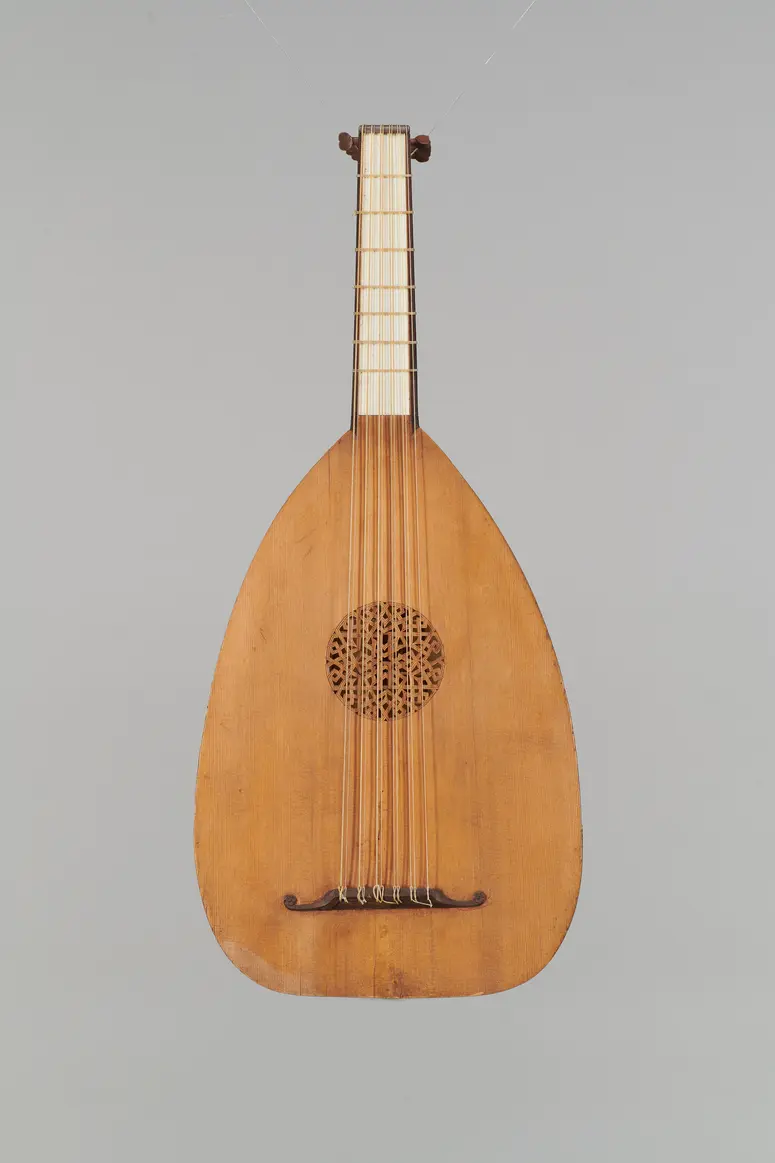
Manufacturer: Anton Schnitzer 1581
Manufacturer: Fa. Bösendorfer 1867
Manufacturer: Antonio Ciciliano presumably after 1602
Manufacturer: Joann Daniel Dulcken 1745
Manufacturer: Wenzel Kowansky 1749