Schüssel, Holzteller, Teller
2. Hälfte 16. Jahrhundert
The front of the wooden plate is painted with stylised tulips, roses and hyacinths on an orange-red background in the mirror and along the steeply raised rim. A meandering band adorns the outside of the lip rim. The back of the plate has a continuous light blue background and is decorated with geometric circular shapes in the centre, while the outer rim features white dots, eye-shaped elements and lip-shaped lines. As the back of the plate was always protected from light, the original brightness of the colours has been better preserved here than on the worn front. The decoration is strongly modelled on so-called Iznik ceramics (Iznik = Nicaea), which experienced a heyday in the Ottoman Empire between the 15th and 17th centuries, especially under the reign of Sultan Suleyman I the Magnificent (r. 1520-1566). The two flowers, the tulip and the rose, were among the most popular ornaments. The tulip, lalé in Turkish, was an anagram of Allah in Arabic, while the rose, gül in Turkish, is said to have sprung from the drops of sweat of the Prophet Mohammed according to Islamic belief. The dating of Ottoman decorative objects is facilitated by the fact that tulips only appear from the middle of the 16th century onwards. While comparable Ottoman everyday objects made of ceramics and precious metals have been preserved in several European collections (Landesmuseum Karlsruhe, Staatliche Kunstsammlungen Dresden, MAK in Vienna), objects made of wood have very rarely come down to us. From today's perspective, however, this very simple and "base" material was already a real rarity in the Ottoman Empire in the 16th century, as deforestation in the countries of the eastern Mediterranean by the crusading armies, among others, had led to a great shortage of wood. In the estate inventory of the Tyrolean sovereign Archduke Ferdinand II from 1596, the plate presented here could be mentioned as one of "Vier flache Turggische schisselen von holz".
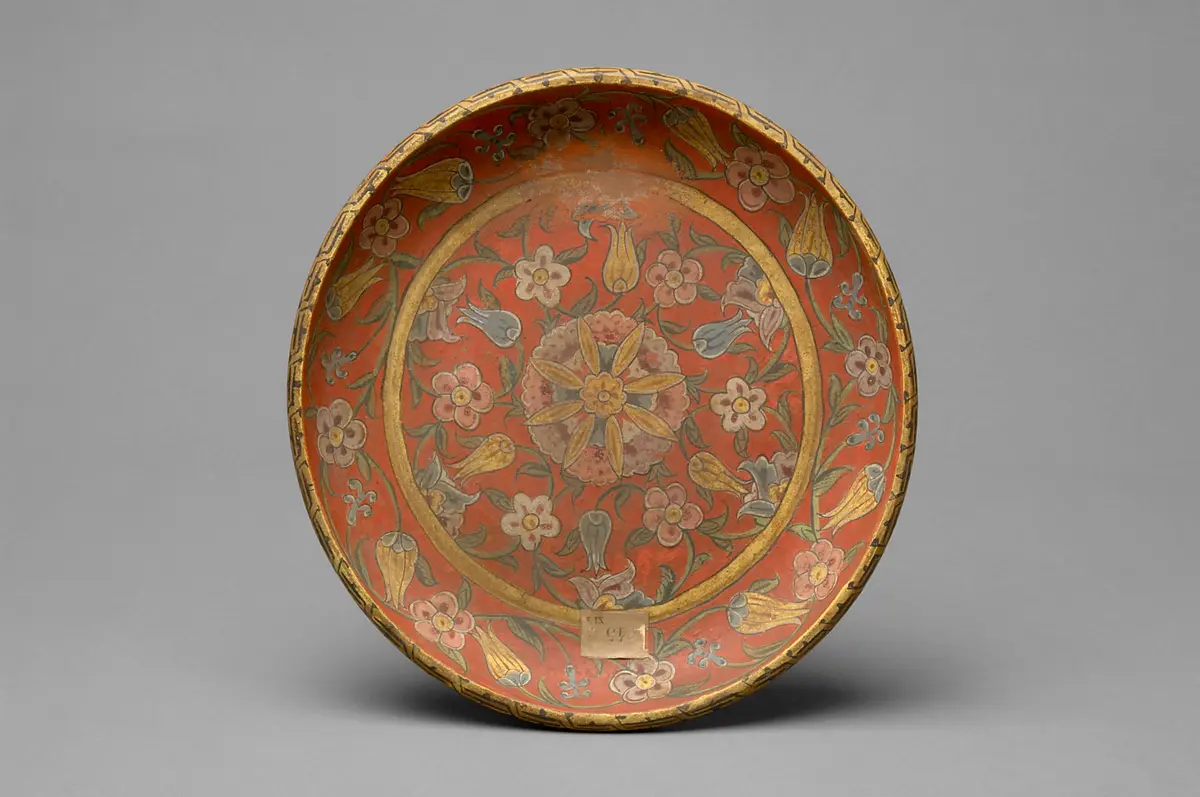
The front of the wooden plate is painted with stylised tulips, roses and hyacinths on an orange-red background in the mirror and along the steeply raised rim. A meandering band adorns the outside of the lip rim. The back of the plate has a continuous light blue background and is decorated with geometric circular shapes in the centre, while the outer rim features white dots, eye-shaped elements and lip-shaped lines. As the back of the plate was always protected from light, the original brightness of the colours has been better preserved here than on the worn front. The decoration is strongly modelled on so-called Iznik ceramics (Iznik = Nicaea), which experienced a heyday in the Ottoman Empire between the 15th and 17th centuries, especially under the reign of Sultan Suleyman I the Magnificent (r. 1520-1566). The two flowers, the tulip and the rose, were among the most popular ornaments. The tulip, lalé in Turkish, was an anagram of Allah in Arabic, while the rose, gül in Turkish, is said to have sprung from the drops of sweat of the Prophet Mohammed according to Islamic belief. The dating of Ottoman decorative objects is facilitated by the fact that tulips only appear from the middle of the 16th century onwards. While comparable Ottoman everyday objects made of ceramics and precious metals have been preserved in several European collections (Landesmuseum Karlsruhe, Staatliche Kunstsammlungen Dresden, MAK in Vienna), objects made of wood have very rarely come down to us. From today's perspective, however, this very simple and "base" material was already a real rarity in the Ottoman Empire in the 16th century, as deforestation in the countries of the eastern Mediterranean by the crusading armies, among others, had led to a great shortage of wood. In the estate inventory of the Tyrolean sovereign Archduke Ferdinand II from 1596, the plate presented here could be mentioned as one of "Vier flache Turggische schisselen von holz".
Time:
2. Hälfte 16. Jahrhundert
Object Name
Schüssel, Holzteller, Teller
Culture
Osmanisch
Material/technology:
Holz, bemalt
Dimensions:
H. 4 cm, Dm. 25 cm
Copyright
Schloss Ambras Innsbruck
Invs.
Schloss Ambras Innsbruck, PA 45
Provenance
Nachlassinventar Erzherzog Ferdinands II. von 1596 (nach KK 6652), fol. 547v: "Vier flache Türggische schisselen von holz das ain schwarz, grien, Rot unnd gelb sambt dem Fueteral"
Browse more
Similar items you might be interested in

Lederteller, Mosaik, Ledermosaik 1. Hälfte 16. Jahrhundert
Lederteller, Lederintarsie, Intarsie, Mosaik 2. Viertel 16. Jahrhundert



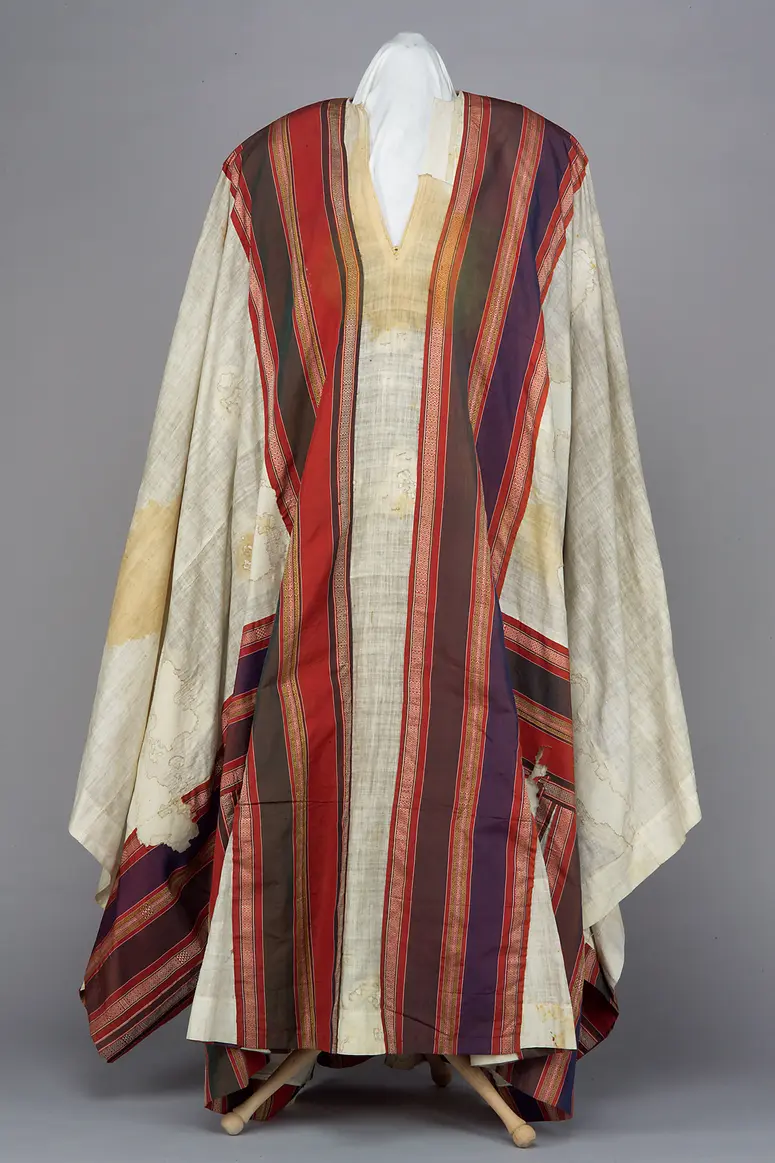
Kleid, Obergewand, Textil, Kleidung 16. Jahrhundert

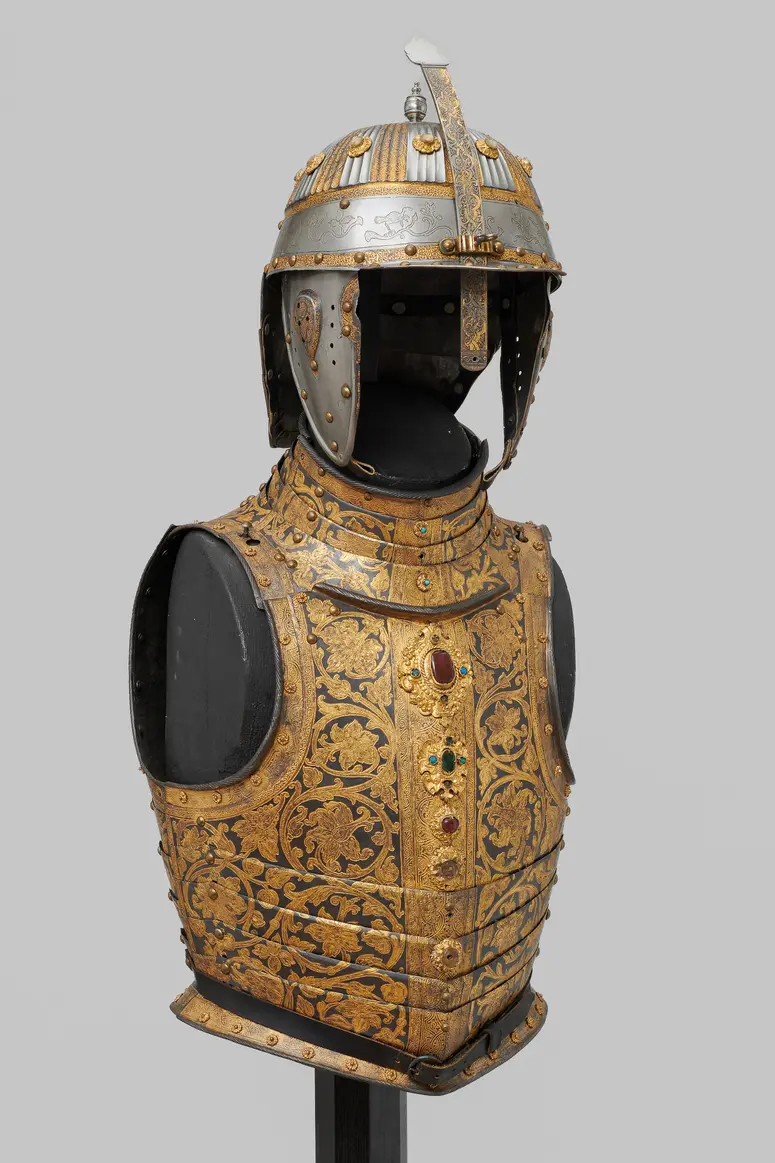


Sultan Muhammed III. Ende 16. Jahrhundert