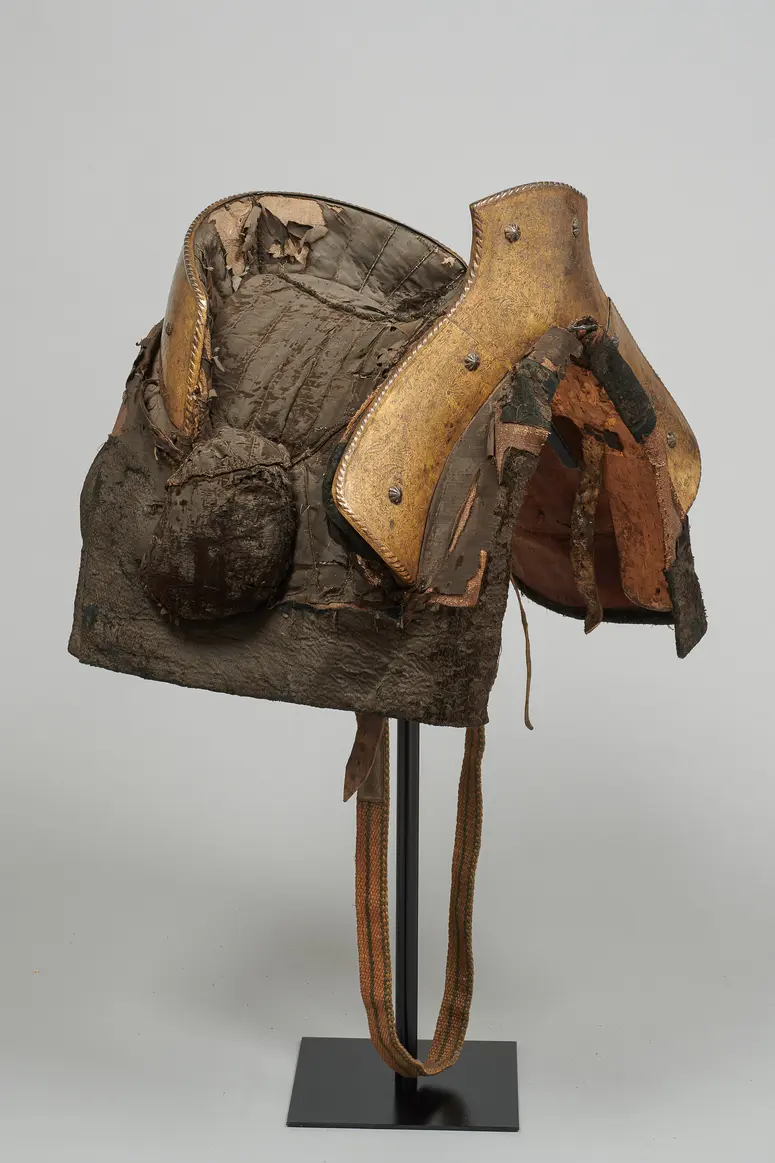
Sattel
1695-1703 | Sultan Mustafa II. Sohn Mehmeds IV.
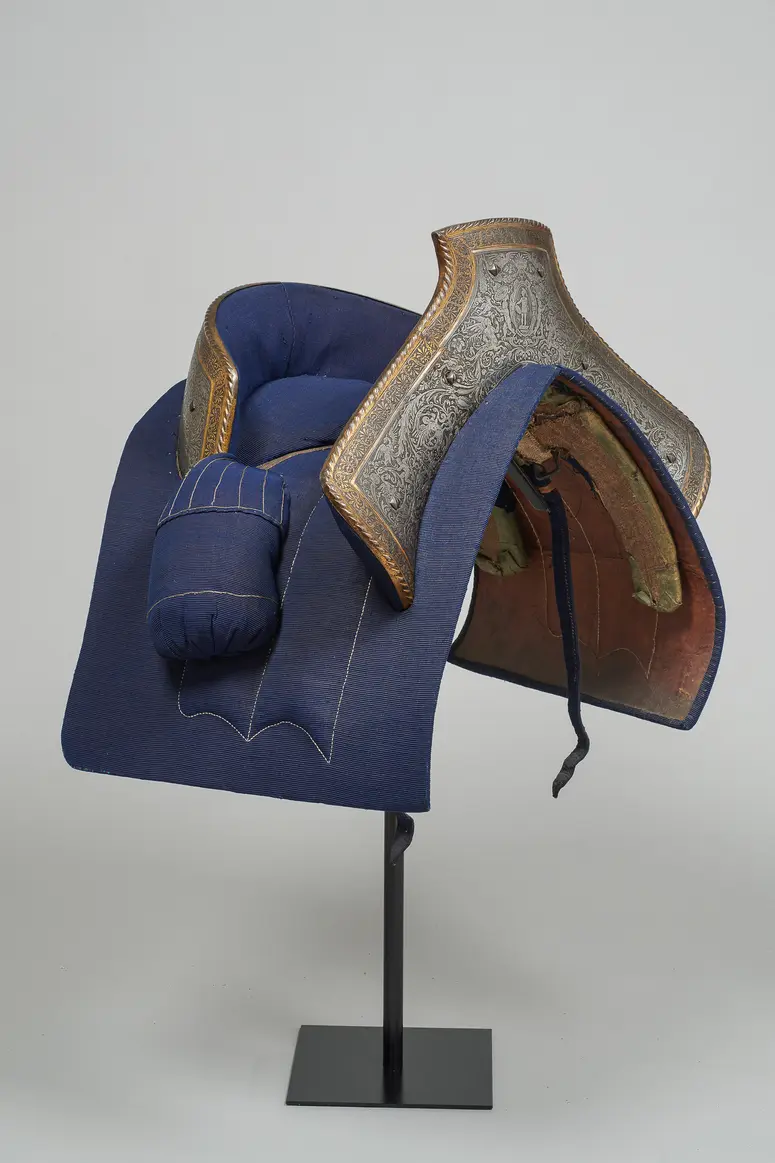
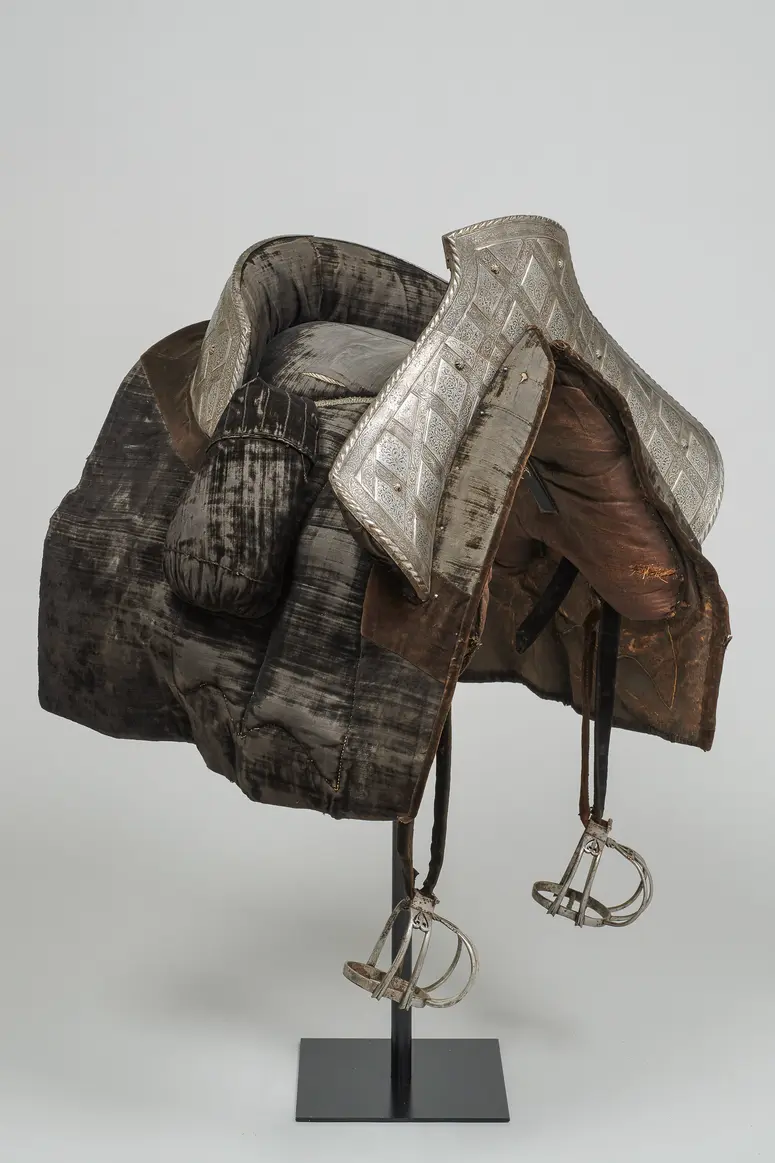
The seat of this saddle is upholstered in cherry-red velvet embroidered with an all-over floral pattern executed in silver and gold thread and leather appliqué. Pommel and cantle are decorated with ornaments made of fluted, partially gilt sheet silver.
In the nineteenth century, the saddle was believed to have belonged to Kara Mustapha, the Ottoman general who led the second siege of Vienna in 1683. Legend has it that the saddle was one of the objects placed at the emperor’s feet after the liberation of the city. There are, however, no archival sources to support this. Much later, in the 1980s, the saddle was attributed to Murad Geray. He was Khan of the Crimean Tartars from 1678 to 1683, and the owner’s mark struck on the back saddle steel was ascribed to him. The Crimean Tartars were Ottoman vassals and fought in the Sultan’s army against the Habsburg Empire, as well as in many other wars. In 1683, Murad Geray led a division of Tartars during the Siege of Vienna.
This owner’s mark, however, is not Murad Geray’s but the tughra of Sultan Mustapha II, who ruled from 1695 to 1703. In 1697, he led a campaign against the Habsburg Empire that ended in a catastrophe: in the decisive Battle of Zenta, fought on 11 September 1697, Prince Eugene of Savoy vanquished the Ottoman army.
This saddle may have entered the imperial collection as part of the spoils brought back from the Battle of Zenta. Among the objects captured by victorious Habsburg troops was the Seal of the Empire that Grand Vizier Elmas Mehmed Pasha had brought with him on this campaign (now in the Heeresgeschichtliches Museum, Vienna).
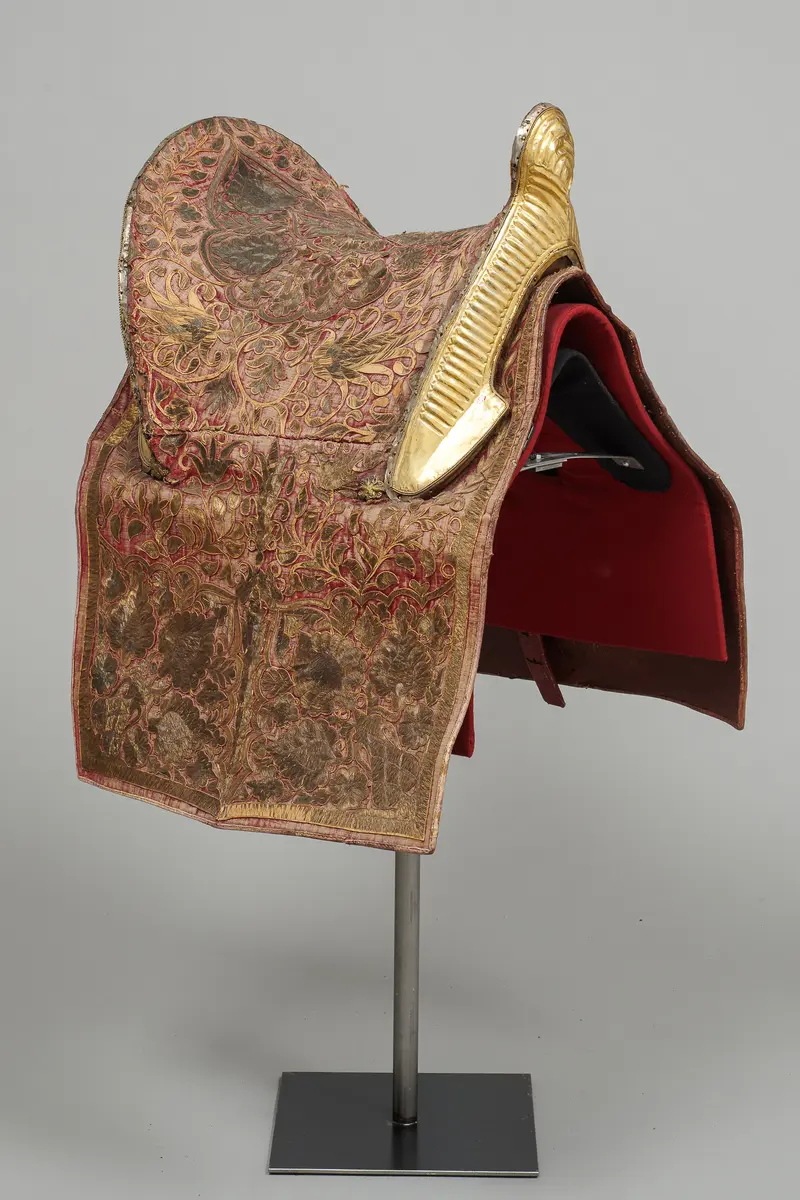
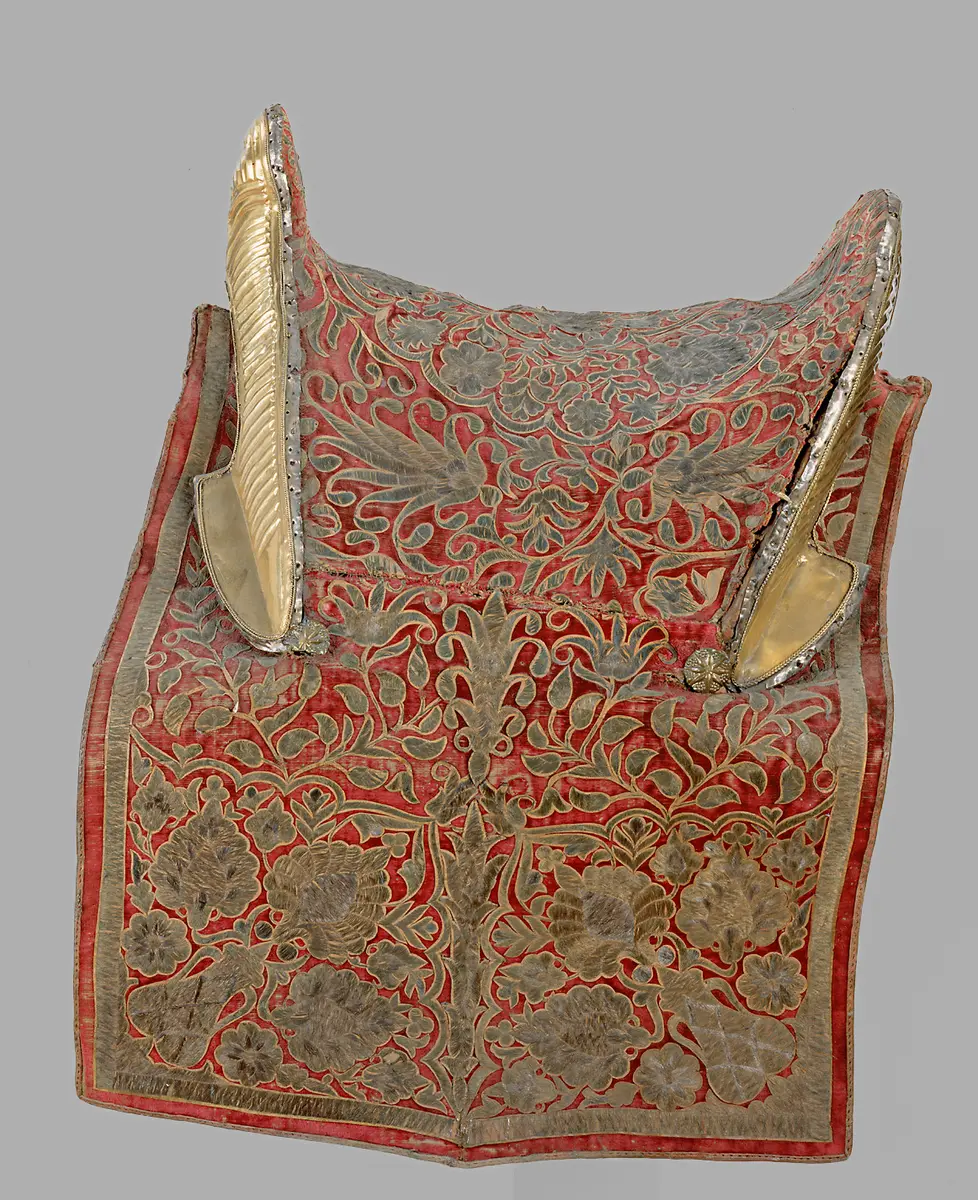
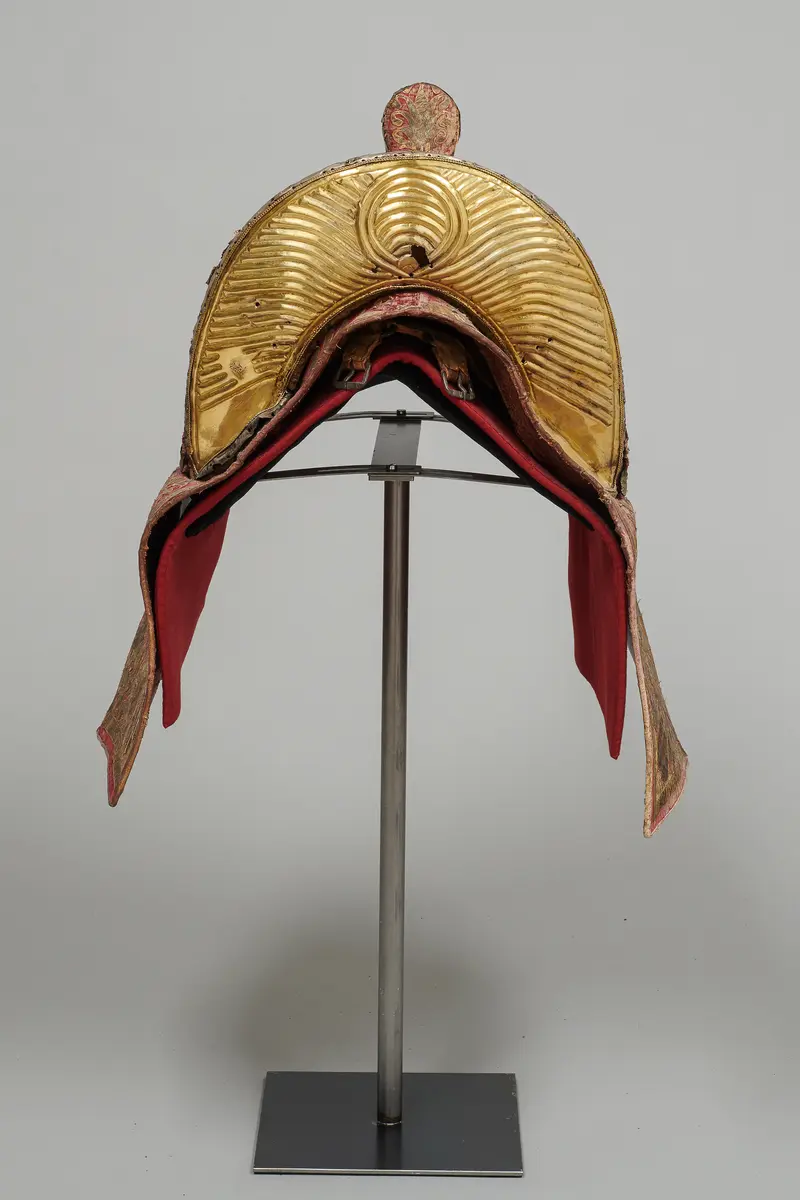
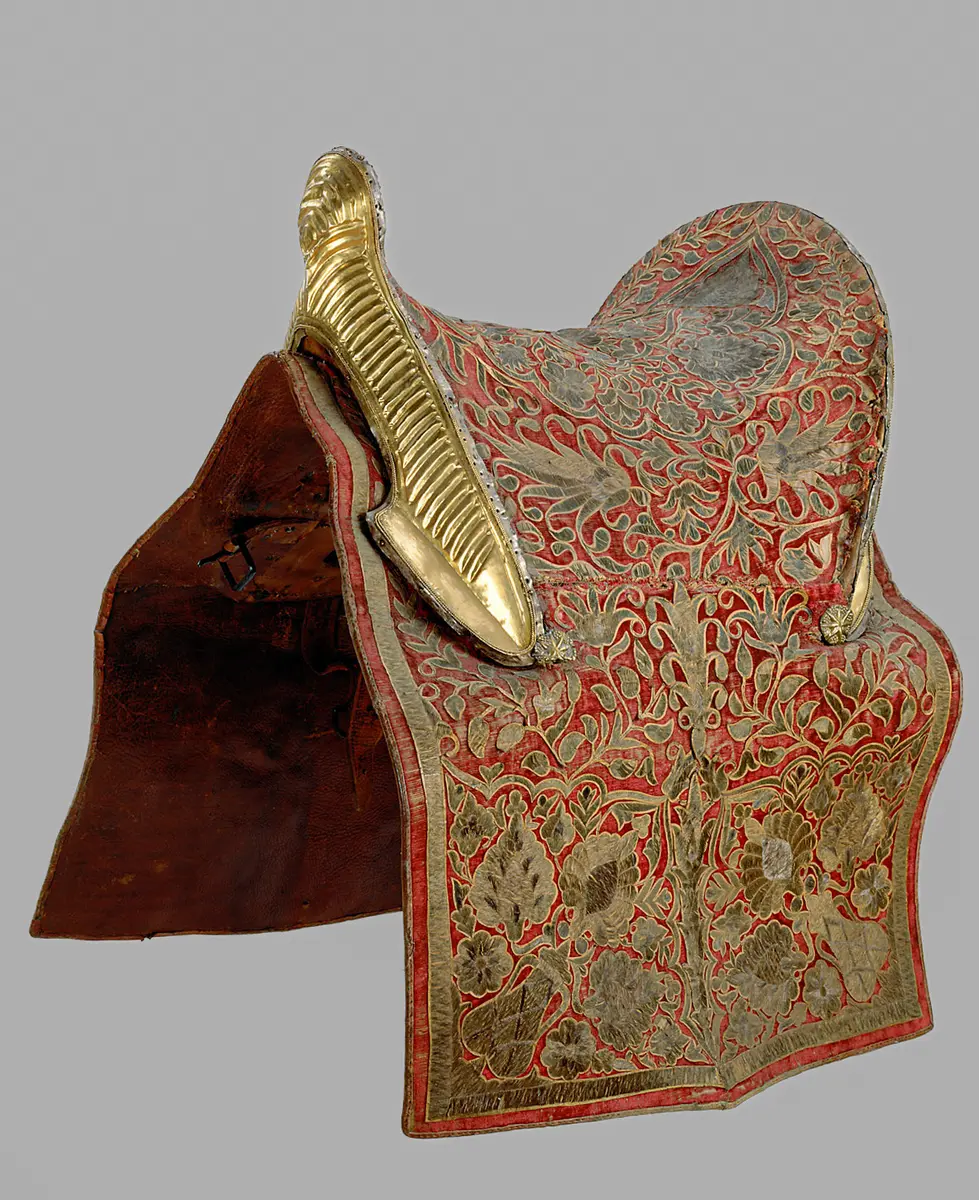
The seat of this saddle is upholstered in cherry-red velvet embroidered with an all-over floral pattern executed in silver and gold thread and leather appliqué. Pommel and cantle are decorated with ornaments made of fluted, partially gilt sheet silver.
In the nineteenth century, the saddle was believed to have belonged to Kara Mustapha, the Ottoman general who led the second siege of Vienna in 1683. Legend has it that the saddle was one of the objects placed at the emperor’s feet after the liberation of the city. There are, however, no archival sources to support this. Much later, in the 1980s, the saddle was attributed to Murad Geray. He was Khan of the Crimean Tartars from 1678 to 1683, and the owner’s mark struck on the back saddle steel was ascribed to him. The Crimean Tartars were Ottoman vassals and fought in the Sultan’s army against the Habsburg Empire, as well as in many other wars. In 1683, Murad Geray led a division of Tartars during the Siege of Vienna.
This owner’s mark, however, is not Murad Geray’s but the tughra of Sultan Mustapha II, who ruled from 1695 to 1703. In 1697, he led a campaign against the Habsburg Empire that ended in a catastrophe: in the decisive Battle of Zenta, fought on 11 September 1697, Prince Eugene of Savoy vanquished the Ottoman army.
This saddle may have entered the imperial collection as part of the spoils brought back from the Battle of Zenta. Among the objects captured by victorious Habsburg troops was the Seal of the Empire that Grand Vizier Elmas Mehmed Pasha had brought with him on this campaign (now in the Heeresgeschichtliches Museum, Vienna).
previously attributed to:
Murad Geray , Khan der Krimtartaren (1627-1696, regierte 1678-1683)
Time:
1695-1703
Object Name
Sattel
Culture
Türkisch (osmanisch)
Material/technology:
Holz. Leder. Lederappliken. Textil: Samt, Seidenfäden, Silberlahn, Goldlahn. Beschläge von Vorder- und Hintersteg, Rosetten: Silberblech, getrieben, teils feuervergoldet. Schnallen: Eisen.
Dimensions:
H 65 cm, B 56 cm, T 46 cm
mit Sattelbock: H 95 cm
Stamp / markings
Stempel mit arabischer Inschrift (sog. Tughra) Sultan Mustafas II. (reg. 1695-1703)
Copyright
Kunsthistorisches Museum, Hofjagd- und Rüstkammer
Invs.
Hofjagd- und Rüstkammer, C 153
Browse more
Similar items you might be interested in
Kaiser Albrecht II. (V.) von Habsburg 1438/1439
Manufacturer: Franz Geissenhof 1806

Ferdinand II. (1564-1595), Erzherzog von Österreich und Landesherr von Tirol 1559/60
Ferdinand II. (1564-1595), Erzherzog von Österreich und Landesherr von Tirol c. 1547 - 1550
Maximilian I. (1477-1519), seit 1493 deutscher König, 1508 Kaiser 15. Jahrhundert (vor 1486?)
Maximilian I. (1477-1519), seit 1493 deutscher König, 1508 Kaiser 1477
Maximilian I. (1477-1519), seit 1493 deutscher König, 1508 Kaiser spätes 15. Jahrhundert
Ladislaus V. Postumus (1453-1457), König von Ungarn und Böhmen um 1455
Otto Heinrich Sohn d. Ruprecht von der Pfalz 1516 (Stirnschild), 1523 (Rossstirn)

Ferdinand II. (1564-1595), Erzherzog von Österreich und Landesherr von Tirol 1556 - 1557