Lederteller, Lederintarsie, Intarsie, Mosaik
2. Viertel 16. Jahrhundert
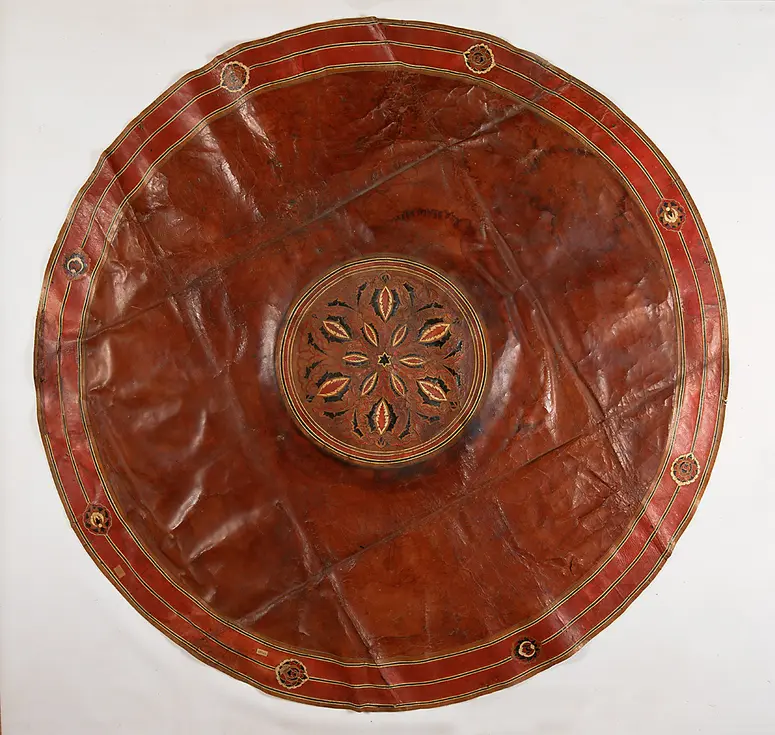
Leather mosaics like the leather sets shown here are extremely rare testimonies of the handicraft skills in the art and culture of the Ottomans. They were used to put food on, like a table on the floor of a tent. The smaller leather plates are decorated with stylised flowers and inscriptions. The predominant motif, the tulip, (lalé), was seen as t h e Turkish flower in the second half of the 16th century.
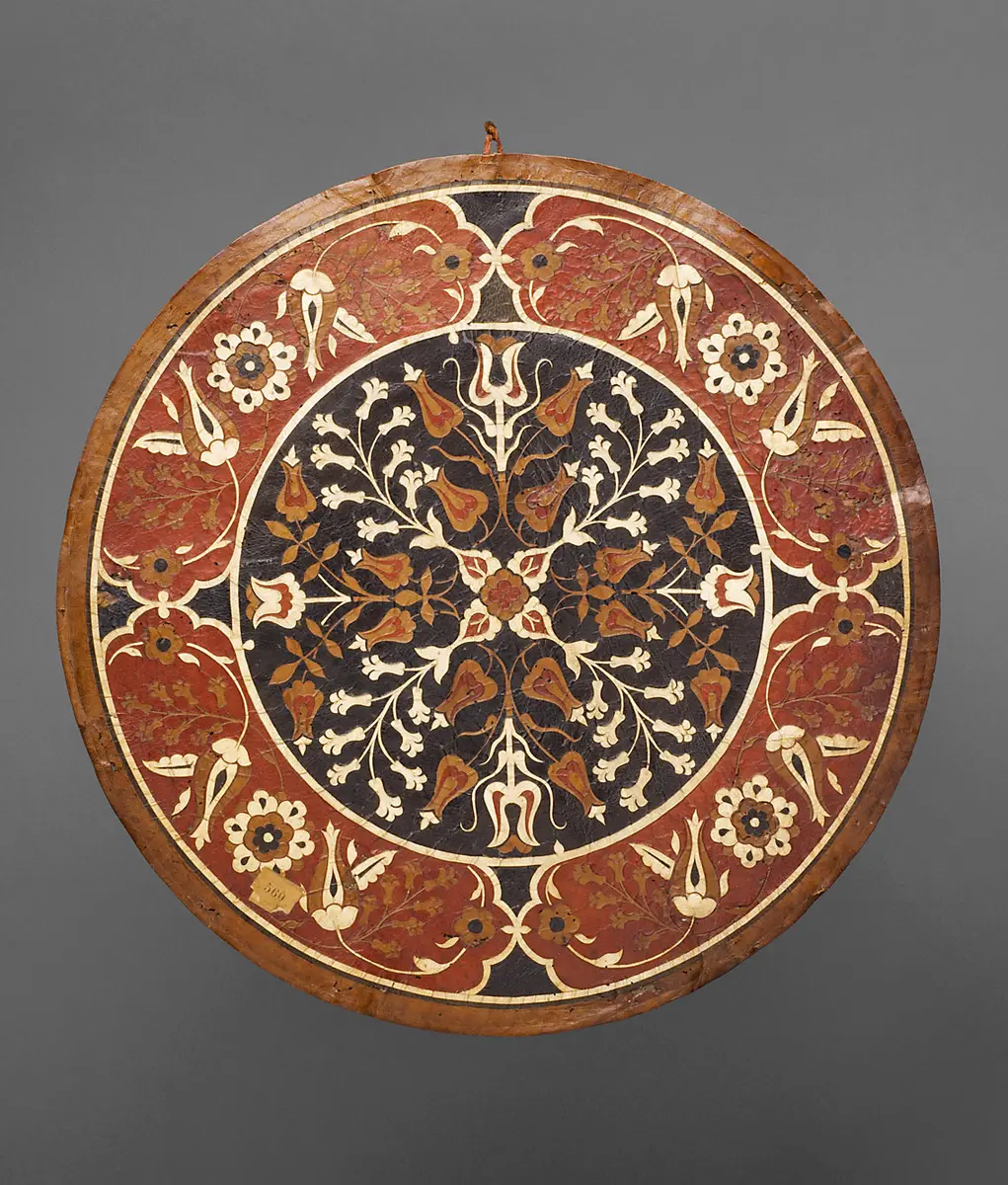
Leather mosaics like the leather sets shown here are extremely rare testimonies of the handicraft skills in the art and culture of the Ottomans. They were used to put food on, like a table on the floor of a tent. The smaller leather plates are decorated with stylised flowers and inscriptions. The predominant motif, the tulip, (lalé), was seen as t h e Turkish flower in the second half of the 16th century.
Time:
2. Viertel 16. Jahrhundert
Object Name
Lederteller, Lederintarsie
Culture
Osmanisch
Material/technology:
Leder, Alaun gegerbtes Ziegenleder, gefärbt (schwarz, braun, weiß, rot), Klebemittel: Stärke, Lederintarsie auf Untergrund geklebt
Dimensions:
Dm. 50,8 cm
Copyright
Schloss Ambras Innsbruck
Invs.
Schloss Ambras Innsbruck, PA 560
Browse more
Similar items you might be interested in
Court service uniform of an officer of the Trabant Life Guards August Loitzl 1915
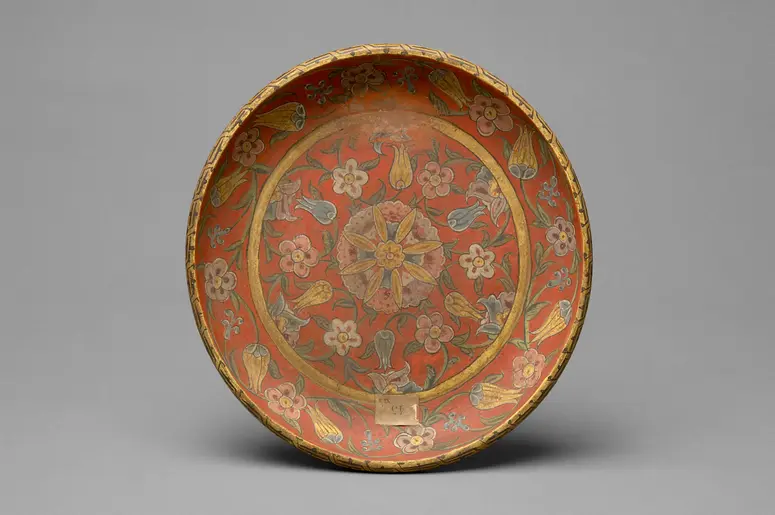
Schüssel, Holzteller, Teller 2. Hälfte 16. Jahrhundert

Lederteller, Mosaik, Ledermosaik 1. Hälfte 16. Jahrhundert
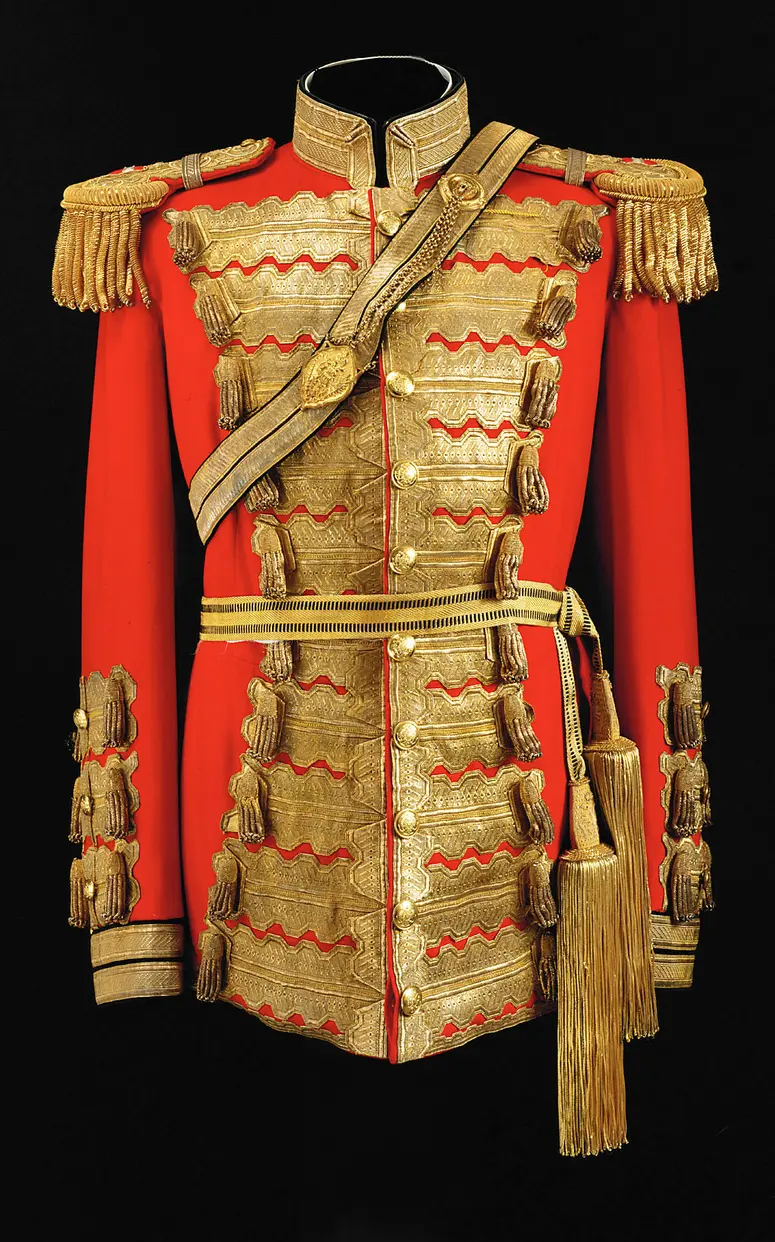
Court service uniform of an officer of the First Arcièren Life Guards around 1910
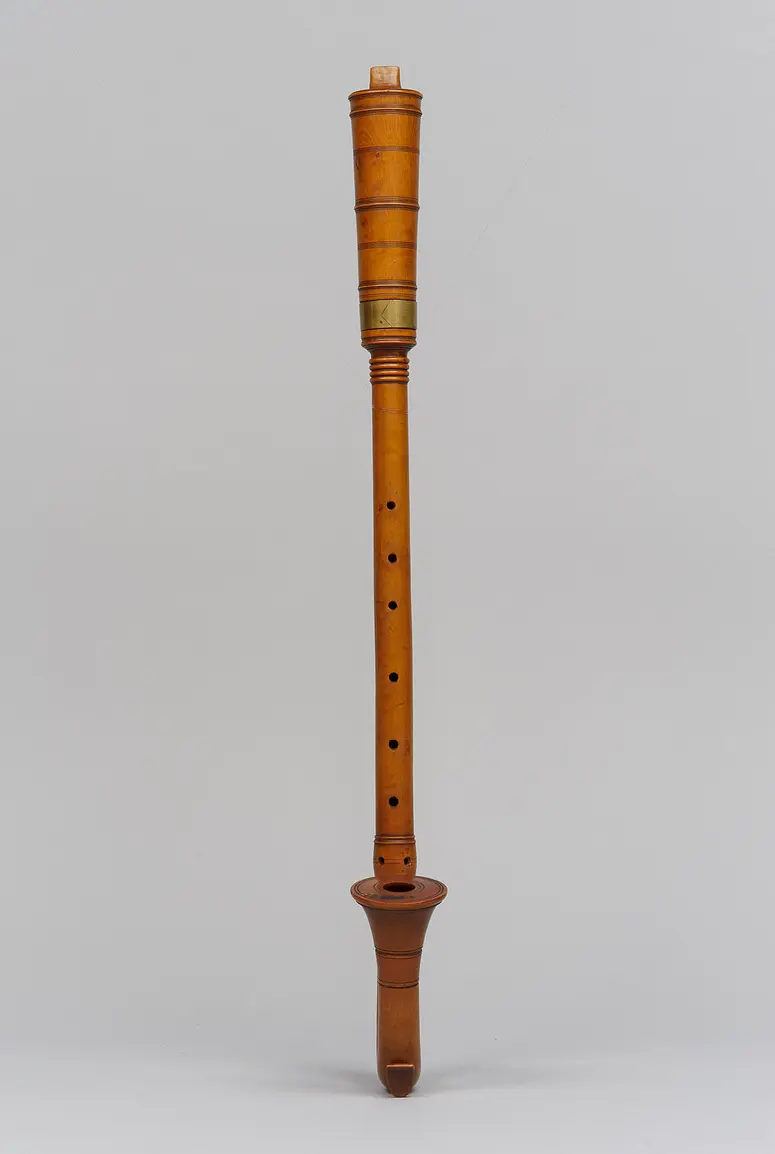
Manufacturer: I. Milla 16th century
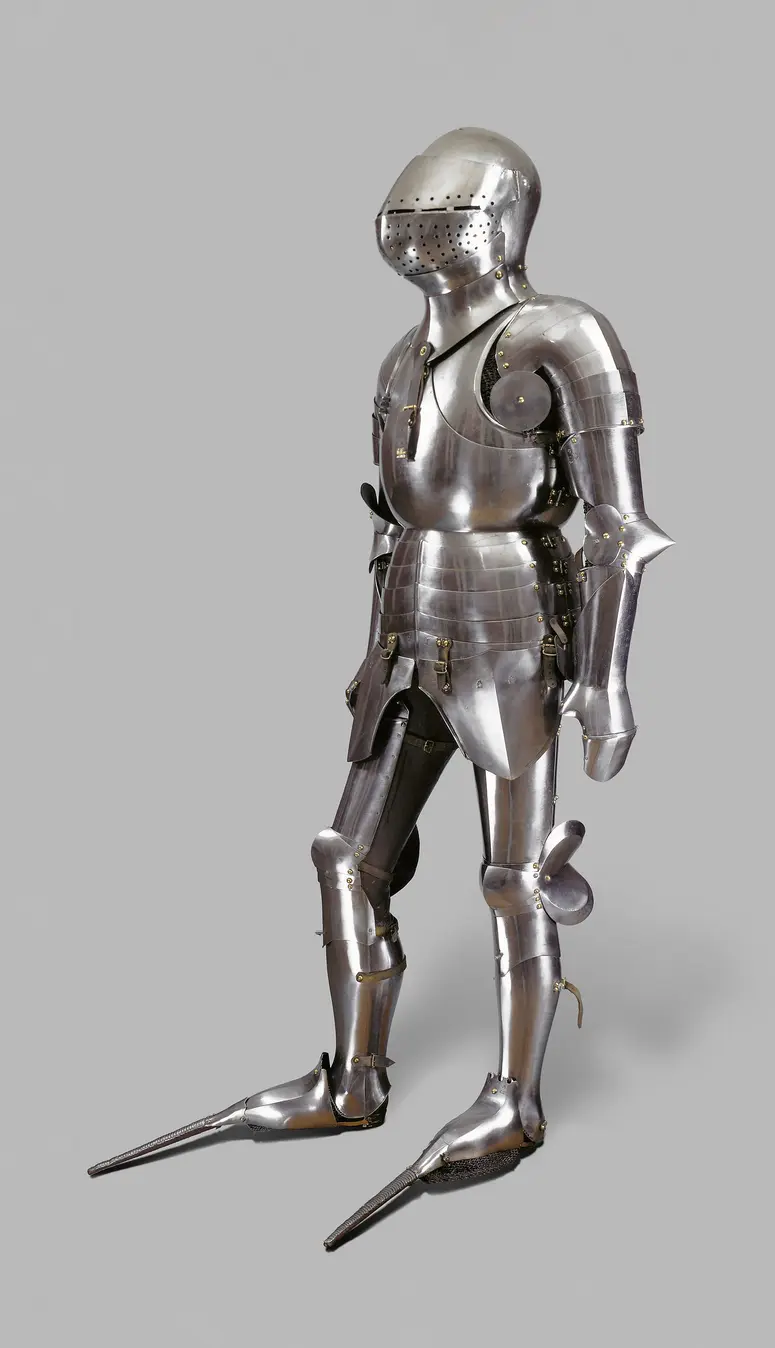
Kurfürst Friedrich I. Sohn des Ludwig III. von der Pfalz around 1450. Gauntlets: around 1475/1485.
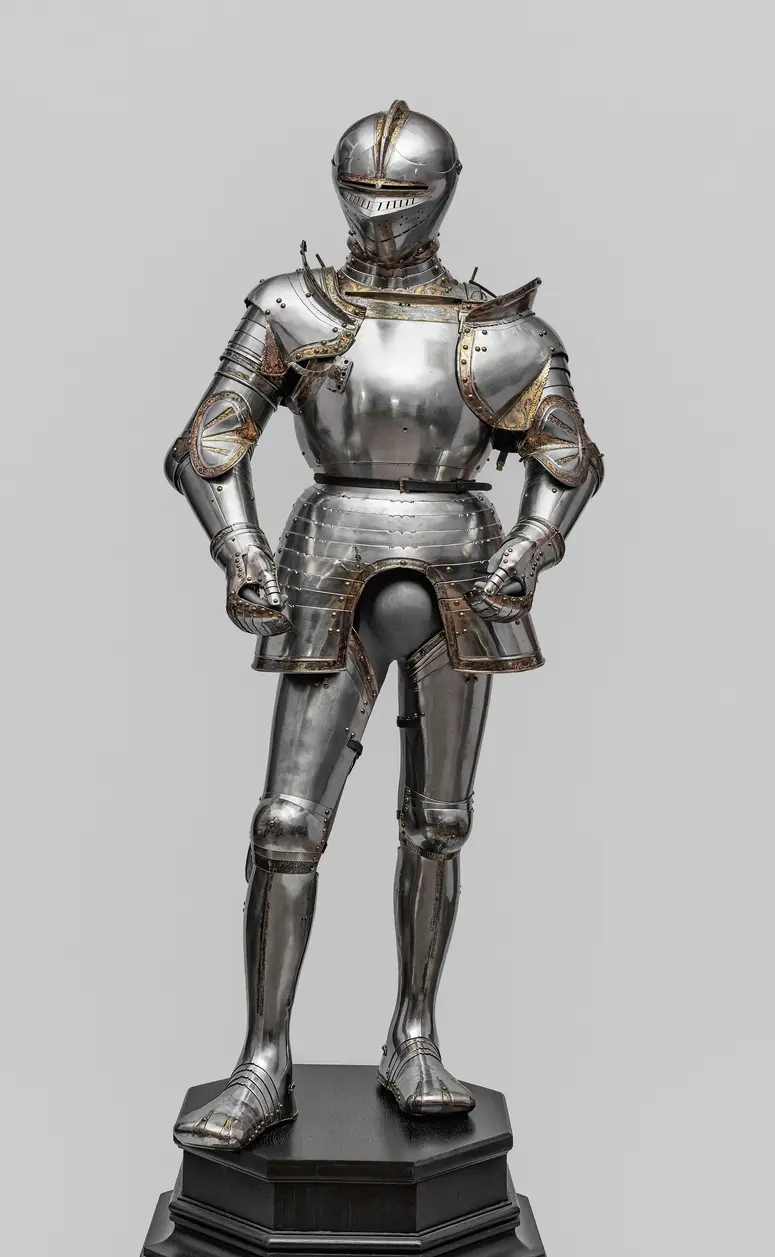
Graf Andreas Sohn d. Eberhardt von Sonnenberg-Friedberg um 1505-1510
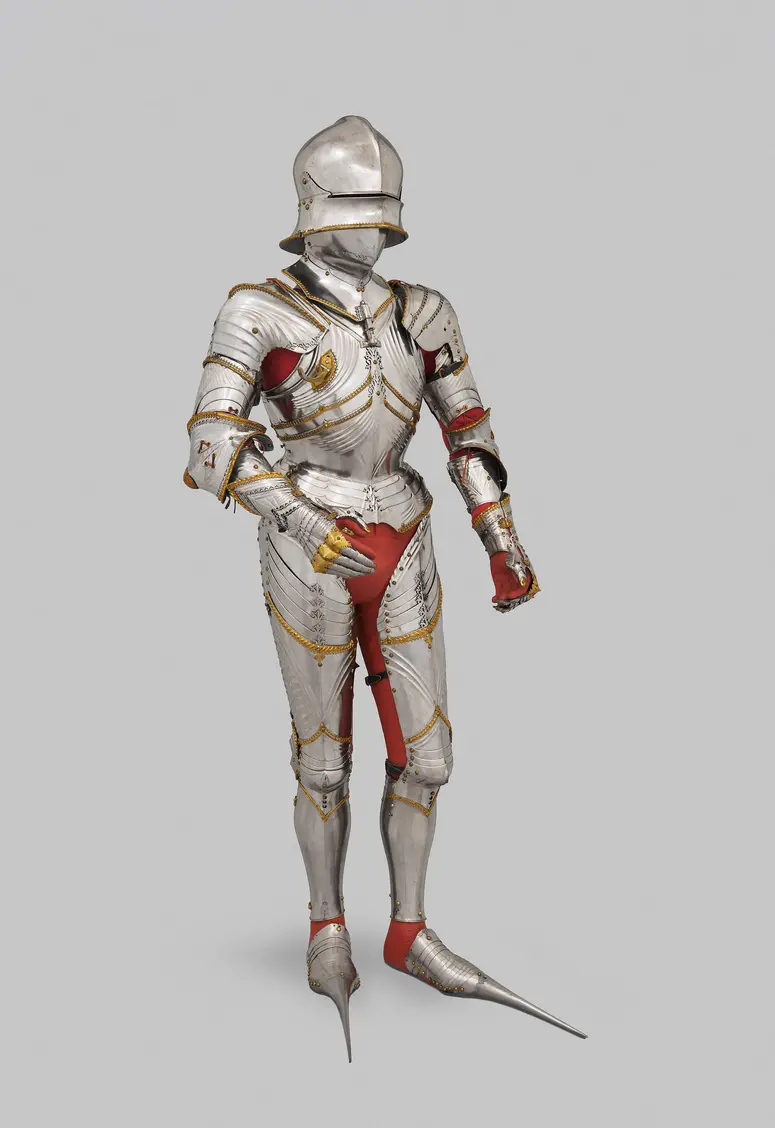
Maximilian I. (1477-1519), seit 1493 deutscher König, 1508 Kaiser um 1485

Franz Joseph I. (1848-1916), Kaiser von Österreich, König von Böhmen und Ungarn kurz nach 1874
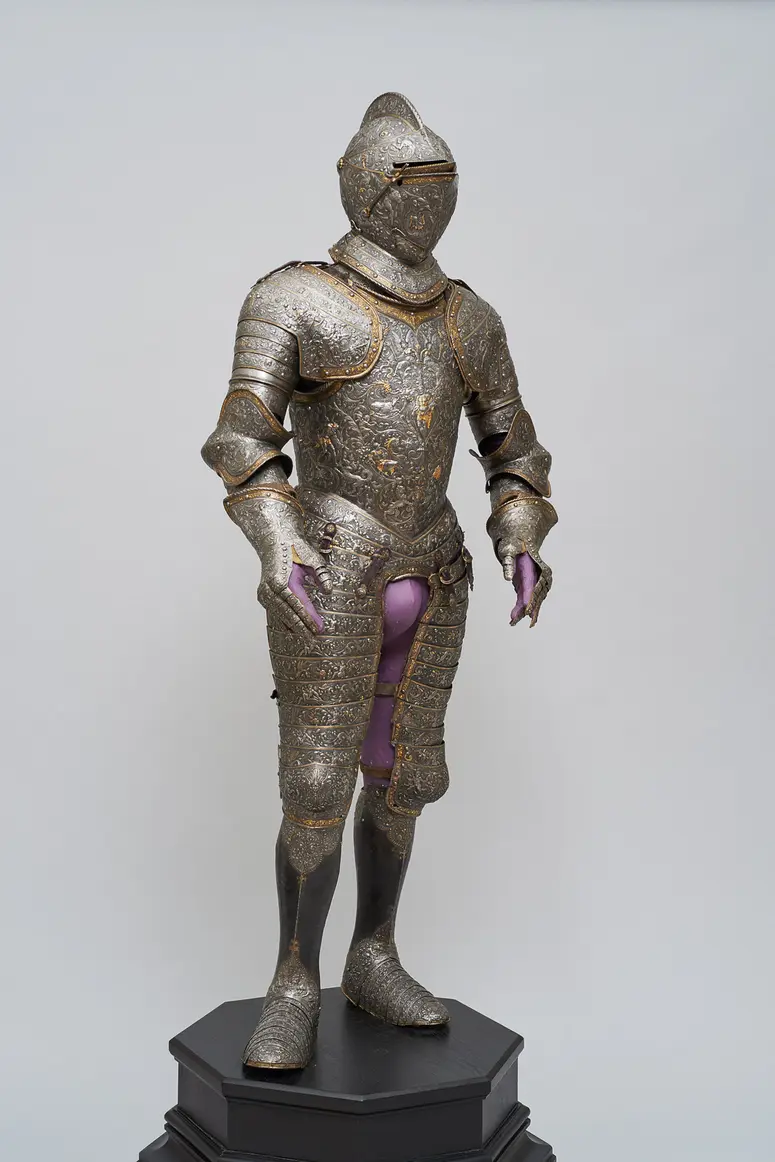
Maximilian II. (1564-1576), Kaiser um 1555-1560
Schmuckkästchen, Kabinettschrank, Pietra-Dura-Kästchen Mitte 17. Jahrhundert

Rudolf II. (1576-1612), Kaiser, römischer König ab 1575, König von Ungarn ab 1572, von Böhmen se vor 1581