Reiterharnisch (Küriss) für Feld und Turnier
um 1505-1510 | Graf Andreas Sohn d. Eberhardt von Sonnenberg-Friedberg
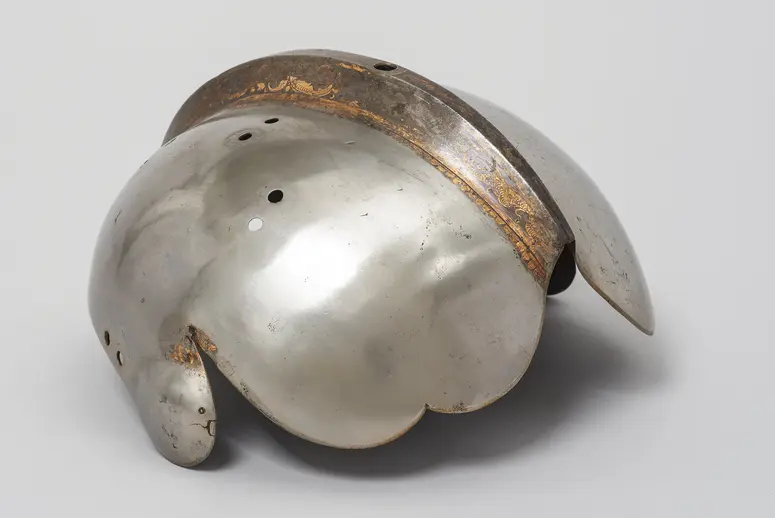
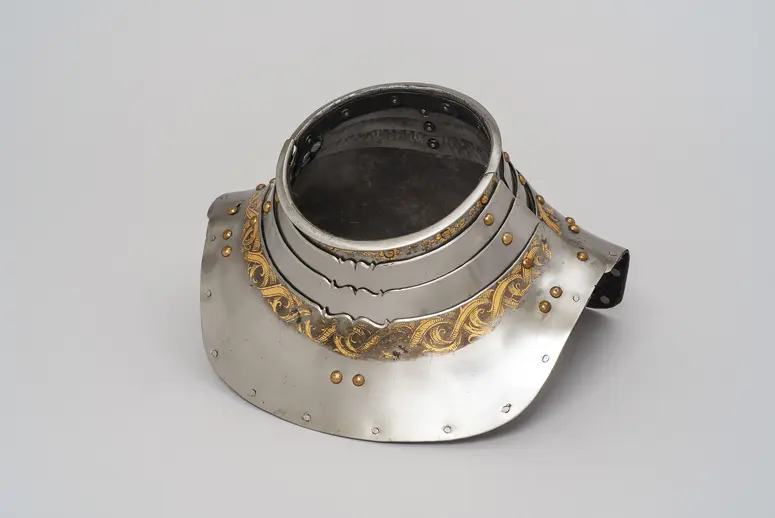
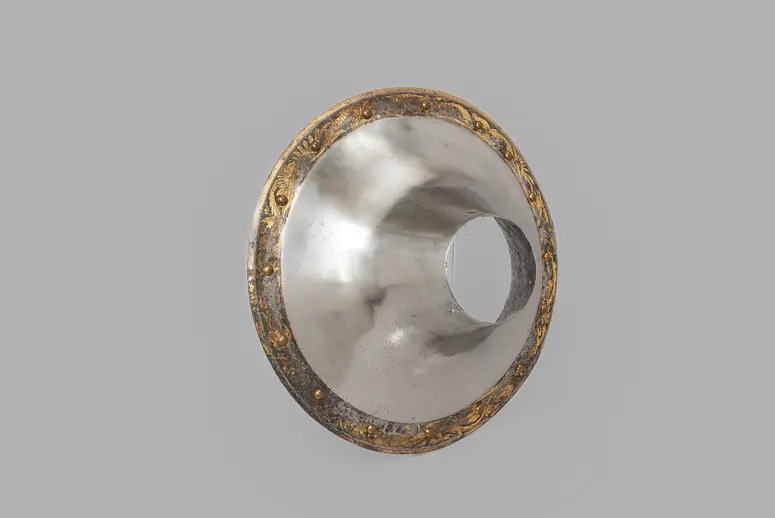
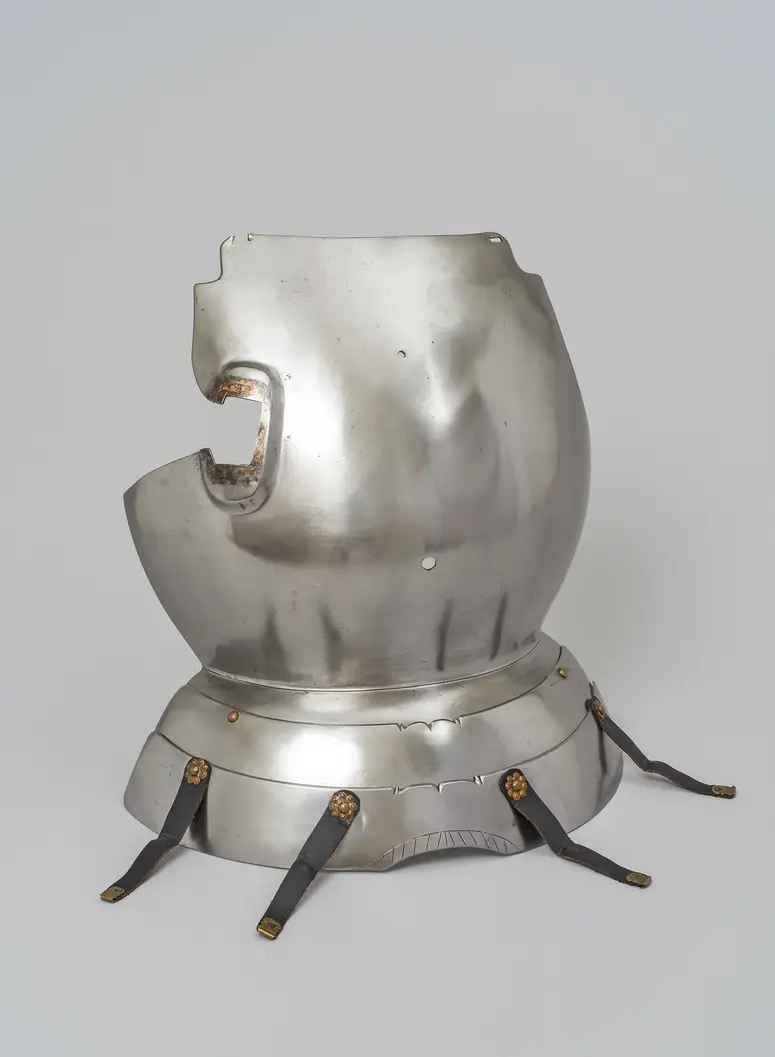
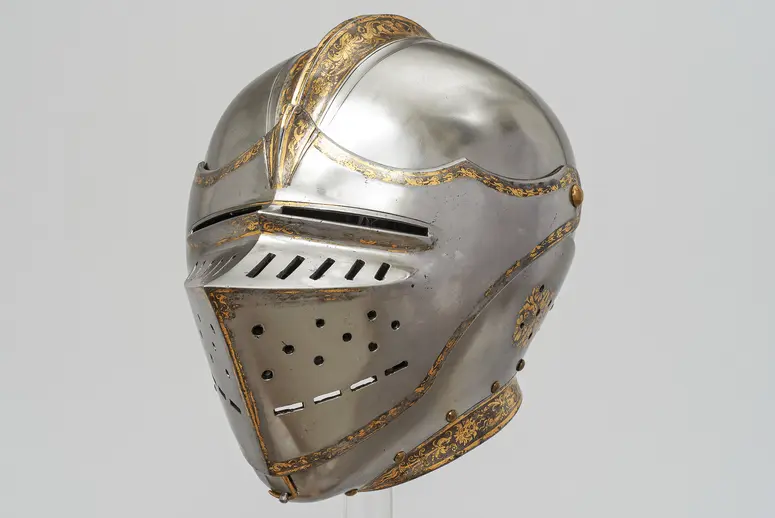
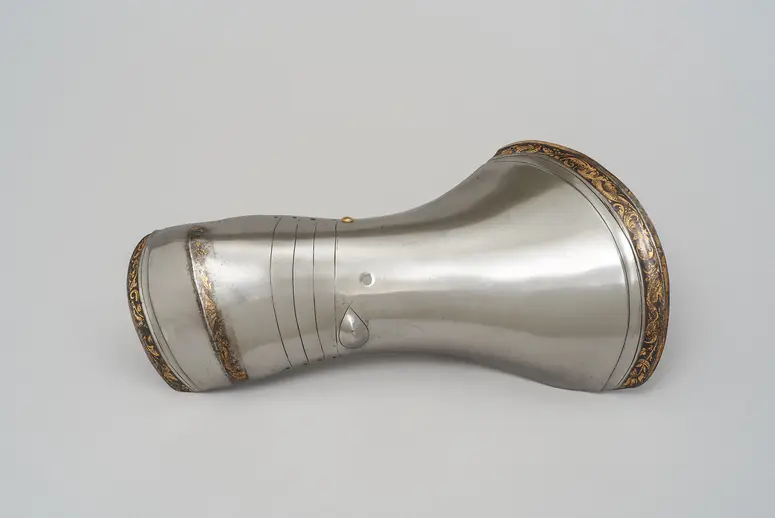
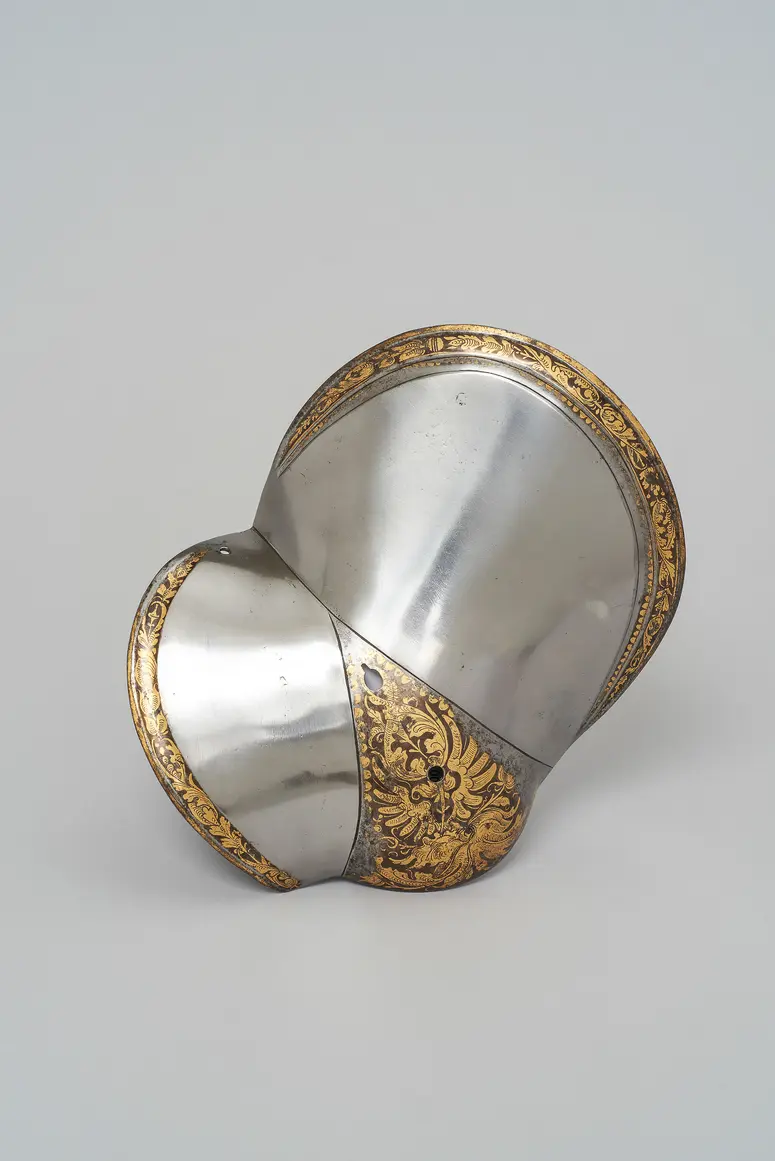
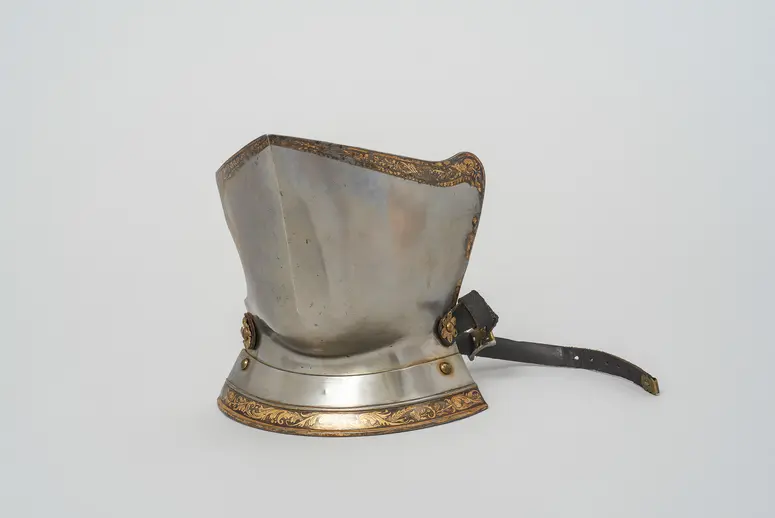
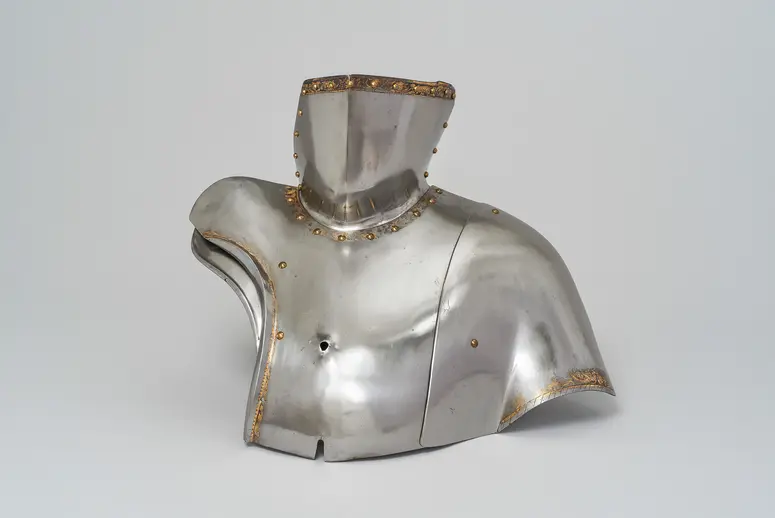
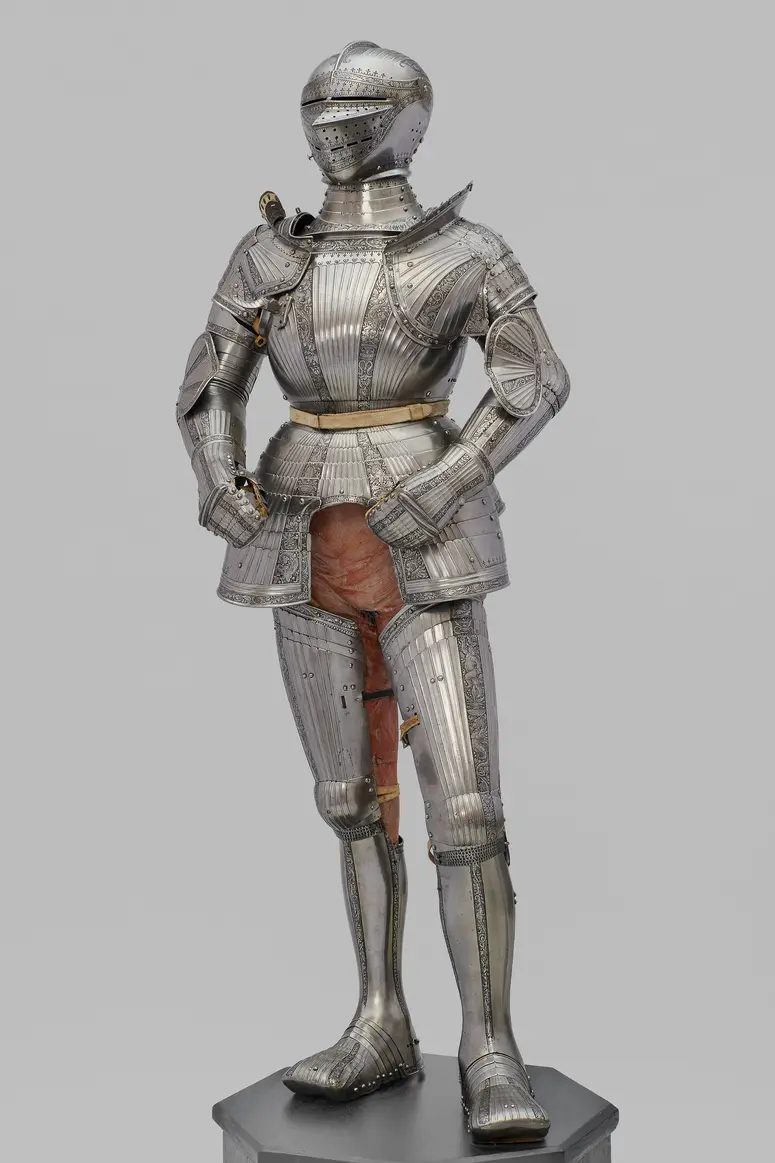
This armour for field and tournament is an early example of a Renaissance garniture. In addition to the armour, the garniture includes the exchange pieces needed for the melee: a second helmet, a collar, a bevor, a large reinforcing piece for breastplate, chin and left pouldron, reinforcing pieces for brow, chest, left elbow, and left hand, and a vamplate. Stylistically, the armour is informed by the Italian Renaissance, whose formal language was beginning to be adopted by armourers’ workshops north of the Alps soon after 1500. All pieces comprising the armour are rounded and smooth – unlike the pointed, geometrical details characteristic of late medieval armour (see, for instance, the one made by Kolman’s father Lorenz for Maximilian I around 1484; inv. A 62).
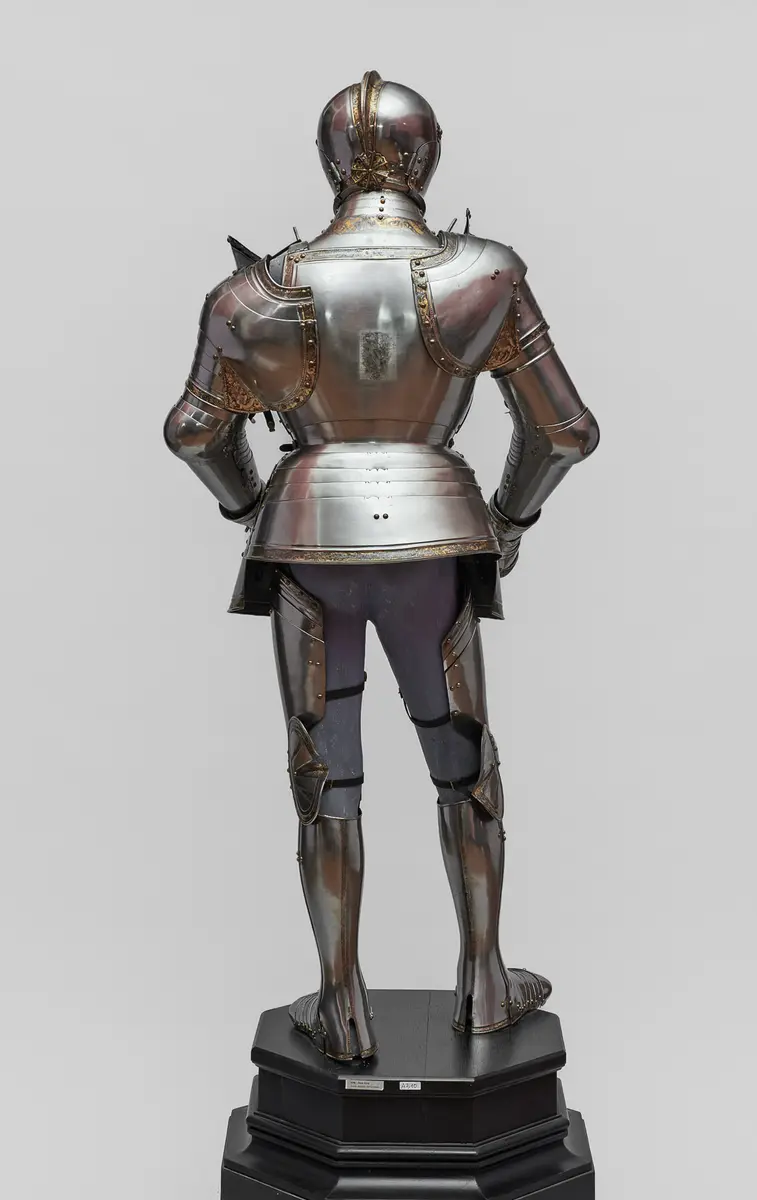
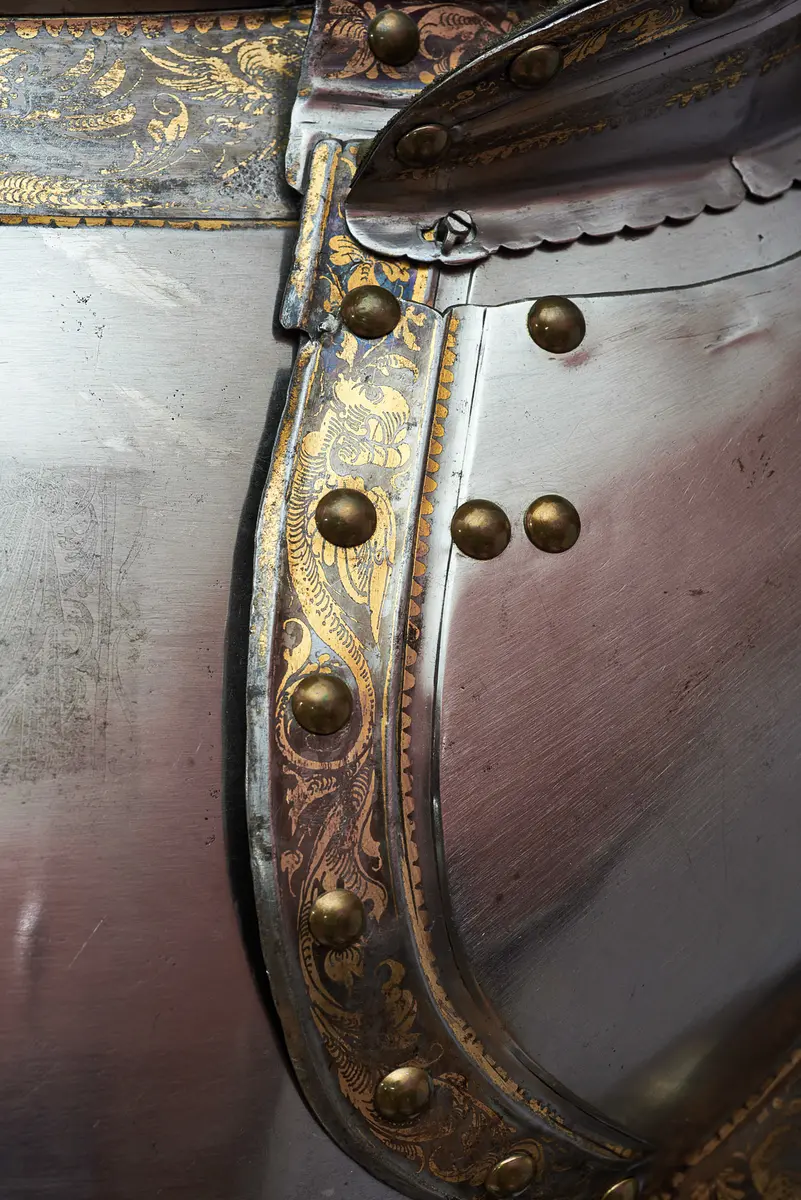
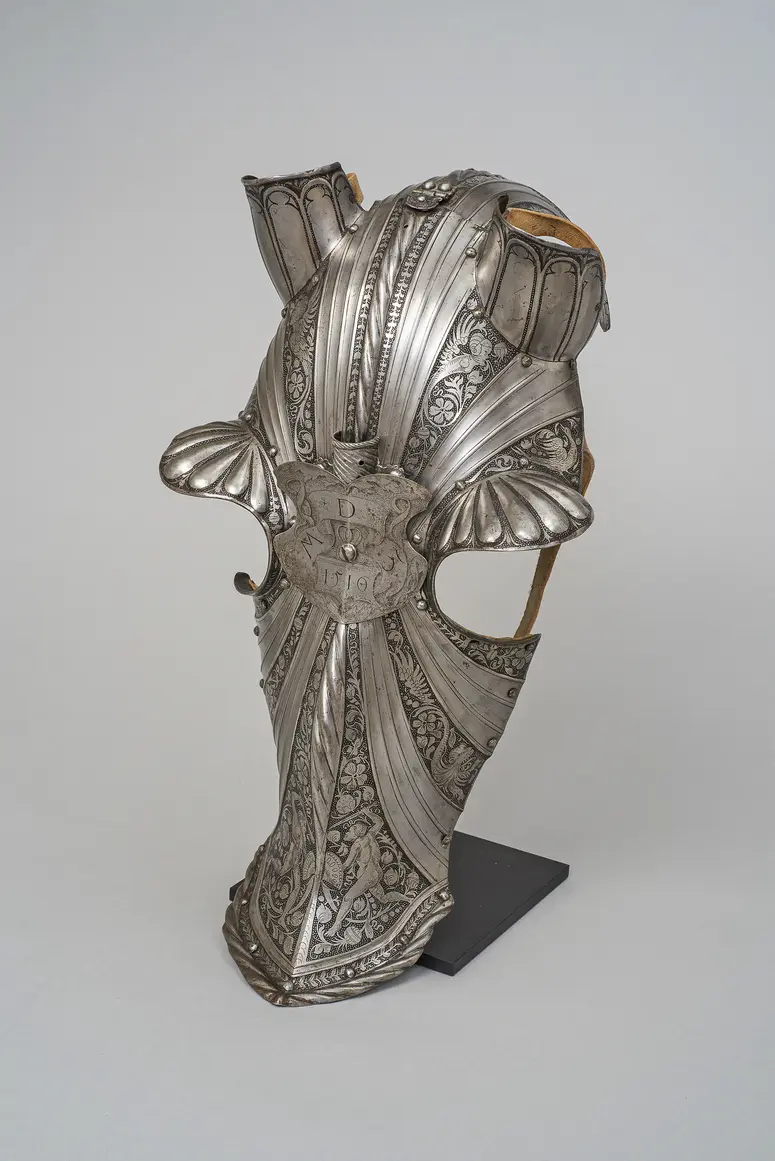
With its cornucopias, putti, fruit garlands, and mermaids inspired by Classical antiquity, the armour’s ornamentation, too, looks to the Renaissance. All these fire-gilt decorations are executed on a blued ground. The breastplate originally featured depictions of Saints Christopher and Barbara; today, one can only make out parts of the (much abraded) Barbara. The backplate shows traces of a Virgin Mary and Child with the inscription Ave Maria.
Andreas, Count of Sonnenberg was a scion of the seneschals of Waldburg; he was a general who served, among others, Emperors Frederick III and Maximilian I. Today, he is best remembered for having been assassinated by Felix of Werdenberg near the Swabian town of Sigmaringen in 1511. Werdenberg and Sonnenberg had long been enemies. At the wedding of Ulrich, Duke of Württemberg and Sabina of Bavaria, celebrated in 1511, the tall Sonnenberg had publicly humiliated Werdenberg, who was escorting the bride into the church, by calling out and making fun of the latter’s height (Werdenberg, streck Dich! – ‘Werdenberg, stretch yourself!’). Werdenberg avenged this ignominy soon afterwards by ambushing and killing Sonnenberg.
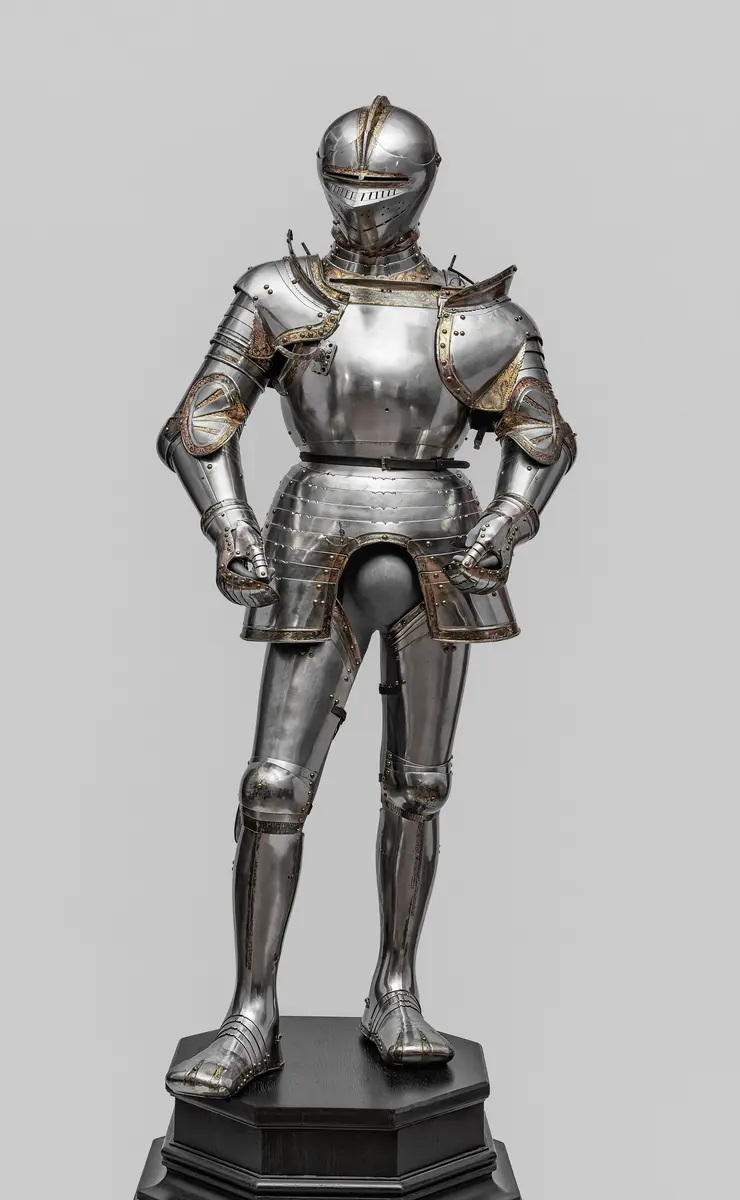
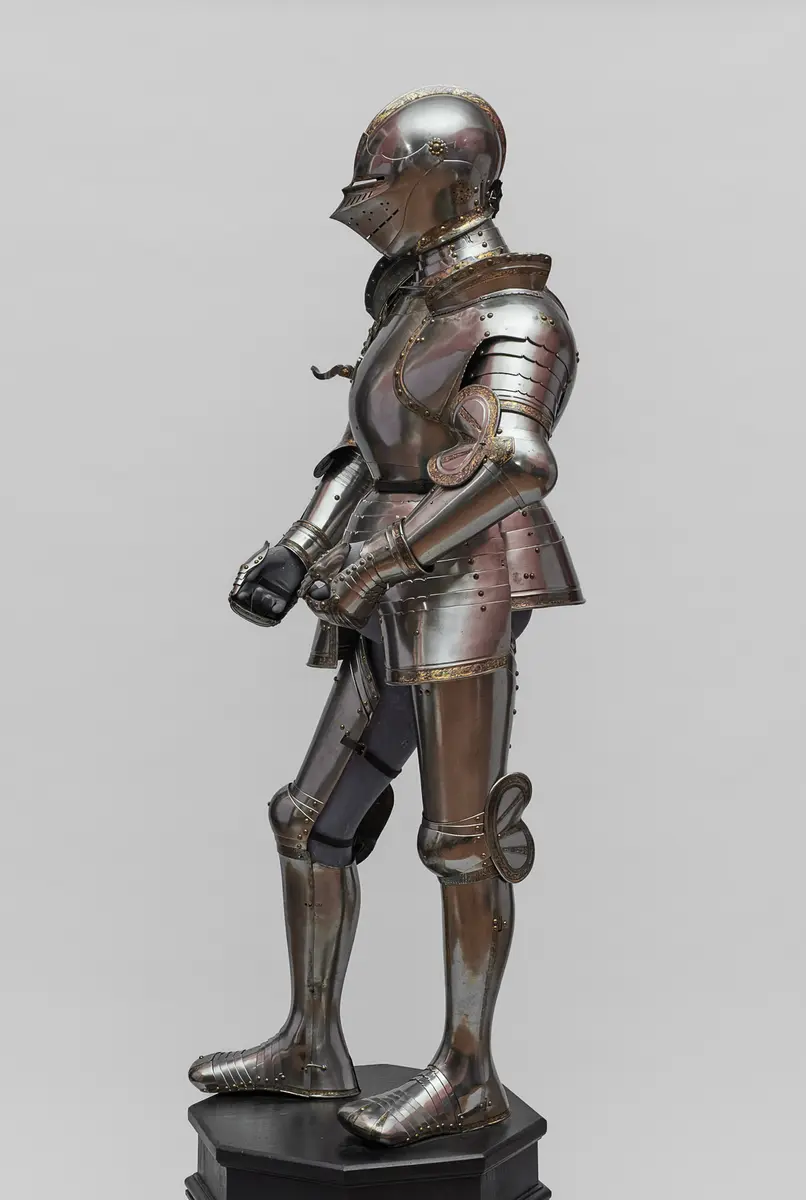
This armour for field and tournament is an early example of a Renaissance garniture. In addition to the armour, the garniture includes the exchange pieces needed for the melee: a second helmet, a collar, a bevor, a large reinforcing piece for breastplate, chin and left pouldron, reinforcing pieces for brow, chest, left elbow, and left hand, and a vamplate. Stylistically, the armour is informed by the Italian Renaissance, whose formal language was beginning to be adopted by armourers’ workshops north of the Alps soon after 1500. All pieces comprising the armour are rounded and smooth – unlike the pointed, geometrical details characteristic of late medieval armour (see, for instance, the one made by Kolman’s father Lorenz for Maximilian I around 1484; inv. A 62).
With its cornucopias, putti, fruit garlands, and mermaids inspired by Classical antiquity, the armour’s ornamentation, too, looks to the Renaissance. All these fire-gilt decorations are executed on a blued ground. The breastplate originally featured depictions of Saints Christopher and Barbara; today, one can only make out parts of the (much abraded) Barbara. The backplate shows traces of a Virgin Mary and Child with the inscription Ave Maria.
Andreas, Count of Sonnenberg was a scion of the seneschals of Waldburg; he was a general who served, among others, Emperors Frederick III and Maximilian I. Today, he is best remembered for having been assassinated by Felix of Werdenberg near the Swabian town of Sigmaringen in 1511. Werdenberg and Sonnenberg had long been enemies. At the wedding of Ulrich, Duke of Württemberg and Sabina of Bavaria, celebrated in 1511, the tall Sonnenberg had publicly humiliated Werdenberg, who was escorting the bride into the church, by calling out and making fun of the latter’s height (Werdenberg, streck Dich! – ‘Werdenberg, stretch yourself!’). Werdenberg avenged this ignominy soon afterwards by ambushing and killing Sonnenberg.
Owner:
Graf Andreas Sohn d. Eberhardt von Sonnenberg-Friedberg (1472 - 1511) DNB
Artist:
Kolman Helmschmid , (Plattner) (1471 - 1532 tätig in Augsburg) DNB
Time:
um 1505-1510
Object Name
Reiterharnisch (Küriss) für Feld und Turnier
Culture
Augsburg
Material/technology:
Eisen, geschmiedet, getrieben. Dekor: teils gebläut, teils feuervergoldet
(Goldschmelz). Leder. Nietkappen, Riemenzungen, Schnallen: Messing.
Dimensions:
H (inkl. Sockel) 212 cm x B 80 cm x T 60 cm
H (exkl. Sockel) 180 cm
Höhe Sockel 32 cm
Gesamtgewicht exkl. Figurine, exkl. Sockel: 30,86 Kilogramm
Inscribed
auf dem Rücken: "Ave Maria"
Stamp / markings
Stechhelm mit Stern als Helmzier (Kolman Helmschmid) und Augsburger Beschau (sog. Stadtpyr)
Copyright
Kunsthistorisches Museum, Hofjagd- und Rüstkammer
Invs.
Hofjagd- und Rüstkammer, A 310
Browse more
Similar items you might be interested in
Graf Andreas Sohn d. Eberhardt von Sonnenberg-Friedberg um 1505-1510
Graf Andreas Sohn d. Eberhardt von Sonnenberg-Friedberg um 1505-1510
Graf Andreas Sohn d. Eberhardt von Sonnenberg-Friedberg um 1505-1510
Graf Andreas Sohn d. Eberhardt von Sonnenberg-Friedberg um 1505-1510
Graf Andreas Sohn d. Eberhardt von Sonnenberg-Friedberg um 1505-1510
Graf Andreas Sohn d. Eberhardt von Sonnenberg-Friedberg um 1505-1510
Graf Andreas Sohn d. Eberhardt von Sonnenberg-Friedberg um 1505-1510
Otto Heinrich Sohn d. Ruprecht von der Pfalz 1516 (Stirnschild), 1523 (Rossstirn)
Georg von (der Ältere) Frundsberg um 1525
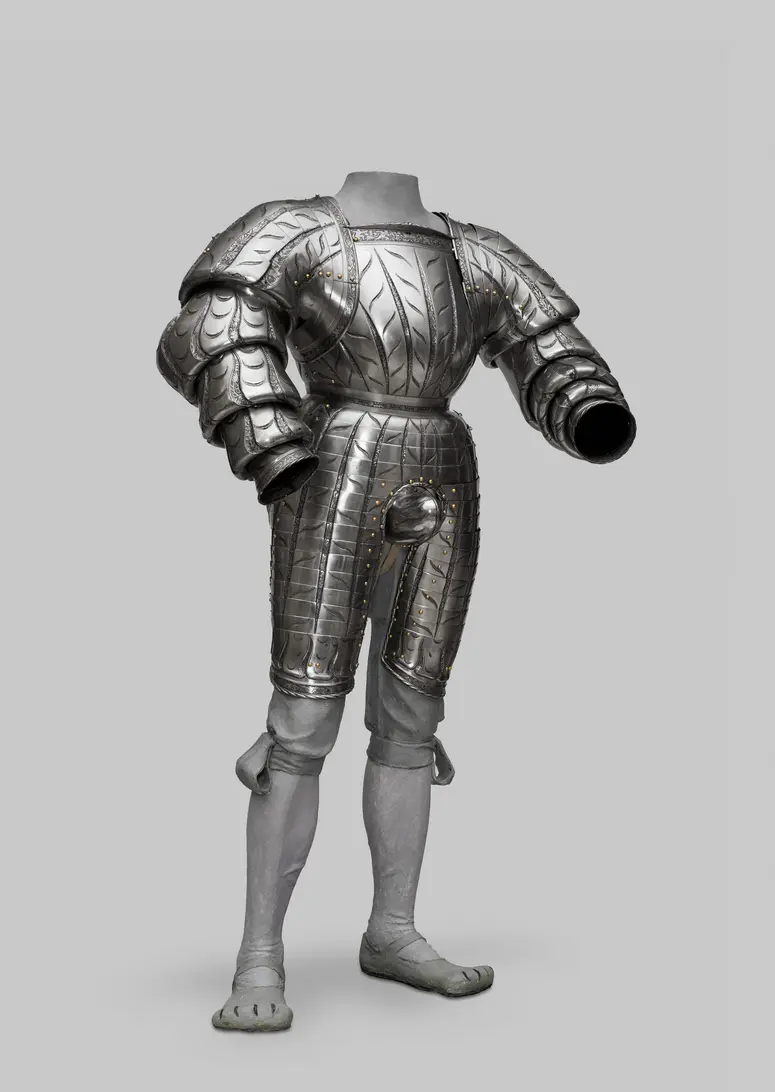
Reichsfreiherr Wilhelm Sohn d. Caspar von Rogendorf 1523
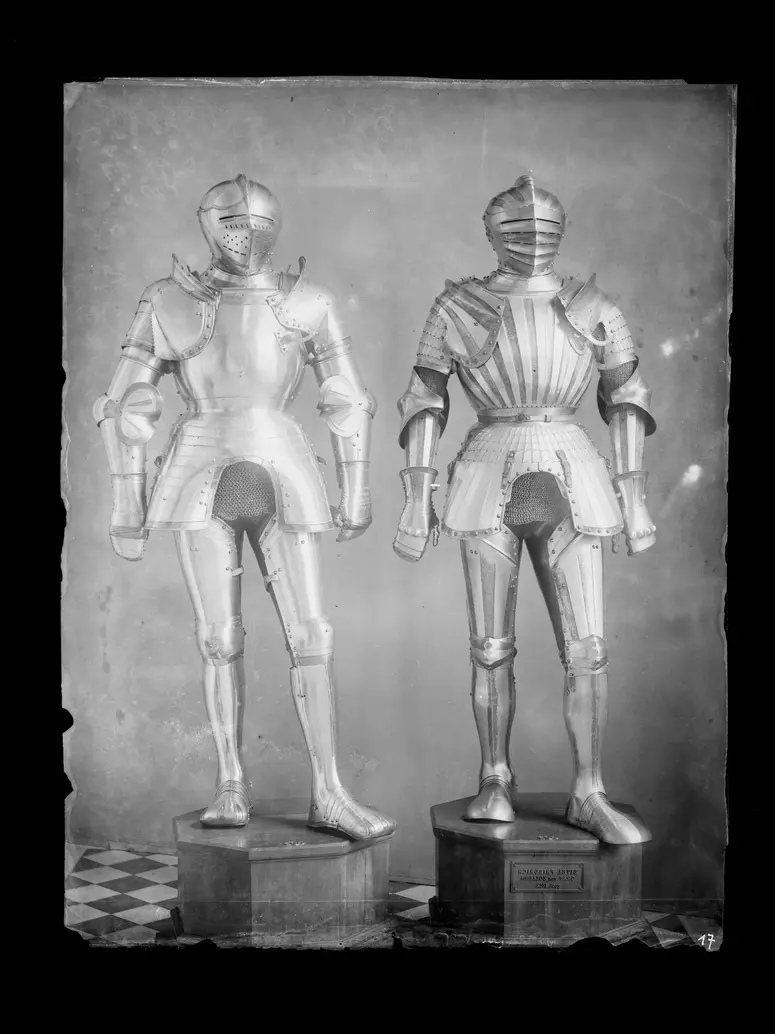
Küriss für Feld und Turnier; Reiterharnisch (Küriss) für Feld und Turnier J. Löwy, K. und K. Hof-Photograph, Kunst- und Verlagsanstalt (Wien) 1892
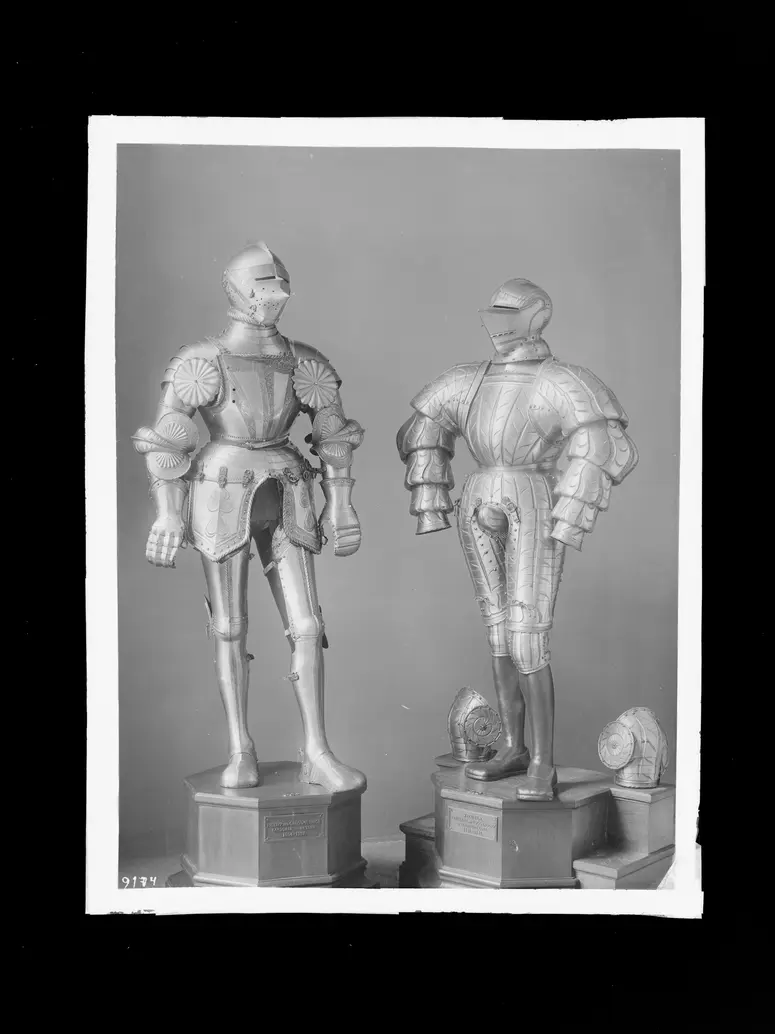
Ein Paar geschobene Achseln mit Schwebescheiben; Küriß (Reiterharnisch); Landsknechts-Kostümharnisch J. Löwy, K. und K. Hof-Photograph, Kunst- und Verlagsanstalt (Wien) 1892
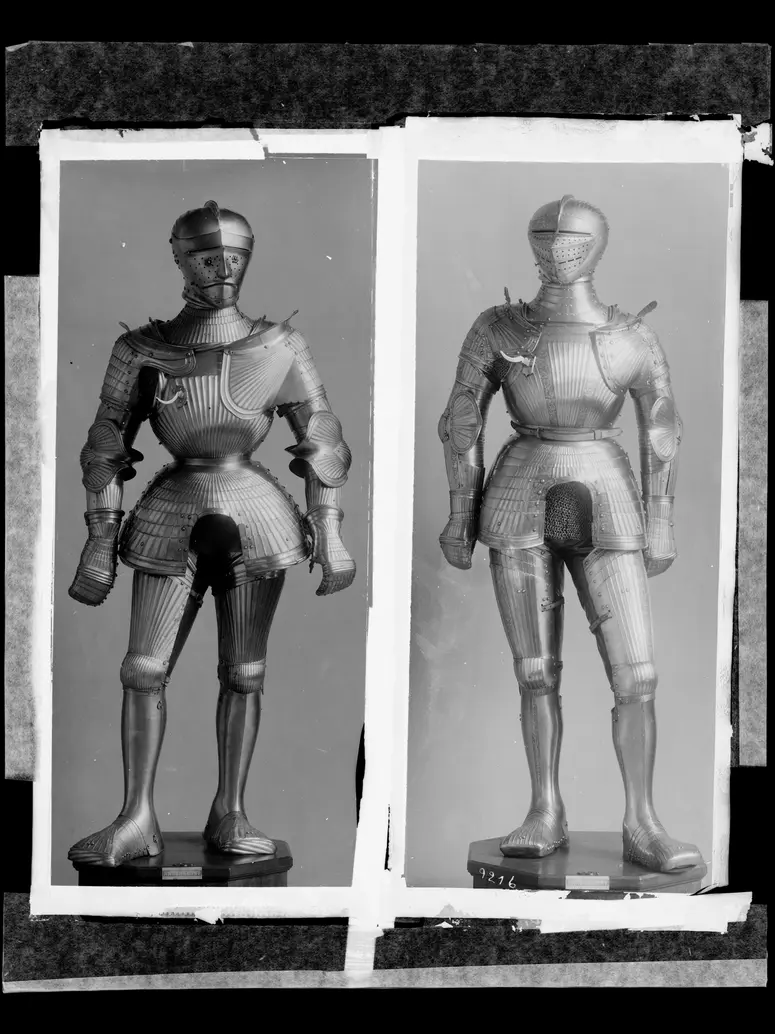
Riefelküriss für Feld und Turnier; Riefelküriss J. Löwy, K. und K. Hof-Photograph, Kunst- und Verlagsanstalt (Wien) 1892
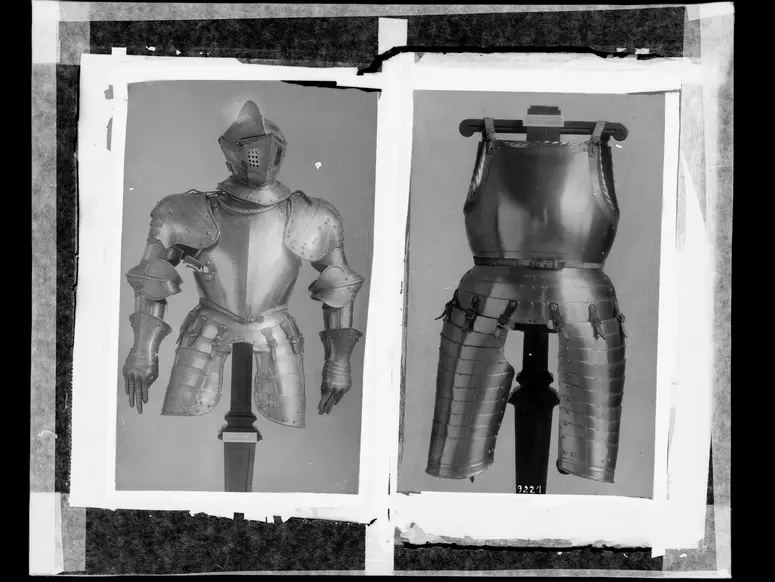
Halbharnisch; Rest eines Feldküriss J. Löwy, K. und K. Hof-Photograph, Kunst- und Verlagsanstalt (Wien) 1892
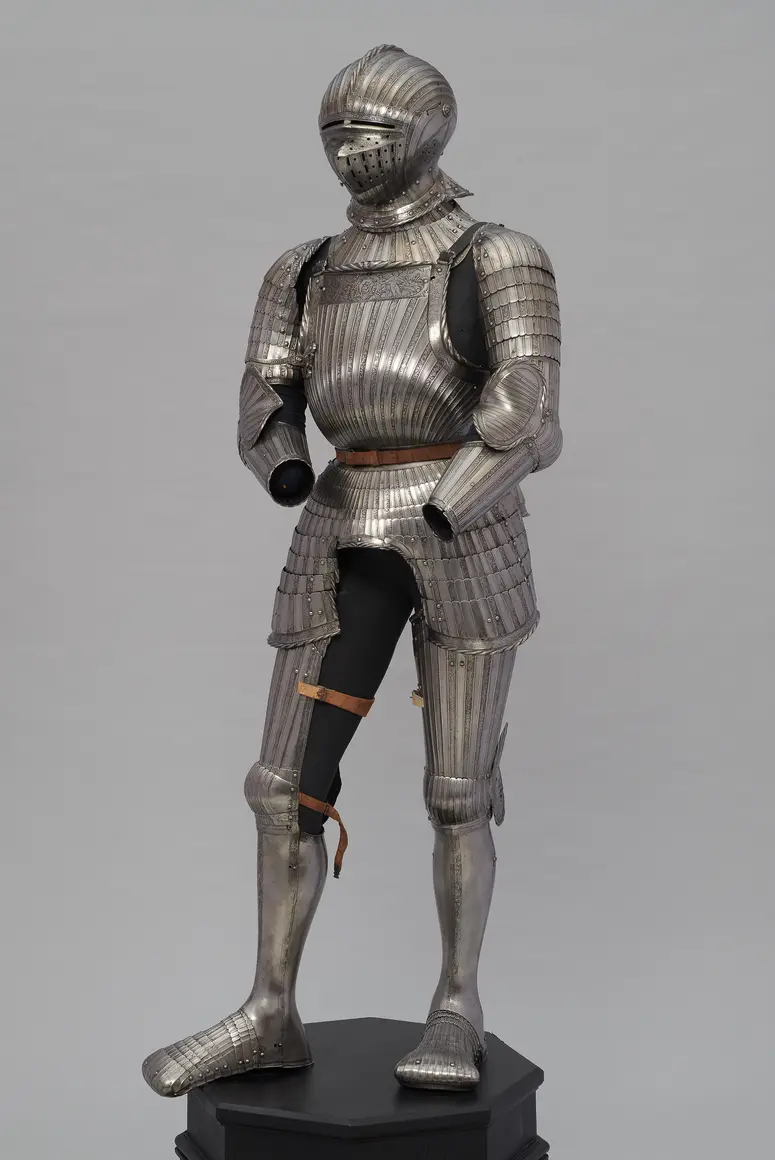
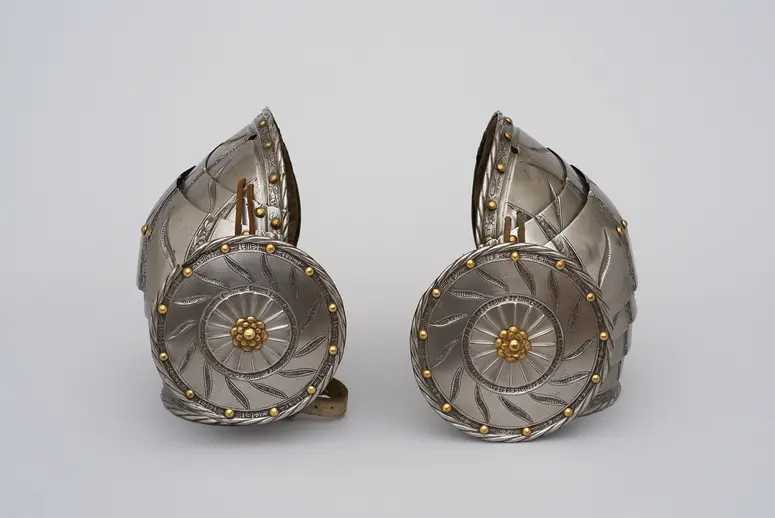
Reichsfreiherr Wilhelm Sohn d. Caspar von Rogendorf 1523
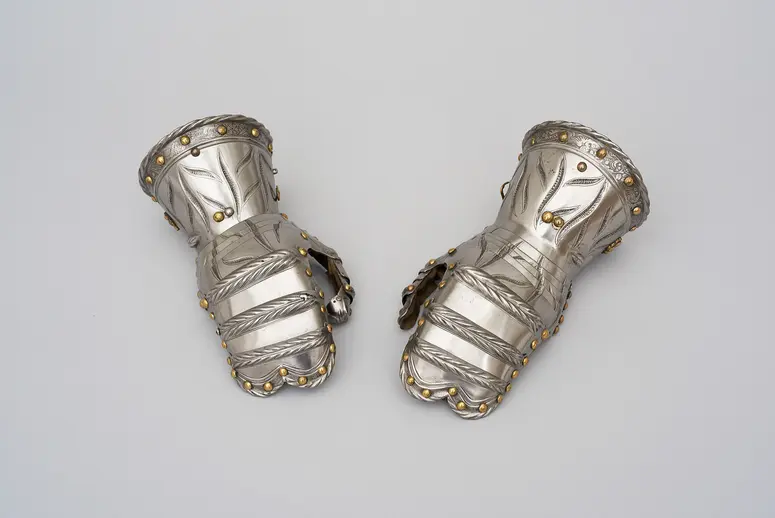
Reichsfreiherr Wilhelm Sohn d. Caspar von Rogendorf 1523