Schmuckkästchen, Kabinettschrank, Pietra-Dura-Kästchen
Mitte 17. Jahrhundert
The front of the box with ten drawers is decorated with pietra-dure inlay work. Pietre-dure (Italian for“hard stone”) is a fl at mosaic made of semi-precious stones which have been cut into small plates. This technique for making ornamental and fl oral mosaics from semi-precious stones goes back to the Renaissance workshop of the Grand Duke of Tuscany in Florence and therefore these mosaics are also called Florentine mosaics. Its simple design and the use of nut wood suggest that this box was most likely manufactured in the Alpine region. The pietre-dure inlay work on the panels features carnations, lemon, apple and pear tree branches with birds. The inlays were produced using templates which were applied back to front and then front-to-back.
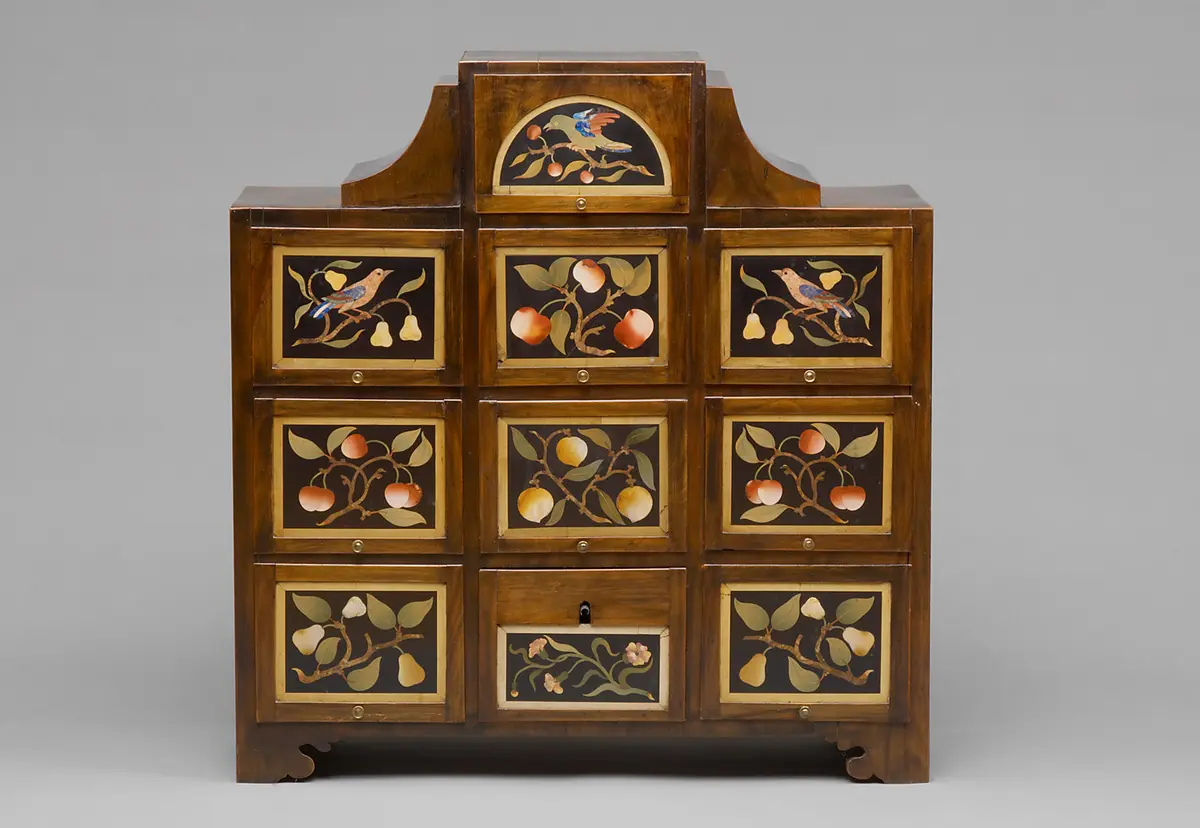
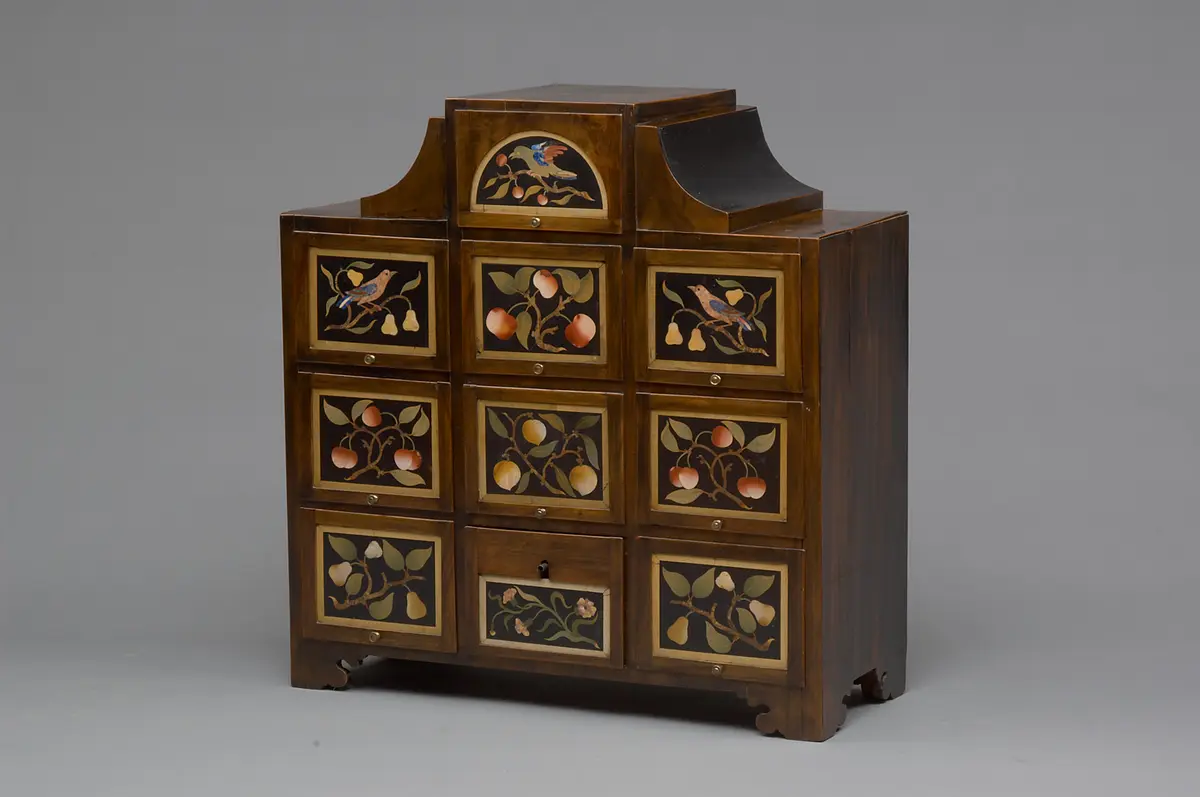
The front of the box with ten drawers is decorated with pietra-dure inlay work. Pietre-dure (Italian for“hard stone”) is a fl at mosaic made of semi-precious stones which have been cut into small plates. This technique for making ornamental and fl oral mosaics from semi-precious stones goes back to the Renaissance workshop of the Grand Duke of Tuscany in Florence and therefore these mosaics are also called Florentine mosaics. Its simple design and the use of nut wood suggest that this box was most likely manufactured in the Alpine region. The pietre-dure inlay work on the panels features carnations, lemon, apple and pear tree branches with birds. The inlays were produced using templates which were applied back to front and then front-to-back.
Time:
Mitte 17. Jahrhundert
Object Name
Kabinettschrank, Pietra-Dura-Kästchen
Culture
Kästchen: alpenländisch, Pietra-Dura: Florenz
Material/technology:
Nuss, Halbedelsteine (Jaspis di Volterra, Albarese, Calcedon di Volterra, Jade di Volterra, Fluorite, Broccatello di Spagna, Lapislazuli), schwarzer Marmor
Dimensions:
H. 61 cm × B. 58 cm × T. 24 cm
Copyright
Schloss Ambras Innsbruck
Invs.
Schloss Ambras Innsbruck, PA 55
Provenance
1907 angekauft
Browse more
Similar items you might be interested in

Kästchen, Einlegearbeit, Perlmuttarbeit 1. Drittel 17. Jahrhundert
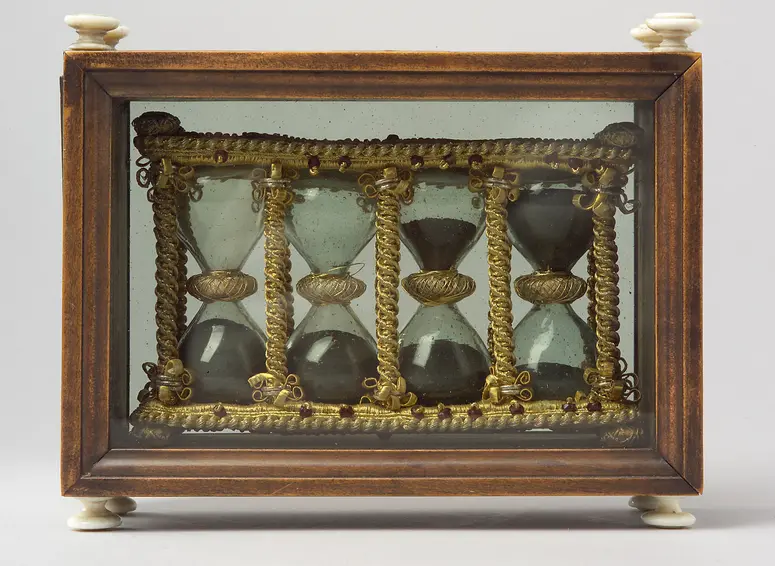
Kästchen mit 4 Sanduhren aus Glas, Sanduhr, Uhr, wissenschaftliches Instrument, Meßgerät 16. Jahrhundert
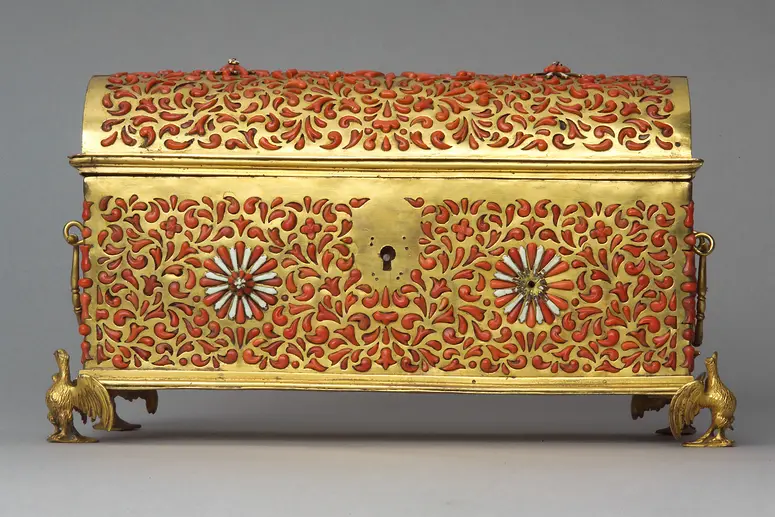
Kästchen mit Adlerfüßen, Korallenmosaik, Einlegearbeit Anfang 17. Jahrhundert
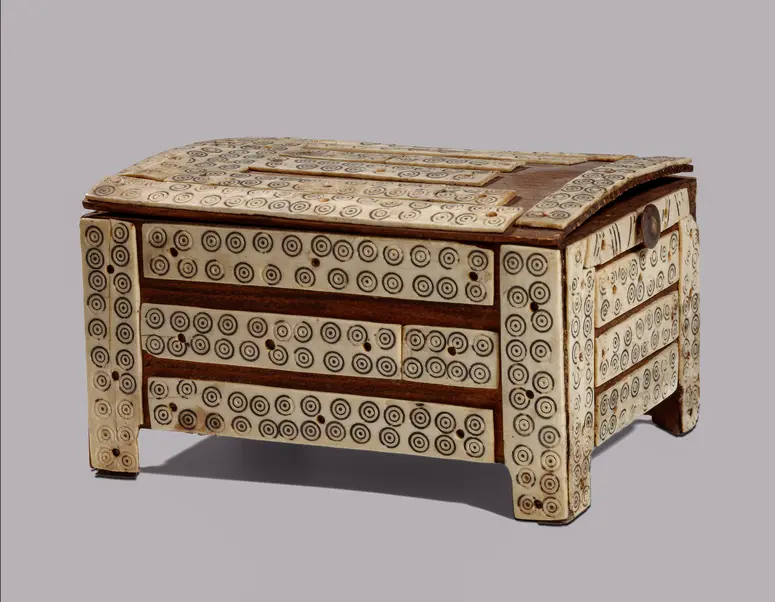
Kosmetikkästchen El-Kubanija Nord, Grab 15 l 1, Grab eines Mädchens 12. Dynastie, um 1900 v. Chr.

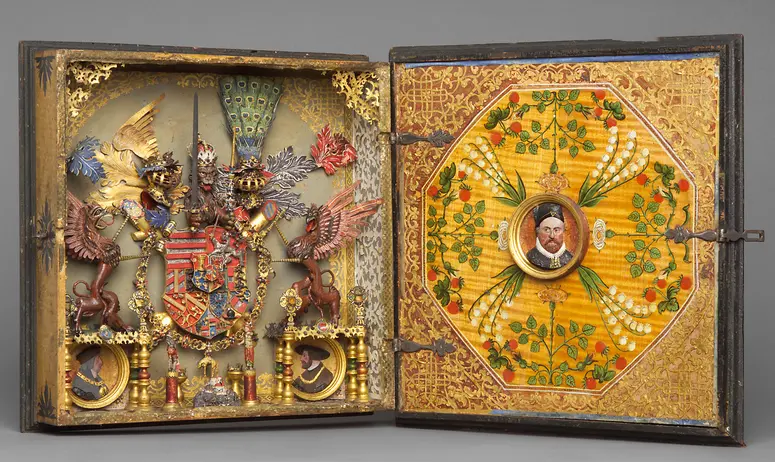
Wappenkästchen Ferdinand I. (1521-1564), Erzherzog, seit 1531 König und seit 1558 Kaiser 1583
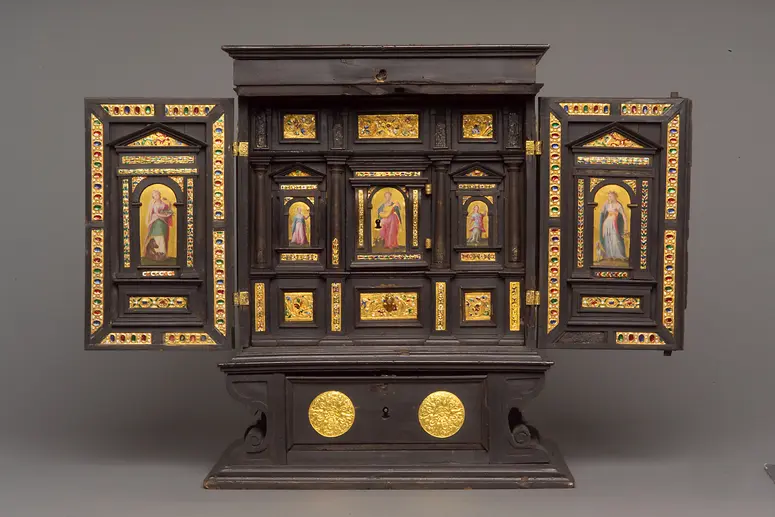
Kästchen, Kabinett, Schmuckkästchen mit Darstellung der 5 Sinne 16. Jahrhundert

Handstein, Grotte, Kreuzigungsgruppe 3. Viertel 16. Jahrhundert
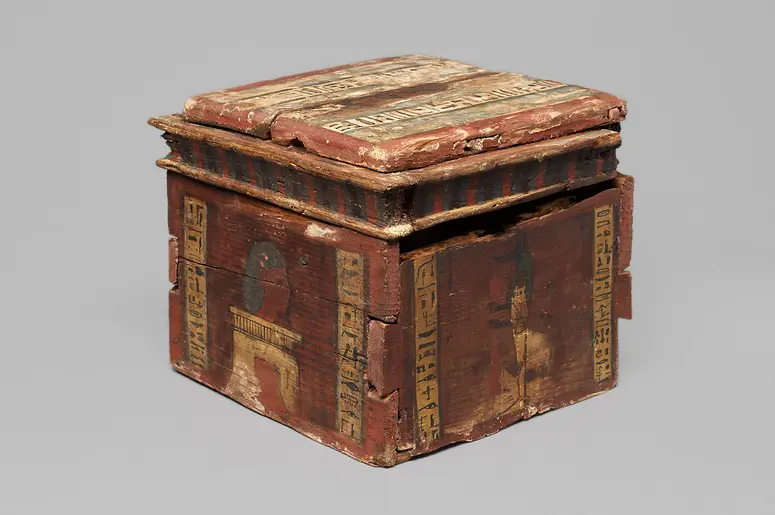
Kleiner Uschebti-Kasten Theben-West, Asasif, L/11, Grab X, Grabkammer 7,1 und Korridor 7,2 30. Dynastie - Ptolemäerzeit, ca. 380-31 v. Chr.

Kästchen für Schmuck und Kosmetikartikel El-Kubanija Nord, Grab 15 l 1, Grab eines Mädchens 12. Dynastie, um 1900 v. Chr.