Lederteller
1. Hälfte 16. Jahrhundert
Leather mosaics like the leather sets shown here are extremely rare testimonies of the handicraft skills in the art and culture of the Ottomans. They were used to put food on, like a table on the floor of a tent. The smaller leather plates are decorated with stylised flowers and inscriptions. The predominant motif, the tulip, (lalé), was seen as t h e Turkish flower in the second half of the 16th century.
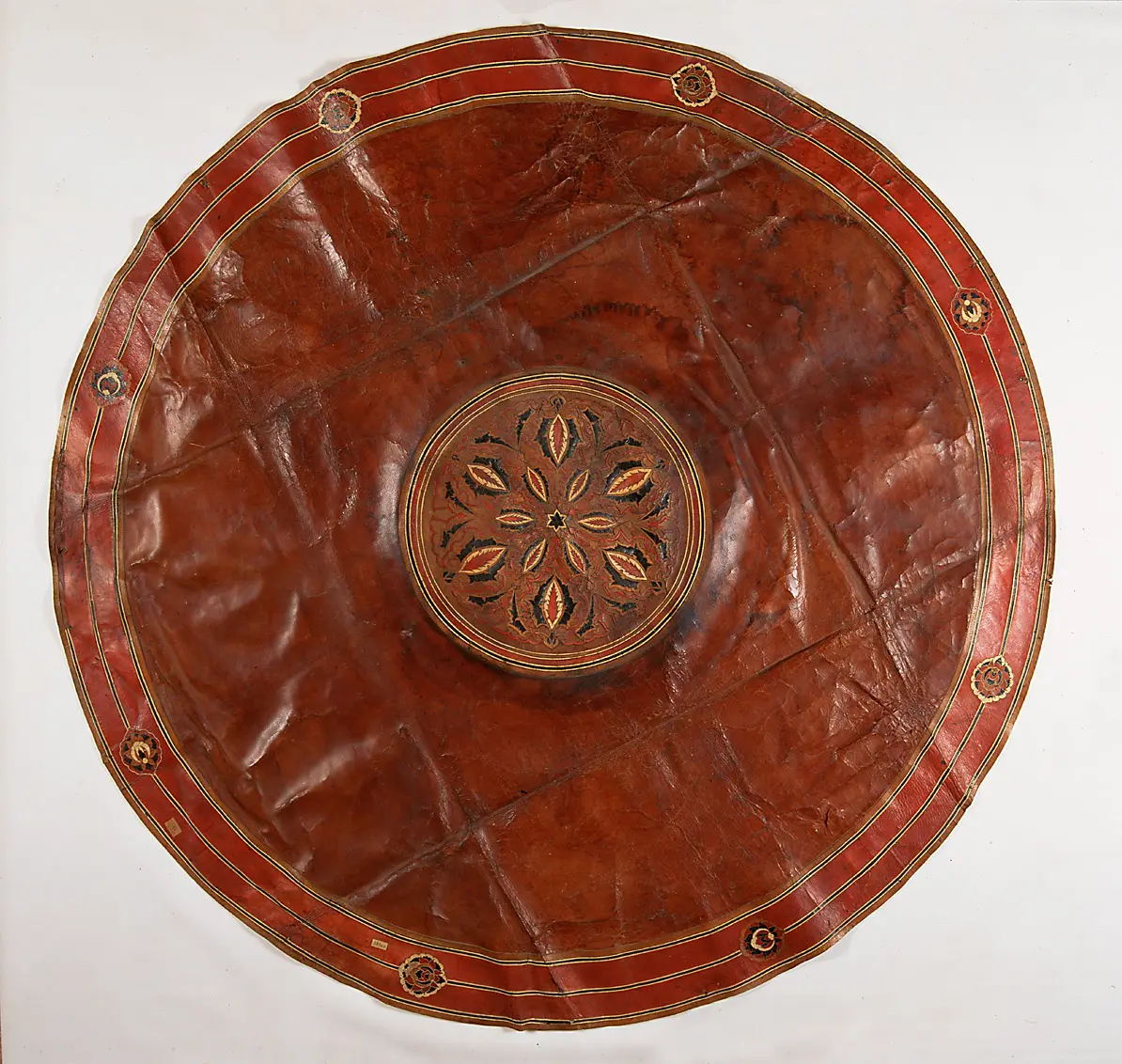
Leather mosaics like the leather sets shown here are extremely rare testimonies of the handicraft skills in the art and culture of the Ottomans. They were used to put food on, like a table on the floor of a tent. The smaller leather plates are decorated with stylised flowers and inscriptions. The predominant motif, the tulip, (lalé), was seen as t h e Turkish flower in the second half of the 16th century.
Time:
1. Hälfte 16. Jahrhundert
Object Name
Lederteller
Culture
Osmanisch
Material/technology:
Leder (Ziege, Rind), Alaun gegerbtes Ziegenleder, gefärbt (braun, weiß, grün),
Dimensions:
Dm. 168 cm
Copyright
Schloss Ambras Innsbruck
Invs.
Schloss Ambras Innsbruck, PA 564
Browse more
Similar items you might be interested in

Lederteller, Mosaik, Ledermosaik 1. Hälfte 16. Jahrhundert
Lederteller, Lederintarsie, Intarsie, Mosaik 2. Viertel 16. Jahrhundert
Wanddekoration, Relief, Einlegearbeit, Korallenmosaik 1. Hälfte 17. Jahrhundert
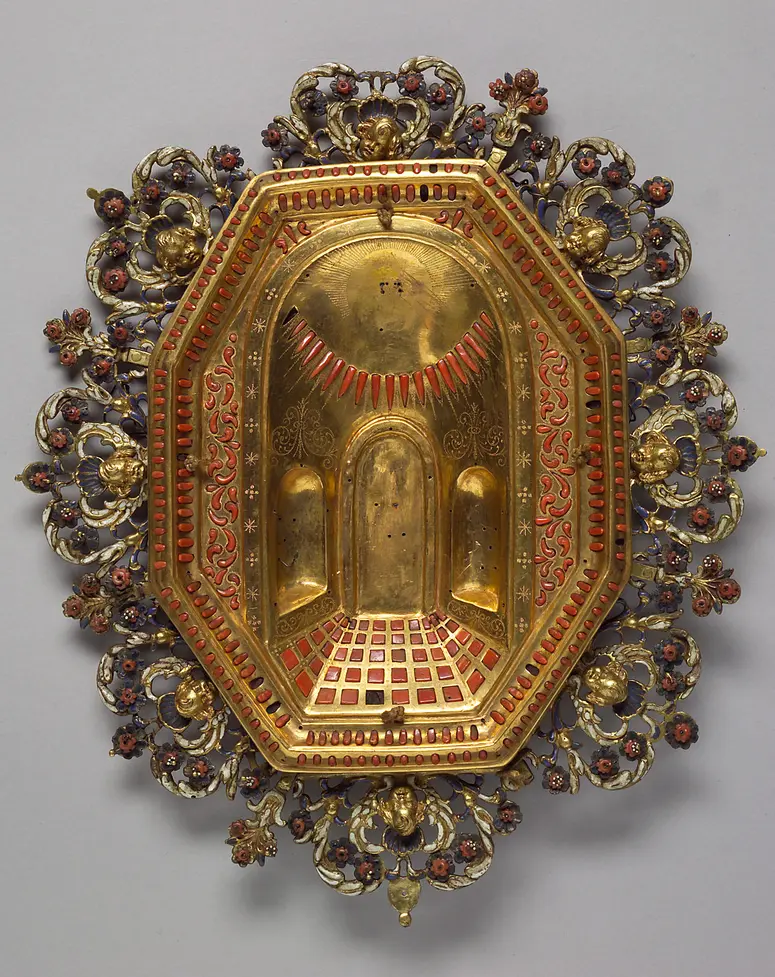
Wanddekoration, Platte, Teller, Einlegearbeit, Korallenmosaik 1. Hälfte 17. Jahrhundert
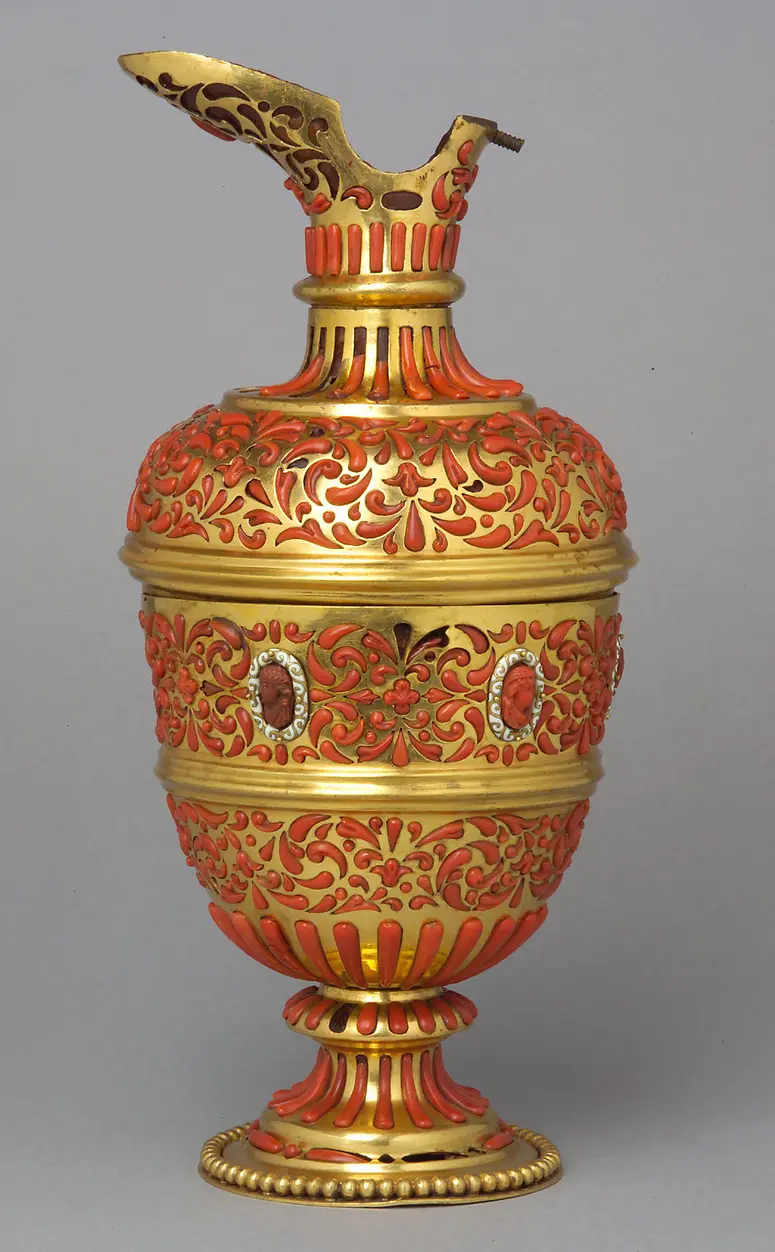
Gefäß; Krug, Kanne, Korallenmosaik, Einlegearbeit Ende 16. Jahrhundert / Anfang 17. Jahrhundert
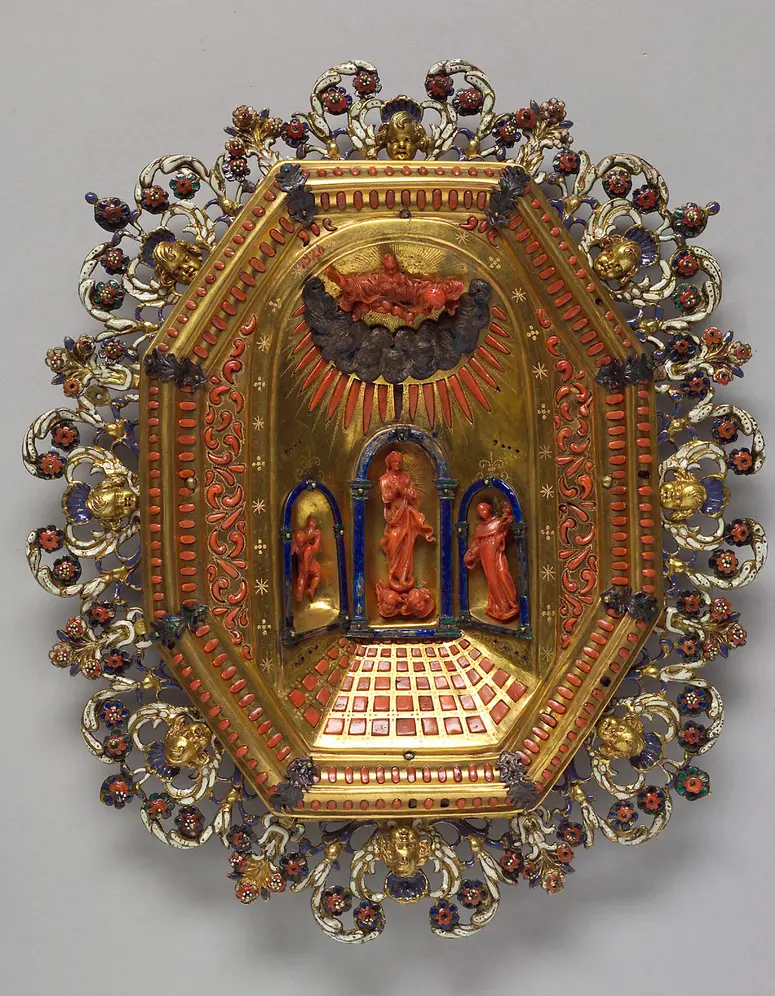
Wanddekoration mit der Darstellung Mariae Empfängnis, Platte, Teller, Einlegearbeit um 1650

Teller mit reliefiertem Rand: Masken und Tiere Römisch, Mittlere Kaiserzeit 2. Jh. n. Chr.
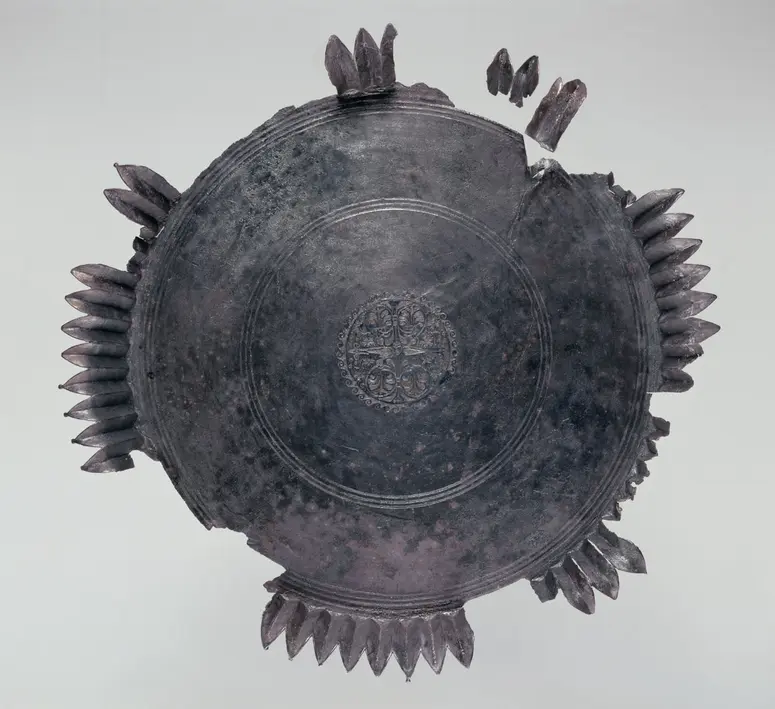
Teller mit Zackenrand und Palmettenornament Römisch, Späte Kaiserzeit 2. Hälfte 3. Jh. n. Chr.
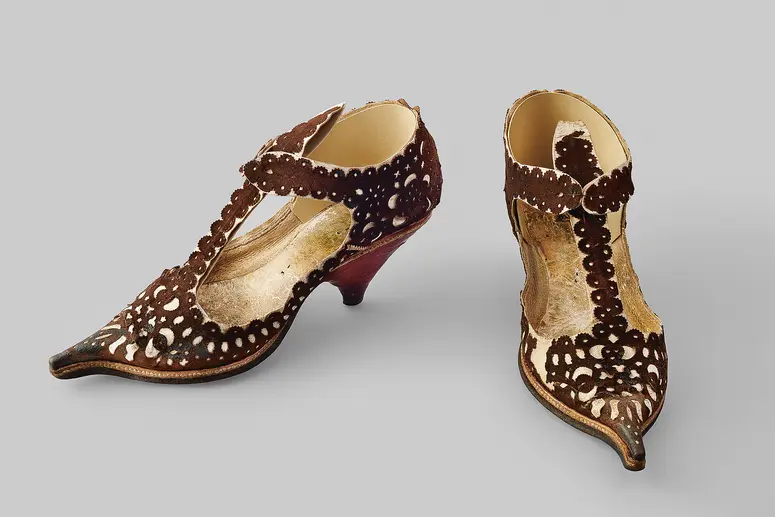
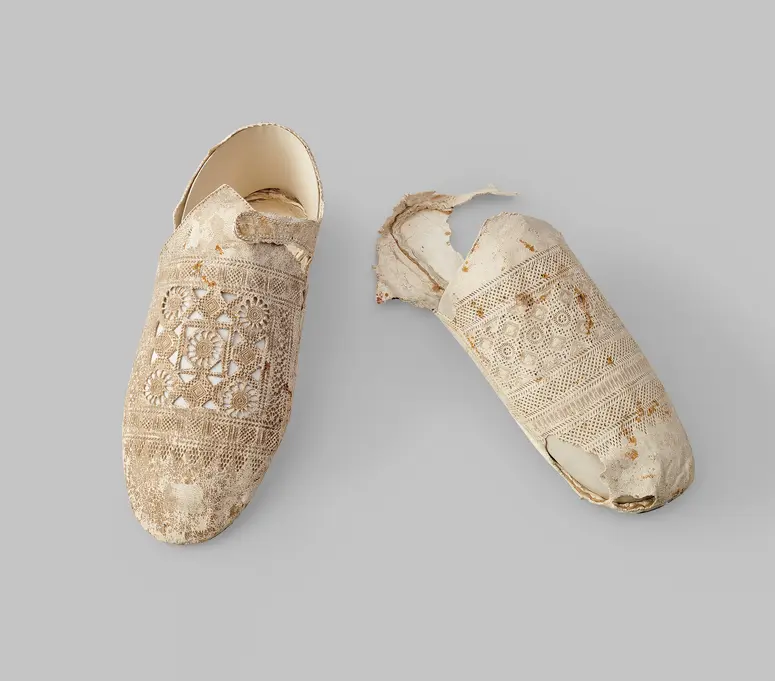
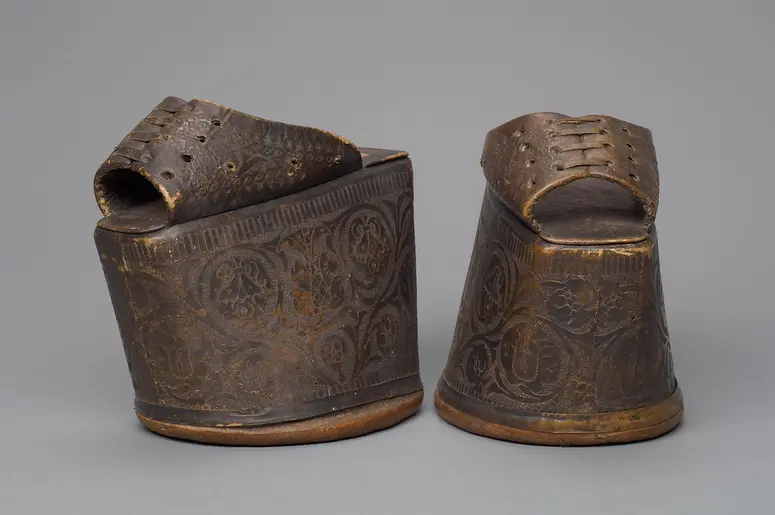
Innenschuhe, Paar Innenschuhe für Chopine (genannt servillas, span. Pantoffel) 16. Jahrhundert
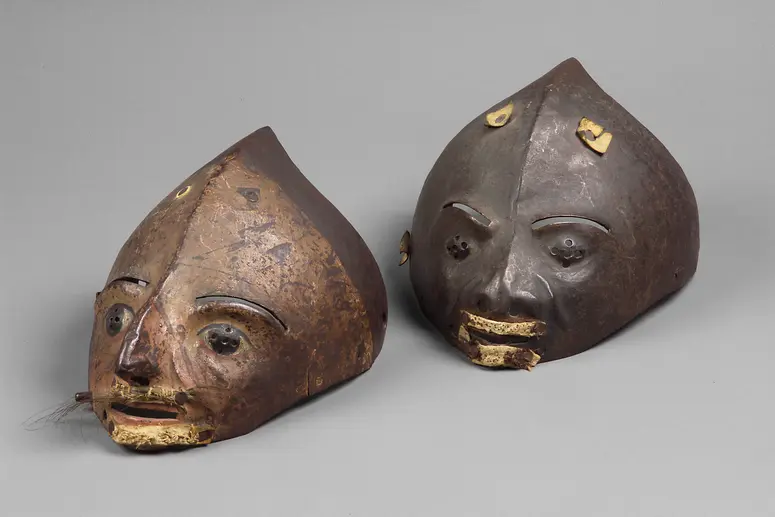
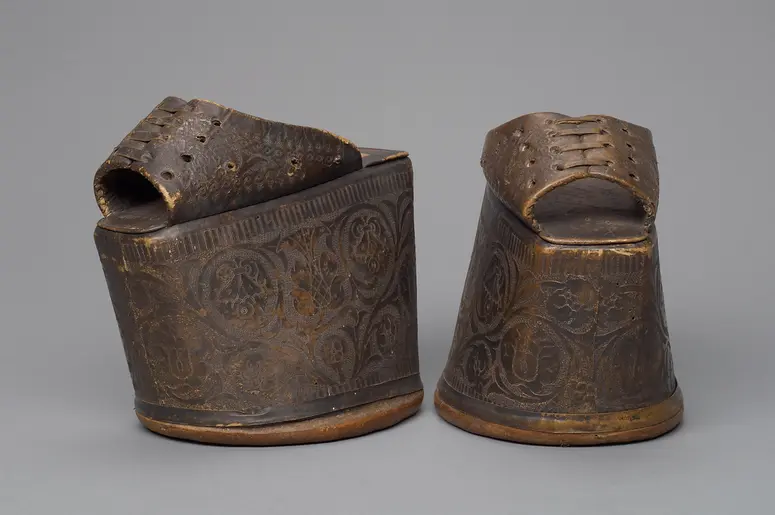

Georg Castriota gen. Skanderbeg wohl 2. Hälfte 15. Jahrhundert
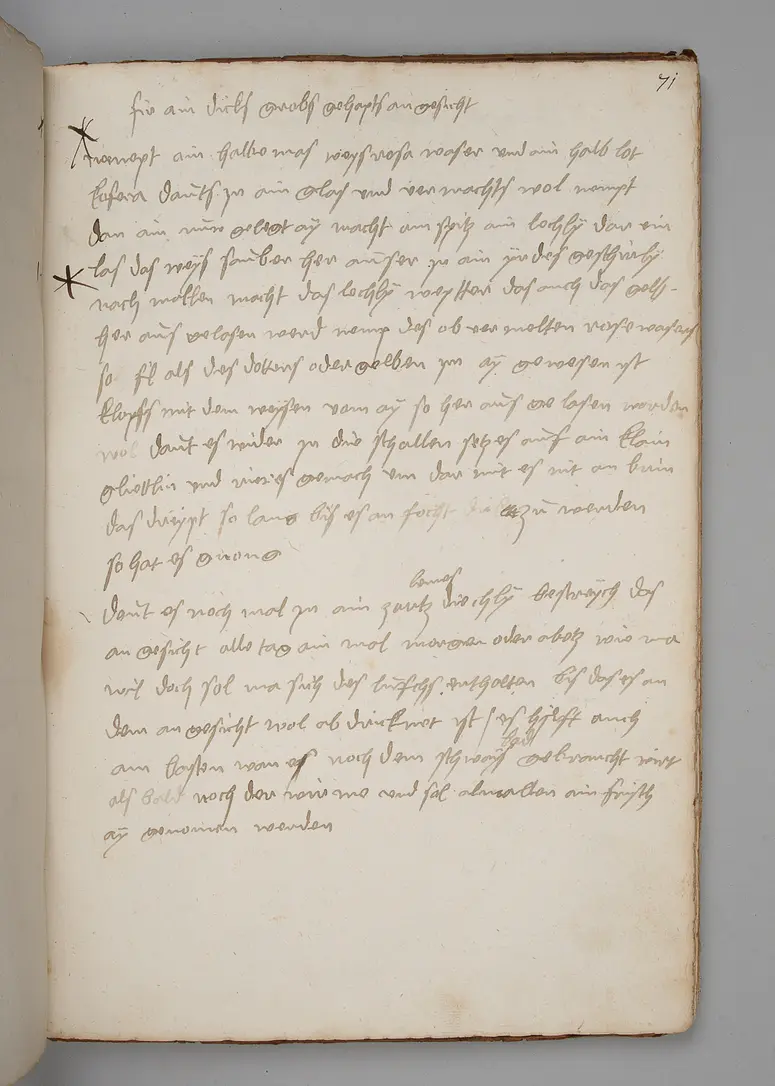
Arzneimittelbuch der Philippine Welser, Arzneimittelbuch Anna Welser 1560-1570
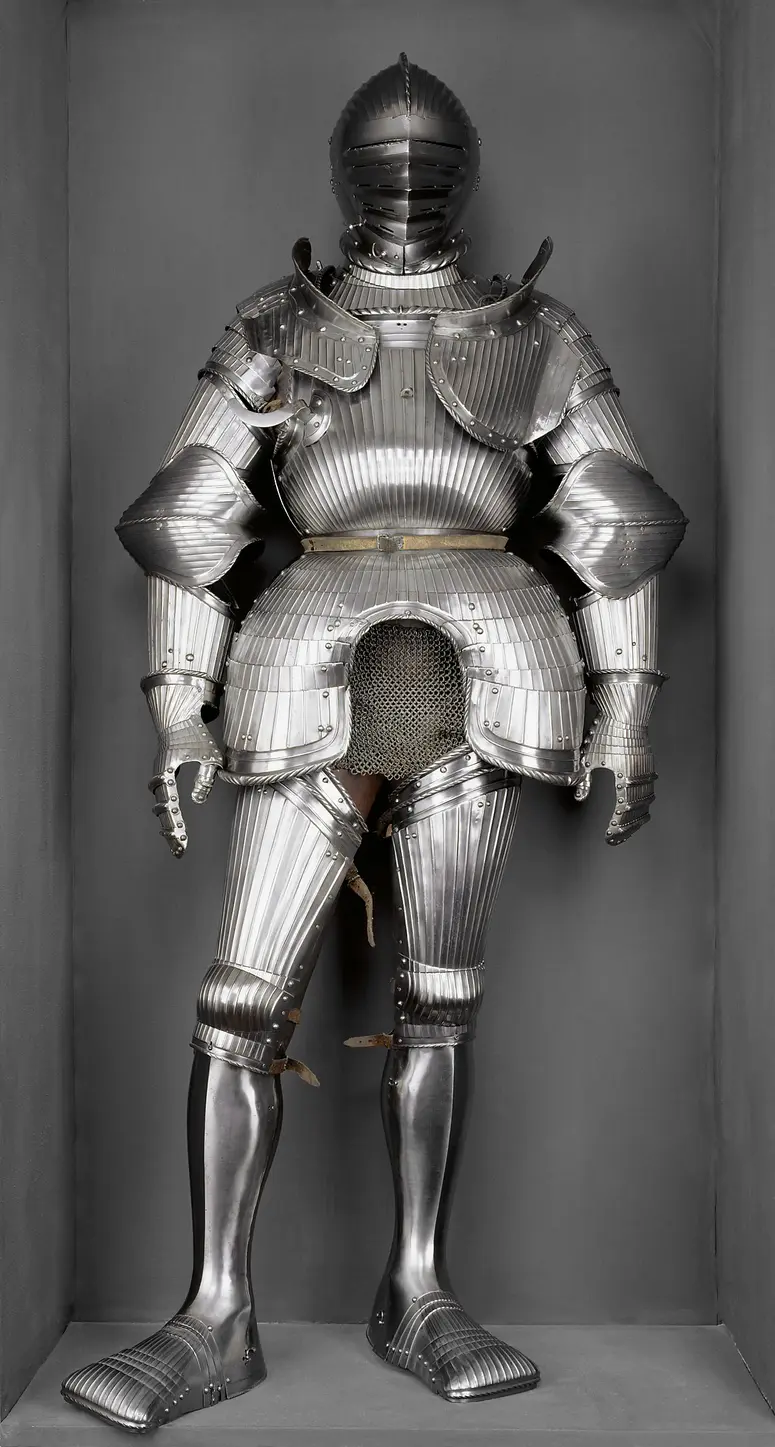
Riefelharnisch von Pfalzgraf Philipp bei Rhein um 1525