Skanderbeg-Helm
wohl 2. Hälfte 15. Jahrhundert | Georg Castriota gen. Skanderbeg
This helmet is mentioned for the first time in the 1593 inventory of the collection assembled by Ferdinand II, Archduke of Austria, at Ambras Castle near Innsbruck: ‘the helmet of George Skanderbek and two swords’ (Georgen Scanderbegg Helmlin und zwaj Schwerter). In the 1596 inventory of Ferdinand’s estate, it is listed as ‘George Skanderbek: a white helmet with gilt hoop, surmounted with the gilt head of a horned goat, and two swords’ (Geörg Scanderbegg; Ain weiss helmblin mit verguldten raifen, darauf ein verguldter gaiskopf mit seinen hörnern, und zwai Schwerter).
In the mid-fifteenth century, Gjergj Kastrioti (commonly known as Skanderbeg) led a rebellion against the Ottoman Empire in the Albanian highlands around Krujë. After his death, his deeds were widely celebrated, and he was included in the Armoury of Heroes assembled at Ambras Castle. This was Ferdinand’s collection of arms and armour made for and worn by celebrated rulers and generals, both his contemporaries and from earlier generations; he displayed them together with objects attributed to these ‘heroes’ or dating from their lifetimes.
The helmet remained at Ambras until 1806, when it was moved to Vienna during the Napoleonic Wars. From 1814 onwards, it was on show to the public as part of the Ambras collection, then displayed at Lower Belvedere Palace; in 1889, the collection – with the helmet – moved to the newly erected Kunsthistorisches Museum.
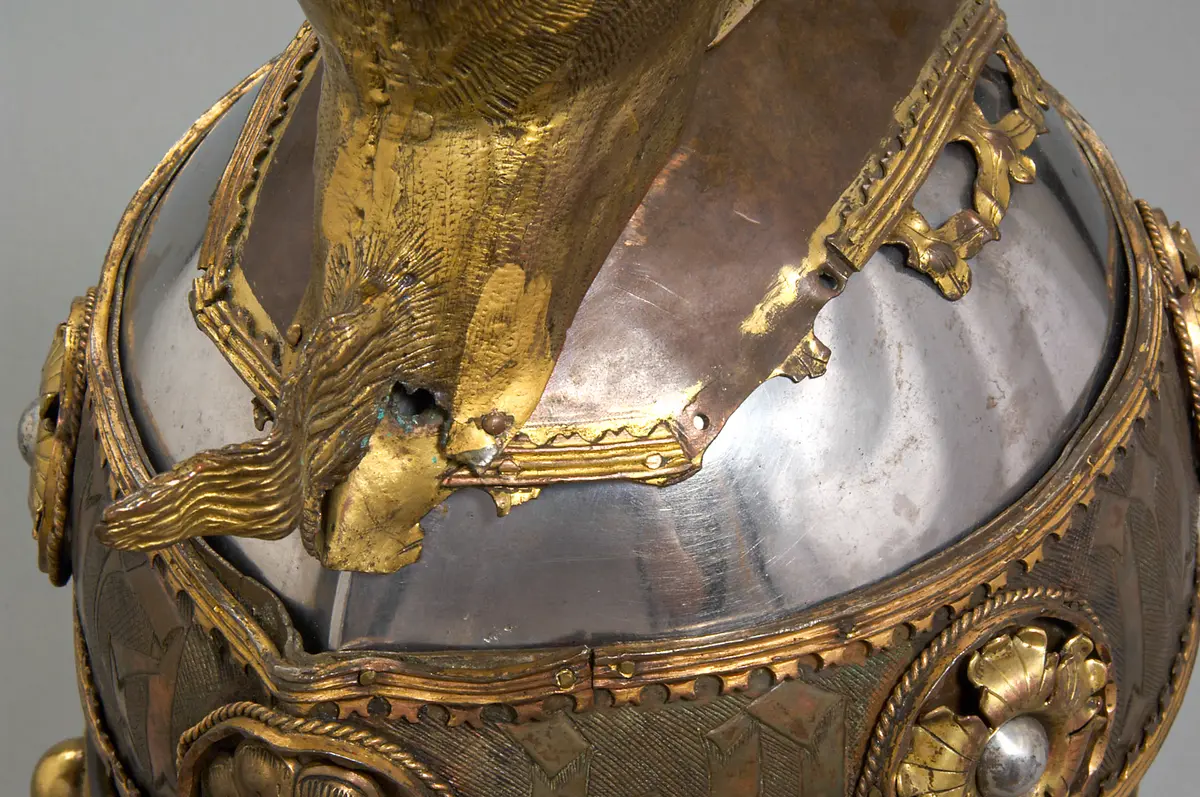
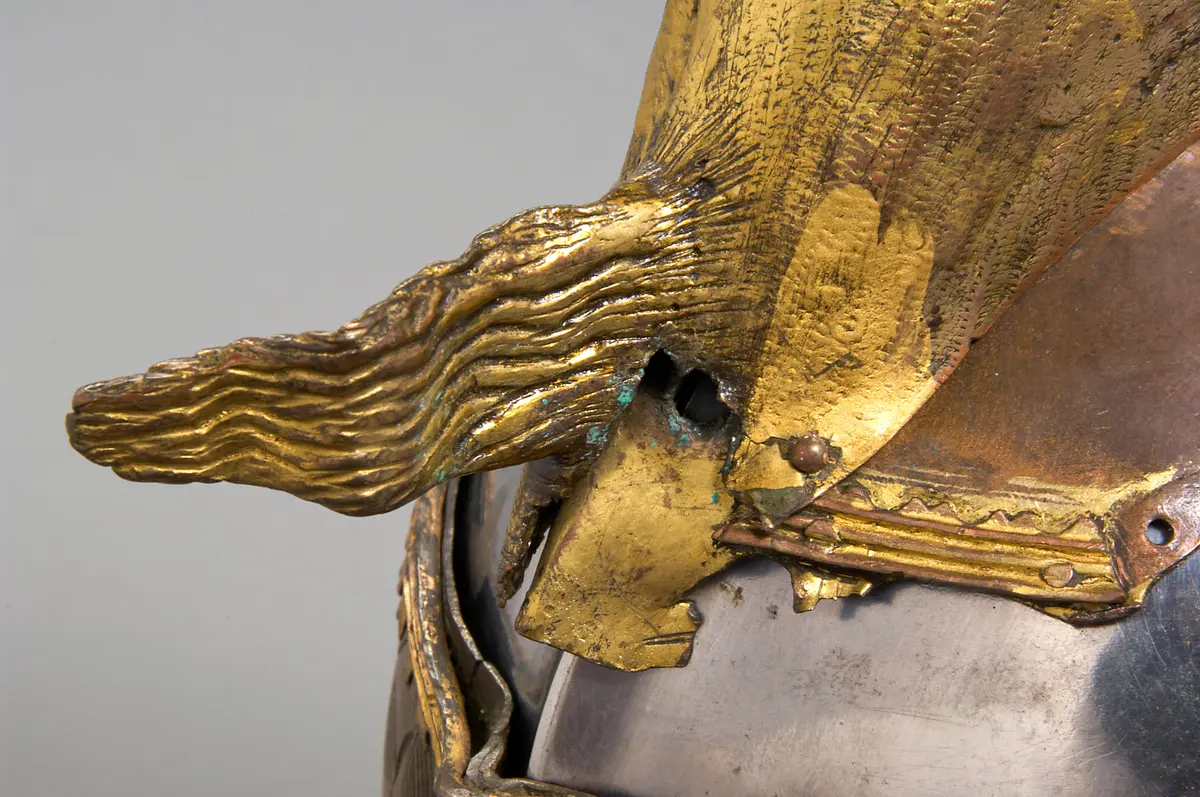
The helmet comprises a steel skull that is actually a fragment of an Italian sallet. The helmet’s jagged edge was already concealed under a riveted leather band when it was in Ferdinand’s collection. The inscription (in minuscule and divided by six flower rosettes) on the circumferential band reads inperatorebt, and a copper plate with a decorative border surmounted with the head of a goat made of gilt sheet copper was added to the helmet. The goat’s eyes were originally inlaid with coloured glass or stones.
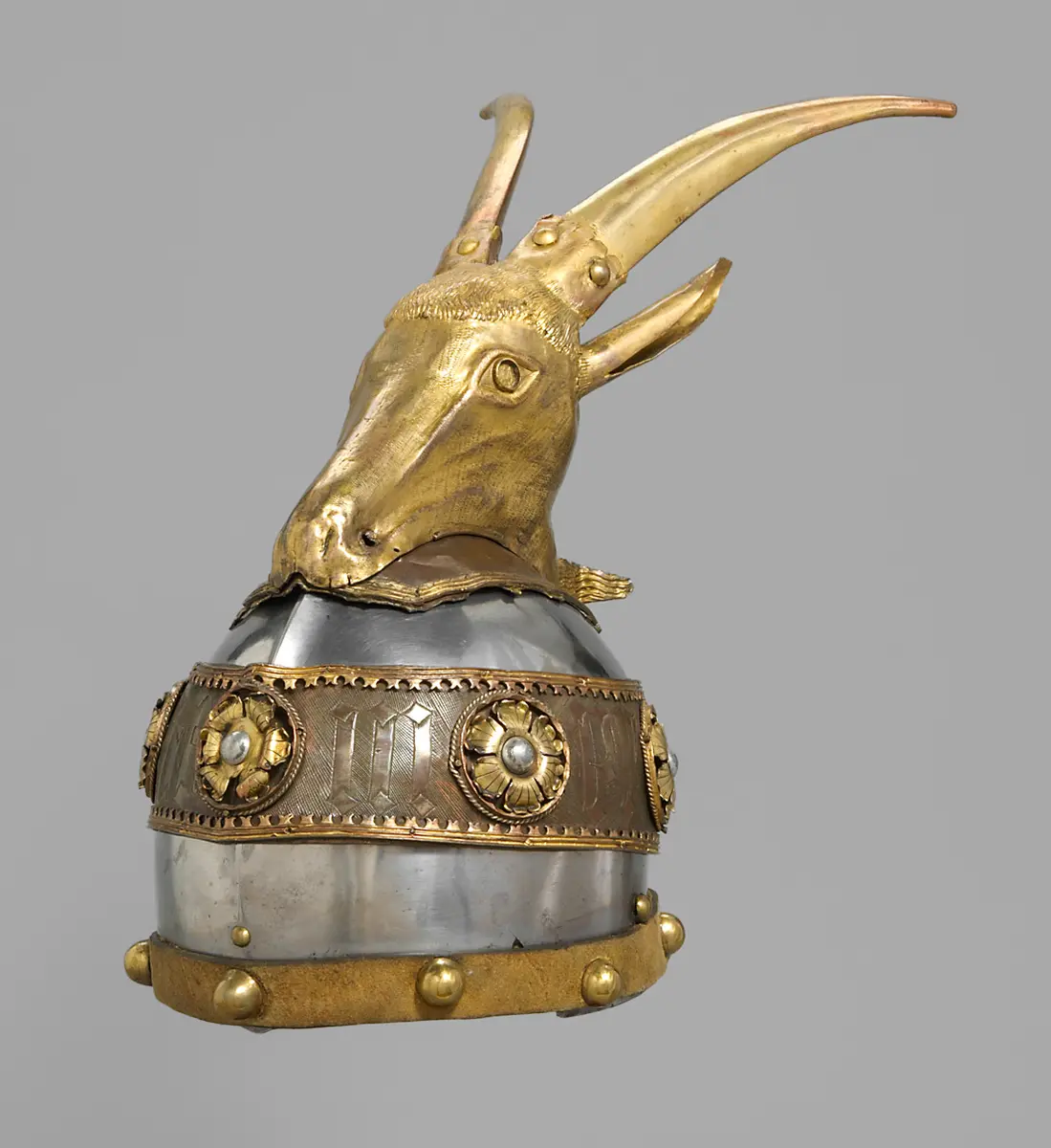

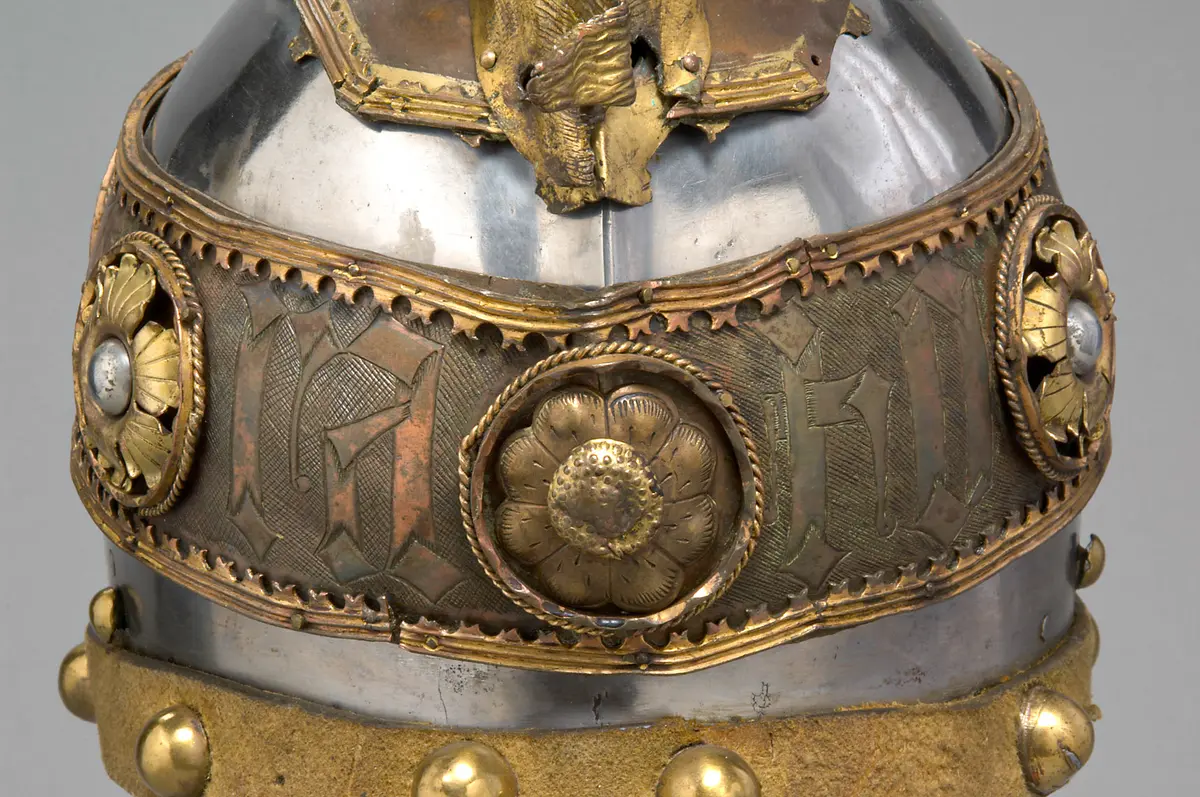
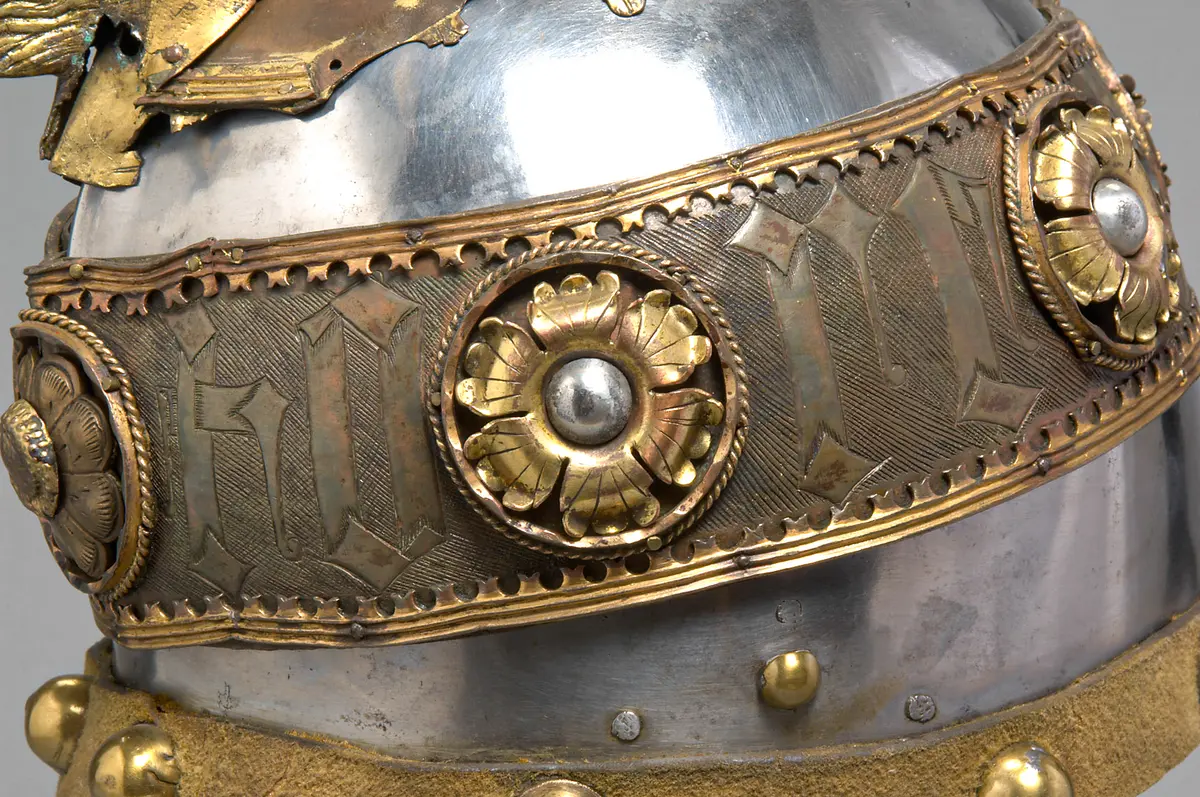
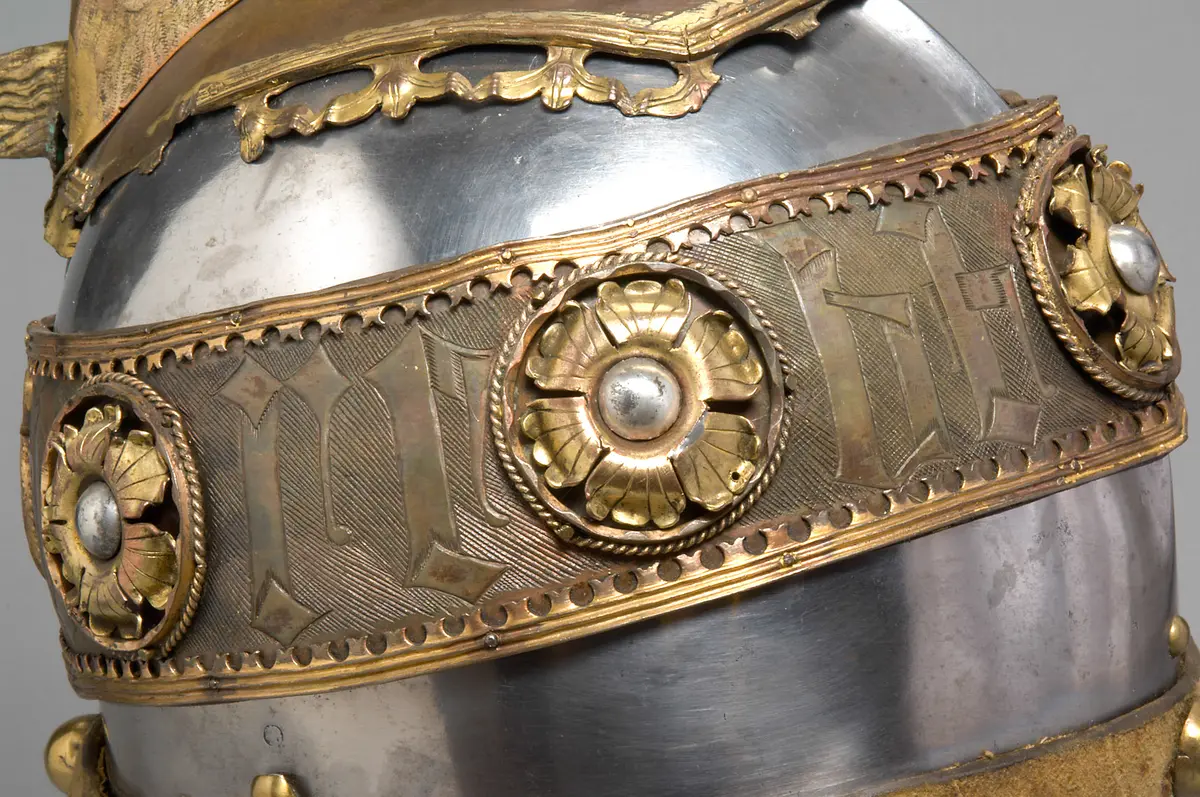
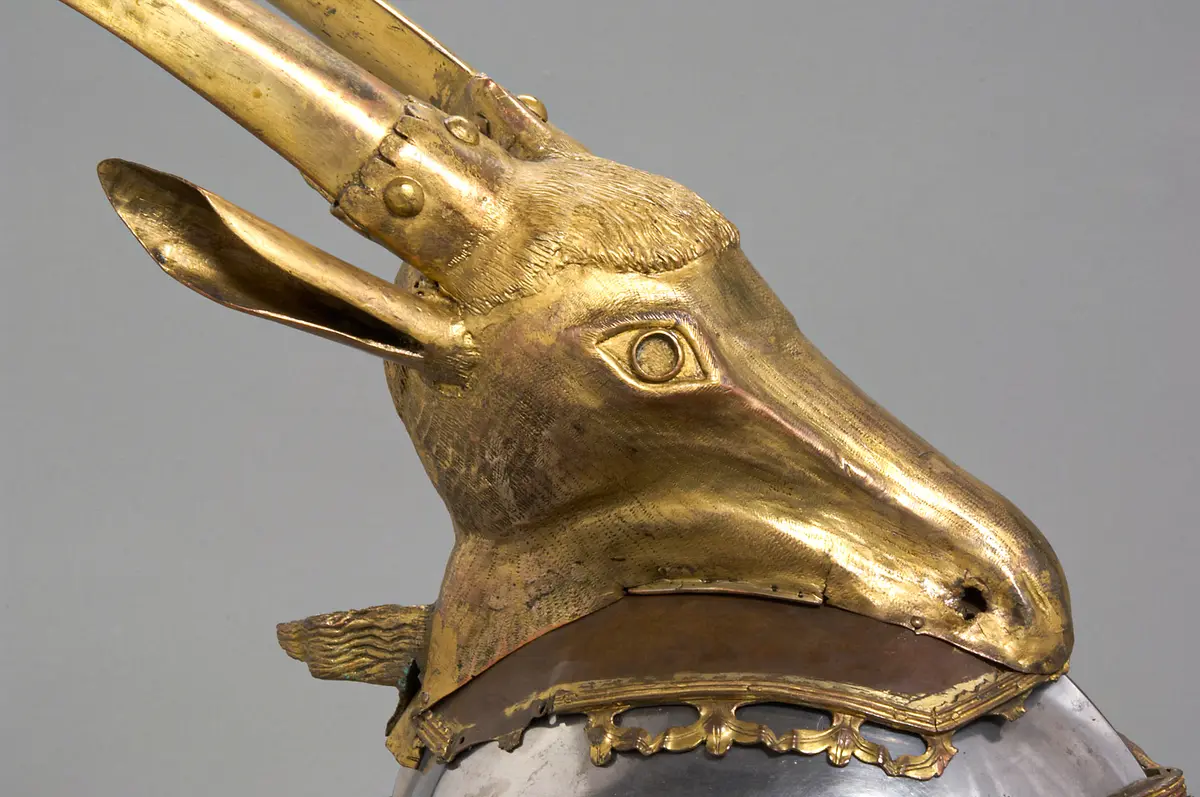
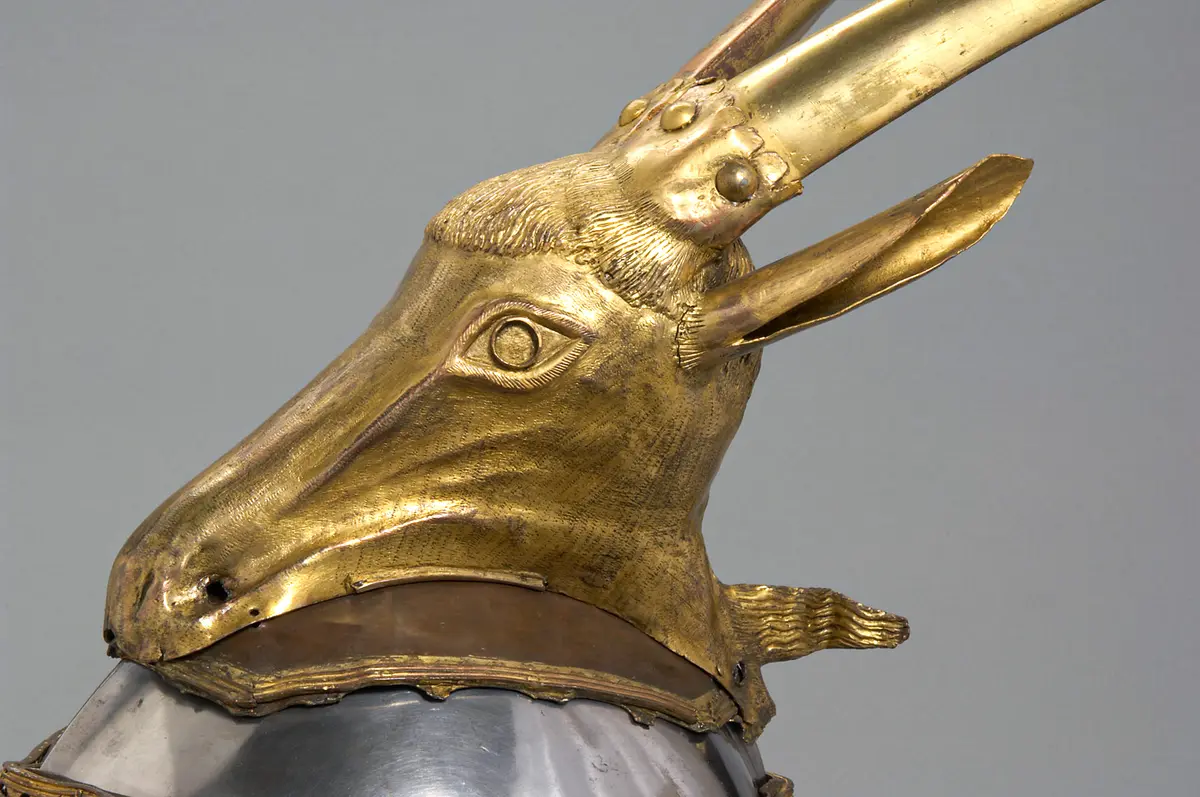
This helmet is mentioned for the first time in the 1593 inventory of the collection assembled by Ferdinand II, Archduke of Austria, at Ambras Castle near Innsbruck: ‘the helmet of George Skanderbek and two swords’ (Georgen Scanderbegg Helmlin und zwaj Schwerter). In the 1596 inventory of Ferdinand’s estate, it is listed as ‘George Skanderbek: a white helmet with gilt hoop, surmounted with the gilt head of a horned goat, and two swords’ (Geörg Scanderbegg; Ain weiss helmblin mit verguldten raifen, darauf ein verguldter gaiskopf mit seinen hörnern, und zwai Schwerter).
In the mid-fifteenth century, Gjergj Kastrioti (commonly known as Skanderbeg) led a rebellion against the Ottoman Empire in the Albanian highlands around Krujë. After his death, his deeds were widely celebrated, and he was included in the Armoury of Heroes assembled at Ambras Castle. This was Ferdinand’s collection of arms and armour made for and worn by celebrated rulers and generals, both his contemporaries and from earlier generations; he displayed them together with objects attributed to these ‘heroes’ or dating from their lifetimes.
The helmet remained at Ambras until 1806, when it was moved to Vienna during the Napoleonic Wars. From 1814 onwards, it was on show to the public as part of the Ambras collection, then displayed at Lower Belvedere Palace; in 1889, the collection – with the helmet – moved to the newly erected Kunsthistorisches Museum.
The helmet comprises a steel skull that is actually a fragment of an Italian sallet. The helmet’s jagged edge was already concealed under a riveted leather band when it was in Ferdinand’s collection. The inscription (in minuscule and divided by six flower rosettes) on the circumferential band reads inperatorebt, and a copper plate with a decorative border surmounted with the head of a goat made of gilt sheet copper was added to the helmet. The goat’s eyes were originally inlaid with coloured glass or stones.
Owner:
Georg Castriota gen. Skanderbeg zugeschrieben (1404 - 1468) DNB
Time:
wohl 2. Hälfte 15. Jahrhundert
Object Name
Skanderbeg-Helm
Culture
Italienisch
Material/technology:
Helm: Eisen, geschmiedet, getrieben. Zierreifen: Kupferblech, graviert. 1 Rosette: Kupferblech, teils feuervergoldet, teils graviert. 1 Nietkopf: Kupfer, getrieben, teils punziert, feuervergoldet. 5 Rosetten: Messingblech, feuervergoldet, teils graviert. 5 Nietköpfe: Messing, feuerversilbert. Kupferdraht, feuervergoldet, gekordelt. Dekorleiste: Kupferblech, feuervergoldet, teils gesägt, teils ziseliert. Leder. Zierkappen: Messing, feuervergoldet. Helmzier: Kupferblech, feuervergoldet, getrieben, teils ziseliert, teils punziert, teils graviert. Dekorleiste: Kupferblech, feuervergoldet, teils gesägt, teils ziseliert.
"
Dimensions:
H 34,5 cm x B 20 cm x T 42,5 cm
Gewicht 3,00 kg
Inscribed
Zwischen den Rosetten auf schraffiertem Grund in gotischer Bandminuskel die Inschrift: “in/pe/ra/to/re/bt”
Copyright
Kunsthistorisches Museum, Hofjagd- und Rüstkammer
Invs.
Hofjagd- und Rüstkammer, A 127