Reiterharnisch (Küriss)
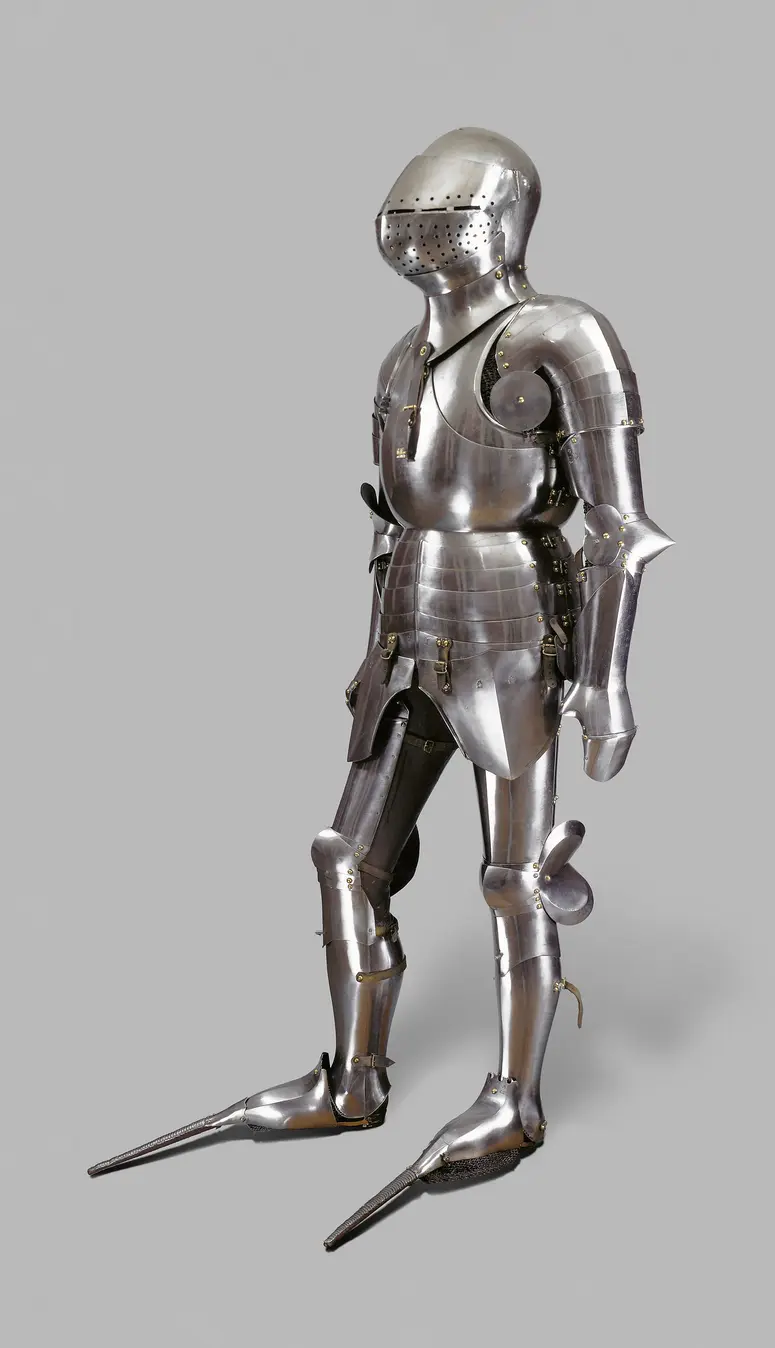
This harness is a highpoint of late Gothic German armour production. It perfectly reflects the contemporary aesthetic ideal in male fashion in steel north of the Alps. The wearer appears slim and light, and the armour’s surface is rhythmized with radial flutings. Some of the edges and lames are embellished with decorative gilt brass strips, while others are pierced to create geometric or lily-shaped patterns. The sabatons are elongated and tapered, reflecting contemporary elite shoe fashion.
The armour was produced around 1484 in the workshop of Lorenz Helmschmid at Augsburg. Lorenz was one of the greatest armourers of all time, founding a dynasty of master-craftsmen which, under his son Kolman and his grandson Desiderius, continued until the mid-sixteenth century to produce armour of the highest quality. From the 1470s onwards, the Helmschmid family worked mainly for the Habsburgs, from Emperor Frederick III to King Philip II of Spain.
This armour comes from the Armoury of Heroes assembled by Archduke Ferdinand II at Ambras Castle near Innsbruck. However, in the Armamentarium Heroicum, the catalogue of the collection published in 1601–03, it was listed and illustrated as armour made for Archduke Sigismund. Despite some doubts, this attribution was accepted until the early twenty-first century, when the young Emperor Maximilian I was finally identified as the probable original owner of this spectacular armour.
One reason for attributing it to Maximilian was his age at the time it was made. Only a slim, young man could have worn such a figure-hugging harness; at the time, Maximilian was 25 but Sigismund was almost 60. We also have no record of Sigismund ordering armour from Lorenz Helmschmid, unlike Maximilian who, starting around 1480, commissioned numerous works from him. In 1491, Maximilian installed Lorenz as his court armourer.
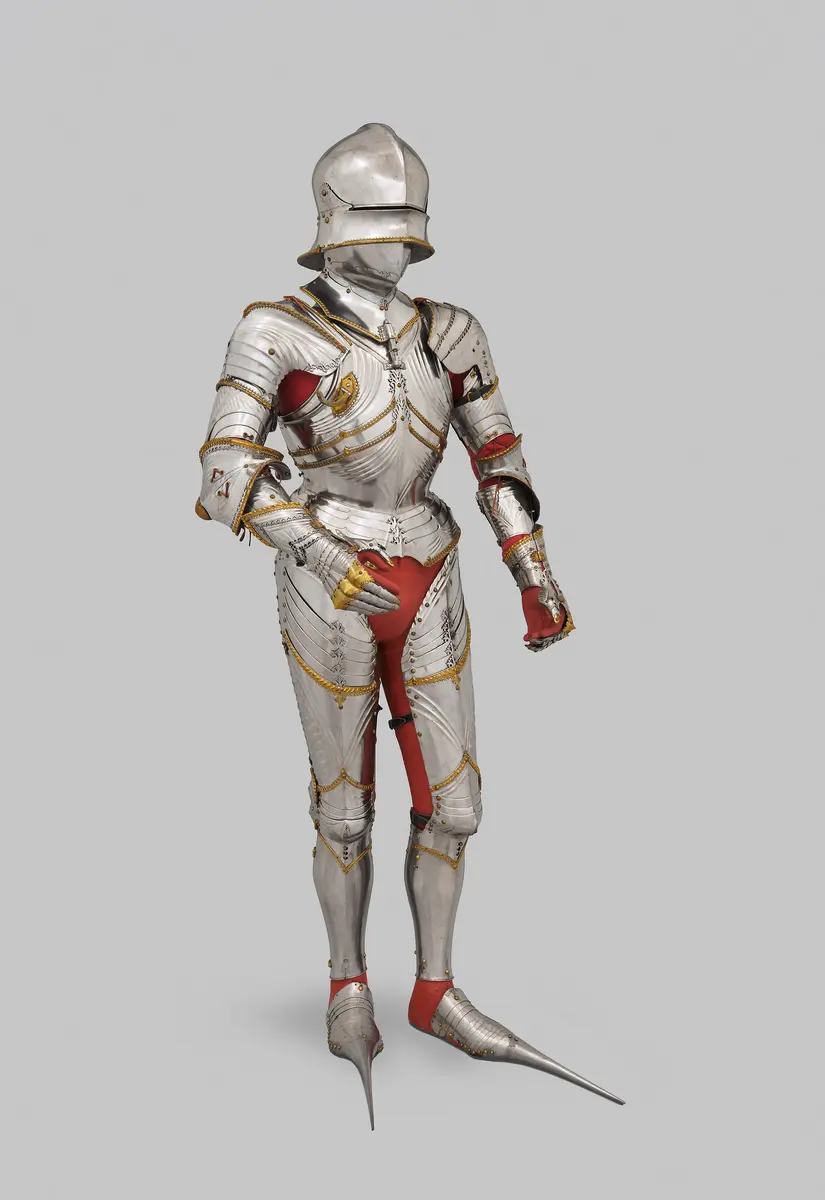
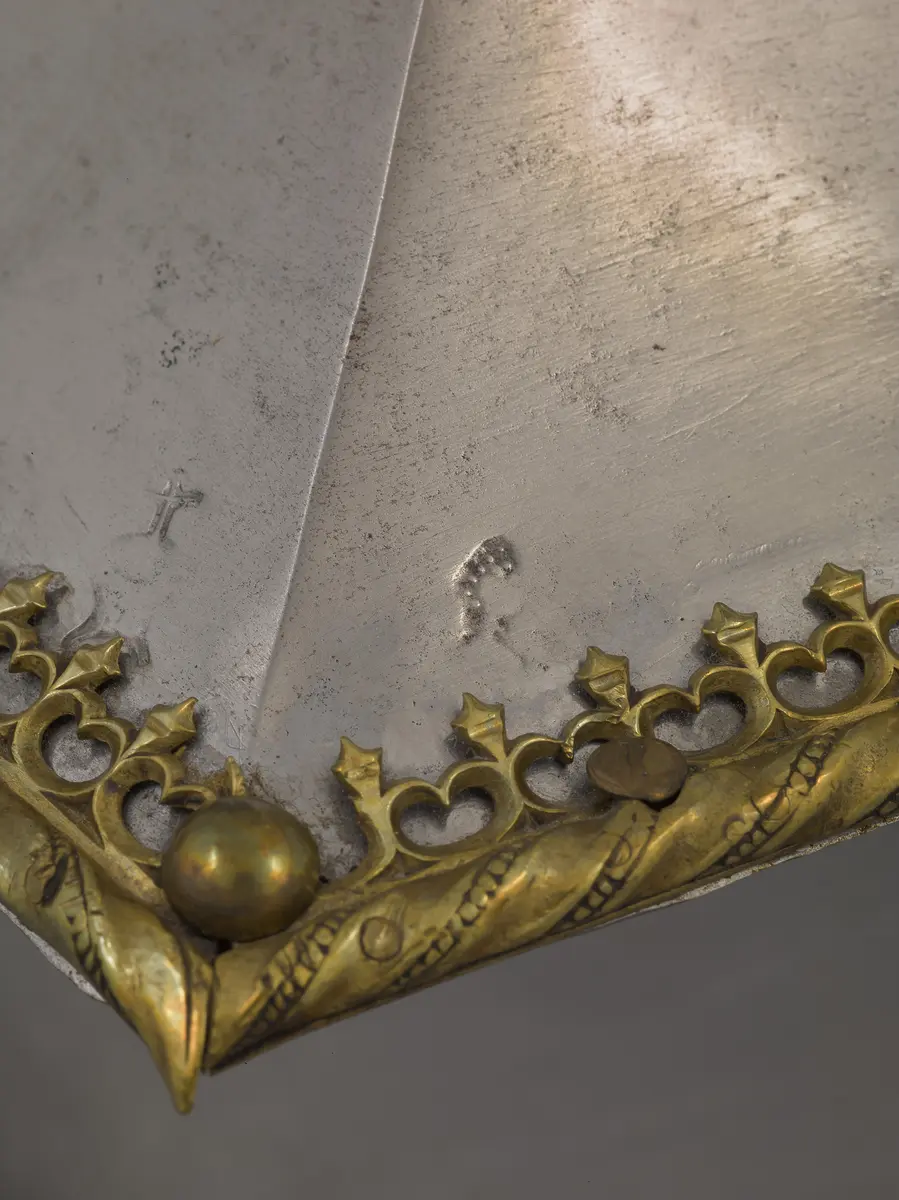
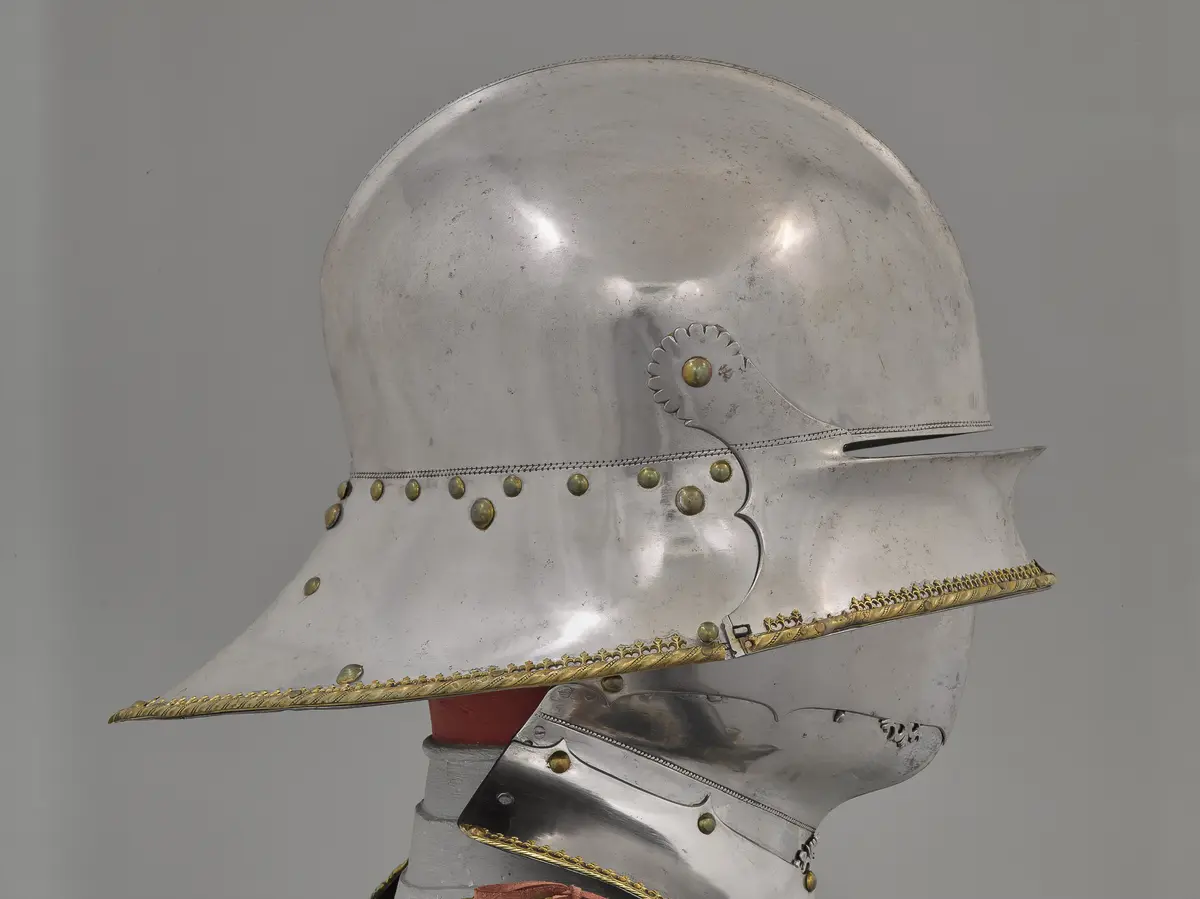
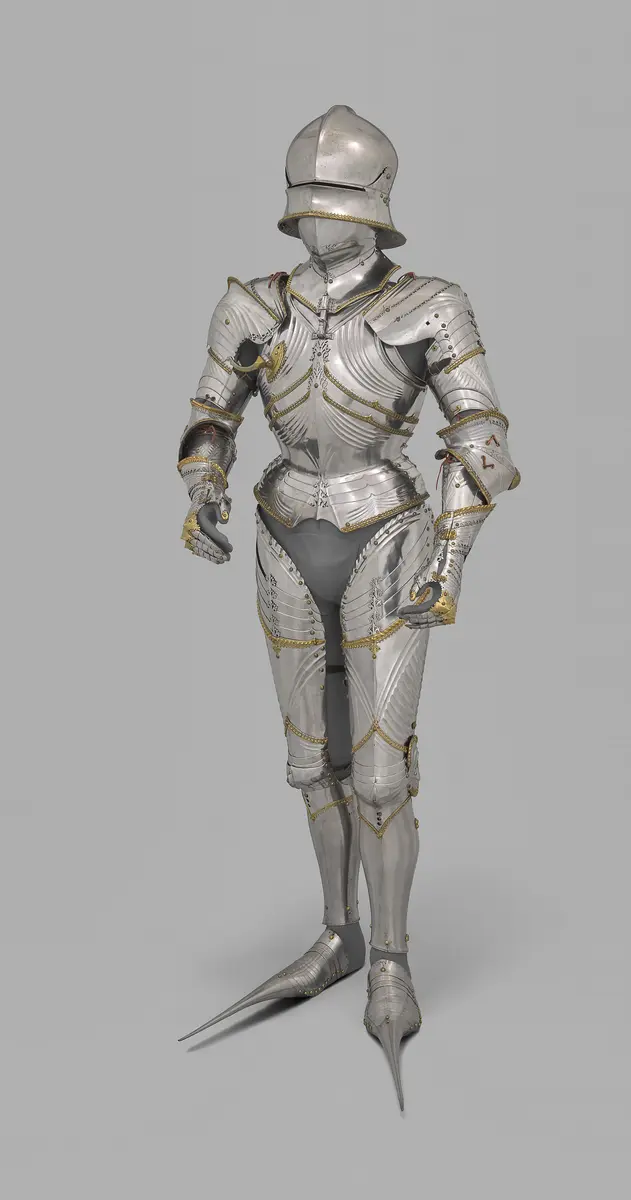
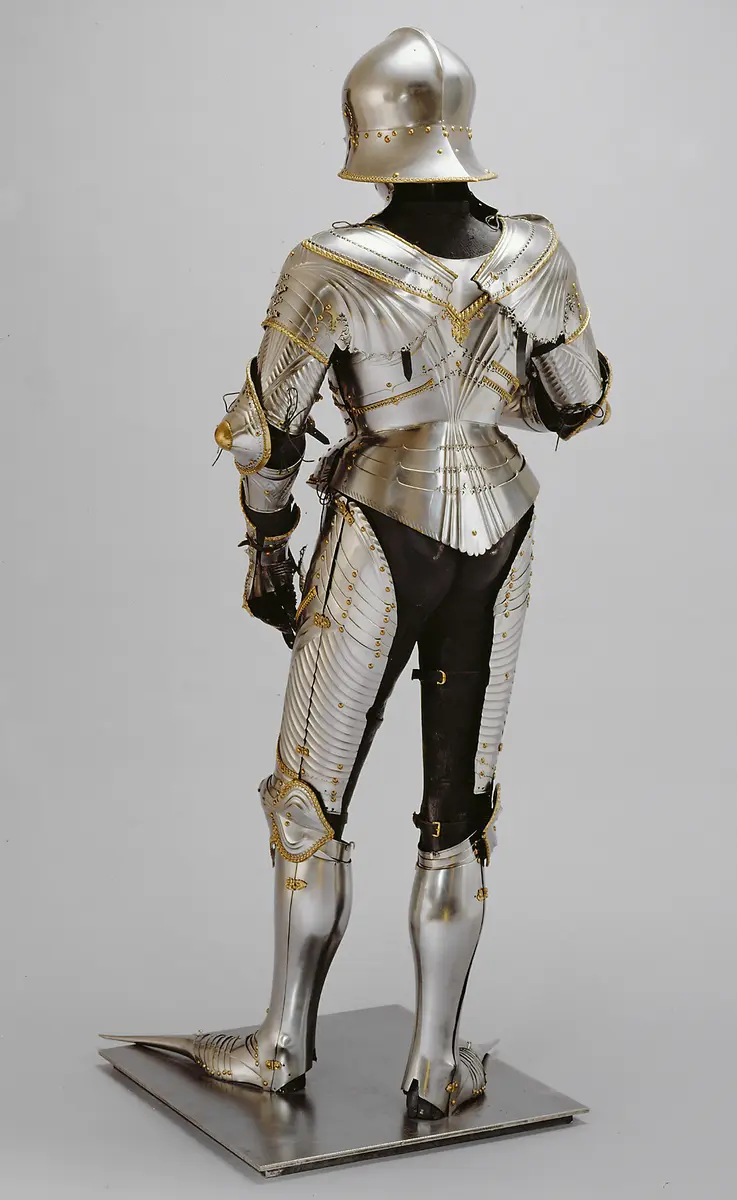
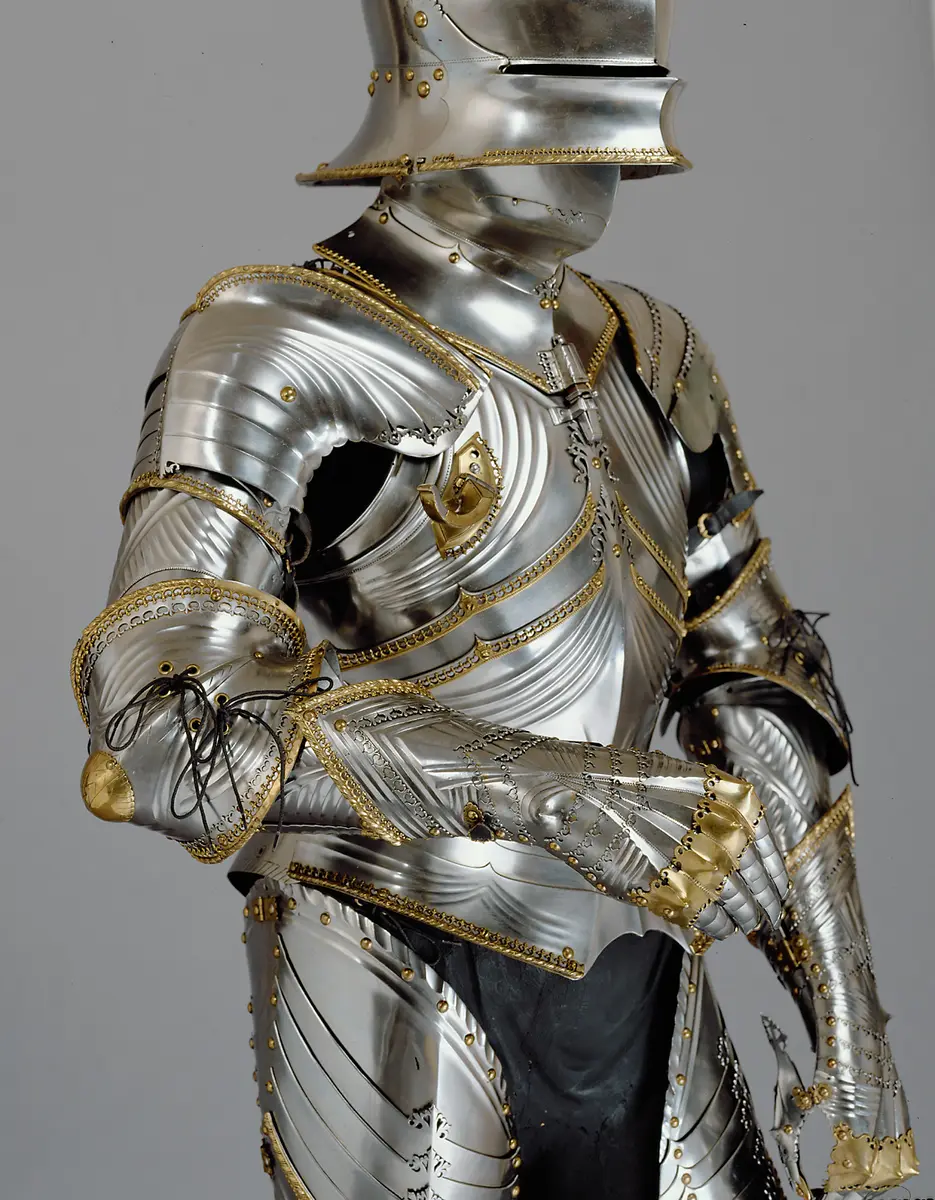
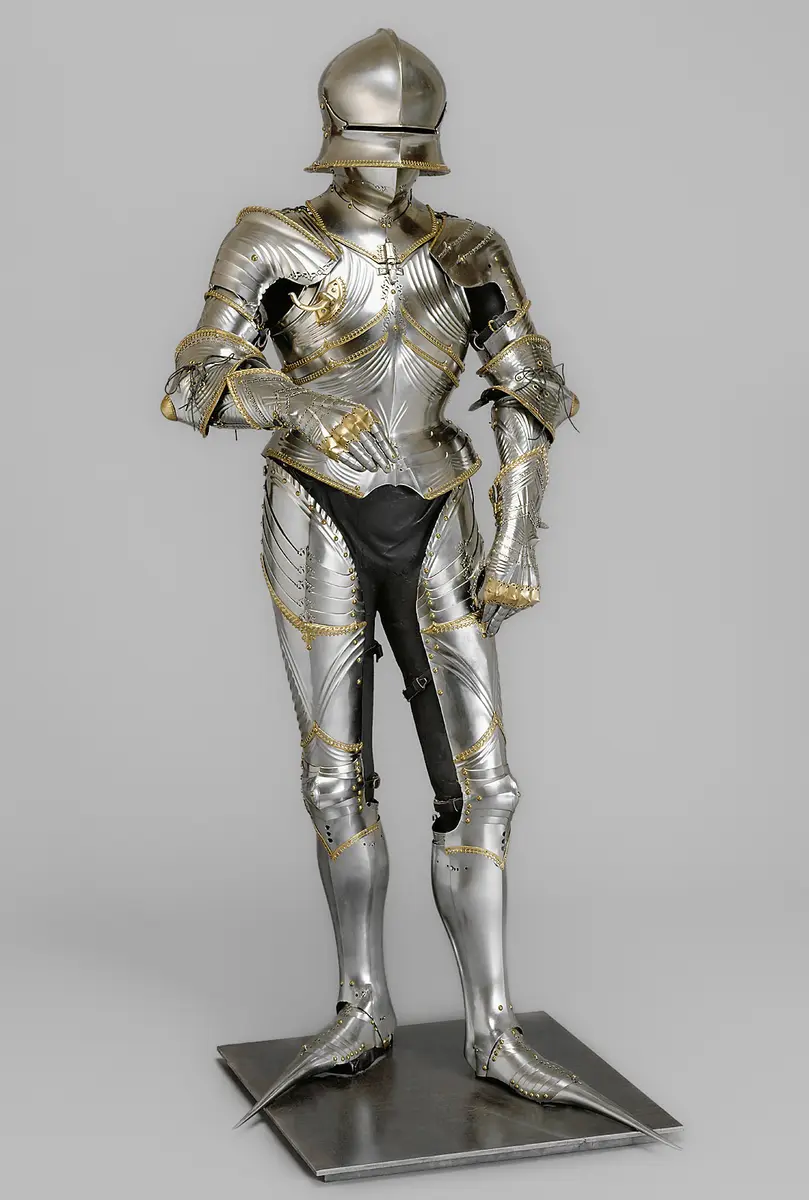
This harness is a highpoint of late Gothic German armour production. It perfectly reflects the contemporary aesthetic ideal in male fashion in steel north of the Alps. The wearer appears slim and light, and the armour’s surface is rhythmized with radial flutings. Some of the edges and lames are embellished with decorative gilt brass strips, while others are pierced to create geometric or lily-shaped patterns. The sabatons are elongated and tapered, reflecting contemporary elite shoe fashion.
The armour was produced around 1484 in the workshop of Lorenz Helmschmid at Augsburg. Lorenz was one of the greatest armourers of all time, founding a dynasty of master-craftsmen which, under his son Kolman and his grandson Desiderius, continued until the mid-sixteenth century to produce armour of the highest quality. From the 1470s onwards, the Helmschmid family worked mainly for the Habsburgs, from Emperor Frederick III to King Philip II of Spain.
This armour comes from the Armoury of Heroes assembled by Archduke Ferdinand II at Ambras Castle near Innsbruck. However, in the Armamentarium Heroicum, the catalogue of the collection published in 1601–03, it was listed and illustrated as armour made for Archduke Sigismund. Despite some doubts, this attribution was accepted until the early twenty-first century, when the young Emperor Maximilian I was finally identified as the probable original owner of this spectacular armour.
One reason for attributing it to Maximilian was his age at the time it was made. Only a slim, young man could have worn such a figure-hugging harness; at the time, Maximilian was 25 but Sigismund was almost 60. We also have no record of Sigismund ordering armour from Lorenz Helmschmid, unlike Maximilian who, starting around 1480, commissioned numerous works from him. In 1491, Maximilian installed Lorenz as his court armourer.
Owner:
Maximilian I. (1477-1519), seit 1493 deutscher König, 1508 Kaiser (1459 - 1519) DNB
Artist:
Lorenz Helmschmid (erw. 1469, gest. 1515/16, Augsburg (Plattner))
Time:
um 1485
Object Name
Reiterharnisch (Küriss)
Culture
Augsburg
Material/technology:
Eisen, geschmiedet, getrieben, teils durchbrochen gearbeitet. Dekorleisten: Messing, feuervergoldet, teils getrieben, teils durchbrochen gearbeitet, teils graviert. Nietkappen, Schnallen, Scharniere, Ösen: Messing, teils feuervergoldet. Rüsthaken: Eisen, geschmiedet und mit Messing plattiert. Messing: teils durchbrochen gearbeitet, teils graviert, feuervergoldet. Leder (modern).
Dimensions:
Maße inkl Eisenplatte: H 186 cm x B 74 cm x T 77 cm
Eisenplatte H: 4 cm x B 60 cm x T 60 cm
Gewicht exkl. Figurine, exkl. Eisenplatte: 21,25 kg
Gewicht: 78 kg (inkl. Figurine und Eisenplatte)
Signed
keine
Inscribed
keine
Stamp / markings
auf Schaller:
Meistermarke: Stechhelm mit Kreuz als Helmzier (Lorenz Helmschmid)
Beschau: Pinienzapfen/Stadtpyr (Augsburg)
Copyright
Kunsthistorisches Museum, Hofjagd- und Rüstkammer
Invs.
Hofjagd- und Rüstkammer, A 62
Browse more
Similar items you might be interested in
Maximilian II. (1564-1576), Kaiser datiert 1557
Kurfürst Friedrich I. Sohn des Ludwig III. von der Pfalz around 1450. Gauntlets: around 1475/1485.
Sigismund Franz (1662-1665), Erzherzog von Vorderösterreich um 1635-1638

Philipp II. (1556-1598), König von Spanien, seit 1580 als Philipp I. König von Portugal 1544
Leopold V. (1619-1632), Erzherzog und Graf von Tirol, Bischof von Passau und Straßburg um 1620

Karl I. (V.) (1516-1556), als Karl I. König von Spanien, ab 1519 deutscher König, ab 1520 Kaiser c. 1512-1514
Maximilian II. (1564-1576), Kaiser datiert 1550
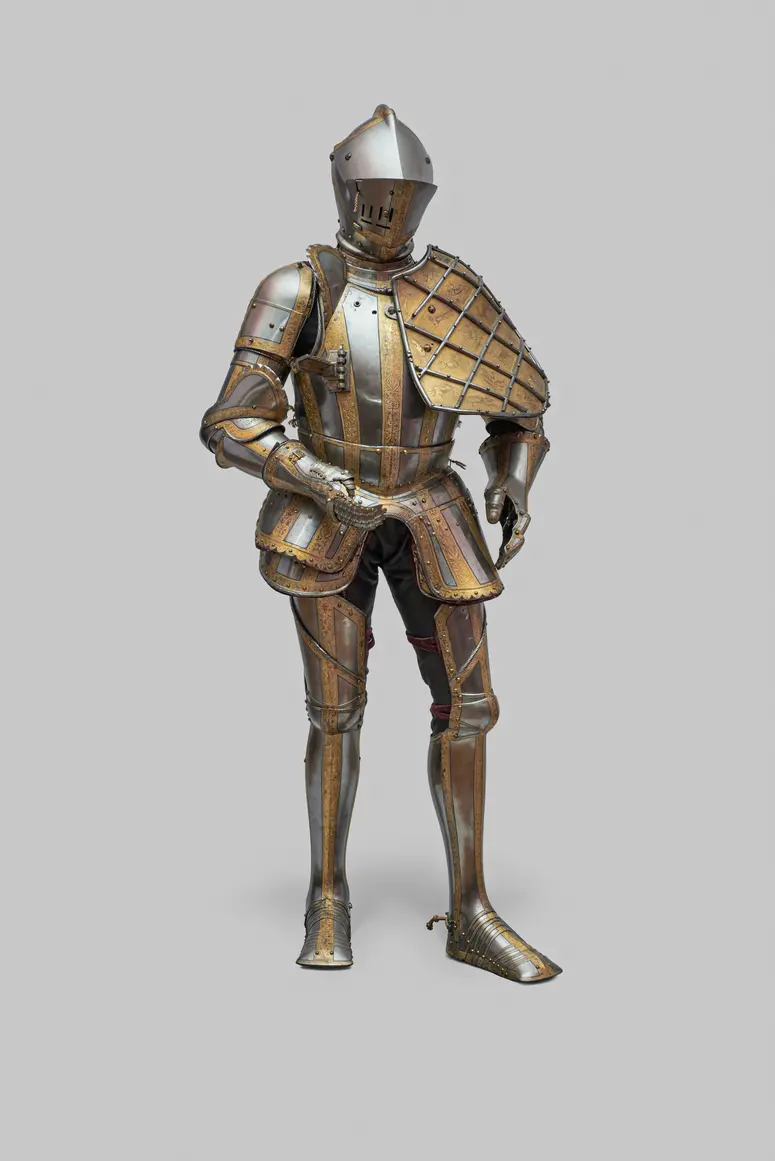
Maximilian II. (1564-1576), Kaiser 1549/1550
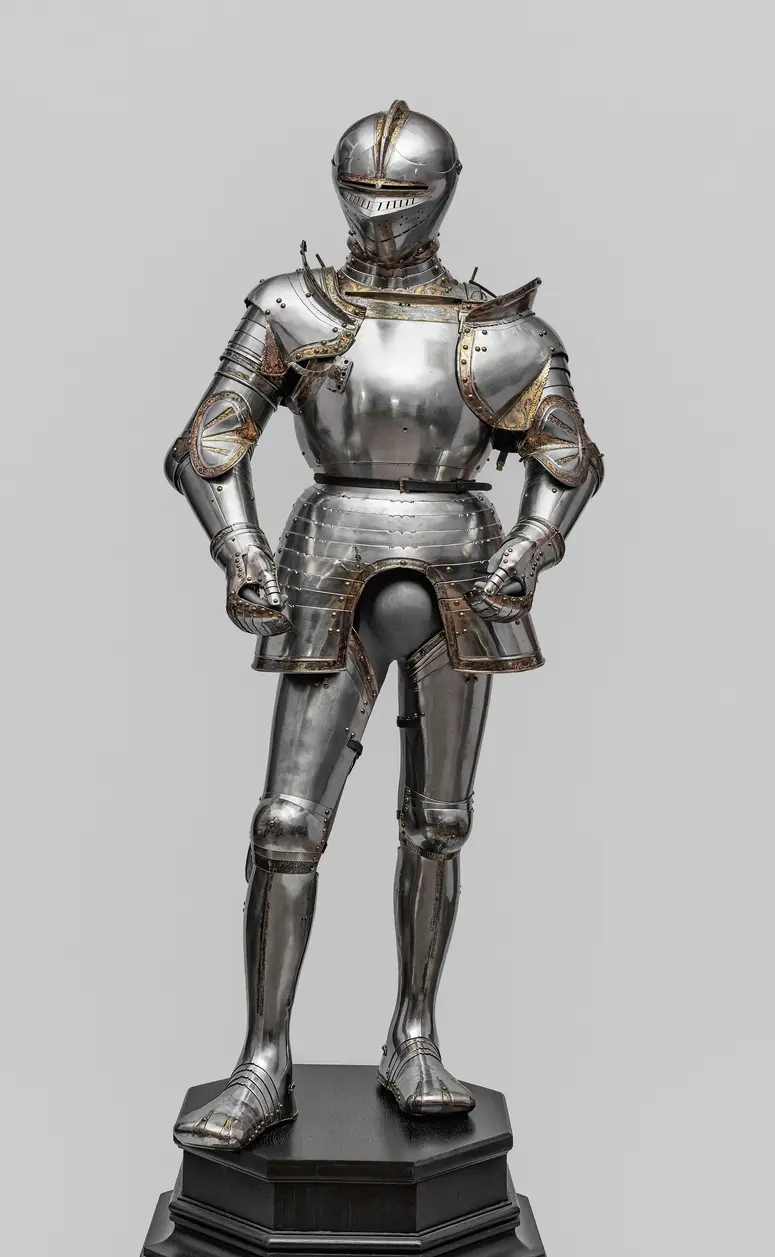
Graf Andreas Sohn d. Eberhardt von Sonnenberg-Friedberg um 1505-1510
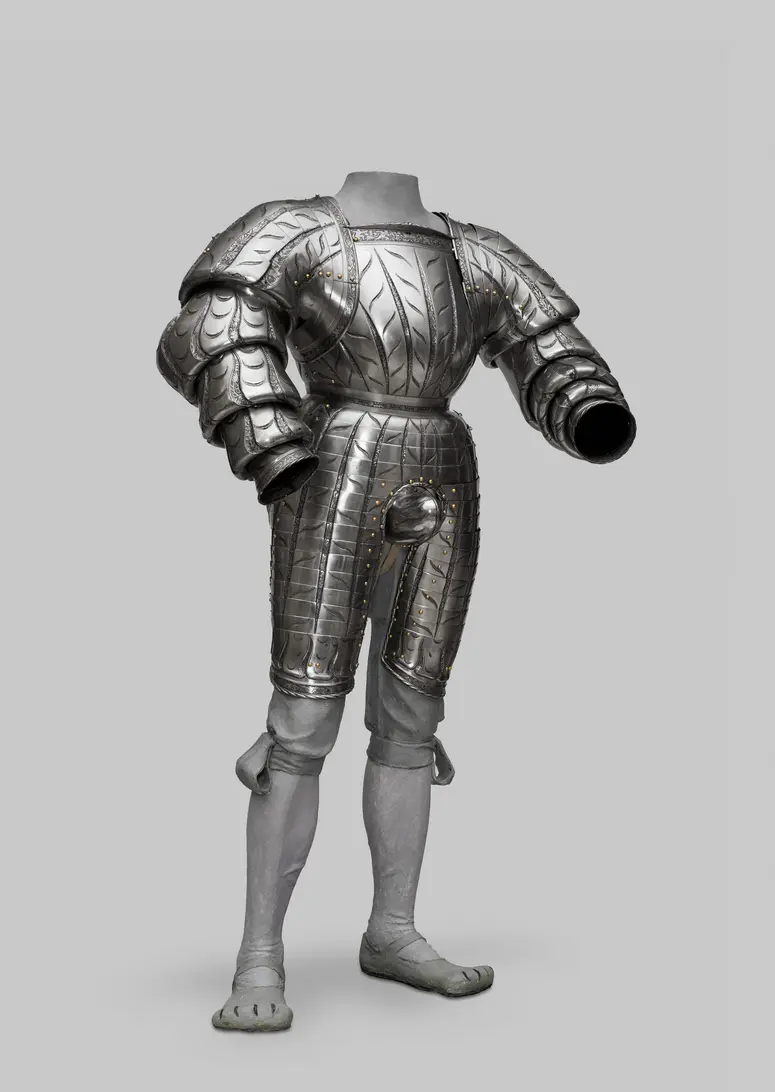
Reichsfreiherr Wilhelm Sohn d. Caspar von Rogendorf 1523

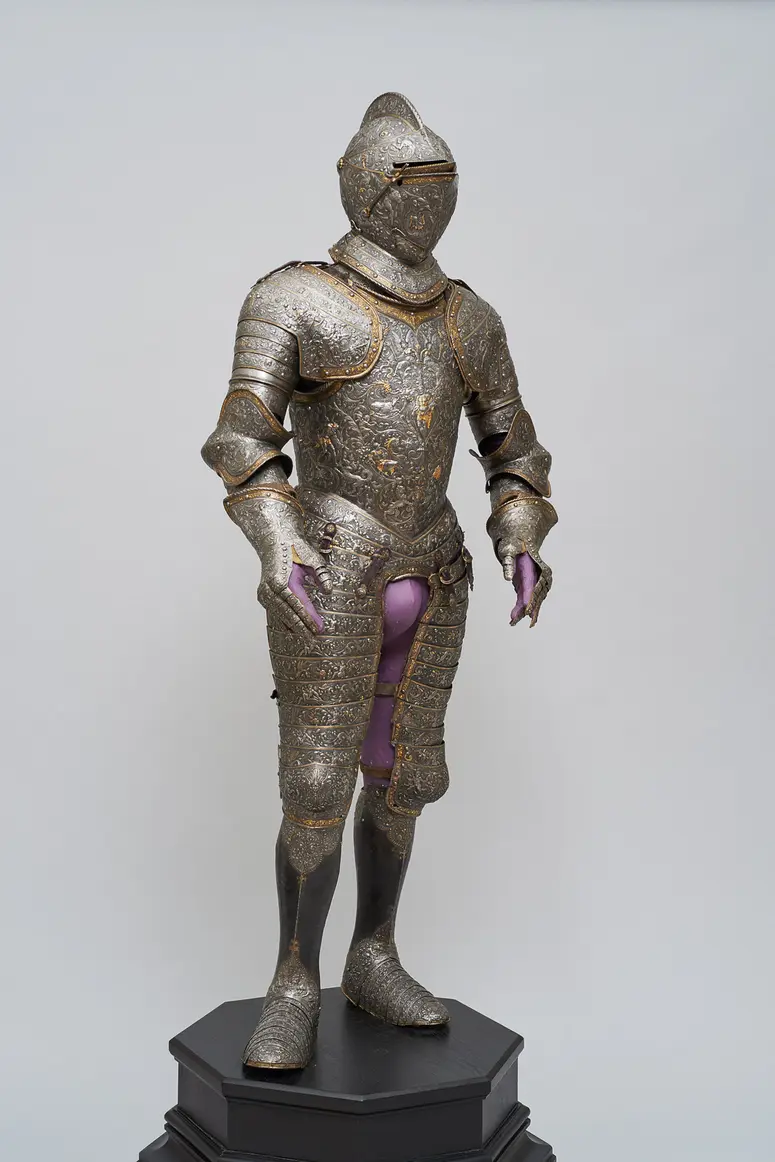
Maximilian II. (1564-1576), Kaiser um 1555-1560
Moritz Sohn des Wilhem von Oranien 1590-1595
Matthäus Lang von Wellenburg (1519-1540), Erzbischof von Salzburg 1511
Claude de Vaudrey, Seigneur de L'Aigle et de Chilly c. 1495
Ulrich (1498-1550), Herzog von Württemberg c. 1525-1530

Riefelharnisch, Riefelküriss: Fluted field armour Johann Friedrich I. (1532-1547), Kurfürst von Sachsen Dated 1530