Doppelstücke einer Harnischgarnitur
1539/1540 | Franz I. von Frankreich
In early 1539, King (later Emperor) Ferdinand I ordered a number of armours from his court armoury at Innsbruck, intended as gifts for ‘our dear brother and brother-in-law the King of France’ (unserm lieben brueder und schwager dem künig zu Frankreich) – that is, Francis I. Ferdinand also ordered armours for the latter’s two sons, Henry and Charles, as well as for Anne de Montmorency, the Connétable of France. The previous summer, France and Austria had signed a ten-year truce, which is presumably the reason Ferdinand commissioned these luxurious bespoke gifts.
In the spring of 1539, Jörg Seusenhofer, Ferdinand’s court armourer, travelled to the French court to take the measurements of the intended recipients. Executing this imperial commission proved difficult, however, and Seusenhofer was plagued by financial problems, a broken-down polishing mill, and especially the ‘impossibly’ tight schedule. Ferdinand had demanded that Seusenhofer and his assistants produce the armours ‘as quickly as possible’ (so schnell als nur möglich), exhorting them to work ‘day and night’ (Tag und Nacht).
The harnesses for Henry and Charles were completed in April 1540 and reached Ferdinand, who was then in the Low Countries, in May. The remaining armours, wrote Seusenhofer, especially those for the king, would take another six months. However, by the summer of 1540 political tensions between France and Austria were on the rise again, and when the armour for Francis I was finally completed, it remained in Innsbruck.
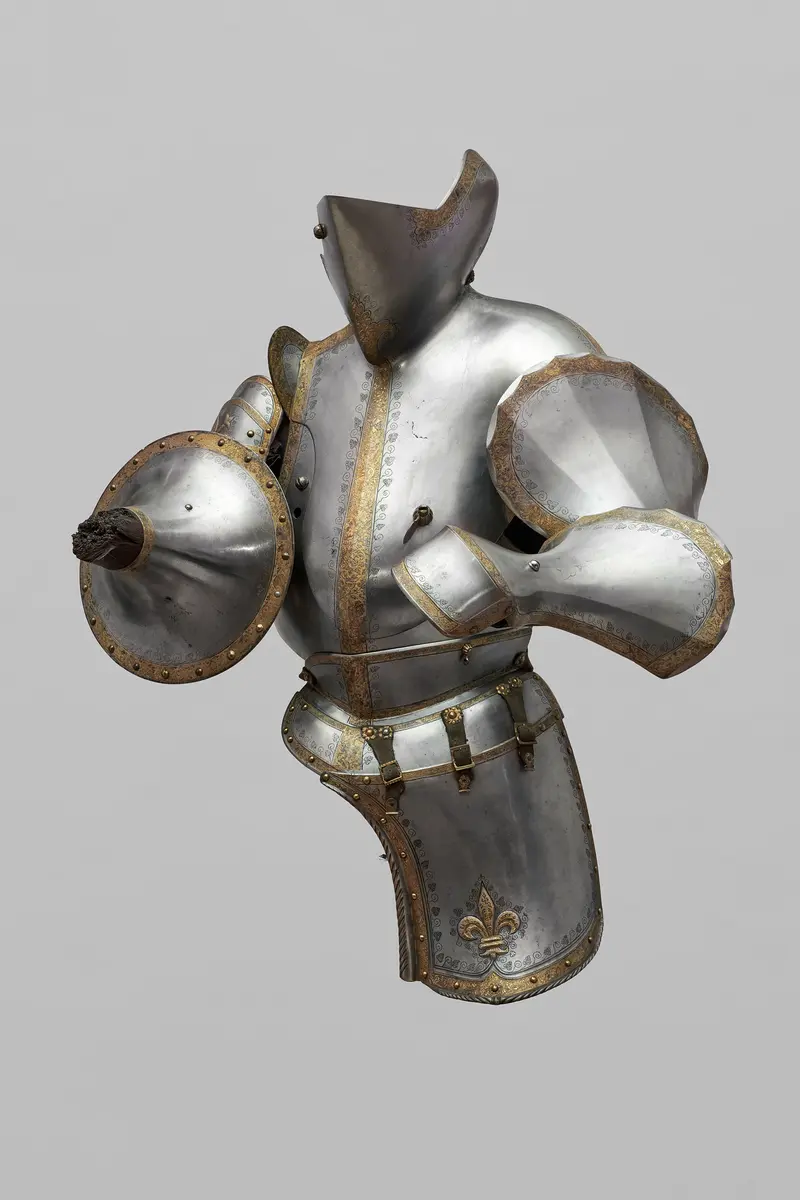
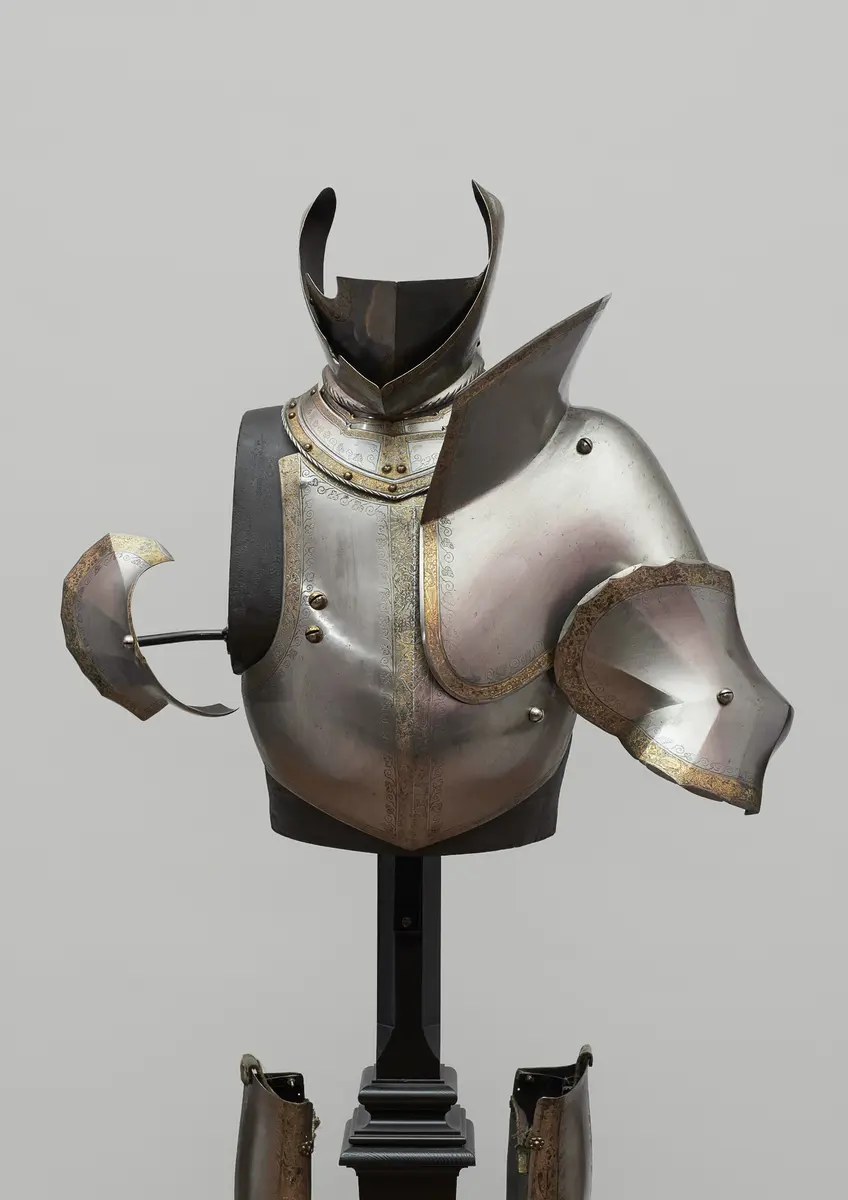
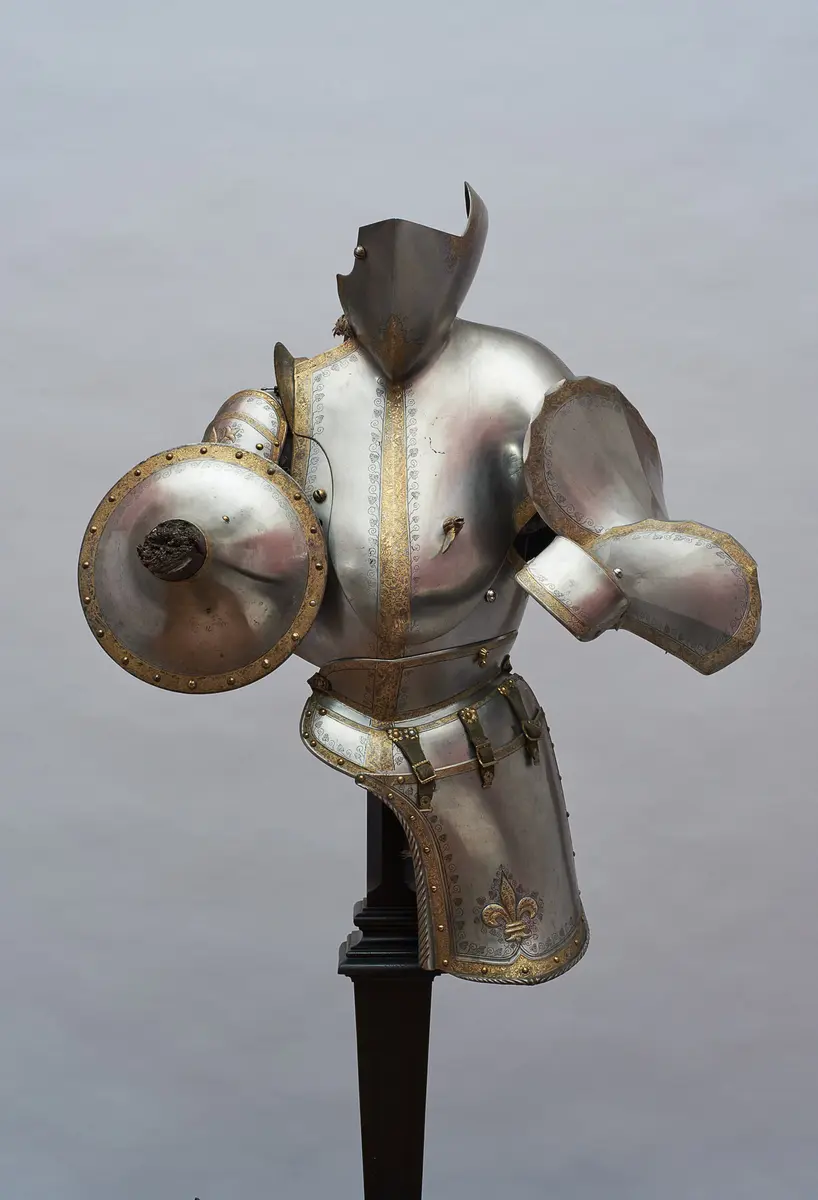
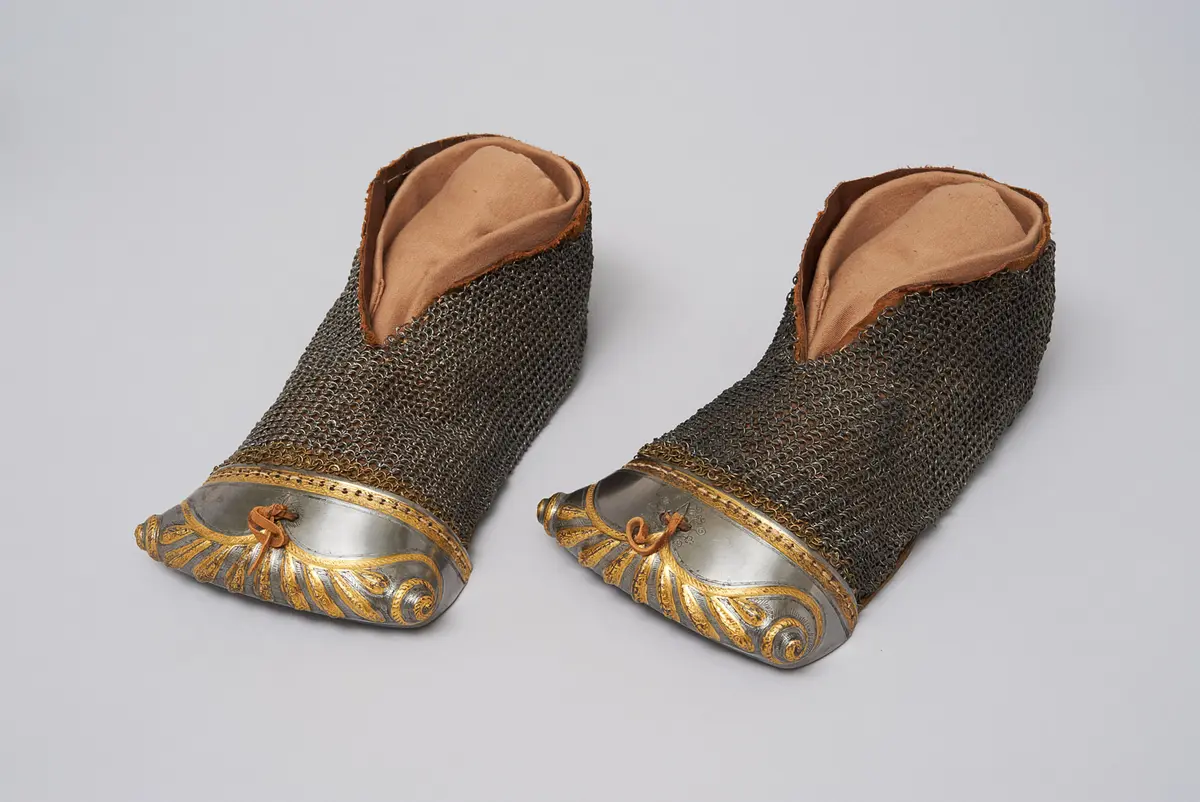
In 1805, French troops removed the armour from Ambras Castle to Paris on the order of Napoleon, which is why it is today in the Musée de l’Armée. However, these exchange pieces for the melee and the tilt were apparently overlooked and thus remained behind. The French fleur-de-lys on the tasset from the armour for the tilt is a reminder of the originally intended recipient, King Francis I of France, who never wore or even set eyes on this splendid bespoke armour.
In early 1539, King (later Emperor) Ferdinand I ordered a number of armours from his court armoury at Innsbruck, intended as gifts for ‘our dear brother and brother-in-law the King of France’ (unserm lieben brueder und schwager dem künig zu Frankreich) – that is, Francis I. Ferdinand also ordered armours for the latter’s two sons, Henry and Charles, as well as for Anne de Montmorency, the Connétable of France. The previous summer, France and Austria had signed a ten-year truce, which is presumably the reason Ferdinand commissioned these luxurious bespoke gifts.
In the spring of 1539, Jörg Seusenhofer, Ferdinand’s court armourer, travelled to the French court to take the measurements of the intended recipients. Executing this imperial commission proved difficult, however, and Seusenhofer was plagued by financial problems, a broken-down polishing mill, and especially the ‘impossibly’ tight schedule. Ferdinand had demanded that Seusenhofer and his assistants produce the armours ‘as quickly as possible’ (so schnell als nur möglich), exhorting them to work ‘day and night’ (Tag und Nacht).
The harnesses for Henry and Charles were completed in April 1540 and reached Ferdinand, who was then in the Low Countries, in May. The remaining armours, wrote Seusenhofer, especially those for the king, would take another six months. However, by the summer of 1540 political tensions between France and Austria were on the rise again, and when the armour for Francis I was finally completed, it remained in Innsbruck.
In 1805, French troops removed the armour from Ambras Castle to Paris on the order of Napoleon, which is why it is today in the Musée de l’Armée. However, these exchange pieces for the melee and the tilt were apparently overlooked and thus remained behind. The French fleur-de-lys on the tasset from the armour for the tilt is a reminder of the originally intended recipient, King Francis I of France, who never wore or even set eyes on this splendid bespoke armour.
Recipient:
(nie übergeben) Franz I. von Frankreich (1494 Cognac - 1547 Rambouillet) DNB
Artist:
Jörg Seusenhofer , (Plattner) (1528 - 1580, tätig in Innsbruck) DNB
Customer:
Ferdinand I. (1521-1564), Erzherzog, seit 1531 König und seit 1558 Kaiser (1503 - 1564) DNB
Time:
1539/1540
Object Name
Doppelstücke einer Harnischgarnitur
Culture
Innsbruck
Material/technology:
Blankes, geschmiedetes, teilweise auch getriebenes Eisen, versehen mit teilweise feuervergoldetem, tiefgätztem Dekor. Leder. Rote Atlaseide. Verschraubungen mit feuervergoldeten Kappen.
Copyright
Kunsthistorisches Museum, Hofjagd- und Rüstkammer
Invs.
Hofjagd- und Rüstkammer, B 147
Browse more
Similar items you might be interested in
Kurfürst Friedrich I. Sohn des Ludwig III. von der Pfalz around 1450. Gauntlets: around 1475/1485.

Karl I. (V.) (1516-1556), als Karl I. König von Spanien, ab 1519 deutscher König, ab 1520 Kaiser c. 1512-1514
Maximilian II. (1564-1576), Kaiser um 1555-1560
Reichsfreiherr Wilhelm Sohn d. Caspar von Rogendorf 1523
Konrad von Boineburg (von Bemelberg) um 1535-1540
Sigismund Franz (1662-1665), Erzherzog von Vorderösterreich um 1635-1638
Claude de Vaudrey, Seigneur de L'Aigle et de Chilly c. 1495
Paolo Francesco Carnesecchi, Sohn von Pietro Carnesecchi (1508-1567) um 1575
Francesco Maria I. della Rovere ca. 1532-1535

Ferdinand II. (1564-1595), Erzherzog von Österreich und Landesherr von Tirol 1559/60
Maximilian II. (1564-1576), Kaiser datiert 1550
Maximilian II. (1564-1576), Kaiser 1549/1550
Ferdinand II. (1564-1595), Erzherzog von Österreich und Landesherr von Tirol 1547
Leopold V. (1619-1632), Erzherzog und Graf von Tirol, Bischof von Passau und Straßburg um 1620

Maximilian II. (1564-1576), Kaiser datiert 1557

Philipp II. (1556-1598), König von Spanien, seit 1580 als Philipp I. König von Portugal 1544
Maximilian I. (1477-1519), seit 1493 deutscher König, 1508 Kaiser um 1485