Fluted field armour
The original owner of this armour was John Frederick, Duke of Saxony. In 1532, John Frederick succeeded to the dukedom as the last Elector of Saxony from the Ernestine line of the House of Wettin. He joined the Protestant Schmalkaldic League against the emperor but was roundly defeated and taken prisoner at the Battle of Mühlberg in 1547, after which he was compelled to abdicate in favour of his cousin Maurice, the first elector from the Albertine line.
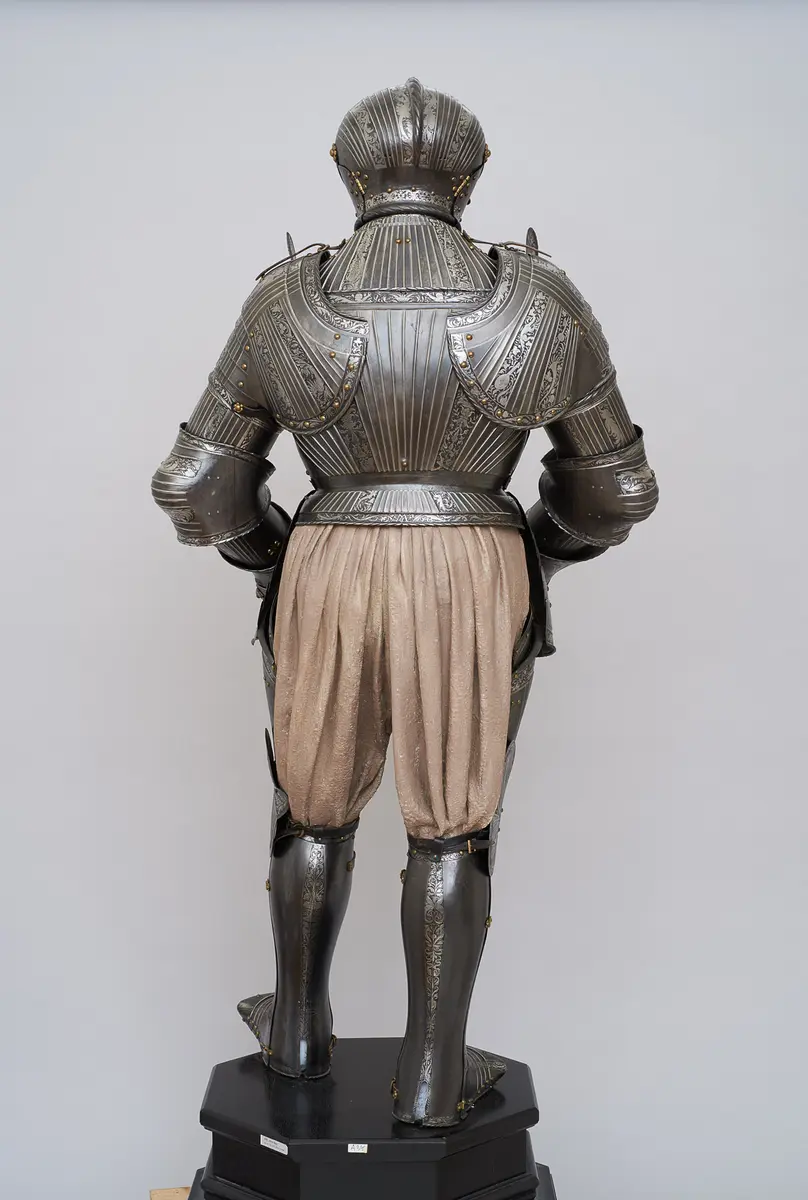
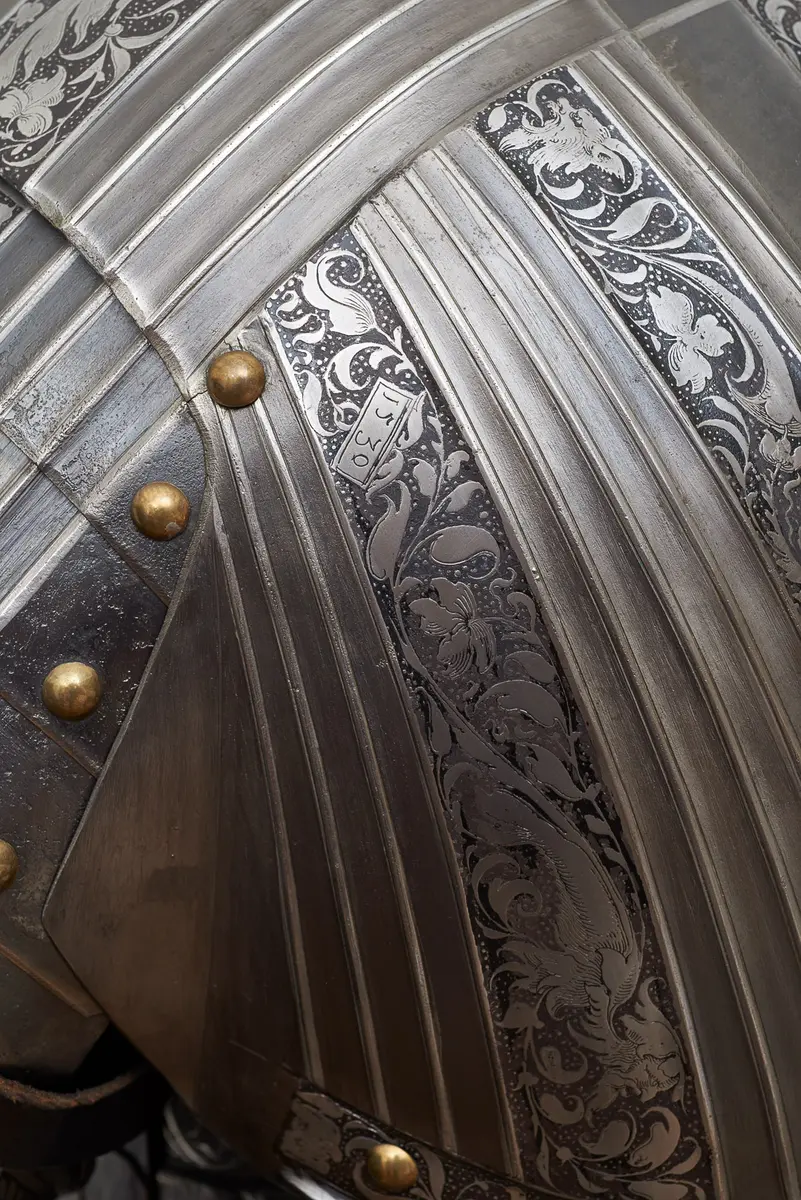
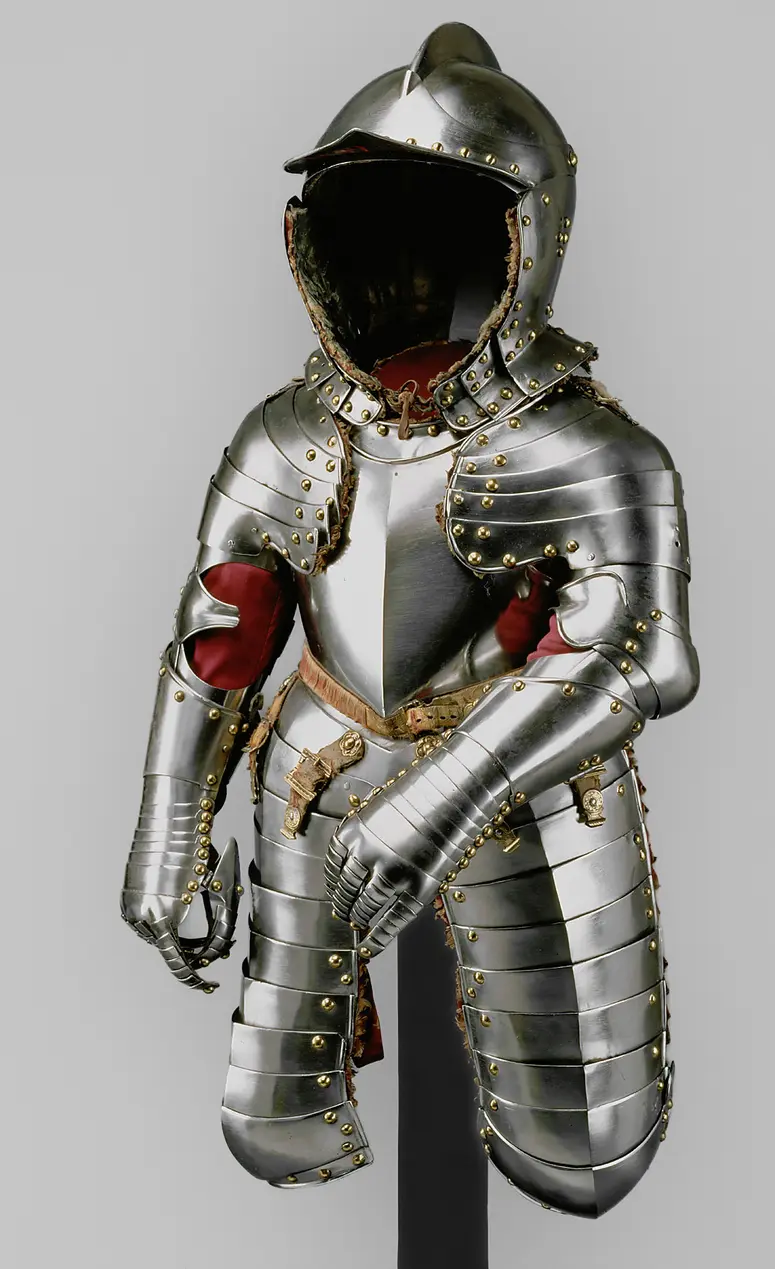
The backplate of this fluted cuirass is inscribed with the date 1530 and the monogram MG, presumably a reference to Matthias Gerung, a painter and woodcarver from Munich. The gauntlets are stamped with the arms of the city of Nuremberg. Stylistic reasons allow us to attribute the armour to Hans Ringler, an armourer active in that city. It is very similar to armour we know Ringler had produced for Otto Henry, Count Palatine, pieces of which are now in London and Paris.
In 1530, the year this armour was ordered, Augsburg hosted the Imperial Diet at which the Protestant estates presented Emperor Charles V with the Confessio Augustana, the first confession of faith of the Lutheran church. The Catholic side categorically refused to accept it, which led to the founding of the Schmalkaldic League in early 1531, a defensive alliance of Protestant princes and free cities. In 1533, the alliance designated John Frederick as one of its leaders.
In 1593, the armour now in Vienna was mentioned as being in the fourth vitrine in the Armoury of Heroes that Archduke Ferdinand II had installed at Ambras Castle near Innsbruck: ‘John Frederick, Duke of Saxony, Elector, complete armour’ (Hanß Fridrich, Herzoge zu Sachsen, Churfürsten, ganze Rüstung).
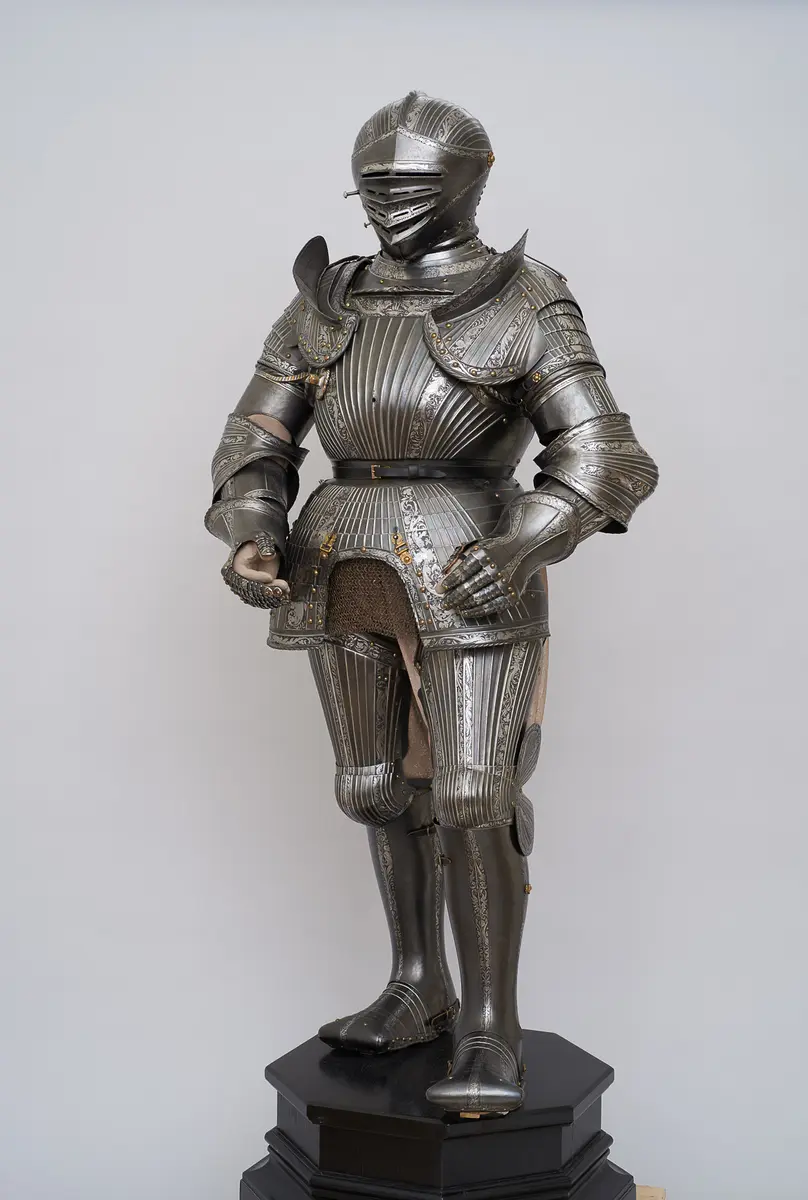
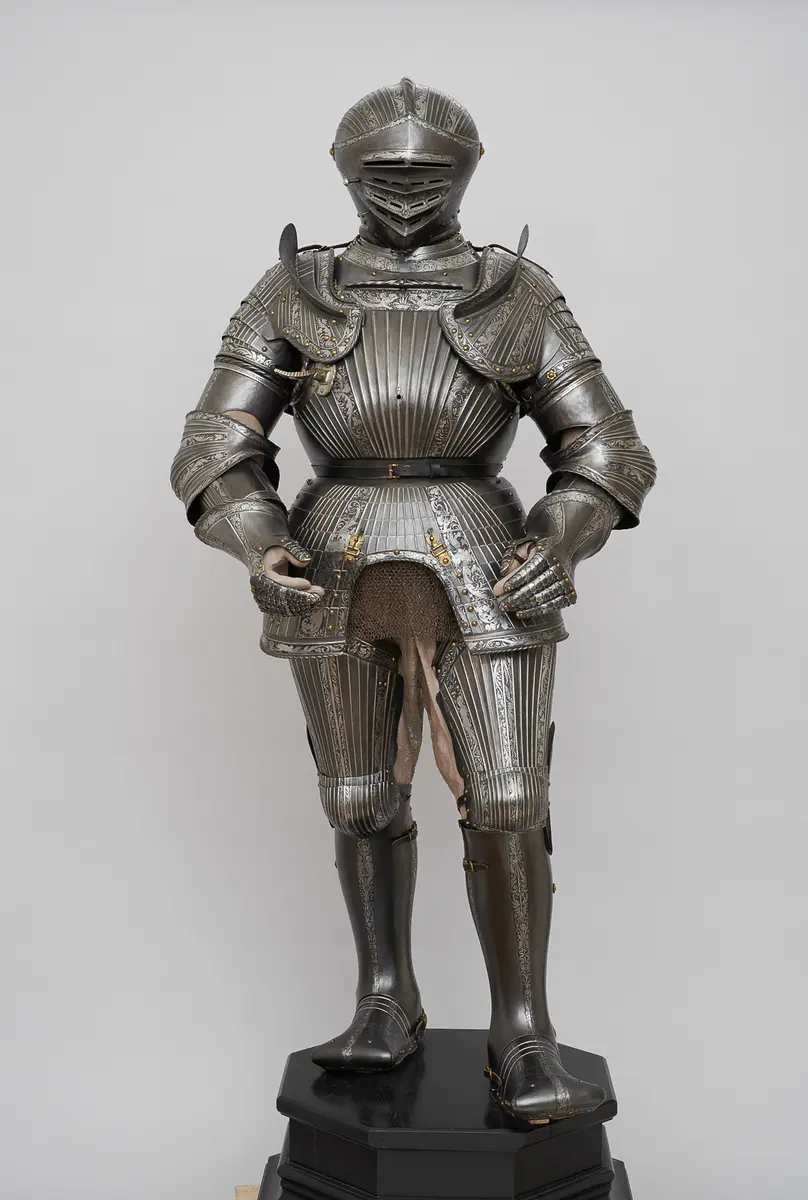
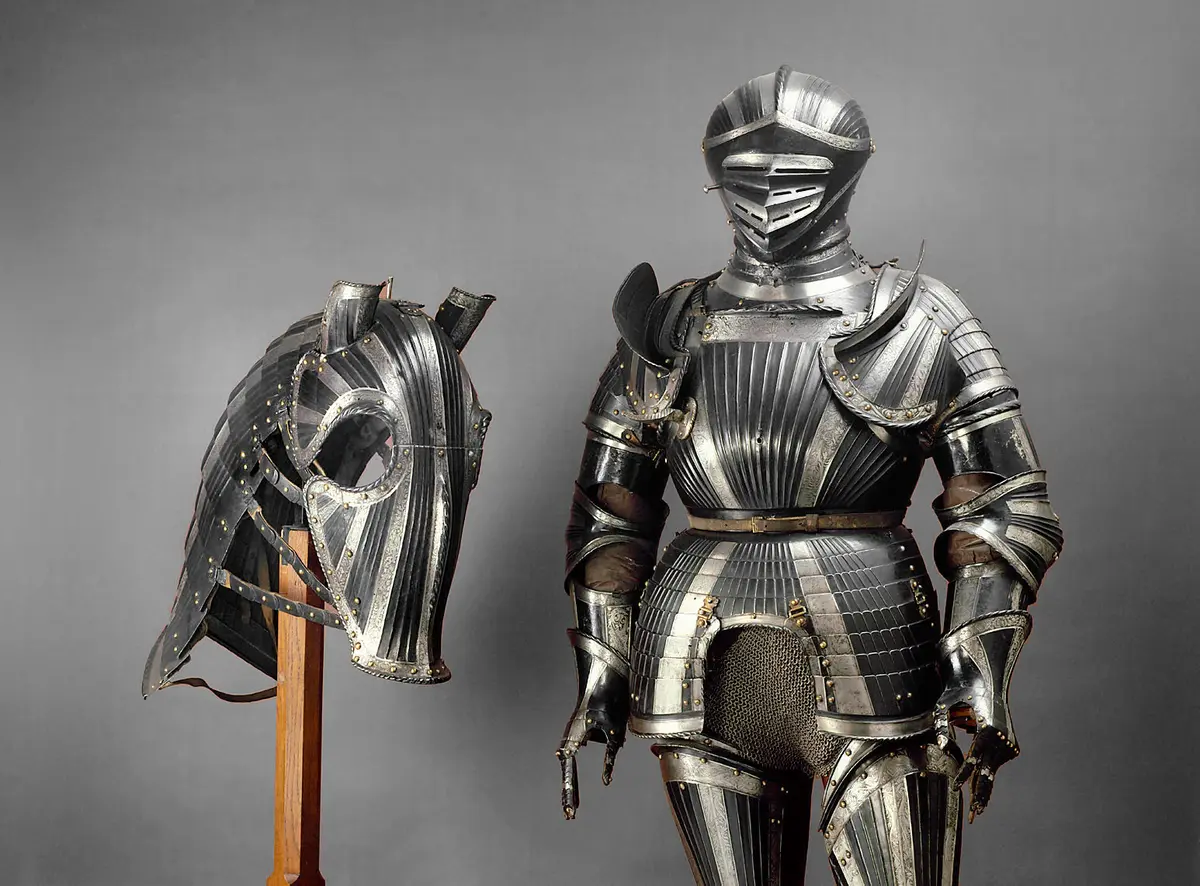
The original owner of this armour was John Frederick, Duke of Saxony. In 1532, John Frederick succeeded to the dukedom as the last Elector of Saxony from the Ernestine line of the House of Wettin. He joined the Protestant Schmalkaldic League against the emperor but was roundly defeated and taken prisoner at the Battle of Mühlberg in 1547, after which he was compelled to abdicate in favour of his cousin Maurice, the first elector from the Albertine line.
The backplate of this fluted cuirass is inscribed with the date 1530 and the monogram MG, presumably a reference to Matthias Gerung, a painter and woodcarver from Munich. The gauntlets are stamped with the arms of the city of Nuremberg. Stylistic reasons allow us to attribute the armour to Hans Ringler, an armourer active in that city. It is very similar to armour we know Ringler had produced for Otto Henry, Count Palatine, pieces of which are now in London and Paris.
In 1530, the year this armour was ordered, Augsburg hosted the Imperial Diet at which the Protestant estates presented Emperor Charles V with the Confessio Augustana, the first confession of faith of the Lutheran church. The Catholic side categorically refused to accept it, which led to the founding of the Schmalkaldic League in early 1531, a defensive alliance of Protestant princes and free cities. In 1533, the alliance designated John Frederick as one of its leaders.
In 1593, the armour now in Vienna was mentioned as being in the fourth vitrine in the Armoury of Heroes that Archduke Ferdinand II had installed at Ambras Castle near Innsbruck: ‘John Frederick, Duke of Saxony, Elector, complete armour’ (Hanß Fridrich, Herzoge zu Sachsen, Churfürsten, ganze Rüstung).
Owner:
Johann Friedrich I. (1532-1547), Kurfürst von Sachsen (1503 - 1554) DNB
Artist:
Hans Ringler , (Plattner), zugeschrieben (Meister 1525, gest. 1547, tätig in Nürnberg) DNB
Time:
Dated 1530
Object Name
Riefelharnisch, Riefelküriss
Culture
Nürnberg
Material/technology:
Iron, forged, chased, partly blued (modern), partly etched. Etching: filled with oil paint (modern). Rivet caps, buckles, rosettes: brass. Leather (modern).
Dimensions:
H (inkl. Eisenplatte) 182 cm x B 90 cm x T 70 cm
Signed
"MG" auf Unterrand des Gesäßreifens des Rückens geätzt (zugeschrieben: Matthias Gerung von München)
Inscribed
"1530" geätzt, hinten auf der linken Schulter
Stamp / markings
Auf beiden Handschuhen die Stadtwappenmarke von Nürnberg
Copyright
Kunsthistorisches Museum, Hofjagd- und Rüstkammer
Invs.
Hofjagd- und Rüstkammer, A 347
Browse more
Similar items you might be interested in
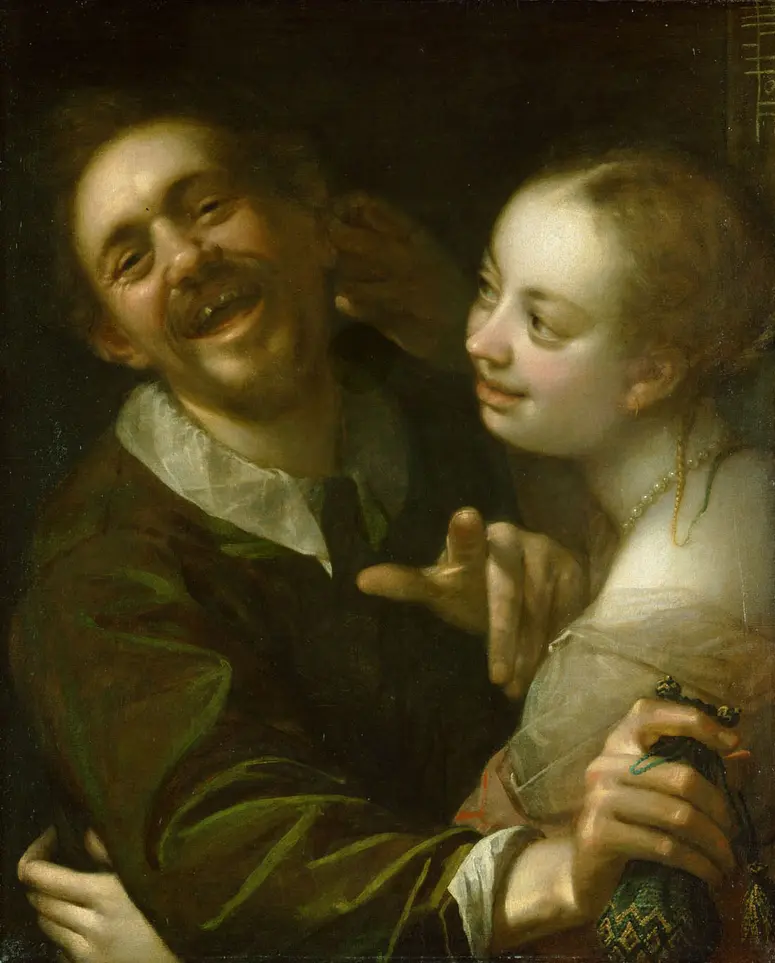
“Joking Couple”, Self-Portrait of the Artist with his Wife Hans von Aachen around 1596
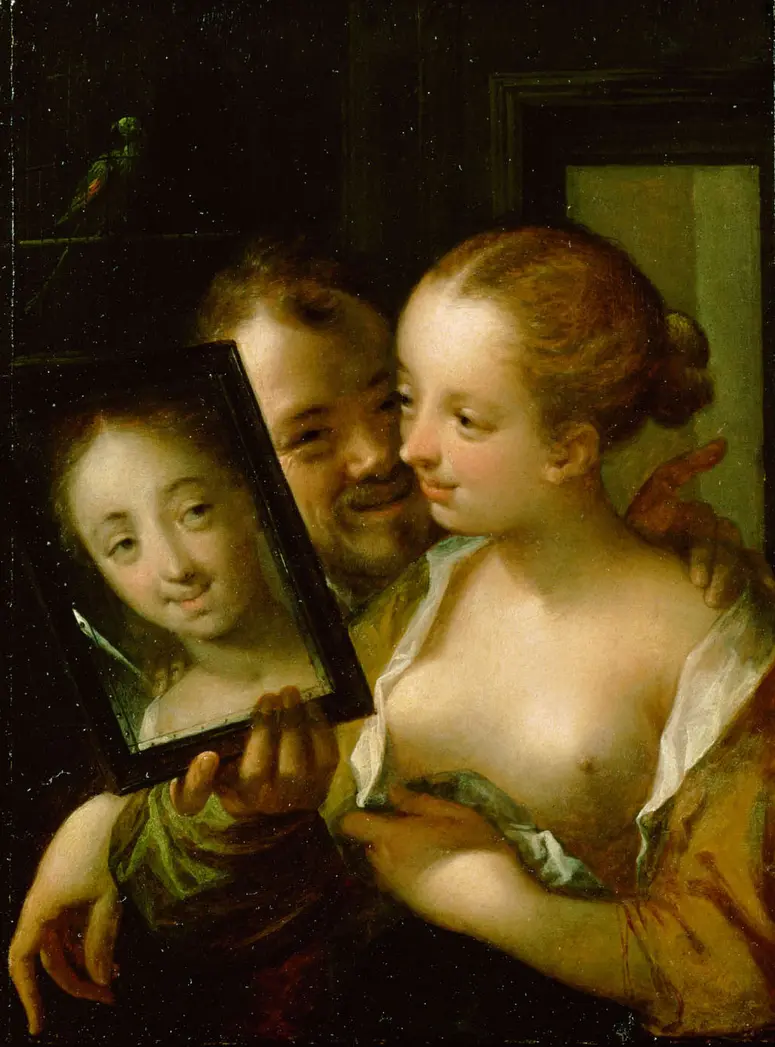
Leopold V. (1619-1632), Erzherzog und Graf von Tirol, Bischof von Passau und Straßburg 1628
Hans Becher d. Ä. Plattnerarbeiten spätes 16. Jahrhundert, Ätzung datiert 1618, tlw. Ergänzungen
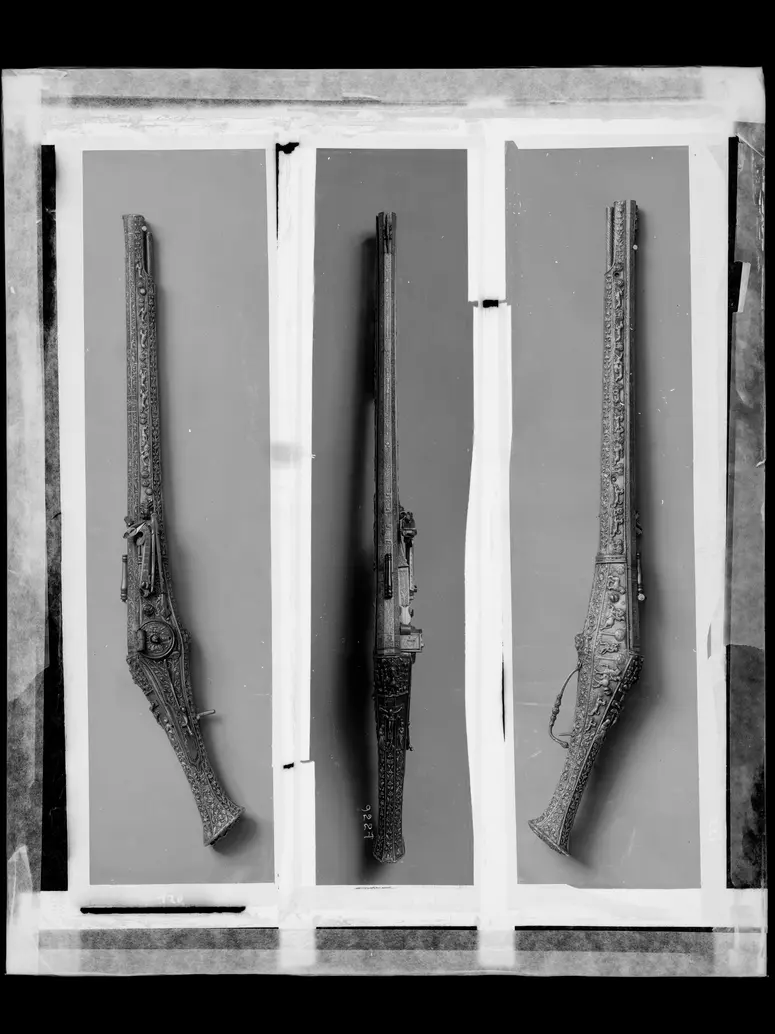
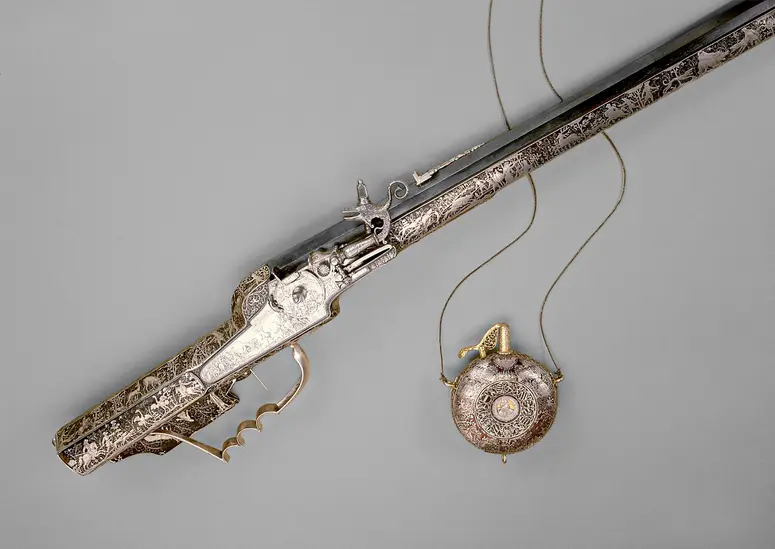
Langes Faustrohr mit Radschloss; Radschlosspistole (mit Ladestock) J. Löwy, K. und K. Hof-Photograph, Kunst- und Verlagsanstalt (Wien) 1892
Halber Fußknechtharnisch; Feldküriss J. Löwy, K. und K. Hof-Photograph, Kunst- und Verlagsanstalt (Wien) 1892
Johann Friedrich I. (1532-1547), Kurfürst von Sachsen datiert 1530
Sigismund Franz (1662-1665), Erzherzog von Vorderösterreich um 1635-1638