Half-armour
um 1540 | Doge Sebastiano Venier
On February 9, 1578, shortly before Sebastiano Venier died on
3 March, Veit von Dornberg († 1591) reported back to Ferdinand II,
Archduke of Austria (1529-1595) that the doge was willing to send his personal
armour, that is the armour he himself had worn. It is first listed in 1593 in
the inventories of the ‘Armoury of Heroes’ the Archduke had installed at Ambras
Castle. It is even pictured in a woodcut included in the ‘Armamentarium
Heroicum’, the catalogue of the collection published in Latin in 1601 and in
German in 1603. In a painting portraying the victors of the Battle of Lepanto
of 1571 (Kunsthistorisches Museum Vienna, Picture Gallery, inv. GG 8270)
Sebastiano Venier is shown wearing this armour.
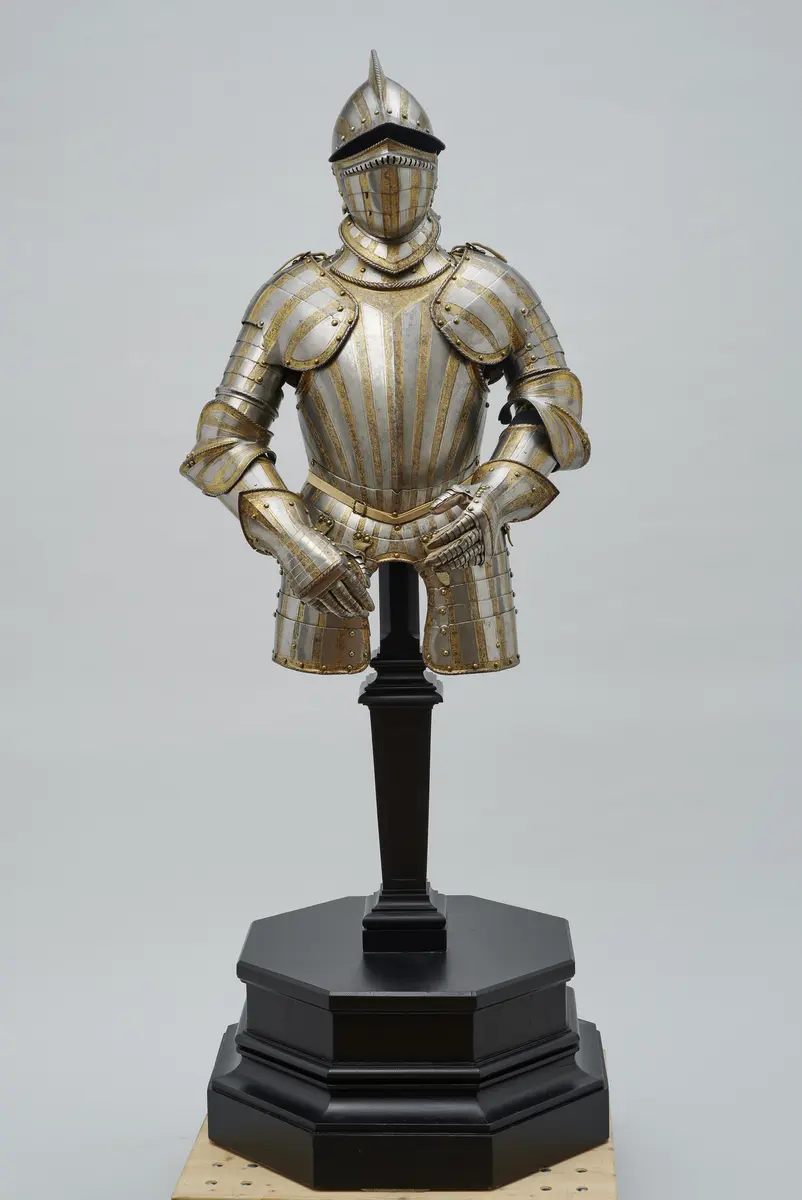
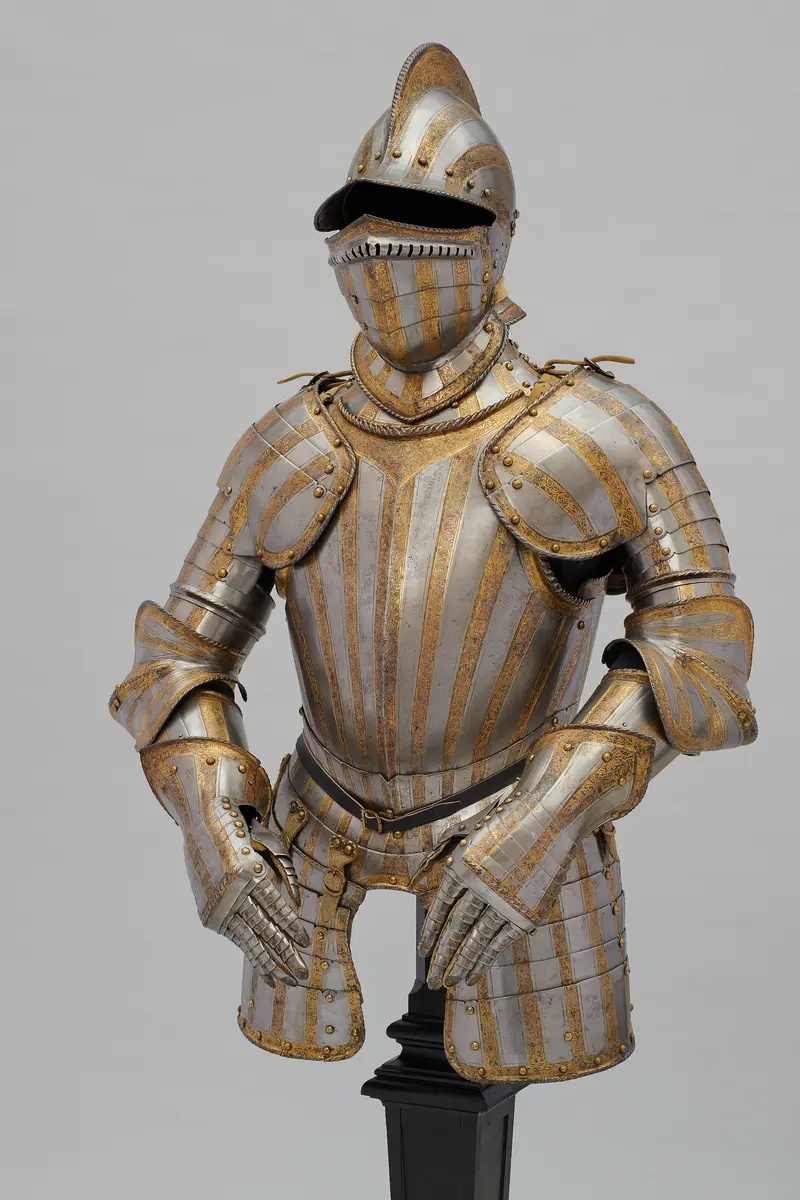
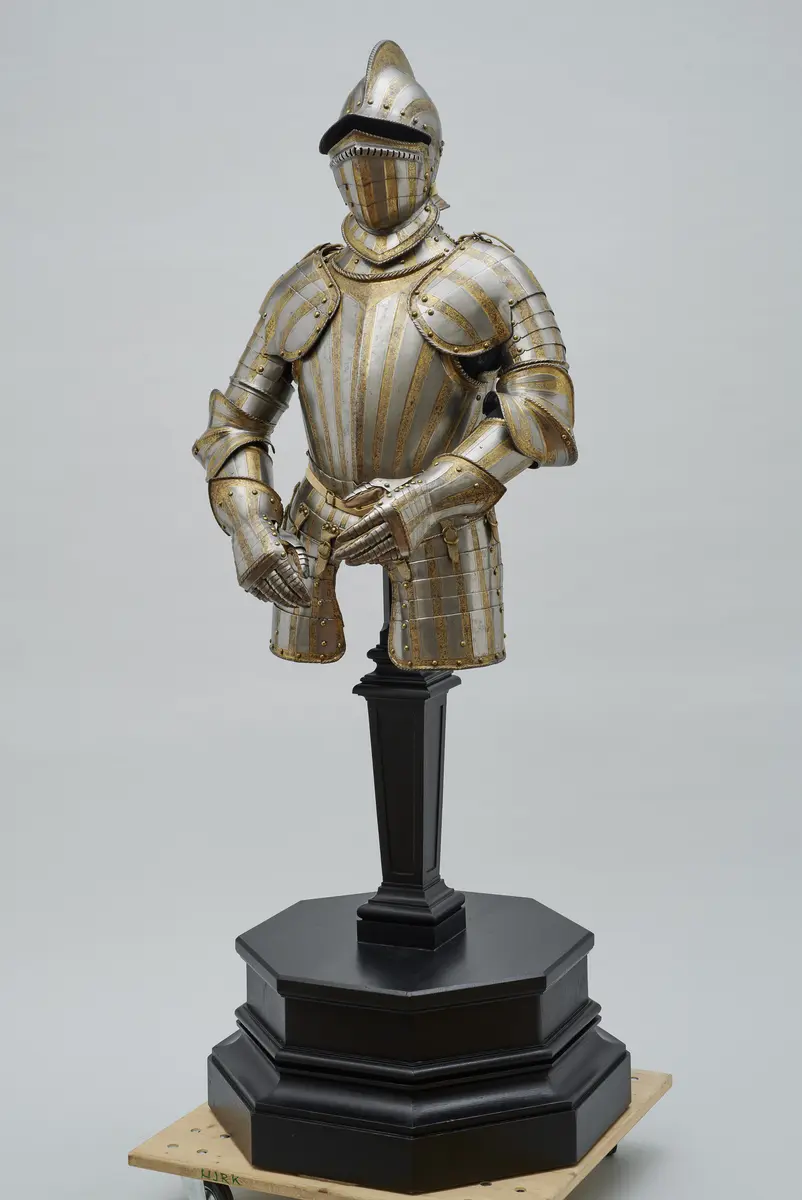
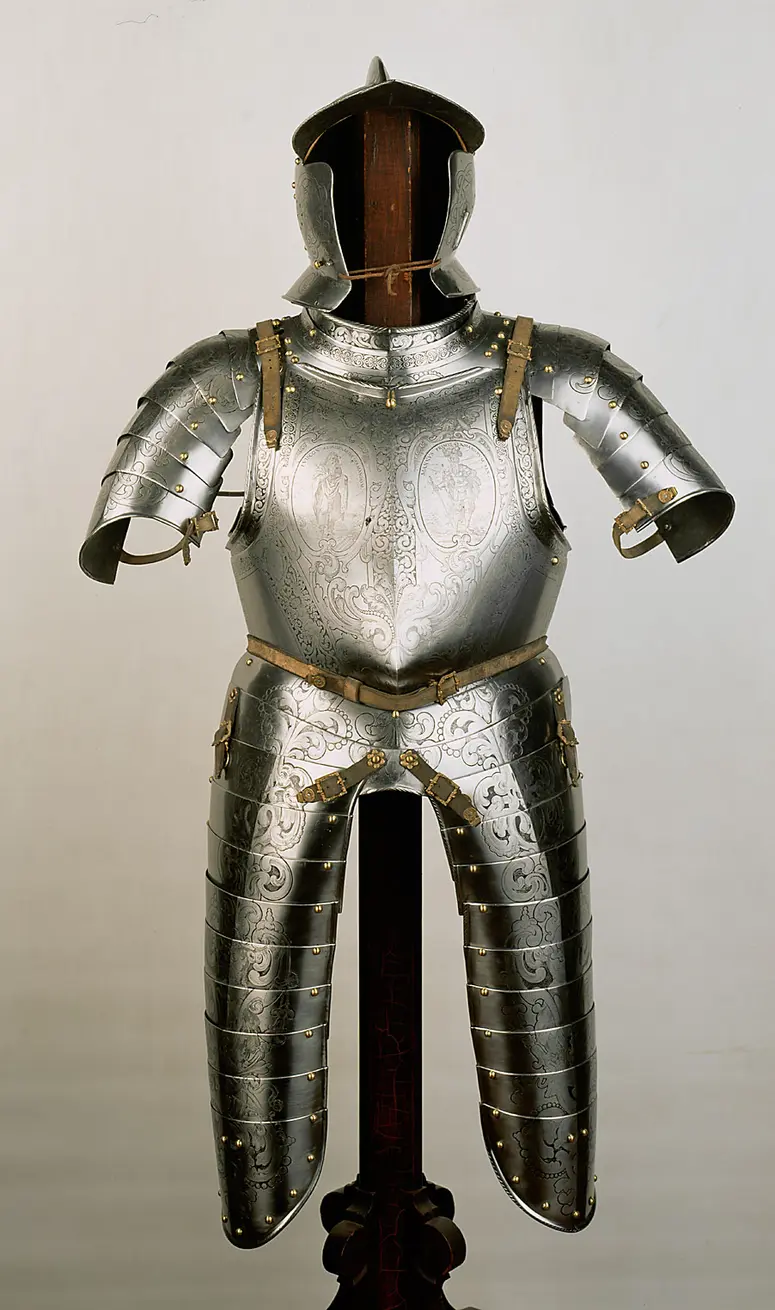
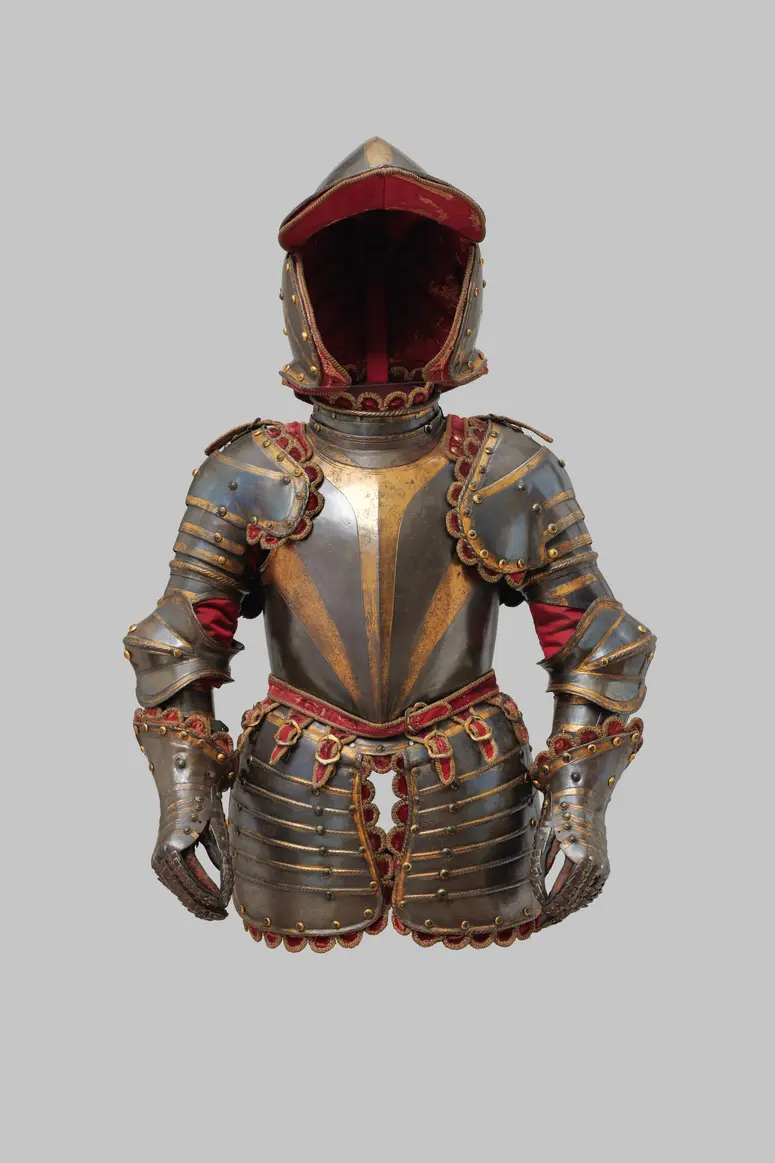
The armour comprises neither leg pieces nor a lance rest, which
would be the norm for a harness for mounted combat. Equipped with a burgonet
complete with bevor, it was perfect for fighting on foot. It represents an
excellent compromise between offering adequate protection for the wearer and
allowing him to move and breathe easily and enjoy unimpaired vision. Apart from
the embellished surfaces, the design is simple and functional. The crimping
along the edges was common at the time. In both the painting mentioned above
and the description included in the 1596 Ambras inventory the armour appears
not to have been blued. In keeping with sixteenth-century fashion, surfaces are
articulated with gilt etched bands with plant ornamentation, some of which also
feature the occasional stag, bird or angel. The dotted ground executed with a
scriber is typical of Italian armour. There are no arms and no iconographic
clues to either its wearer or Venice.
Sebastiano Venier served the Serenissima in Candida, Brescia,
Verona and on Corfu. In 1577, a few years after he had commanded the Venetian
fleet in the victory of the Christian navy over the Ottoman navy in the Battle
of Lepanto, he was elected Doge of Venice. The armour lacks a maker’s mark, a signature
of the etcher and a date.
On February 9, 1578, shortly before Sebastiano Venier died on
3 March, Veit von Dornberg († 1591) reported back to Ferdinand II,
Archduke of Austria (1529-1595) that the doge was willing to send his personal
armour, that is the armour he himself had worn. It is first listed in 1593 in
the inventories of the ‘Armoury of Heroes’ the Archduke had installed at Ambras
Castle. It is even pictured in a woodcut included in the ‘Armamentarium
Heroicum’, the catalogue of the collection published in Latin in 1601 and in
German in 1603. In a painting portraying the victors of the Battle of Lepanto
of 1571 (Kunsthistorisches Museum Vienna, Picture Gallery, inv. GG 8270)
Sebastiano Venier is shown wearing this armour.
The armour comprises neither leg pieces nor a lance rest, which
would be the norm for a harness for mounted combat. Equipped with a burgonet
complete with bevor, it was perfect for fighting on foot. It represents an
excellent compromise between offering adequate protection for the wearer and
allowing him to move and breathe easily and enjoy unimpaired vision. Apart from
the embellished surfaces, the design is simple and functional. The crimping
along the edges was common at the time. In both the painting mentioned above
and the description included in the 1596 Ambras inventory the armour appears
not to have been blued. In keeping with sixteenth-century fashion, surfaces are
articulated with gilt etched bands with plant ornamentation, some of which also
feature the occasional stag, bird or angel. The dotted ground executed with a
scriber is typical of Italian armour. There are no arms and no iconographic
clues to either its wearer or Venice.
Sebastiano Venier served the Serenissima in Candida, Brescia,
Verona and on Corfu. In 1577, a few years after he had commanded the Venetian
fleet in the victory of the Christian navy over the Ottoman navy in the Battle
of Lepanto, he was elected Doge of Venice. The armour lacks a maker’s mark, a signature
of the etcher and a date.
Owner:
Doge Sebastiano Venier (1496 - 1578) DNB
Time:
um 1540
Object Name
Half-armour
Culture
Oberitalien
Material/technology:
Eisen, geschmiedet, getrieben, teils feuervergoldet, teils geätzt. Ätzdekor: feuervergoldet. Scharniere, Schnallen: Eisen. Nietkappen: Messing. Leder (teils modern).
Copyright
Kunsthistorisches Museum, Hofjagd- und Rüstkammer
Invs.
Hofjagd- und Rüstkammer, A 984
Browse more
Similar items you might be interested in
Alexander Farnese (1545-1592), Herzog von Parma Niederländisch 2. Hälfte 16. Jahrhundert
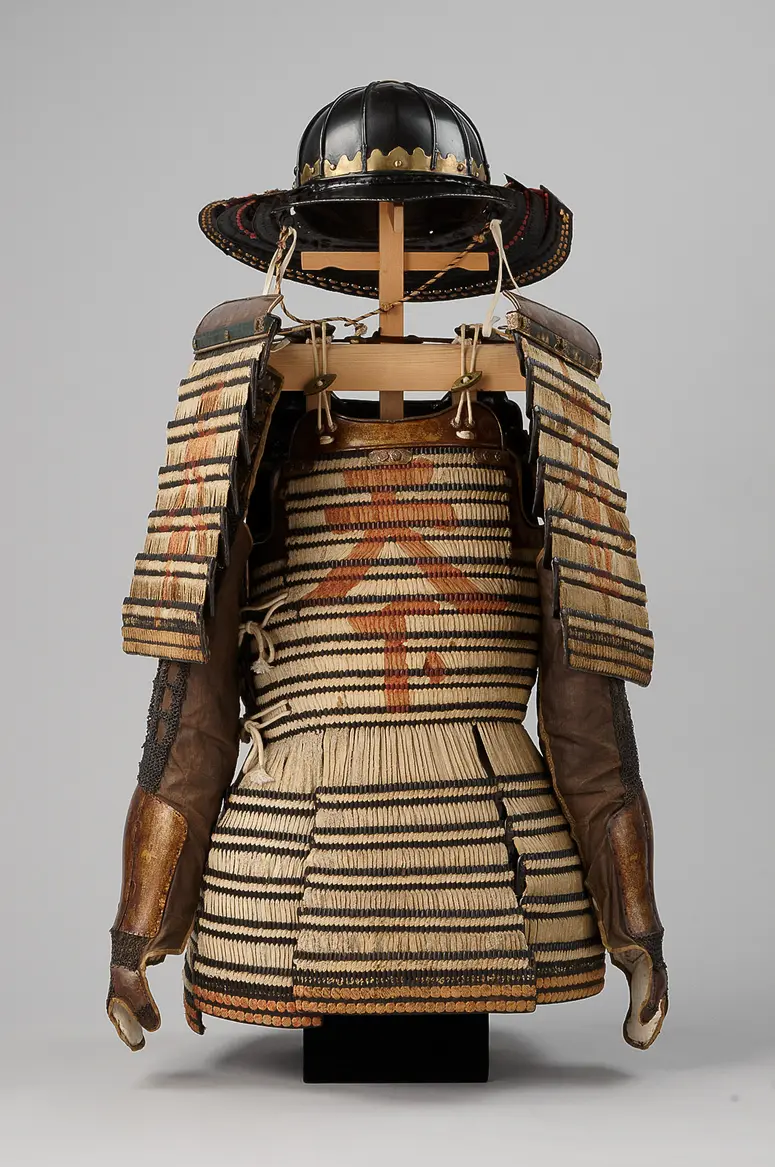
Samurai, Samurairüstung um 1580, Ende 16. Jahrhundert
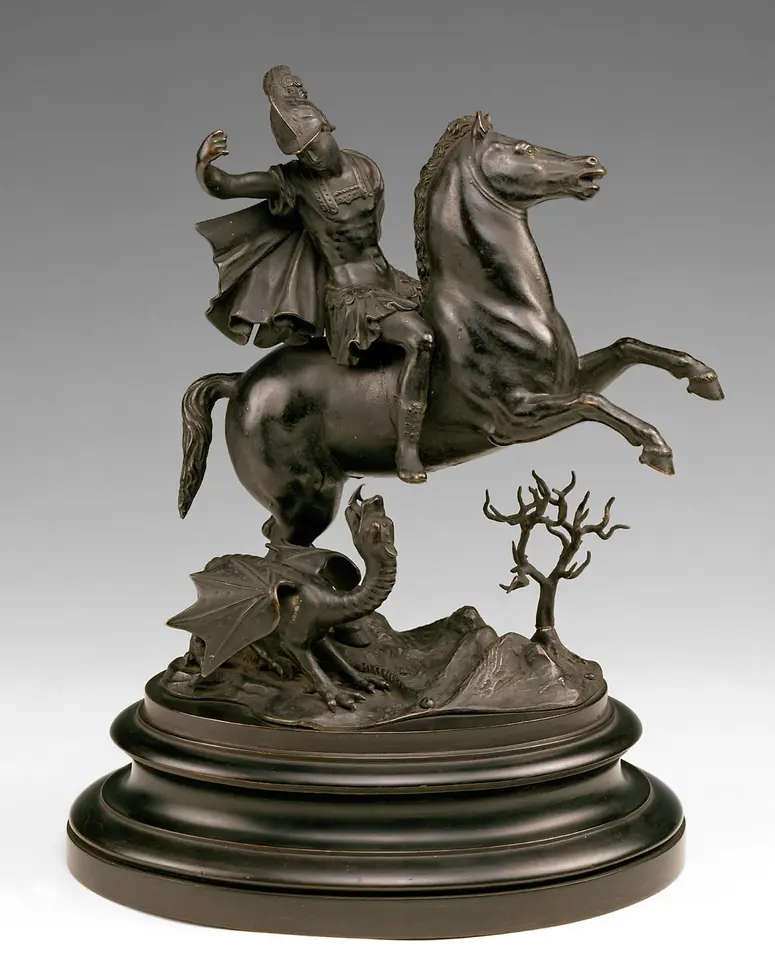
Reiterstatuette des Hl. Georg, Statuette, Kleinbronze, Bronze, Heiliger Georg Caspar Gras spätes 17. Jahrhundert (?)

Philipp II. (1556-1598), König von Spanien, seit 1580 als Philipp I. König von Portugal 1544
Paolo Francesco Carnesecchi, Sohn von Pietro Carnesecchi (1508-1567) um 1575

Maximilian I. (1477-1519), seit 1493 deutscher König, 1508 Kaiser Datiert 1498

Ferdinand II. (1564-1595), Erzherzog von Österreich und Landesherr von Tirol 3. Viertel 16. Jahrhundert
Ganzer blanker Harnisch, Rüstung zum Plankenstechen / Freirennen Anton Peffenhauser um 1570
Leopold III. der Fromme, Herzog Leopold III. von Österreich, Statue, Statuette, Terracotta Herzog Leopold III. Sohn von Albrecht II. von Habsburg um 1600

Karl I. (V.) (1516-1556), als Karl I. König von Spanien, ab 1519 deutscher König, ab 1520 Kaiser c. 1512-1514
Maximilian I. (1477-1519), seit 1493 deutscher König, 1508 Kaiser um 1485
