Streitbeil
Ende 16. Jahrhundert | Sultan Muhammed III.
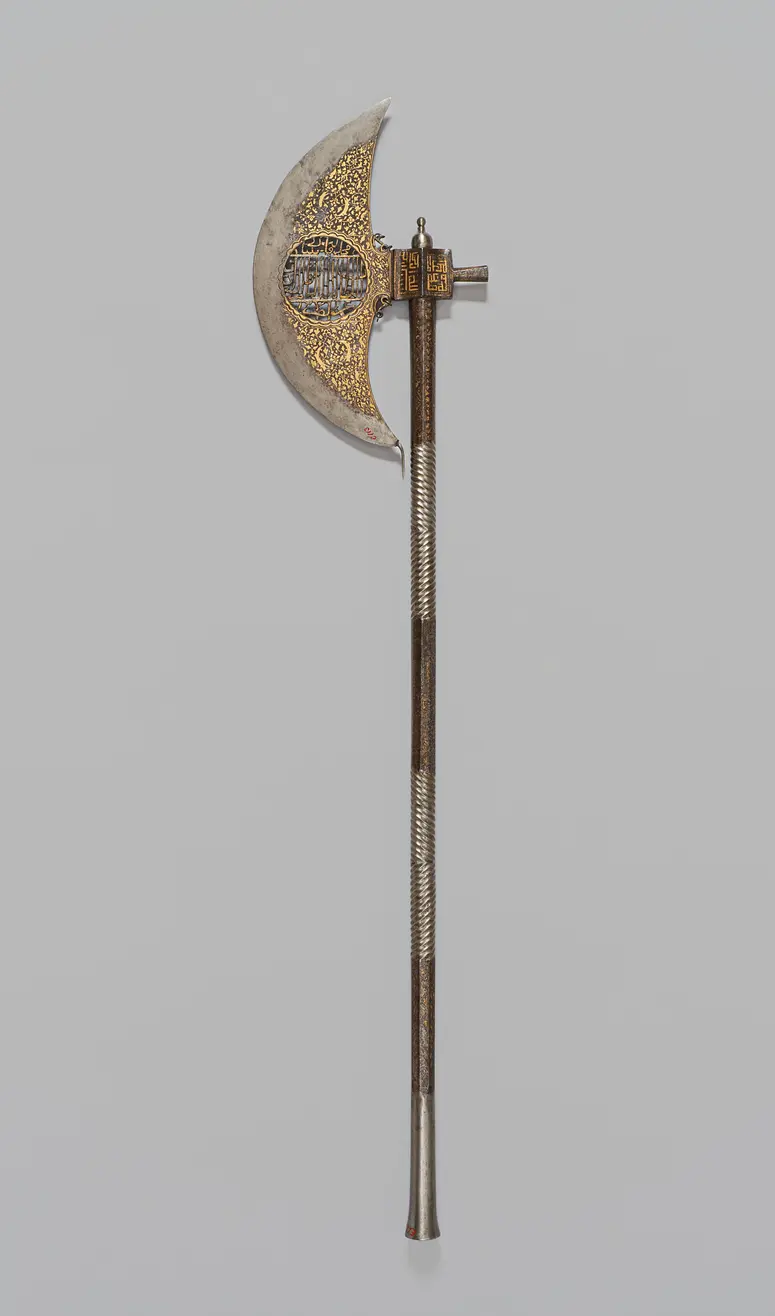
Both faces of the blade of this Turkish ceremonial axe feature gilt Arabic inscriptions. In the central medallion is an invocation of Allah, but the script ends in purely decorative flourishes. The inscription along the edge of the axe lists the Ottoman sultans from Orhan I to Mehmed III, though some have been omitted. The name of the last sultan in this list of rulers – Mehmet III – is inscribed on the axe’s small hammer. He ruled from 1595 until his death in 1603, and this ceremonial weapon was presumably made for a member of his Life Guard.
This ceremonial axe was formerly in the imperial arsenal in Vienna, but we do not know how or when it entered the Habsburg collections; it was probably not booty, as Mehmet III never actually went on a campaign. It may have been sent to Vienna as a diplomatic gift, although Mehmet III ruled the Ottoman Empire during the Long Turkish War (1591–1606), which makes the exchange of diplomatic gifts unlikely. However, in this war military phases alternated with periods of diplomacy, and this axe may have been presented to the Habsburg envoy during one of these negotiations.
One possibility is the Treaty of Zsitvatorok, which finally ended the Long Turkish War and which was signed in 1606 in no-man’s-land between the Habsburg and the Ottoman empires, east of Komáro on the Danube in what is now Slovakia. Sultan Ahmed I may have gifted this ceremonial axe, connected with his deceased predecessor, to his Habsburg opponent. It is, however, equally possible that the axe was dispatched as a gift at a later date, when its value was merely antiquarian.
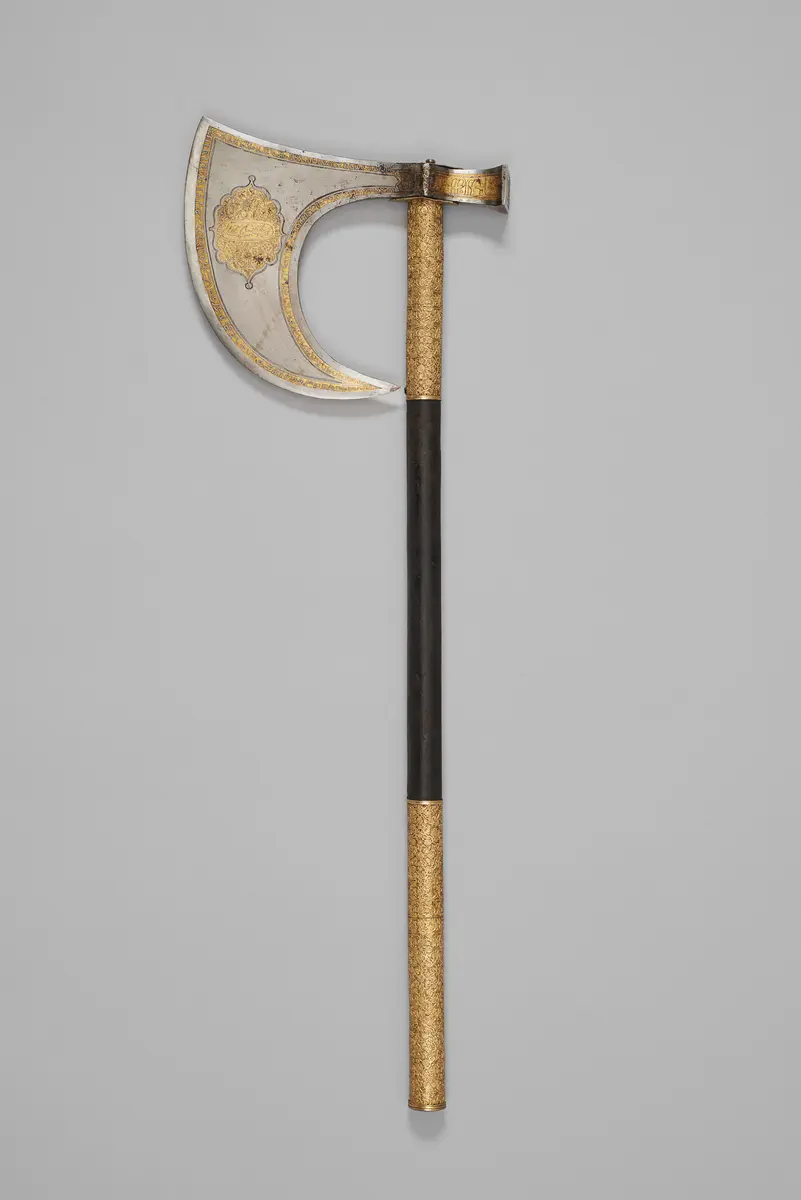
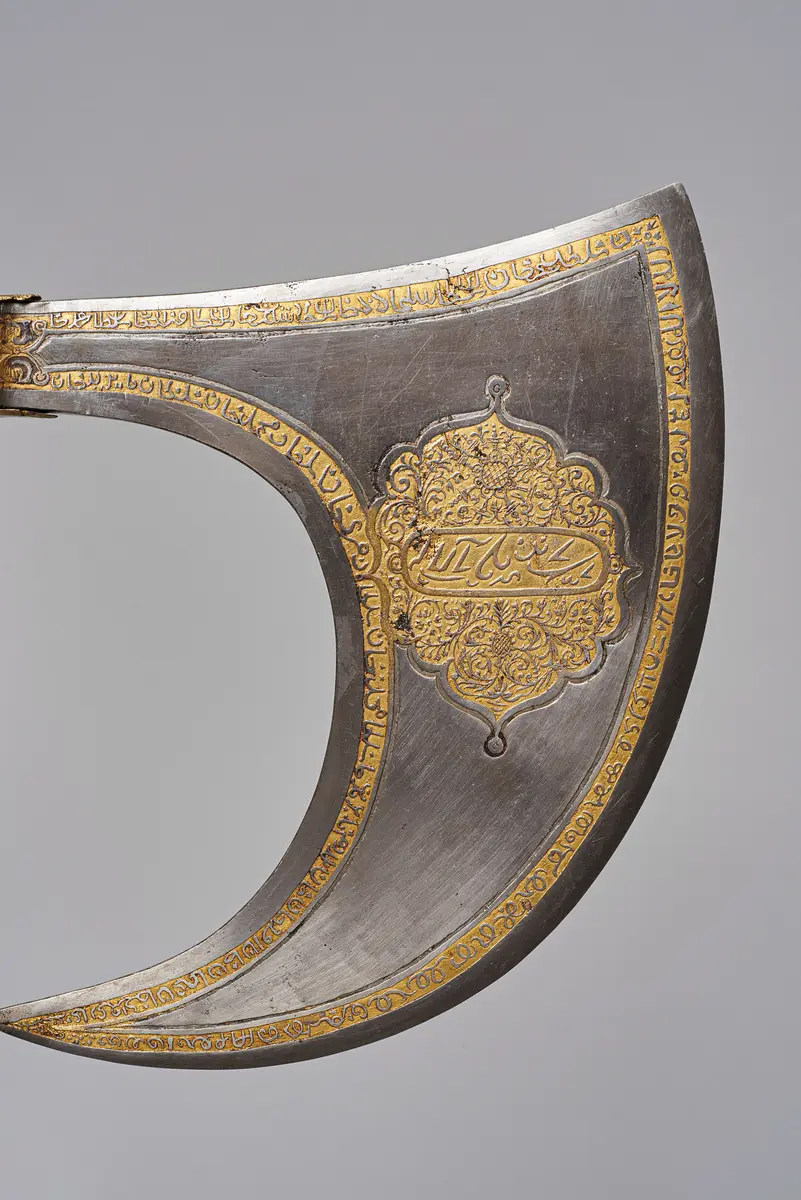
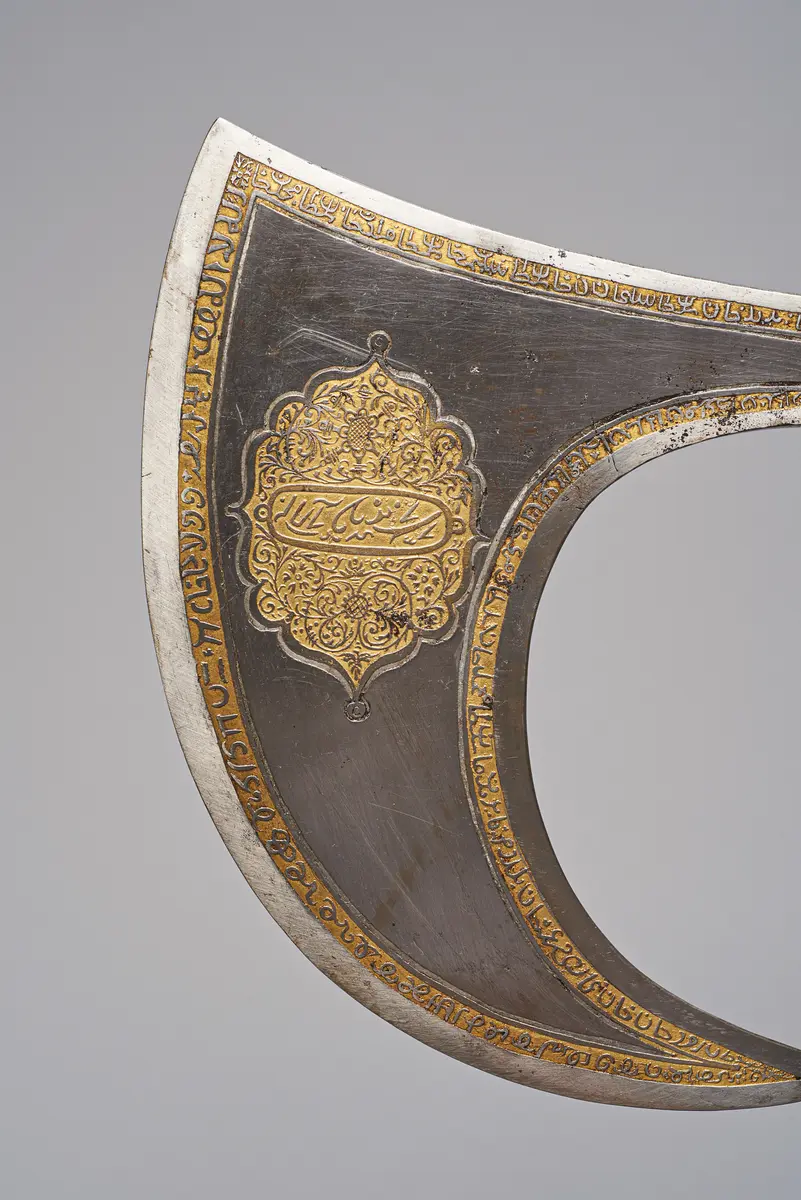
Both faces of the blade of this Turkish ceremonial axe feature gilt Arabic inscriptions. In the central medallion is an invocation of Allah, but the script ends in purely decorative flourishes. The inscription along the edge of the axe lists the Ottoman sultans from Orhan I to Mehmed III, though some have been omitted. The name of the last sultan in this list of rulers – Mehmet III – is inscribed on the axe’s small hammer. He ruled from 1595 until his death in 1603, and this ceremonial weapon was presumably made for a member of his Life Guard.
This ceremonial axe was formerly in the imperial arsenal in Vienna, but we do not know how or when it entered the Habsburg collections; it was probably not booty, as Mehmet III never actually went on a campaign. It may have been sent to Vienna as a diplomatic gift, although Mehmet III ruled the Ottoman Empire during the Long Turkish War (1591–1606), which makes the exchange of diplomatic gifts unlikely. However, in this war military phases alternated with periods of diplomacy, and this axe may have been presented to the Habsburg envoy during one of these negotiations.
One possibility is the Treaty of Zsitvatorok, which finally ended the Long Turkish War and which was signed in 1606 in no-man’s-land between the Habsburg and the Ottoman empires, east of Komáro on the Danube in what is now Slovakia. Sultan Ahmed I may have gifted this ceremonial axe, connected with his deceased predecessor, to his Habsburg opponent. It is, however, equally possible that the axe was dispatched as a gift at a later date, when its value was merely antiquarian.
Owner:
Sultan Muhammed III. (1566 - 1603) DNB
Time:
Ende 16. Jahrhundert
Object Name
Streitbeil
Culture
Türkisch
Material/technology:
Klinge: Eisen, geschmiedet, teils geätzt. Ätzdekor: feuervergoldet. Griff: Leder. Silber, teils ziseliert, feuervergoldet. Holzkern.
Dimensions:
L 83 cm x B 27,3 cm x T 4,2 cm
Copyright
Kunsthistorisches Museum, Hofjagd- und Rüstkammer
Invs.
Hofjagd- und Rüstkammer, C 119
Browse more
Similar items you might be interested in

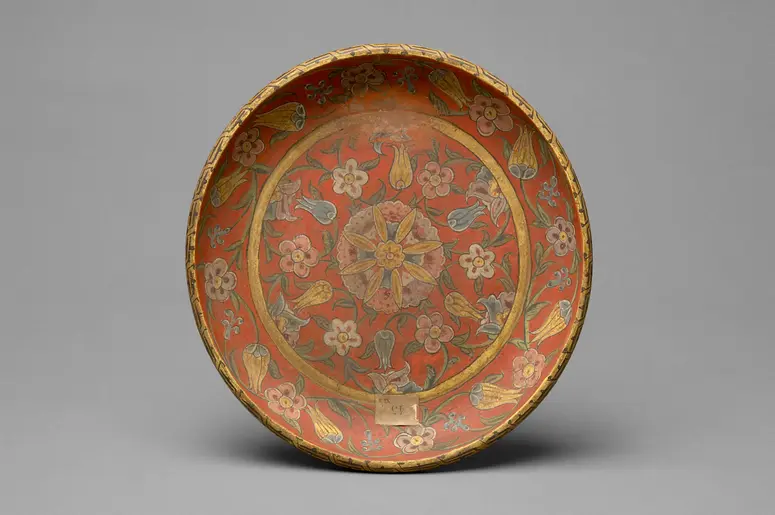
Schüssel, Holzteller, Teller 2. Hälfte 16. Jahrhundert
Rudolf II. (1576-1612), Kaiser, römischer König ab 1575, König von Ungarn ab 1572, von Böhmen se vor 1581
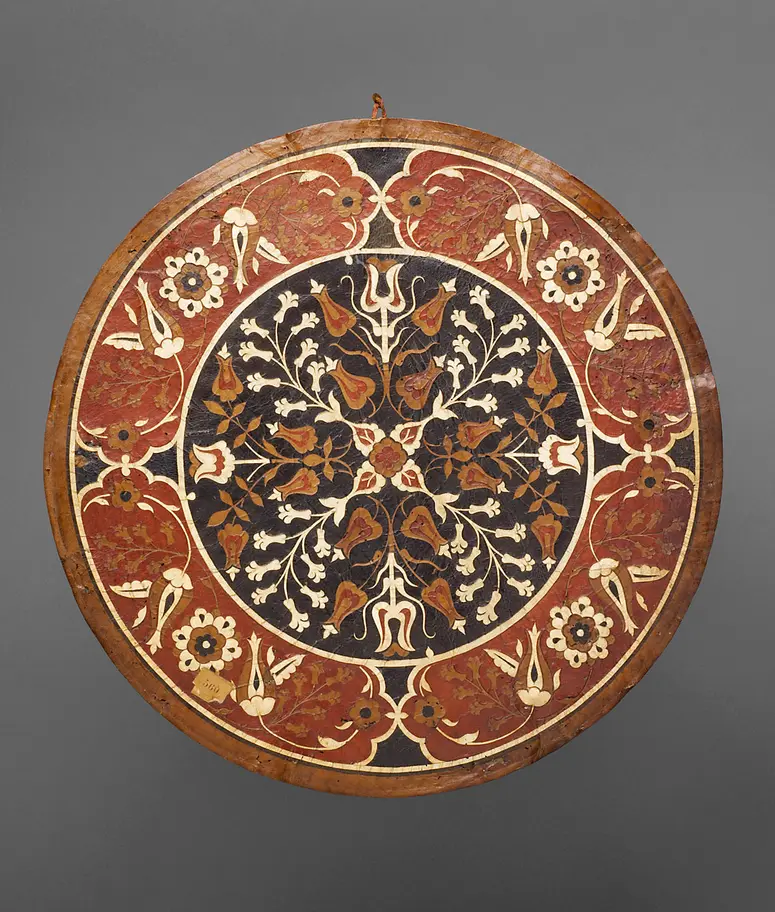
Lederteller, Lederintarsie, Intarsie, Mosaik 2. Viertel 16. Jahrhundert
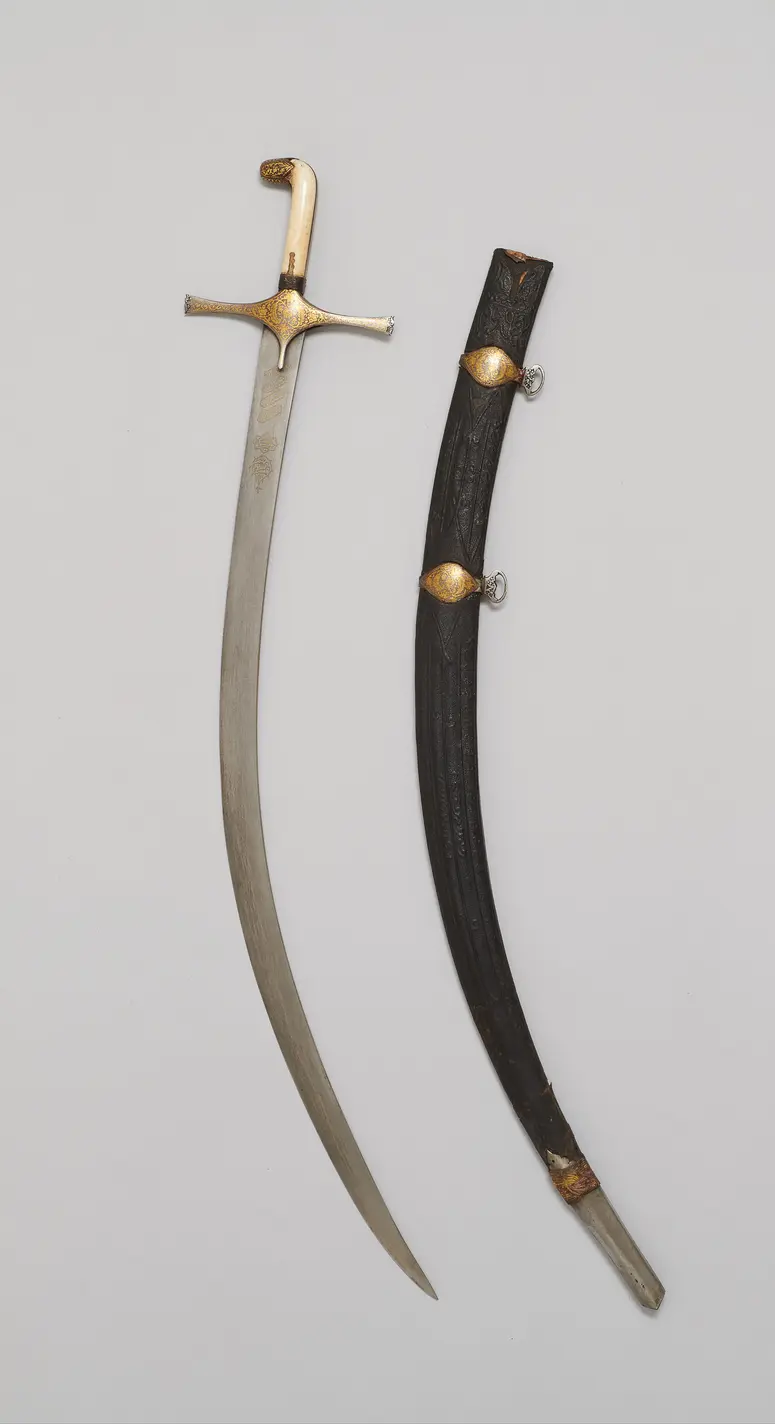
Sultan Hussain Schah von Persien 1700/1722
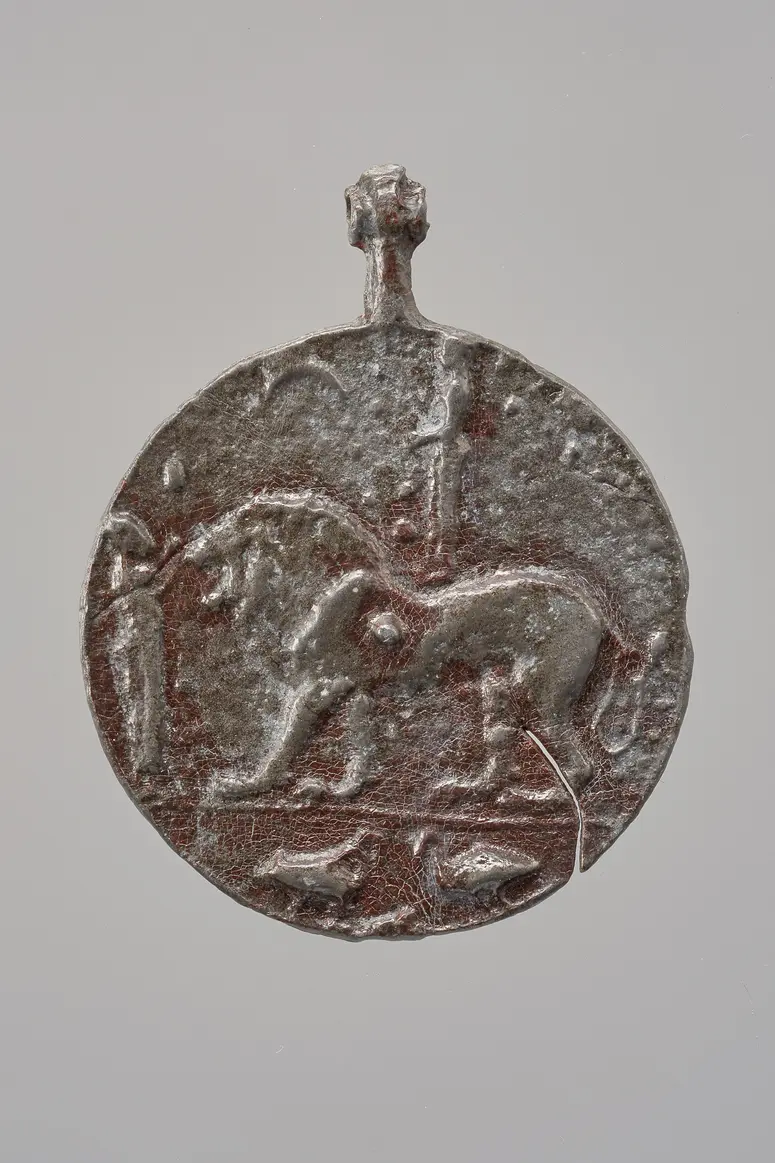
Votiv: Bleivotiv: Astarte auf Löwen Griechisch, Ostrgriechisch 2. Hälfte 6. Jh. v. Chr.

Georg Castriota gen. Skanderbeg wohl 2. Hälfte 15. Jahrhundert
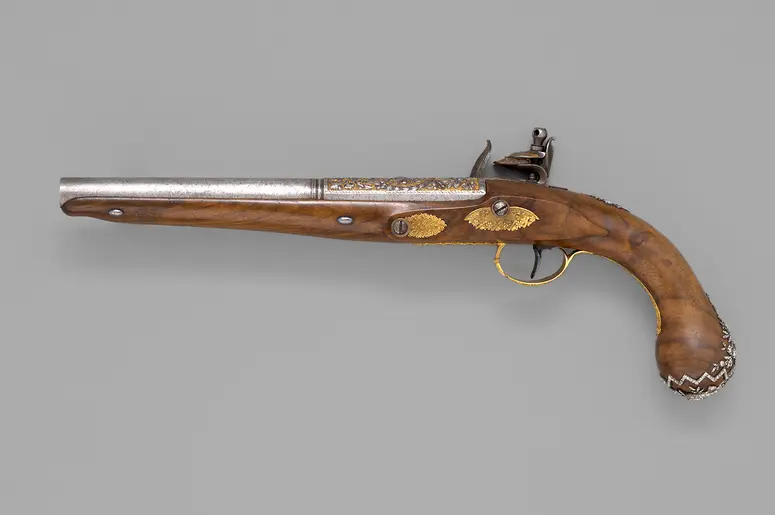
Franz (1792-1835), von 1792-1806 als Franz II. Kaiser, seit 1806 als Franz I. Kaiser von Österreich um 1790