Oberteil einer männlichen Votivstatue
um 500 v. Chr.
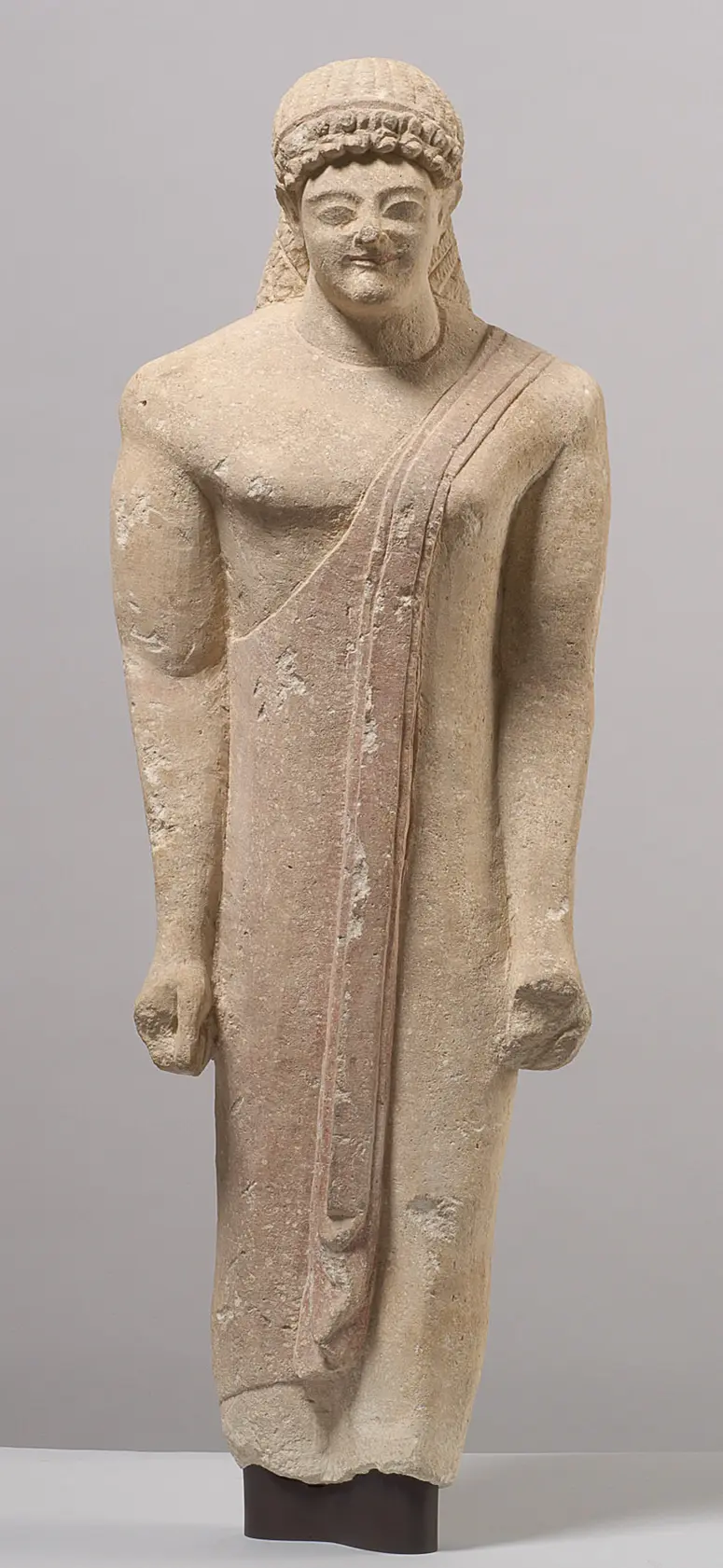
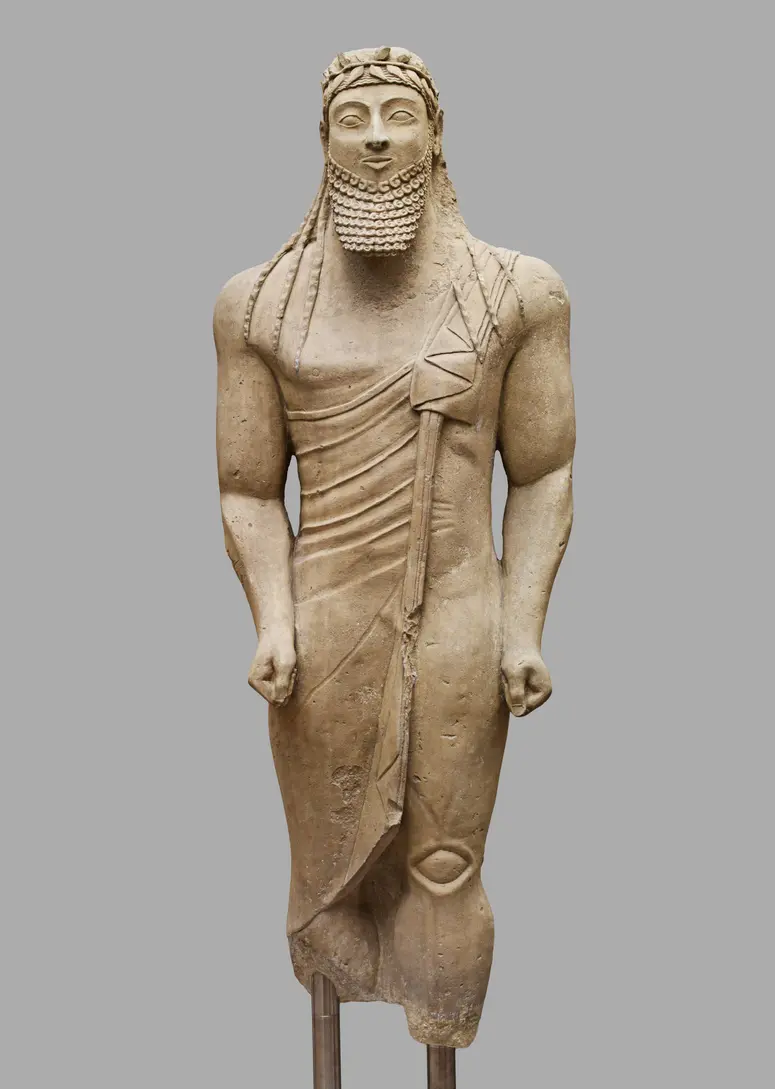
The upper torso of a young man standing, in kouros style. A broad, plump face with narrow, almond-shaped eyes, protruding eyebrows and a strong chin; the corners of the mouth are drawn upwards in the „archaic smile.“ The (originally painted?) hair resembles a cap: a homogeneous mass centered on the calotte, falling down the back like a wig. Three locks of hair on each side fall behind the ears onto the chest. In the hair is a wreath of leaves with a knurled ribbon and adversifoliate leaves changing direction above the middle of the brow. In the right ear is a pin with an eight-leafed rosette. His attire consists of a short-sleeved undergarment visible at the neck and on the left upper arm, a cloak clasped on the left shoulder and wrapped round the torso beneath the right breast. The flat rear side of the figurine is crudely realized and partially splintered off.
A. Bernhard-Walcher u. a., Die Sammlung zyprischer Antiken im KHM. Sammlungskataloge des KHM Bd. 2, Wien: 1999
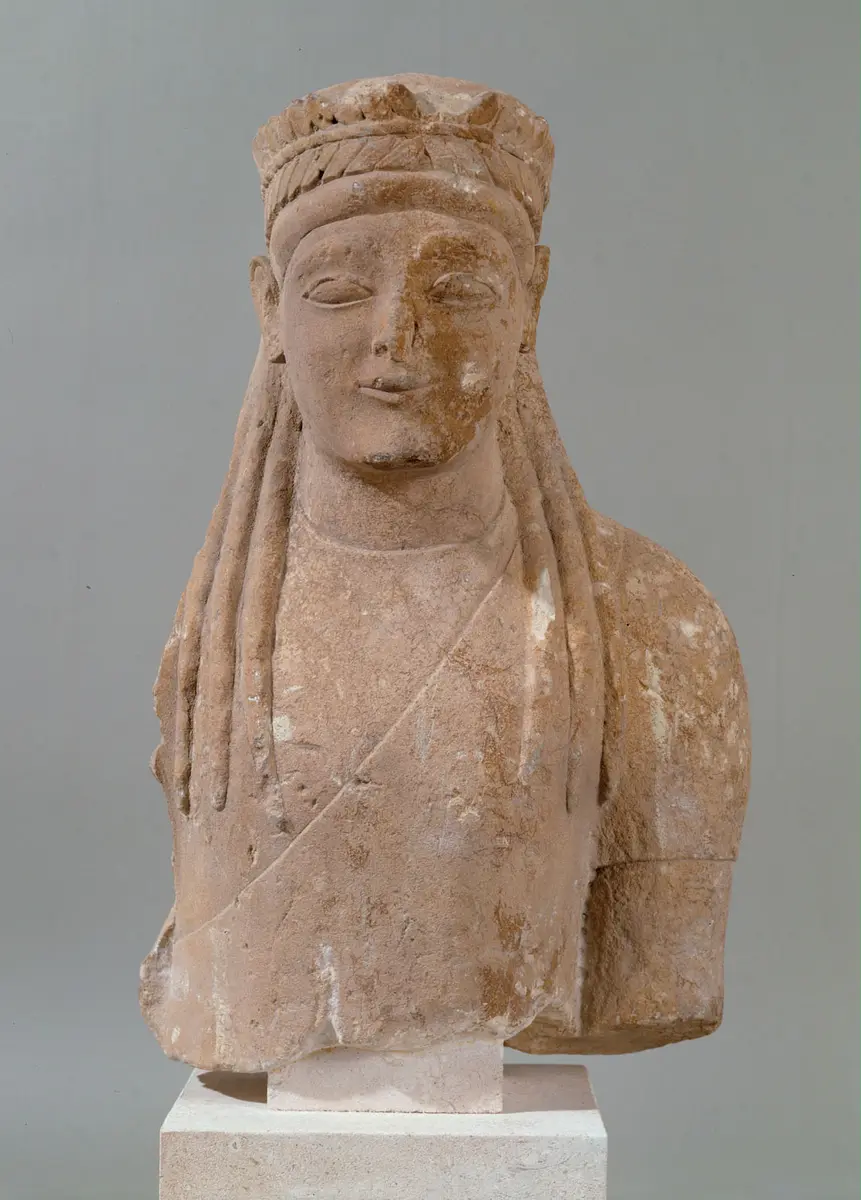
The upper torso of a young man standing, in kouros style. A broad, plump face with narrow, almond-shaped eyes, protruding eyebrows and a strong chin; the corners of the mouth are drawn upwards in the „archaic smile.“ The (originally painted?) hair resembles a cap: a homogeneous mass centered on the calotte, falling down the back like a wig. Three locks of hair on each side fall behind the ears onto the chest. In the hair is a wreath of leaves with a knurled ribbon and adversifoliate leaves changing direction above the middle of the brow. In the right ear is a pin with an eight-leafed rosette. His attire consists of a short-sleeved undergarment visible at the neck and on the left upper arm, a cloak clasped on the left shoulder and wrapped round the torso beneath the right breast. The flat rear side of the figurine is crudely realized and partially splintered off.
A. Bernhard-Walcher u. a., Die Sammlung zyprischer Antiken im KHM. Sammlungskataloge des KHM Bd. 2, Wien: 1999
Time:
um 500 v. Chr.
Object Name
Statue
Culture
Zyprisch
Location of discovery:
Zypern
Material/technology:
Kalkstein
Dimensions:
H. 50 cm
Copyright
Kunsthistorisches Museum, Antikensammlung
Invs.
Antikensammlung, I 623
Provenance
Millosicz, Georg von, Wien; 1889 Geschenk
Browse more
Similar items you might be interested in
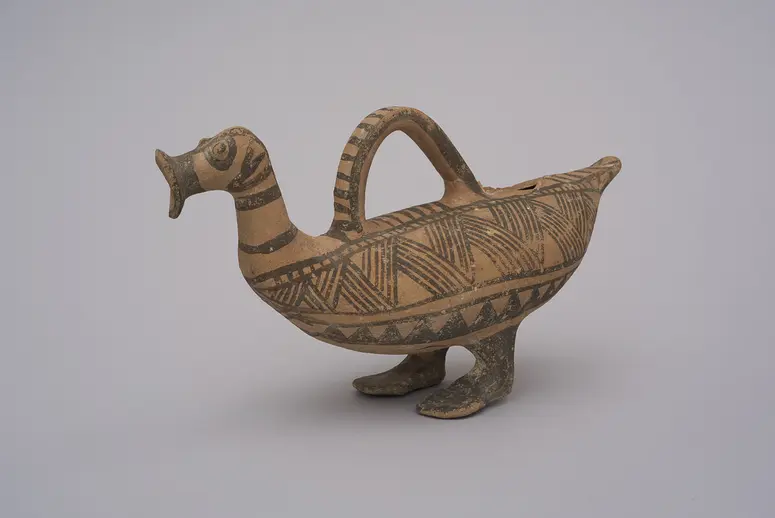
Askos der Proto-White Painted Ware: Form eines Vogels Zyprisch, Bronzezeit, Spätzyprisch 1125 - 1050 v. Chr.
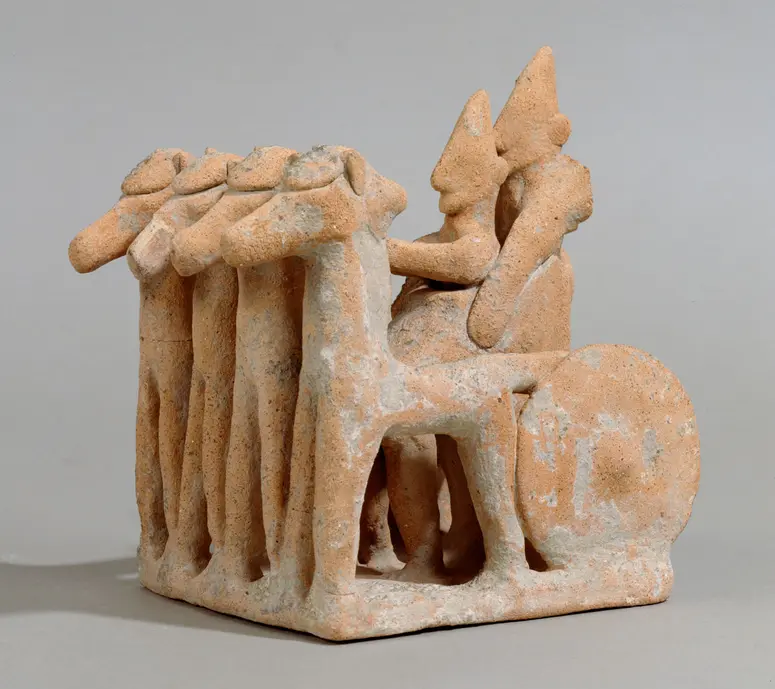
Statuette: Modell eines Viergespannes (Quadriga) Zyprisch, Eisenzeit, archaisch 6. Jh. v. Chr.
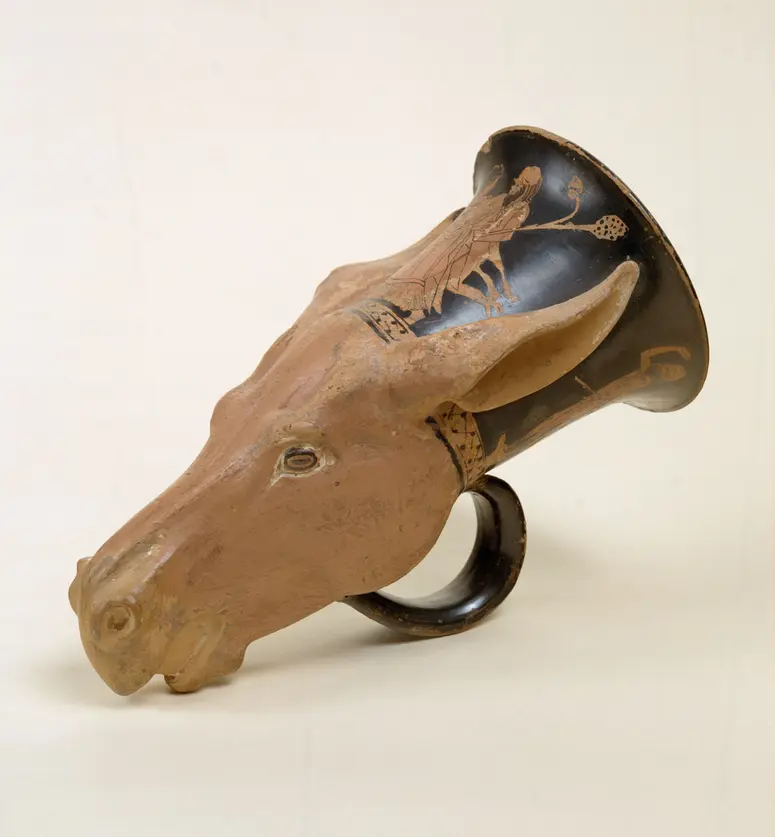
Rhyton: Trinkgefäß mit Maultierkopf Griechisch, Attisch, rotfigurig Mitte 5. Jh. v. Chr.
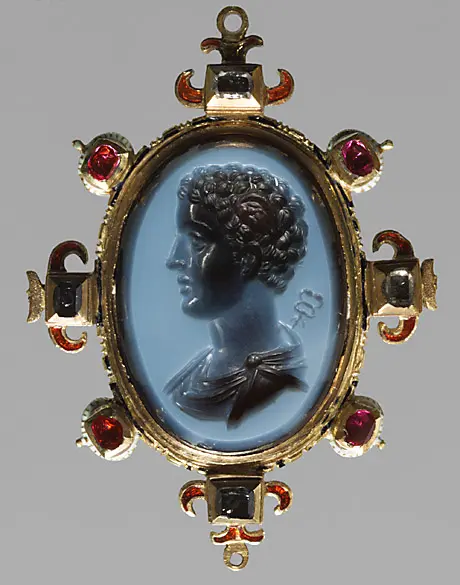
Gemme: Büste des jugendlichen Marcus Aurelius als Mercur Römisch, Mittlere Kaiserzeit 2. Viertel 2. Jh. n. Chr.
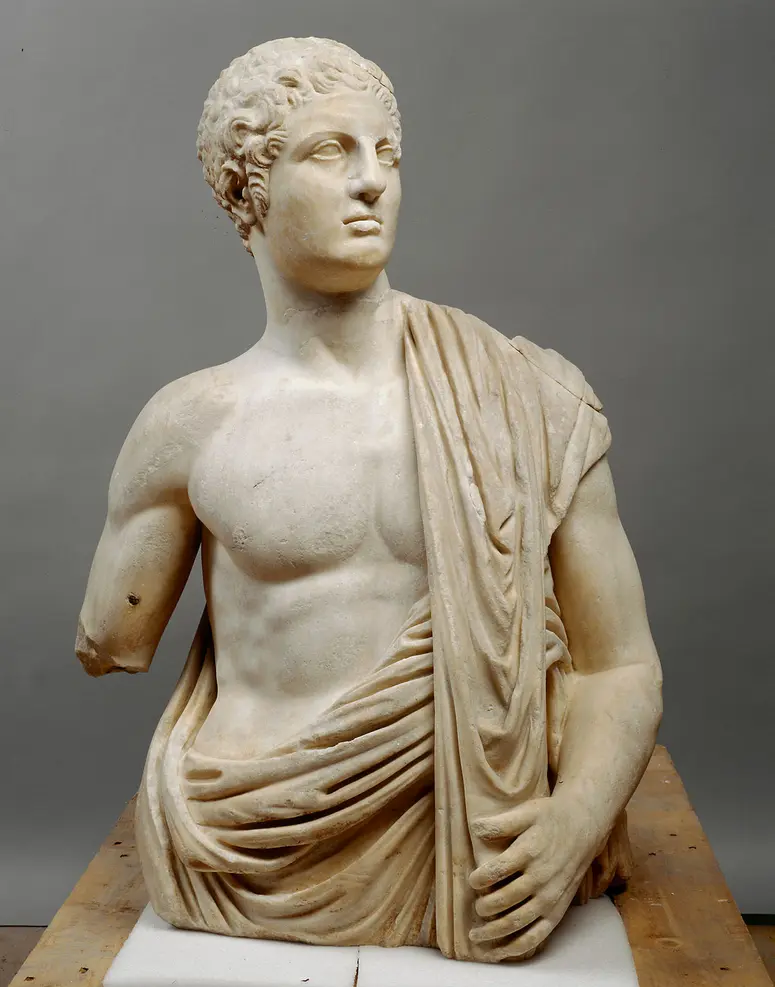
Statue: Oberteil einer männlichen Ehrenstatue Griechisch, Hellenistisch um 100 v. Chr.
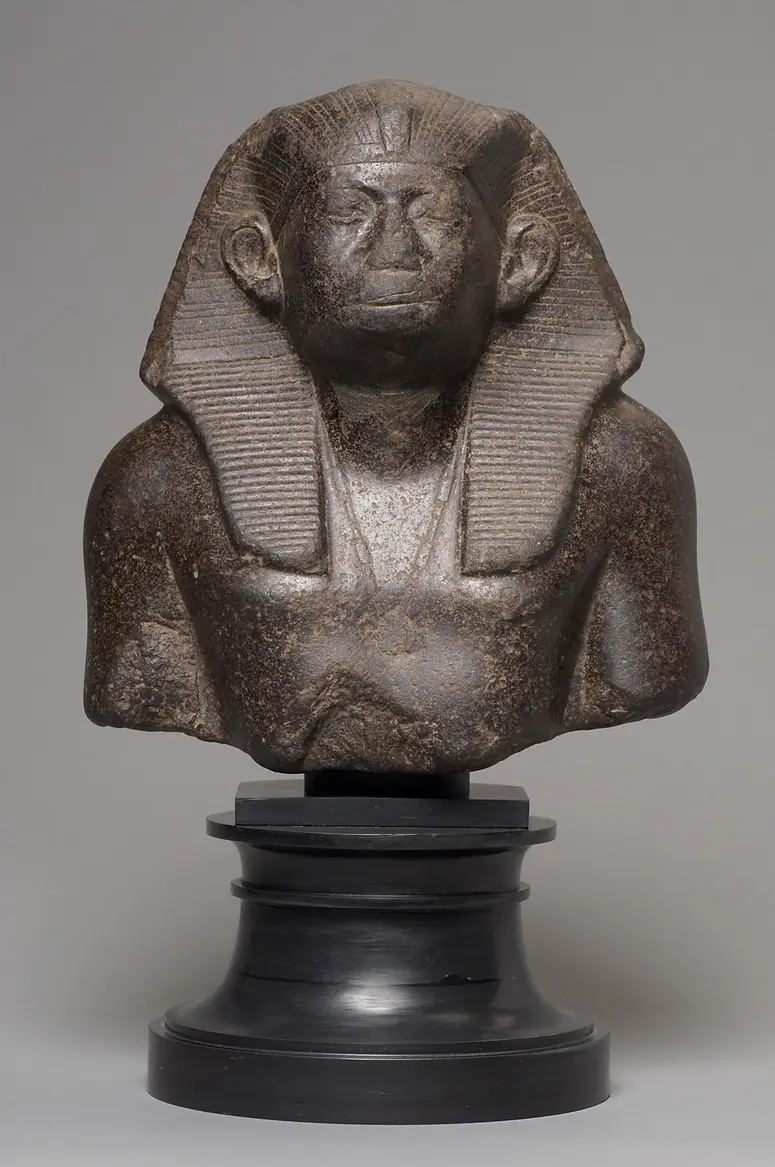
Bust from a statue of Amenemhet III Fundort unbekannt 12th Dynasty, reign of Amenemhet III, ca. 1843-1797 BC;
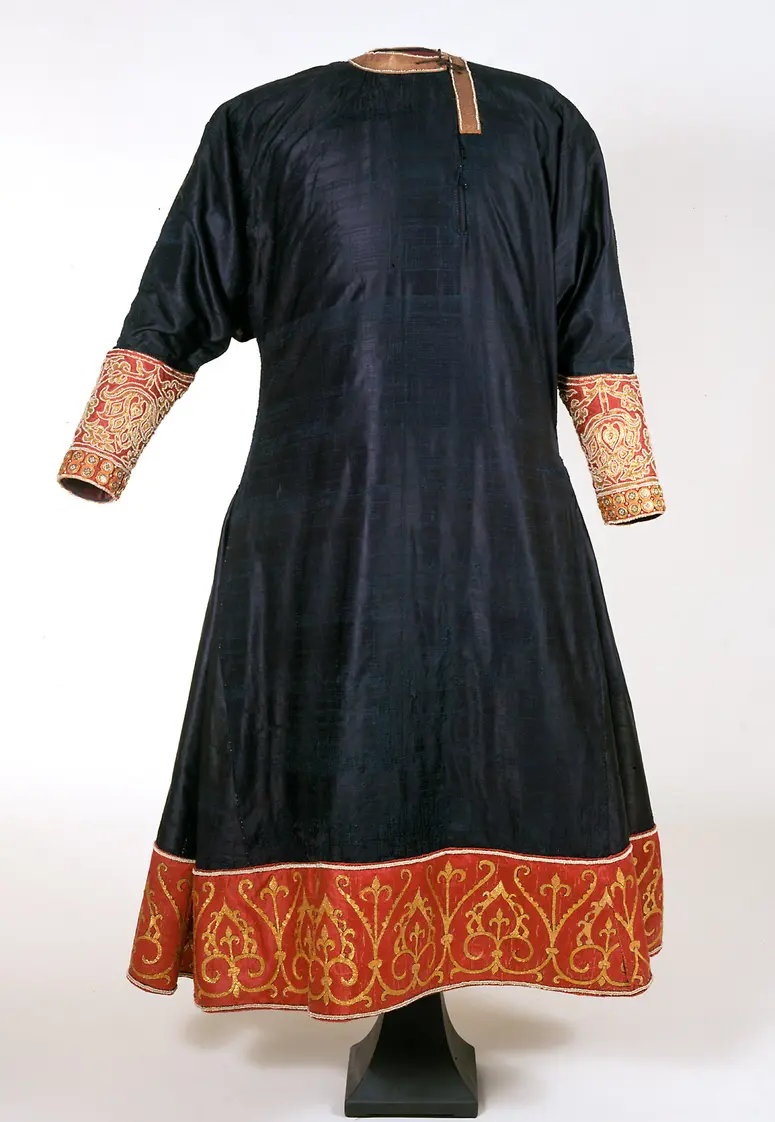
Die blaue Tunicella (Dalmatika) Palermo, Königliche Hofwerkstätten 1. Hälfte 12. Jahrhundert
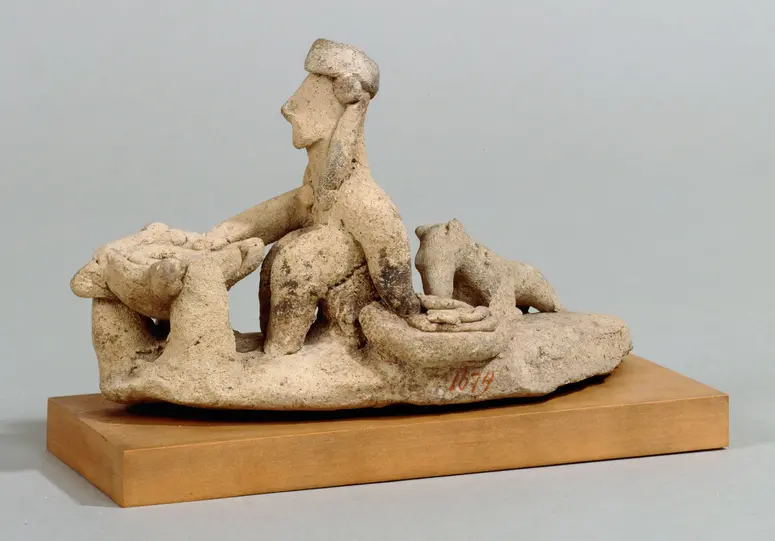
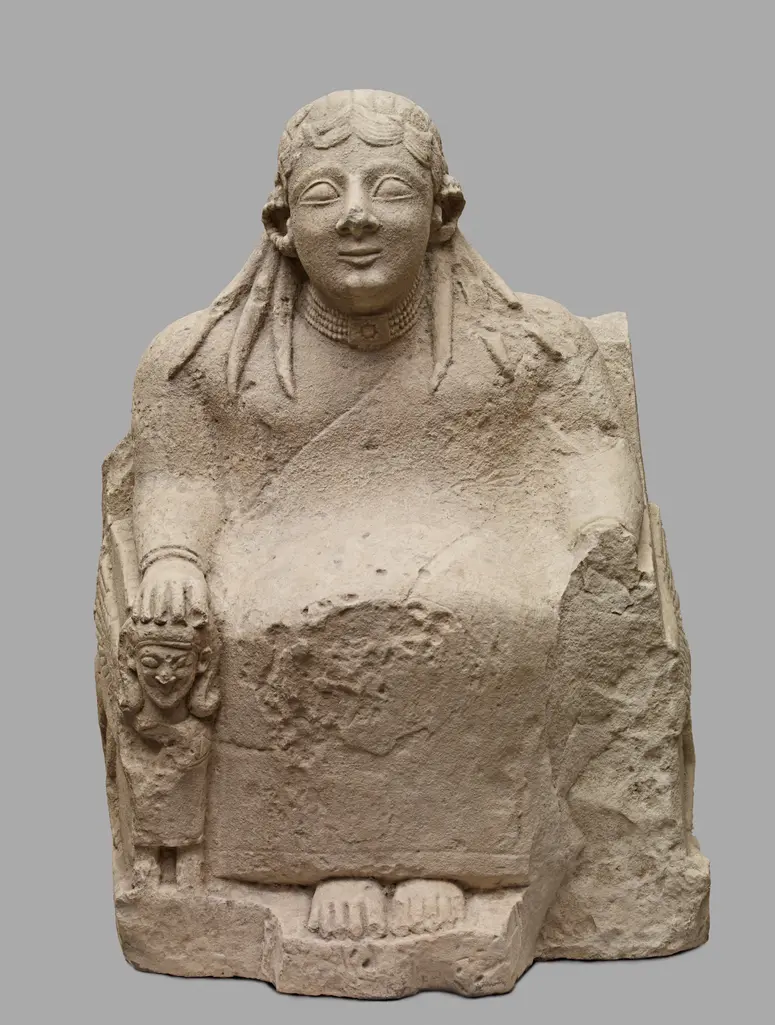
Statuette: Thronende Göttin (Astarte?) Zyprisch, Eisenzeit, archaisch 1. Hälfte 6. Jh. v. Chr.
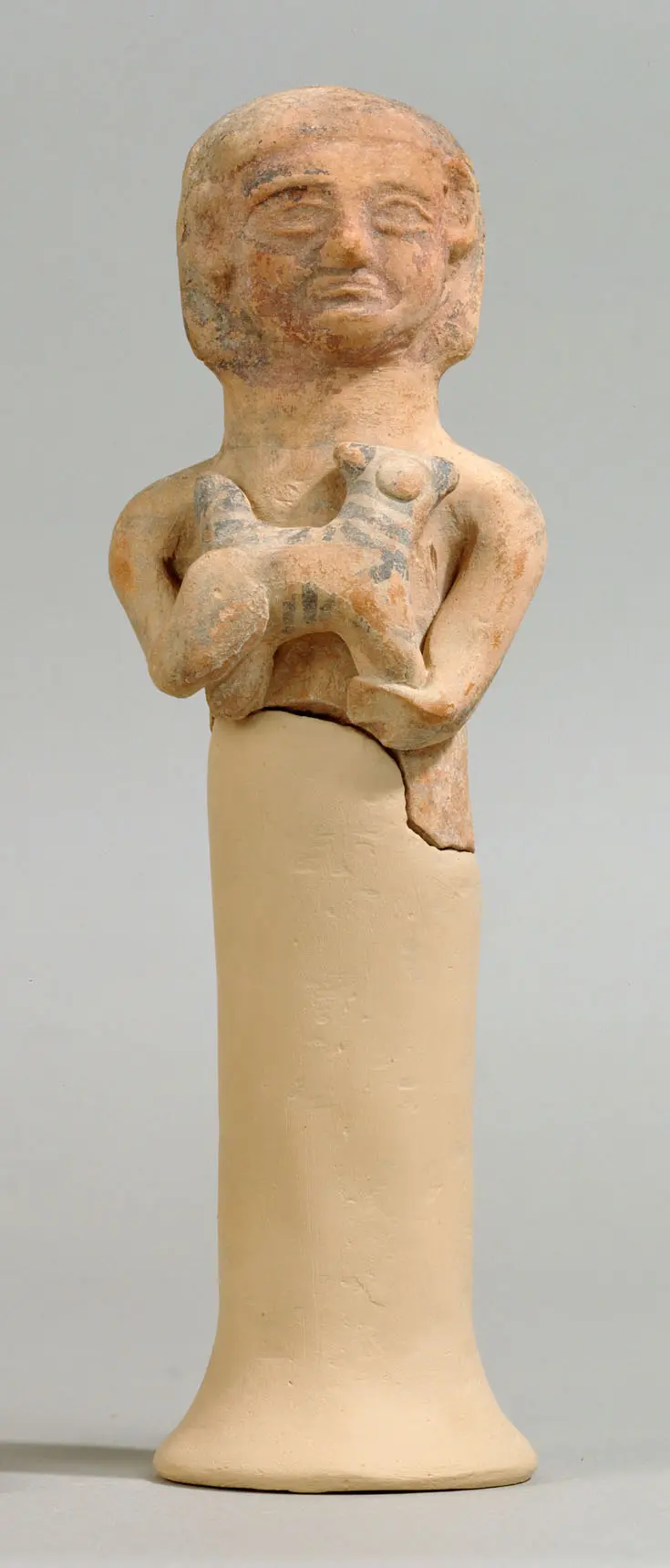
Statuette: Fragment einer Frau mit Kitz (?) Zyprisch, Eisenzeit, archaisch 7. - 6. Jh. v. Chr.
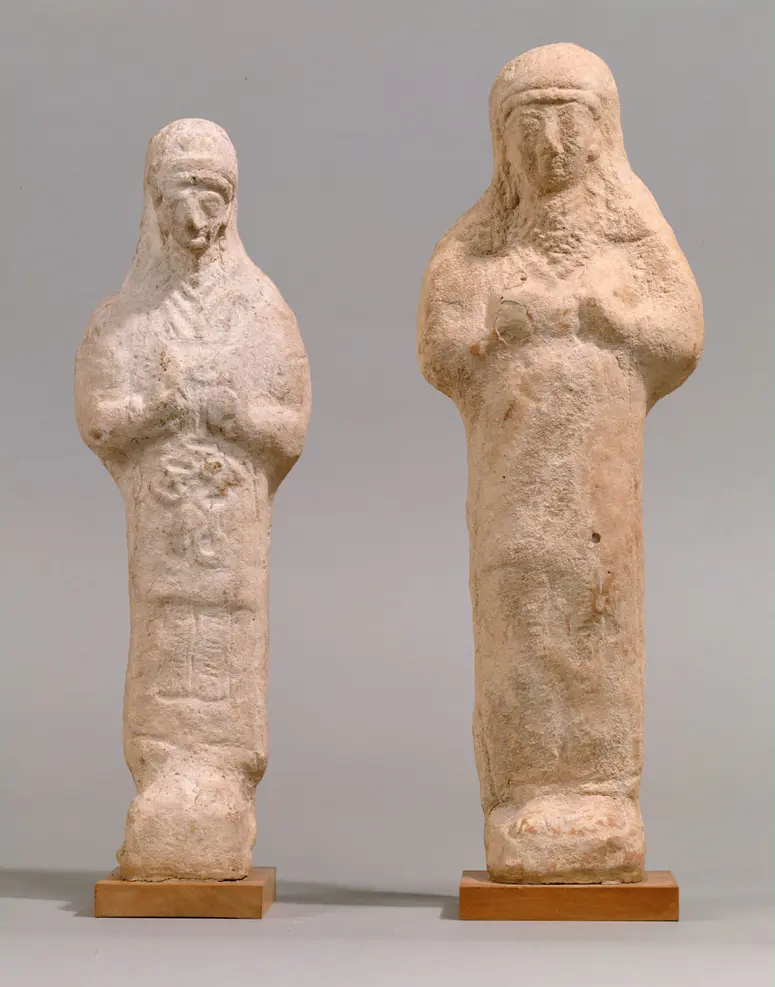
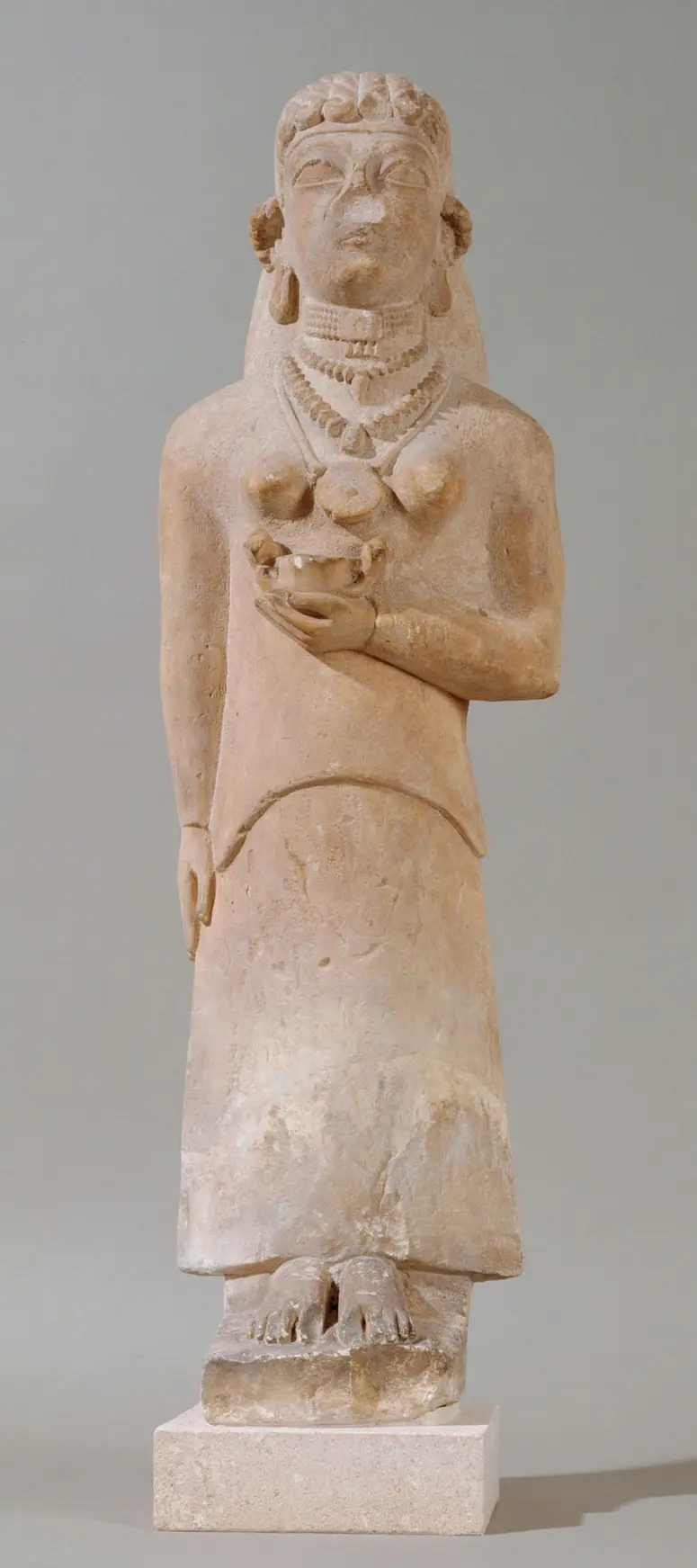
Statuette: Stehende Frau mit Kantharos (Trinkgefäß) Zyprisch, Eisenzeit, archaisch um 550 v. Chr.
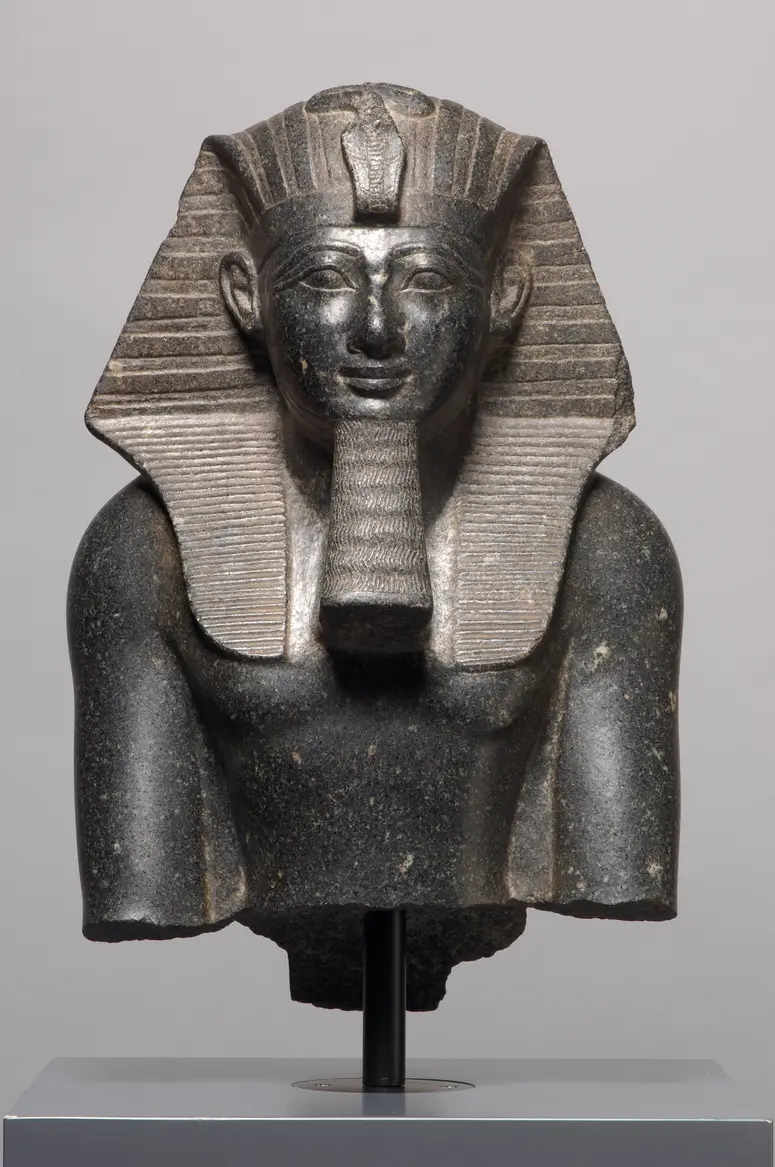
Upper part from a statue of Thutmose III Fundort unbekannt 18th Dynasty, reign of Thutmose III, 1504–1452 BC
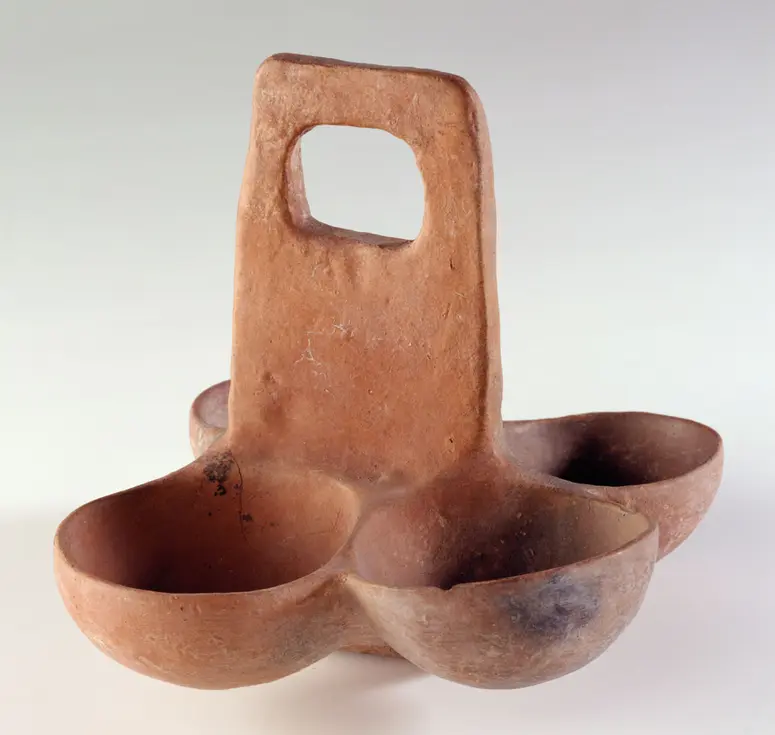
Kompositgefäß der Base-Ring I Ware (?): Halbkugelförmige Schalen Zyprisch, Bronzezeit, Spätzyprisch 1625 - 1450 v. Chr.

Karl I. (V.) (1516-1556), als Karl I. König von Spanien, ab 1519 deutscher König, ab 1520 Kaiser c. 1512-1514