Stehende Frau mit Kantharos (Trinkgefäß)
um 550 v. Chr.
The female counterpart of the kouros is the kore, a woman in the prime of youth. As with kouroi, korai are generally identifiable as portrayals of mortals (votive or burial statues) or representations of divinities only by their original location or purpose. It was also a characteristic feature of Cypriot korai that the archaic formal idiom was long retained.A woman depicted frontally, standing on a slightly inclined, rectangular plinth. Her head is covered by a veil-like scarf whose sharp contour crosses her forehead. Above this are eight plaits in a spiral pattern which protrude from the scarf at the crown of her head and are each curled in a ringlet over her forehead. At the back her hair hangs down like a wig. Her face appears almost metallic with its arching eyebrows and large, sharply incised eyes. Her mouth with its pointed lips is relatively small, her chin prominent. The torso is flat and board-like, but the small, conical breasts are especially emphasized.The long-sleeved, smooth dress with its rounded tuck reaches to her naked feet, which are kept together. She holds her right arm close to her side, the fingers outstretched. Her left arm is bent, and in the palm of her hand she is holding a vessel similar to a cantharus. Its handle ends in lily-like blossoms.A notable feature of this figure is her abundant jewelry. She is wearing a neckband, two necklaces, a pendant and ear jewelry. The necklace is made up of an alternating sequence of four rows of pearls and square, plate-like elements. The middle plate is also adorned with four drop-like pendants and a recessed sun with rays at the center. The second and third chains are made up of biconical links with a drop-like or spherical pendant in a wide, ribbon-shaped setting. The large pendant on her chest consists of a large disc with an aureole radiating from a semi-spherical central elevation. A horizontal casing a mounted on the pendant, and through this a strap-like string is threaded. The ears are adorned with the „ear bonnets“ characteristic of Cypriot ear jewelry. Fitted over the top portion of the ears, they would in real life have been made of metal. A looped pendant hangs from the lower edge.
A. Bernhard-Walcher u. a., Die Sammlung zyprischer Antiken im KHM. Sammlungskataloge des KHM Bd. 2, Wien: 1999
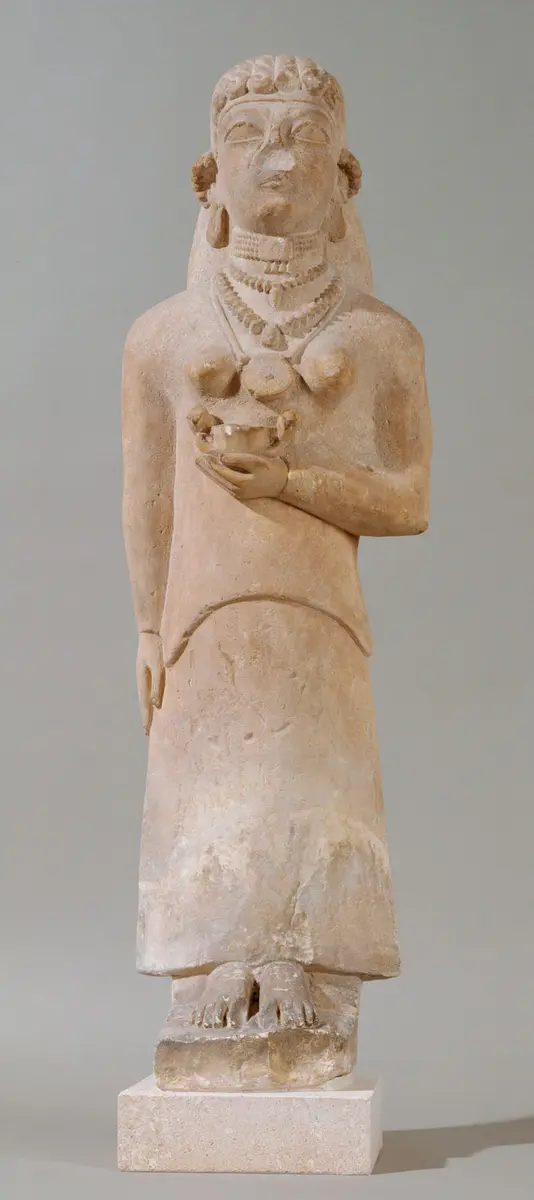
The female counterpart of the kouros is the kore, a woman in the prime of youth. As with kouroi, korai are generally identifiable as portrayals of mortals (votive or burial statues) or representations of divinities only by their original location or purpose. It was also a characteristic feature of Cypriot korai that the archaic formal idiom was long retained.A woman depicted frontally, standing on a slightly inclined, rectangular plinth. Her head is covered by a veil-like scarf whose sharp contour crosses her forehead. Above this are eight plaits in a spiral pattern which protrude from the scarf at the crown of her head and are each curled in a ringlet over her forehead. At the back her hair hangs down like a wig. Her face appears almost metallic with its arching eyebrows and large, sharply incised eyes. Her mouth with its pointed lips is relatively small, her chin prominent. The torso is flat and board-like, but the small, conical breasts are especially emphasized.The long-sleeved, smooth dress with its rounded tuck reaches to her naked feet, which are kept together. She holds her right arm close to her side, the fingers outstretched. Her left arm is bent, and in the palm of her hand she is holding a vessel similar to a cantharus. Its handle ends in lily-like blossoms.A notable feature of this figure is her abundant jewelry. She is wearing a neckband, two necklaces, a pendant and ear jewelry. The necklace is made up of an alternating sequence of four rows of pearls and square, plate-like elements. The middle plate is also adorned with four drop-like pendants and a recessed sun with rays at the center. The second and third chains are made up of biconical links with a drop-like or spherical pendant in a wide, ribbon-shaped setting. The large pendant on her chest consists of a large disc with an aureole radiating from a semi-spherical central elevation. A horizontal casing a mounted on the pendant, and through this a strap-like string is threaded. The ears are adorned with the „ear bonnets“ characteristic of Cypriot ear jewelry. Fitted over the top portion of the ears, they would in real life have been made of metal. A looped pendant hangs from the lower edge.
A. Bernhard-Walcher u. a., Die Sammlung zyprischer Antiken im KHM. Sammlungskataloge des KHM Bd. 2, Wien: 1999
Time:
um 550 v. Chr.
Object Name
Statuette
Culture
Zyprisch
Location of discovery:
Zypern
Material/technology:
Kalkstein
Dimensions:
H. 86 cm
Copyright
Kunsthistorisches Museum, Antikensammlung
Invs.
Antikensammlung, I 357
Provenance
Brugsch, Heinrich Dr. Prof.; 1875 Kauf
Browse more
Similar items you might be interested in
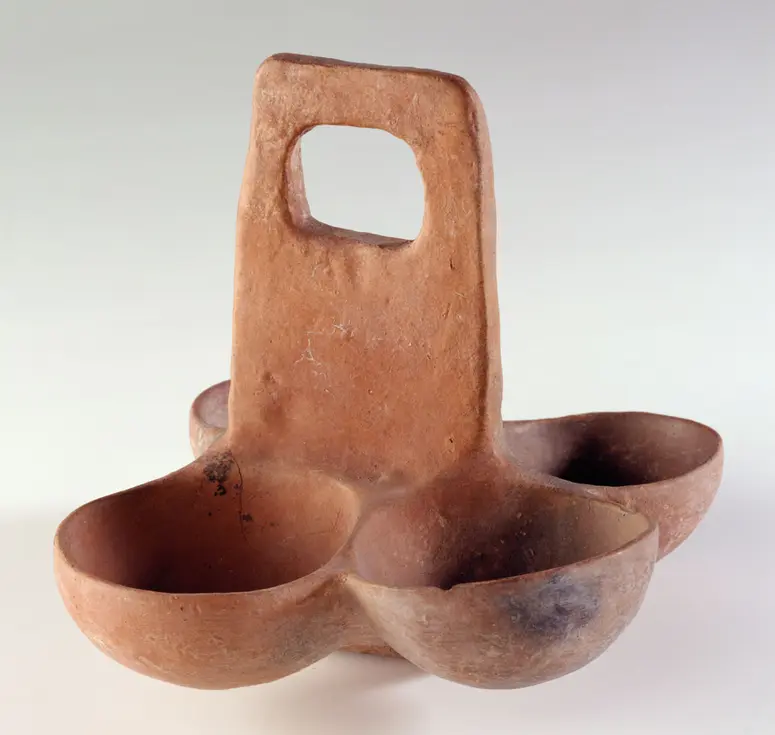
Kompositgefäß der Base-Ring I Ware (?): Halbkugelförmige Schalen Zyprisch, Bronzezeit, Spätzyprisch 1625 - 1450 v. Chr.
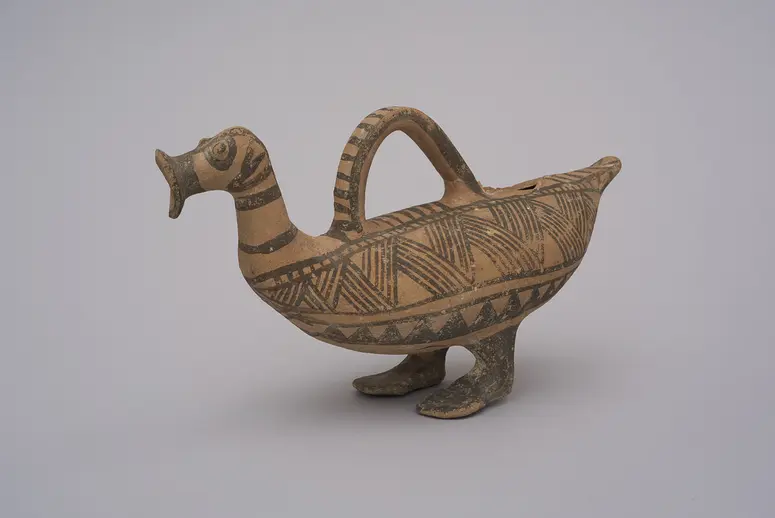
Askos der Proto-White Painted Ware: Form eines Vogels Zyprisch, Bronzezeit, Spätzyprisch 1125 - 1050 v. Chr.

Vier Schmuckstücke aus dem Besitz der Kaiserin Elisabeth von Österreich Elisabeth Amalie Eugenie (1854-1898), Kaiserin von Österreich 2. Hälfte 19. Jahrhundert
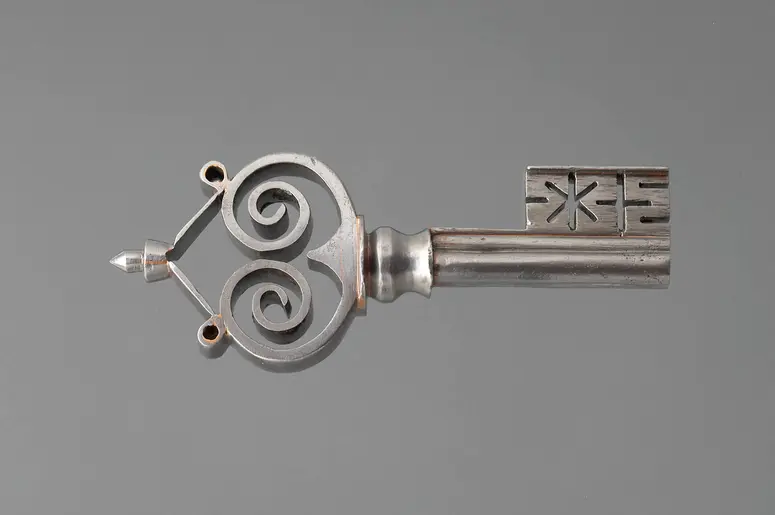
Schlüssel, Gerät, Schlüssel mit lyraförmigem Griff 16. - 17. Jahrhundert
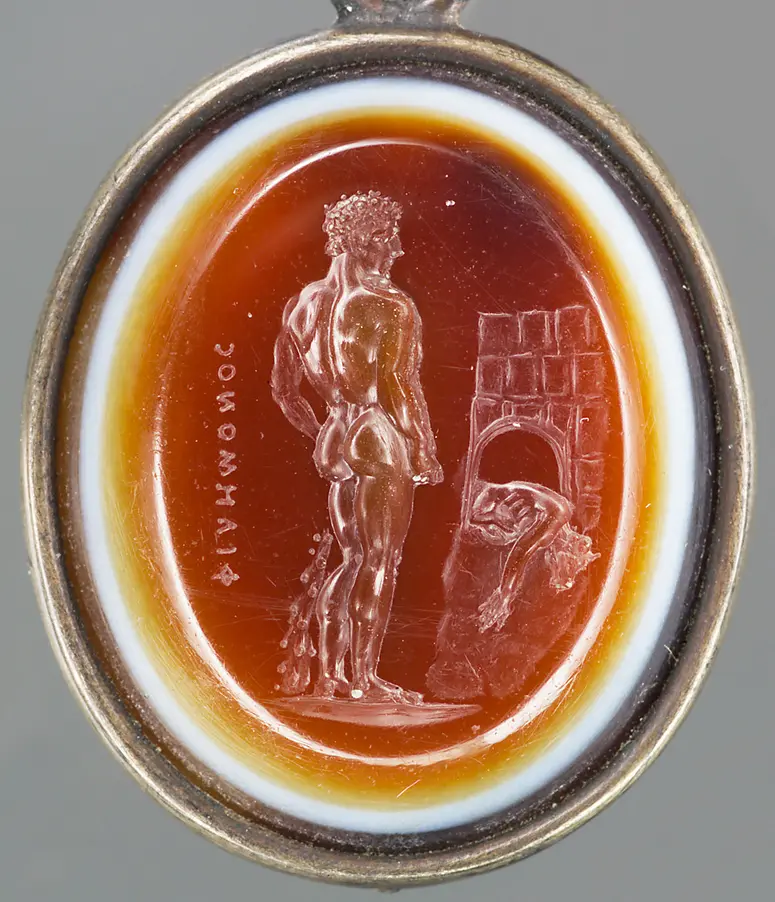
Gemme: Theseus betrachtet den erlegten Minotaurus Römisch, Frühe Kaiserzeit 4. Viertel 1. Jh. v. Chr.

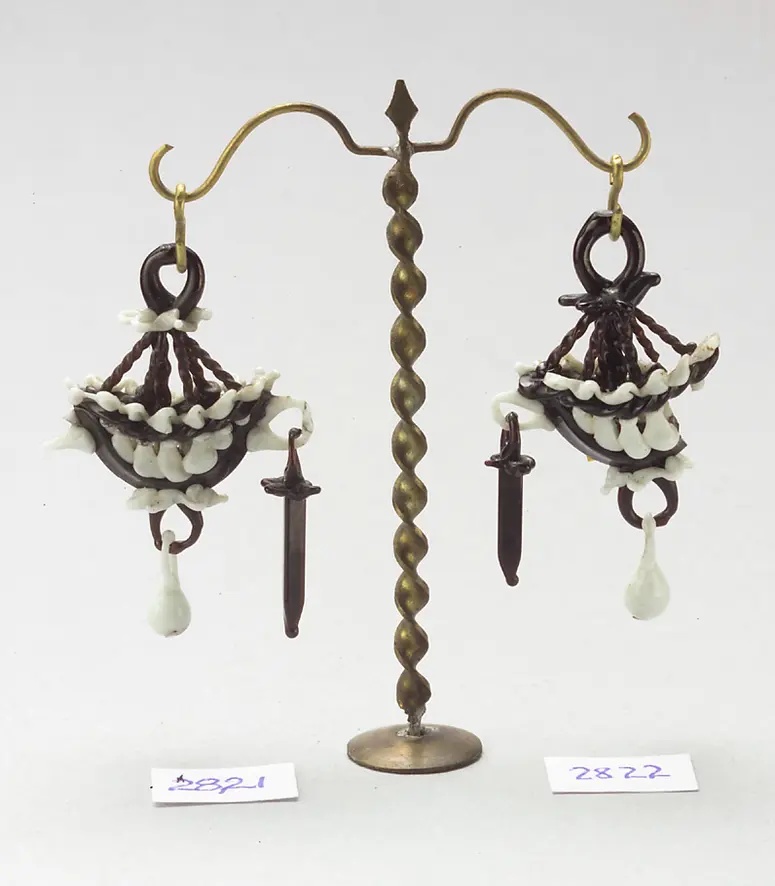
Schifförmiges Ohrgehänge mit schwertförmigen Anhängseln aus Glas Innsbrucker Hofglashütte 4. Viertel 16. Jh.

Schifförmiges Ohrgehänge mit schwertförmigen Anhängseln aus Glas Innsbrucker Hofglashütte 4. Viertel 16. Jh.
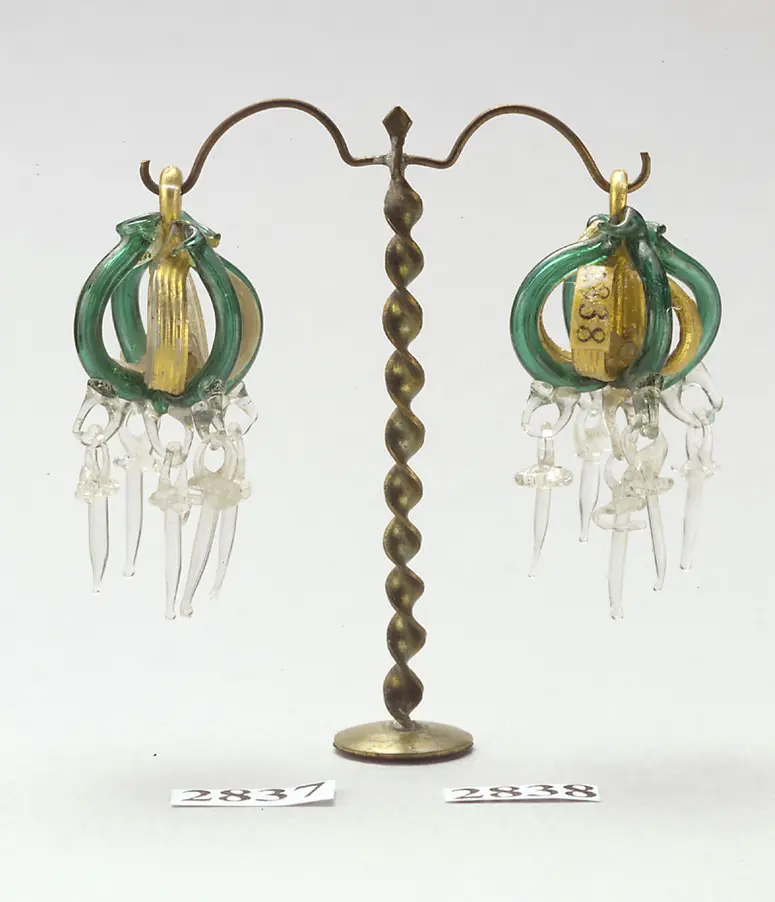
vasenförmiges Ohrgehänge mit schwertförmigen Anhängseln aus Glas Innsbrucker Hofglashütte 4. Viertel 16. Jh.
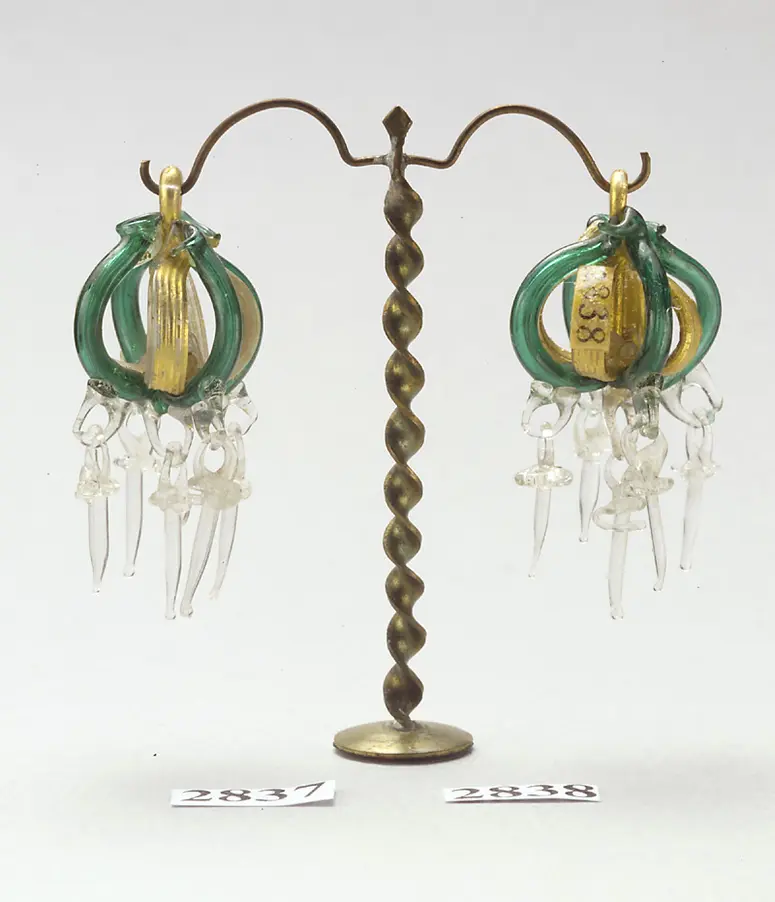
vasenförmiges Ohrgehänge mit schwertförmigen Anhängseln aus Glas Innsbrucker Hofglashütte 4. Viertel 16. Jh.
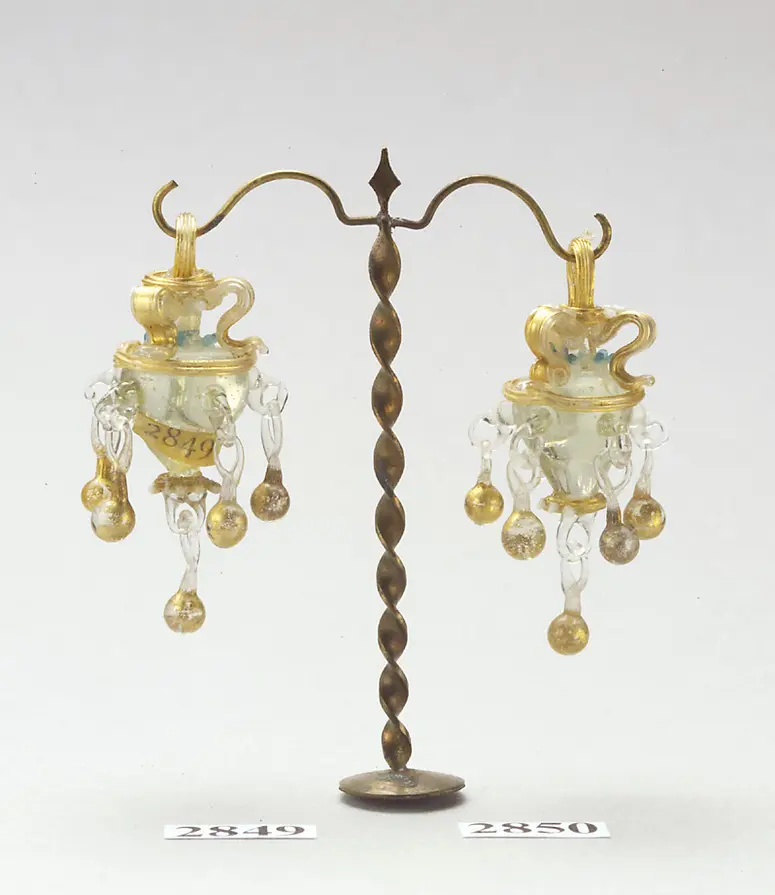
vasenförmiges Ohrgehänge mit kugelförmigen Anhängseln aus Glas Innsbrucker Hofglashütte 4. Viertel 16. Jh.
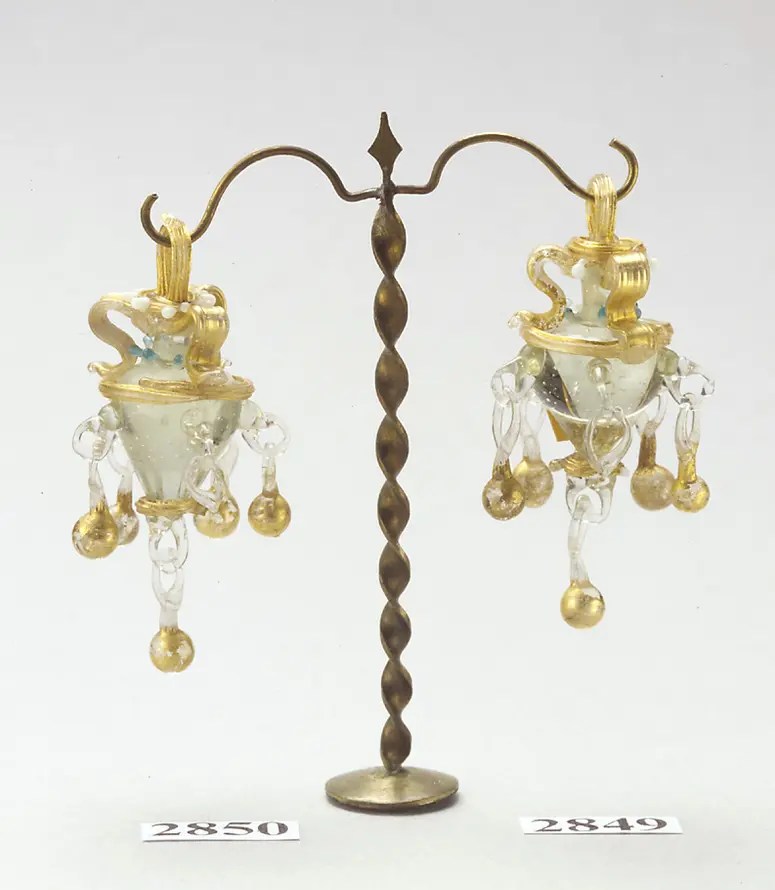
vasenförmiges Ohrgehänge mit kugelförmigen Anhängseln aus Glas Innsbrucker Hofglashütte 4. Viertel 16. Jh.
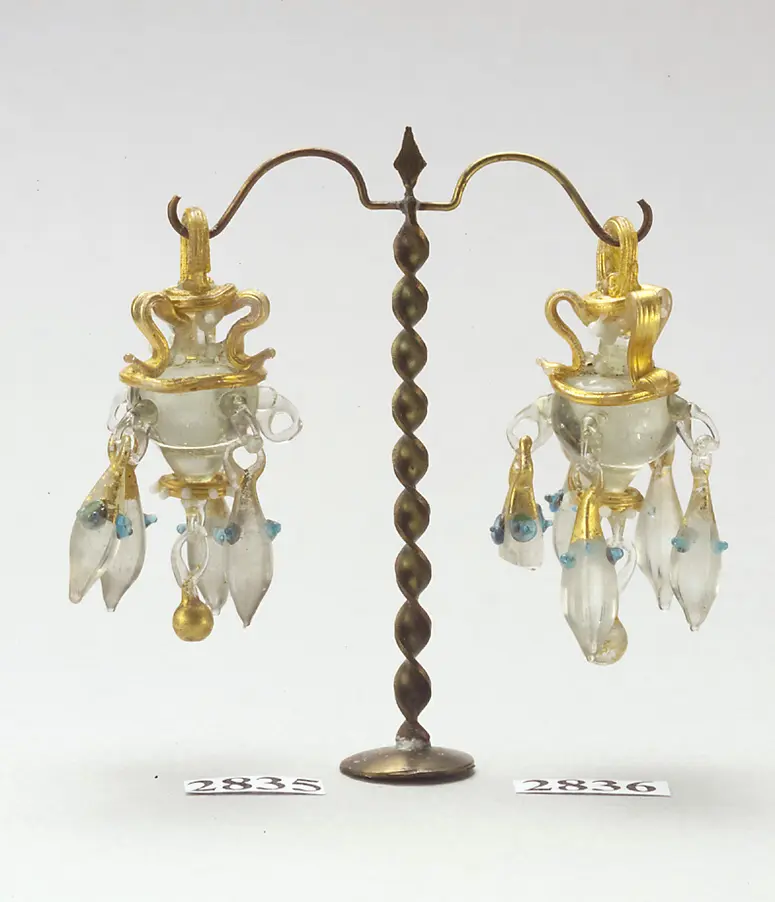
vasenförmiges Ohrgehänge mit tropfenförmigen Anhängseln aus Glas Innsbrucker Hofglashütte 4. Viertel 16. Jh.