Francesco Petrarca (1304-1374)
16. Jahrhundert | Italienisch, Florenz (?)
The historical and philosophical works of the Italian poet Francesco Petrarca (1304–1374) prepared the way for Humanism. His love-sonnets addressed to Laura had a lasting influence on European love lyrics. In the lyrical Canzoniere he writes about his deep and unrequited love to Laura. »You, Laura, are like sharp laurels. Who tries them, hoping to get well, will die.« It is uncertain if she really was his
mistress or just fiction.
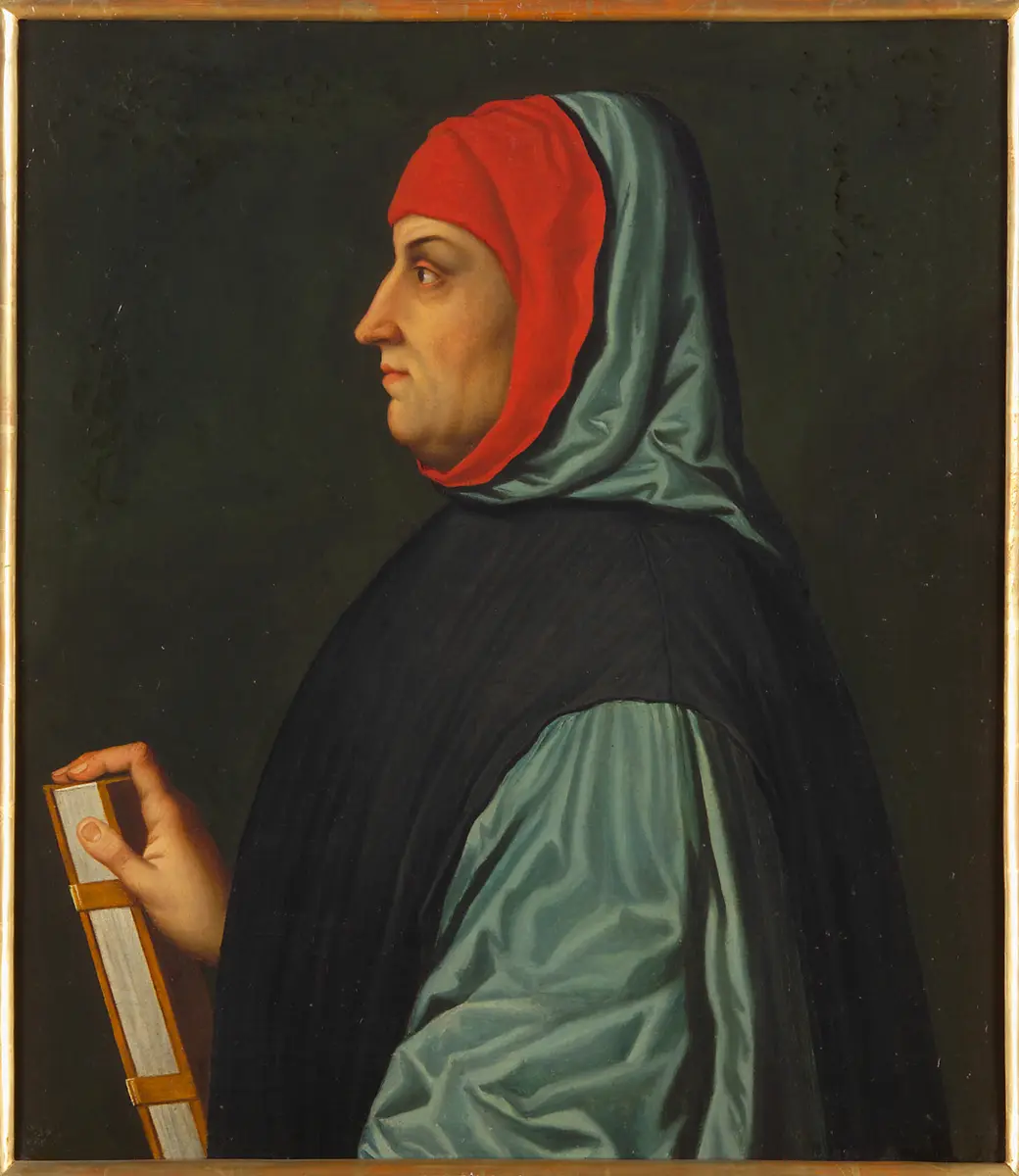
The historical and philosophical works of the Italian poet Francesco Petrarca (1304–1374) prepared the way for Humanism. His love-sonnets addressed to Laura had a lasting influence on European love lyrics. In the lyrical Canzoniere he writes about his deep and unrequited love to Laura. »You, Laura, are like sharp laurels. Who tries them, hoping to get well, will die.« It is uncertain if she really was his
mistress or just fiction.
Attributed to:
Italienisch, Florenz (?)
Artist:
anonym
Depiction/Person:
Francesco Petrarca (1304 - 1374) DNB
Time:
16. Jahrhundert
Object Name
Gemälde, Francesco Petrarca
Culture
Italienisch
Dimensions:
Overall: 75,7 × 65,8 × 2,3 cm
Framed: 80,5 × 71 × 4,3 cm
Copyright
Kunsthistorisches Museum, Gemäldegalerie
Invs.
Gemäldegalerie, 8065
Provenance
1621 in Ambraser Sammlung dokumentiert
Browse more
Similar items you might be interested in
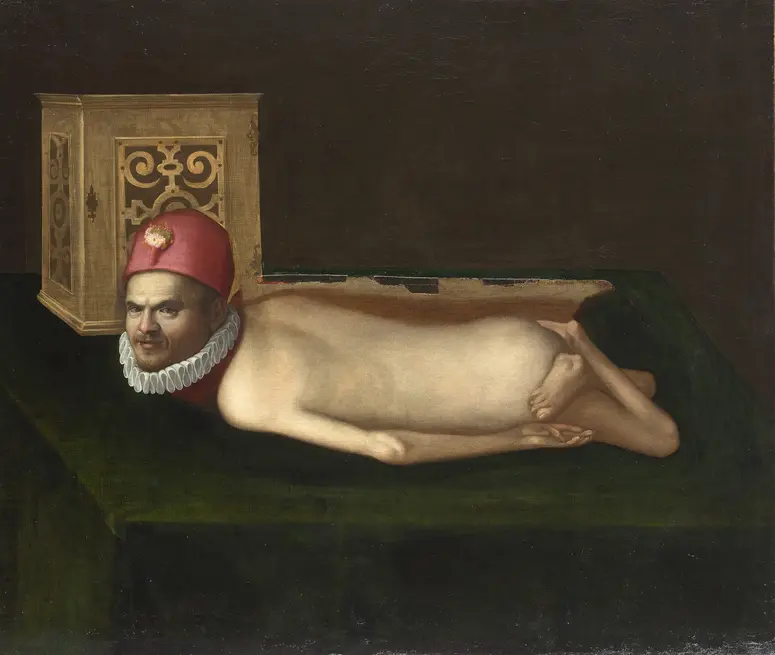
Bildnis eines behinderten Mannes Deutsch 2. Hälfte 16. Jahrhundert
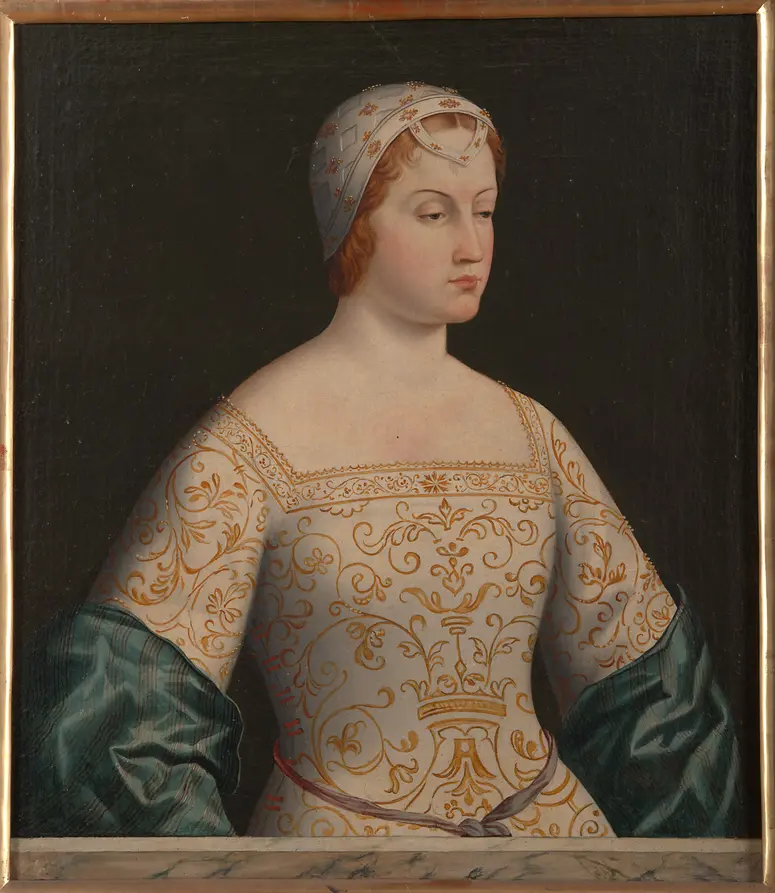
Laura (de Sades) (1307-1348) Italienisch, Florenz (?) 16. Jahrhundert



Tartsche, Flügeltartsche, Ungarische Tartsche, Schild um 1570

Lederteller, Mosaik, Ledermosaik 1. Hälfte 16. Jahrhundert
David mit dem Haupt des Goliath, das Schwert an ein Postament gelehnt Giovanni Andrea Sirani 18. Jahrhundert?