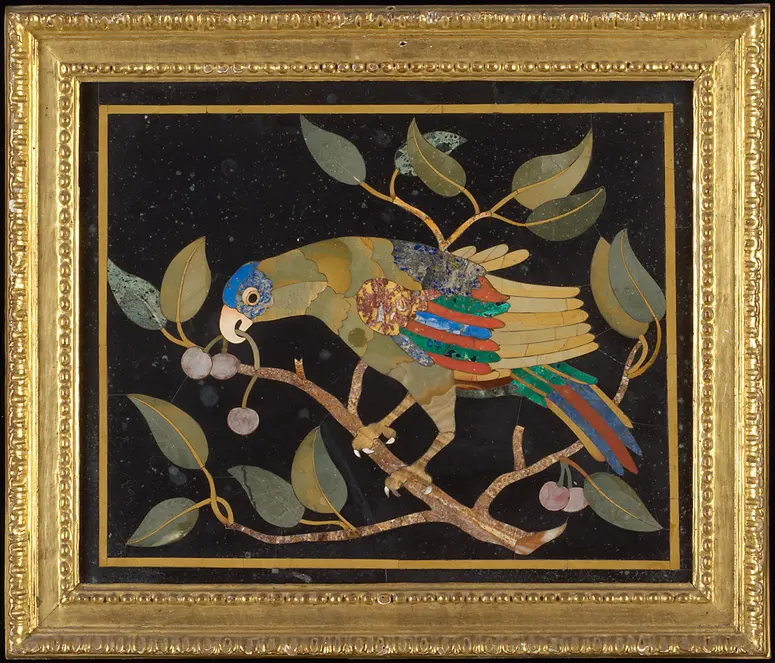
Helmperlhuhn
um 1610 ?
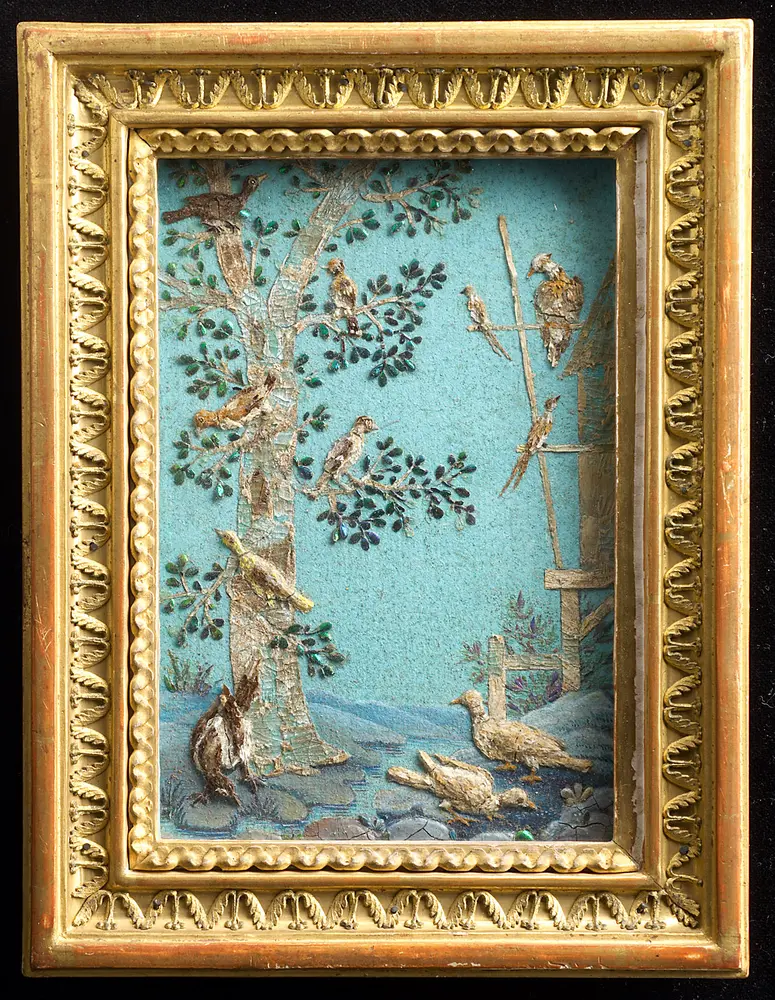
The mosaic, part of a serie of 4, are mainly made from parts of insects. The individual materials were cut into small, sometimes even miniscule pieces and then, using great artistic skill, arranged into portrayals of birds or plants. The iridescent green oft he trees comes from the wings of another leaf beetle, while the feathers oft the ducks were made of wings of butterflies. The next picture shows different waterfowls.
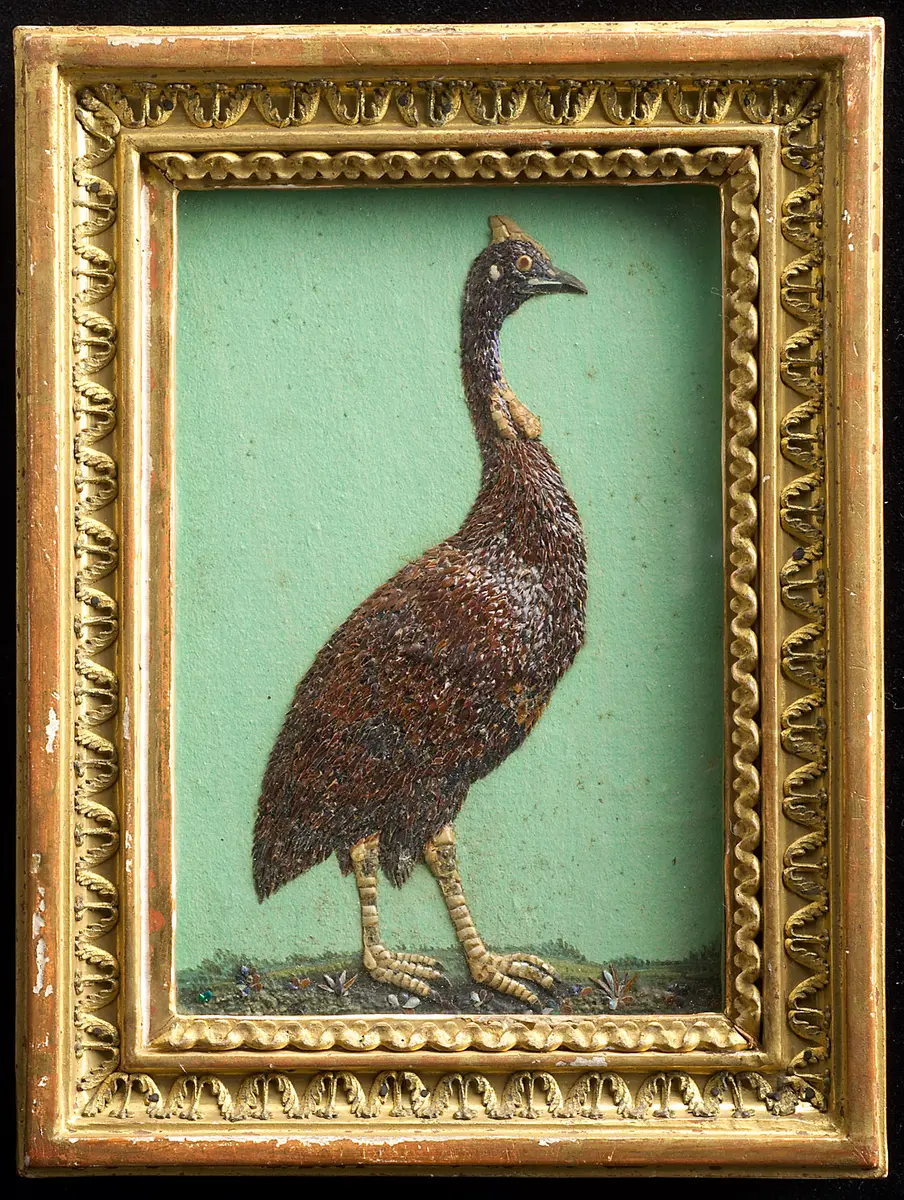
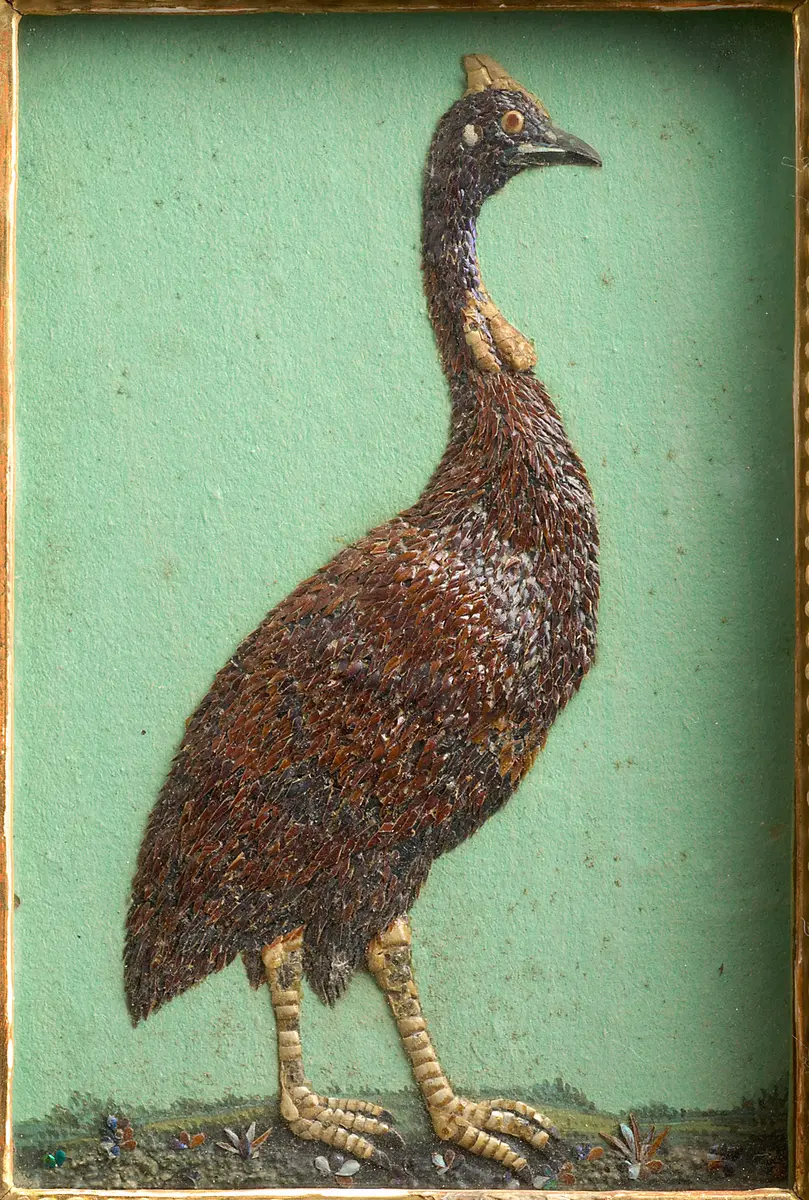
The mosaic, part of a serie of 4, are mainly made from parts of insects. The individual materials were cut into small, sometimes even miniscule pieces and then, using great artistic skill, arranged into portrayals of birds or plants. The iridescent green oft he trees comes from the wings of another leaf beetle, while the feathers oft the ducks were made of wings of butterflies. The next picture shows different waterfowls.
Time:
um 1610 ?
Object Name
Tierbild, Pflanzenmosaik, Helmperlhuhn, Tierdarstellung
Culture
Deutsch (?)
Material/technology:
zurechtgeschnittene Flügel des Blattkäfers (chrysomela sp.), Ohren- und Nasenlöcher wurden aus den Flügeln des Wimpernbocks (pogonocherus sp.) und der Schnabel aus den Flügeln des Goldgruben-Eichenprachtkäfers (chrysobothris affinis) gefertigt
Dimensions:
mit Rahmen: H. 19 cm × B. 14,5 cm
Copyright
Schloss Ambras Innsbruck
Invs.
Schloss Ambras Innsbruck, PA 442
Provenance
vielleicht aus der Prager Kunstkammer Kaiser Rudolfs II. (?); 1847 vom k.k. physikalischen Kabinett in Wien an die Ambraser Sammlungen übergeben (s. Supplement-Inventar der K.K. Ambraser Sammlung, Nachtrag zum Inventar 1880, S. 14)
Browse more
Similar items you might be interested in
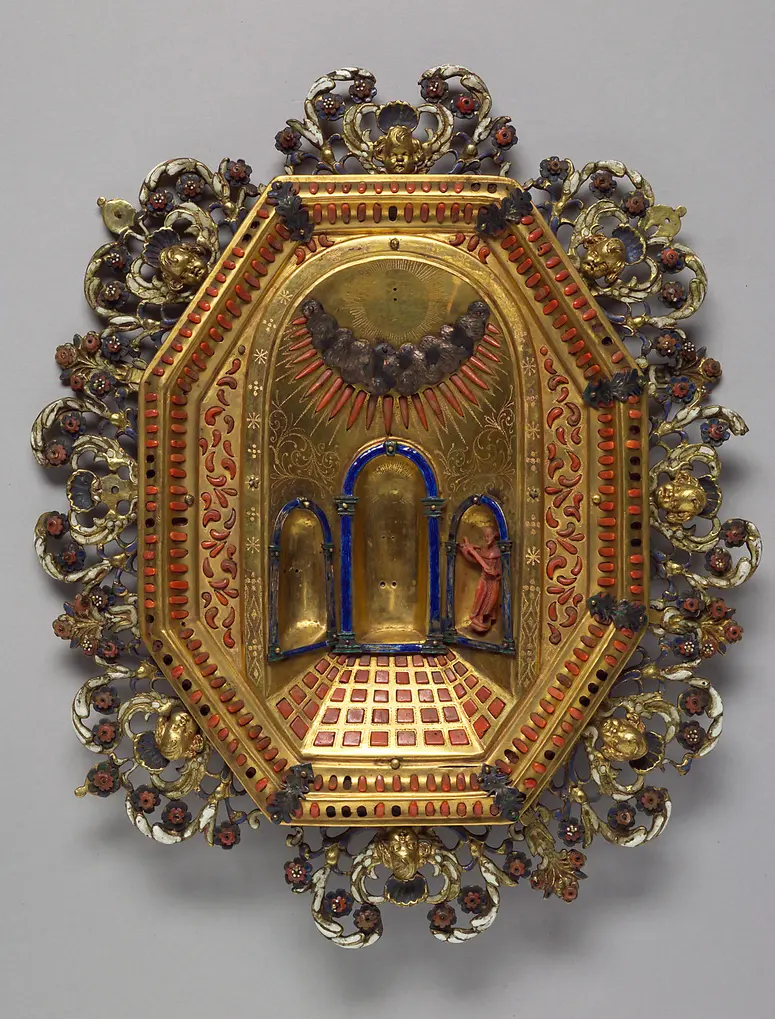
Wanddekoration, Relief, Einlegearbeit, Korallenmosaik 1. Hälfte 17. Jahrhundert
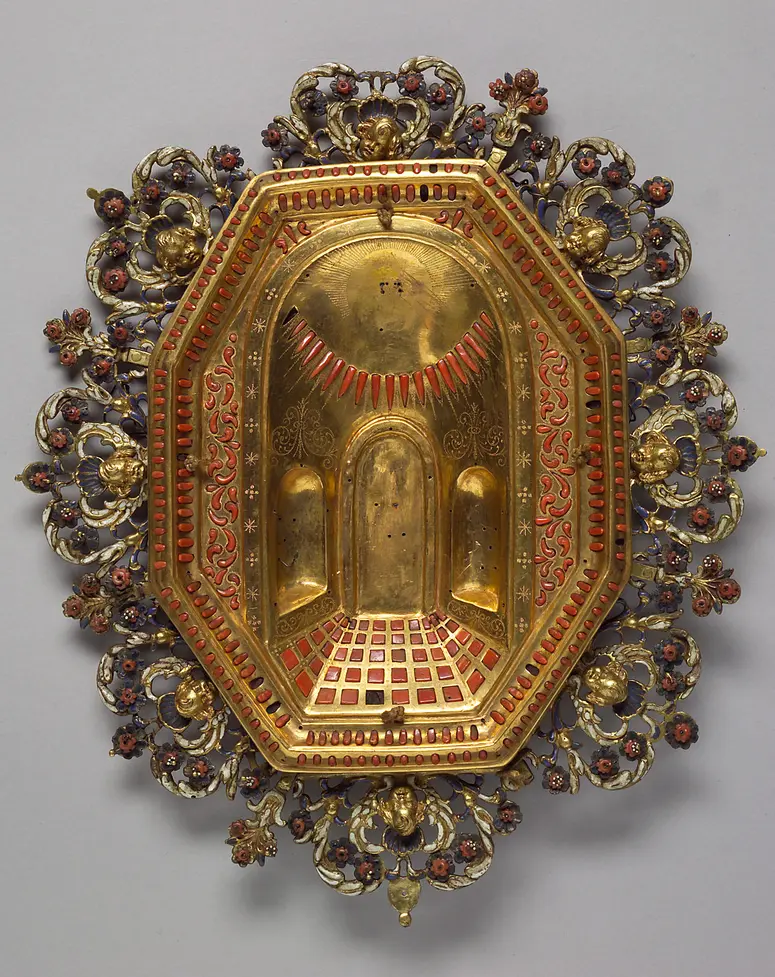
Wanddekoration, Platte, Teller, Einlegearbeit, Korallenmosaik 1. Hälfte 17. Jahrhundert

Lederteller, Mosaik, Ledermosaik 1. Hälfte 16. Jahrhundert
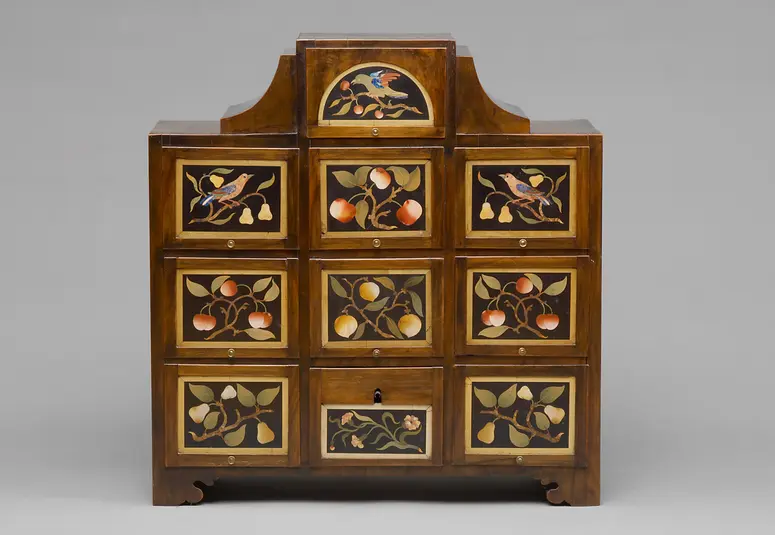
Schmuckkästchen, Kabinettschrank, Pietra-Dura-Kästchen Mitte 17. Jahrhundert
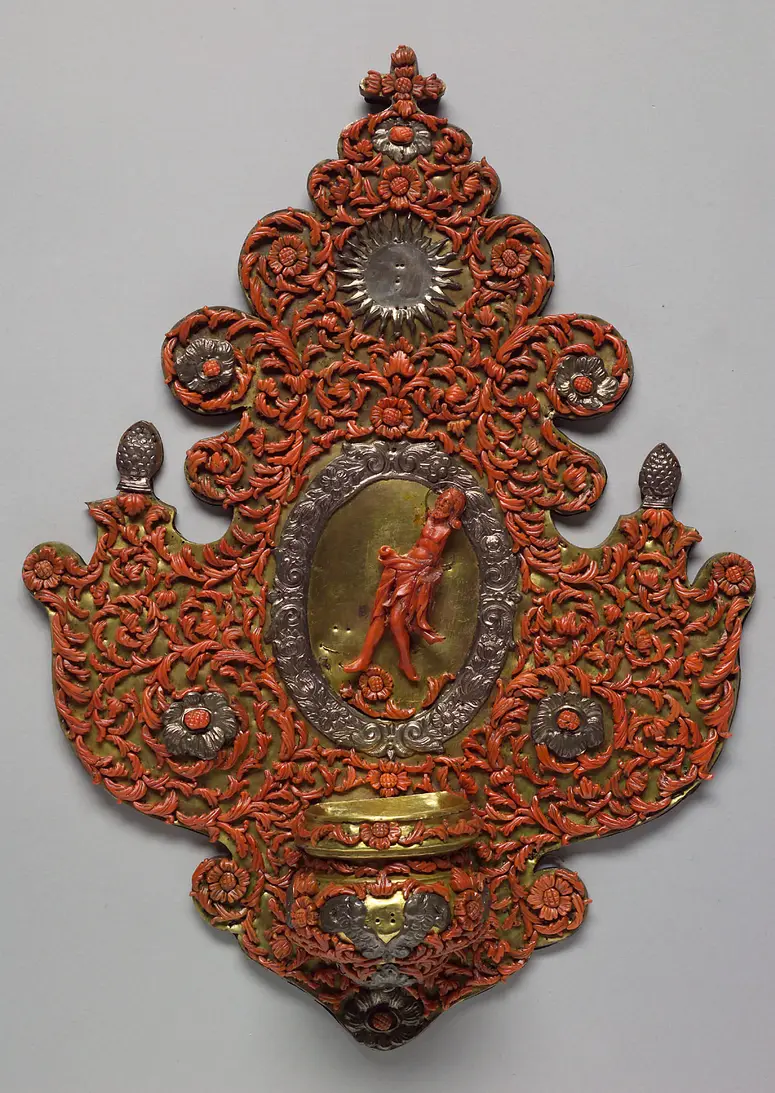
Weihwasserbecken, Gefäß; Becken, Weihwasserbecken, Korallenmosaik, Einlegearbeit 17. Jahrhundert ?, Anfang 18. Jahrhundert (?)

Wanddekoration, Platte, Teller, Einlegearbeit, Korallenmosaik, Maria Immaculata um 1650
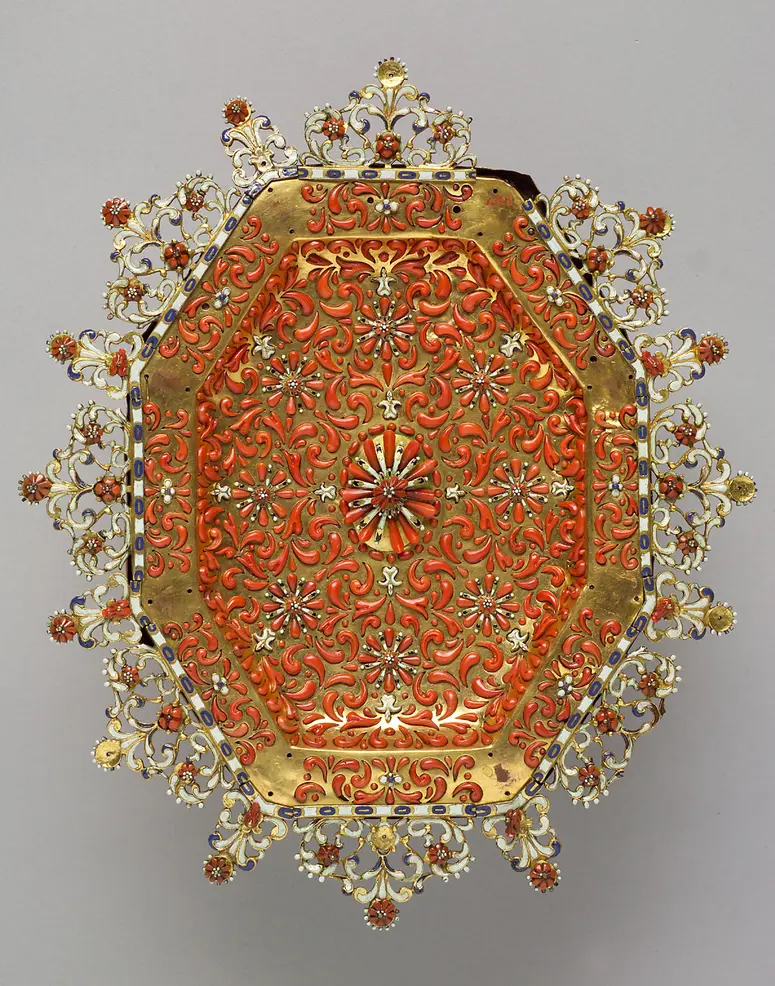
Gefäß, Teller, Platte, Korallenmosaik, Einlegearbeit Ende 16. Jahrhundert / Anfang 17. Jahrhundert
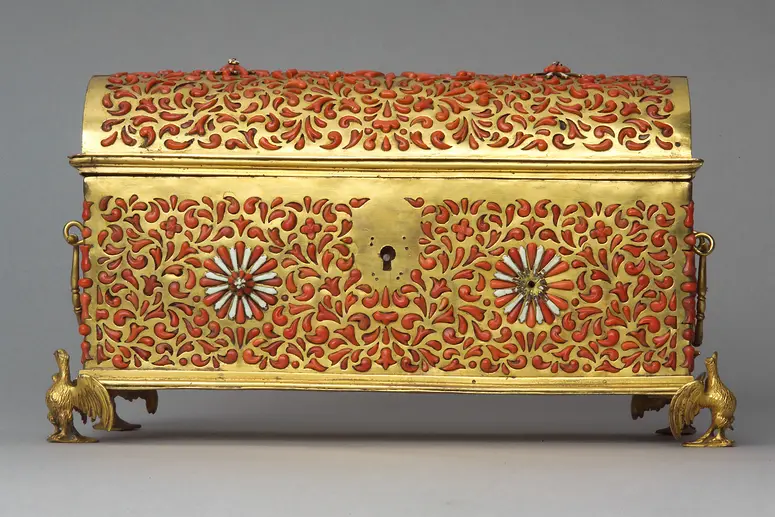
Kästchen mit Adlerfüßen, Korallenmosaik, Einlegearbeit Anfang 17. Jahrhundert
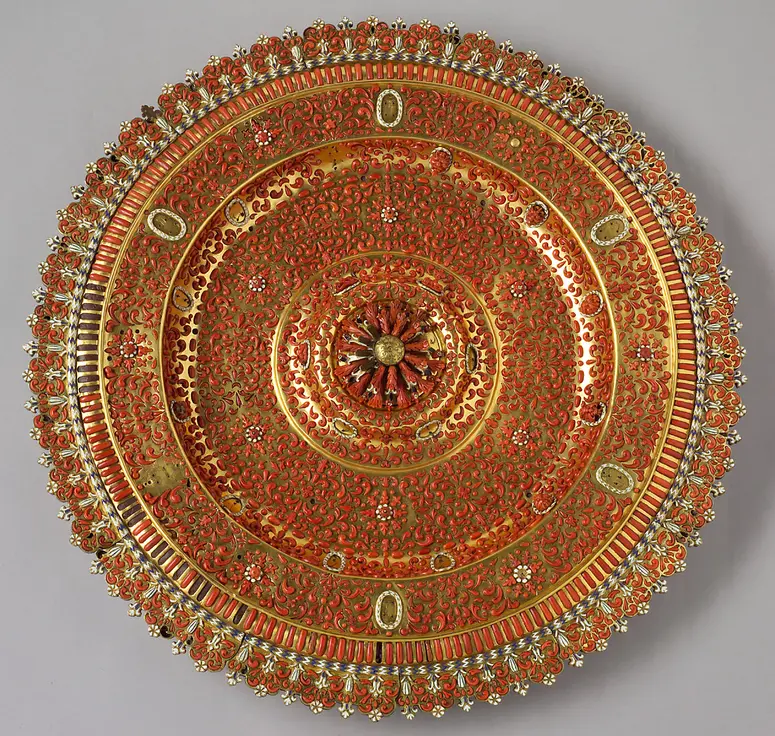
Becken mit durchbrochenen Verzierungen, Gefäß; Becken, Teller, Korallenmosaik, Einlegearbeit Anfang 17. Jahrhundert
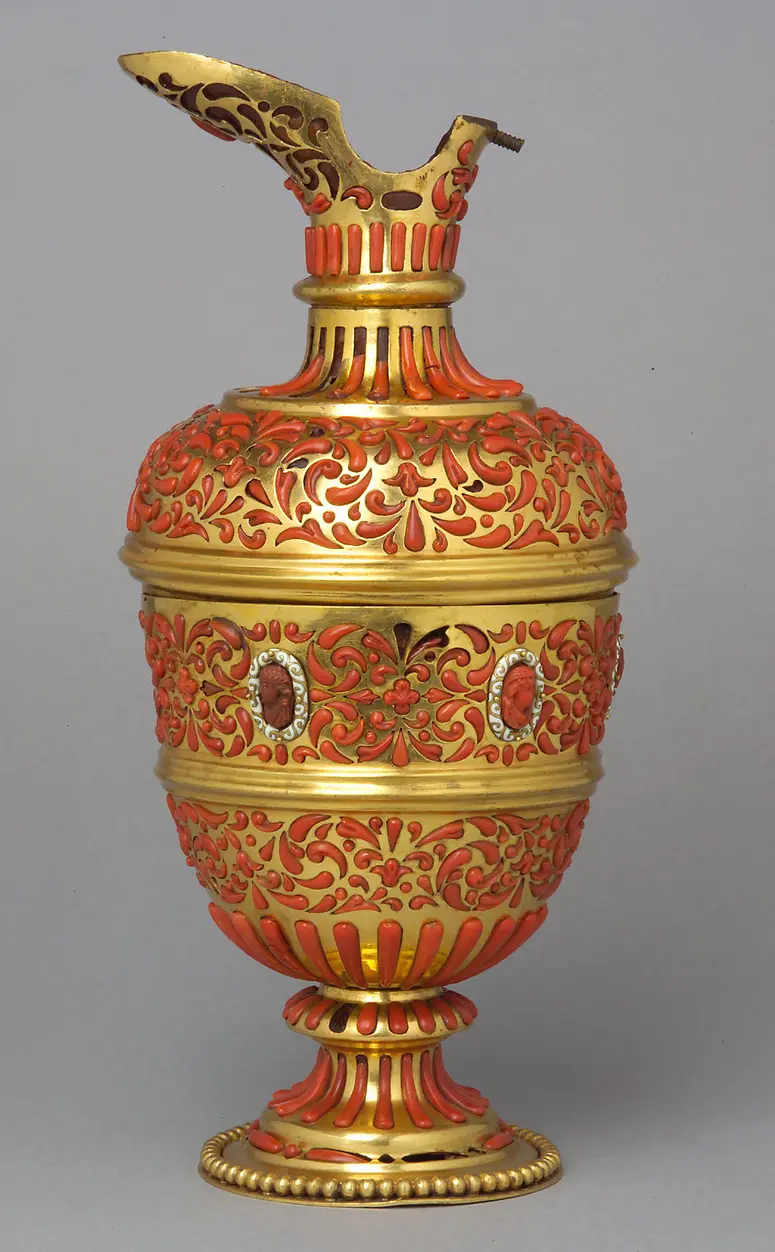
Gefäß; Krug, Kanne, Korallenmosaik, Einlegearbeit Ende 16. Jahrhundert / Anfang 17. Jahrhundert
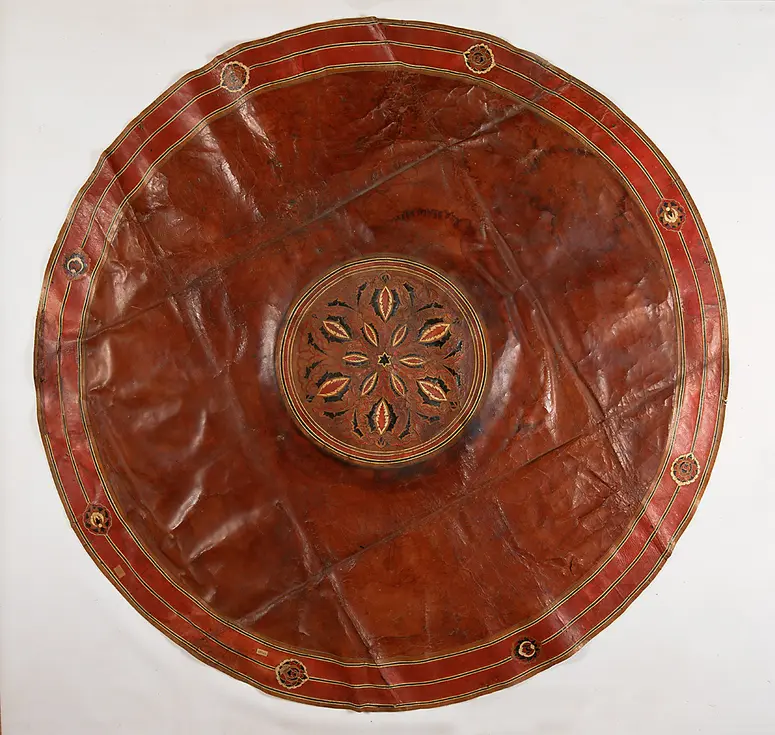
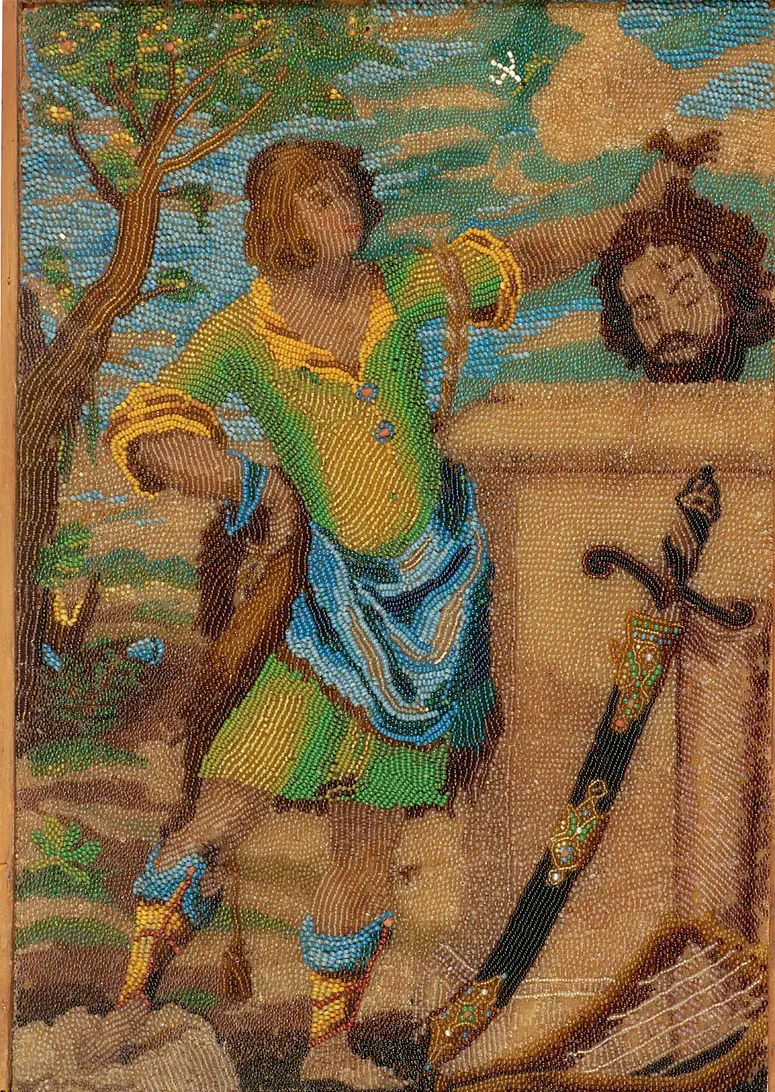
David mit dem Haupt des Goliath, das Schwert an ein Postament gelehnt Giovanni Andrea Sirani 18. Jahrhundert?
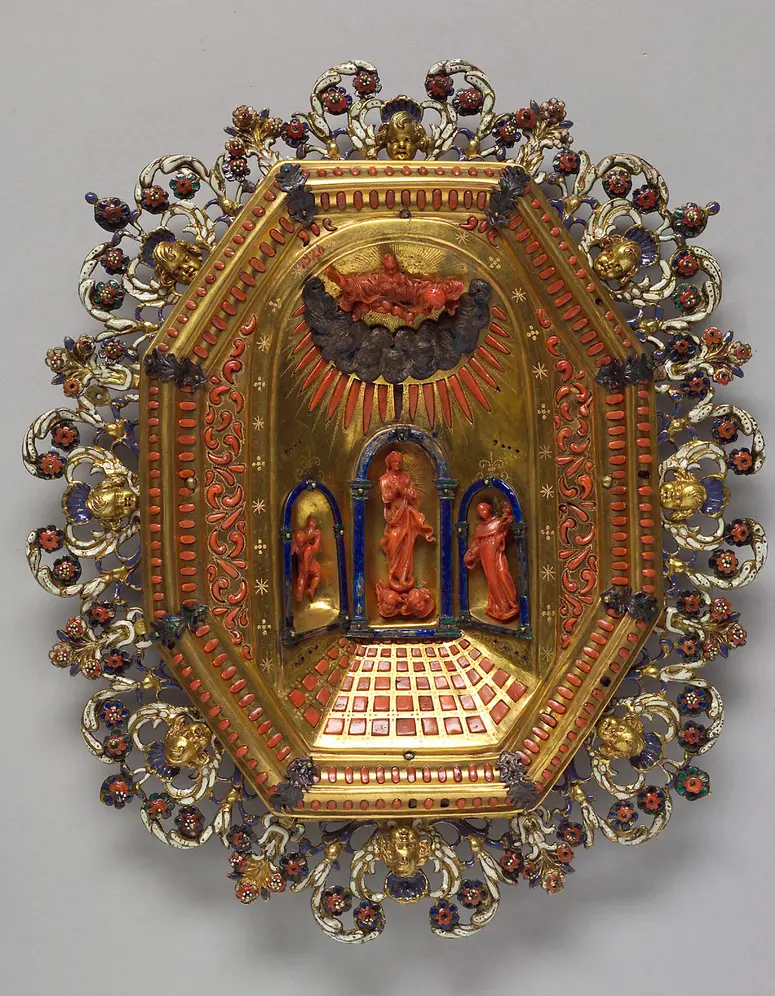
Wanddekoration mit der Darstellung Mariae Empfängnis, Platte, Teller, Einlegearbeit um 1650
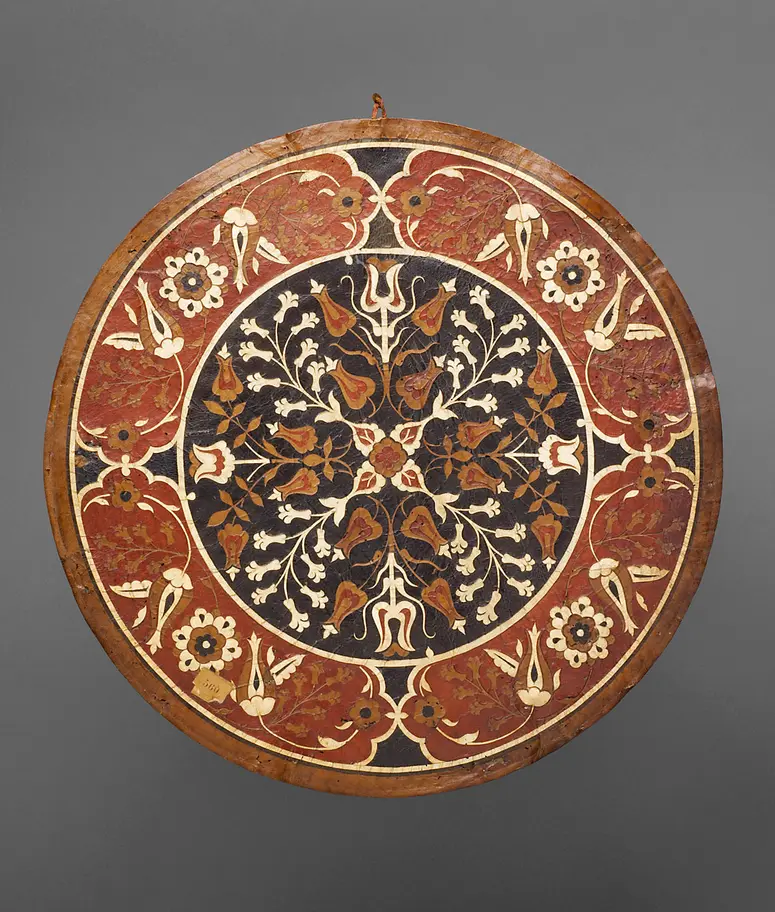
Lederteller, Lederintarsie, Intarsie, Mosaik 2. Viertel 16. Jahrhundert
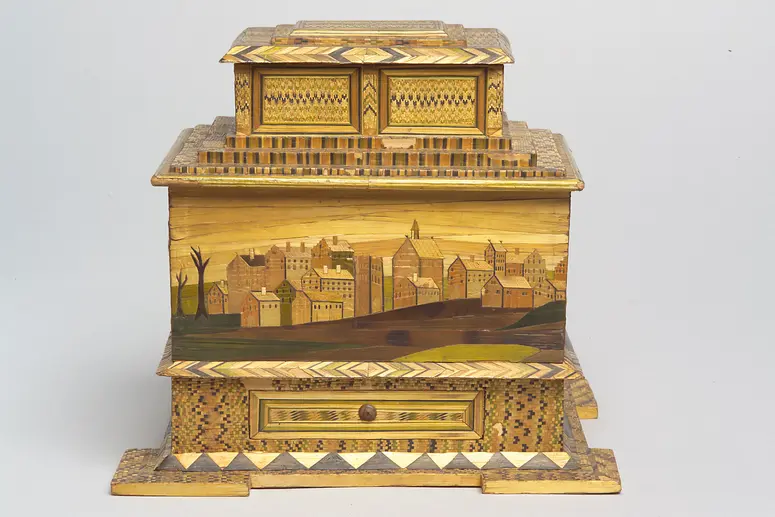
Kassette, Strohmosaik, Strohkassette, Strohkabinett, Möbel, Strohkästchen 16. oder 17. Jahrhundert
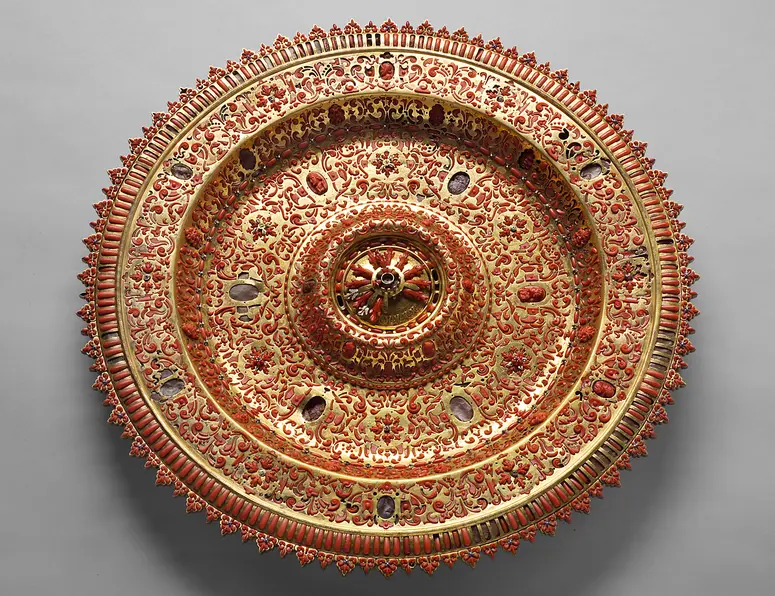
Becken, Teller, Rundteller, Platte, Korallenmosaik, Einlegearbeit Anfang 17. Jahrhundert