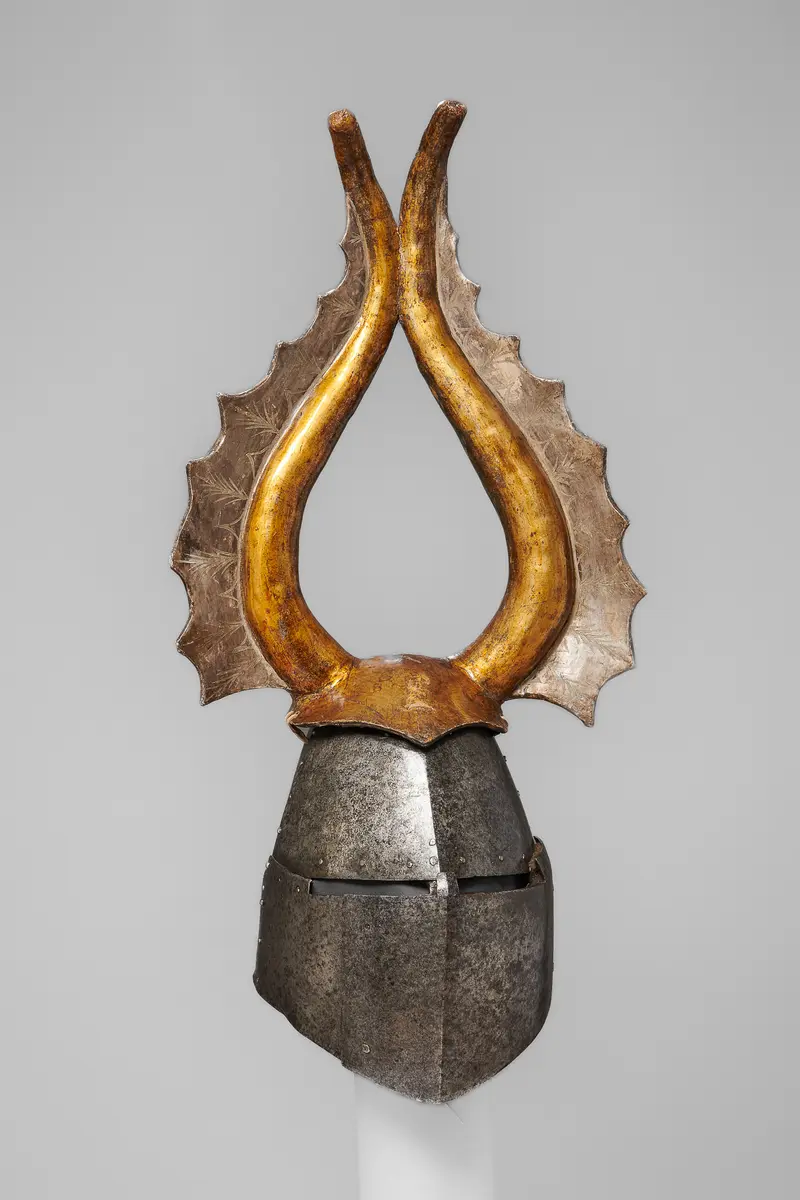
Prankher Helm
ca. 1330-1340 (Helm) und 15. Jahrhundert (Helmzier) | Albert von Prankh
This helmet comes from the church of the former monastery of Augustinian Friars at Seckau in Styria (today a Benedictine monastery). In 1877, it was removed from its place high up on the wall of the southern aisle of the church, where it had hung for centuries below two funerary shields of the Prankh family. In 1878, Johann Baptist Zwerger, Prince-Bishop of Seckau, presented it to the imperial collections in Vienna.
A comparison with similar helmets suggests the great helm from Seckau was made around 1330. It comprises two front plates, two neckplates, and a flat, pierced top plate. On the left, and partially also on the right, the plates protecting the face are reinforced with a plate lined in felt. This reinforcement suggests the great helm was not worn in battle but for hastiludes, medieval martial games. It was presumably donned for the melee (a mock battle in which two rival parties of knights faced each other armed with lances, swords, and maces), because it bears the marks of slashes on all sides. Hits sustained in a duel fought with lances would have been limited to the front and left side of the helmet.
The great helm probably originally belonged to Albert of Prankh, who lived in the mid-fourteenth century. Albert’s seal survives on a document dated 1353, and it features two horns with combs similar to the crest surmounting this helmet. However, the same symbol was also used on the seals of other members of the Prankh family who lived in the late fourteenth and the fifteenth century.
There are almost no extant medieval crested helmets. The most famous example is the great helm of Edward the Black Prince in Canterbury Cathedral (England). Crests first appeared as heraldic symbols in the early thirteenth century; in the later Middle Ages they were mainly worn by jousters as fantastic decorations in the lists.
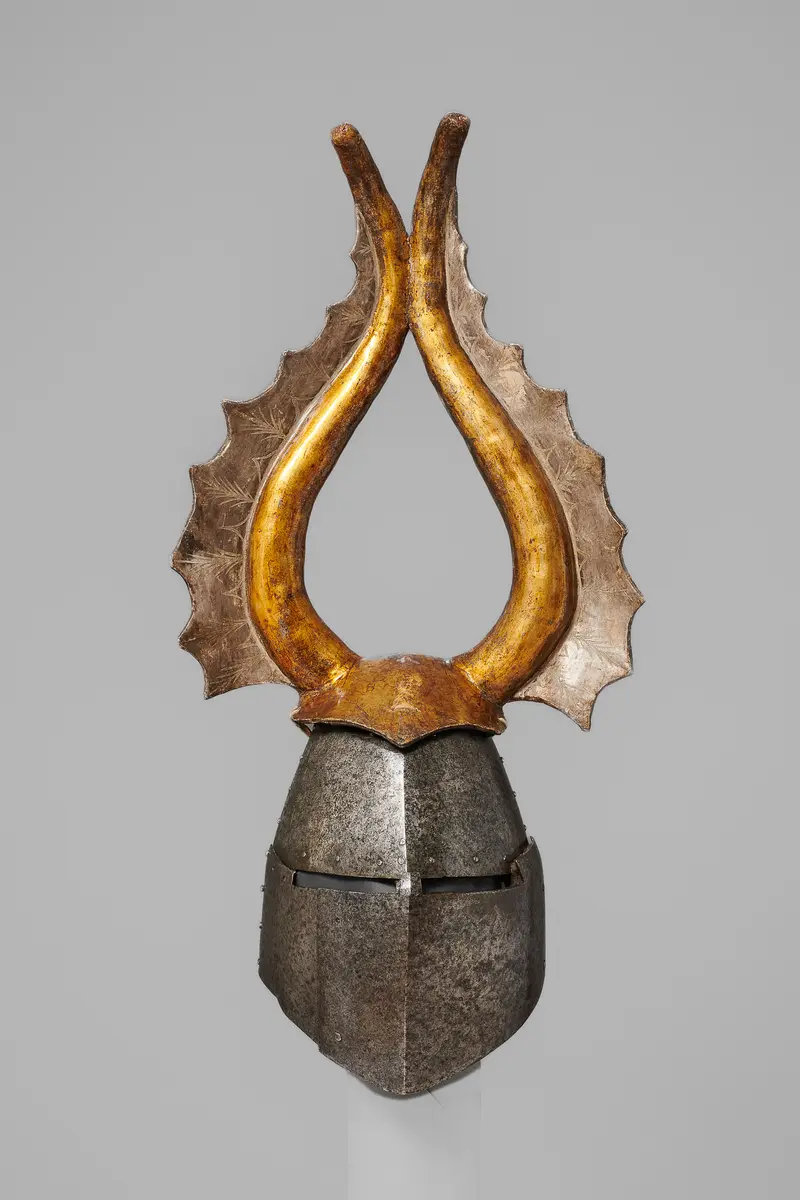
This helmet comes from the church of the former monastery of Augustinian Friars at Seckau in Styria (today a Benedictine monastery). In 1877, it was removed from its place high up on the wall of the southern aisle of the church, where it had hung for centuries below two funerary shields of the Prankh family. In 1878, Johann Baptist Zwerger, Prince-Bishop of Seckau, presented it to the imperial collections in Vienna.
A comparison with similar helmets suggests the great helm from Seckau was made around 1330. It comprises two front plates, two neckplates, and a flat, pierced top plate. On the left, and partially also on the right, the plates protecting the face are reinforced with a plate lined in felt. This reinforcement suggests the great helm was not worn in battle but for hastiludes, medieval martial games. It was presumably donned for the melee (a mock battle in which two rival parties of knights faced each other armed with lances, swords, and maces), because it bears the marks of slashes on all sides. Hits sustained in a duel fought with lances would have been limited to the front and left side of the helmet.
The great helm probably originally belonged to Albert of Prankh, who lived in the mid-fourteenth century. Albert’s seal survives on a document dated 1353, and it features two horns with combs similar to the crest surmounting this helmet. However, the same symbol was also used on the seals of other members of the Prankh family who lived in the late fourteenth and the fifteenth century.
There are almost no extant medieval crested helmets. The most famous example is the great helm of Edward the Black Prince in Canterbury Cathedral (England). Crests first appeared as heraldic symbols in the early thirteenth century; in the later Middle Ages they were mainly worn by jousters as fantastic decorations in the lists.
Owner:
Albert von Prankh (um 1350)
Time:
ca. 1330-1340 (Helm) und 15. Jahrhundert (Helmzier)
Object Name
Prankher Helm
Culture
Norditalien/Süddeutschland/Österreich
Material/technology:
Helm: Eisen, geschmiedet, aus Einzelteilen gebaut. Farbreste. Textil: Filz. Helmzier: Leder. Textil: Leinen. Kreidegrund, blattvergoldet und – versilbert. Lasur.
Dimensions:
H inklusive Zimier: H 76 cm x B 24,2 cm x T 31 cm
B gesamt inkl. Zimier 40 cm
Gewicht Zimier: 1,01kg
Gewicht Helm: 5,2kg
Gesamtgewicht: 6,21kg
Signed
keine
Inscribed
keine
Stamp / markings
keine
Copyright
Kunsthistorisches Museum, Hofjagd- und Rüstkammer
Invs.
Hofjagd- und Rüstkammer, B 74
Browse more
Similar items you might be interested in

Leopold V. (1619-1632), Erzherzog und Graf von Tirol, Bischof von Passau und Straßburg 1628
Leopold V. (1619-1632), Erzherzog und Graf von Tirol, Bischof von Passau und Straßburg um 1620

Maximilian I. (1477-1519), seit 1493 deutscher König, 1508 Kaiser Datiert 1498
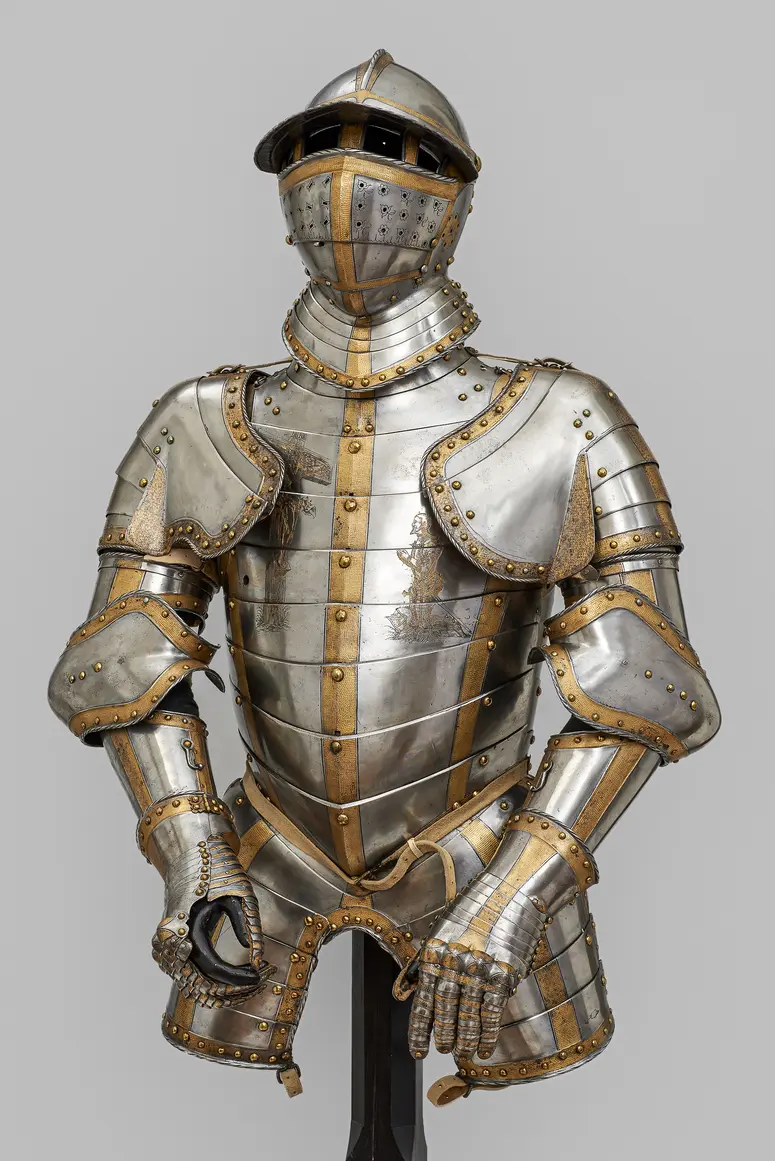
Fernando Alvarez de Toledo, Herzog von Alba um 1546
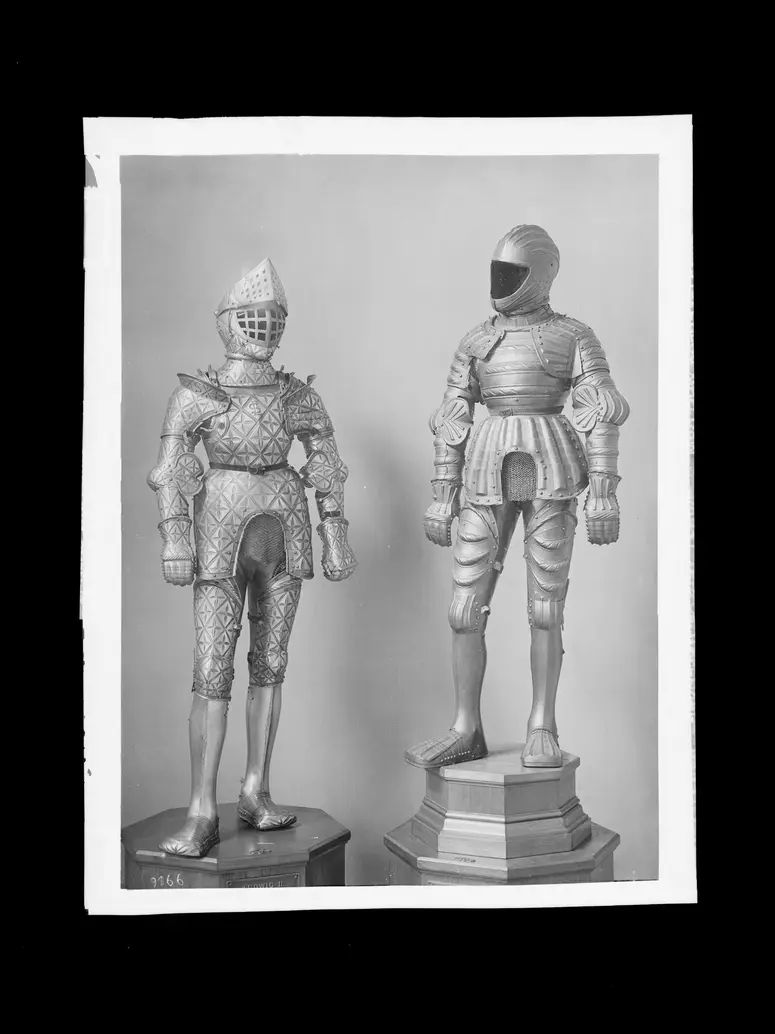
Prunkharnisch; unvollendeter Kinder-Kostümharnisch J. Löwy, K. und K. Hof-Photograph, Kunst- und Verlagsanstalt (Wien) 1892
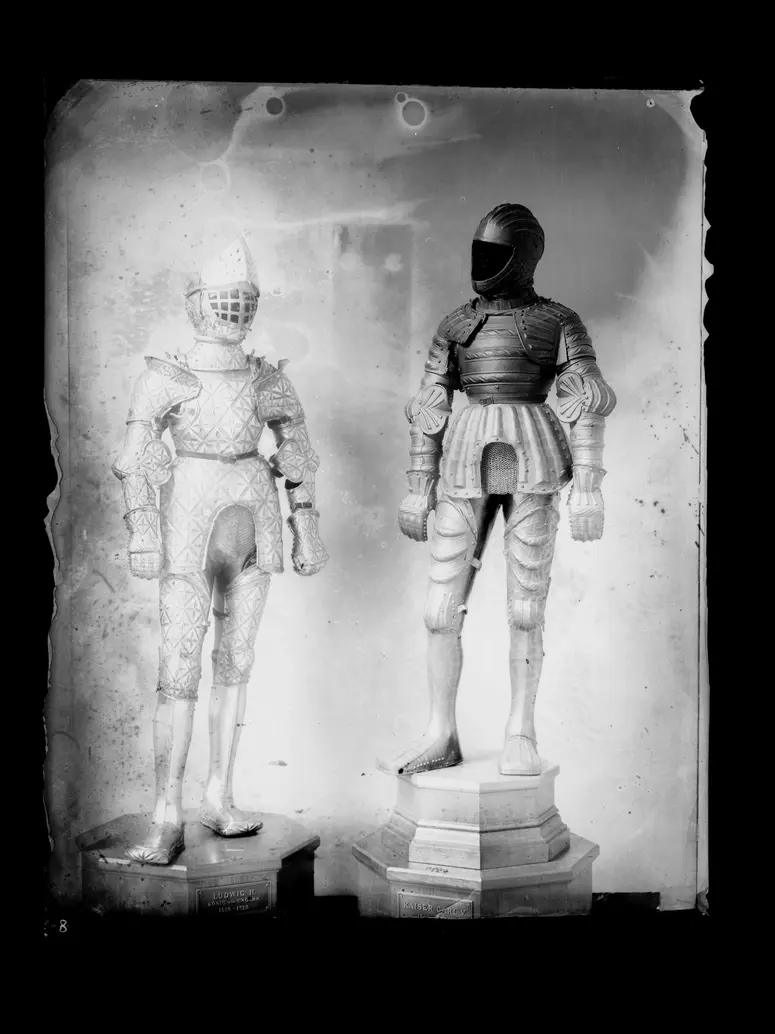
unvollendeter Kinder-Kostümharnisch; Prunkharnisch J. Löwy, K. und K. Hof-Photograph, Kunst- und Verlagsanstalt (Wien) 1892
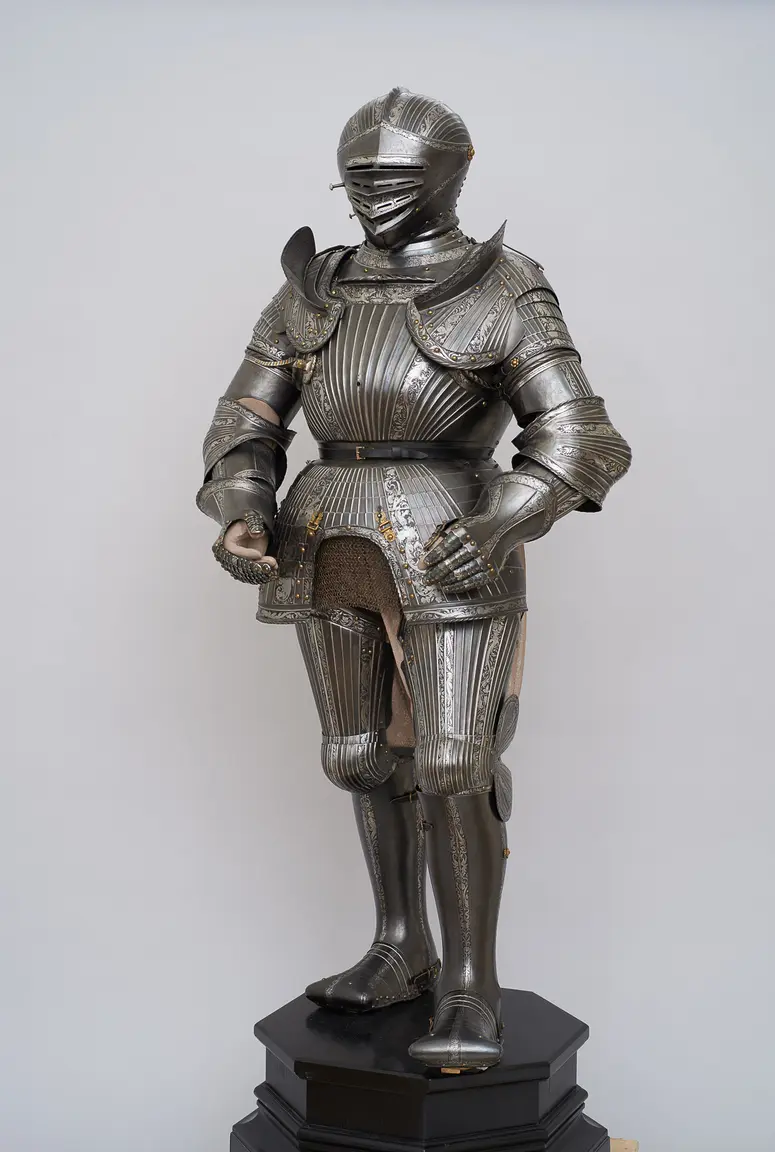
Riefelharnisch, Riefelküriss: Fluted field armour Johann Friedrich I. (1532-1547), Kurfürst von Sachsen Dated 1530
Sigismund Franz (1662-1665), Erzherzog von Vorderösterreich um 1635-1638

Franz Joseph I. (1848-1916), Kaiser von Österreich, König von Böhmen und Ungarn kurz nach 1874

Karl VI. (1711-1740), Kaiser datiert 1733
Bildnis eines behinderten Mannes Deutsch 2. Hälfte 16. Jahrhundert
Ferdinand III. (1637-1657), Kaiser datiert 1638
Ferdinand II. (1564-1595), Erzherzog von Österreich und Landesherr von Tirol 1547
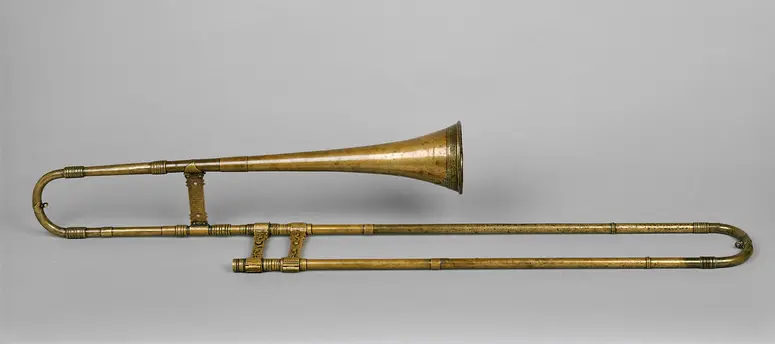
Manufacturer: Joerg Neuschel 1557
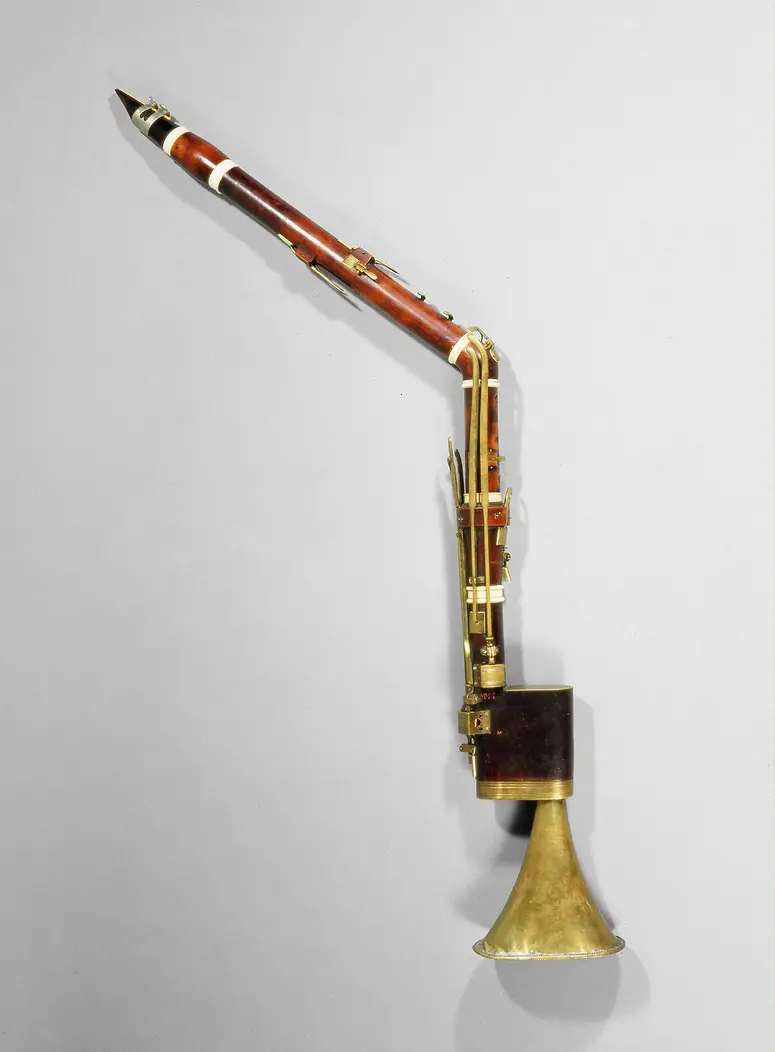
Manufacturer: Johann Baptist Merklein approx. 1800


Maximilian I. (1477-1519), seit 1493 deutscher König, 1508 Kaiser 1496
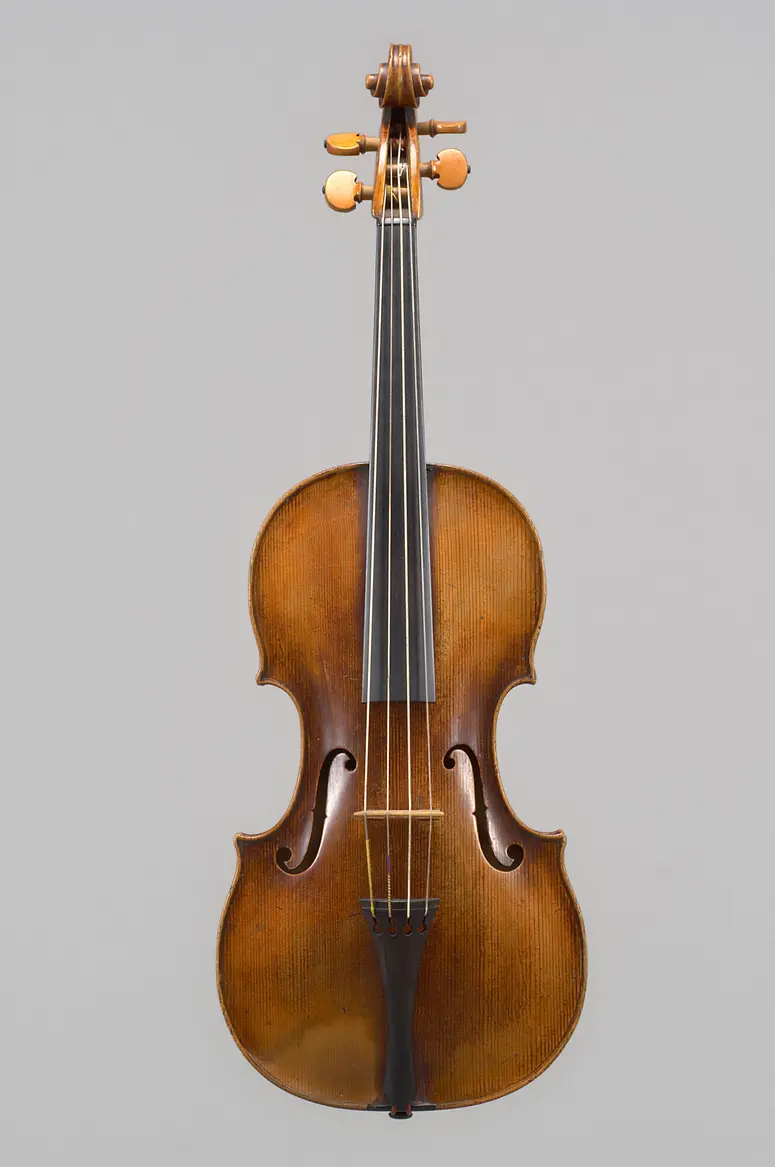
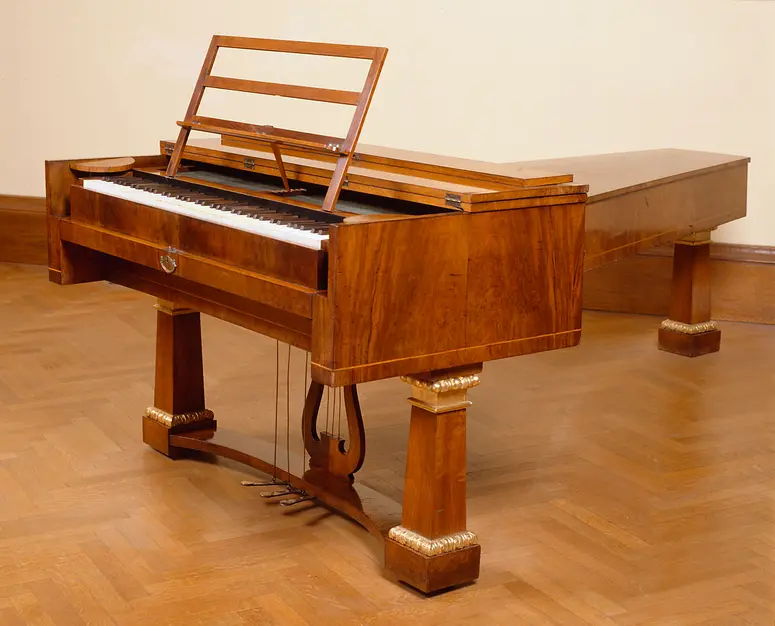
Manufacturer: Johann Baptist Streicher 1840