Polosfragment
1. - 3. Jh. n. Chr.
The fragment shows a piece of the roof of a small temple and was initially interpreted as an architectural model. Very probably, however, it is part of a "polos", the solemn, towering headdress with which the cult image of Artemis of Ephesus was adorned. The crowning is a small temple and probably means the Artemision, the sanctuary of the goddess, which was considered one of the Seven Wonders of the World in antiquity.
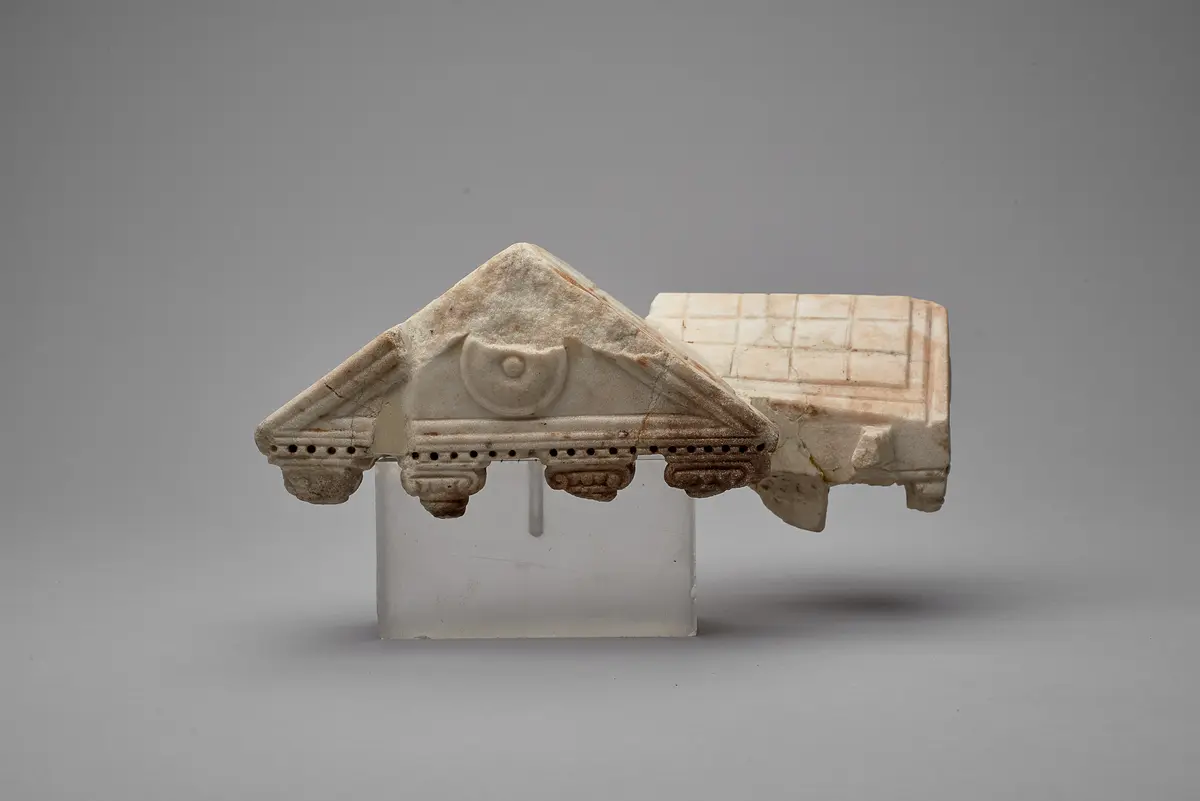
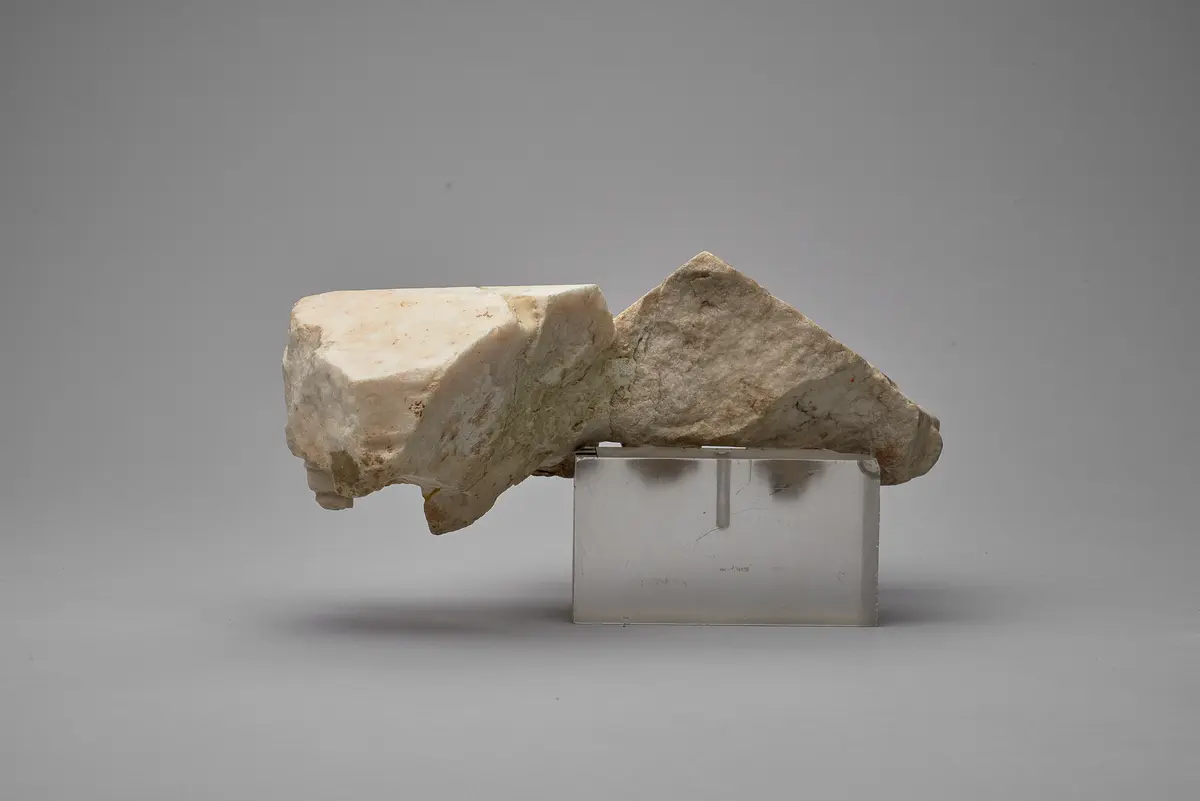
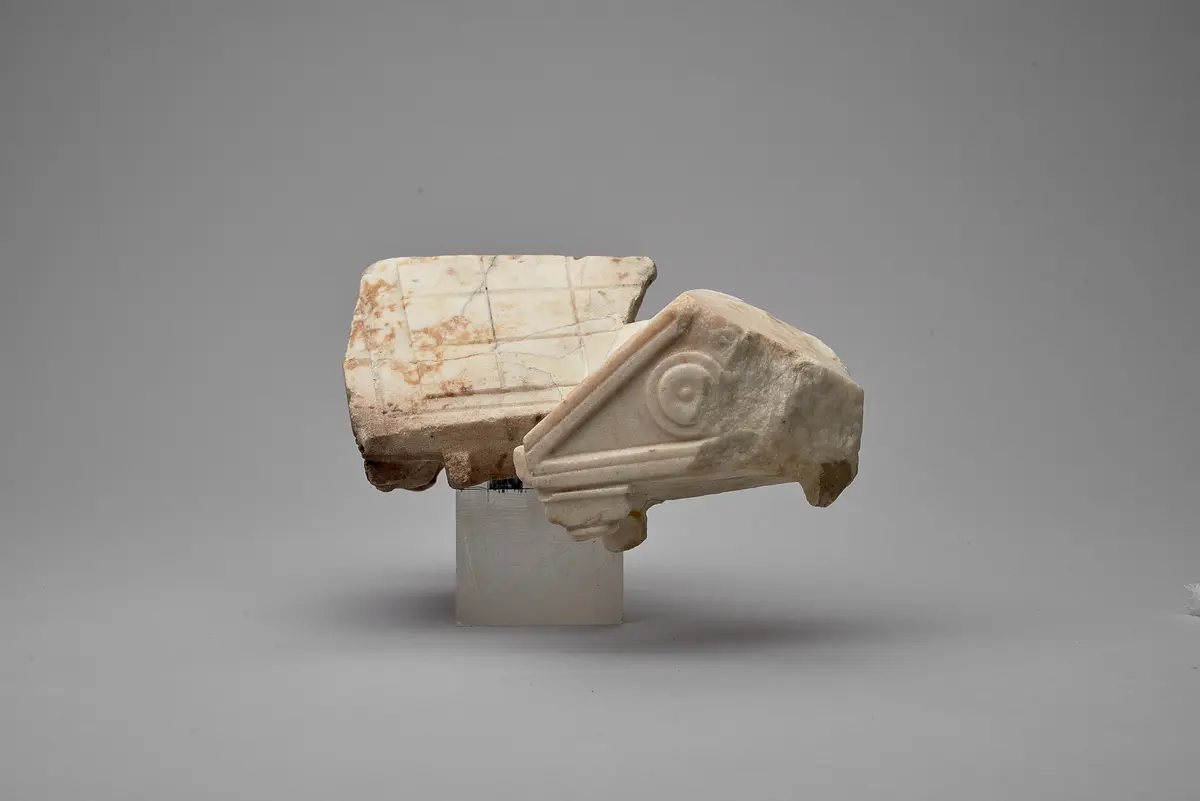
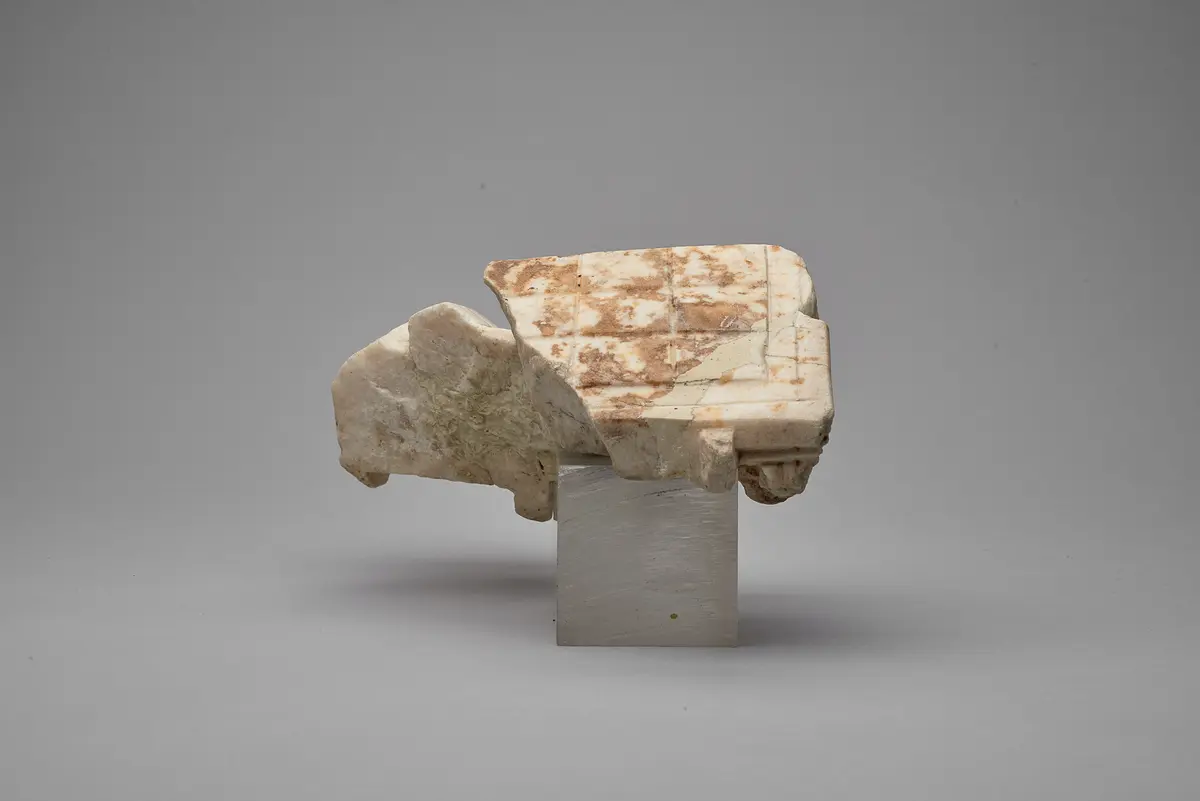
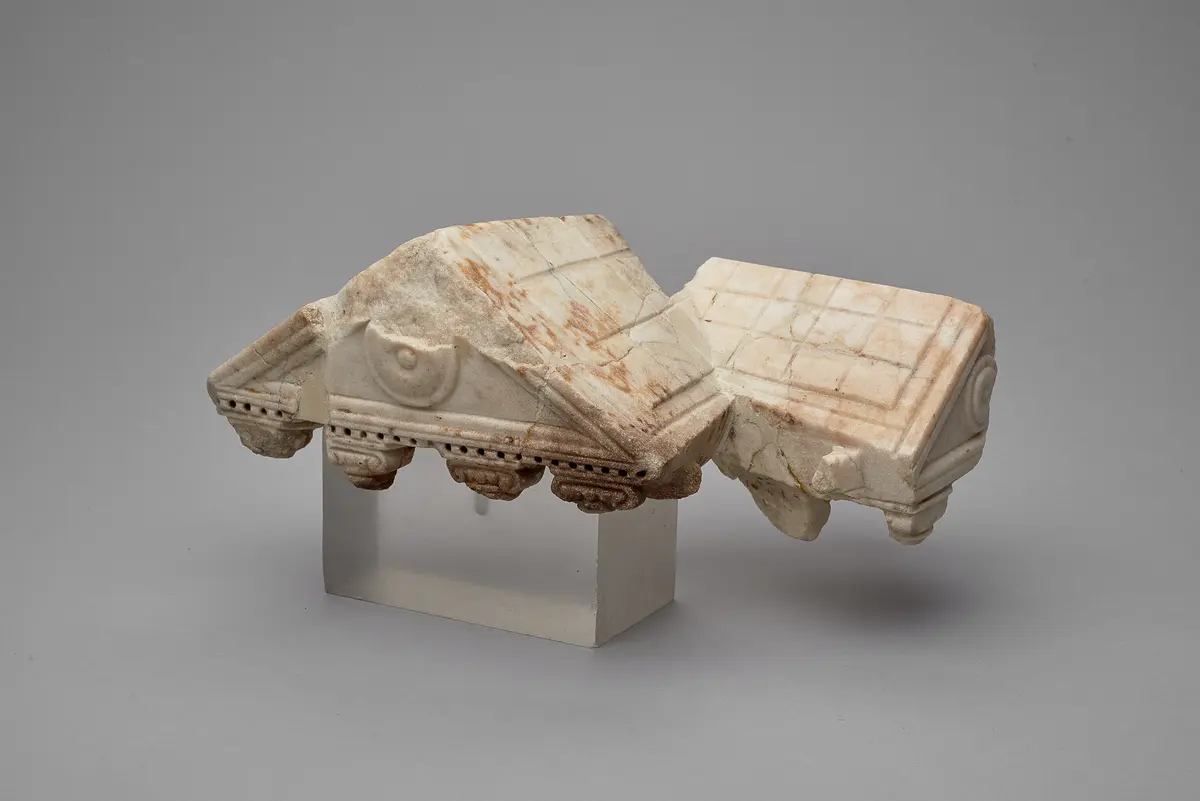
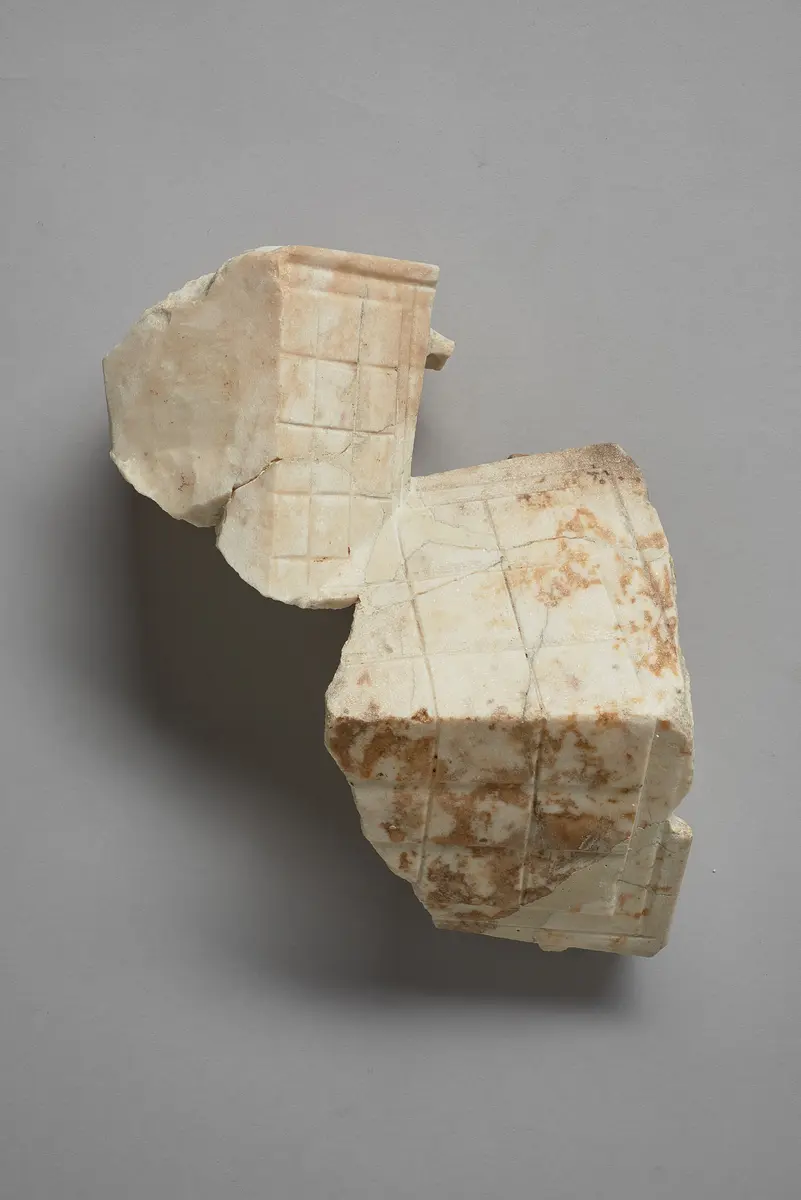
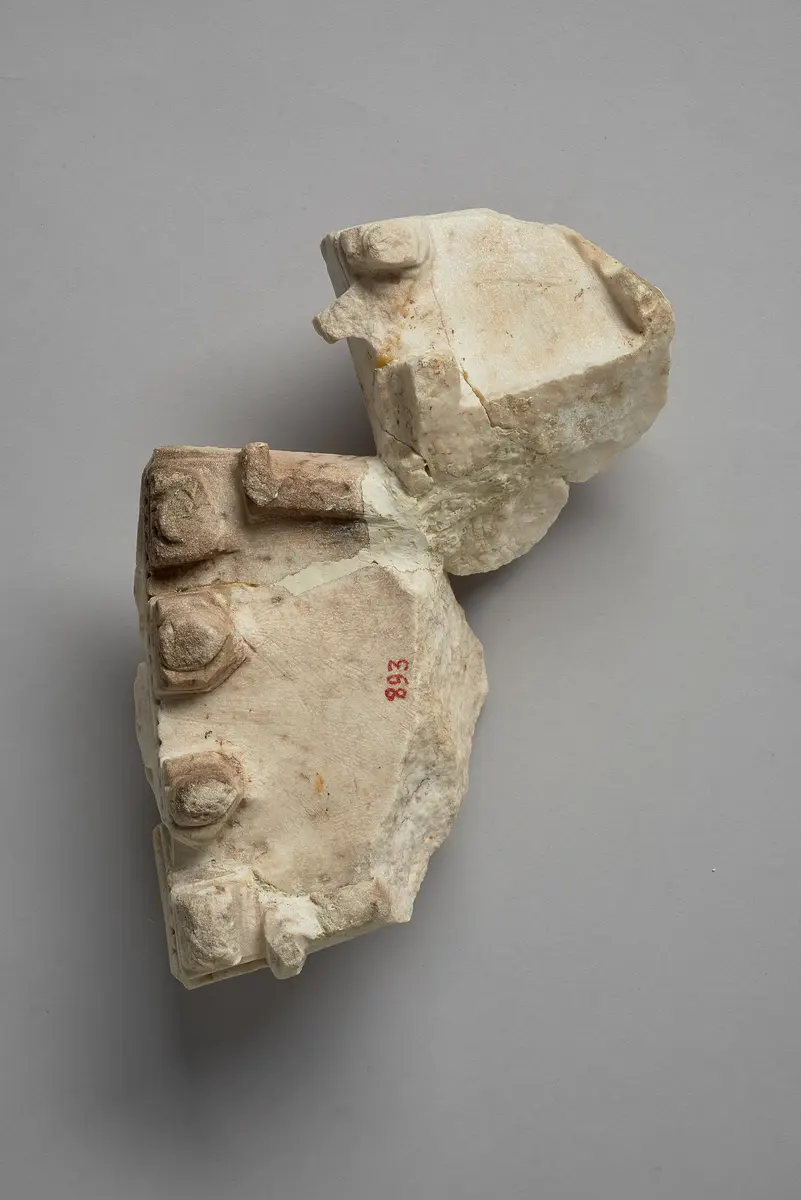
The fragment shows a piece of the roof of a small temple and was initially interpreted as an architectural model. Very probably, however, it is part of a "polos", the solemn, towering headdress with which the cult image of Artemis of Ephesus was adorned. The crowning is a small temple and probably means the Artemision, the sanctuary of the goddess, which was considered one of the Seven Wonders of the World in antiquity.
Time:
1. - 3. Jh. n. Chr.
Object Name
Statuenfragment
Culture
Römisch
Location of discovery:
Ephesos Hafengymnasium (Selçuk, Kleinasien, Türkei)
Material/technology:
Marmor
Dimensions:
L/H 8 × B 19,5 cm
Copyright
Kunsthistorisches Museum, Antikensammlung
Invs.
Antikensammlung, I 893
Provenance
Sultan, Abdul, Hamid, II.; Österreichische Ausgrabungen in Ephesos; Geschenk an Kaiser Franz Joseph; 1913 nachträglich inventarisiert
Browse more
Similar items you might be interested in

Inschrift: Hirtenbrief des Erzbischofs Hypatios Frühchristlich, Spätantike 2. Viertel 6. Jh.
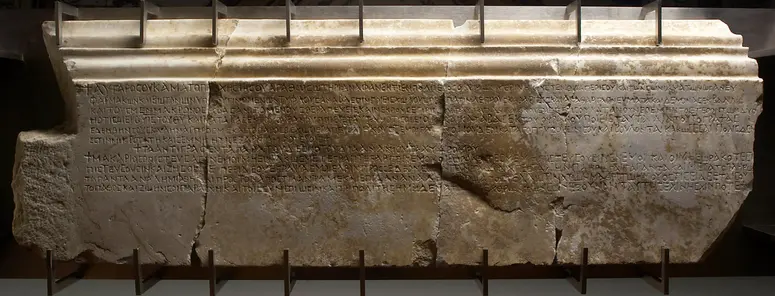
Inschrift: Türsturz mit Abgaros-Inschrift Frühchristlich, Spätantike 5. - 6. Jh. n. Chr.
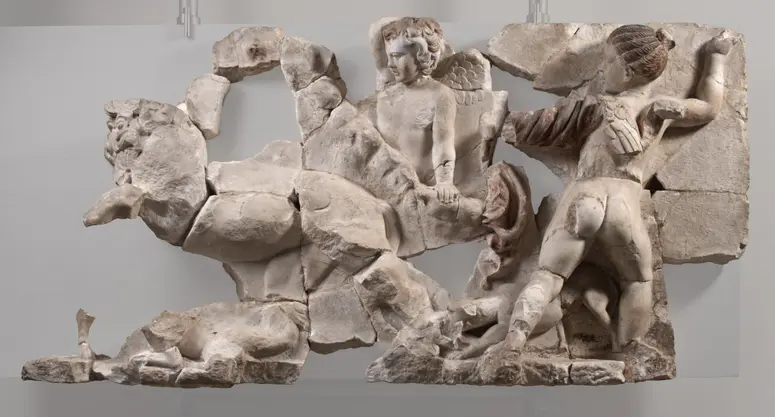
Relief: Erotenfries: Eroten auf Löwenjagd Römisch, Frühe Kaiserzeit 2. Hälfte 1. Jh. n. Chr.
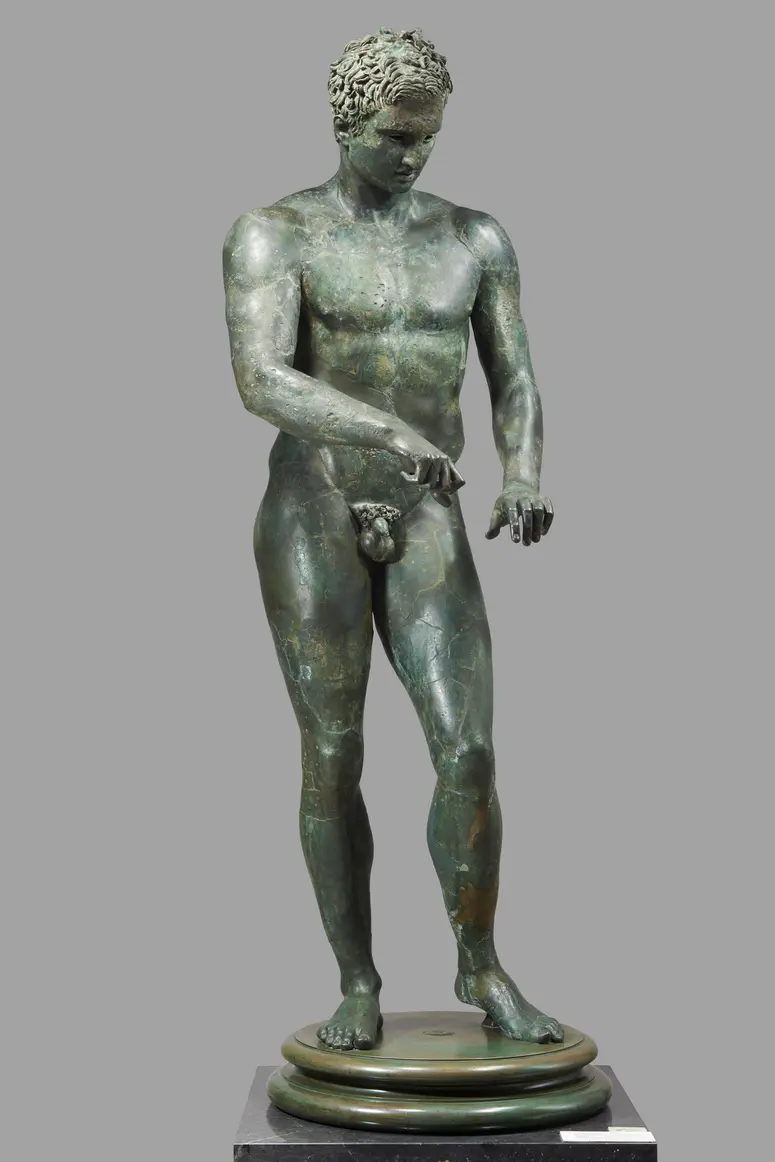
Statue: Athlet Römisch, Frühe Kaiserzeit 1. Jh. n. Chr., nach griech. Original um 330 v. Chr.
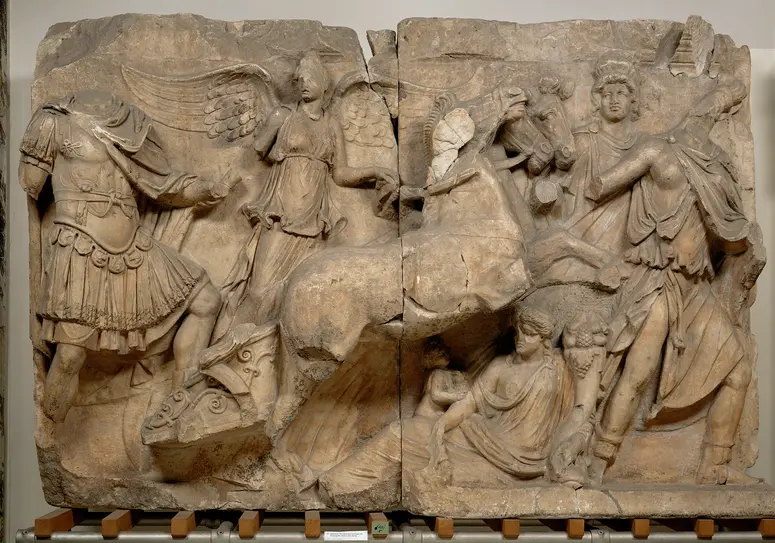
Relief: Triumph des Kaisers Römisch, Mittlere Kaiserzeit Mitte des 2. Jhs. n. Chr.

Relieffragment: Tanzende Mänade Römisch, Kaiserzeit 1. - 3. Jh. n. Chr.
Relieffragment: Füsse einer Mänade Römisch, Kaiserzeit 1. - 3. Jh. n. Chr.
Votiv: Bleivotiv: Ephesische Artemis Römisch, Kaiserzeit 1. - 2. Jh. n. Chr.
Giebel: Celsusbibliothek: Segmentgiebel Römisch, Mittlere Kaiserzeit 113 - 117 n. Chr.
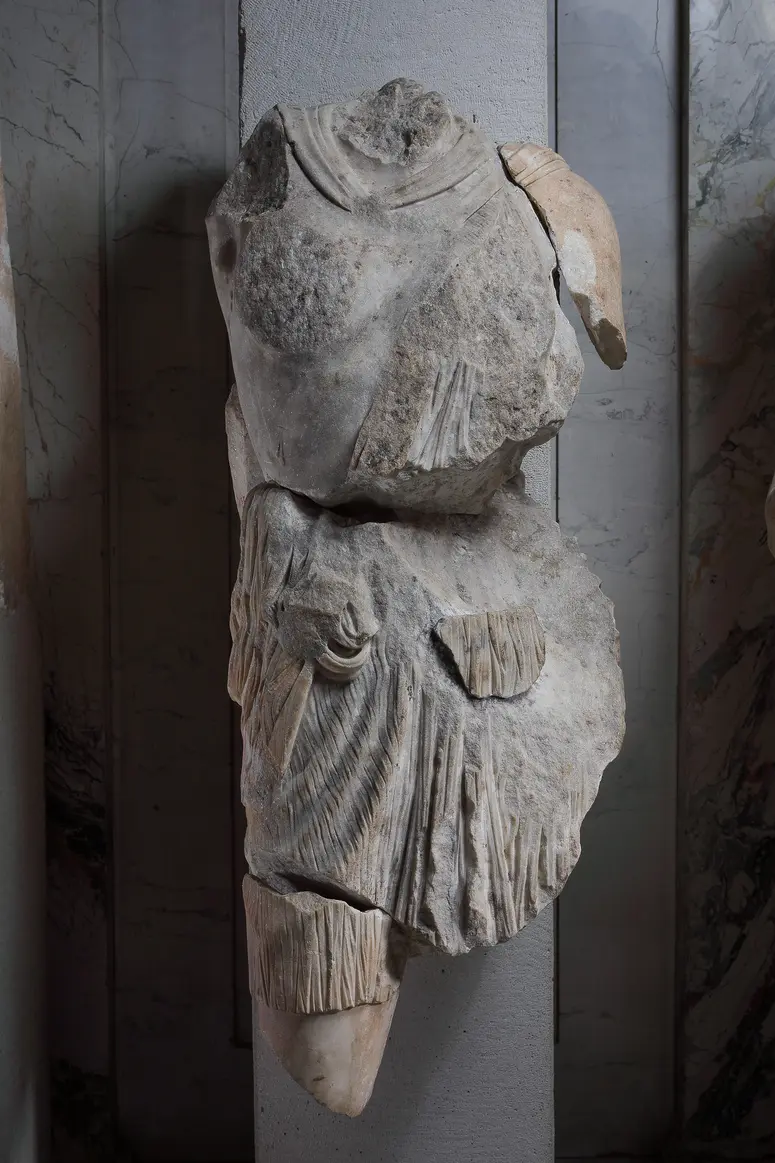
Relief: Hochrelief am Pfeiler: Verwundete Amazone Römisch, Mittlere Kaiserzeit 2. Jh. n. Chr., nach griechischem Bronzeoriginal um 440/430 v. Chr.
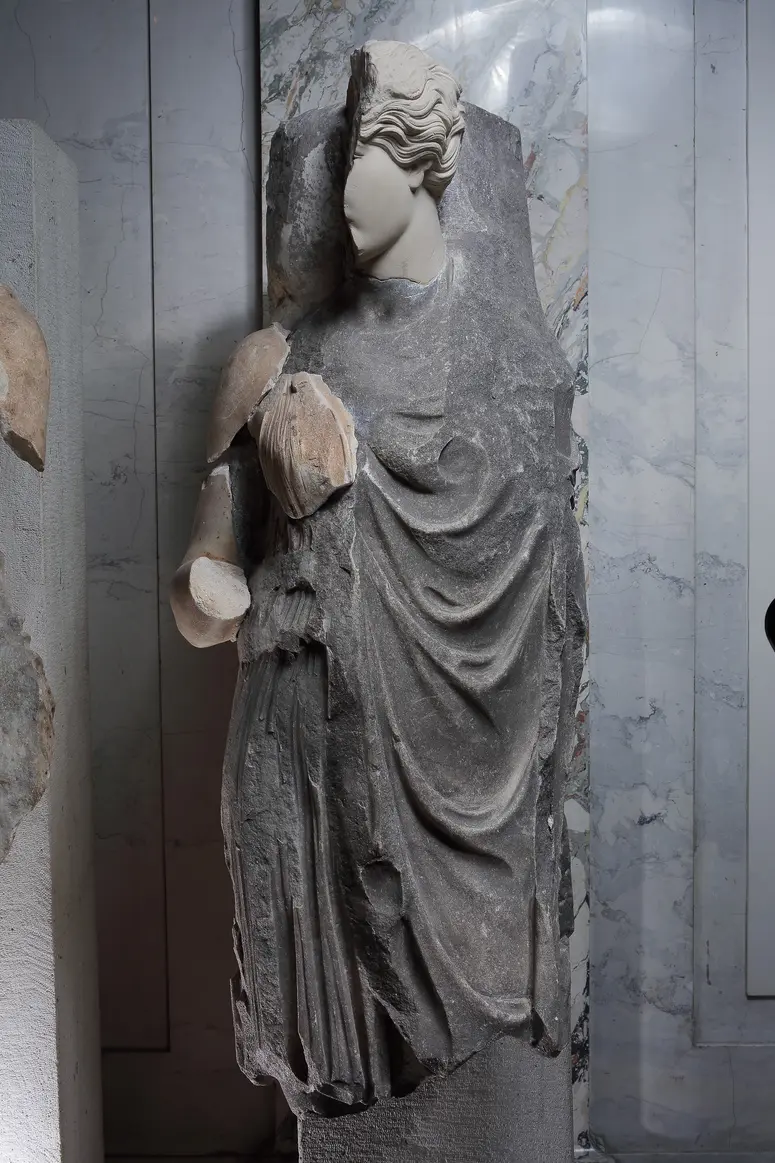
Relief: Hochrelief am Pfeiler: Stehende Amazone Römisch, Mittlere Kaiserzeit 2. Jh. n. Chr., nach griechischem Bronzeoriginal um 440/430 v. Chr.
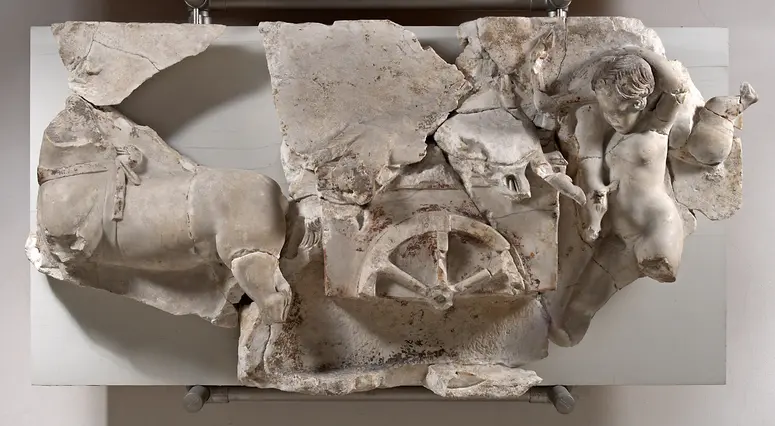
Relief: Erotenfries: Eroten mit Jagdbeute Römisch, Frühe Kaiserzeit 2. Hälfte 1. Jh. n. Chr.
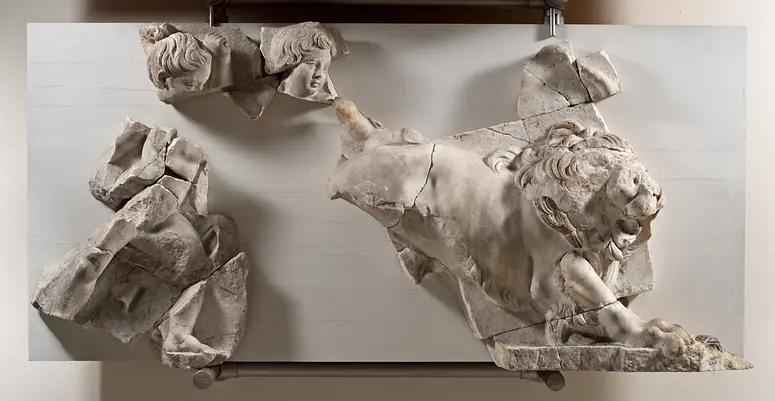
Relief: Erotenfries: Eroten auf Löwenjagd Römisch, Frühe Kaiserzeit 2. Hälfte 1. Jh. n. Chr.
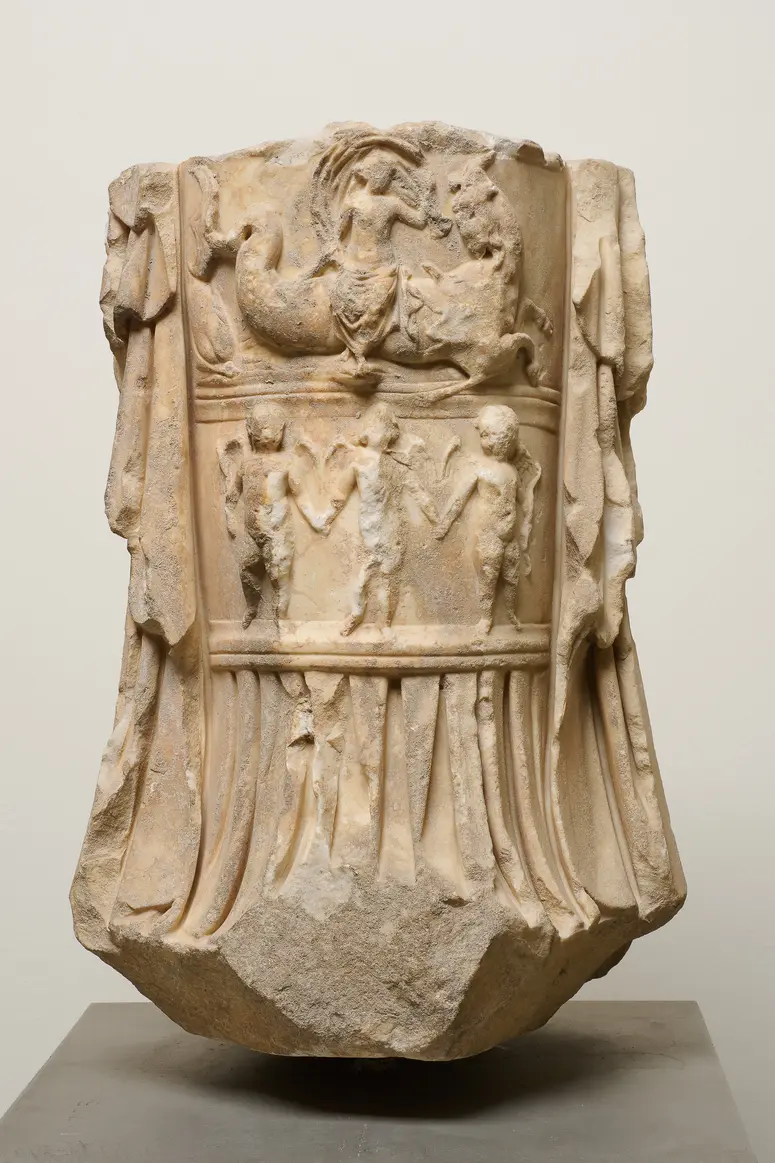
Statuette: Statuettentorso: Aphrodite von Aphrodisias Römisch, Kaiserzeit 1. - 3. Jh. n. Chr.
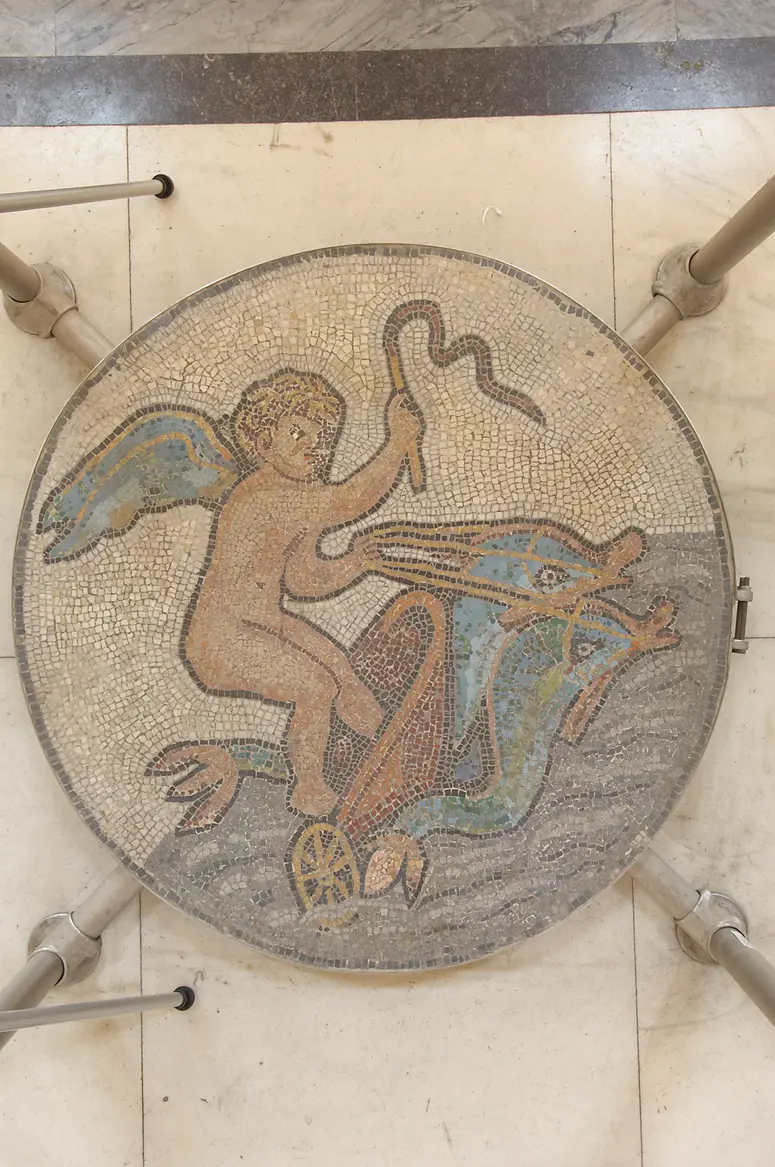
Mosaik: Mosaikfragment: Eros auf Biga Römisch, Spätantik 6. Jh. n. Chr.
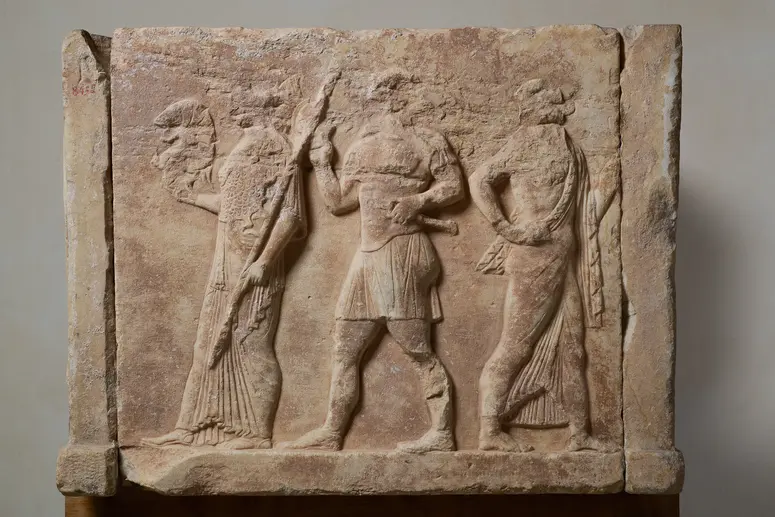
Relief: Archaistisches Relief für Kaiser Augustus Römisch, Frühe Kaiserzeit 12 v. - 2 n. Chr.

Porträtkopffragment: Kaiserpriesterin Römisch, Mittlere Kaiserzeit 130-150