Celsusbibliothek: Segmentgiebel
113 - 117 n. Chr.
Eight columns each on the bottom and upper floor dominated the richly decorated library façade. Two columns, together with a cantilevered entablature, formed a so-called aedicula. On the upper floor, the aediculae were moved by one column axis in reference to the bottom floor, leading to a single column on each side of the façade with three aediculae in between. The entablature shown here features a flower tendril with Medusa’s head in its centre. This was believed to protect the library against all evil.
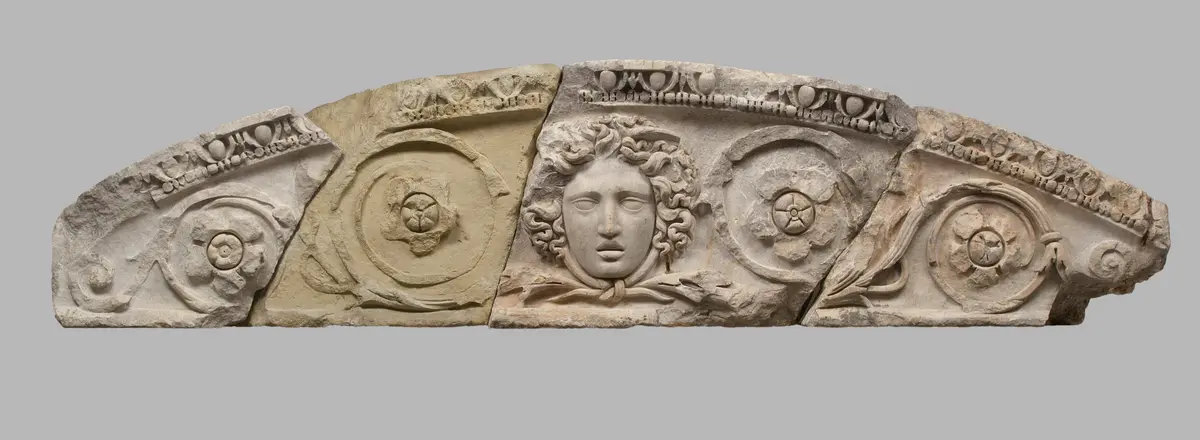
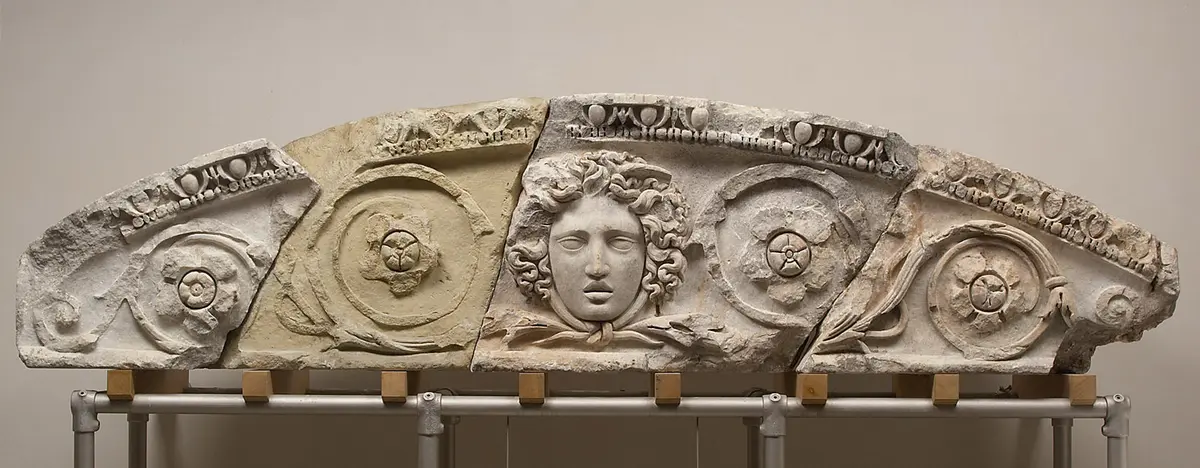
Eight columns each on the bottom and upper floor dominated the richly decorated library façade. Two columns, together with a cantilevered entablature, formed a so-called aedicula. On the upper floor, the aediculae were moved by one column axis in reference to the bottom floor, leading to a single column on each side of the façade with three aediculae in between. The entablature shown here features a flower tendril with Medusa’s head in its centre. This was believed to protect the library against all evil.
Time:
113 - 117 n. Chr.
Object Name
Giebel
Culture
Römisch
Location of discovery:
Ephesos Celsusbibliothek (Selçuk, Kleinasien, Türkei)
Material/technology:
Marmor
Dimensions:
H. 67 cm, B. 172 cm, T. 63,5 cm
Copyright
Kunsthistorisches Museum, Antikensammlung
Invs.
Antikensammlung, I 1632
Provenance
Sultan, Abdul, Hamid, II.; Österreichische Ausgrabungen in Ephesos; Geschenk an Kaiser Franz Joseph; 1957 nachträglich inventarisiert