Triumph des Kaisers
Mitte des 2. Jhs. n. Chr.
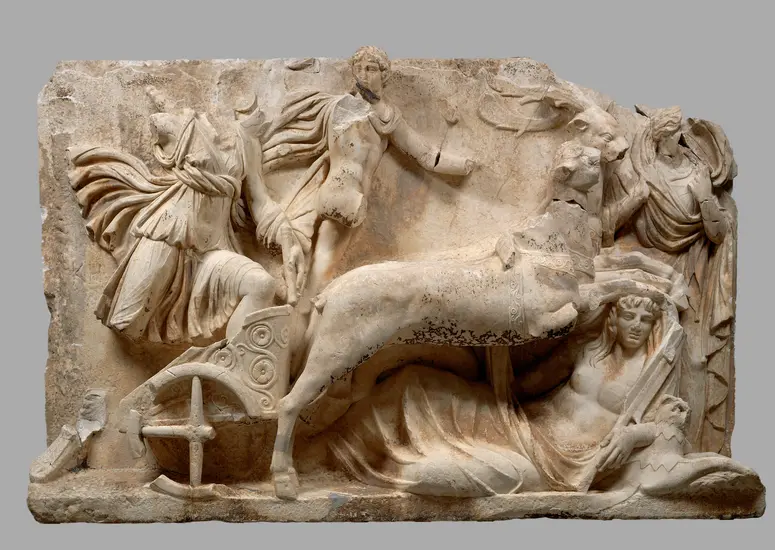
The Emperor is shown climbing a quadriga, a chariot drawn by four horses and here driven by Victoria-Nike. In keeping with the traditions of Roman historical reliefs, this proclaims the Emperor’s victoriousness. All the protagonists depicted in this relief are numina, personifications or deities. The ruler is preceded by Virtus, the personification of his valour and virtues. The prostate figure underneath the chariot is Tellus, the earth; the haloed male figure is generally identified as Phosphorus, the Morning Star. A similar composition depicts the divine siblings Apollo and Artemis riding their respective chariots; that of Apollo as sun god (Helios) is drawn by panthers (on show here is a plaster cast of the tablet discovered in 1990), that of Artemis-Selene, identified by the crescent moon behind her head, by hinds. The symmetrical composition of these two reliefs suggests the triumphant emperor was also juxtaposed with some other figure riding a chariot.
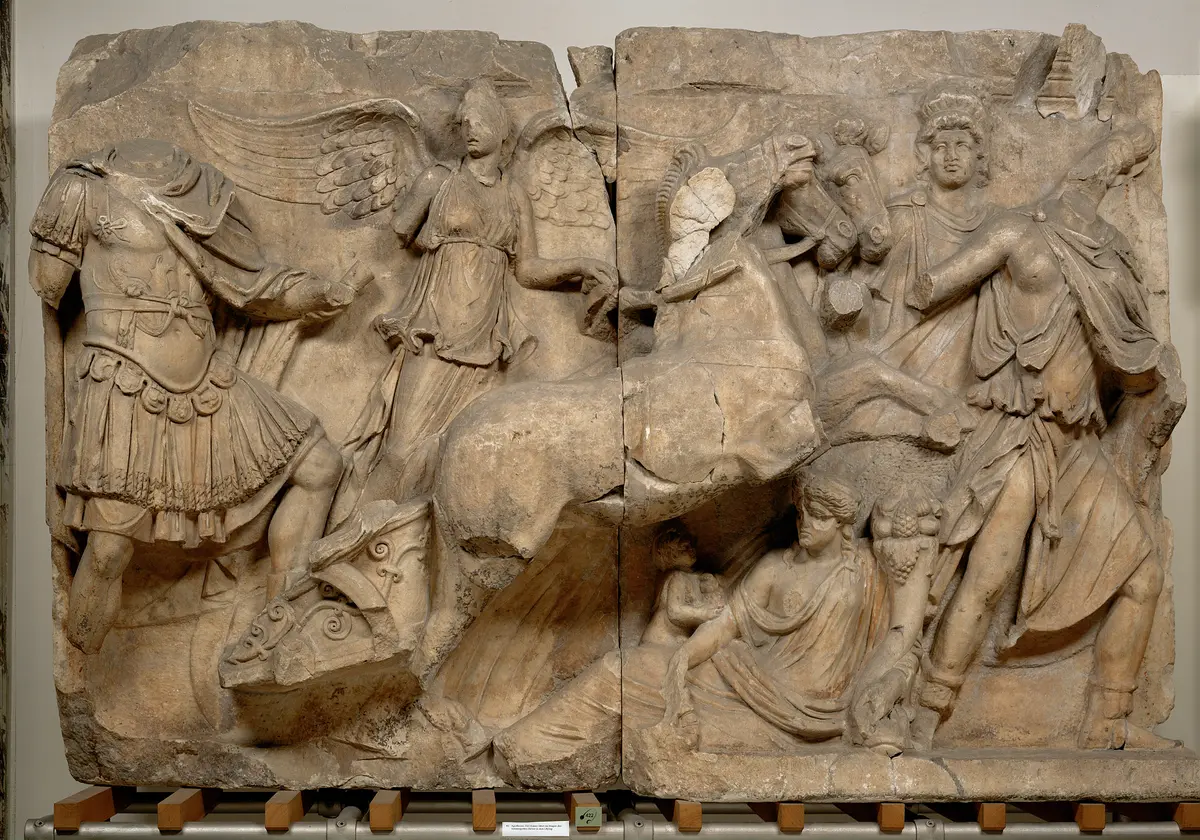
The Emperor is shown climbing a quadriga, a chariot drawn by four horses and here driven by Victoria-Nike. In keeping with the traditions of Roman historical reliefs, this proclaims the Emperor’s victoriousness. All the protagonists depicted in this relief are numina, personifications or deities. The ruler is preceded by Virtus, the personification of his valour and virtues. The prostate figure underneath the chariot is Tellus, the earth; the haloed male figure is generally identified as Phosphorus, the Morning Star. A similar composition depicts the divine siblings Apollo and Artemis riding their respective chariots; that of Apollo as sun god (Helios) is drawn by panthers (on show here is a plaster cast of the tablet discovered in 1990), that of Artemis-Selene, identified by the crescent moon behind her head, by hinds. The symmetrical composition of these two reliefs suggests the triumphant emperor was also juxtaposed with some other figure riding a chariot.
Time:
Mitte des 2. Jhs. n. Chr.
Object Name
Relief
Culture
Römisch
Location of discovery:
Ephesos Celsusbibliothek Umgebung (Selçuk, Kleinasien, Türkei)
Material/technology:
Marmor
Dimensions:
H. 208 cm, B. 306 cm, T. 84 cm
Copyright
Kunsthistorisches Museum, Antikensammlung
Invs.
Antikensammlung, I 867
Provenance
Sultan, Abdul, Hamid, II.; Österreichische Ausgrabungen in Ephesos; Geschenk an Kaiser Franz Joseph; 1911 nachträglich inventarisiert
Browse more
Similar items you might be interested in
Aschenkiste des T. Gerillanus Marcellus Römisch, Kaiserzeit 1. - 2. Jh. n. Chr.
Relief: Verwundete Amazone Griechisch 2. Hälfte 4. Jh. v. Chr.
Kopf: Artemis (Typus Candia) Römisch, Frühe Kaiserzeit 1. Jh. n. Chr., nach griechischem Original um 460 v. Chr.
Architektur: Oktogon Römisch, Frühe Kaiserzeit 3. Drittel 1. Jh. v. Chr.

Modell: Oktogon (Grab der Arsinoe) Hergestellt 1977 - 1978

Abguss: Große Artemis von Ephesos Römisch, Mittlere Kaiserzeit 2. Jh. n. Chr.
Relief: Artemis Selene Römisch, Mittlere Kaiserzeit Mitte 2. Jh. n. Chr.
Kapitell: Ionisches Kapitell Griechisch 2. Hälfte 4. Jh. v. Chr.
Statuenfragment: Polosfragment Römisch, Kaiserzeit 1. - 3. Jh. n. Chr.
Statuette: Statuettentorso: Aphrodite von Aphrodisias Römisch, Kaiserzeit 1. - 3. Jh. n. Chr.
Siegelabdruck: Kultbild der ephesischen Artemis Römisch, Kaiserzeit 1. - 2. Jh. n. Chr.
Statue: Knabe mit Fuchsgans Römisch, Mittlere Kaiserzeit 2. Jh. n. Chr., nach Bronzeoriginal aus dem 3. Jh. v. Chr.
Relief: Adoption der Kaiser Lucius Verus und Marc Aurel Römisch, Mittlere Kaiserzeit Mitte 2. Jh. n. Chr.
Statuette: Statuettenfragment: Ephesische Artemis Römisch, Kaiserzeit 1. - 2. Jh. n. Chr.
Porträtkopf: Kaiser Hadrian Römisch, Mittlere Kaiserzeit um 120 n. Chr.
Relief: Erotenfries: Eroten auf Löwenjagd Römisch, Frühe Kaiserzeit 2. Hälfte 1. Jh. n. Chr.

Kandelaber: Herakles und Kentaur im Kampf Griechisch, Hellenistisch Mitte 1. Jh. v. Chr.
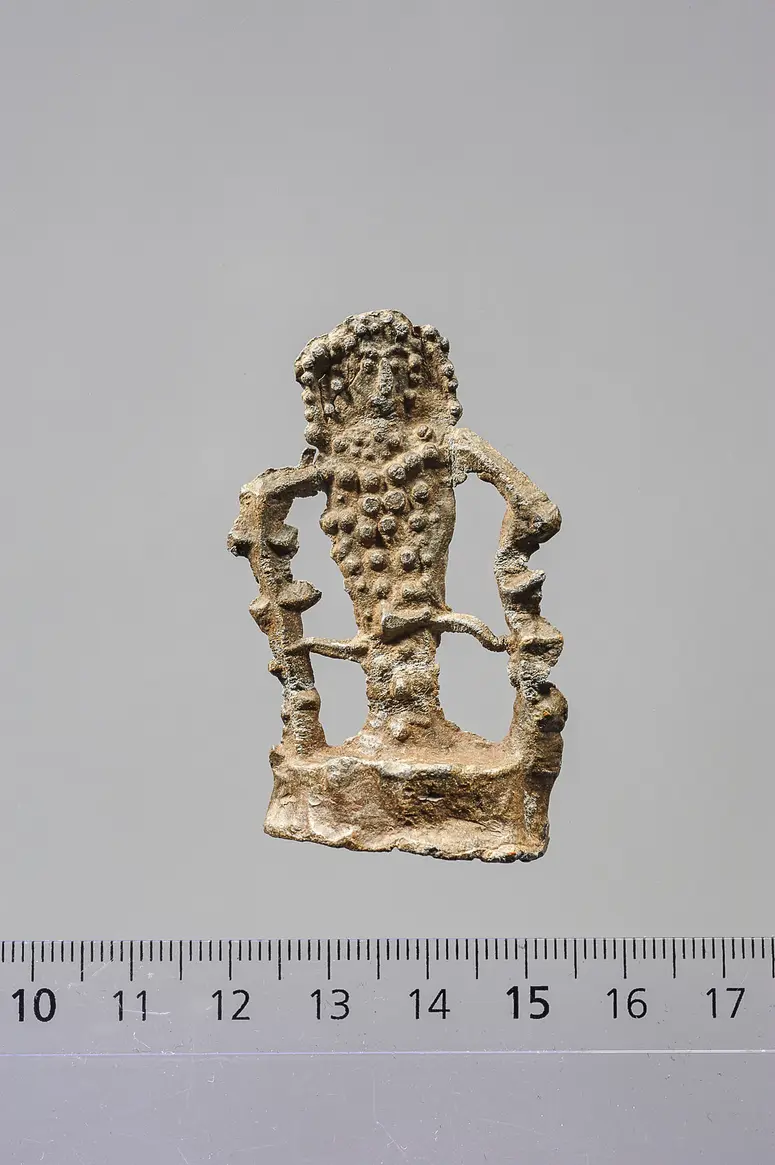
Votiv: Bleivotiv: Ephesische Artemis Römisch, Kaiserzeit 1. - 2. Jh. n. Chr.
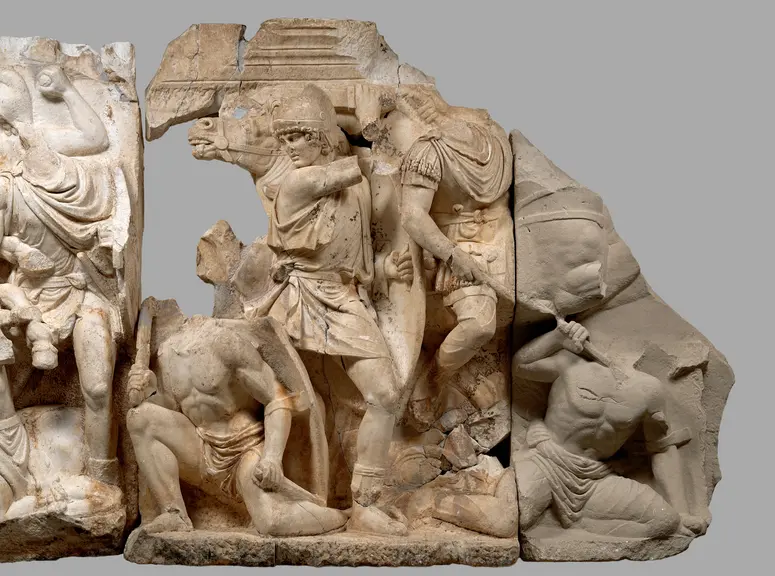
Relief: Schlachtenszene, Schwertkämpfer Römisch, Mittlere Kaiserzeit Mitte 2. Jh. n. Chr.