Kaiser Hadrian
um 120 n. Chr.
This exceptional portrait of Emperor Hadrian (ruled A.D. 117–138) was probably commissioned in connection with the statue erected to commemorate the ruler’s visit to the city in A.D. 123. Hadrian’s characteristic hairstyle and beard follow a type named after a head now in the Museo Chiaramonti in the Vatican. Note also the excellent condition of the surface that has retained traces of the original polishing.
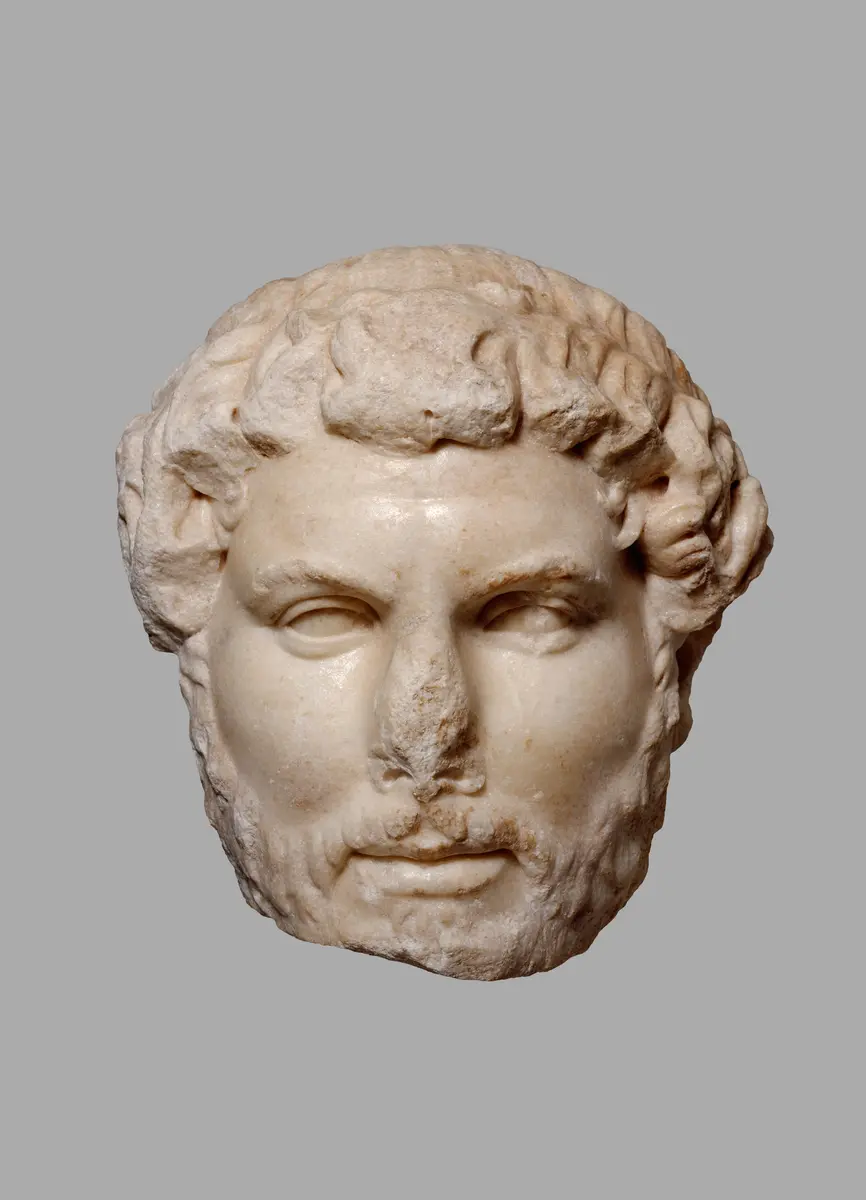
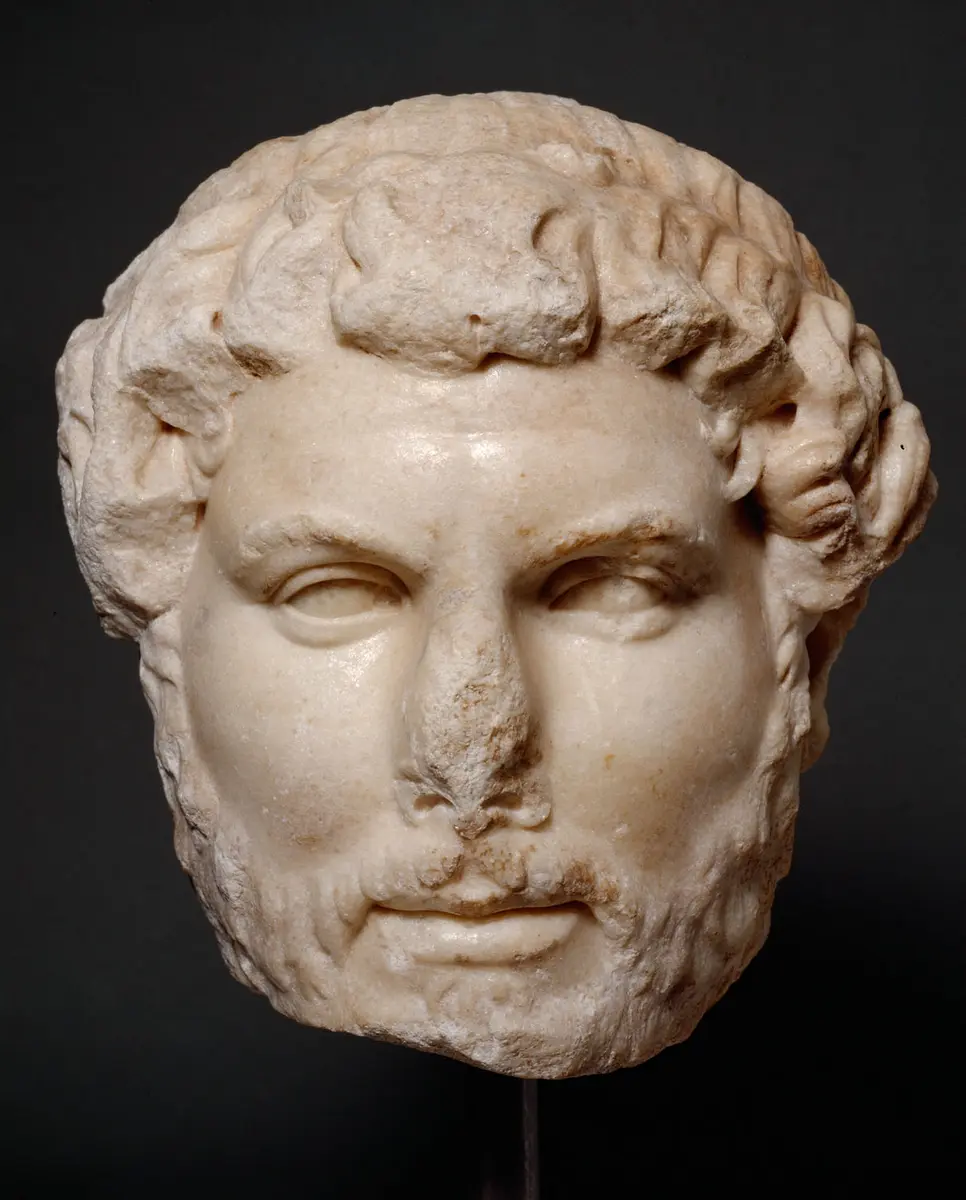
This exceptional portrait of Emperor Hadrian (ruled A.D. 117–138) was probably commissioned in connection with the statue erected to commemorate the ruler’s visit to the city in A.D. 123. Hadrian’s characteristic hairstyle and beard follow a type named after a head now in the Museo Chiaramonti in the Vatican. Note also the excellent condition of the surface that has retained traces of the original polishing.
Time:
um 120 n. Chr.
Object Name
Porträtkopf
Culture
Römisch
Location of discovery:
Ephesos Mazaeus-Mithridatestor (Selçuk, Kleinasien, Türkei)
Material/technology:
Marmor
Dimensions:
H. 28,5 cm
Copyright
Kunsthistorisches Museum, Antikensammlung
Invs.
Antikensammlung, I 857
Provenance
Sultan, Abdul, Hamid, II.; Österreichische Ausgrabungen in Ephesos; Geschenk an Kaiser Franz Joseph; 1911 nachträglich inventarisiert
Browse more
Similar items you might be interested in
Relief: Verwundete Amazone Griechisch 2. Hälfte 4. Jh. v. Chr.
Statue: Knabe mit Fuchsgans Römisch, Mittlere Kaiserzeit 2. Jh. n. Chr., nach Bronzeoriginal aus dem 3. Jh. v. Chr.

Kandelaber: Herakles und Kentaur im Kampf Griechisch, Hellenistisch Mitte 1. Jh. v. Chr.
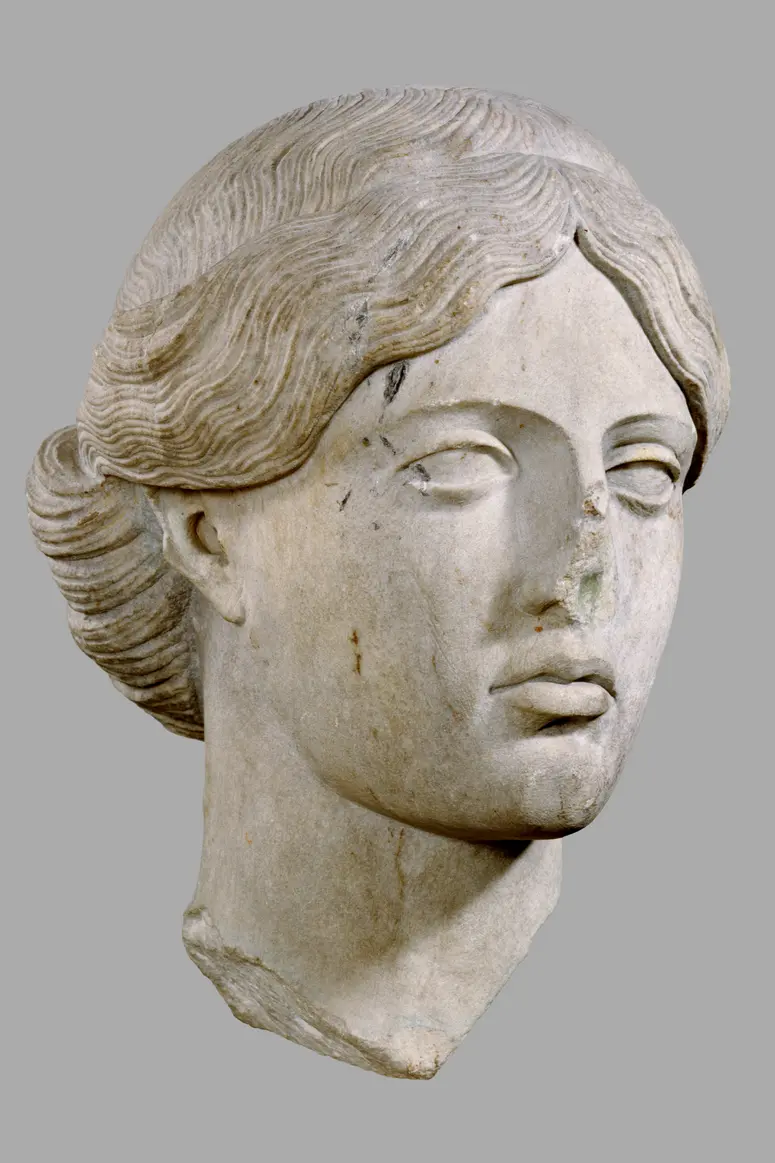
Kopf: Artemis (Typus Candia) Römisch, Frühe Kaiserzeit 1. Jh. n. Chr., nach griechischem Original um 460 v. Chr.
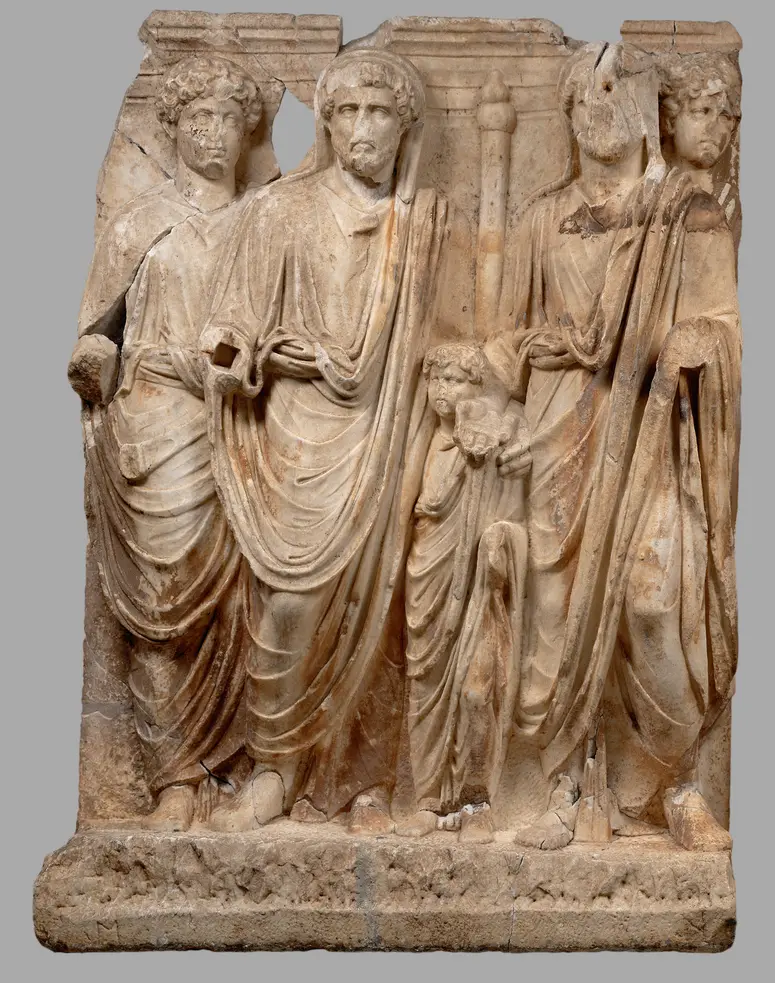
Relief: Adoption der Kaiser Lucius Verus und Marc Aurel Römisch, Mittlere Kaiserzeit Mitte 2. Jh. n. Chr.
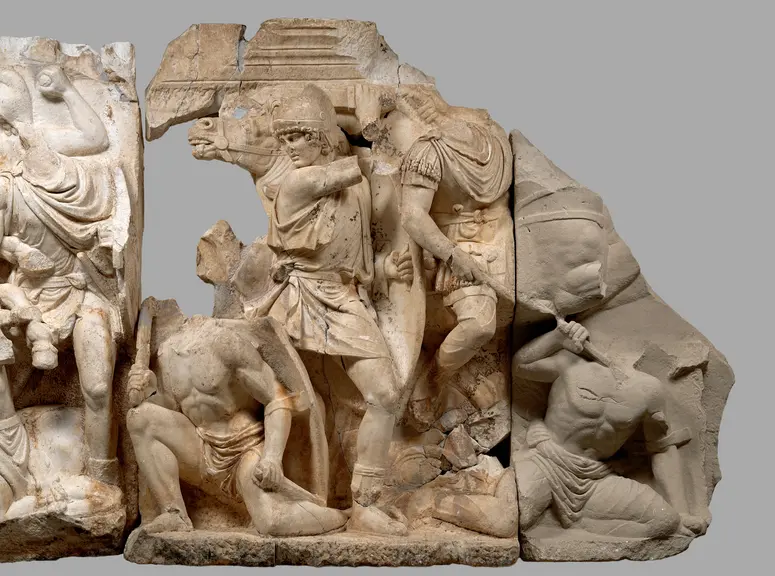
Relief: Schlachtenszene, Schwertkämpfer Römisch, Mittlere Kaiserzeit Mitte 2. Jh. n. Chr.
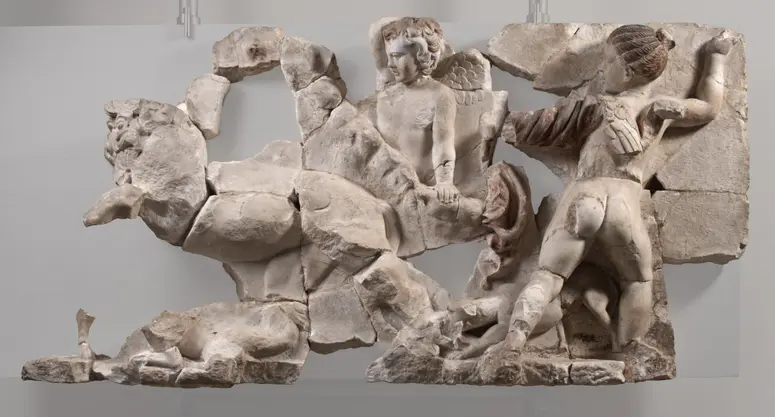
Relief: Erotenfries: Eroten auf Löwenjagd Römisch, Frühe Kaiserzeit 2. Hälfte 1. Jh. n. Chr.
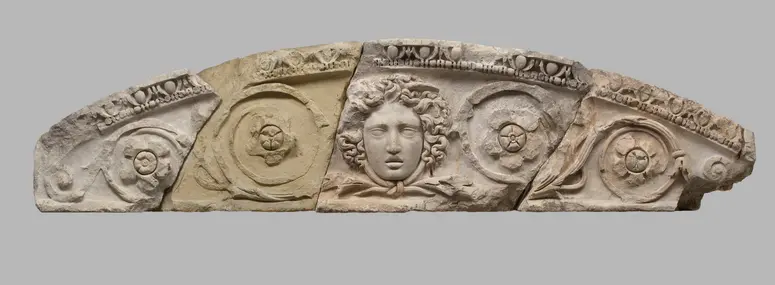
Giebel: Celsusbibliothek: Segmentgiebel Römisch, Mittlere Kaiserzeit 113 - 117 n. Chr.
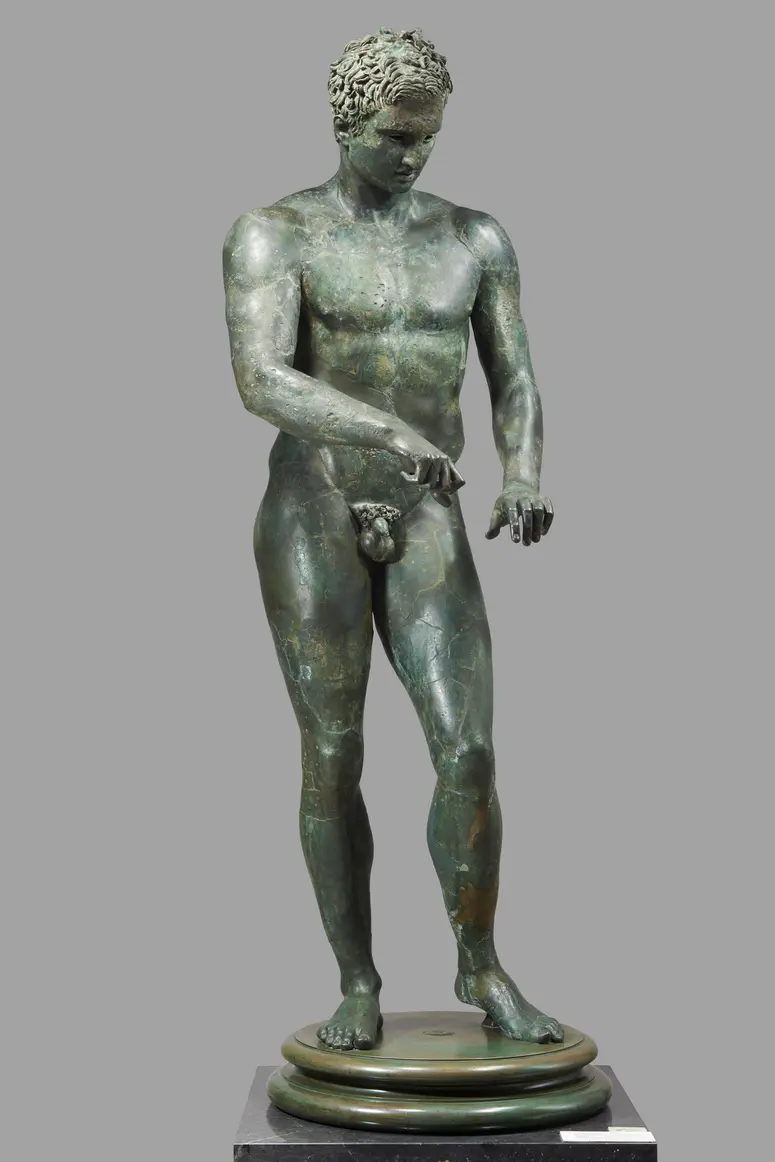
Statue: Athlet Römisch, Frühe Kaiserzeit 1. Jh. n. Chr., nach griech. Original um 330 v. Chr.
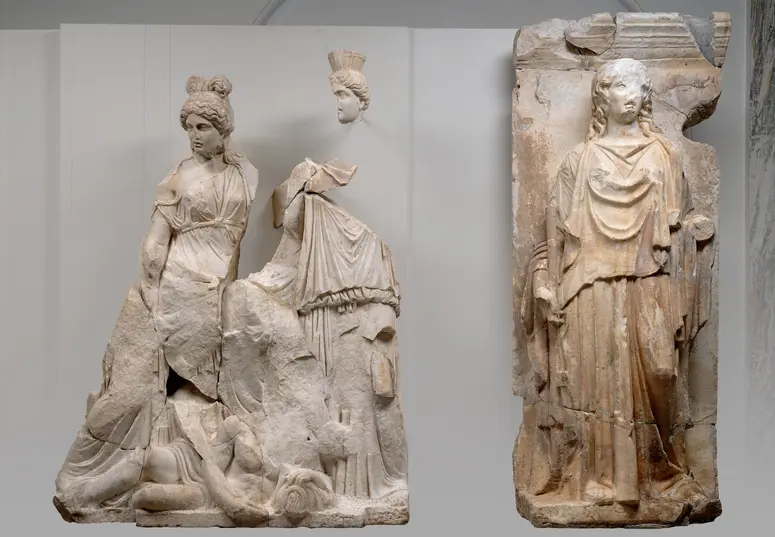
Relief: Götterversammlung: Demeter Römisch, Mittlere Kaiserzeit Mitte des 2. Jhs. n. Chr.

Relief: Stierkopf-Girlandenfries Römisch, Mittlere Kaiserzeit Mitte 2. Jh. n. Chr.

Modell: Oktogon (Grab der Arsinoe) Hergestellt 1977 - 1978
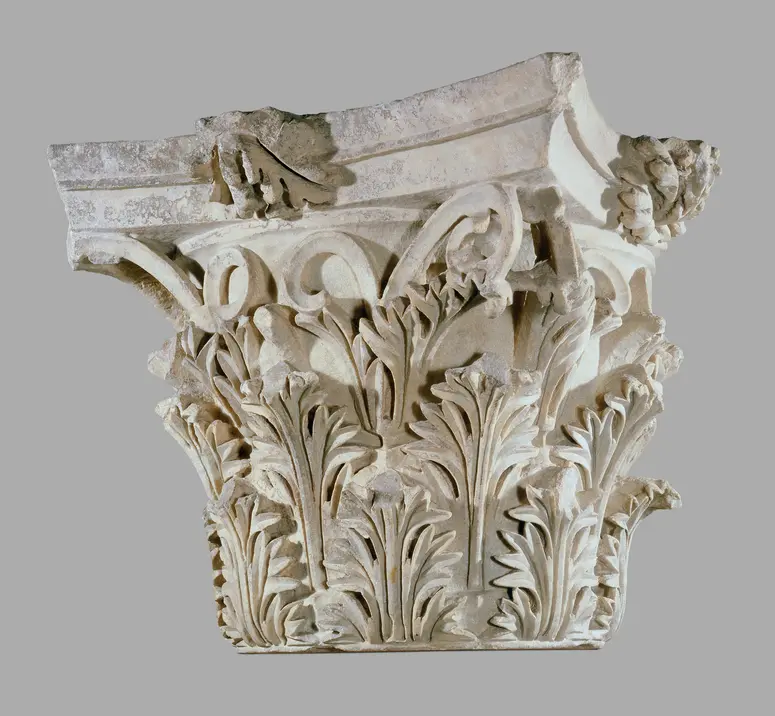
Korinthisches Kapitell Römisch, Mittlere Kaiserzeit Ende 1. Jh. n. Chr.
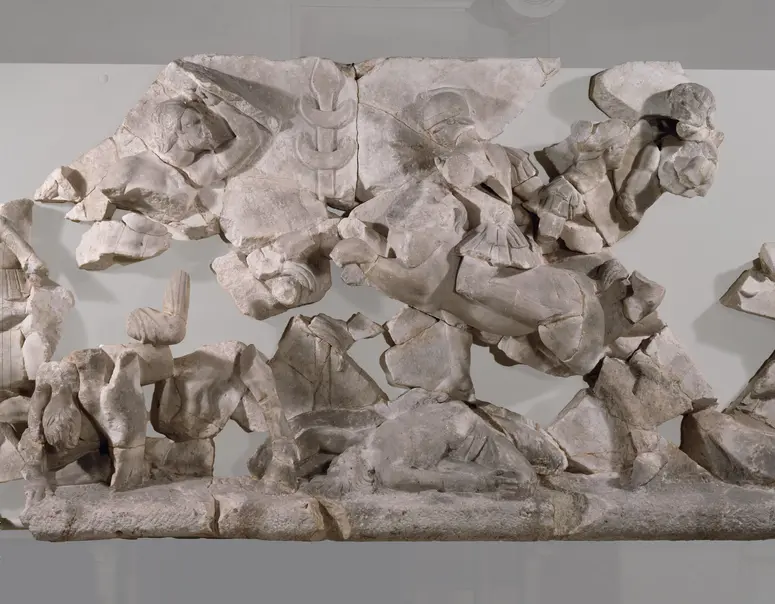
Relief: Reiterschlacht Griechisch, Hellenistisch um 166 v. Chr.
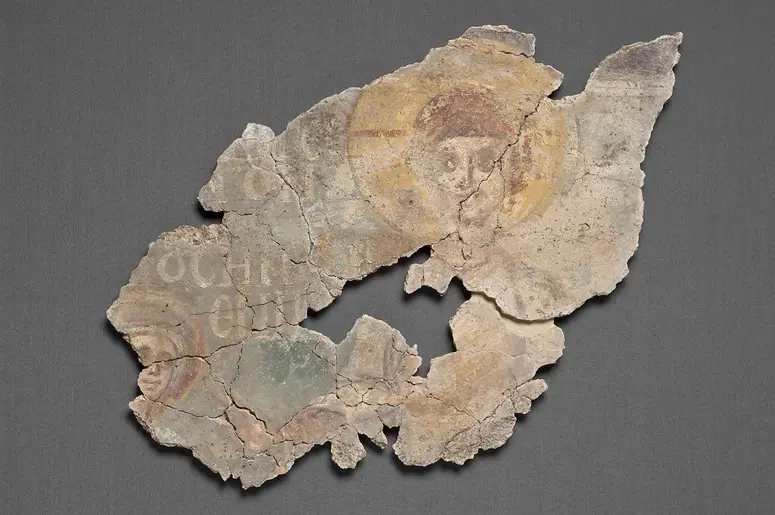
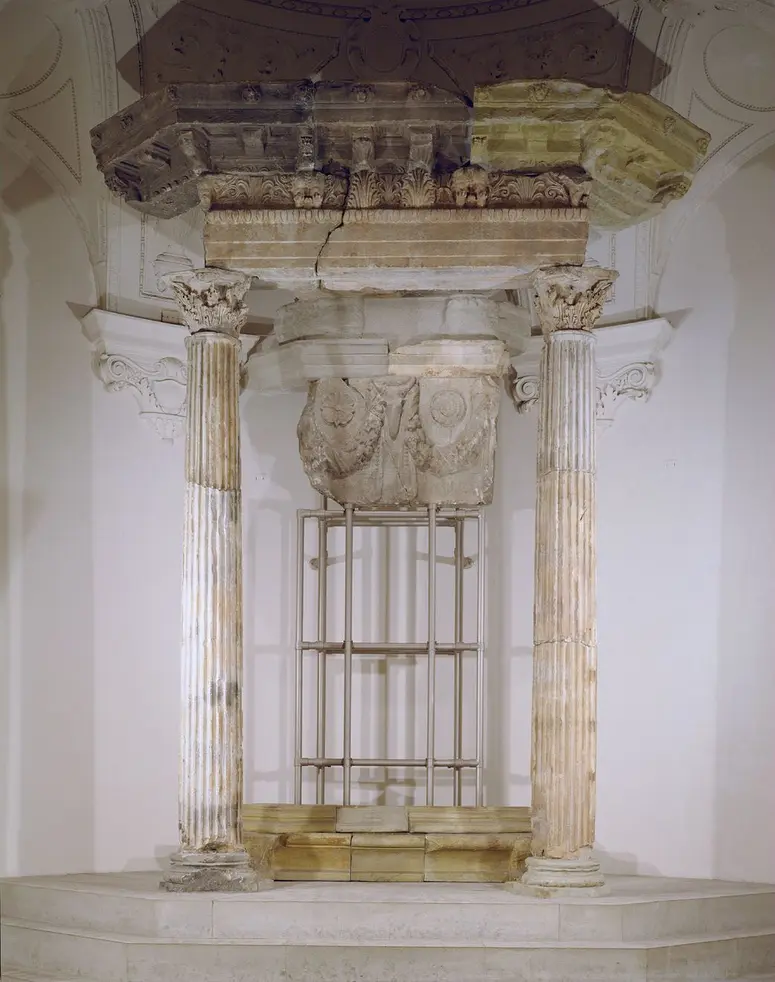
Architektur: Oktogon Römisch, Frühe Kaiserzeit 3. Drittel 1. Jh. v. Chr.
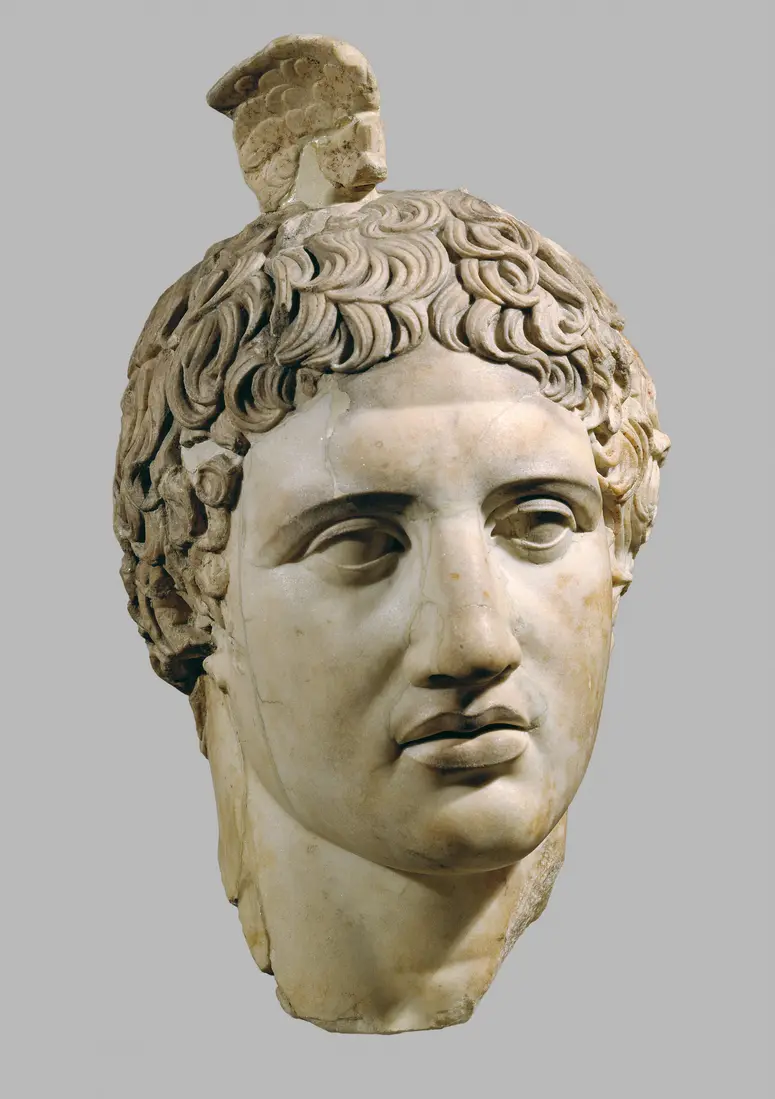
Kopf: Hermes Römisch, Mittlere Kaiserzeit Mitte des 2. Jhs. n. Chr., nach Bronzeoriginal um 430 v. Chr.
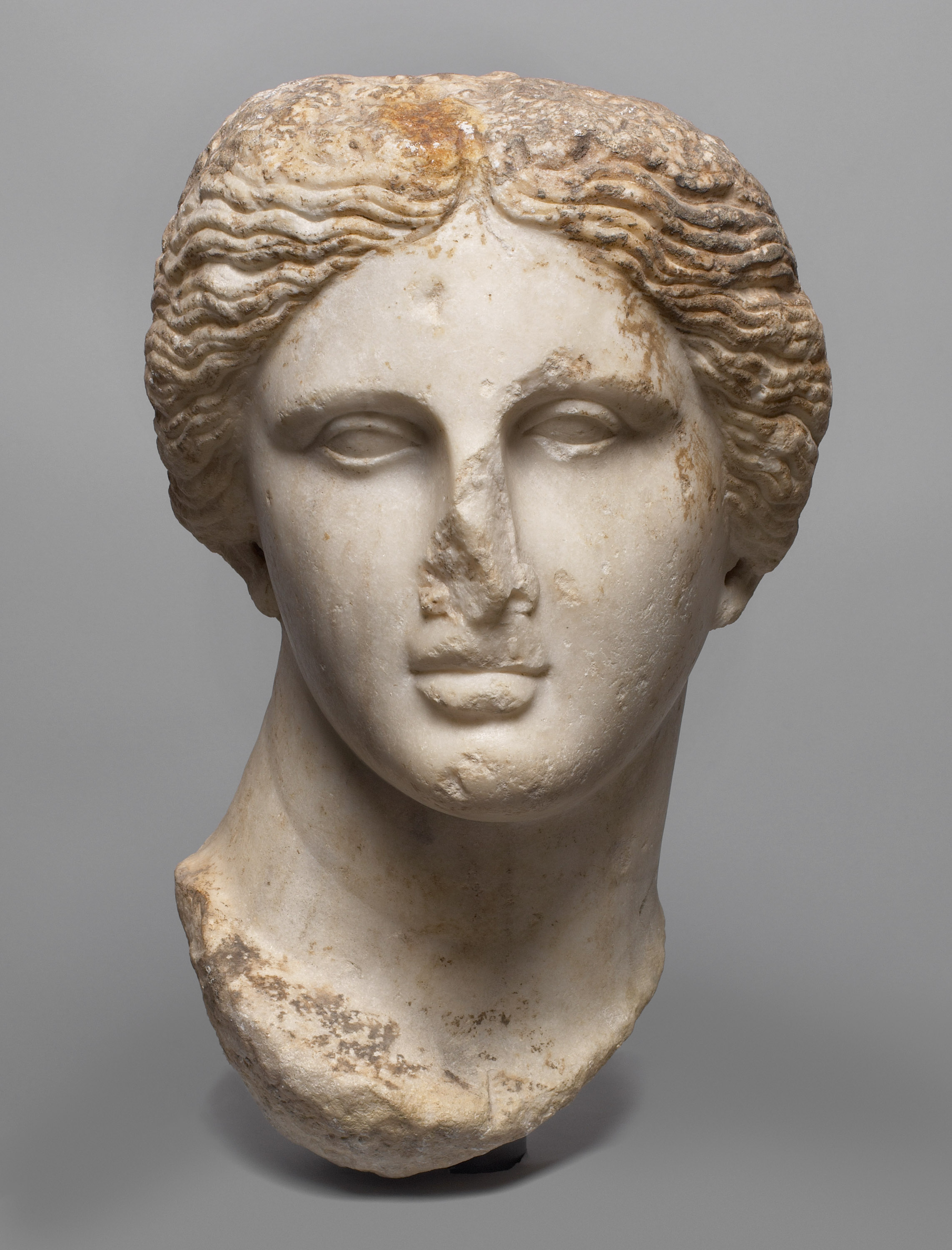
Porträtkopf: Arsinoe III. (?) Griechisch, Hellenistisch 3. Jh. v. Chr.
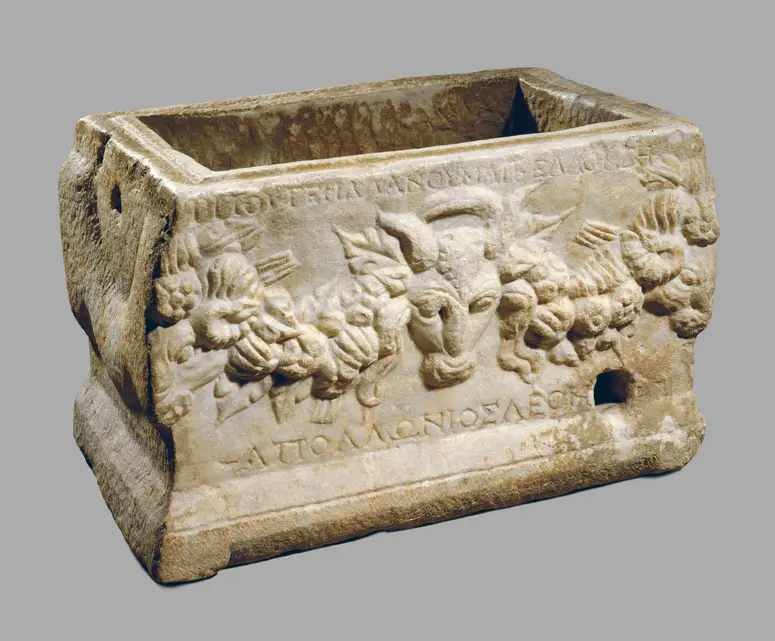
Aschenkiste des T. Gerillanus Marcellus Römisch, Kaiserzeit 1. - 2. Jh. n. Chr.
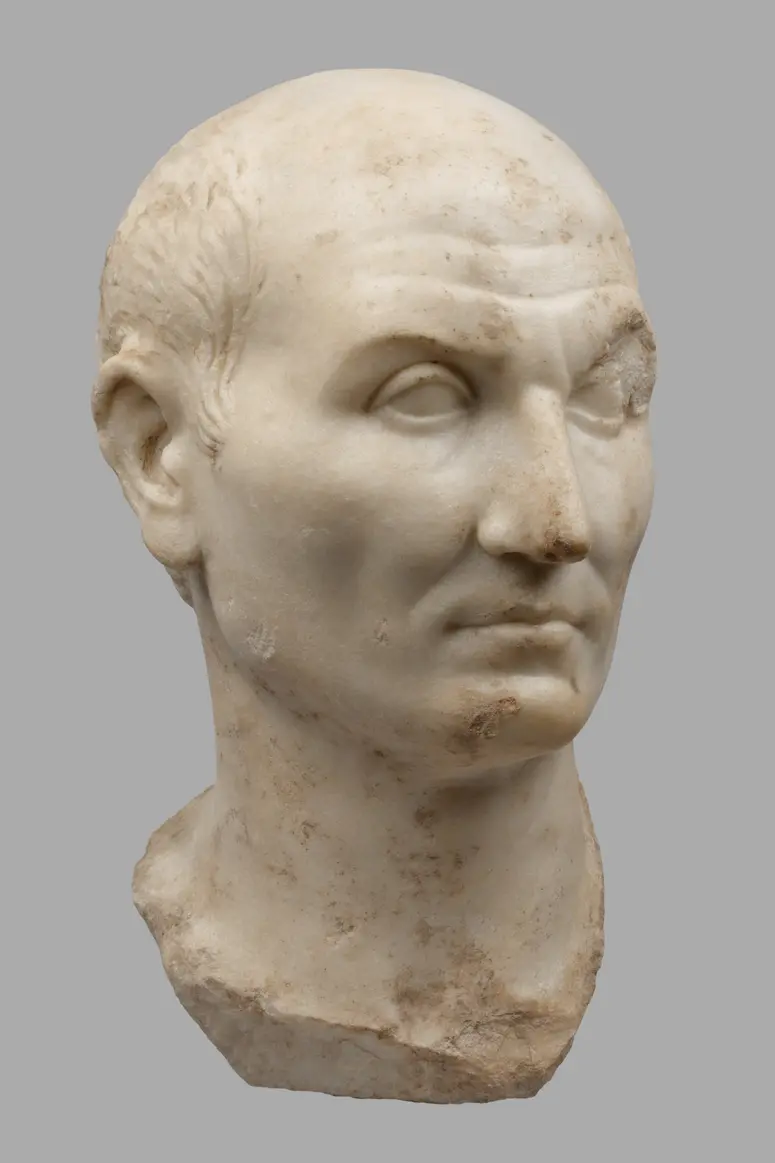
Porträtkopf: Römer Römisch, Augusteisch Letztes Viertel 1. Jh. v. Chr.