Reiterschlacht
um 166 v. Chr.
The relief depicts a battle between Greeks and Galatians, a Celtic people who from the early 3rd century onwards repeatedly invaded Asia Minor. The battle is turning in the Greeks’ favour; to the right of a standard (signum) an armed Greek horseman is jumping over a – presumably fallen – Galatian. The depiction presumably references the final wars between Pergamum and Galatia fought in 189/188 and 168–166 B.C., which ended with the Galatians’ defeat by Eumenes II, King of Pergamum. Like Miletus, Sardis and Pergamum, Ephesus probably erected a monument honouring their saviour, which may have included this relief.
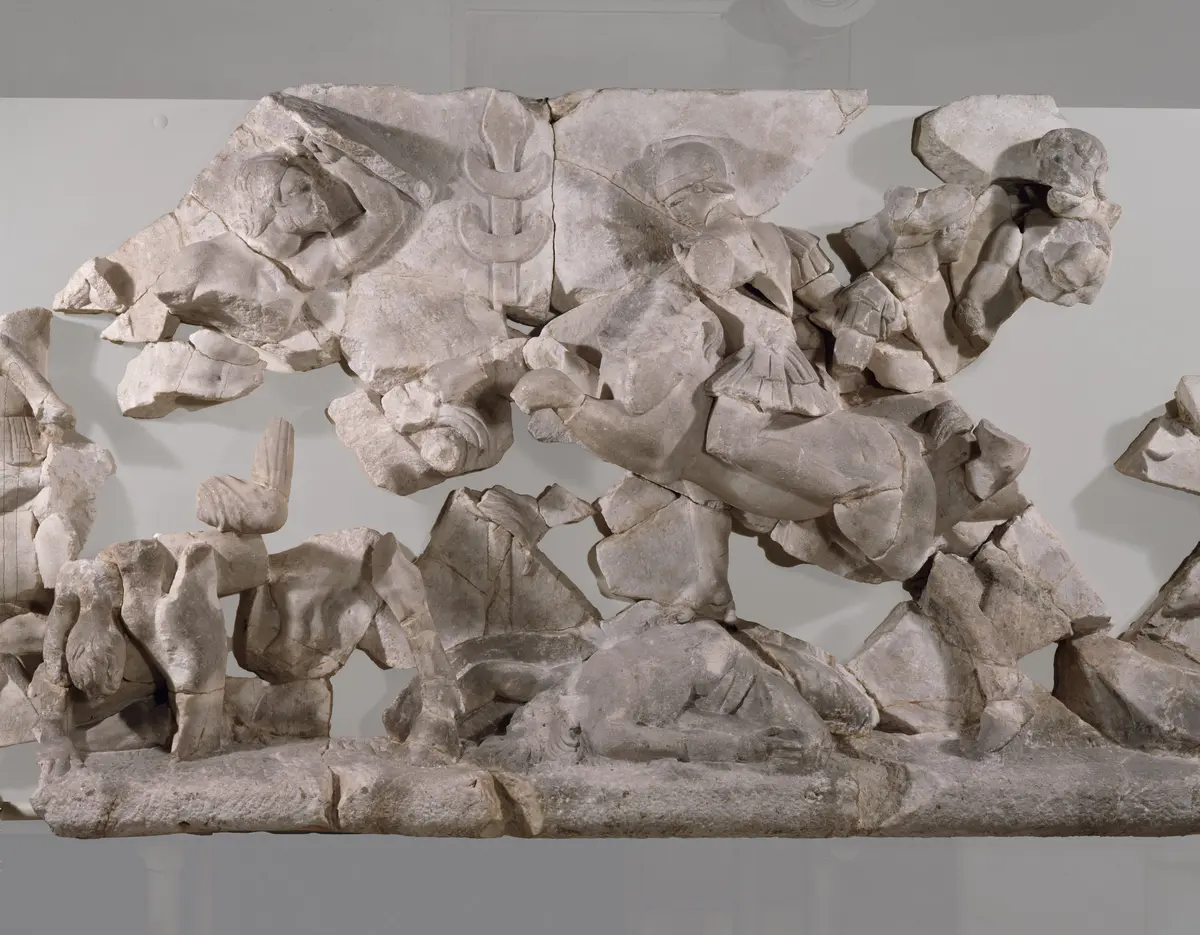
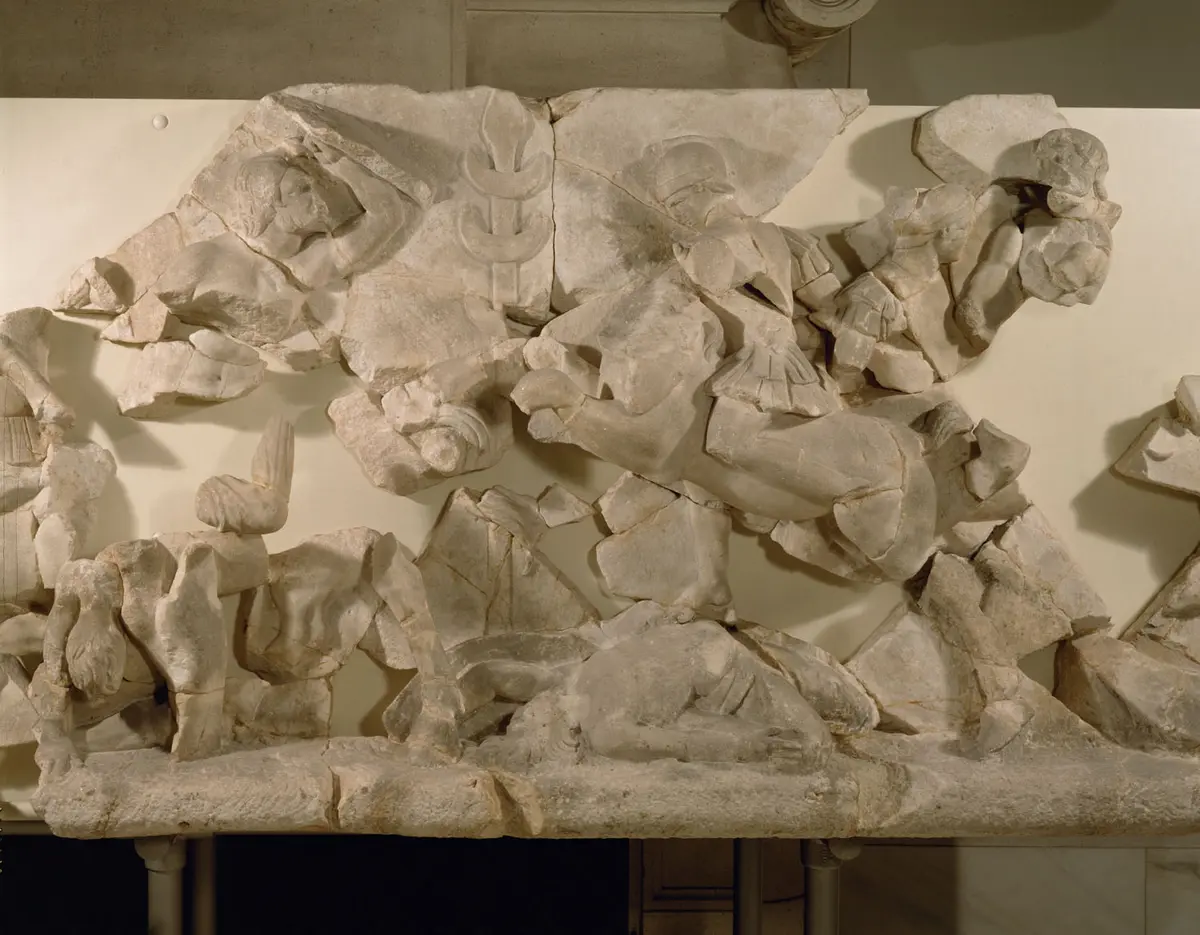
The relief depicts a battle between Greeks and Galatians, a Celtic people who from the early 3rd century onwards repeatedly invaded Asia Minor. The battle is turning in the Greeks’ favour; to the right of a standard (signum) an armed Greek horseman is jumping over a – presumably fallen – Galatian. The depiction presumably references the final wars between Pergamum and Galatia fought in 189/188 and 168–166 B.C., which ended with the Galatians’ defeat by Eumenes II, King of Pergamum. Like Miletus, Sardis and Pergamum, Ephesus probably erected a monument honouring their saviour, which may have included this relief.
Time:
um 166 v. Chr.
Object Name
Relief
Culture
Griechisch
Location of discovery:
Ephesos Torbau nördlich der Arkadiane Umgebung (Selçuk, Kleinasien, Türkei)
Material/technology:
Dolomit-Marmor
Dimensions:
H. 99 cm
Copyright
Kunsthistorisches Museum, Antikensammlung
Invs.
Antikensammlung, I 814
Provenance
Sultan, Abdul, Hamid, II.; Österreichische Ausgrabungen in Ephesos; Geschenk an Kaiser Franz Joseph; 1911 nachträglich inventarisiert
Browse more
Similar items you might be interested in
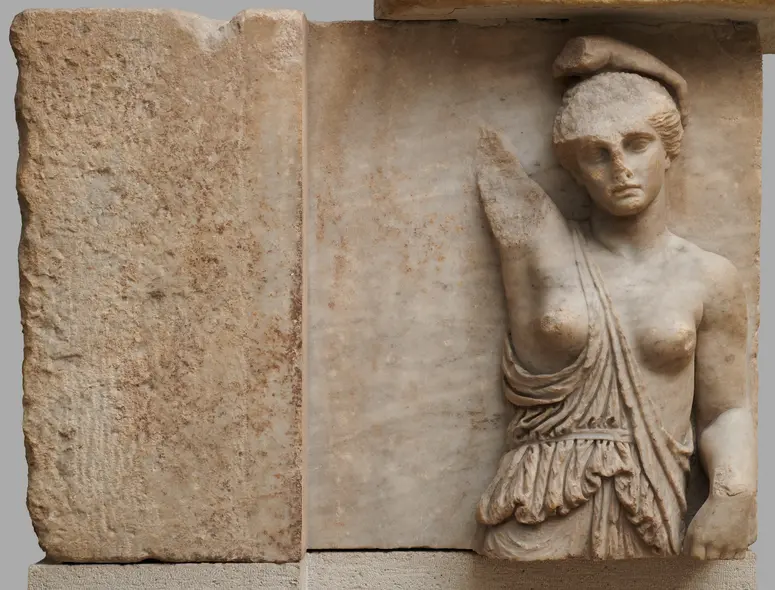
Relief: Verwundete Amazone Griechisch 2. Hälfte 4. Jh. v. Chr.
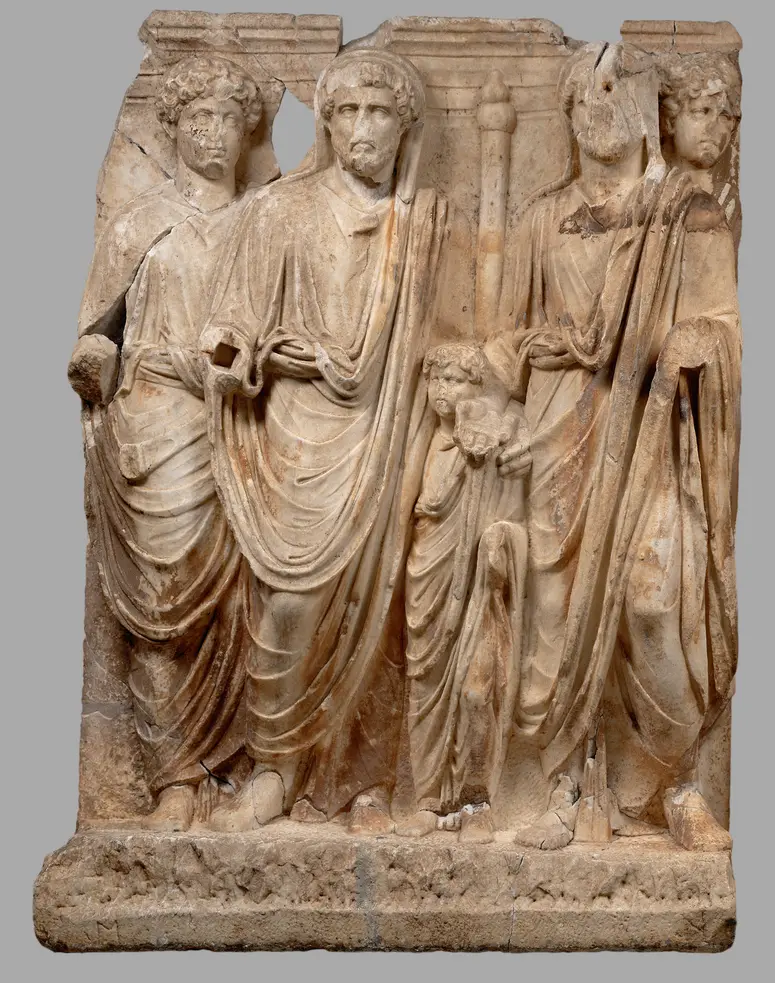
Relief: Adoption der Kaiser Lucius Verus und Marc Aurel Römisch, Mittlere Kaiserzeit Mitte 2. Jh. n. Chr.
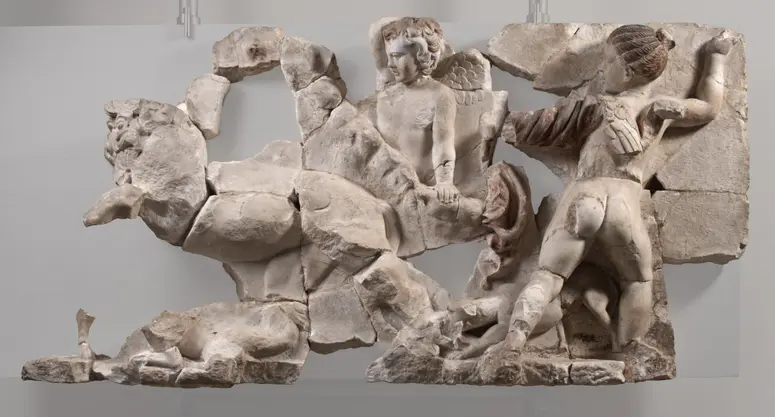
Relief: Erotenfries: Eroten auf Löwenjagd Römisch, Frühe Kaiserzeit 2. Hälfte 1. Jh. n. Chr.
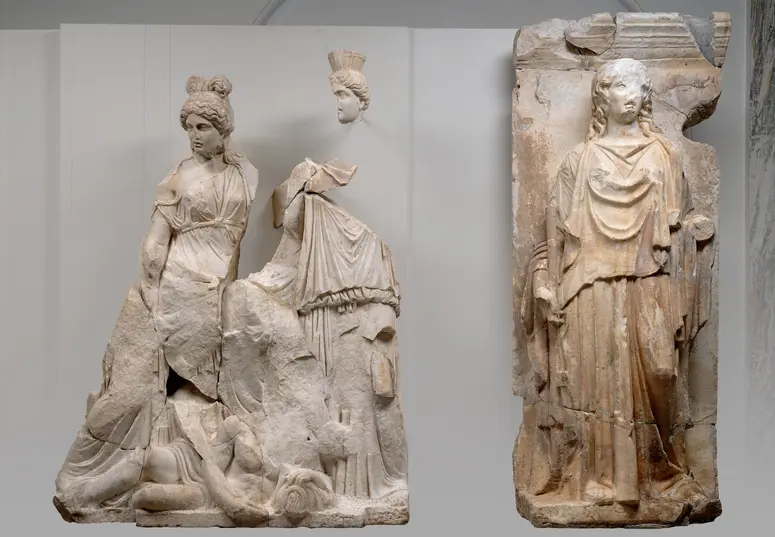
Relief: Götterversammlung: Demeter Römisch, Mittlere Kaiserzeit Mitte des 2. Jhs. n. Chr.
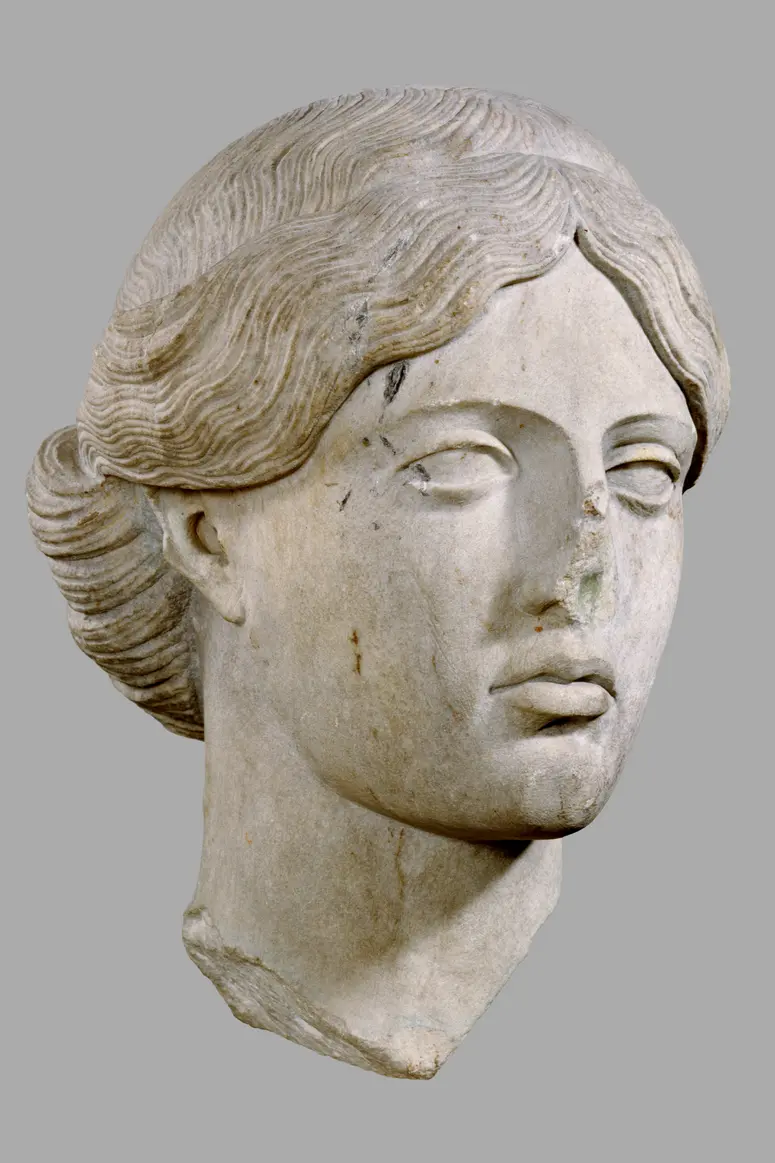
Kopf: Artemis (Typus Candia) Römisch, Frühe Kaiserzeit 1. Jh. n. Chr., nach griechischem Original um 460 v. Chr.
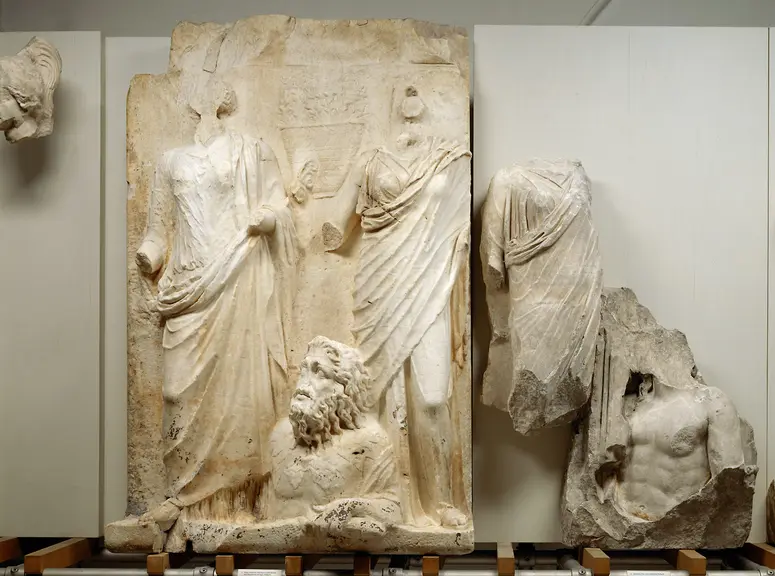
Relief: Städtepersonifikationen Römisch, Mittlere Kaiserzeit Mitte 2. Jh. n. Chr.
Relief: Schlachtenszene, Schwertkämpfer Römisch, Mittlere Kaiserzeit Mitte 2. Jh. n. Chr.
Relief: Artemis Selene Römisch, Mittlere Kaiserzeit Mitte 2. Jh. n. Chr.
Aschenkiste des T. Gerillanus Marcellus Römisch, Kaiserzeit 1. - 2. Jh. n. Chr.

Relief: Stierkopf-Girlandenfries Römisch, Mittlere Kaiserzeit Mitte 2. Jh. n. Chr.
Relief: Triumph des Kaisers Römisch, Mittlere Kaiserzeit Mitte des 2. Jhs. n. Chr.
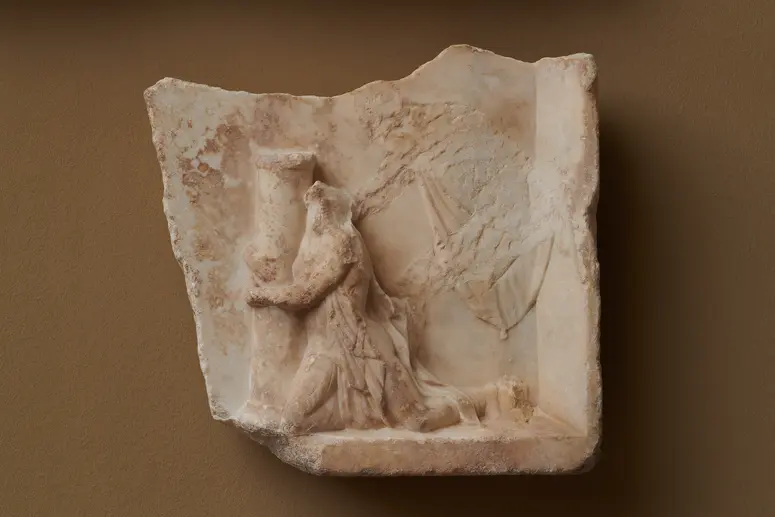

Relieffragment: Tanzende Mänade Römisch, Kaiserzeit 1. - 3. Jh. n. Chr.
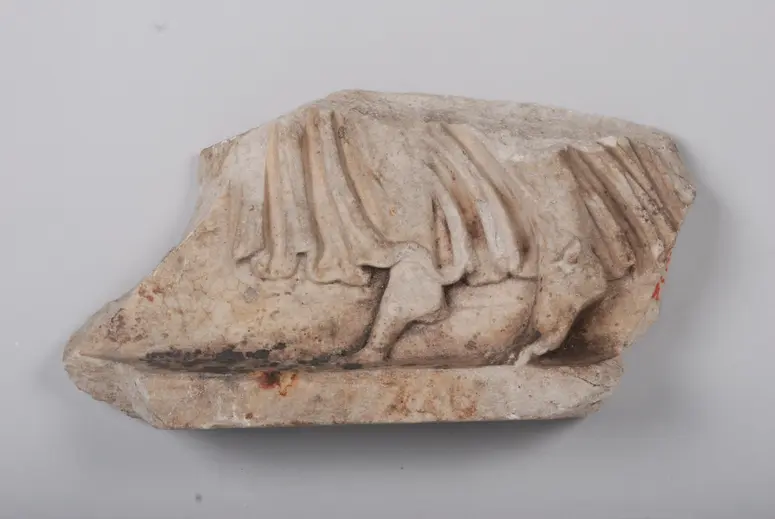
Relieffragment: Füsse einer Mänade Römisch, Kaiserzeit 1. - 3. Jh. n. Chr.
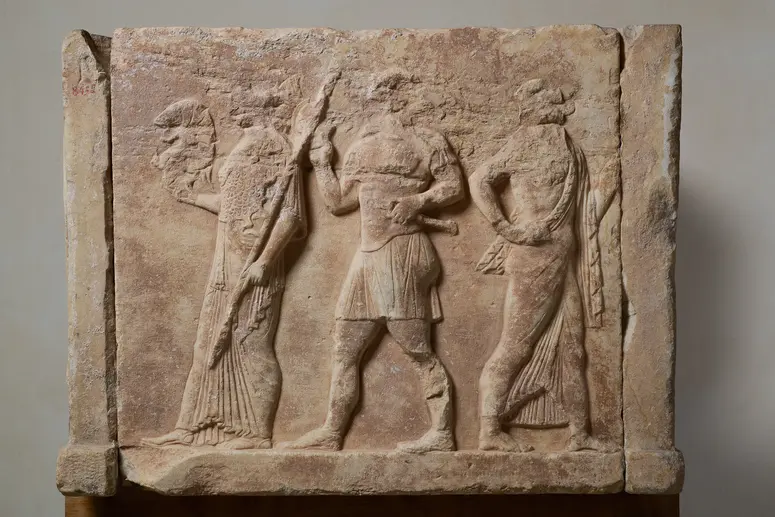
Relief: Archaistisches Relief für Kaiser Augustus Römisch, Frühe Kaiserzeit 12 v. - 2 n. Chr.
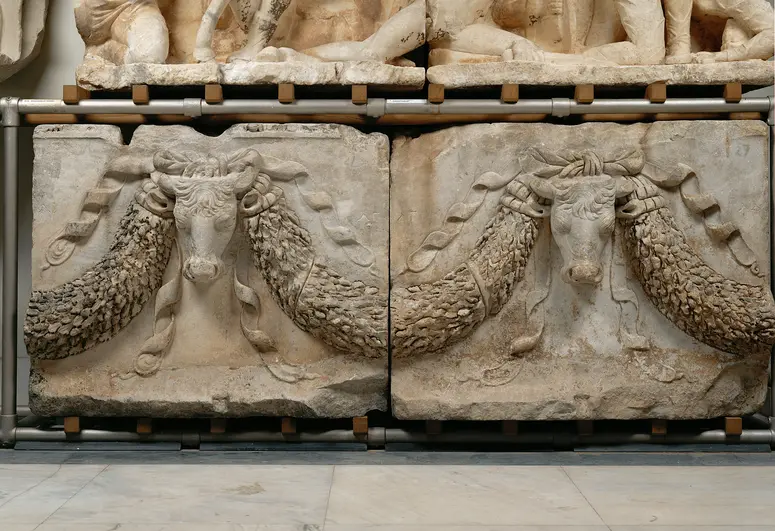
Relief: Stierkopf-Girlandenfries Römisch, Mittlere Kaiserzeit Mitte 2. Jh. n. Chr.
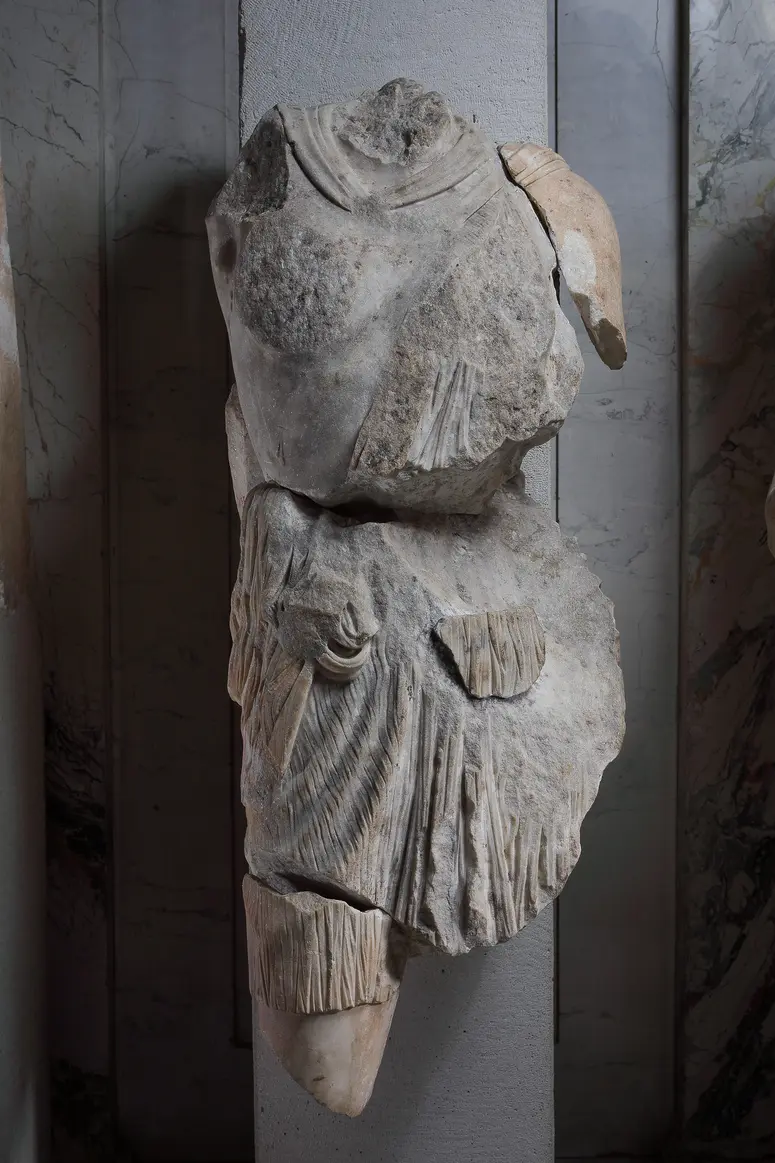
Relief: Hochrelief am Pfeiler: Verwundete Amazone Römisch, Mittlere Kaiserzeit 2. Jh. n. Chr., nach griechischem Bronzeoriginal um 440/430 v. Chr.
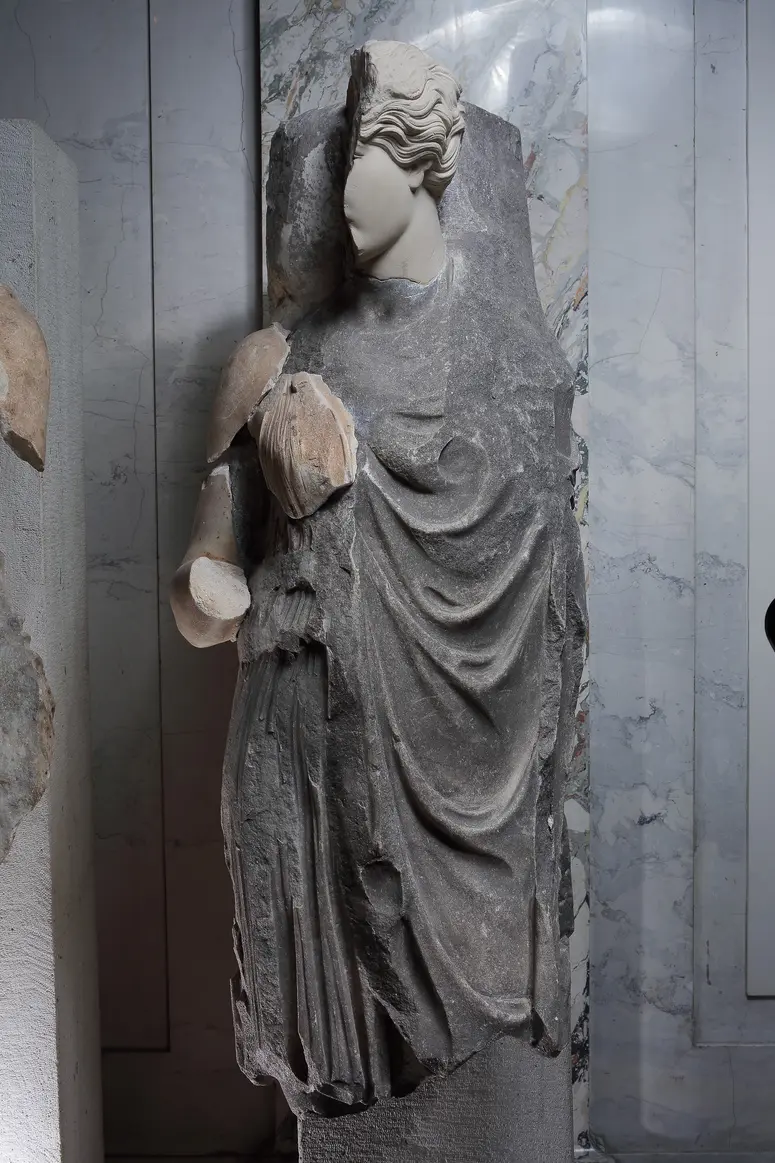
Relief: Hochrelief am Pfeiler: Stehende Amazone Römisch, Mittlere Kaiserzeit 2. Jh. n. Chr., nach griechischem Bronzeoriginal um 440/430 v. Chr.
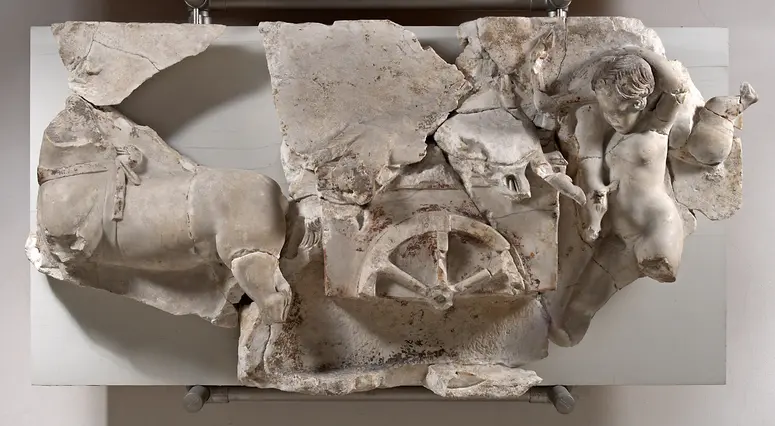
Relief: Erotenfries: Eroten mit Jagdbeute Römisch, Frühe Kaiserzeit 2. Hälfte 1. Jh. n. Chr.
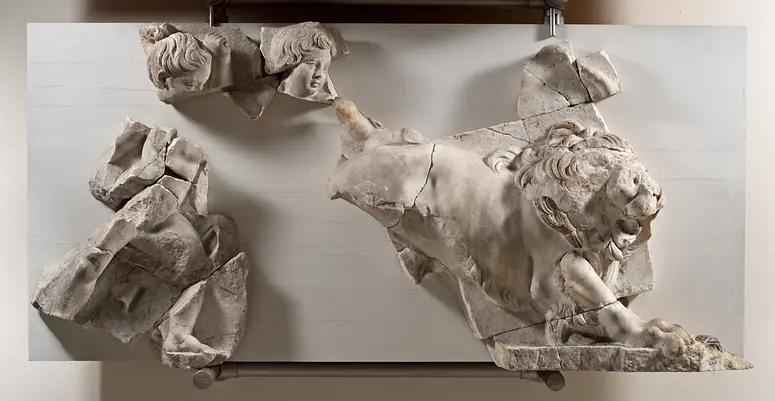
Relief: Erotenfries: Eroten auf Löwenjagd Römisch, Frühe Kaiserzeit 2. Hälfte 1. Jh. n. Chr.