Archaistisches Relief für Kaiser Augustus
12 v. - 2 n. Chr.
Of the originally twelve deities only Athena, Ares and Poseidon (clutching a small dolphin in his right hand) have survived; they are arranged on the narrow side, and another goddess has survived on a fragment of the main side, which includes the end of the dedicatory inscription “[…] τῶν τέκνων” (“of the children”) that presumably contained the name of the patron. On the back three nymphs are approaching an altar and the deity Pan in a grotto. The relief’s style clearly harks back to the Archaic period (archaistic). It can be dated with the help of the dedicatory inscription honouring Emperor Augustus and his grandsons, Gaius and Lucius Caesar and Marcus Agrippa Postumus, on one of the profiled blocks forming the lid that is now in Ephesus.
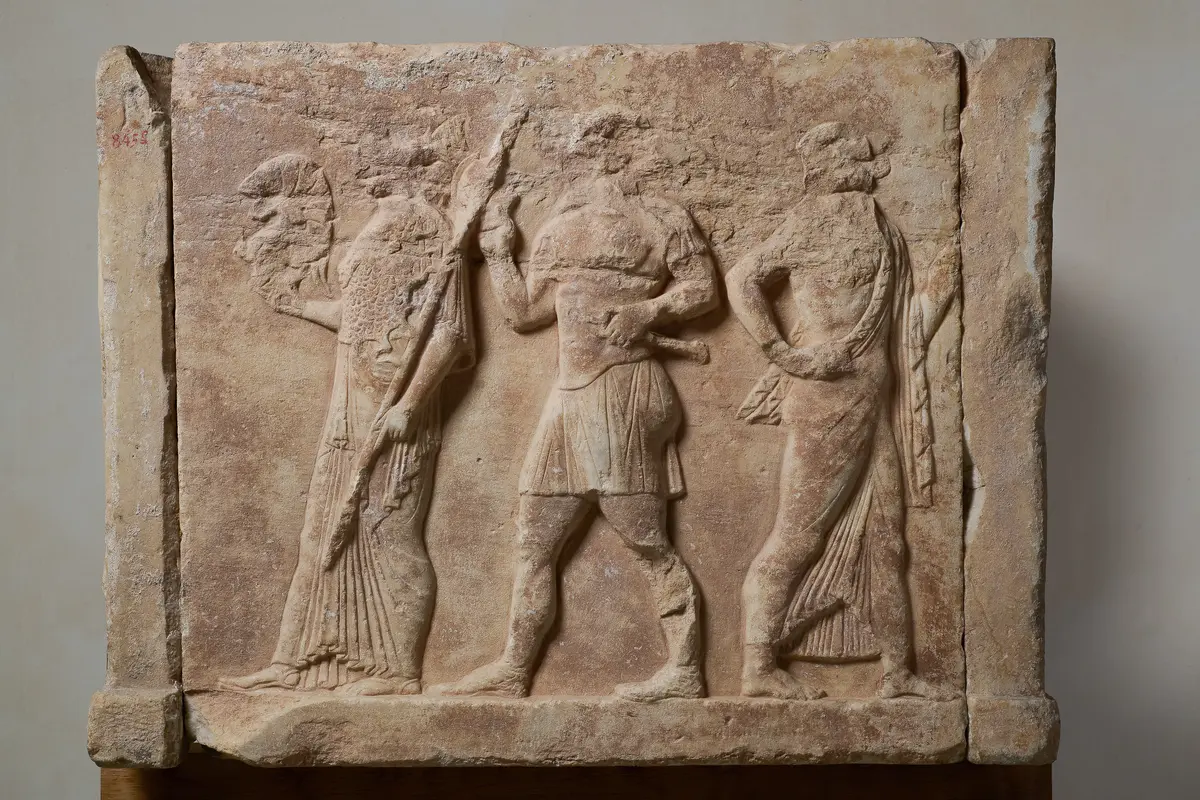
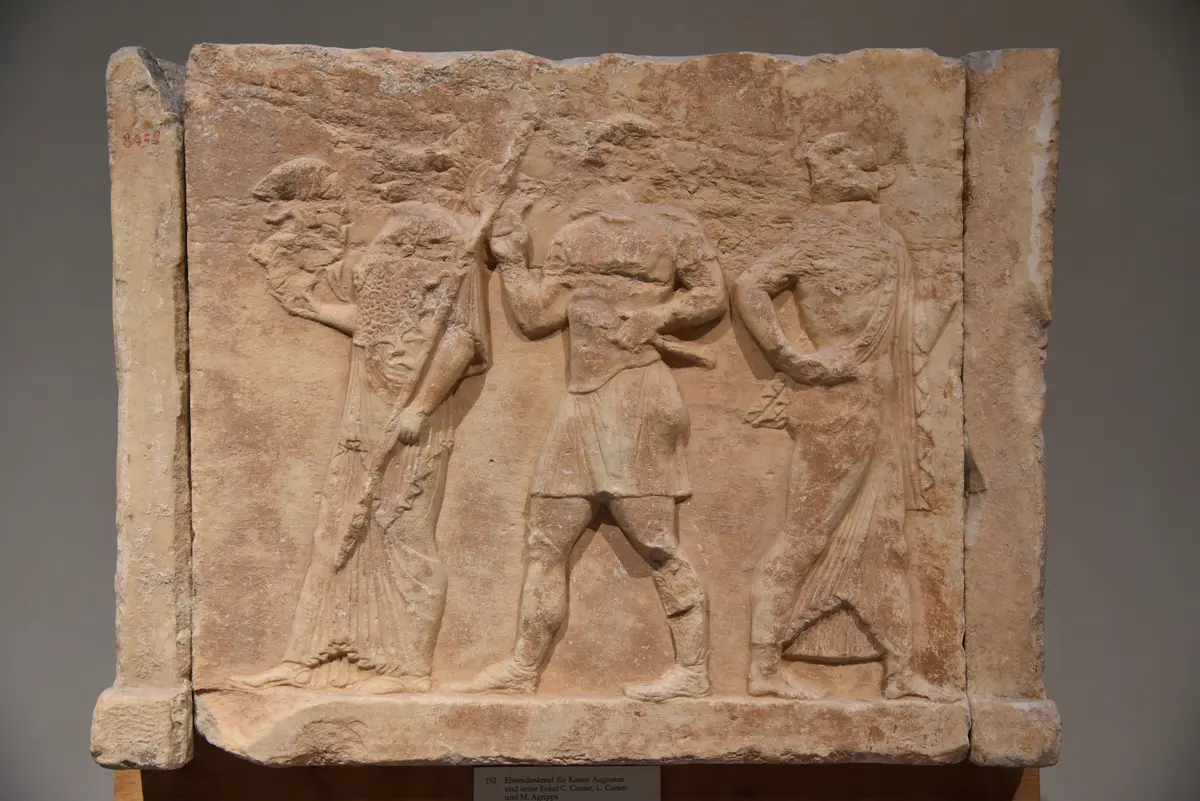
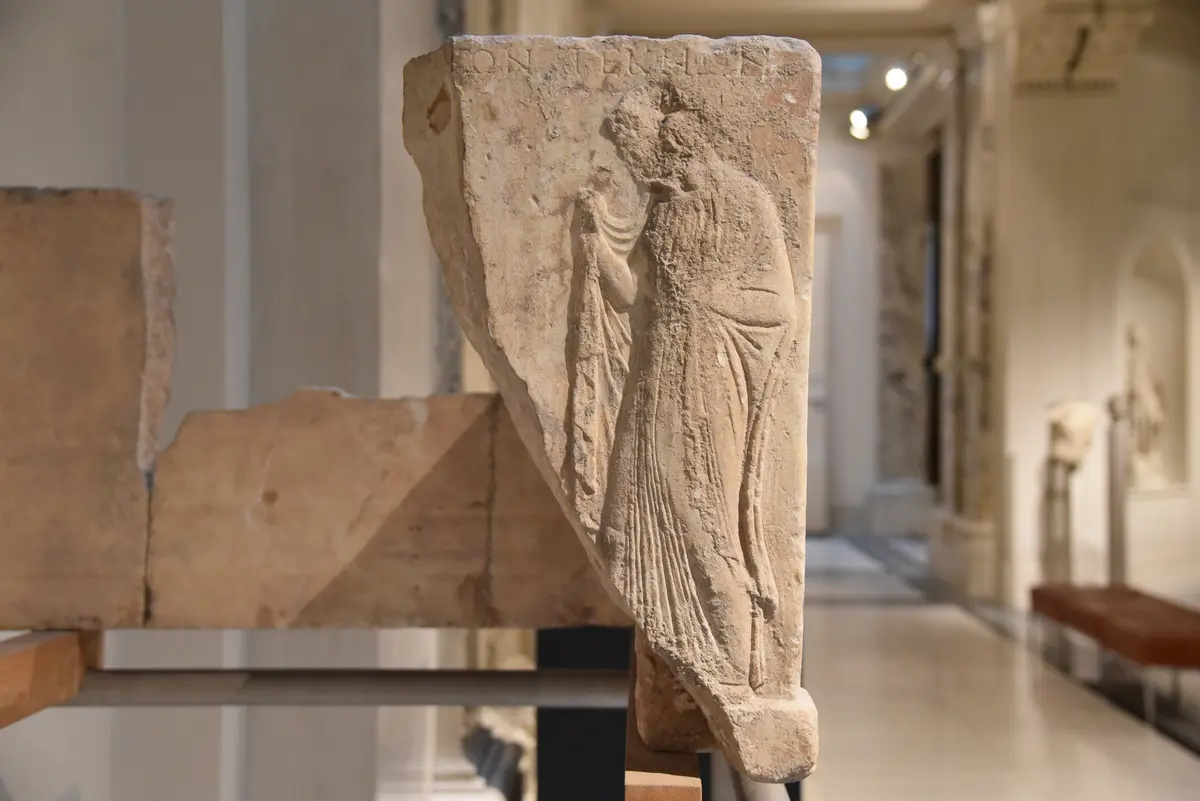
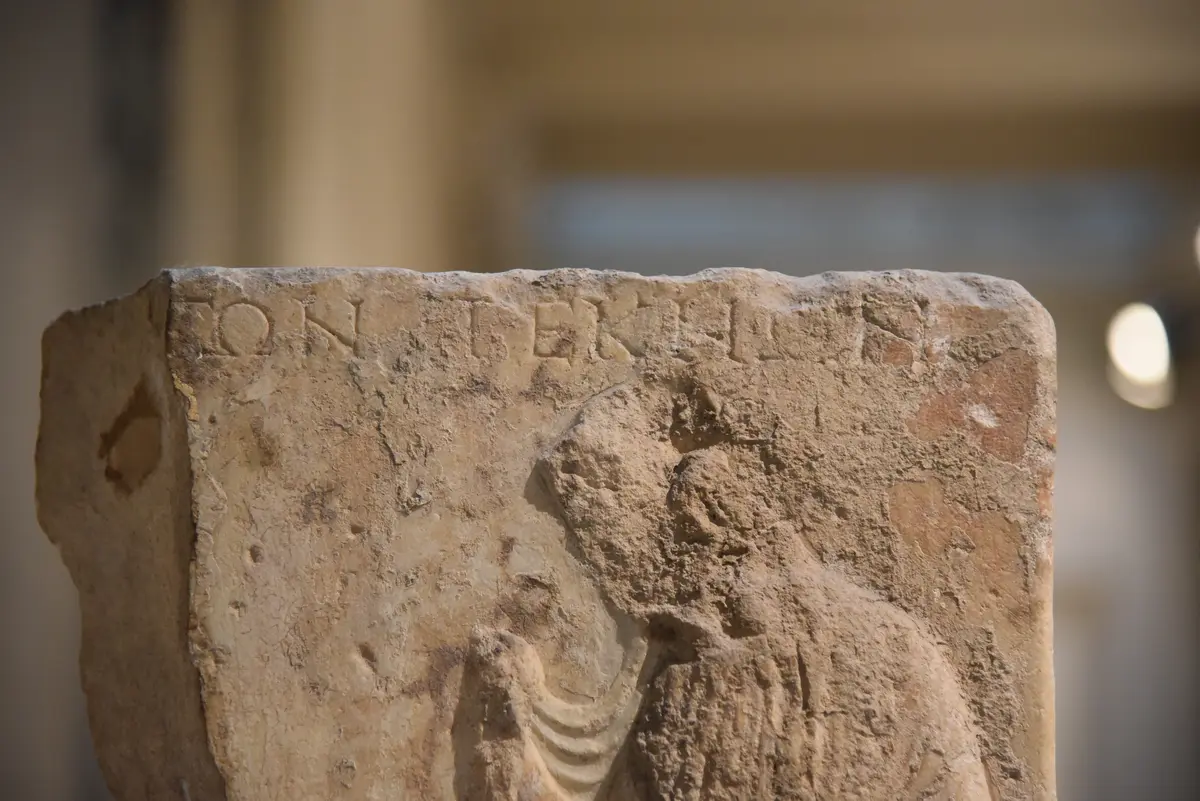
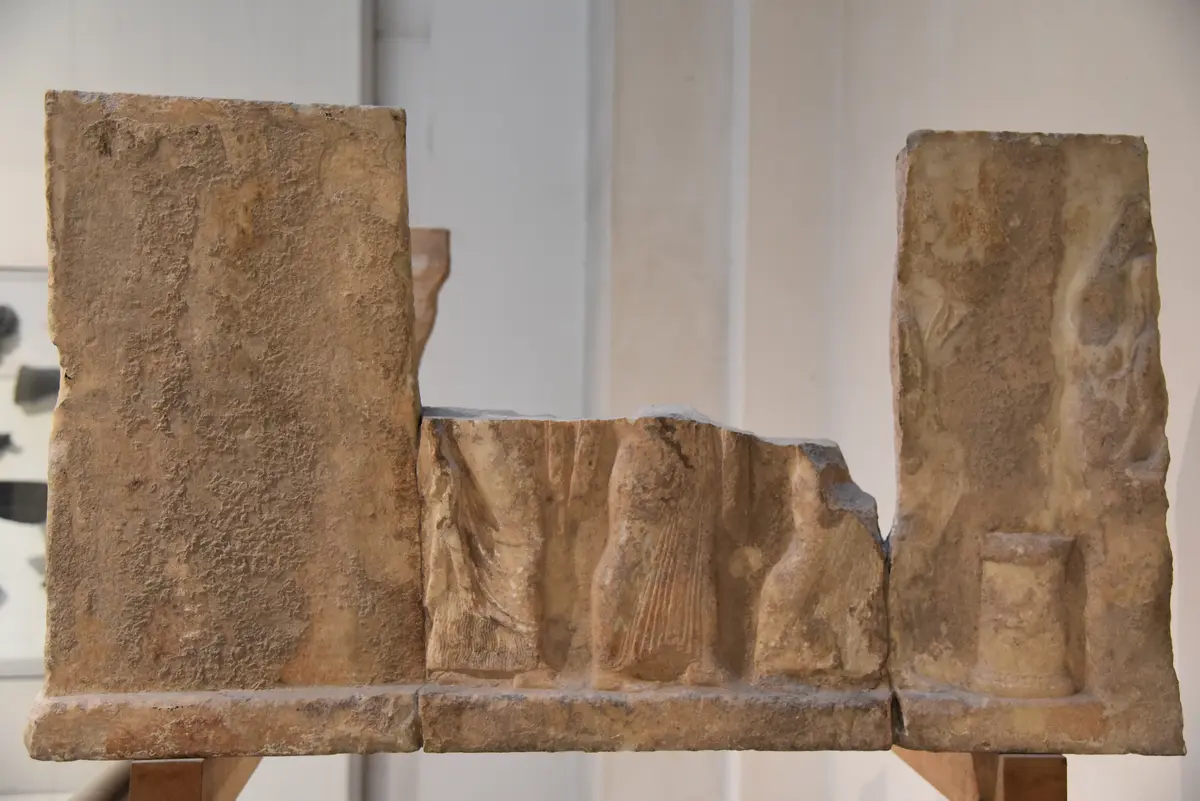
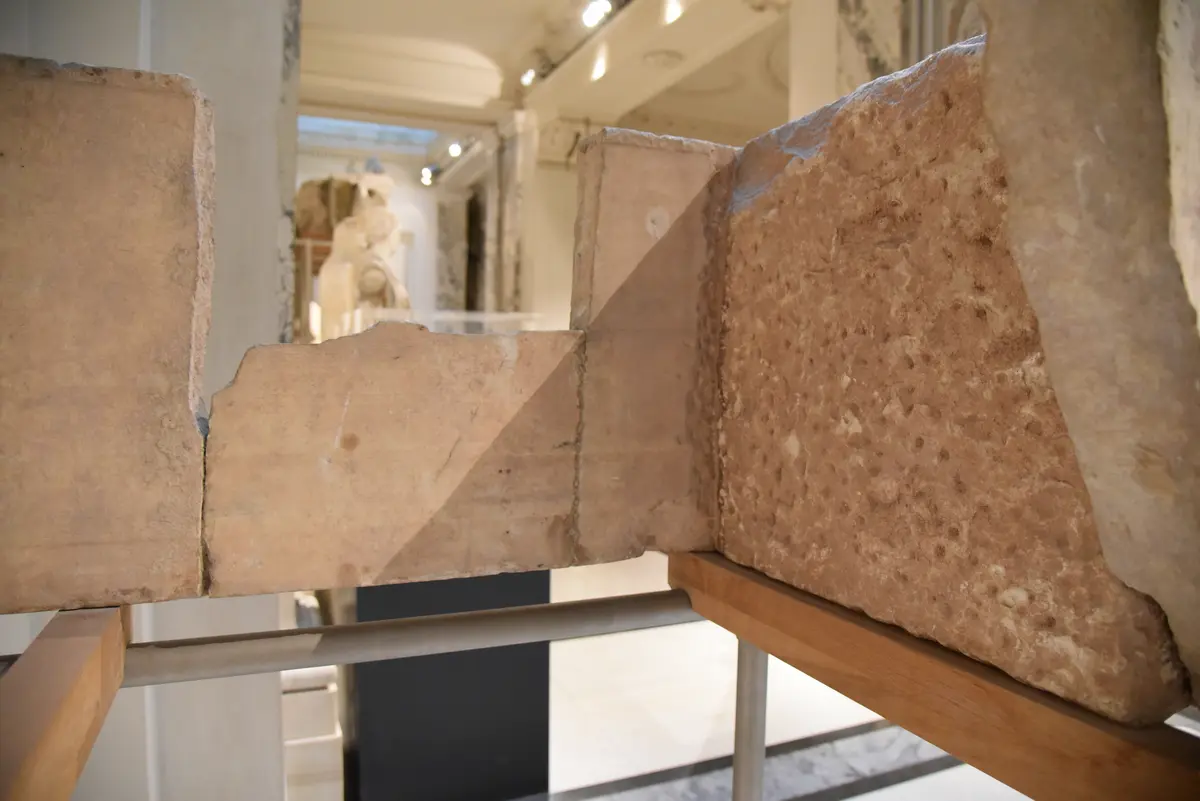
Of the originally twelve deities only Athena, Ares and Poseidon (clutching a small dolphin in his right hand) have survived; they are arranged on the narrow side, and another goddess has survived on a fragment of the main side, which includes the end of the dedicatory inscription “[…] τῶν τέκνων” (“of the children”) that presumably contained the name of the patron. On the back three nymphs are approaching an altar and the deity Pan in a grotto. The relief’s style clearly harks back to the Archaic period (archaistic). It can be dated with the help of the dedicatory inscription honouring Emperor Augustus and his grandsons, Gaius and Lucius Caesar and Marcus Agrippa Postumus, on one of the profiled blocks forming the lid that is now in Ephesus.
Time:
12 v. - 2 n. Chr.
Object Name
Relief
Culture
Römisch
Location of discovery:
Ephesos Marmorstraße Ostseite (Selçuk, Kleinasien, Türkei)
Material/technology:
Marmor
Dimensions:
L/H 57,5 × B 28,5 × D/T 8 cm
Copyright
Kunsthistorisches Museum, Antikensammlung
Invs.
Antikensammlung, I 845
Provenance
Sultan, Abdul, Hamid, II.; Österreichische Ausgrabungen in Ephesos; Geschenk an Kaiser Franz Joseph; 1911 nachträglich inventarisiert
Browse more
Similar items you might be interested in