Save object
You may download and use the image for private purposes. Nutzungsbedingungen & AGBs
To request to use the image for commercial or academic purposes, please send us a reproduction request
Save object
You may download and use the image for private purposes. Nutzungsbedingungen & AGBs
To request to use the image for commercial or academic purposes, please send us a reproduction request
Save object
You may download and use the image for private purposes. Nutzungsbedingungen & AGBs
To request to use the image for commercial or academic purposes, please send us a reproduction request
Save object
You may download and use the image for private purposes. Nutzungsbedingungen & AGBs
To request to use the image for commercial or academic purposes, please send us a reproduction request
Save object
You may download and use the image for private purposes. Nutzungsbedingungen & AGBs
To request to use the image for commercial or academic purposes, please send us a reproduction request
Save object
You may download and use the image for private purposes. Nutzungsbedingungen & AGBs
To request to use the image for commercial or academic purposes, please send us a reproduction request
Save object
You may download and use the image for private purposes. Nutzungsbedingungen & AGBs
To request to use the image for commercial or academic purposes, please send us a reproduction request
Römer
Letztes Viertel 1. Jh. v. Chr.
Depicted turning vigorously to the side, this head of a man aged around fifty was designed to be inserted into a toga statue. Note his sitter’s distinctive features combining a high forehead and thinning central parting, hollow cheeks, pointy chin and aquiline nose. Informed by likenesses of Julius Caesar, and the Late Republic’s repertoire of virtues (Lat. virtus), such portraits were very popular; the larger than life-sized statue may depict the owner of one of the villas situated on the Panayır dağ.
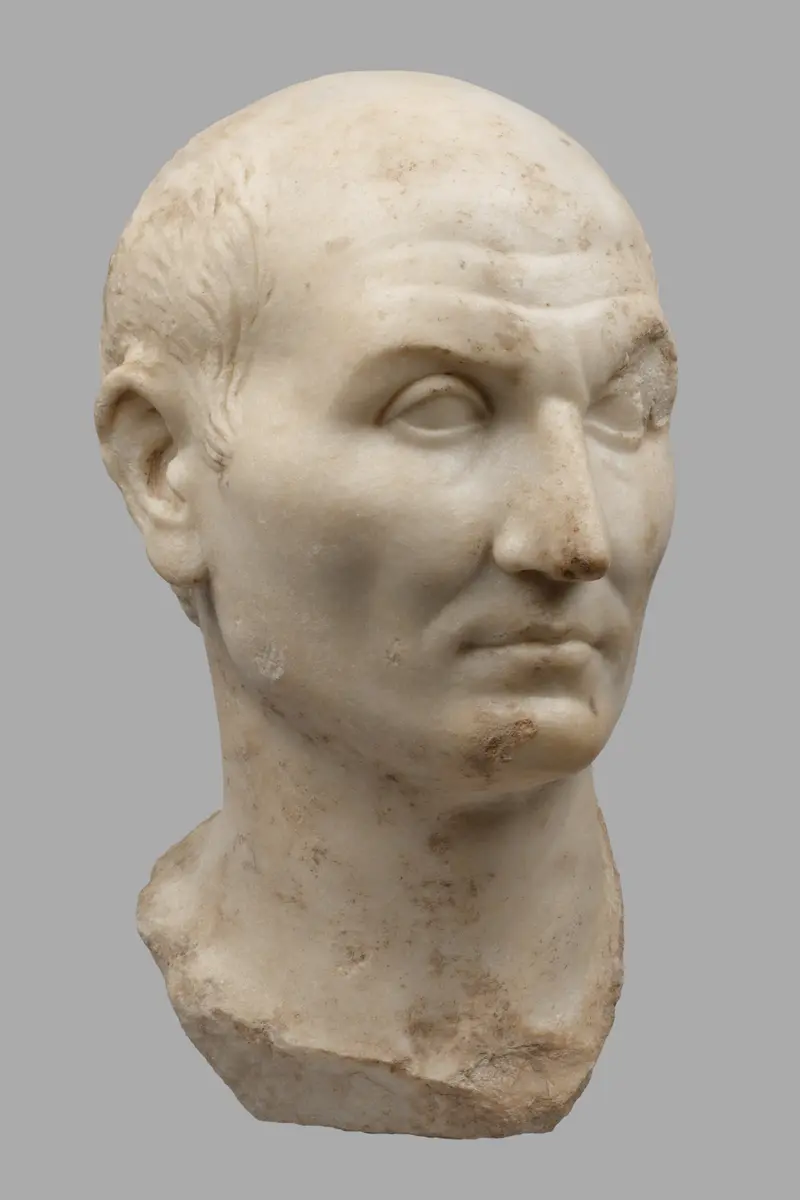
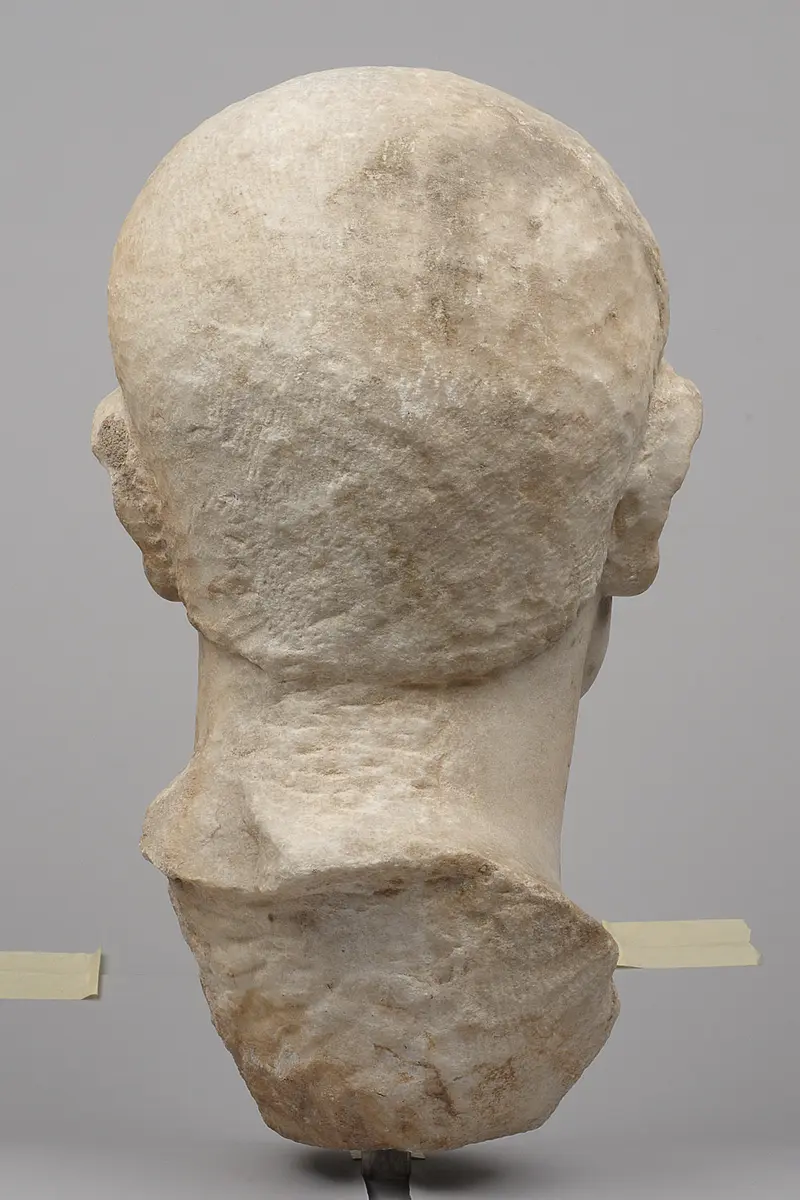
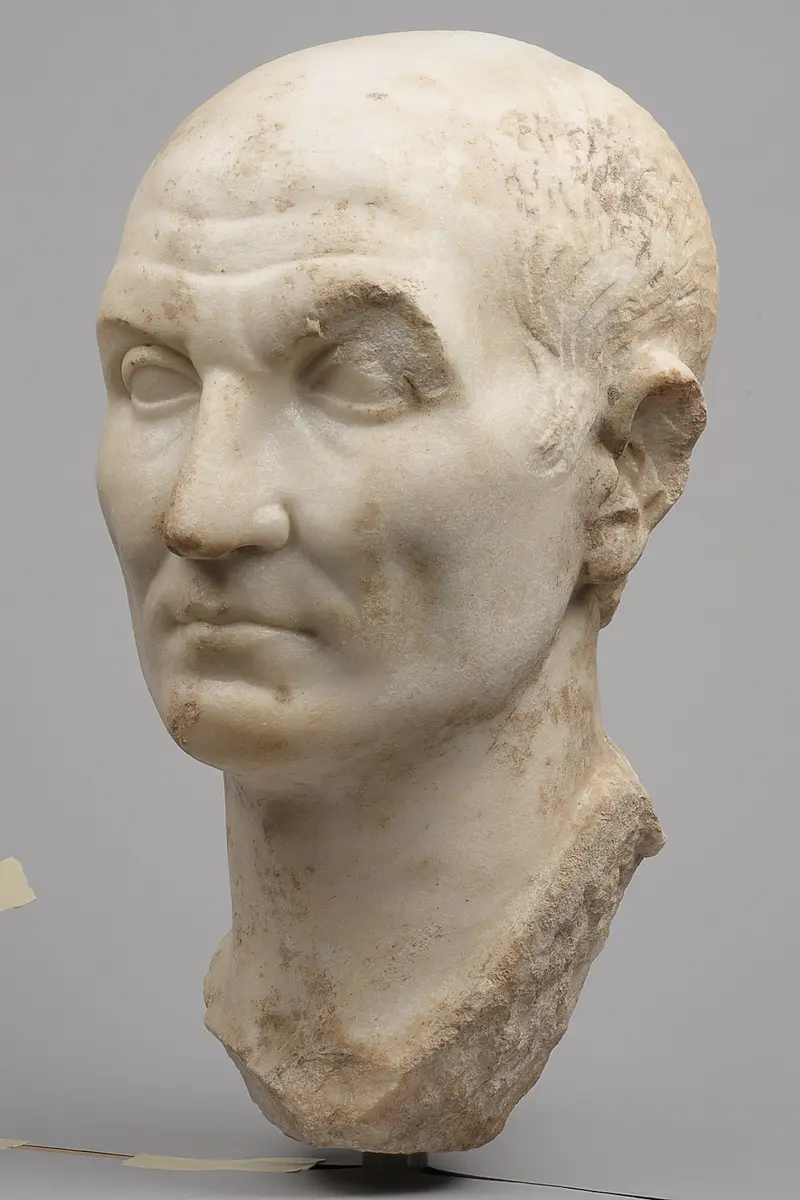
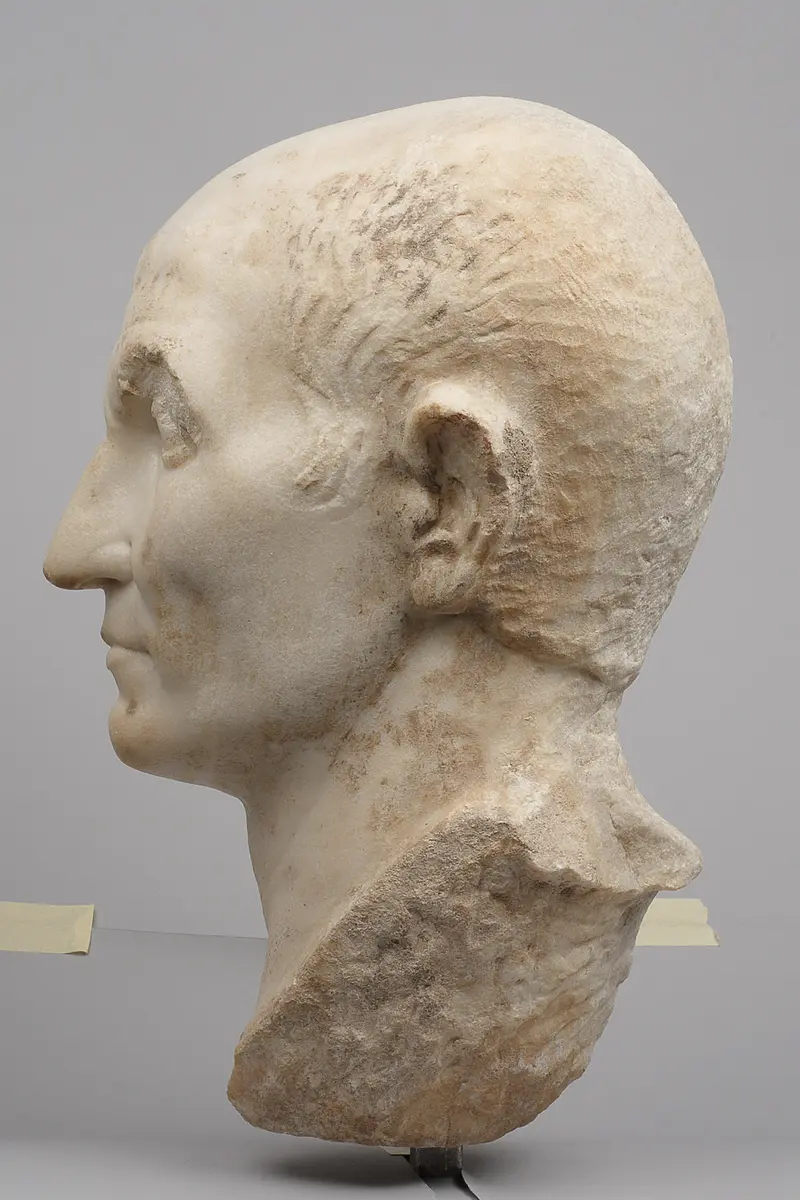
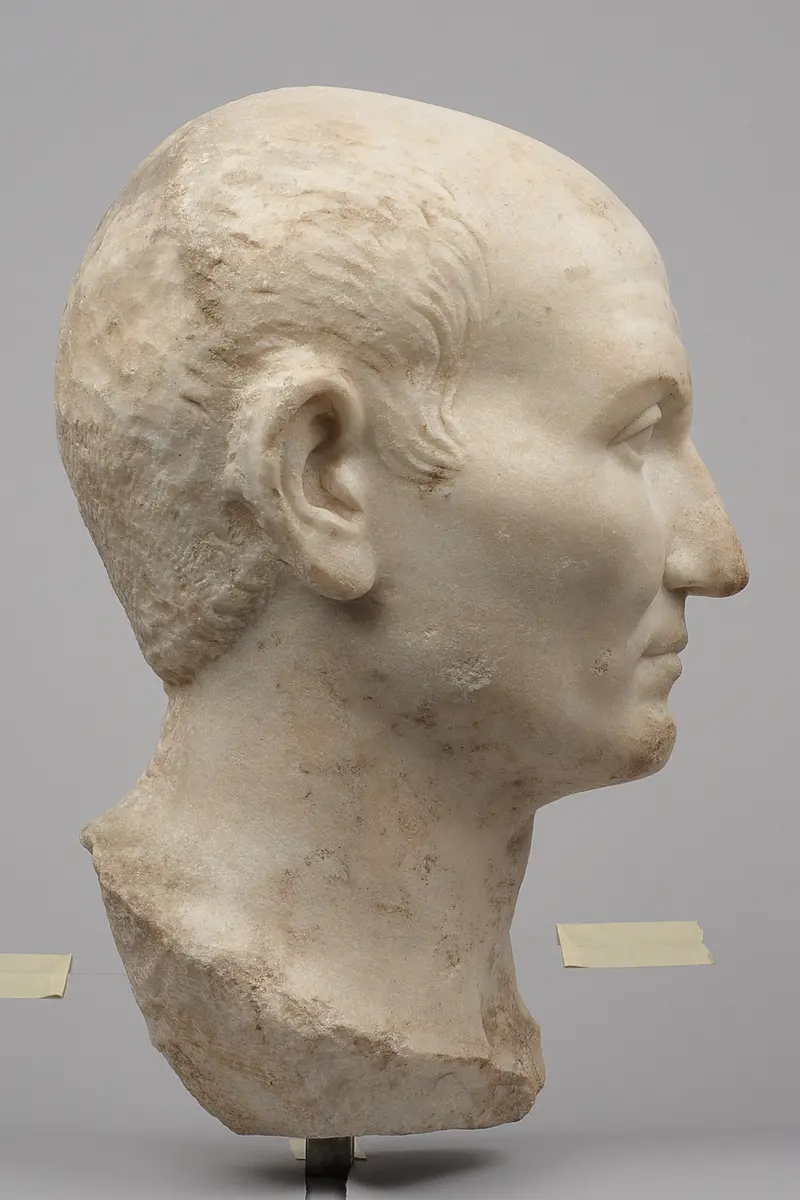
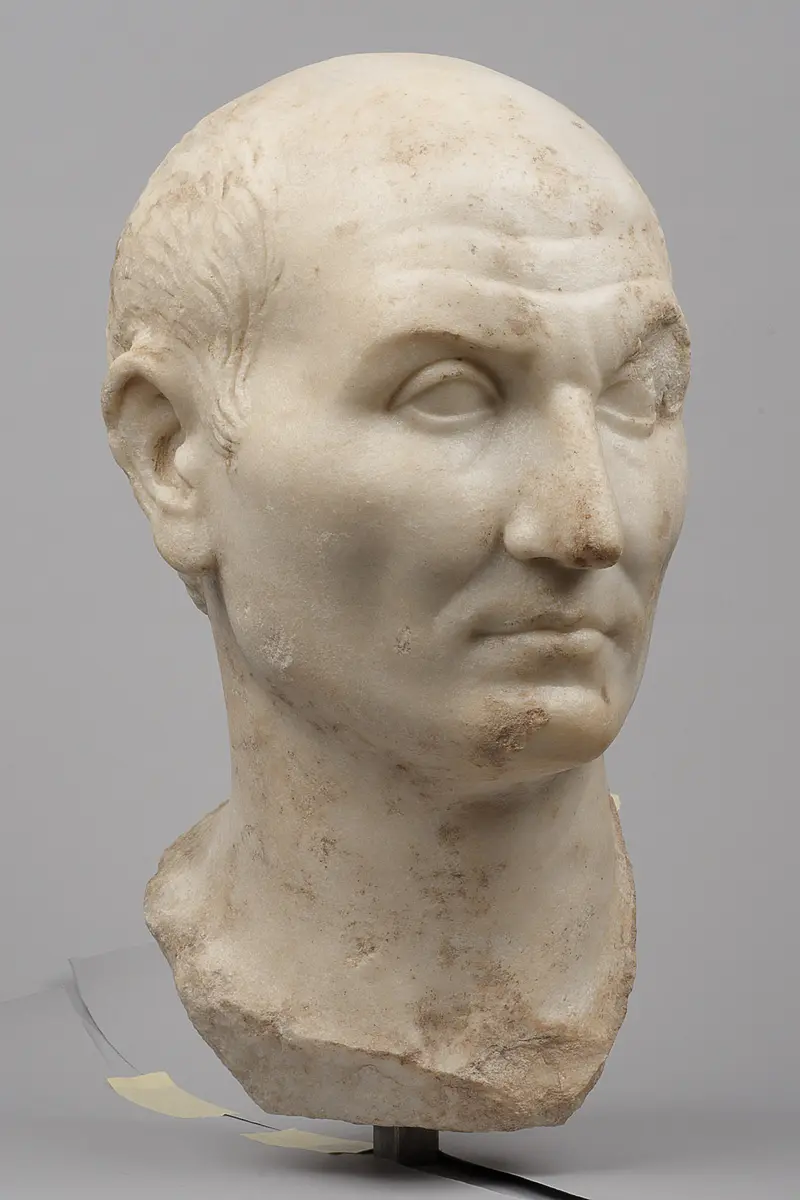
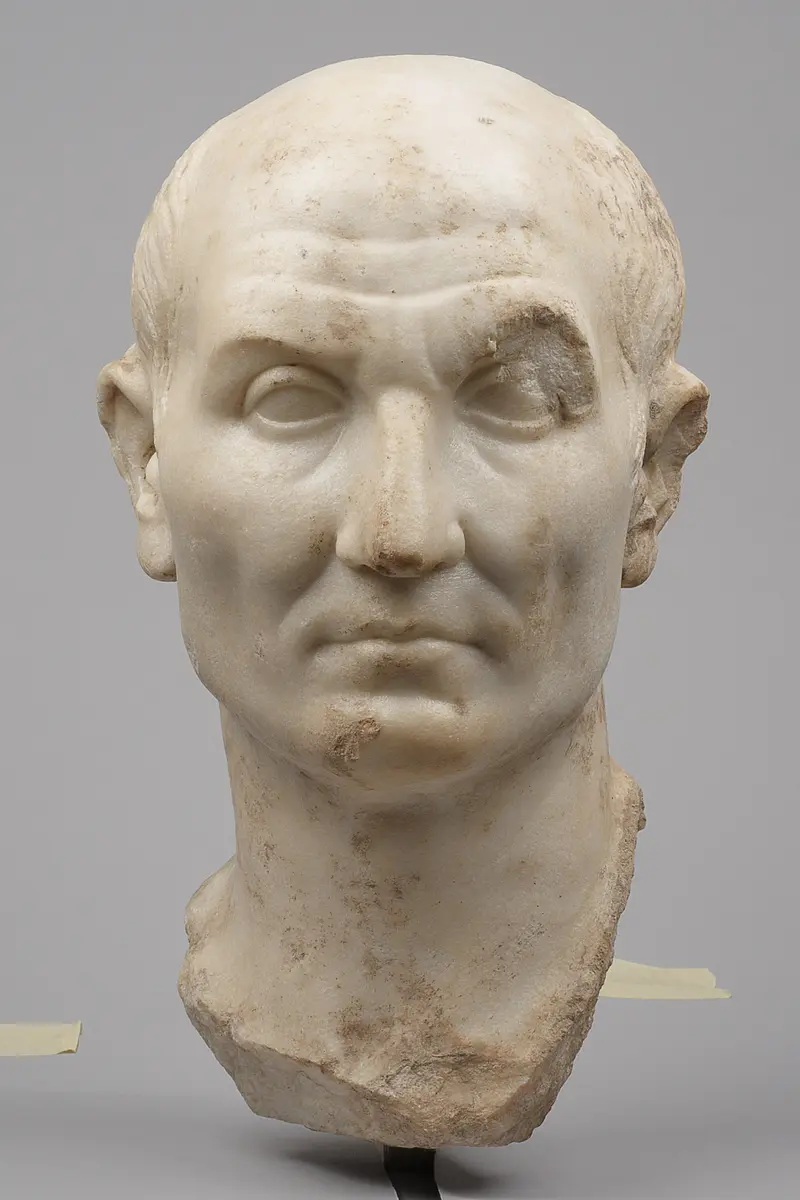
Depicted turning vigorously to the side, this head of a man aged around fifty was designed to be inserted into a toga statue. Note his sitter’s distinctive features combining a high forehead and thinning central parting, hollow cheeks, pointy chin and aquiline nose. Informed by likenesses of Julius Caesar, and the Late Republic’s repertoire of virtues (Lat. virtus), such portraits were very popular; the larger than life-sized statue may depict the owner of one of the villas situated on the Panayır dağ.
Time:
Letztes Viertel 1. Jh. v. Chr.
Object Name
Porträtkopf
Culture
Römisch
Location of discovery:
Ephesos byzant. Stadtmauer beim Theater (Selçuk, Kleinasien, Türkei)
Material/technology:
Marmor
Dimensions:
H. 43 cm
Copyright
Kunsthistorisches Museum, Antikensammlung
Invs.
Antikensammlung, I 817
Provenance
Sultan, Abdul, Hamid, II.; Österreichische Ausgrabungen in Ephesos; Geschenk an Kaiser Franz Joseph; 1911 nachträglich inventarisiert
Browse more
Similar items you might be interested in

Relief: Verwundete Amazone Griechisch 2. Hälfte 4. Jh. v. Chr.

Statue: Knabe mit Fuchsgans Römisch, Mittlere Kaiserzeit 2. Jh. n. Chr., nach Bronzeoriginal aus dem 3. Jh. v. Chr.

Relief: Adoption der Kaiser Lucius Verus und Marc Aurel Römisch, Mittlere Kaiserzeit Mitte 2. Jh. n. Chr.

Porträtkopf: Kaiser Hadrian Römisch, Mittlere Kaiserzeit um 120 n. Chr.

Kandelaber: Herakles und Kentaur im Kampf Griechisch, Hellenistisch Mitte 1. Jh. v. Chr.

Kopf: Artemis (Typus Candia) Römisch, Frühe Kaiserzeit 1. Jh. n. Chr., nach griechischem Original um 460 v. Chr.

Relief: Erotenfries: Eroten auf Löwenjagd Römisch, Frühe Kaiserzeit 2. Hälfte 1. Jh. n. Chr.

Relief: Schlachtenszene, Schwertkämpfer Römisch, Mittlere Kaiserzeit Mitte 2. Jh. n. Chr.

Relief: Götterversammlung: Demeter Römisch, Mittlere Kaiserzeit Mitte des 2. Jhs. n. Chr.

Giebel: Celsusbibliothek: Segmentgiebel Römisch, Mittlere Kaiserzeit 113 - 117 n. Chr.

Statue: Athlet Römisch, Frühe Kaiserzeit 1. Jh. n. Chr., nach griech. Original um 330 v. Chr.

Korinthisches Kapitell Römisch, Mittlere Kaiserzeit Ende 1. Jh. n. Chr.

Relief: Stierkopf-Girlandenfries Römisch, Mittlere Kaiserzeit Mitte 2. Jh. n. Chr.

Relief: Reiterschlacht Griechisch, Hellenistisch um 166 v. Chr.

Modell: Oktogon (Grab der Arsinoe) Hergestellt 1977 - 1978

Porträtkopf: Arsinoe III. (?) Griechisch, Hellenistisch 3. Jh. v. Chr.

Kopf: Hermes Römisch, Mittlere Kaiserzeit Mitte des 2. Jhs. n. Chr., nach Bronzeoriginal um 430 v. Chr.

Aschenkiste des T. Gerillanus Marcellus Römisch, Kaiserzeit 1. - 2. Jh. n. Chr.

Statue: Arete Kelsou Hellenistisch-römisch, Mittlere Kaiserzeit Torso hellenistisch, Kopf 2. Jh. n. Chr.
