Korinthisches Kapitell
Ende 1. Jh. n. Chr.
The Corinthian order is one of the leitmotifs of Roman architecture. The capital’s body (kalathos/basket) is embellished with two rows of eight leaves each, generally called acanthus leaves because of their similarity to the eponymous plant found in the countries bordering the Mediterranean; here, they are surmounted by volutes and “helices” on which rests the abacus, the flat uppermost slab that receives the weight of the architrave. Such capitals were used in many of the buildings found at Ephesus, including the palaestra of the Harbour Baths.
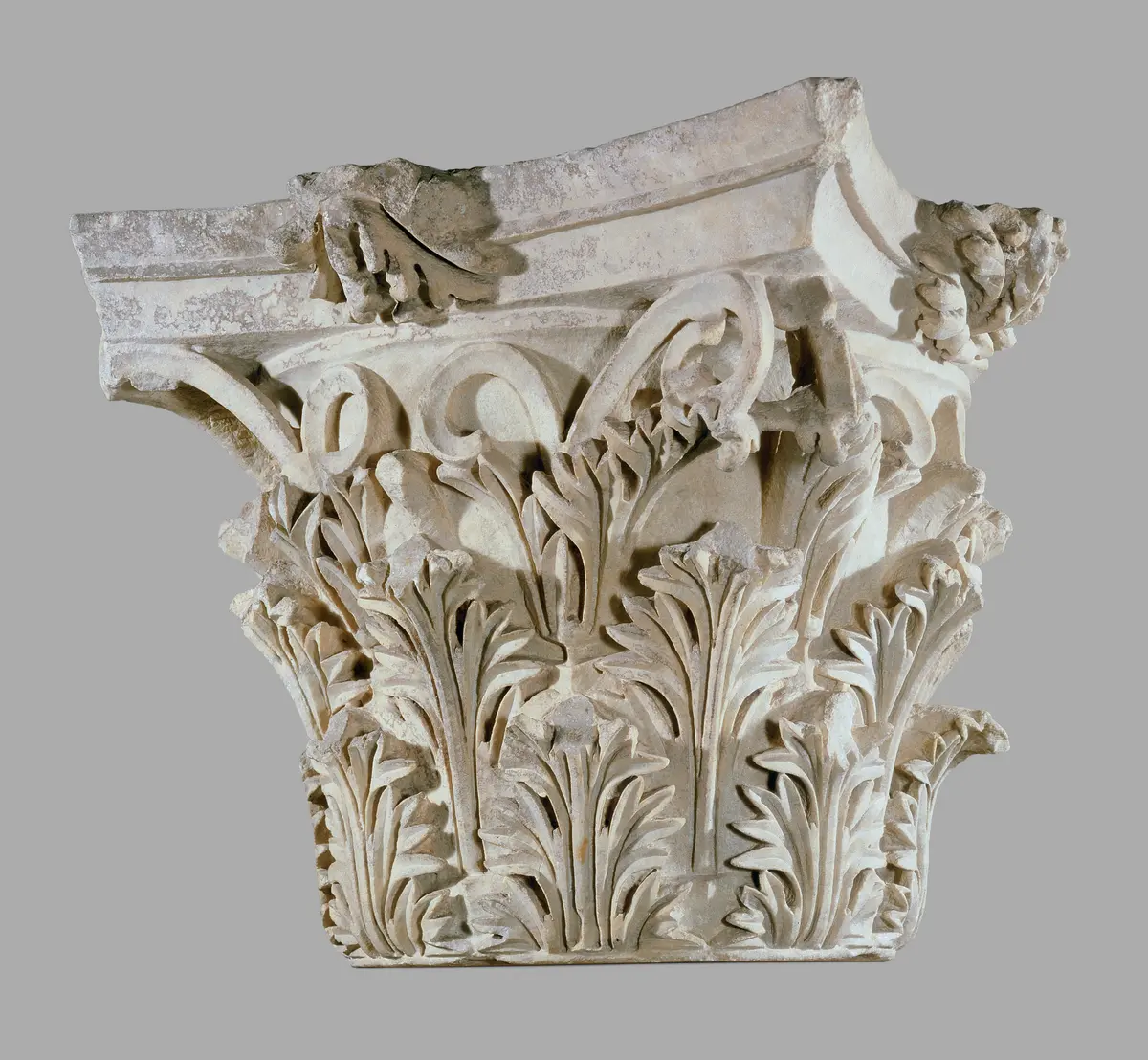
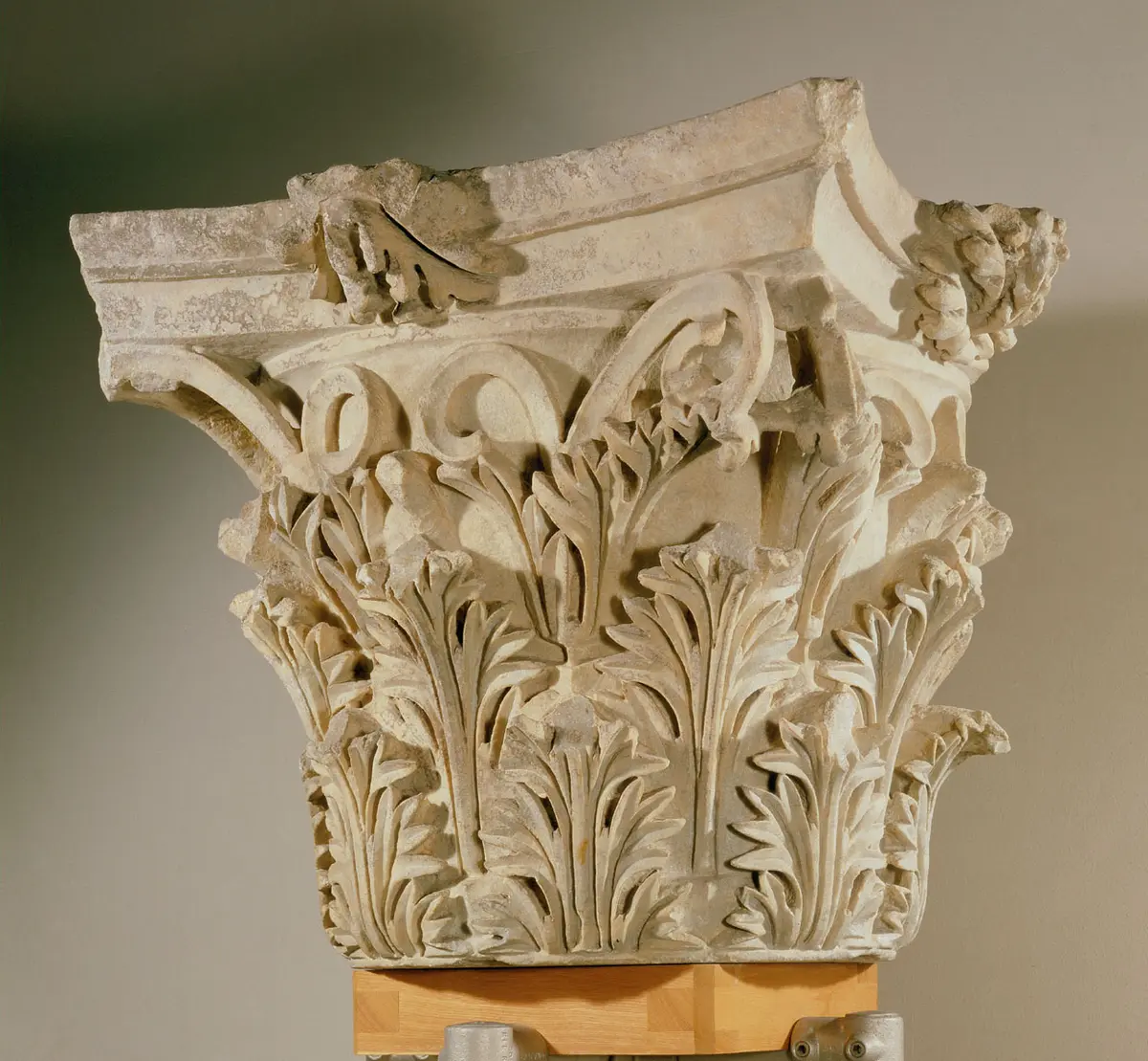
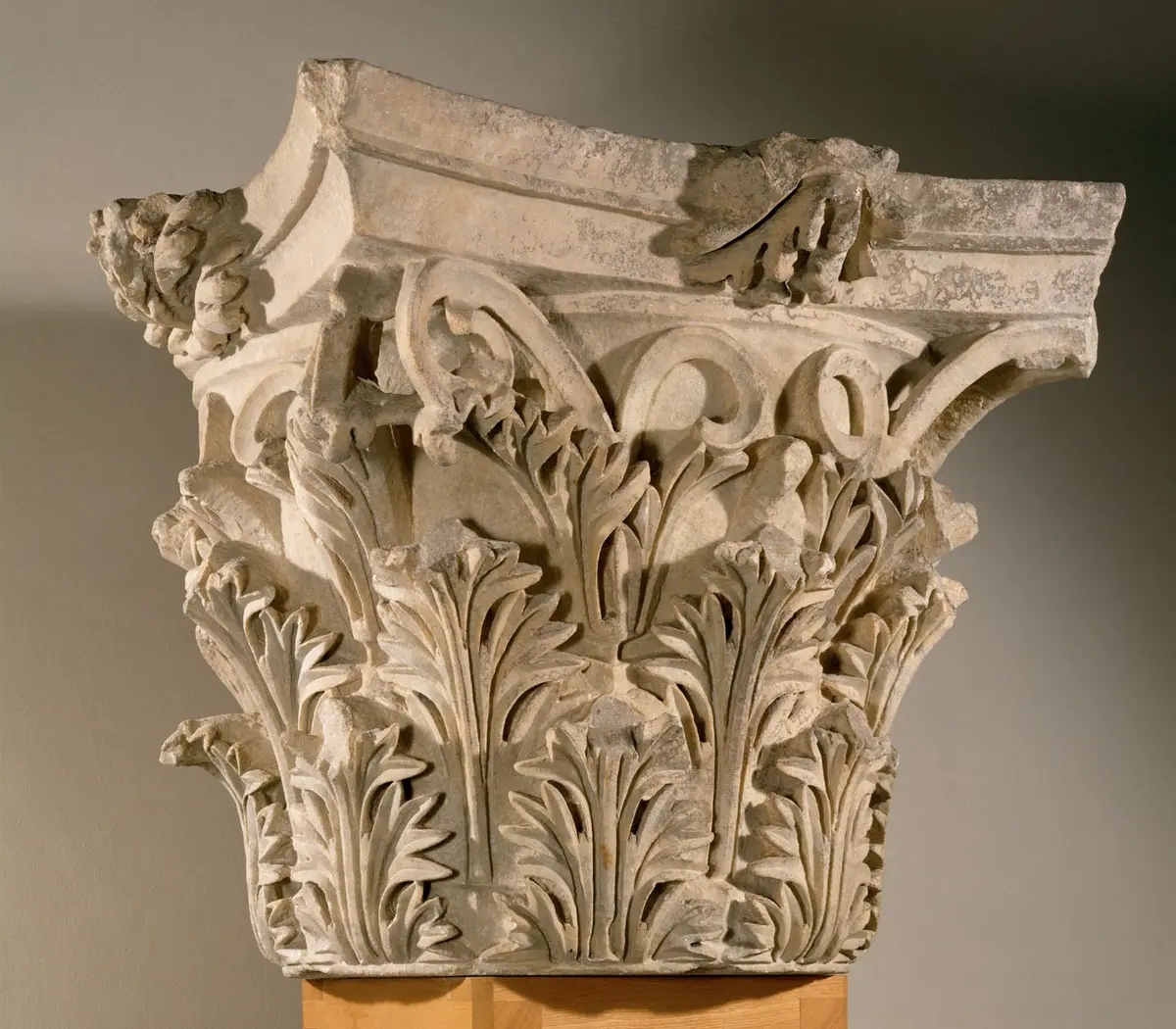
The Corinthian order is one of the leitmotifs of Roman architecture. The capital’s body (kalathos/basket) is embellished with two rows of eight leaves each, generally called acanthus leaves because of their similarity to the eponymous plant found in the countries bordering the Mediterranean; here, they are surmounted by volutes and “helices” on which rests the abacus, the flat uppermost slab that receives the weight of the architrave. Such capitals were used in many of the buildings found at Ephesus, including the palaestra of the Harbour Baths.
Time:
Ende 1. Jh. n. Chr.
Culture
Römisch
Location of discovery:
Ephesos Hafengymnasium Marmorsaal (Selçuk, Kleinasien, Türkei)
Material/technology:
Marmor
Dimensions:
H. 68 cm, Dm. 50 cm
Copyright
Kunsthistorisches Museum, Antikensammlung
Invs.
Antikensammlung, I 840
Provenance
Sultan, Abdul, Hamid, II.; Österreichische Ausgrabungen in Ephesos; Geschenk an Kaiser Franz Joseph; 1911 nachträglich inventarisiert