Mosaikfragment: Eros auf Biga
6. Jh. n. Chr.
This exceptional central emblem depicting a cupid riding in a chariot (biga) drawn by dolphins across the sea is a rare example of a late-antique mosaic from Ephesus. In addition to local stones, the artist used tesserae made of brick and glass. The emblem originally functioned as the centre of a large floor mosaic that decorated the main public room of a private house in the late-antique metropolis. The fifth and sixth century A.D. were the glory years of these houses erected in the palaestra of the former Harbour Baths at Ephesus, but they were destroyed and abandoned in the early seventh century.
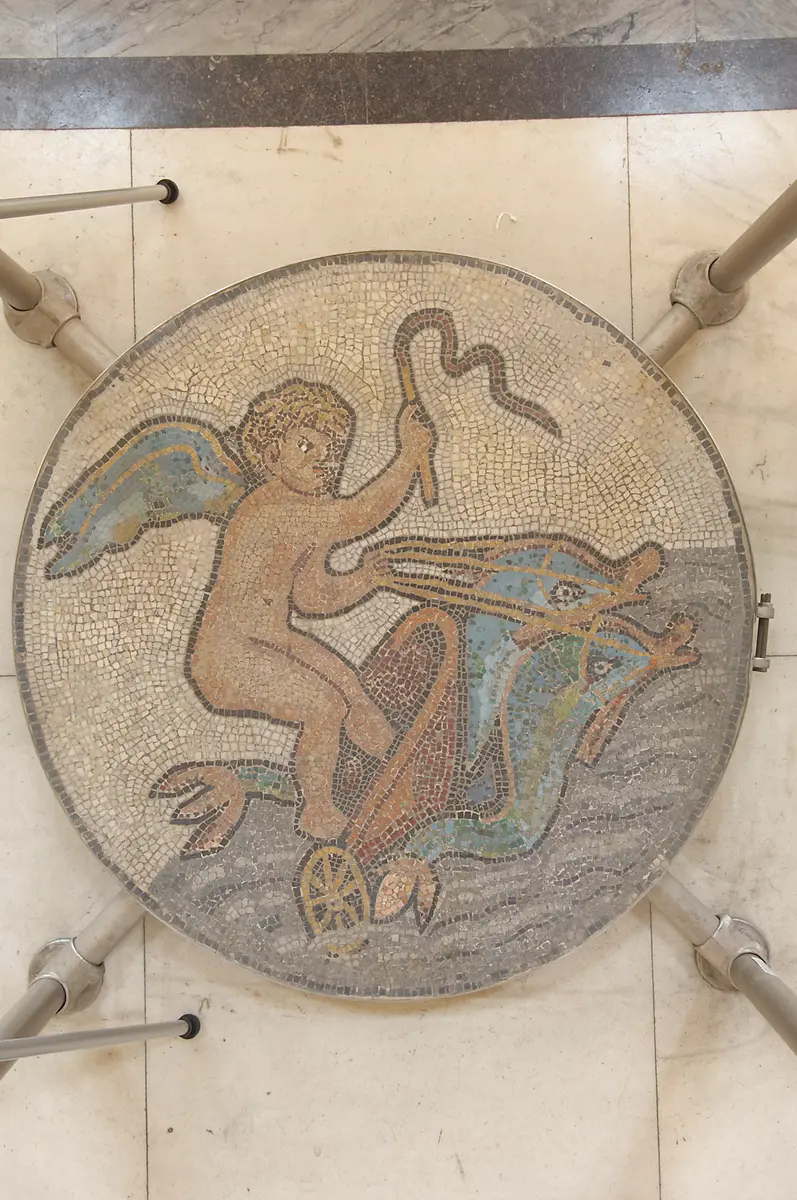
This exceptional central emblem depicting a cupid riding in a chariot (biga) drawn by dolphins across the sea is a rare example of a late-antique mosaic from Ephesus. In addition to local stones, the artist used tesserae made of brick and glass. The emblem originally functioned as the centre of a large floor mosaic that decorated the main public room of a private house in the late-antique metropolis. The fifth and sixth century A.D. were the glory years of these houses erected in the palaestra of the former Harbour Baths at Ephesus, but they were destroyed and abandoned in the early seventh century.
Time:
6. Jh. n. Chr.
Object Name
Mosaik
Culture
Römisch
Location of discovery:
Ephesos Spätantikes Haus oberhalb Verulanushalle (Selçuk, Kleinasien, Türkei)
Material/technology:
Stein, Ziegel, Glas
Dimensions:
D 98 cm
Copyright
Kunsthistorisches Museum, Antikensammlung
Invs.
Antikensammlung, II 22
Provenance
Sultan, Abdul, Hamid, II.; Österreichische Ausgrabungen in Ephesos; Geschenk an Kaiser Franz Joseph; 1911 nachträglich inventarisiert
Browse more
Similar items you might be interested in

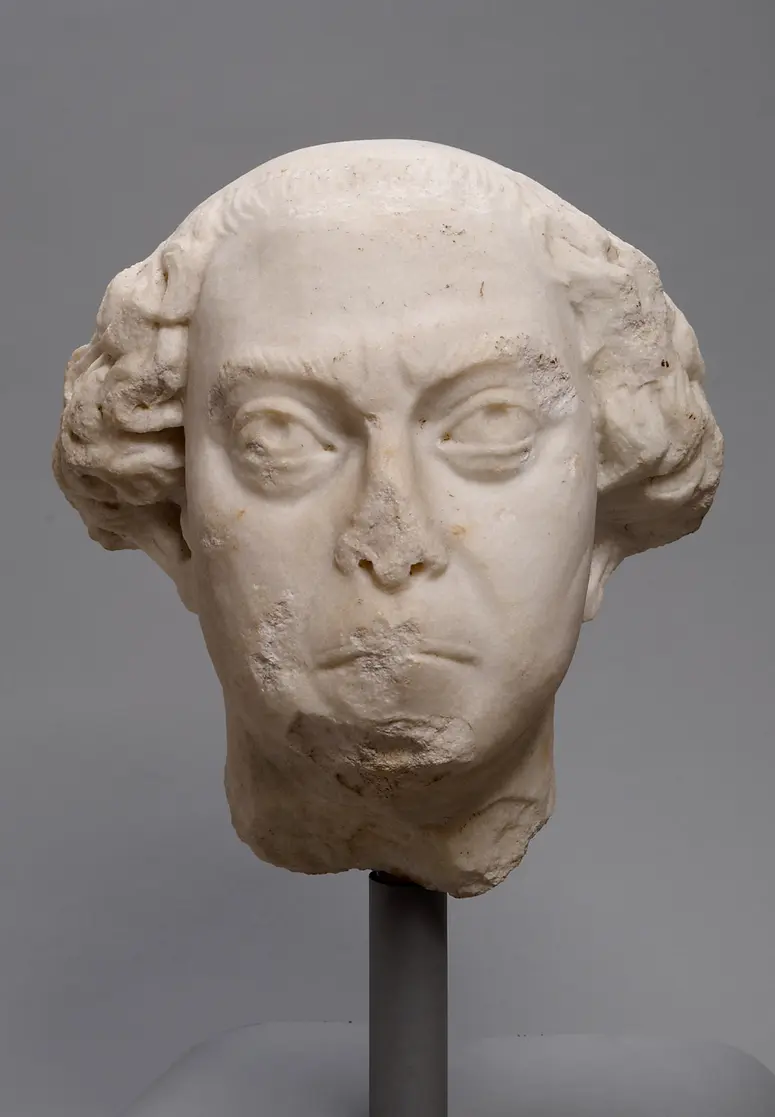
Porträtkopf: Porträt eines kahlköpfigen Mannes Römisch, Spätantik 1. Hälfte 6. Jh. n. Chr.
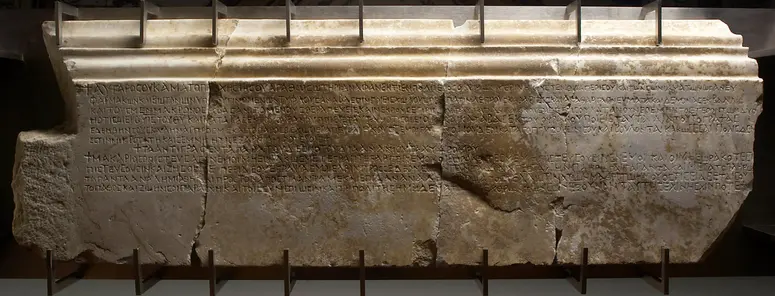
Inschrift: Türsturz mit Abgaros-Inschrift Frühchristlich, Spätantike 5. - 6. Jh. n. Chr.
Ständerlampe: Konstantinisches Christogramm Frühchristlich, Spätantike 4. - 6. Jh. n. Chr.